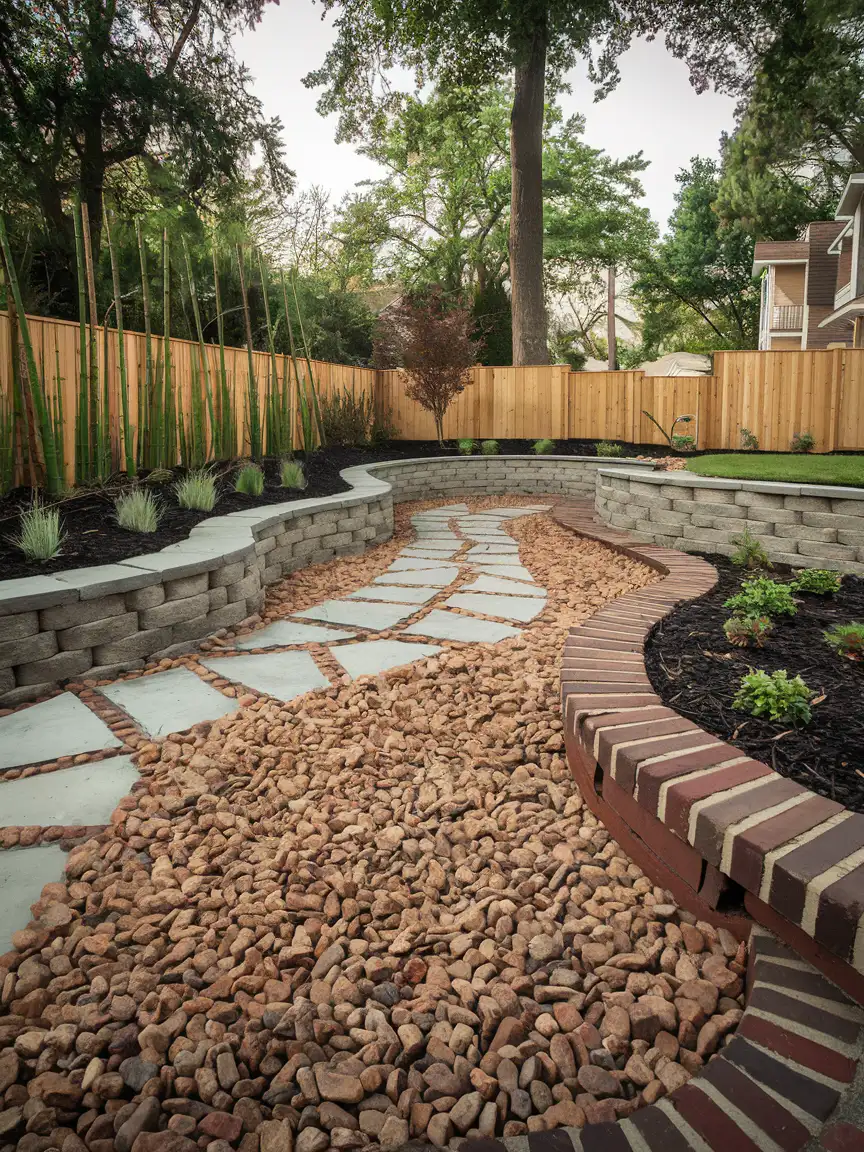
If you have stood in the landscaping aisle staring at bags of stone, bundles of bamboo, and rolls of plastic sheeting, wondering which one your garden actually needs, you are not alone. Gardening rock is one of the most versatile materials available for borders, pathways, and ground cover, but it is far from the only option, and picking the wrong material for the job can mean redoing your work within a year or two.
This guide breaks down when to use gardening rocks versus stone gardening features, bricks, pebbles, bamboo, and plastic liners, so you can match the right material to the right part of your yard instead of guessing.
Whether you are building a low maintenance rock bed, edging a walkway with a gardening wall, or laying down a plastic liner to stop weeds before they start, the material you choose affects everything from how much upkeep you will deal with later to how the finished space actually looks. This guide walks through the practical differences between each option so you can make a confident choice the first time.
By the end, you will know which situations call for rocks for gardening versus softer materials like bamboo, how a gardening plastic liner actually works underground, how these materials compare side by side, and how to combine them for a finished look that holds up for years.
Understanding Gardening Rock and When to Use It
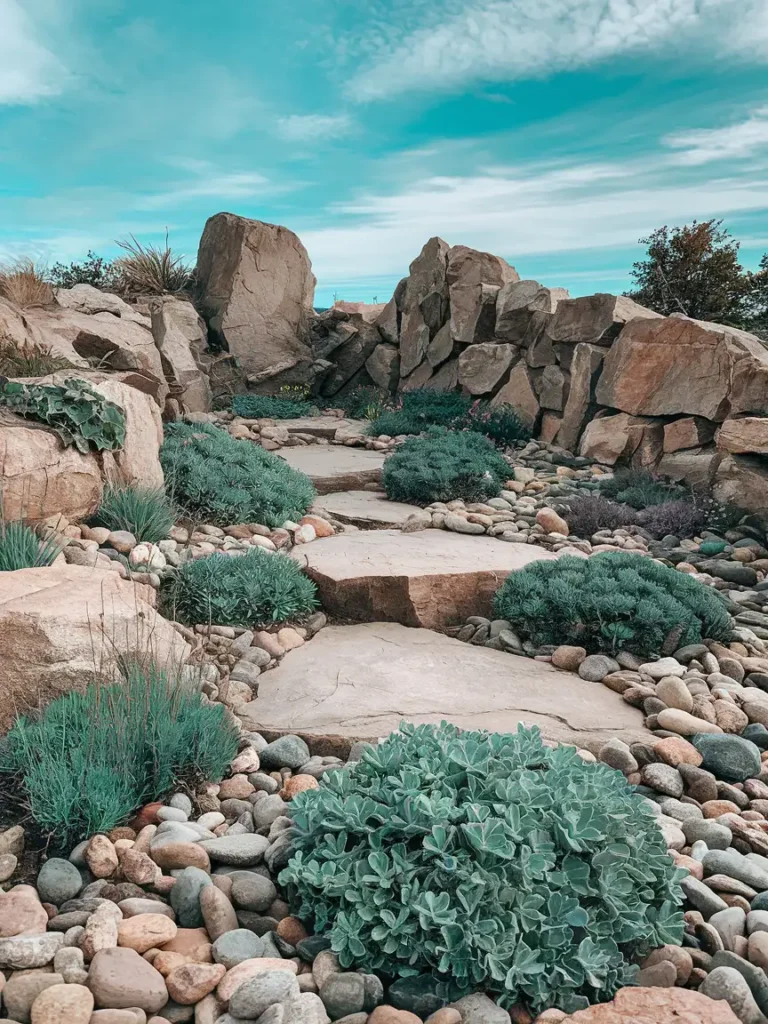
Gardening rock refers to any stone material used for ground cover, borders, or decorative accents in a garden bed, and it remains one of the most popular choices for a reason. Unlike mulch, gardening rocks do not break down or need replacing every year or two. For gardeners comparing practical supplies, a gardening mat and gear guide can also help you choose the right tools and protective materials to use alongside rock.
They stay in place through wind and heavy rain far better than lighter materials, and they come in a wide enough range of sizes and colors to fit nearly any style, from a stark modern xeriscape to a softer, more natural looking bed.
Larger gardening rocks, sometimes called boulders or accent stones, work well as focal points within a bed, especially paired with drought tolerant plants that already suit a rocky, low water landscape. Medium sized rocks, often a few inches across, are commonly used as ground cover across an entire bed, filling in space around plants while suppressing weed growth.
The biggest advantage of rocks for gardening over organic mulch is longevity. While wood mulch typically needs topping off annually as it decomposes, a properly installed rock bed can last a decade or more with only occasional raking to keep it looking tidy and free of blown in debris.
Where Gardening Rocks Work Best
Gardening rocks perform best in areas that get full sun and do not need frequent digging or replanting, since moving rocks around every season to access soil underneath becomes tedious fast.
Dry, low maintenance beds, pathway borders, and areas around trees or shrubs that will not need regular disturbance are ideal candidates. Avoid using rocks in vegetable beds, or anywhere you plan to rotate plants seasonally, since working around stone in soil you need to till regularly adds unnecessary difficulty.
Sizing Gardening Rock for Different Uses
Rock size matters more than most first time buyers expect. Fine gravel, generally under half an inch, works well for pathways since it compacts down into a relatively stable, walkable surface. Medium rock, in the one to three inch range, is the standard choice for ground cover in planting beds since it is heavy enough to resist wind and light rain but still easy to spread and rake.
Larger rock, three inches and up, works best as a border material or accent feature rather than as full bed coverage, since it becomes difficult and uneven to walk or plant through at that size.
Stone Gardening Features Beyond Basic Ground Cover
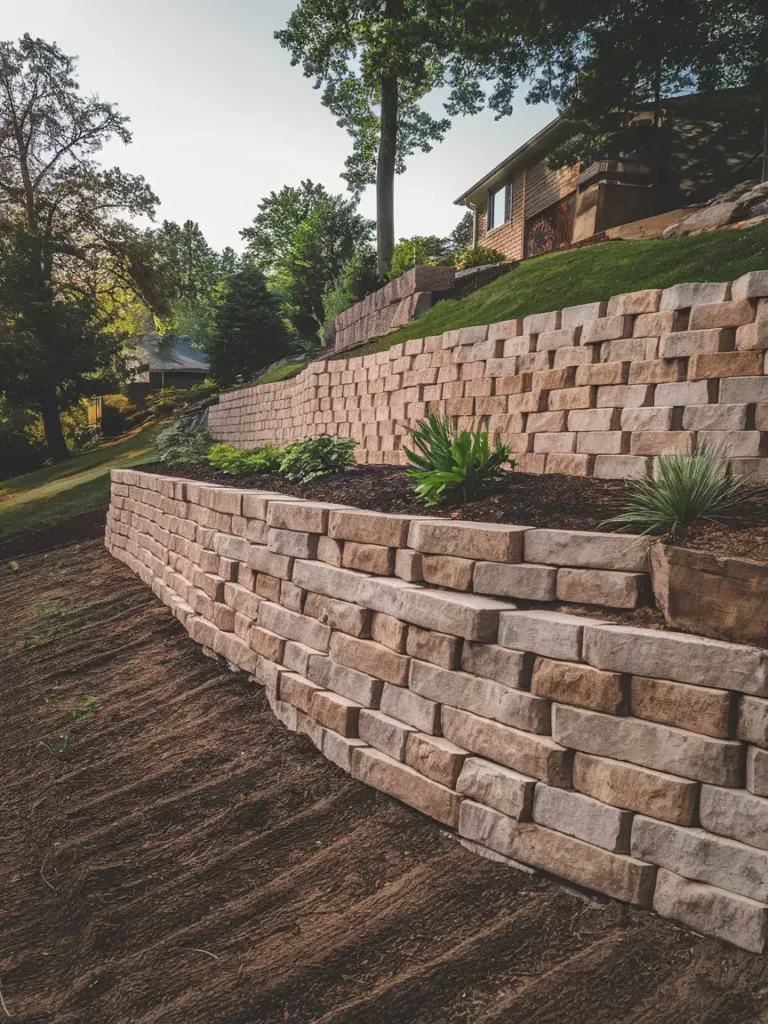
Stone gardening goes beyond simply covering bare soil. Larger scale stone features, like retaining walls, raised bed borders, and stepping stone pathways, bring structure and permanence to a yard that loose gravel or rock alone cannot achieve.
A gardening wall built from stacked stone or dry laid stone blocks serves both a practical and decorative purpose. On sloped yards, a stone retaining wall holds back soil, preventing erosion while creating flat, usable planting areas on what would otherwise be an unusable incline. Even on flat ground, a low stone wall around a raised bed adds visual structure and makes the bed easier to maintain since you are not bending as far to reach the soil.
Stepping stone paths, made from flat, irregular stone pieces, offer a more natural looking alternative to poured concrete walkways. These work particularly well in cottage style or naturalistic gardens where a perfectly straight, uniform path would feel out of place against looser, more organic plantings.
Building a Simple Gardening Wall
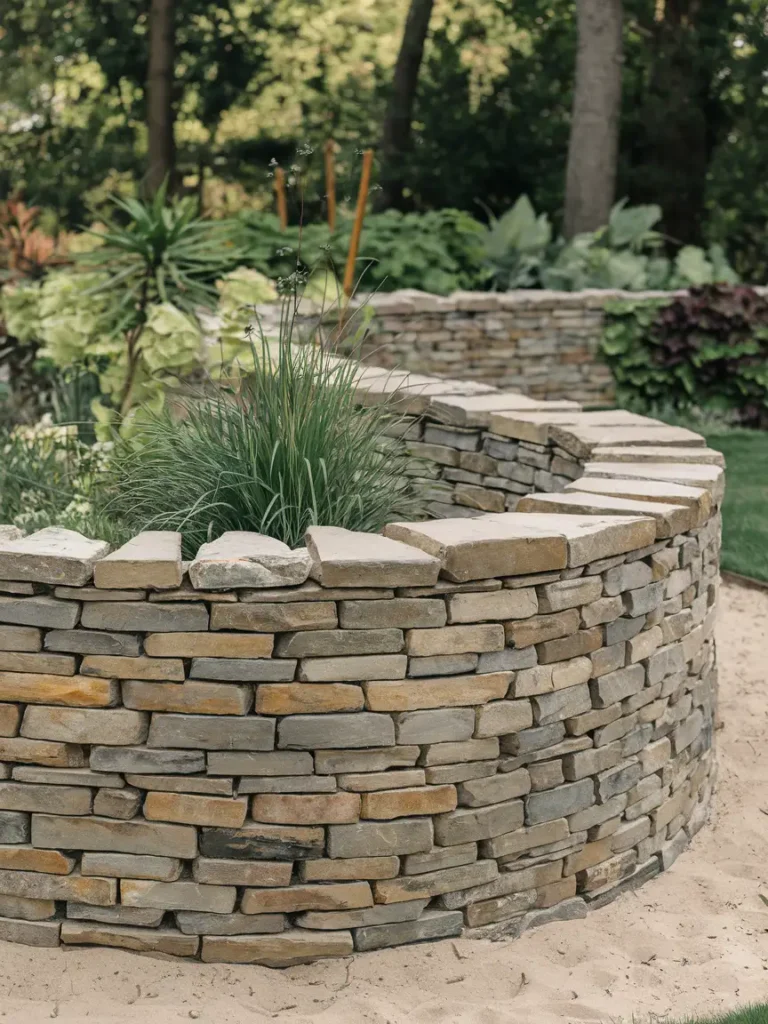
A basic dry stacked gardening wall does not require mortar for most low, residential applications under about two feet in height. Start with a slightly buried first course of larger, flatter stones as your foundation, then stack subsequent layers so that each stone bridges the seam of the two stones beneath it, similar to how bricks are laid.
This overlapping pattern, sometimes called running bond, adds significant stability compared to stacking stones directly on top of one another in straight vertical lines.
When a Wall Needs Professional Help
While a low, short dry stacked wall is a reasonable weekend project for most homeowners, taller walls, generally anything above two to three feet, start to involve real structural considerations like drainage behind the wall and proper base preparation to prevent shifting or collapse.
For taller retaining walls, especially ones holding back a significant slope, consulting a landscaping professional or checking local building codes is worth the extra step before committing to a large stone project.
Comparing Bricks and Pebbles for Garden Borders
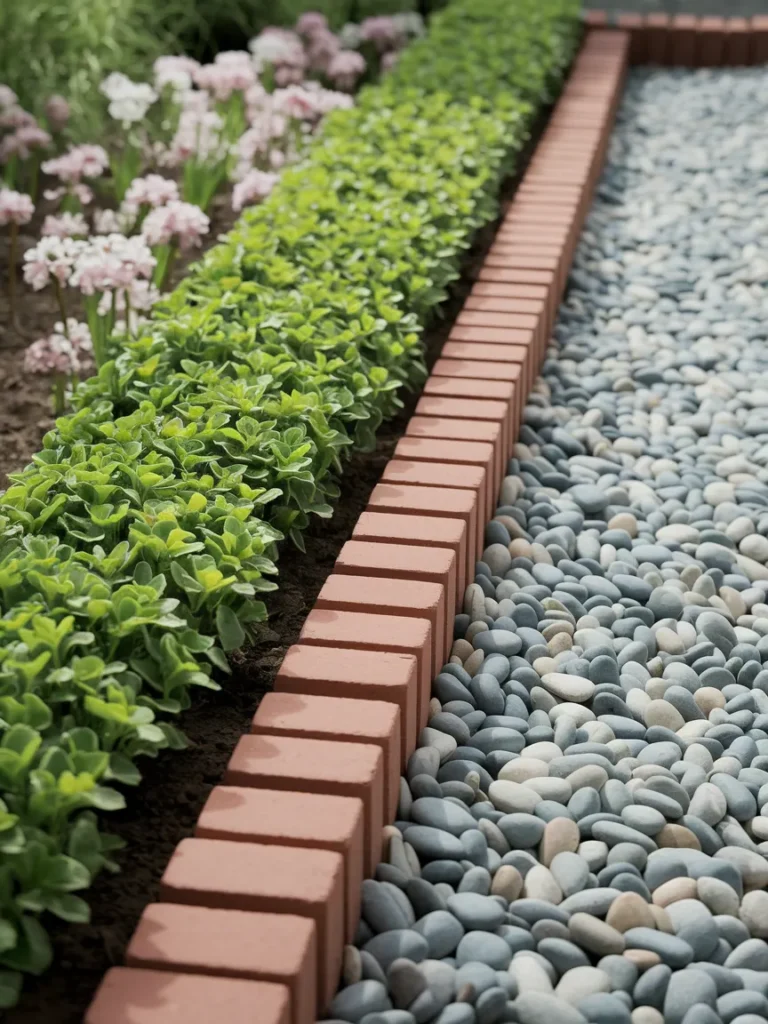
Gardening bricks offer a more structured, uniform alternative to natural stone, and they tend to suit formal or traditional garden styles better than the irregular shapes of natural rock. Bricks laid on their side along a bed edge create a clean, defined border that separates lawn from planting area, which also makes mowing easier since a mower wheel can run directly along the brick edge without needing hand trimming afterward.
Gardening pebbles, smaller and smoother than standard gardening rocks, work well in more refined or decorative applications where a rougher stone would look too heavy. Pebbles are commonly used in container gardens as a decorative top dressing, around water features where their smooth surface complements moving water, and in small accent beds near entryways where a more polished look is desired.
The main tradeoff between bricks and pebbles comes down to function versus flexibility. Bricks create hard, permanent lines that are difficult to reconfigure once installed, while pebbles can be raked, redistributed, or added to easily as a bed evolves.
Choosing Between Bricks and Loose Stone Borders
If you want a border that stays perfectly crisp with minimal maintenance, bricks are usually the better choice since they do not shift, scatter, or need occasional raking back into place the way loose stone can after heavy rain. If you prefer flexibility to adjust bed shapes over time, or you like the more relaxed, natural look of loose stone, pebbles or small gardening rocks offer that adaptability at the cost of slightly more upkeep.
Material Matchup: A Quick Side by Side Look
Sometimes the fastest way to decide between materials is to see them lined up against each other on the things that actually matter. Here is how the main options stack up.
| Material | Best For | Typical Lifespan | Upkeep Level | Cost to Start |
| Gardening Rock | Ground cover, dry beds | 10+ years | Low, occasional raking | Moderate |
| Stone (walls, steps) | Structure, slopes, paths | 20+ years | Very low | Higher |
| Gardening Bricks | Clean, formal edging | 15 to 20 years | Very low | Moderate |
| Gardening Pebbles | Pots, accents, water features | 10+ years | Low, needs occasional raking | Moderate |
| Bamboo | Plant support, screening | 3 to 7 years untreated | Moderate | Low |
| Plastic Liner | Weed control under rock | 5 to 10 years | Low, check for tears | Low |
| Plastic Edging | Budget borders | 5 to 10 years | Low, replace as it fades | Low |
Use this as a starting point rather than a strict rulebook. A yard almost always ends up using two or three of these materials together rather than relying on just one, which is exactly what the rest of this guide walks through.
Bamboo for Gardening Structure and Style
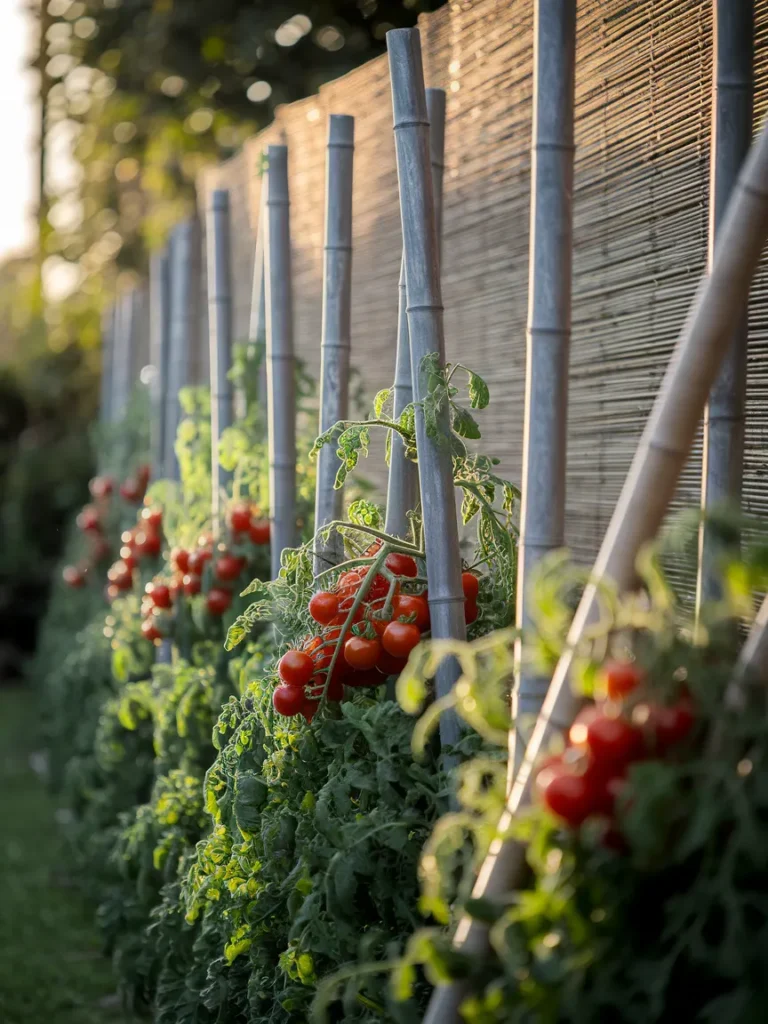
Bamboo for gardening serves a very different purpose than rock or stone, focusing on vertical structure and natural, organic texture rather than ground cover. Bamboo stakes and poles are commonly used to support climbing plants like beans, peas, and tomatoes, offering a renewable, biodegradable alternative to plastic or metal stakes.
Beyond plant support, bamboo fencing and screening panels bring privacy and visual softness to a yard without the heavier, more permanent feel of a wood or vinyl fence. These panels work particularly well paired with stone or rock features, since the contrast between hard stone and soft, textured bamboo creates visual balance rather than a yard that feels entirely made of hard surfaces.
Bamboo edging, sold in rolled sections, offers another border option distinct from brick or stone. This creates a softer, more textured boundary line that suits gardens with an Asian inspired or tropical design direction, where the natural warmth of bamboo fits the overall aesthetic better than the coolness of stone.
Maintaining Bamboo Garden Structures
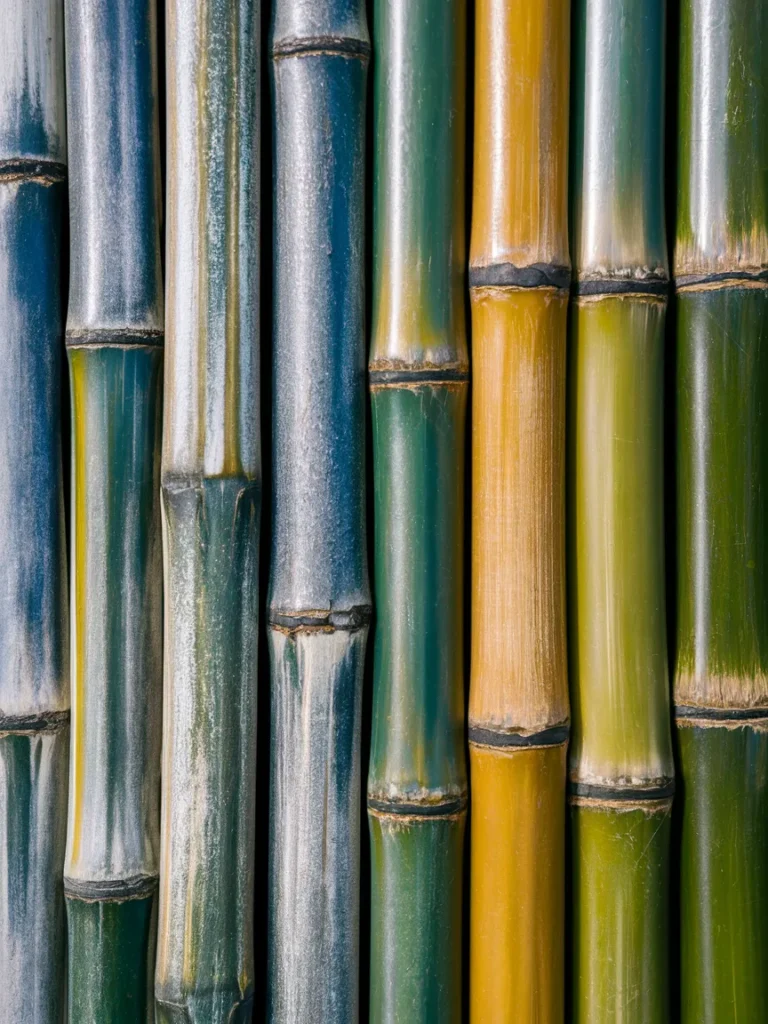
Untreated bamboo will eventually break down when exposed to constant moisture, typically lasting anywhere from three to seven years depending on climate and how much direct ground contact it has. Choosing pressure treated or specifically weather rated bamboo products extends this lifespan considerably. Keeping bamboo stakes and structures elevated slightly off wet soil, rather than buried directly, also slows the rate of decay significantly.
Understanding Gardening Plastic Liner and Sheet Options
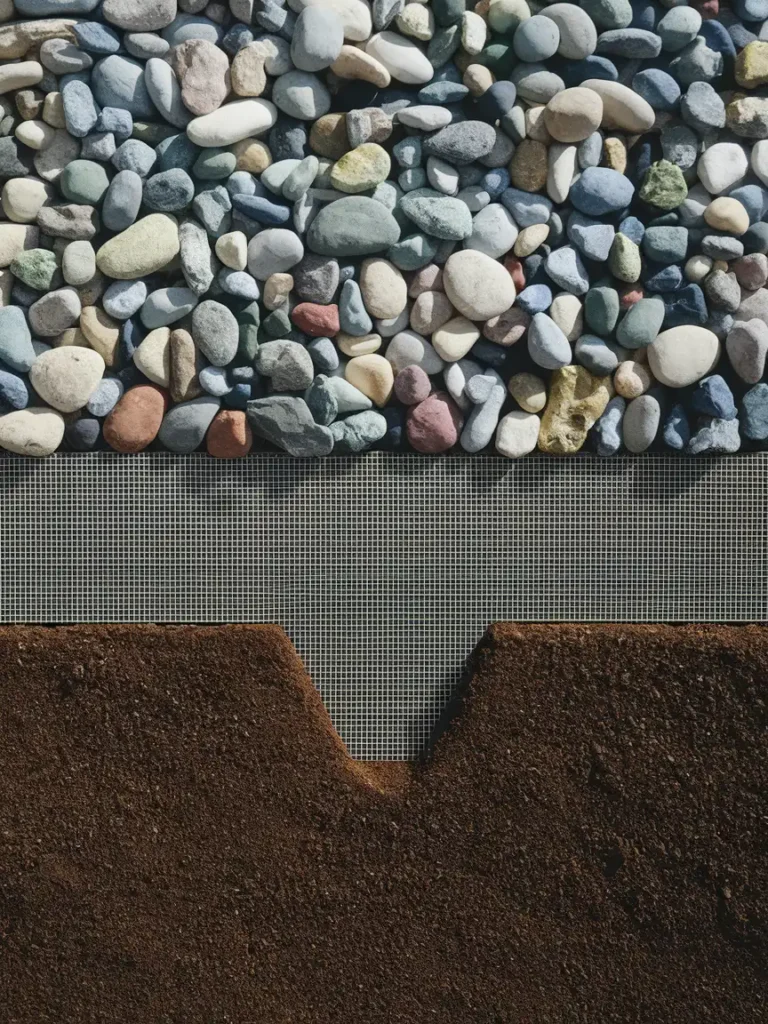
Gardening plastic serves a mostly functional rather than decorative role, though it plays a critical part in how well rock and stone beds actually perform over time. A gardening plastic liner, typically a heavy duty woven or nonwoven landscape fabric, gets installed underneath rock or gravel beds to prevent weeds from pushing up through the stone while still allowing water to drain through into the soil below.
Without a proper liner, even a thick layer of rock will eventually develop weed growth as windblown seeds settle into the gaps between stones and find enough soil contact to germinate. A quality liner blocks this weed growth for years, though it is worth noting that no liner is completely permanent, and most need replacing or patching after five to ten years as they naturally degrade from UV exposure and general wear.
A gardening plastic sheet, distinct from a permeable weed barrier liner, refers to solid, non porous plastic sometimes used for short term weed suppression or soil solarization, a process where clear plastic traps heat to kill weed seeds and pathogens in the soil before planting. Unlike a permeable liner meant for permanent rock bed installation, a solid plastic sheet is generally a temporary tool rather than a long term landscaping material.
Installing Plastic Liner Correctly
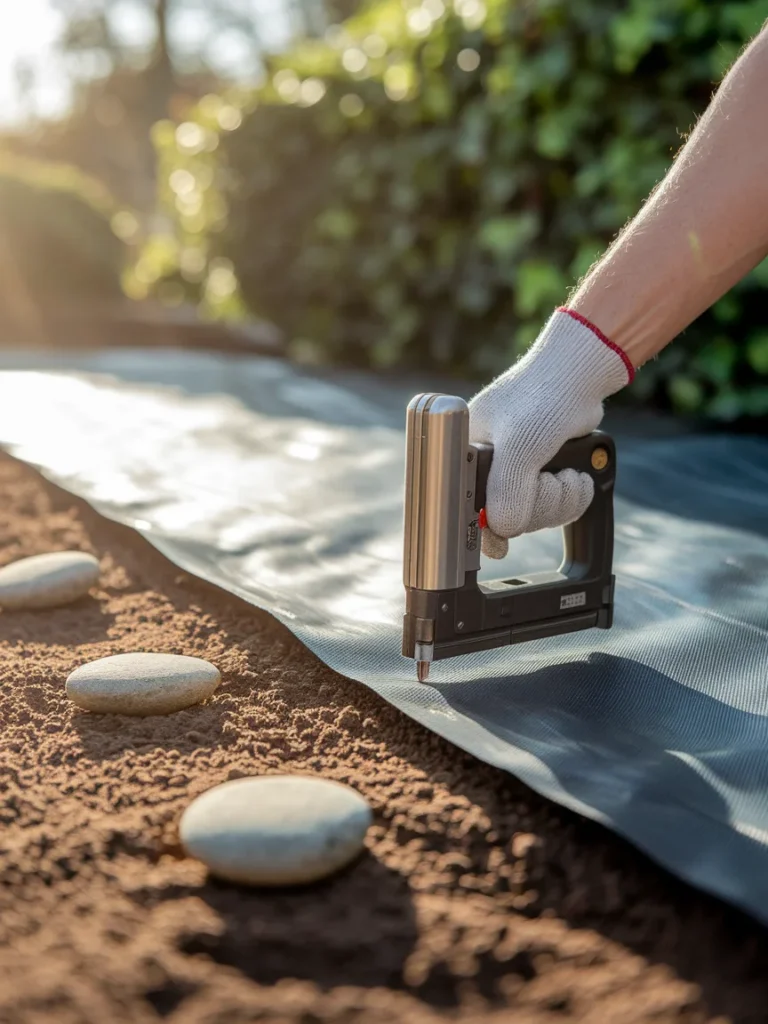
Proper installation makes a significant difference in how well a gardening plastic liner performs. Clear the area of existing weeds and debris first, then lay the fabric flat, overlapping seams by at least six inches if using multiple pieces. Secure the liner with landscape staples every few feet around the perimeter and along seams to prevent shifting when rock is added on top.
Cutting small X shaped slits for individual plants, rather than removing large sections of fabric, keeps weed suppression intact around the rest of the bed while still allowing plants to grow through in specific spots.
Signs Your Liner Needs Replacing
Over time, even a quality liner starts to break down, and catching the signs early saves you from a bigger weeding project later. Watch for small weeds sprouting directly through the fabric rather than around its edges, which usually signals the material itself has thinned or torn in that spot.
Fabric that feels brittle or crumbles slightly when handled has likely degraded from years of UV exposure and is due for replacement. Patching small torn areas with a fresh piece of fabric and a few extra staples is usually enough to extend the life of an otherwise sound liner without redoing the entire bed.
When Plastic for Gardening Makes Sense Versus Natural Materials
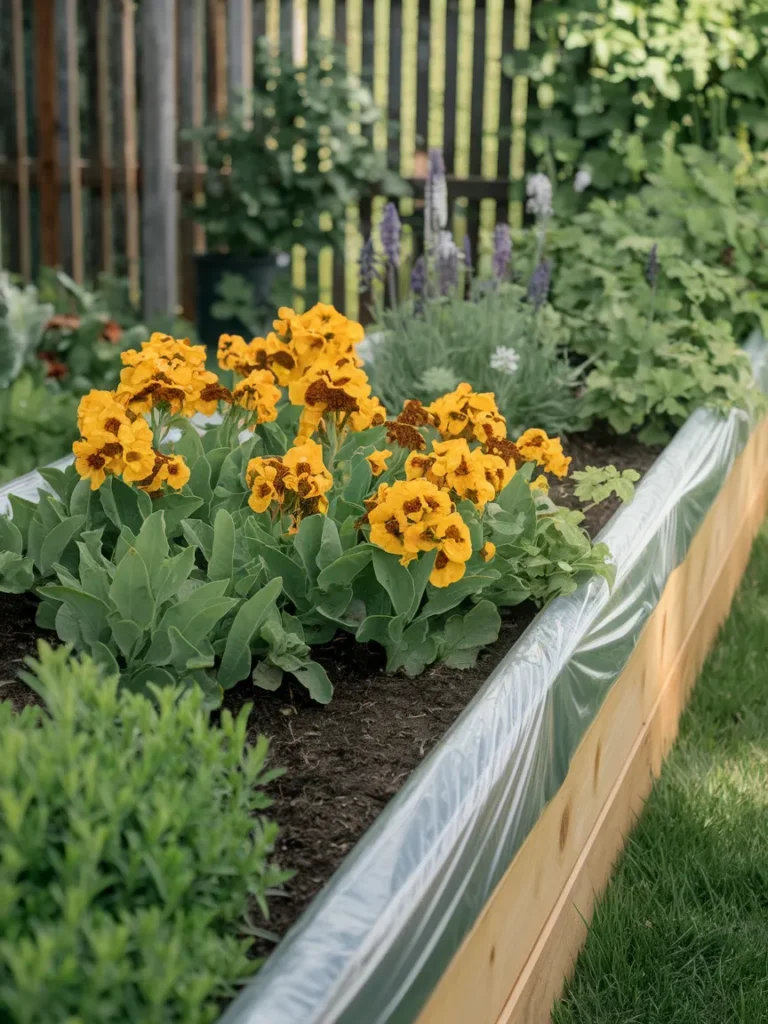
Plastic for gardening extends beyond just liners and sheets into a range of other applications, including raised bed liners, plant pots, edging strips, and even decorative faux rock or faux wood elements designed to mimic natural materials at a lower cost and weight.
Plastic edging strips offer a budget friendly, lightweight alternative to brick or stone borders, and they install quickly without the labor involved in laying individual bricks or stones. The tradeoff is durability and appearance, since plastic edging tends to look less substantial than natural materials and can become brittle or discolored after years of sun exposure, particularly in hot climates.
For raised garden beds, a plastic liner along the interior walls helps protect wooden bed frames from constant soil moisture, extending the life of the wood significantly. This is a case where plastic and natural materials work together rather than competing, with the plastic serving a protective function invisible to anyone looking at the finished bed.
Weighing Plastic Against Natural Material Costs
Plastic products generally cost less upfront than natural stone, brick, or bamboo, which makes them appealing for large scale projects or tight budgets. However, natural materials typically last far longer and rarely need full replacement, while plastic components, especially those exposed to direct sun, often need replacing every five to ten years as they become brittle or fade.
When budgeting a project, it helps to weigh the lower initial cost of plastic against the likelihood of replacement costs down the road.
Combining Materials for a Cohesive Garden Design
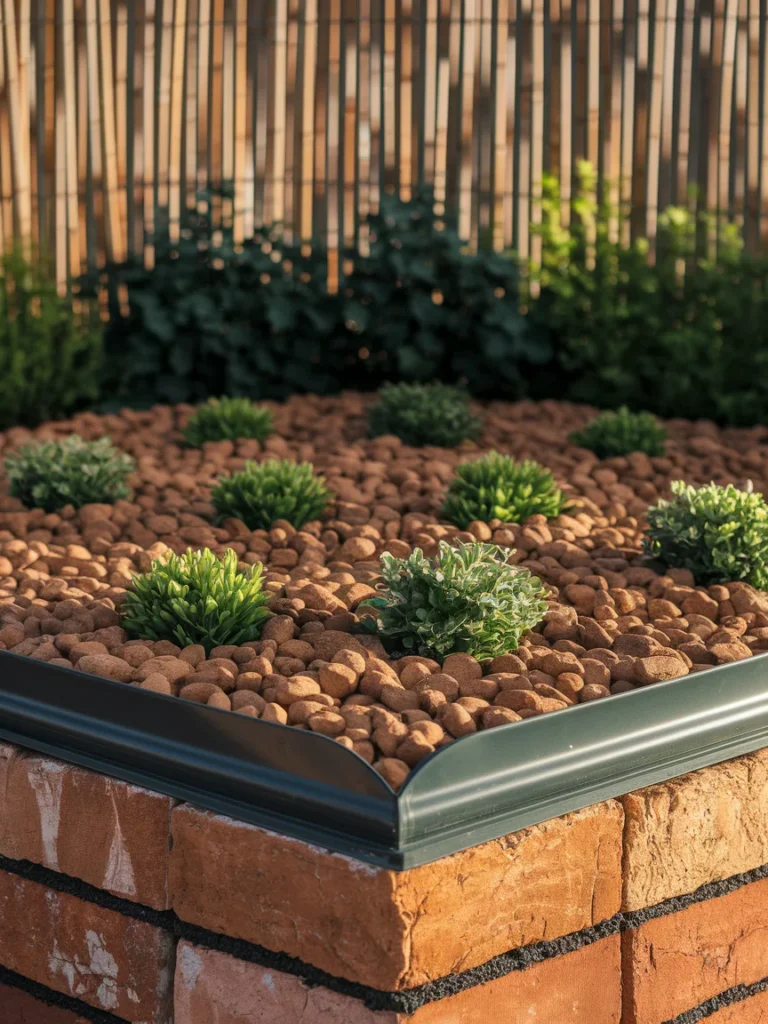
The most successful yards rarely rely on a single material throughout. Combining gardening rock with a stone gardening wall, bamboo accents, and strategic use of plastic liners underneath it all tends to create a more layered, professional looking result than committing to just one material everywhere.
A common effective combination starts with a plastic liner as the functional base layer, gardening rocks or pebbles as the visible ground cover, brick or stone edging to define clean borders, and bamboo elements added for vertical interest or privacy screening where needed. Each material handles the job it does best rather than being stretched to cover a role it was not really designed for.
When mixing materials, consistency in color palette and overall style keeps the combination looking intentional rather than mismatched. A yard using warm toned gardening bricks alongside cool gray gardening rocks can look disjointed unless a repeated element, like a matching bamboo fence stain or consistent plant choices, ties the different textures together.
Planning Material Zones Before You Buy
Before purchasing any material in bulk, it helps to walk your yard and mentally divide it into zones based on function rather than buying one material and figuring out where it goes afterward. Mark which areas need weed control and ground cover, which need structural support like a slope or raised bed, and which are purely decorative accents near a patio or entryway.
This zone based approach prevents the common mistake of overbuying one material for an area where a different one would have worked better and saved money.
Frequently Asked Questions
What is the difference between gardening rocks and gardening pebbles?
Gardening rocks are typically larger and rougher in texture, often several inches across, and work well for ground cover and accent features. Gardening pebbles are smaller and smoother, generally used in more decorative applications like container top dressing or accents near water features.
Do I need a plastic liner under gardening rock?
Yes, in most cases. A gardening plastic liner underneath rock or gravel prevents weeds from growing up through the stone while still allowing water to drain properly, and skipping this step usually leads to weed problems within the first year or two.
How long does bamboo last in a garden?
Untreated bamboo typically lasts three to seven years depending on climate and moisture exposure, while pressure treated or weather rated bamboo products can last significantly longer, especially when kept slightly elevated off wet soil.
Is plastic edging a good alternative to brick or stone borders?
Plastic edging works well for budget conscious or temporary projects since it installs quickly and costs less upfront, but it generally does not last as long as brick or stone and can become brittle or discolored after prolonged sun exposure.
Can I mix gardening rocks with bricks and bamboo in the same yard?
Yes, combining materials often creates a more layered, professional looking result than using a single material throughout, as long as you keep a consistent color palette or repeated design element to tie the different textures together.
Conclusion
Choosing between gardening rock, stone gardening features, bricks, pebbles, bamboo, and plastic really comes down to matching each material to the job it does best in your gardening space. Rock and stone offer durability and low maintenance for ground cover and structural walls. Bamboo brings natural texture and plant support. Plastic liners and sheets handle the practical, unseen work of weed control and moisture protection that keeps everything else performing well above ground.
Start with one area of your yard, decide what that space needs functionally weed control, erosion prevention, or simple visual definition- and choose the material built for that job. From there, you can expand your material choices section by section as the rest of your garden takes shape.