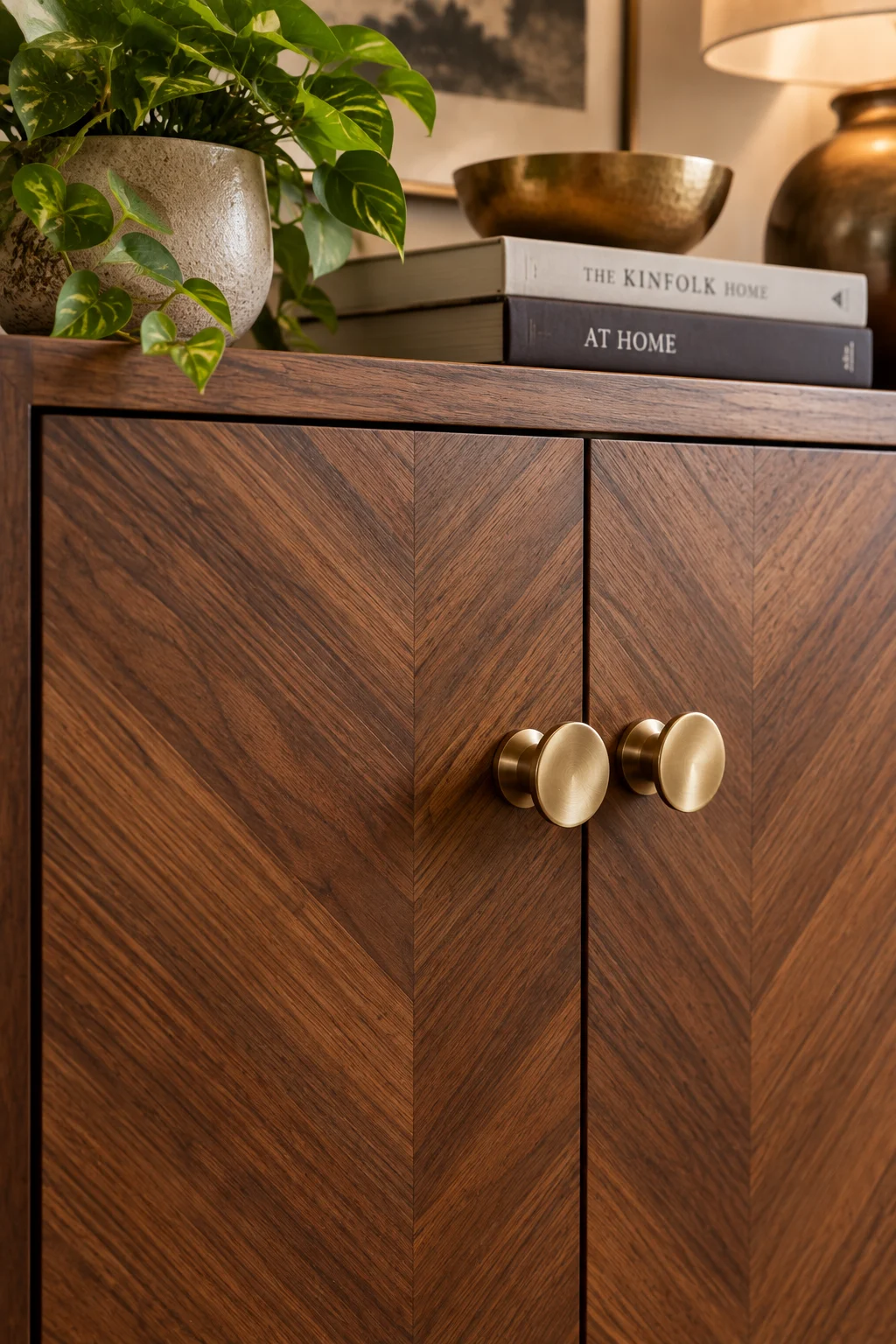
Walk into most living rooms, and you will spot the same problem. There is a cabinet sitting against the wall, either completely bare or cluttered with random items that never quite come together. Living room cabinet decor is one of those details that seems small but actually shapes how the entire room feels.
Done well, it turns a plain piece of furniture into a focal point. Done poorly, or left undone, it can make an otherwise nice room feel unfinished. This guide covers practical, real world ways to style your cabinet, along with ideas for tables for living room decor and side table decor that work together as a complete system rather than scattered pieces.
Whether you have a tall media cabinet, a low credenza, or a small accent cabinet tucked in a corner, the same core principles apply. You are working with layers, height, and a few anchor pieces that tell a visual story. None of this requires an expensive redesign. It mostly comes down to knowing what to place where and why, and understanding a handful of design habits that professional stylists rely on again and again.
By the end of this guide, you will know how to read your cabinet’s existing style, build balanced groupings using the rule of three, coordinate your side tables and other tables for living room decor with the rest of the space, and avoid the most common mistakes that make a styled surface feel off instead of finished.
Why Cabinet Styling Changes the Whole Room
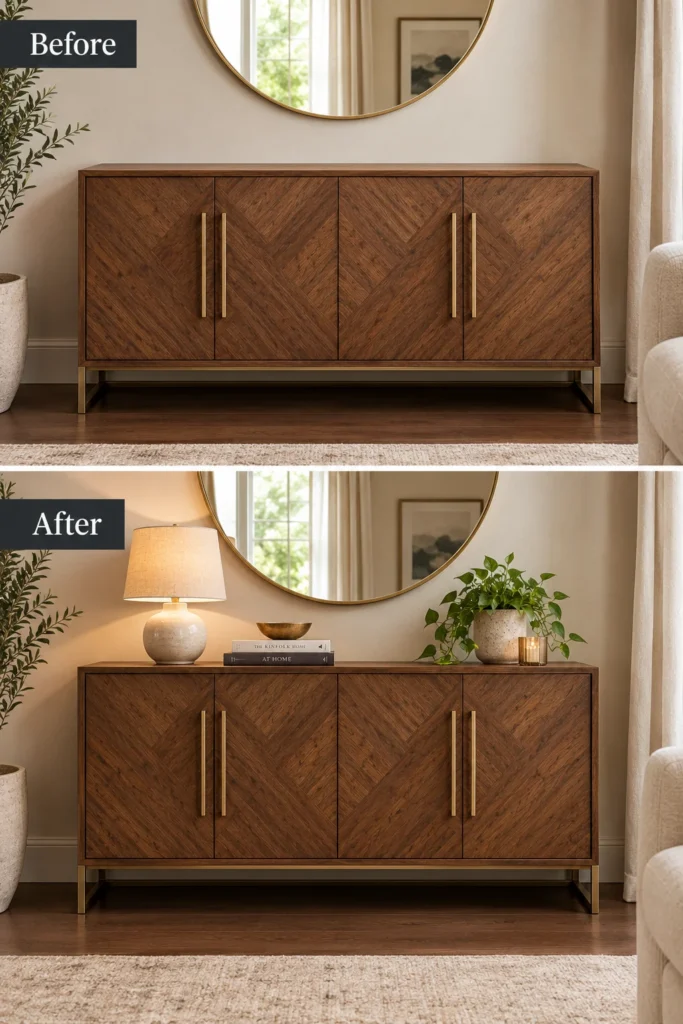
A living room cabinet usually sits at eye level or close to it, which means it gets noticed more than almost anything else in the room besides the sofa. When a cabinet is left bare, the room can feel cold or half finished, even if everything else is decorated well. When it is overloaded with clutter, the room feels busy and stressed instead of calm, especially in college living room decor where space and storage are often limited.
Good living room cabinet decor works almost like a frame around the rest of your furniture. It gives your eye a place to land, adds texture and color at a different height than your seating, and helps tie together the style of the room, whether that is modern, traditional, coastal, or something more eclectic.
There is also a practical layer to this. A cabinet is often used for storage, so the styling needs to leave enough breathing room for the piece to still function. The goal is decor that looks intentional without turning the top of the cabinet into another junk drawer. Think of it as a small, contained design project. It has clear boundaries, a manageable scope, and a big visual payoff for a relatively small amount of effort compared to something like repainting a room or buying new furniture.
Cabinets also tend to hold a room’s personality in a way larger furniture pieces cannot. A sofa or rug sets the base tone, but guests usually stop and look at the objects on a cabinet top. That makes this surface one of the highest impact spots in the entire living room for showing off personal style, travel finds, or meaningful objects.
Start With the Cabinet Itself Before Adding Decor
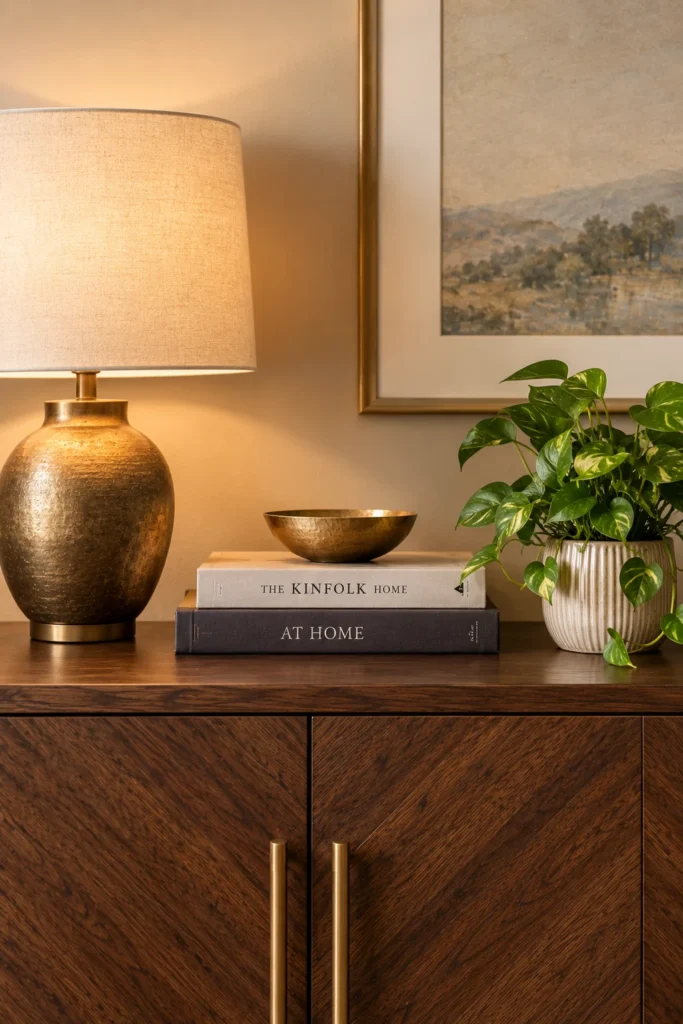
Before adding a single object, look at the cabinet as its own piece. The finish, shape, and hardware all send a signal about the style direction you should follow.
A warm wood cabinet with brass hardware leans traditional or transitional. A matte black or white cabinet with clean lines leans modern. A rattan or woven front cabinet leans coastal or boho. Your decor choices should support that existing style rather than fight against it.
If your cabinet already feels a bit dated or plain, consider small upgrades before you decorate. Swapping out hardware for updated knobs or pulls is one of the cheapest ways to modernize a piece. A fresh coat of paint on an older cabinet can also completely change its role in the room, sometimes making it worth keeping instead of replacing.
Matching Cabinet Style to Room Style
Take a walk around your living room and note the finishes already in play, such as your flooring, your coffee table, and any existing metal accents like light fixtures. Your cabinet decor should pick up at least one or two of those same tones or materials so the piece feels connected to the rest of the room instead of standing alone.
Reading the Cabinet’s Proportions
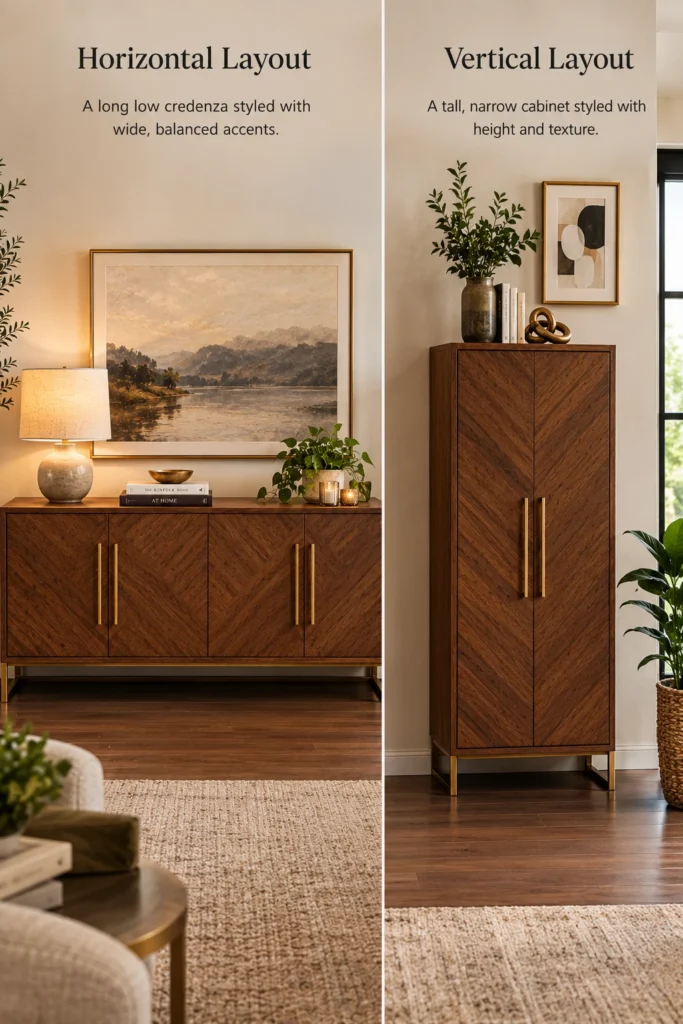
Beyond finish and hardware, pay attention to the actual shape and proportions of the cabinet itself. A long, low credenza style cabinet usually looks best with a horizontal styling approach, meaning wider groupings spread across the surface rather than one tall, narrow cluster.
A tall, narrow cabinet works better with a more vertical arrangement that draws the eye upward, since a wide, spread out grouping can look lost on a smaller top surface. Matching your styling approach to the actual shape of the furniture is a simple step that a lot of people skip, and it makes a noticeable difference once you start paying attention to it.
The Rule of Three for Cabinet Top Styling
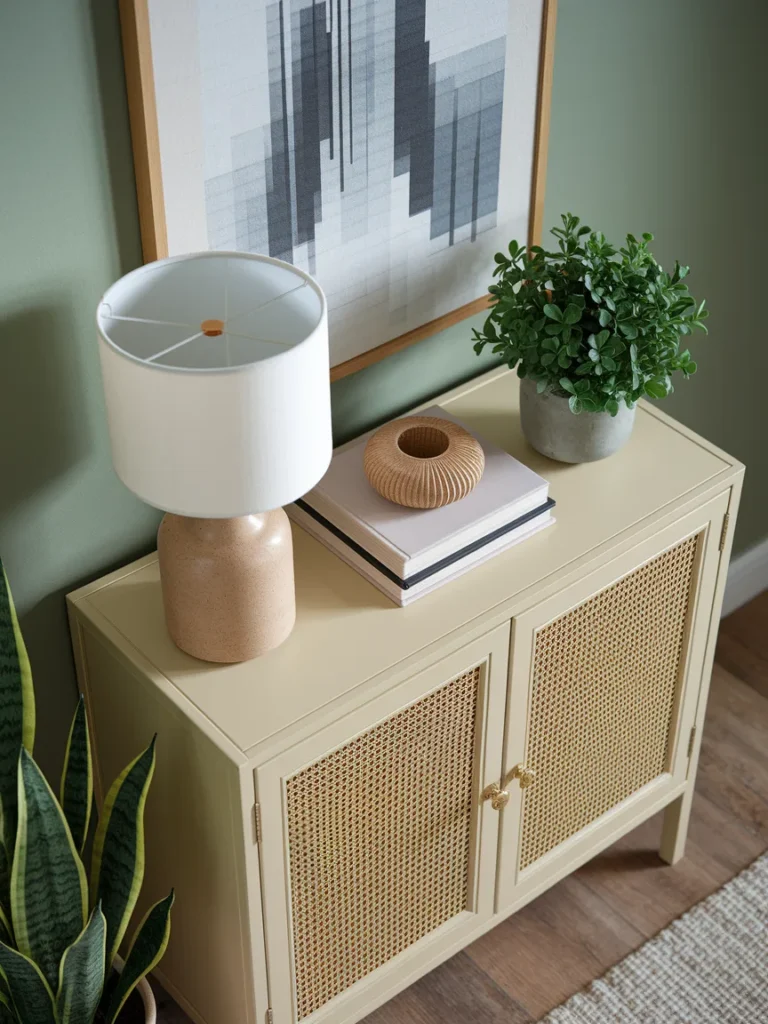
One of the easiest tricks for living room cabinet decor is grouping items in odd numbers, usually three. Odd numbered groupings tend to look more natural and less stiff than pairs, which is part of why designers rely on this so heavily.
A simple three piece grouping might include a lamp for height, a stack of books or a decorative box for mid level interest, and a small plant or sculptural object for a soft, organic touch. The key is variation. You want different heights, different shapes, and at least one item with texture, like a woven basket or a ceramic vase, so the grouping does not feel flat.
Avoid lining items up in a straight row like soldiers. Instead, let them overlap slightly or sit at slightly different depths on the cabinet surface. This creates a more layered, collected look rather than something that feels staged straight out of a catalog.
Building Height Variation
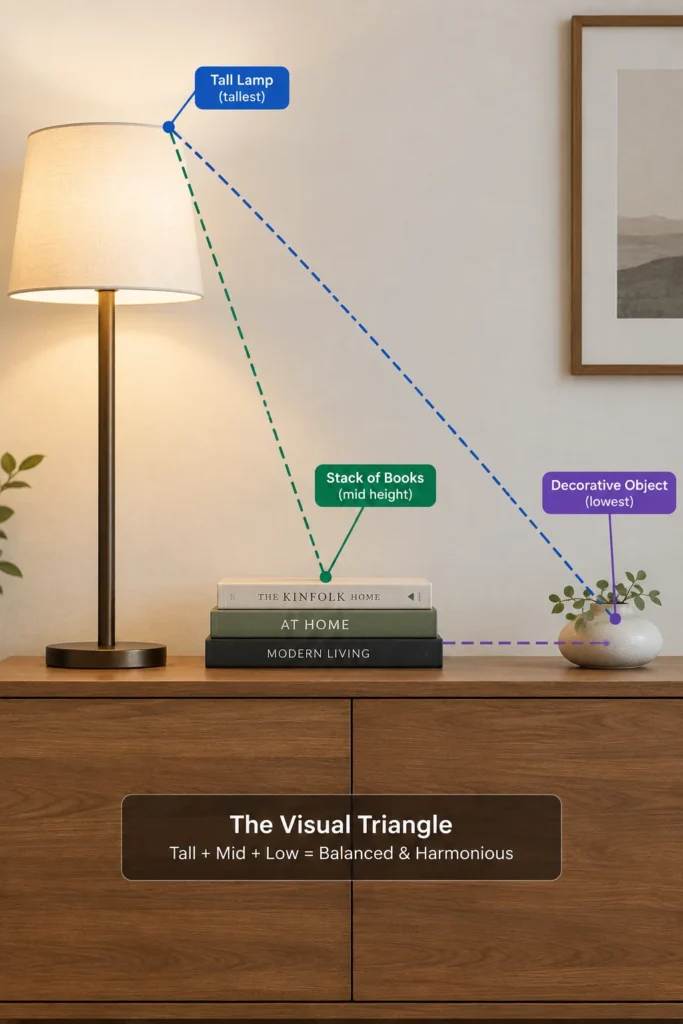
Height is one of the most overlooked parts of styling a cabinet top. If everything sits at the same height, your eye has nowhere interesting to travel. A lamp or a tall vase gives you a high point. A stack of two or three books gives you a mid point. A low dish or small object gives you a base point. Together, these create a natural visual triangle that feels balanced without looking planned.
Working With Longer Cabinets
If your cabinet is on the longer side, a single grouping of three items often is not enough to fill the space without looking sparse. In these cases, create two smaller groupings instead of one large one, positioned toward each end or at roughly the one third and two thirds points along the cabinet. Leave the center area more open, especially if the cabinet sits behind a sofa or below wall art, since a busy center can compete with whatever is above or behind it.
Layering With Books, Boxes, and Trays
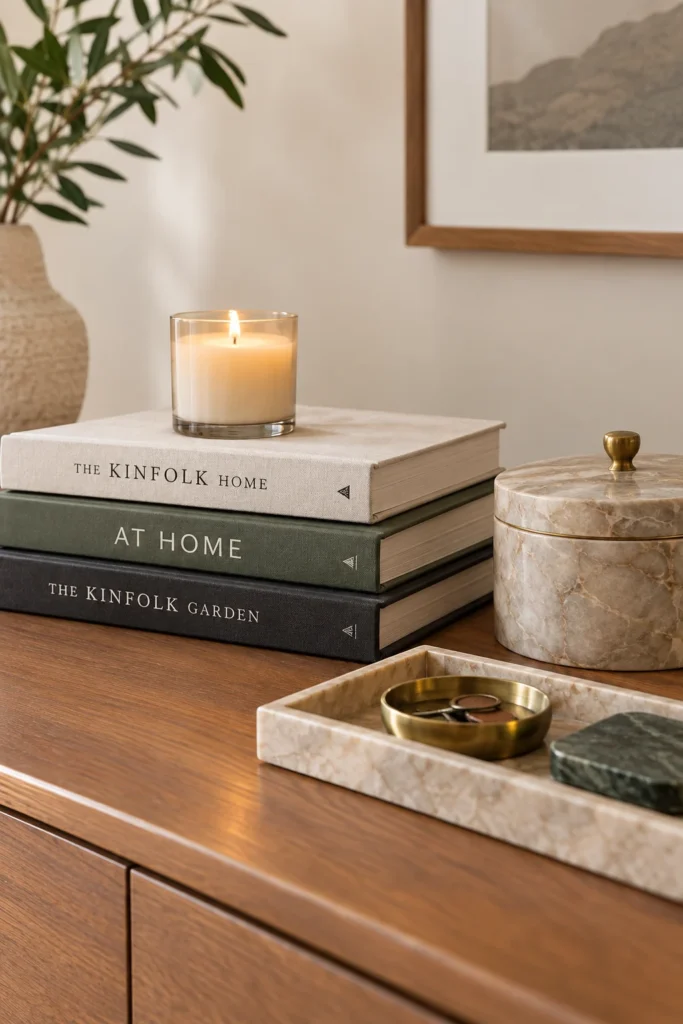
Books are one of the most underused decor tools for a living room cabinet. Beyond adding color and texture, they also function as a base to elevate smaller objects, which adds even more height variation to your styling.
Stack books horizontally in groups of two or three, and choose covers with colors or spines that either match your room’s palette or provide a deliberate pop of contrast. A small object like a candle or a miniature sculpture placed on top of the stack adds another layer of interest without taking up much space.
Decorative boxes and trays serve a similar purpose while also offering hidden storage. A lidded box can hold remote controls or coasters out of sight, while a tray helps group smaller items together so they read as one cohesive vignette instead of scattered clutter. This is especially useful if your cabinet doubles as a spot for everyday items like keys or mail.
Trays are worth calling out on their own because they solve a specific styling problem. When several small objects sit directly on a cabinet surface without any grouping element, they can look accidental, almost like they were set down and forgotten. Placing those same objects on a single tray instantly makes them read as a deliberate collection instead. This trick works just as well on a coffee table or side table as it does on a cabinet.
Side Table Decor Ideas Living Room Pieces Actually Need
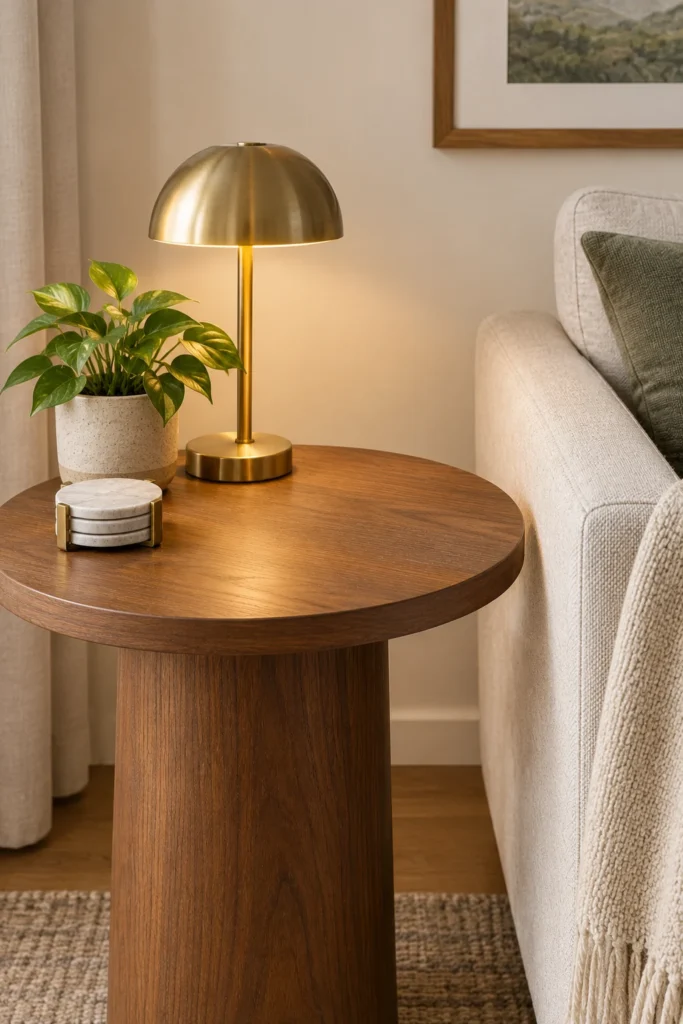
Cabinets rarely stand alone in a living room. Most spaces also include one or more side tables, and coordinating your side table decor ideas with your cabinet styling creates a much more finished, intentional look throughout the room.
The biggest mistake people make with side tables is overcrowding them. Because a side table sits right next to where people are sitting, it usually needs to handle a practical function, like holding a drink or a phone, in addition to looking nice. A good rule is to limit side table decor to two or three items maximum, leaving enough open space for actual use.
A small lamp is almost always a strong anchor piece for a side table, both for the light itself and for the height it adds to the room. Pair it with one smaller item, such as a small plant, a coaster stack, or a single meaningful object like a framed photo. Keep the scale appropriate to the table size. A side table that is only twelve or fourteen inches wide cannot handle a large sculptural vase without looking cramped.
Coordinating Side Tables With Your Cabinet
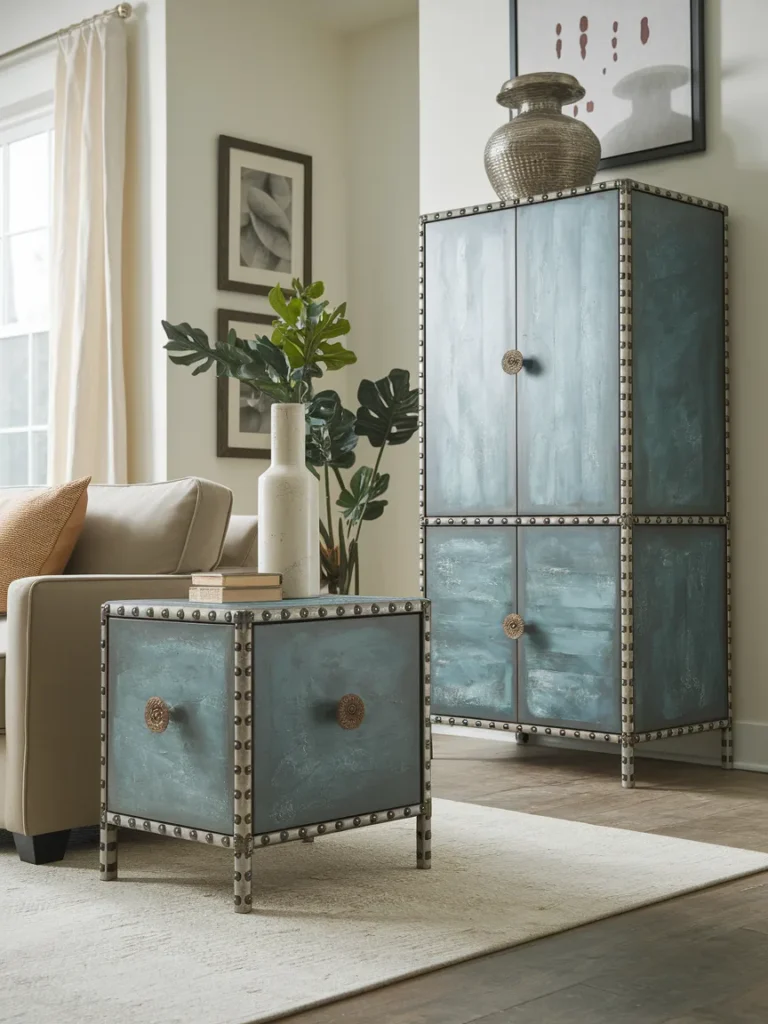
If your cabinet and side tables are visible in the same sightline, repeat at least one material or color between them. This could mean matching metal finishes, like brass or black, or repeating a color from your cabinet decor in a smaller way on the side table. This kind of repetition is what makes a room feel curated rather than like each surface was decorated separately with no relationship to the others.
Choosing Lamps for Side Tables
Lighting deserves its own mention because it does double duty as both function and decor. A side table lamp should generally sit around twenty six to thirty two inches tall when placed next to a standard height sofa arm, so the shade sits roughly at or just below eye level for someone seated. A lamp that is too short gets visually lost next to the sofa, while one that is too tall can feel top heavy on a small table. Beyond height, warm toned bulbs almost always read as cozier and more flattering in a living room than cool white light, which tends to feel more clinical.
Choosing the Right Tables for Living Room Decor
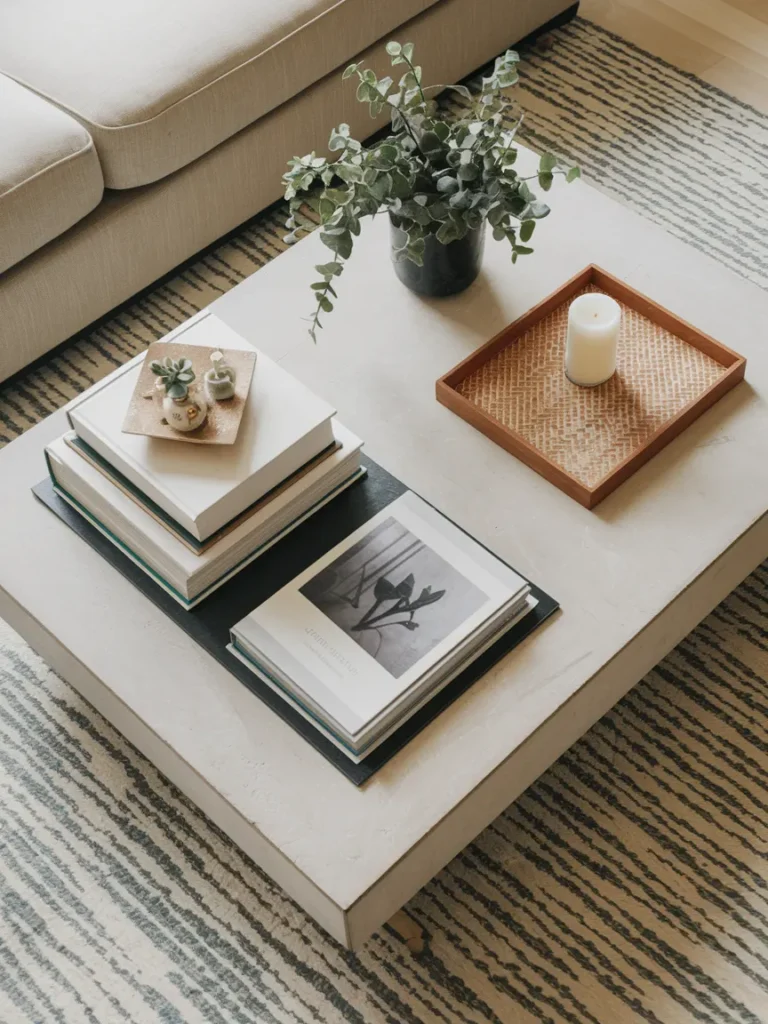
Beyond side tables, many living rooms include a coffee table, console table, or accent table that also plays into the overall decor plan. When people search for tables for living room decor, they are often trying to figure out how these pieces should work together rather than looking at any single table in isolation.
A coffee table typically needs a slightly different approach than a side table because it is viewed from above by people sitting around it. Layering here often works well with a stack of large format books, a low tray holding a candle or small dish, and one organic element like a small plant or a bowl of natural objects such as stones or dried branches. Keep the center of the table relatively open if people actually use it for setting down food or drinks.
Console tables, often placed behind a sofa or along a wall, function similarly to a cabinet top in terms of styling. They can handle a taller lamp, a piece of art leaning against the wall behind it, and a grouping of smaller objects in front, creating good depth from front to back.
Matching Table Height to Decor Scale
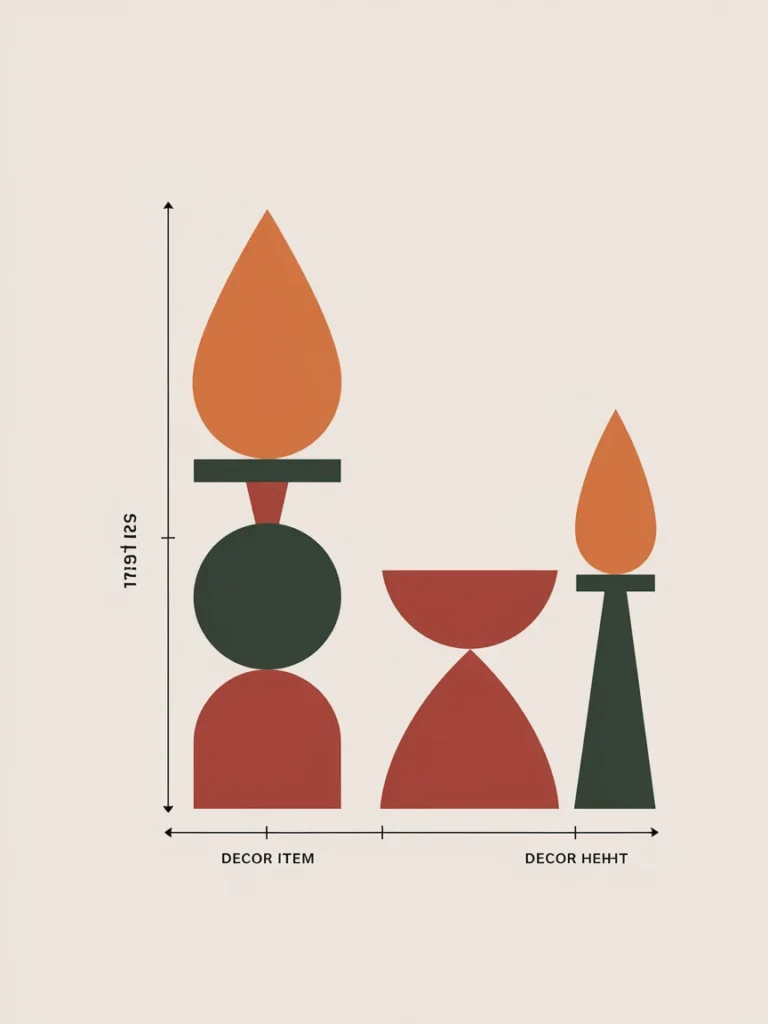
One detail that gets overlooked constantly is scale relative to table height. A low coffee table needs shorter, flatter decor so it does not feel top heavy or unstable looking. A taller console or cabinet can handle taller lamps and vertical decor pieces without looking out of proportion. Before buying new decor, measure your table height and keep your tallest piece to roughly one third of that height as a starting guideline.
Accent Tables and Multi Purpose Surfaces
Smaller accent tables, sometimes placed near a reading chair or in an empty corner, offer a chance to introduce a bit more personality since they are not always in the direct sightline of the main seating area. These smaller surfaces are a good spot for sentimental objects, a small stack of magazines, or a single striking piece like a sculptural candle holder. Because the surface area is limited, resist the urge to add more than one or two items so the table does not feel crowded.
Adding Color and Texture Without Overdoing It
A common issue with living room cabinet decor is either playing it too safe, resulting in a bland, all neutral arrangement, or going too far in the opposite direction with too many colors and patterns competing for attention.
A reliable approach is to choose one accent color and repeat it in small doses across two or three objects, such as a vase, a book cover, and a small decorative box. This creates a sense of intention without requiring everything to match perfectly.
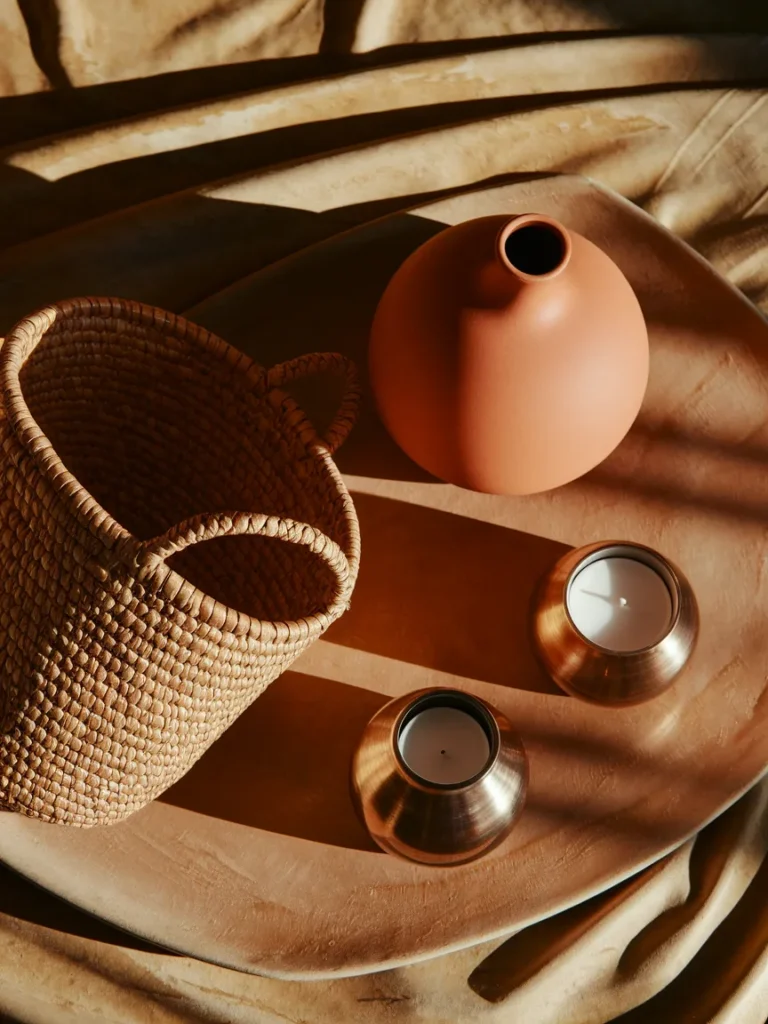
Texture matters just as much as color. Mixing materials like wood, ceramic, woven fiber, and metal keeps a vignette from feeling flat, even if the color palette stays fairly neutral. A woven basket next to a smooth ceramic vase and a metal candle holder gives you three different textures using a fairly simple, restrained color scheme.
Pattern can be introduced carefully as well, usually through one item rather than several. A single patterned box, a printed book cover, or a textured ceramic piece adds visual interest without overwhelming the rest of the grouping. When in doubt, choose one pattern and let everything else around it stay simple.
Seasonal and Rotating Decor Strategies
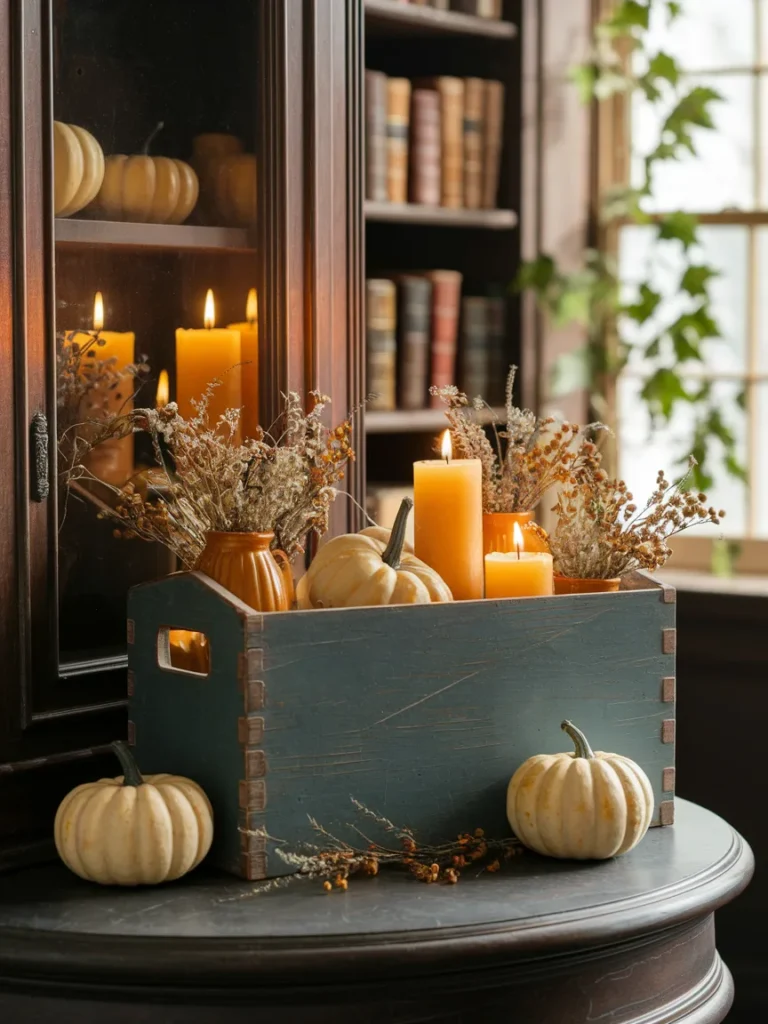
One advantage of cabinet and table decor over larger furniture choices is how easy it is to refresh. Unlike a sofa or a rug, small decor pieces can be swapped out seasonally without much cost or effort, which keeps a room feeling current throughout the year.
Consider keeping a small rotating collection of items, such as a few different vases, a couple of seasonal candles, and one or two artwork pieces that can lean against the wall behind your cabinet. Swapping even two or three items between seasons is often enough to make a room feel refreshed without a full redecorating project.
This approach also makes it easier to incorporate holiday or seasonal touches without the space looking overly themed the rest of the year. A neutral base setup with a few swappable accent pieces gives you flexibility while keeping the overall living room cabinet decor consistent.
A practical way to manage this is to store your rotating pieces in a labeled bin or box by season, so swapping decor takes minutes instead of becoming a search through closets. Many people find that once they build a small rotating collection, refreshing a room becomes something they actually look forward to instead of a chore.
Common Mistakes to Avoid
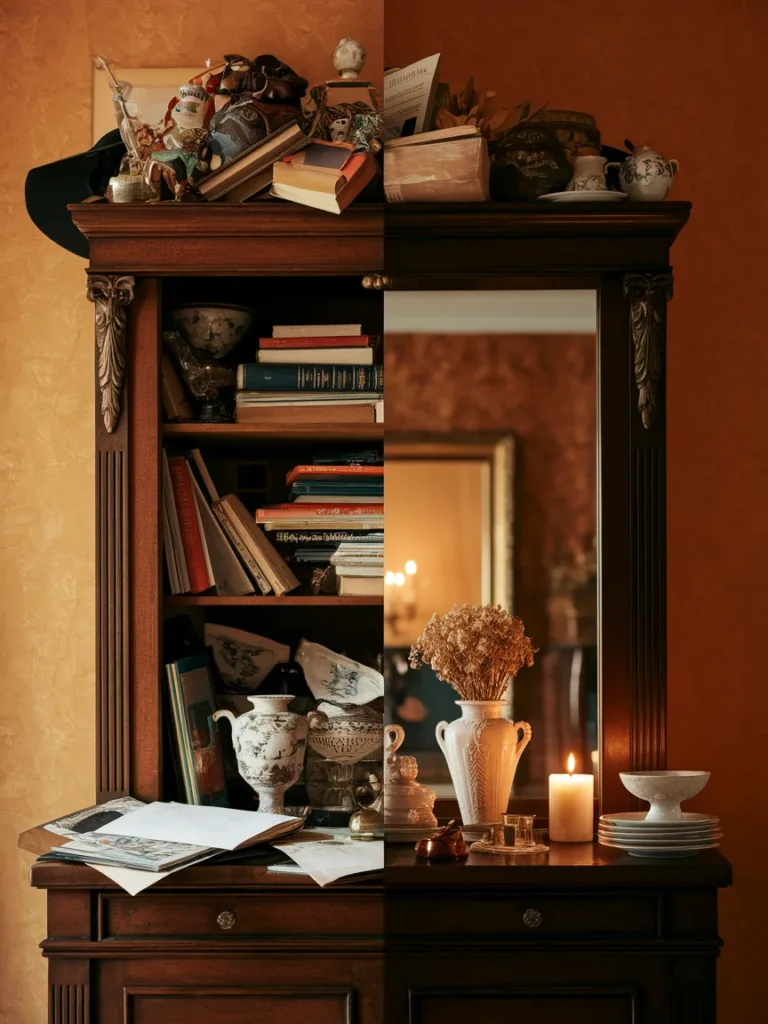
Even with good intentions, a few recurring mistakes show up again and again in living room styling.
Overcrowding is the most common issue. When every inch of a cabinet or table surface is covered, the eye has nowhere to rest and the space feels cluttered rather than curated. Leave visible empty space between groupings, generally at least a third of the surface area.
Ignoring scale is another frequent problem. A tiny object on a large cabinet gets lost, while an oversized piece on a small side table looks awkward and unbalanced. Always consider the size of the furniture piece relative to the objects placed on it.
Matching everything too closely can also backfire. A cabinet top where every item is the same color and material tends to look flat and one dimensional. A bit of contrast, whether in color, texture, or shape, keeps the arrangement feeling alive.
Forgetting function causes problems down the line. If your side table decor leaves no room for an actual drink or your cabinet styling blocks the doors from opening, the arrangement will not last because it fights against how the room actually gets used every day.
Finally, decorating in isolation is a mistake that is easy to make but simple to fix. Styling a cabinet without ever stepping back to look at it alongside your side tables, coffee table, and console can result in a room where every surface looks fine on its own but does not feel connected as a whole. Periodically stand back and view the room as one complete picture rather than judging each surface separately.
Frequently Asked Questions
How do I style a living room cabinet that has no shelves on top?
Group two or three items with varying heights, such as a lamp, a stack of books, and a small plant or decorative object. Keep the arrangement toward one side or in a loose triangle rather than centered and evenly spaced, which tends to look more natural.
What is the rule of three in decorating?
The rule of three refers to grouping decor items in odd numbers, usually three, since odd numbered groupings tend to look more visually balanced and natural than pairs or symmetrical arrangements.
How much space should I leave empty on a cabinet or table?
A good guideline is to leave at least a third of the surface visibly empty. This prevents the arrangement from feeling overcrowded and gives the eye a place to rest between grouped items.
Should side tables match the living room cabinet exactly?
They do not need to match exactly, but repeating one element, such as a wood tone or metal finish, helps tie the pieces together so the room feels cohesive rather than like separate, unrelated purchases.
How often should I update my cabinet and table decor?
There is no strict rule, but many people refresh a few smaller pieces seasonally, swapping two or three items every few months, while keeping larger anchor pieces like lamps in place year round.
Conclusion
Styling a living room cabinet does not require an expert eye or a large budget. It comes down to a few repeatable principles, including grouping items in odd numbers, varying height and texture, leaving breathing room, and connecting your cabinet decor to your side tables and other tables for living room decor throughout the space. These simple living room decor principles can help even a basic cabinet become one of the most interesting parts of the room.
Start with one grouping on your main cabinet, then work outward to your side tables and any additional surfaces. Small, consistent choices across the room add up to a space that feels finished, personal, and genuinely put together. Take it one surface at a time, and you will be surprised how quickly the whole room starts to feel pulled together.