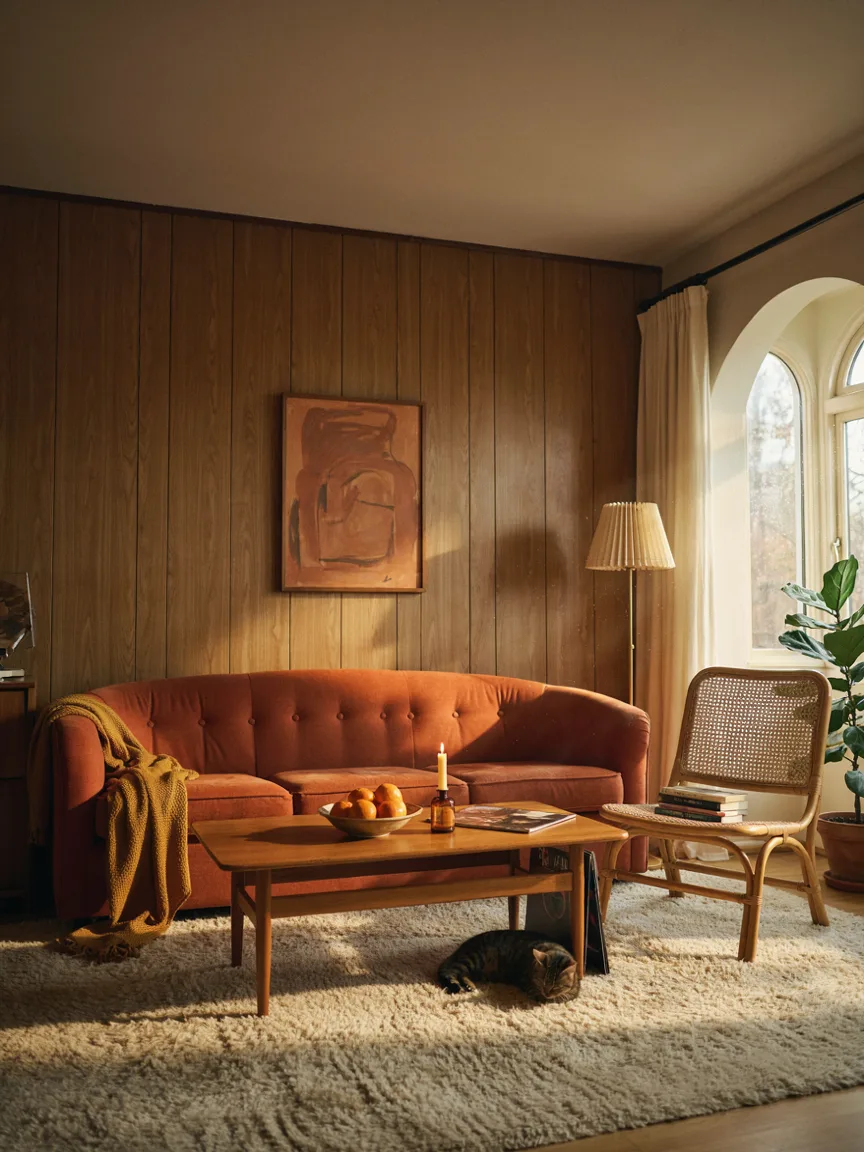
The seventies keep coming back for a reason. Scroll through any design feed right now, and you will spot burnt-orange sofas, curved rattan chairs, and walls painted in warm, earthy tones that feel more inviting than anything sold in a big-box store today. A well done 70s decor living room is not about turning your home into a costume set. It is about borrowing the warmth, texture, and confidence of that era and mixing it into a space that still feels livable in the present day.
This guide covers everything you need to pull the look off, from the color palette and materials that define the decade to specific furniture and lighting choices, plus how to avoid the look tipping into theme party territory. You will also find budget friendly ways to get started, tips for mixing old and new pieces, and answers to the questions people ask most often when they start hunting for that retro groove. By the end, you will have a clear roadmap instead of a scattered mood board.
What Defines 70s Living Room Decor
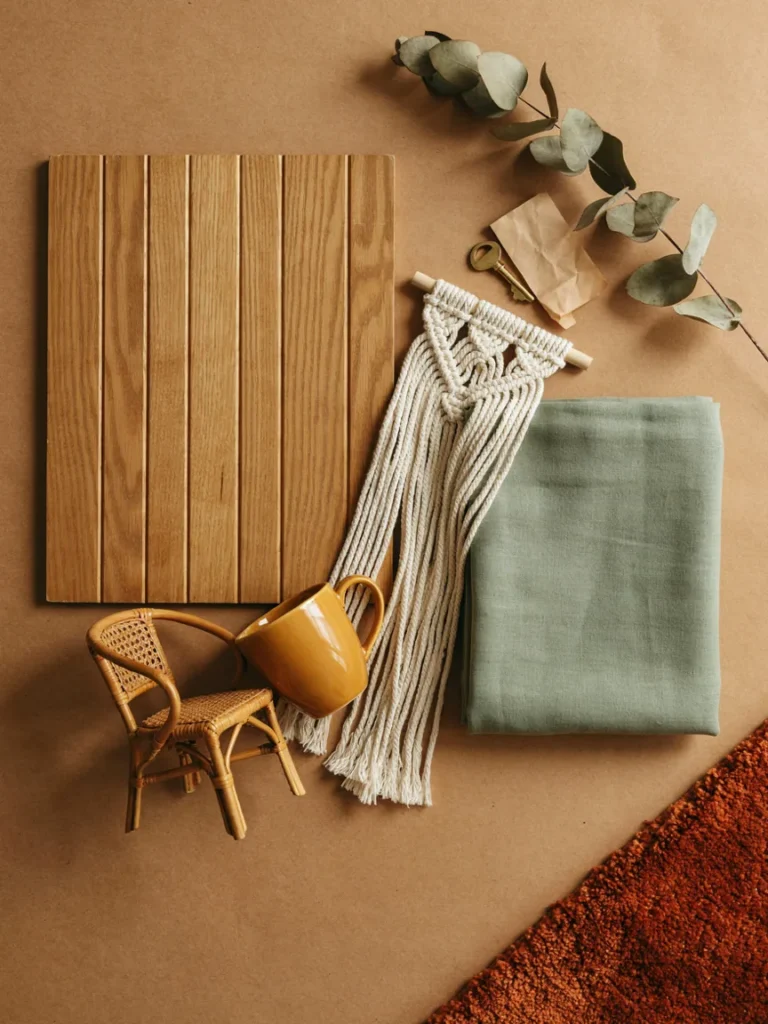
Before shopping for anything, it helps to understand what actually made a seventies living room look like a seventies living room, rather than just vaguely old fashioned. This makes it easier to separate authentic retro details from newer trends, much like the distinction between classic Paris decor living room ideas and modern interpretations of Parisian style.
The decade moved away from the cool, formal tones of the sixties and leaned hard into warmth. Earth tones dominated nearly every surface, walls, upholstery, carpet, and even kitchen appliances came in shades of burnt orange, avocado green, harvest gold, and deep brown. Natural materials mattered too. Wood paneling, wicker, rattan, cork, and macrame all showed up constantly, giving rooms a textured, organic feel that plastic and chrome era design never had.
Pattern was everywhere, and it was bold. Geometric prints, psychedelic swirls, and oversized florals covered curtains, upholstery, and wallpaper without much hesitation. Furniture got low and curvy, with deep sunken seating, modular sofas, and chairs shaped more like sculptures than traditional seats. Lighting leaned toward globe pendants, floor lamps with tripod legs, and the occasional lava lamp for good measure.
Put together, living room 70s home decor reads as warm, textured, a little maximalist, and unmistakably confident. Nothing about it apologizes for being loud.
It is worth noting that the decade was not one single unified look either. Early seventies interiors leaned closer to the psychedelic patterns and bold color saturation of the late sixties, while the back half of the decade shifted toward the earthier, more natural palette most people picture today when they hear the phrase seventies style.
Most modern reinterpretations borrow from that second half, which is part of why the look tends to feel warm and grounded rather than loud in a jarring way. Knowing that distinction can help if you are hunting for reference photos or vintage pieces and keep finding images that feel more sixties than seventies.
Choosing the Right Color Palette for 70s Decor in a Living Room
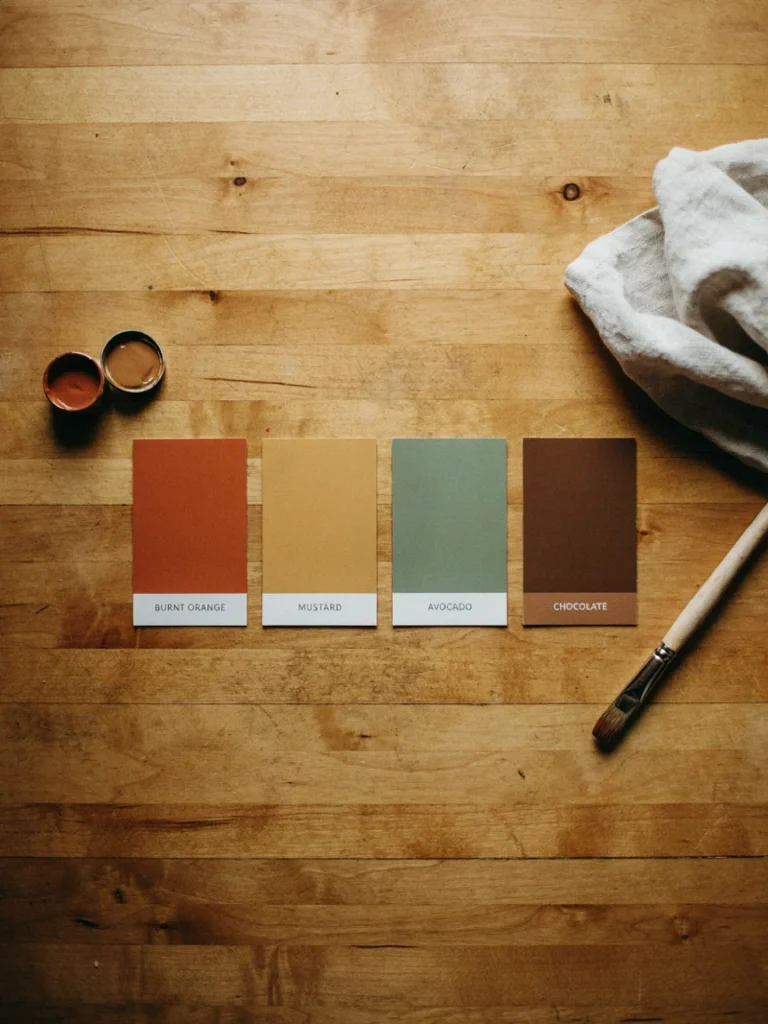
Color is the fastest way to signal the decade, and it is usually the first decision worth making before anything else in the room.
Earth Tones as Your Foundation
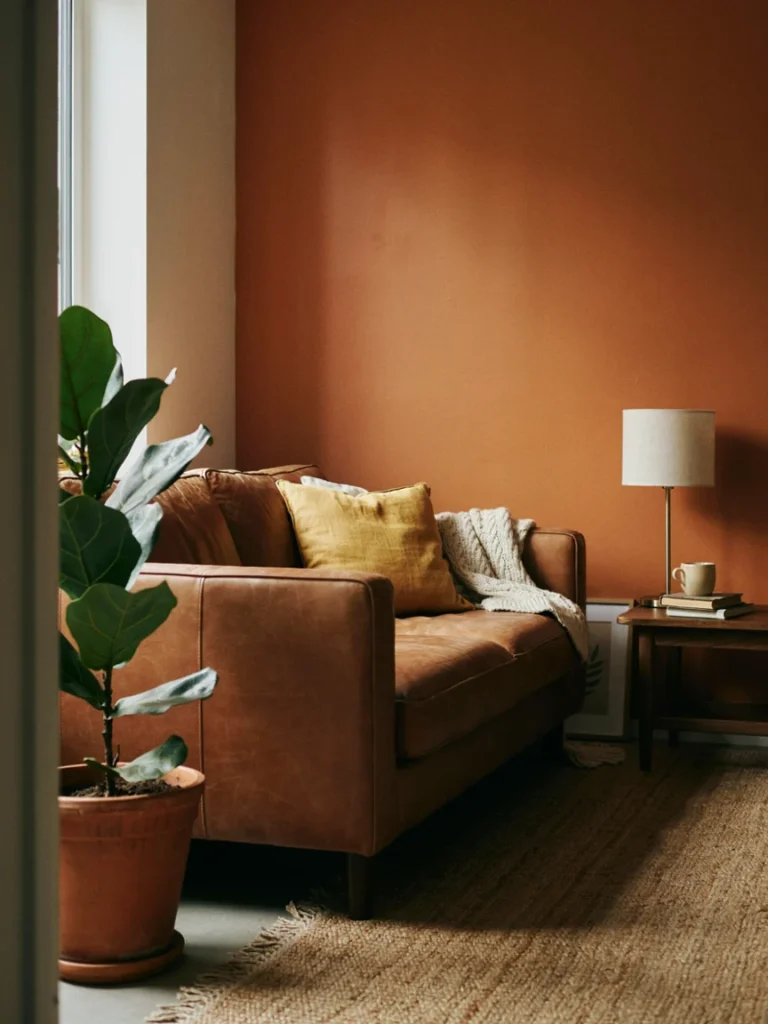
Burnt orange, mustard yellow, avocado green, and chocolate brown form the backbone of most seventies rooms. These colors work particularly well because they are warm and grounding rather than harsh, which is part of why so many people are drawn back to them after years of stark white and grey interiors.
A common approach is to pick one earth tone as a dominant wall or sofa color, then layer in the others through smaller pieces like pillows, a rug, or a lamp. Going all in on every earth tone at once in equal measure can start to feel heavy in a smaller room, so balance is worth thinking about even within a genuinely bold palette.
A useful trick when working with this palette is to think in terms of a sixty thirty ten split, roughly sixty percent of the room in your dominant earth tone, thirty percent in a secondary supporting tone, and the remaining ten percent reserved for a bolder accent color or a metallic finish like brass. This kind of structure keeps a maximalist palette from tipping into visual chaos, even though nothing about the individual colors themselves is quiet or restrained.
Adding Warmth with Wood Tones
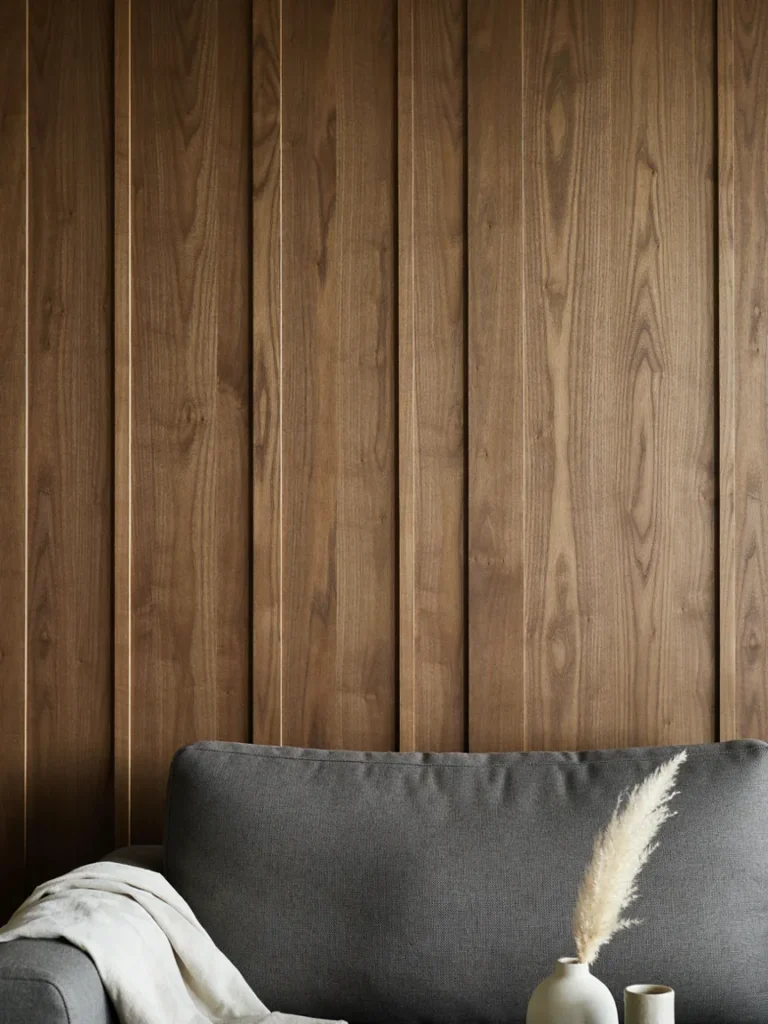
Wood paneling was a defining feature of the decade, and while a full wall of paneling is a bigger commitment than most modern homeowners want, a single accent wall, a wood framed mirror, or wood trimmed furniture brings that same warmth without the full renovation. Look for medium to dark wood tones rather than the pale, bleached finishes common in more modern styling, since that contrast is part of what makes the look read as authentically seventies.
Where to Use Bold Accent Colors
![Deep teal accent chair with brass lamp beside it in an otherwise neutral toned living room corner, single bold pop of color, warm ambient lighting]](https://stylishhomecorner.com/wp-content/uploads/2026/09/Deep-teal-accent-chair-with-brass-lamp-beside-it-in-an-otherwise-neutral-toned-living-room-corner-single-bold-pop-of-color-warm-ambient-lighting-768x1024.webp)
Not every surface needs an earth tone. A single bold accent, a deep teal chair, a mustard yellow door, or a burnt orange lamp, gives the eye a place to land and keeps an otherwise neutral toned room from feeling flat. This is also where you can safely experiment, since a lamp or accent chair is far easier to swap out later than an entire wall color.
Metallic finishes deserve a mention here too, since brass in particular was everywhere during the decade, on lamp bases, drawer pulls, picture frames, and table legs. A few brass accents scattered through a room add warmth and a slight sense of glamour without competing with the earth tone palette the way a second bold color choice might. If you are unsure where to start with accents, brass hardware and a single warm colored lamp are usually the safest, lowest risk entry points.
Furniture and Materials That Make 70’s Living Room Decor Feel Authentic
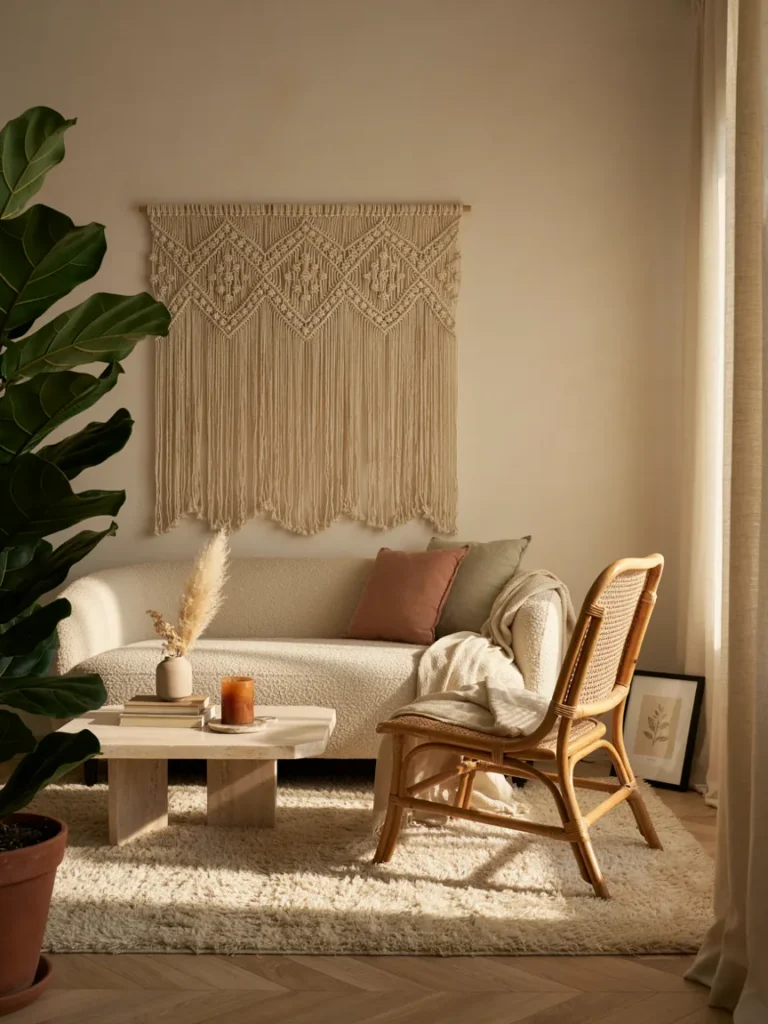
Color sets the tone, but furniture is what actually makes a room read as seventies rather than simply warm toned.
Curved and Low Profile Seating
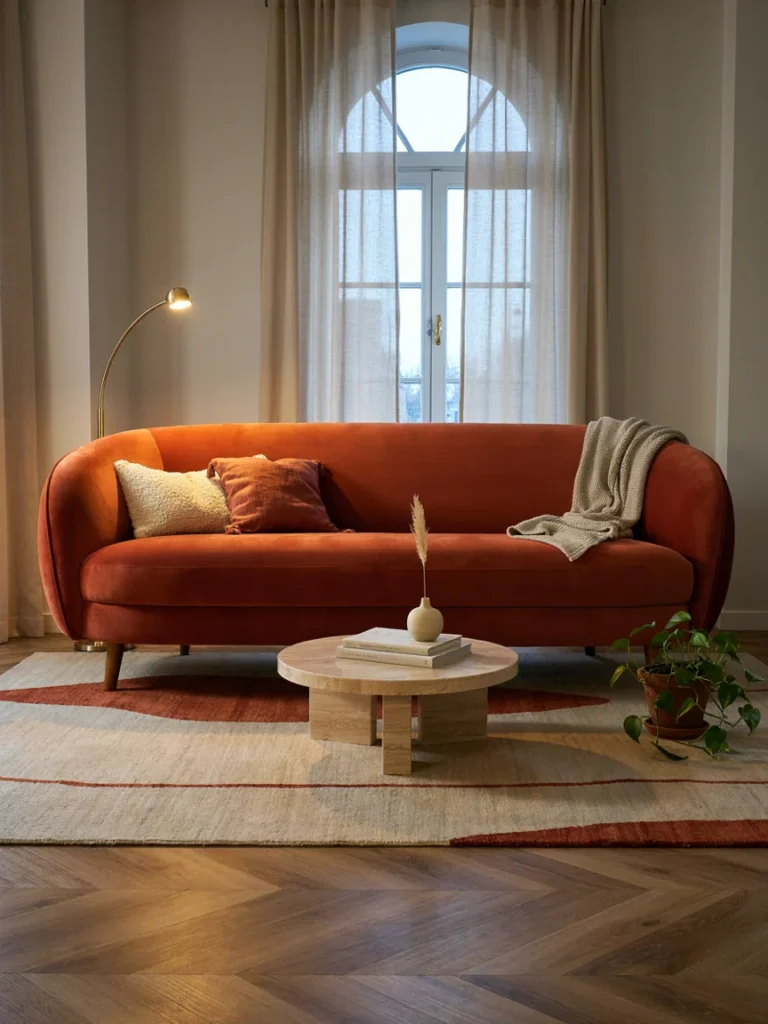
Sofas and chairs from this era favored soft, rounded silhouettes over sharp, boxy lines. Sunken conversation pits, low slung sectionals, and armless lounge chairs all fall into this category. If a full sunken seating area is not realistic in your space, a single curved sofa or a low profile armchair goes a long way toward getting that same relaxed, sculptural feel.
Natural and Textured Materials
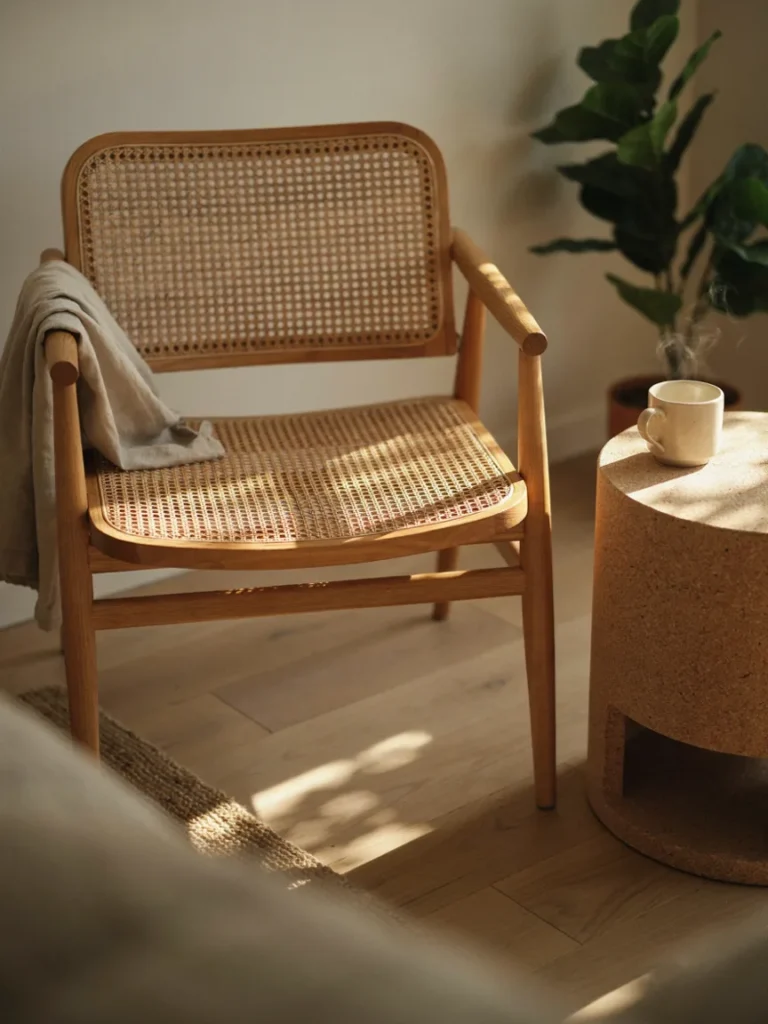
Rattan, wicker, cane, and cork show up constantly in genuine seventies interiors, often as accent chairs, room dividers, or headboard style pieces adapted for the living room. These materials bring texture that flat modern furniture usually lacks, and they pair especially well with the era’s warm color palette.
Cork in particular is worth a second look, since it tends to get overlooked in favor of the more obvious rattan and wicker choices. A cork accent wall or a set of cork coasters and trays brings the same organic, slightly rough hewn texture without needing to hunt down a specific piece of furniture, and it is one of the more affordable materials on this list to work into a room.
Statement Rugs
![Thick shag rug in warm burnt orange tone layered under a wooden coffee table, plush texture visible, cozy living room floor styling, soft natural light]](https://stylishhomecorner.com/wp-content/uploads/2026/09/Thick-shag-rug-in-warm-burnt-orange-tone-layered-under-a-wooden-coffee-table-plush-texture-visible-cozy-living-room-floor-styling-soft-natural-light-768x1024.webp)
A thick shag rug in a warm tone is one of the single most recognizable pieces of 70s decor for a living room. Beyond the visual impact, shag rugs genuinely soften a room acoustically and underfoot in a way that flat weave rugs cannot match. If a full shag carpet feels like too much, a smaller shag area rug layered under a coffee table does most of the same visual work.
Maintenance is worth planning for if you go this route, since shag fibers trap dust and debris more readily than flat weave rugs and typically need more frequent vacuuming with a setting designed for high pile carpet. Households with pets or young children may find a mid pile shag rug, rather than the deepest, shaggiest options, strikes a better balance between authentic texture and practical upkeep.
Wall Art and Macrame
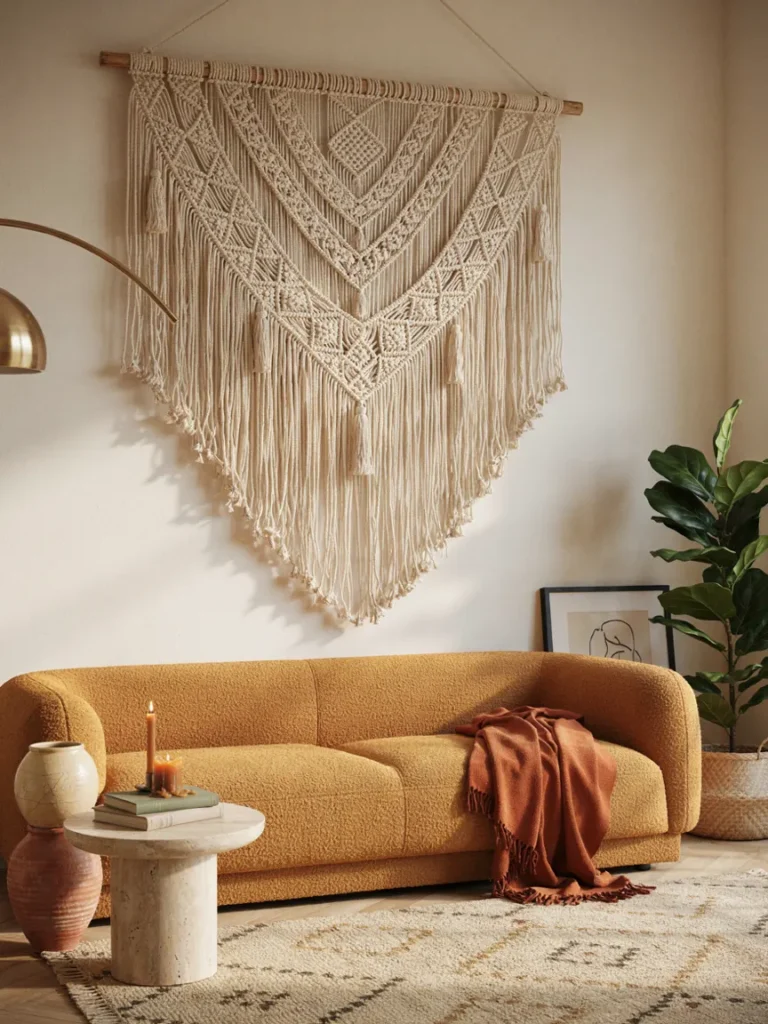
Large scale wall hangings, particularly macrame in cream or natural rope tones, were everywhere during the decade and remain some of the easiest, most affordable ways to add texture to a blank wall. Framed geometric prints and sunburst mirrors are strong runner up choices if macrame feels too crafty for your taste.
Lighting Ideas for a 70s Decor Living Room
![Amber glass globe pendant light hanging over a coffee table, warm smoked glass tones, cozy evening ambiance, retro lighting fixture close up]](https://stylishhomecorner.com/wp-content/uploads/2026/09/Amber-glass-globe-pendant-light-hanging-over-a-coffee-table-warm-smoked-glass-tones-cozy-evening-ambiance-retro-lighting-fixture-close-up-768x1024.webp)
Lighting does a huge amount of work in setting the mood for this style, often more than people expect before they try it.
Globe pendants and glass fixtures. Smoked glass, amber glass, and simple round globe shapes hanging from a cord are instantly recognizable seventies lighting choices, and they work well as a single statement fixture over a coffee table or in a reading corner.
Tripod floor lamps. A wood or brass tripod base topped with a drum shade brings height and a bit of sculptural interest to a corner that might otherwise sit empty.
Warm bulb temperature. Regardless of fixture style, warm toned bulbs matter enormously here. A cool white LED bulb in a beautifully chosen vintage fixture will still make the whole room feel wrong, while a warm amber toned bulb pulls even a modern fixture closer to the right mood.
A lava lamp, used sparingly. This is the one item that can tip a room from stylish retro into novelty territory if overused. One lava lamp on a side table or bookshelf reads as a playful nod to the era. Several scattered around the room starts to feel more like a themed party than a living room.
Layering matters as much as fixture choice. A single overhead light, no matter how well chosen, rarely captures the mood on its own. Seventies interiors tended to rely on several smaller light sources scattered around a room rather than one dominant ceiling fixture a floor lamp in one corner, a table lamp near the seating area, and a pendant over a specific zone like a reading nook or game table.
Recreating that layered approach, even with modern fixtures, does more to set the right atmosphere than any single statement piece could manage alone.
Blending Vintage and Modern Pieces in Living Room 70s Home Decor
![Living room mixing a vintage rattan chair with a clean lined modern coffee table and contemporary neutral sofa, balanced blend of retro and current styling, natural daylight]](https://stylishhomecorner.com/wp-content/uploads/2026/09/Living-room-mixing-a-vintage-rattan-chair-with-a-clean-lined-modern-coffee-table-and-contemporary-neutral-sofa-balanced-blend-of-retro-and-current-styling-natural-daylight-768x1024.webp)
Very few people want to live in a room that is one hundred percent authentic to 1975, and that is completely fine. The most successful 70s living room decor today mixes genuine vintage pieces or reproductions with contemporary furniture, so the room feels current rather than like a museum exhibit.
A practical rule of thumb is to keep one or two large pieces, a sofa or a statement rug, firmly in the seventies aesthetic, then let smaller accent pieces, side tables, throw pillows, and lamps, move more freely between styles. This keeps the overall room grounded in the decade without every single object needing to match a specific era.
Mixing textures also helps modernize the look. Pairing a rattan chair with a clean lined modern coffee table, or a shag rug with a simple contemporary sofa, keeps the room from feeling like a period recreation while still pulling clear inspiration from the era. The goal is a room that feels curated rather than costumed, which usually means resisting the urge to buy every seventies specific item you come across at once.
It also helps to think about which rooms in your home already lean traditional or transitional, since those spaces tend to absorb seventies pieces more gracefully than a strictly minimalist or industrial interior would. If your existing furniture already includes some warm wood tones or textured fabrics, a seventies accent piece will likely feel like a natural extension of what is already there rather than a jarring addition. Starting with one piece and living with it for a few weeks before adding more is a good way to judge whether the overall balance still feels right as the room fills in.
Budget Friendly Ways to Get the 70’s Decor Living Room Look
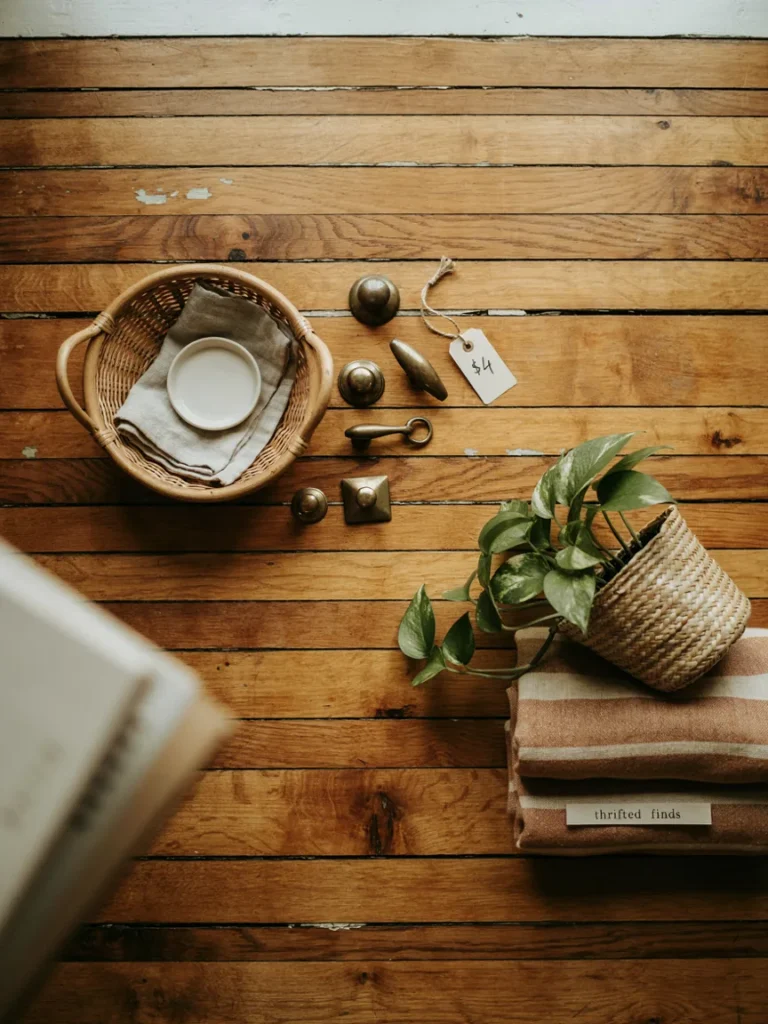
You do not need an antique dealer’s budget to pull this off convincingly.
Shop secondhand first. Thrift stores, estate sales, and online marketplaces are consistently the best sources for genuine seventies furniture, often at a fraction of what a modern reproduction costs. Look specifically for solid wood pieces, since these tend to have held up structurally far better than particleboard furniture from the same era.
Reupholster instead of replacing. A structurally sound but dated sofa can be reupholstered in a bold earth tone fabric for a fraction of the cost of buying new, and it gives you full control over the exact color and pattern.
Start with textiles. Pillows, throws, curtains, and a rug are the cheapest and fastest way to bring seventies color and pattern into a room, and none of them require a permanent commitment the way paint or furniture does.
Paint one wall instead of the whole room. A single accent wall in a deep earth tone delivers most of the visual impact of a fully painted room at a fraction of the time and material cost, and it is far less intimidating to commit to if you are unsure about the color.
Use plants generously. Large leafy plants, particularly in woven or ceramic planters, were a constant in seventies interiors and remain one of the cheapest ways to add life and texture to a room.
Check estate sale listings for structural pieces. Solid wood dressers, credenzas, and bookshelves from the era are often priced well below their reproduction equivalents simply because they are not always labeled or marketed as design pieces. A quick search of local estate sale listings before shopping retail can turn up genuinely well built furniture for a fraction of what a new comparable piece would cost.
Swap hardware before replacing furniture entirely. A dated but structurally sound cabinet or side table can look noticeably more current with new drawer pulls or hinges in a warm brass or matte black finish, which costs far less than buying a new piece outright and takes an afternoon rather than weeks of shopping.
Common Mistakes That Make 70s Decor Look Like a Costume
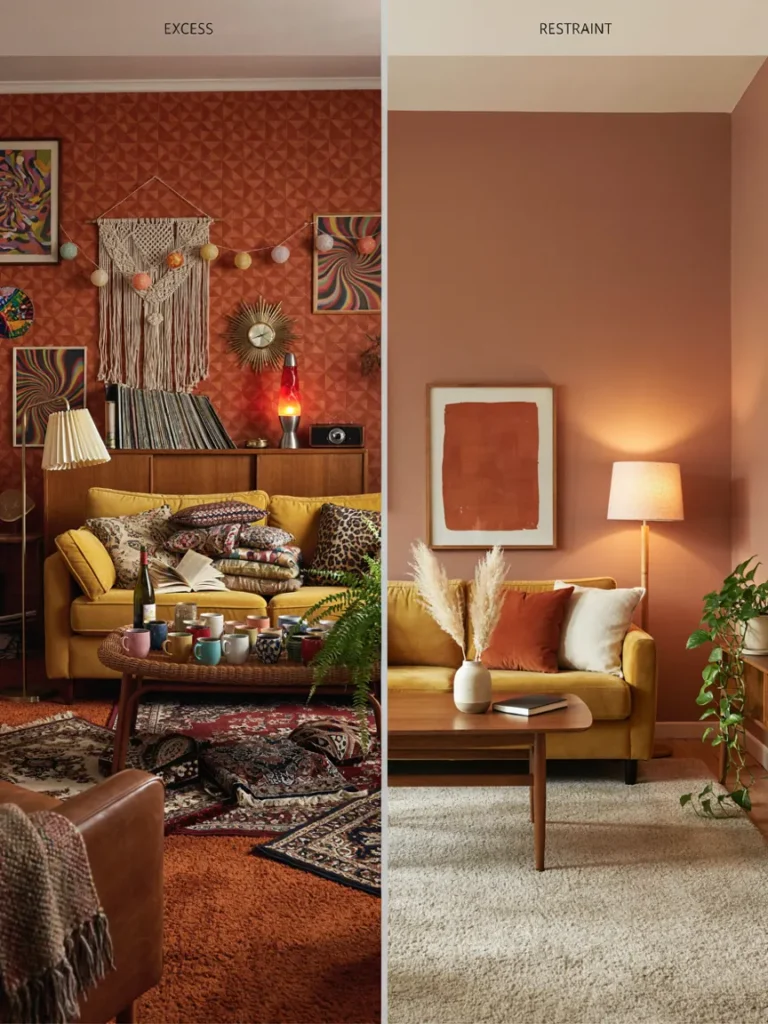
A few habits reliably push an otherwise well intentioned room from confident retro styling into something closer to a themed party. Knowing what to avoid matters just as much as knowing what to buy.
Buying every seventies specific item at once. A room filled with lava lamps, macrame, shag carpet, and psychedelic wallpaper all at the same time tends to read as a recreation rather than a lived in space. Pick a handful of standout pieces and let everything else in the room stay simpler.
Ignoring scale in a smaller room. Deep sunken seating and oversized sectionals were designed for the larger open floor plans common in seventies homes. In a smaller modern living room, a single curved chair or a compact modular sofa captures the same spirit without overwhelming the space.
Skipping the lighting update. A room full of authentic seventies furniture lit with stark cool white overhead lighting will never feel quite right. Warm bulbs and a mix of lamp lighting rather than a single bright overhead source do more to sell the mood than most individual furniture pieces.
Forgetting that pattern needs breathing room. Bold geometric or psychedelic prints look striking against a relatively calm background, but stacking several loud patterns directly against each other, on the rug, the curtains, and the upholstery all at once, usually reads as cluttered rather than confident. Let one pattern take the lead and keep everything around it simpler.
Treating every piece as untouchable. Genuine vintage furniture sometimes needs a bit of restoration, a reupholstery job, a fresh coat of oil on wood, or new hardware, before it looks its best. Buying a great secondhand piece and leaving it in rough condition undercuts the whole look, even if the bones of the piece are exactly right.
Frequently Asked Questions
What colors were popular in 70s living room decor?
Burnt orange, mustard yellow, avocado green, and chocolate brown were the defining colors of the decade, often layered together through walls, furniture, and textiles. These earth tones remain the fastest way to signal the era in a modern room.
How do I get 70s decor for a living room without it looking like a costume?
Mix genuine vintage or reproduction pieces with contemporary furniture rather than making every single item period specific. Keep one or two large statement pieces firmly in the seventies aesthetic and let smaller accents move more freely between styles.
Is shag carpet coming back in style?
Shag rugs, especially in warm earth tones, have become one of the most popular ways to bring seventies texture into a modern room. A smaller shag area rug is an easier commitment than full wall to wall shag carpet for most homeowners.
What furniture pieces best represent 70’s living room decor?
Curved and low profile sofas, rattan or wicker accent chairs, sunken or modular seating, and wood tripod floor lamps are among the most recognizable furniture styles from the era and remain widely available secondhand.
Where can I find affordable 70s decor living room pieces?
Thrift stores, estate sales, and online secondhand marketplaces are consistently the best sources for genuine vintage furniture and decor at reasonable prices. Reupholstering an existing piece and shopping for textiles first are also budget friendly ways to build the look gradually.
Do I need real vintage furniture or will reproductions work?
Reproductions work perfectly well, especially for larger pieces like sofas where genuine vintage examples can be harder to find in good structural condition. Many people mix a few authentic secondhand finds, often smaller items like lamps or side tables, with newly made pieces designed in the same style.
Conclusion
A great 70s decor living room comes down to a handful of consistent choices. Lean into warm earth tones, bring in natural textured materials like rattan and shag, choose curved furniture over sharp modern lines, and light the room with warm toned fixtures rather than cool white bulbs. These simple Living Room Decor choices help create a cozy, authentic atmosphere. Blend genuine vintage pieces with contemporary furniture so the space feels lived in rather than staged, and build the look gradually through textiles and secondhand finds rather than trying to buy everything at once.
Start with one anchor piece, whether that is a shag rug, a statement sofa, or a single earth toned accent wall, and build the rest of the room around it. A space with one confident retro choice will guide every decision after that far more easily than trying to nail the whole look in a single shopping trip.