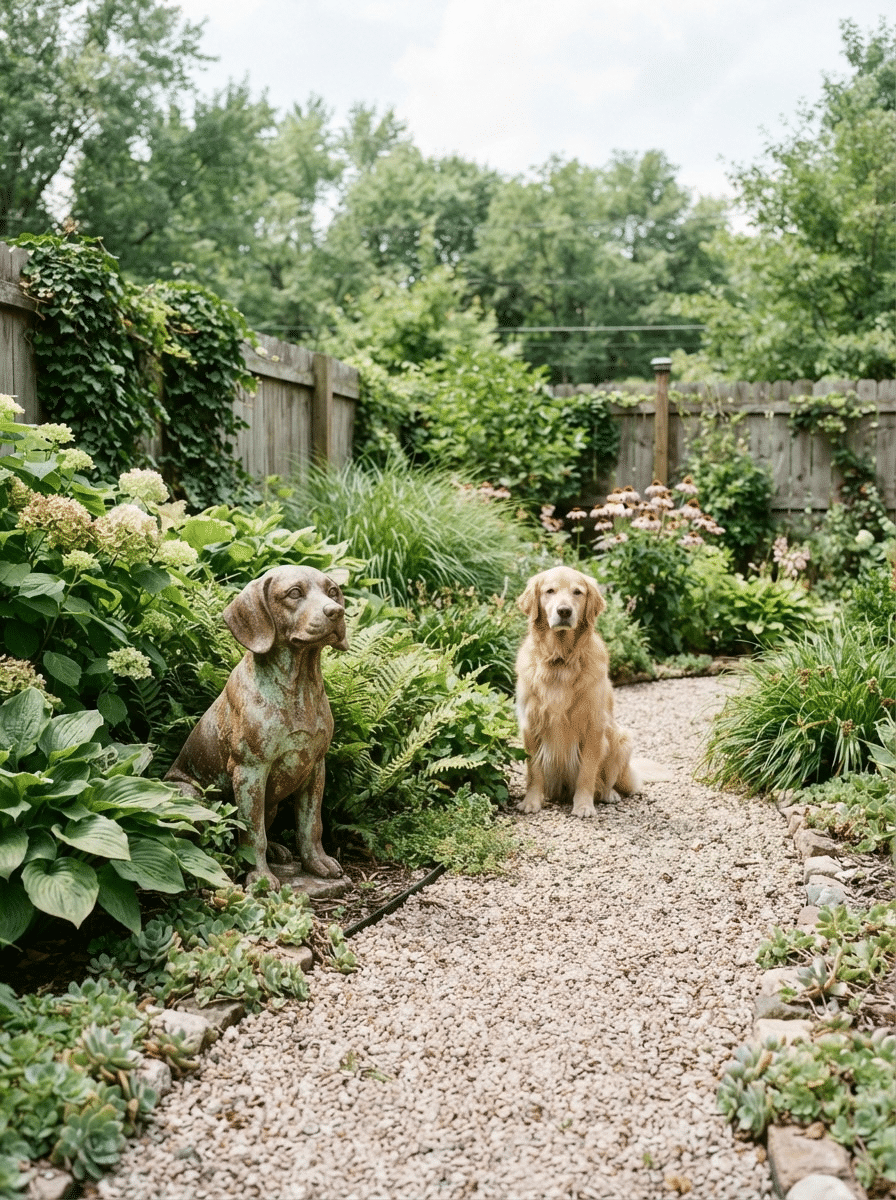
Dog garden decor is one of the easiest ways to give your yard some personality. A stone lab beside the path, a metal retriever near the roses, or a small pup statue under a shady tree can turn a plain patch of grass into a place that feels like yours. But good dog garden decor does more than look cute. It has to fit your space, handle the weather, and stay safe around a real dog who loves to sniff, chew, dig, and zoom.
This guide covers both sides. You’ll learn how to pick the right material, size, and spot for your statues and ornaments. You’ll also see black lab garden decor ideas, which plants and surfaces work best, and how to avoid common mistakes with safety, mud, and yellow lawn patches.
I’ve pulled together advice from garden designers, horticulture experts, and dog trainers so you get more than shopping tips. By the end, you’ll know how to build a yard that looks great and works for the dog who lives in it.
What Does Dog Garden Decor Actually Include?
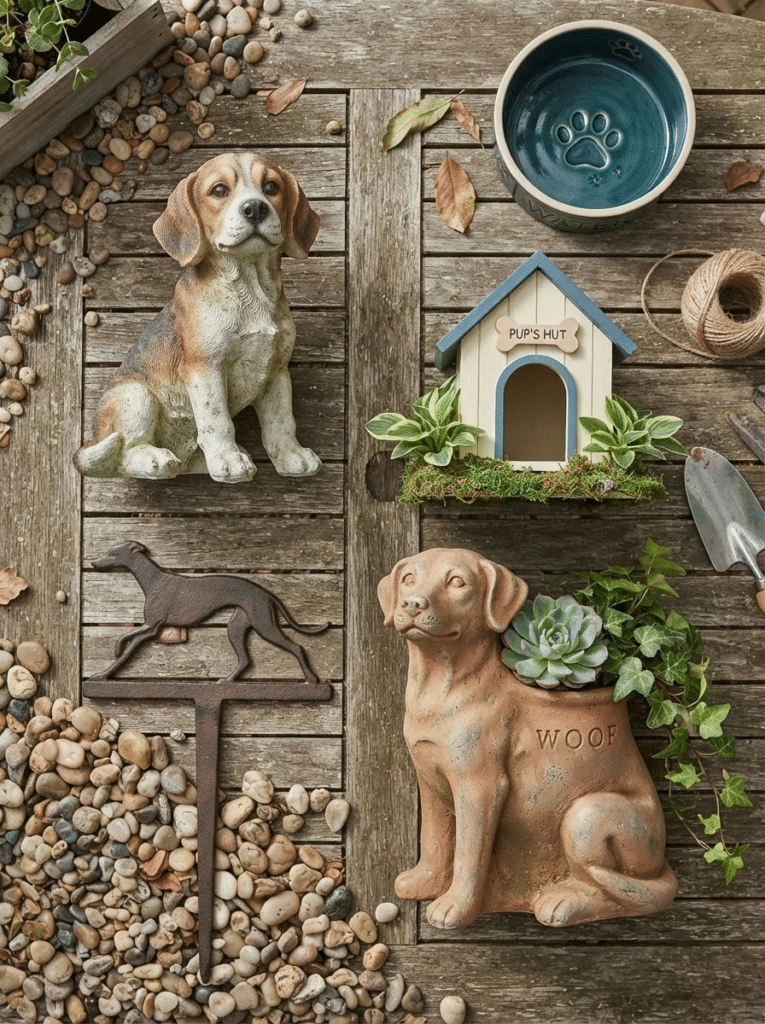
When most people hear “dog garden decor,” they picture a statue. That’s a big part of it, but the category is wider than that. From playful dog sculptures to creative planters and charming accents, these designs can complement whimsical garden decor ideas and add personality, humor, and a welcoming touch to any outdoor space.
Dog garden decor means any decorative item in your outdoor space that celebrates dogs or is designed with dogs in mind. That includes:
- Statues and sculptures of dogs made from stone, metal, resin, or wood
- Garden stakes, plaques, and memorial stones
- Decorative doghouses and shady dog nooks
- Fountains, water bowls, and water features built for pets
- Fun pieces such as a replica fire hydrant or a piece of driftwood for marking
- Dog themed signs, planters, and lanterns
The best yards mix a few of these. One bold statue gives the eye a place to land. Practical decor, like a stylish water station or a shady doghouse, makes the yard better for your pup.
Why Dog Garden Decor Works So Well
A garden full of plants can still feel flat. Plants give you color and texture, but ornaments add character. Dog garden decor does this in a warm and friendly way that people notice right away.
It Adds Warmth and Personality
Dog statues work in a tiny courtyard and in a large country garden. They make a space feel lived in and loved. Visitors often smile when they spot one tucked beside a flower bed.
It Honors Your Own Dog
For many owners, a statue is a tribute. Some people choose a piece that looks like their current companion. Others pick one to remember a dog who has passed. Dogs are widely seen as symbols of loyalty, love, and protection, so these pieces tend to carry real meaning.
It Creates Focal Points
A focal point is the thing your eye goes to first. A larger dog statue at the end of a path, near a gate, or beside a pond gives the garden structure. Smaller pieces can then guide the eye around the yard.
It Works With a Dog Friendly Layout
Here’s something many decor guides skip. A garden that is built for your dog and a garden that looks good don’t have to compete. When you plan decor along with paths, shade, and planting, the whole yard feels more connected.
How to Choose Dog Garden Decor: 5 Things to Check First
Shopping for dog garden decor can feel overwhelming. There are hundreds of options. Start with these five questions and the list gets short fast.
1. Material: Stone, Metal, Resin, or Wood?
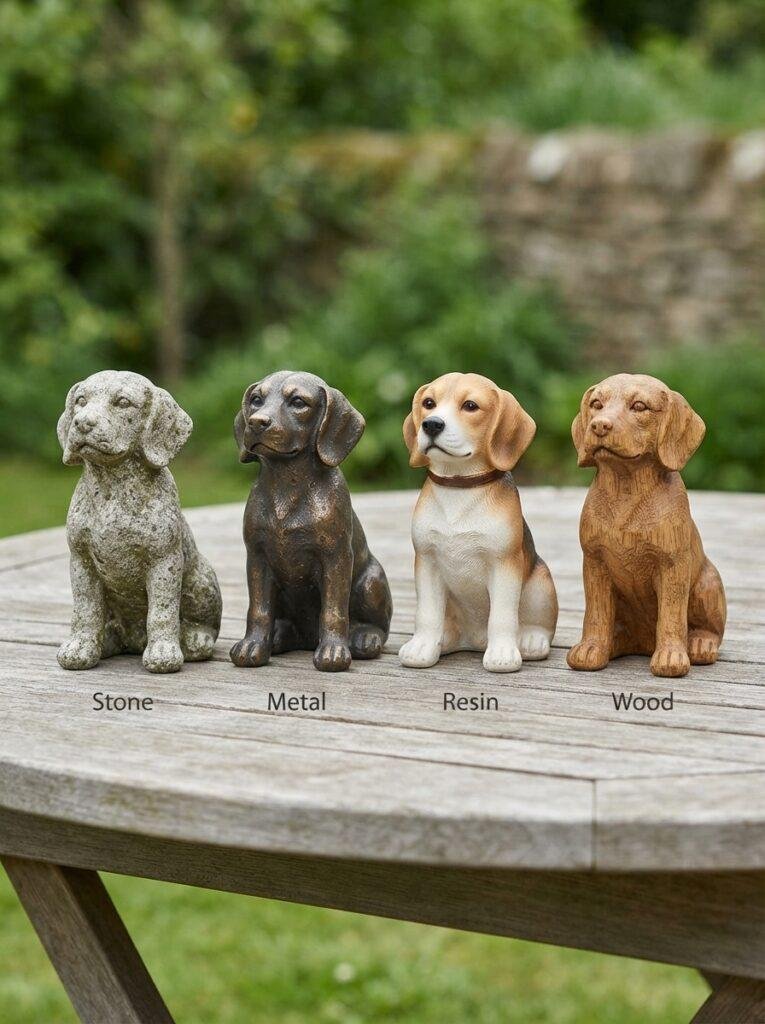
Each material has strengths and trade offs.
Stone is classic and heavy. It suits a traditional or cottage garden, and it blends well with plants and paths. Because of its weight, it’s harder for a bouncing dog to knock over. That’s a real safety plus.
Metal gives a more modern look. Cast iron, bronze, and stainless steel are popular choices. Over time, many metals develop a rich weathered finish called a patina, which adds depth. If you don’t like that look, a bit of cleaning and care keeps it fresh. One tip: in strong summer sun, metal can get hot to the touch, so think about whether your dog will lie right against it.
Resin is light, affordable, and low in upkeep. Good resin pieces can copy the look of stone or metal. The downside is durability. Resin may crack or fade sooner, and a light statue can be tipped by an excited dog. It works well for small gardens and for pieces you want to move around.
Wood gives a rustic feel, but it needs more care. It can rot, split, or be chewed. If your dog loves to gnaw on sticks, wood decor may not last long.
2. Size: Match the Piece to the Space
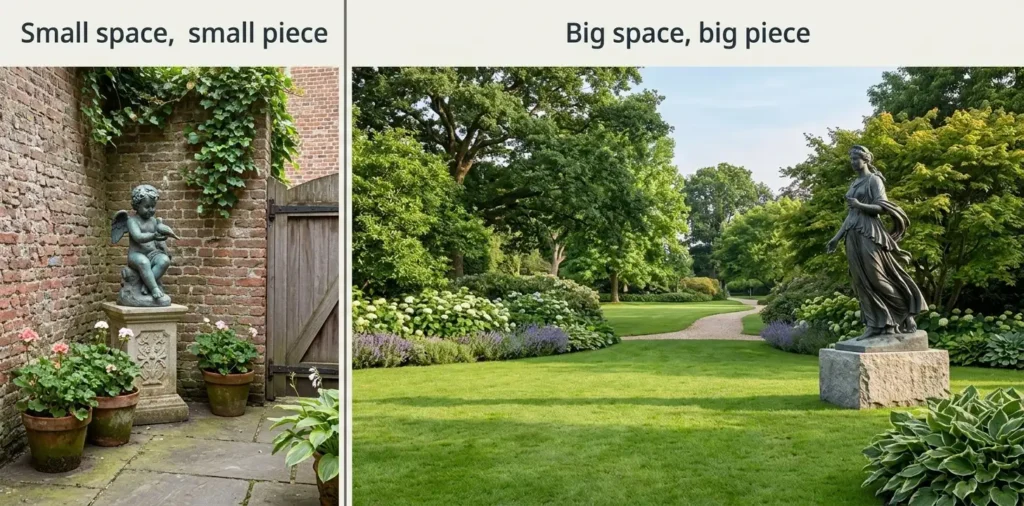
Proportion matters more than most people expect. Pair small ornaments with small spaces and large ornaments with large spaces. That one rule prevents most “why does this look off?” moments.
A large statue is a strong focal point on its own. A big piece can also work in a small garden if you give it room, such as near the entrance or in an open corner. Small pieces are easy to move and great near a favorite plant, a pond, a flower bed, or along a path. In a big yard, use several small statues together so they don’t get lost.
Before you buy, measure your space. Then mark the spot with a box or a chair to see how the piece will feel in real life.
3. Placement: Where the Decor Goes
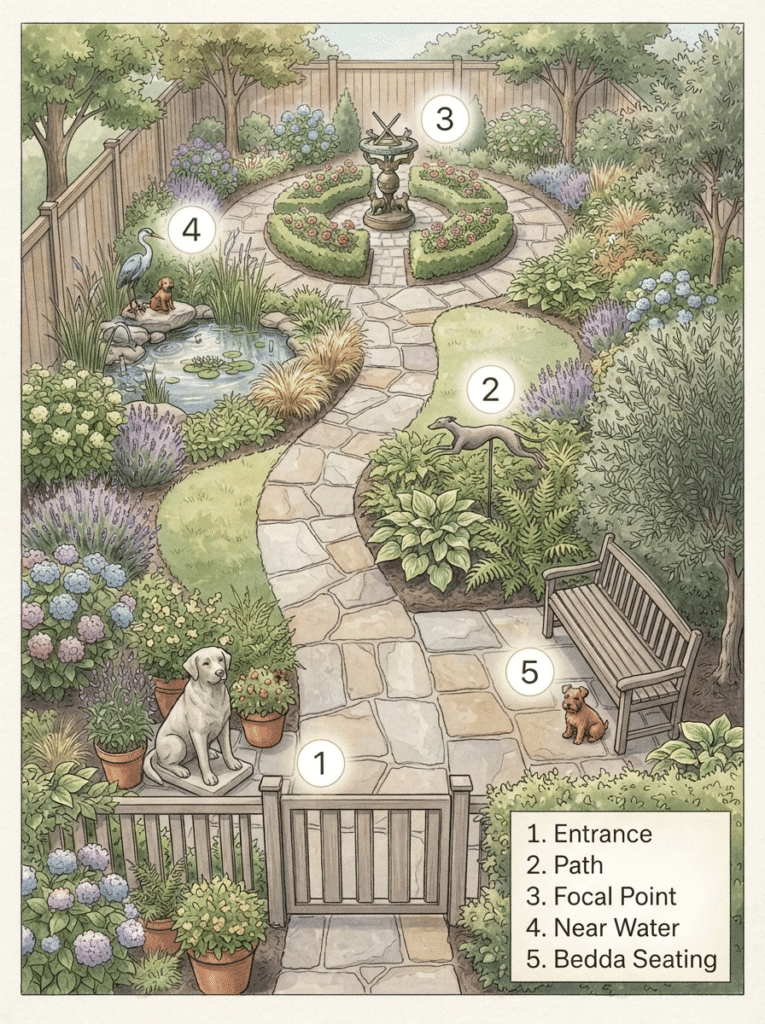
Where you put a statue changes how it looks and how it works. Try these ideas:
- Entrance: A large dog statue near the gate sets the tone as soon as people arrive.
- Along a path: Small statues spaced out can guide visitors. Add soft ground lights for safety at night.
- Focal spot: Place a larger piece, like a dog bust of your favorite breed, in the part of the garden you love most.
- Near water: Statues look lovely beside a pond, fountain, or birdbath.
- Beside seating: A dog statue near a bench makes a cozy spot feel complete.
For fun, you can dress your statues for the season. Warm knit scarves in winter or bright collars in spring give the yard a playful, changing look.
4. Style: Realistic, Themed, or Abstract?
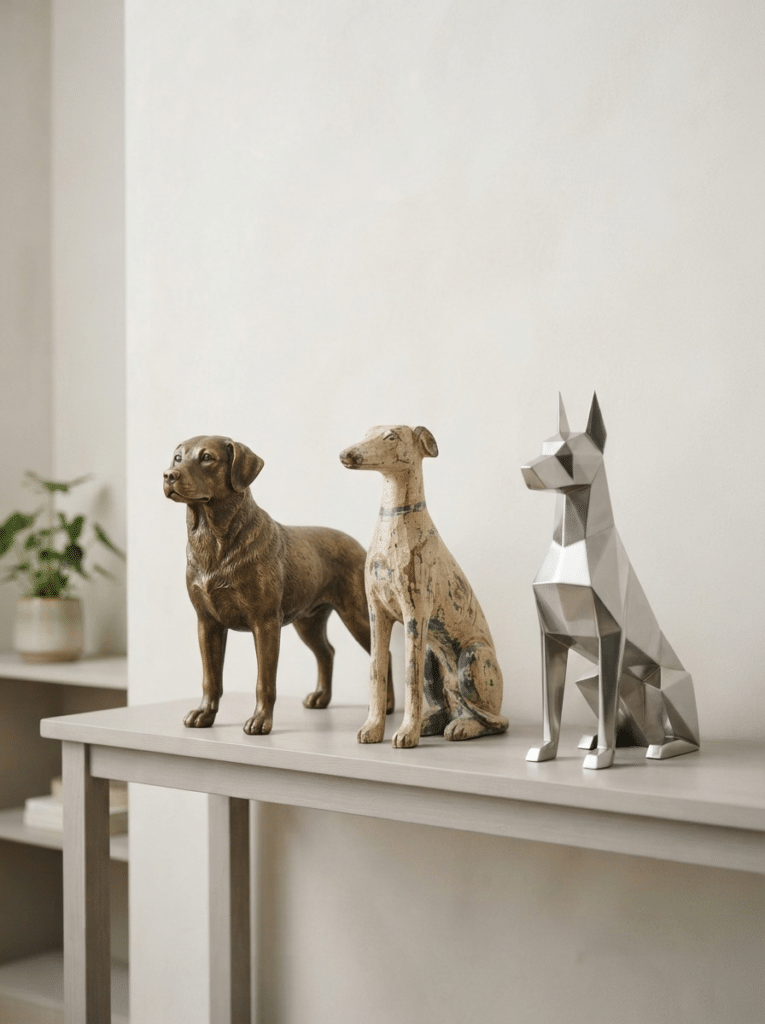
Ask yourself what you want the piece to say.
- Realistic statues show every detail and are the best choice if you want to honor a specific pet. They also add a sense of company to the yard.
- Rustic or period pieces, such as a Victorian style hound, suit a garden with a clear theme.
- Modern or abstract pieces bring shape and color, and they’re perfect if your yard needs a pop of something bold.
5. Breed: Make It Personal
Don’t forget the breed. A beagle, a corgi, a golden retriever, and a greyhound each have a different shape and attitude. Picking a statue that looks like your dog, or like your favorite breed, makes the piece feel like it belongs. Which brings us to one of the most popular choices of all.
Black Lab Garden Decor: Ideas for Lab Lovers
Labs are one of the most loved breeds out there, and black Labs have a sleek, strong shape that looks great in sculpture form. If you want black lab garden decor, you have more options than you might think.
Why Black Lab Garden Decor Is So Popular
A black Lab statue has a bold, simple silhouette. The dark finish stands out against green plants and light gravel. It also pairs well with almost any style, from farmhouse to modern. For many Lab owners, it’s the quickest way to say “this garden belongs to a dog person.”
Black Lab Garden Decor Ideas to Try
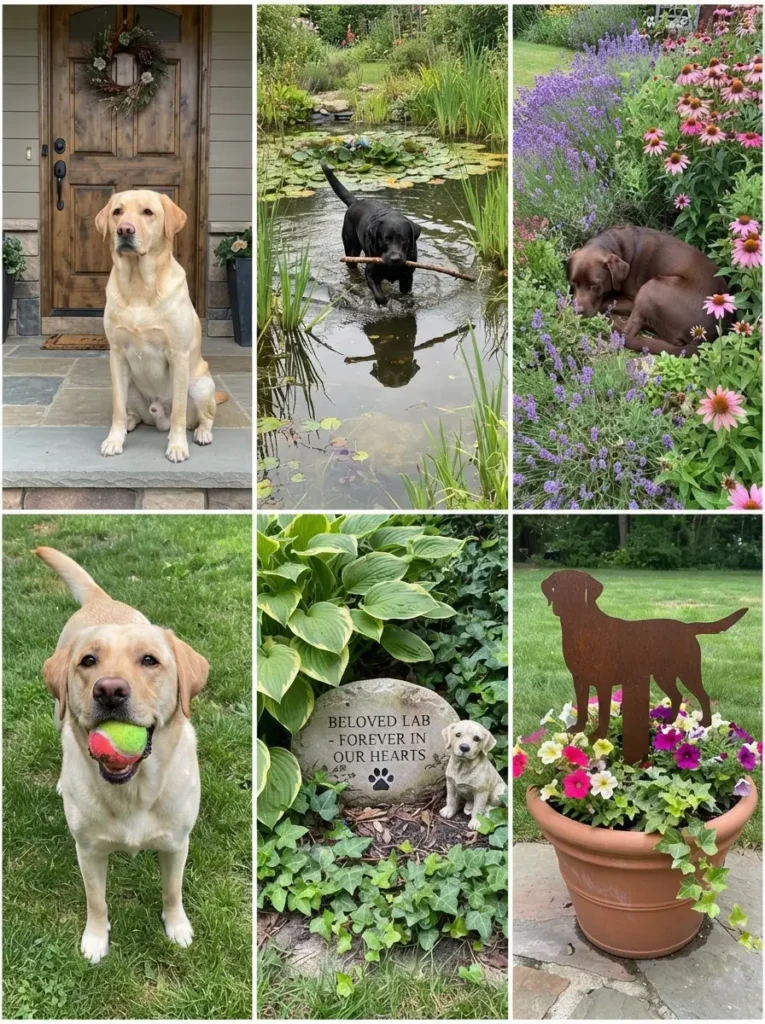
A sitting Lab by the front door. A seated black Lab statue looks welcoming and calm. It’s a friendly greeter for visitors.
A Lab near the water. Labs are famous for loving water. A statue near a pond, small fountain, or stone basin feels like a nod to the breed’s personality.
A resting Lab in a flower bed. A lying down statue tucked among low plants looks natural, like a dog napping in the shade.
A Lab with a retrieving pose. A Lab holding a ball or a bird dummy adds a bit of action to the garden.
A memorial Lab. If you’ve lost a black Lab, a statue with a small engraved stone beside it creates a quiet place to remember them.
A black lab garden stake. For small spaces or containers, a metal stake with a Lab silhouette is cheap and easy to move.
Tips for Styling Black Lab Garden Decor
Dark statues look best against a lighter background. Place black lab garden decor near pale gravel, light stone, silver foliage like lavender, or white flowers. This contrast makes the shape pop.
Be careful in full sun. A dark metal or dark painted piece can get very warm. Place it in partial shade if your dog likes to lean on it.
Finally, check the finish. If your Lab chews on things, choose a statue with a durable, weather safe coating, and keep an eye on paint that flakes. When in doubt, ask the seller what finish was used.
Is Dog Garden Decor Safe for Dogs?
This is the question most decor guides ignore, and it’s one of the most important. A beautiful ornament is only a good idea if it’s safe for the dog who lives there.
Yes, dog garden decor is safe for dogs when you choose stable, non toxic, chew resistant pieces and place them away from hazards. Here’s what to check.
Stability
Heavy statues should sit on a flat, firm base. If a piece could tip, it can hurt a running dog or a child. For lighter resin pieces, anchor them with a stake, a bit of weight inside the base, or a patio paver underneath. Make sure any obstacle or ornament in your yard can’t tip over.
Size and Small Parts
Avoid decor with small removable parts, like loose glass beads, tiny stones, or dangling pieces. Dogs, especially puppies, love to grab and chew.
Materials and Finishes
Look for non toxic paints and sealants. Skip anything that smells strongly of chemicals or sheds flakes.
Sharp Edges
Run your hand over metal or cast pieces. Rough seams and sharp points can scratch a dog who brushes past.
Location
Don’t place ornaments where your dog sprints through, such as along the boundary line where many dogs patrol. If your dog has a regular running route, build decor around it, not in it.
Plant Smart: The Garden Around Your Decor
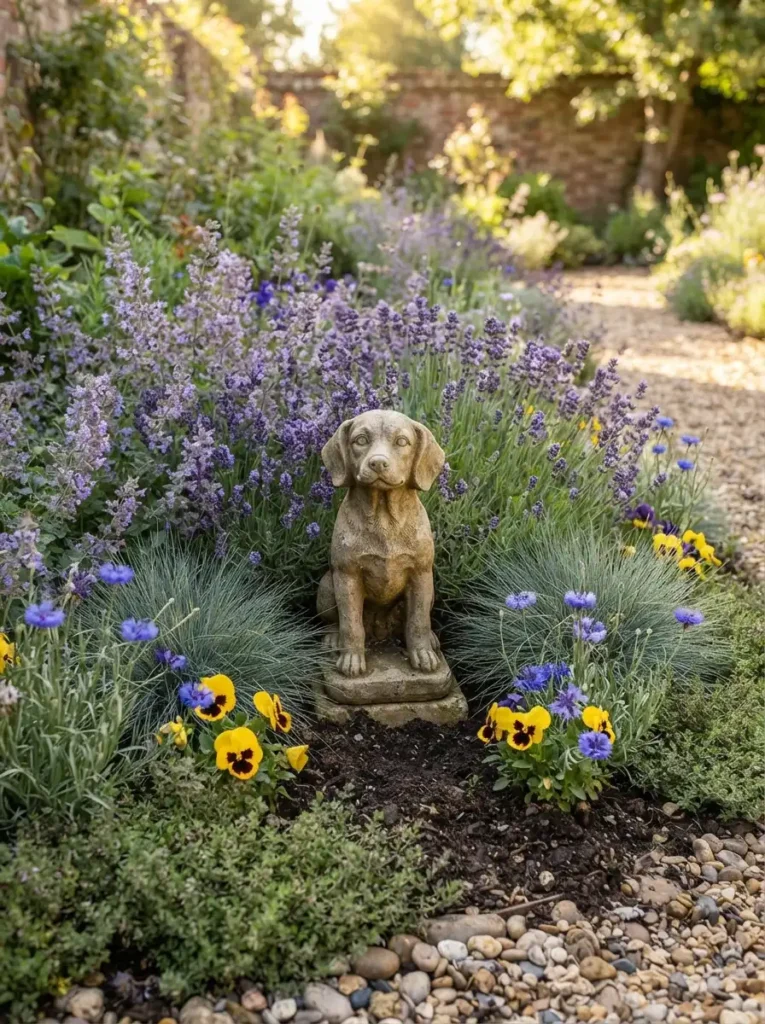
Even the best dog garden decor looks off if the plants around it are in trouble. Dogs trample, nibble, and nap in beds, so your plant choices matter.
Choose Tough Plants That Handle Boisterous Dogs
Dogs play hard. Delicate plants rarely survive. Better choices include sedges, shorter grasses, catmint, and lavender. They bounce back after being stepped on, and they look good next to statues.
Plant for the Nose
Dogs explore with their noses. Herbs such as rosemary, thyme, basil, and lemon balm are dog friendly choices that smell wonderful and give your dog something to investigate.
Think About What Your Dog Can See
Dogs see mostly in shades of blue and yellow. If you want a garden your dog can enjoy visually, add cornflowers, pansies, asters, and sunflowers. Pansies bloom for a long stretch, which gives you steady color.
Know the Toxic Plants
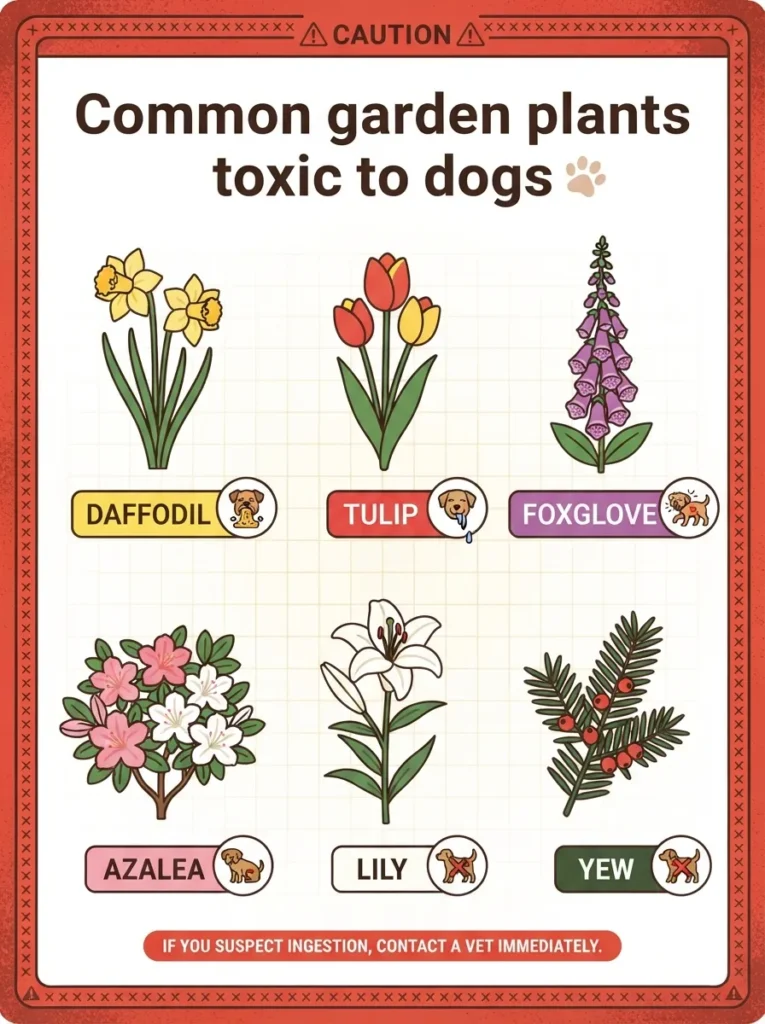
Many popular garden plants can make dogs sick. Common troublemakers include:
- Bulbs such as daffodils and tulips
- Alliums, including onions, garlic, and leeks
- Foxgloves
- Rhododendrons and azaleas
- Lilies
- Yew, laburnum, oleander, and cherry laurel
- Boxwood and elder
- Grapes and the pits of stone fruit
One garden designer shared a good rule of thumb: most plants are toxic to some degree, but some are far worse than others. Bulbs and their leaves and flowers are among the most dangerous. Puppies are more likely to nibble, though many grow out of it. If your dog is a grazer, remove high risk plants or fence them off with a barrier your dog can’t go through, under, or over. If your dog eats something suspicious, call your vet right away.
Watch Out for Grass Nibblers
Some dogs love eating ornamental grasses. One designer noted that nibbling the tips of feathery grasses in spring can badly stunt them. If you have a puppy, you may want to wait on lots of ornamental grasses until the chewing phase passes.
Skip Harmful Mulch and Chemicals
Cocoa mulch is dangerous for dogs, so avoid it. Plain bark mulch and small bark chips are safer choices. Be careful with fertilizers, slug pellets, and pesticides too. Choose pet-safe products and store everything out of reach. Also secure your compost pile, since moldy scraps and coffee grounds can be toxic.
Build a Dog Friendly Garden That Supports Your Decor
Great dog garden decor shines when the yard itself works well. Here are the layout features that matter most.
Start With a Secure Fence
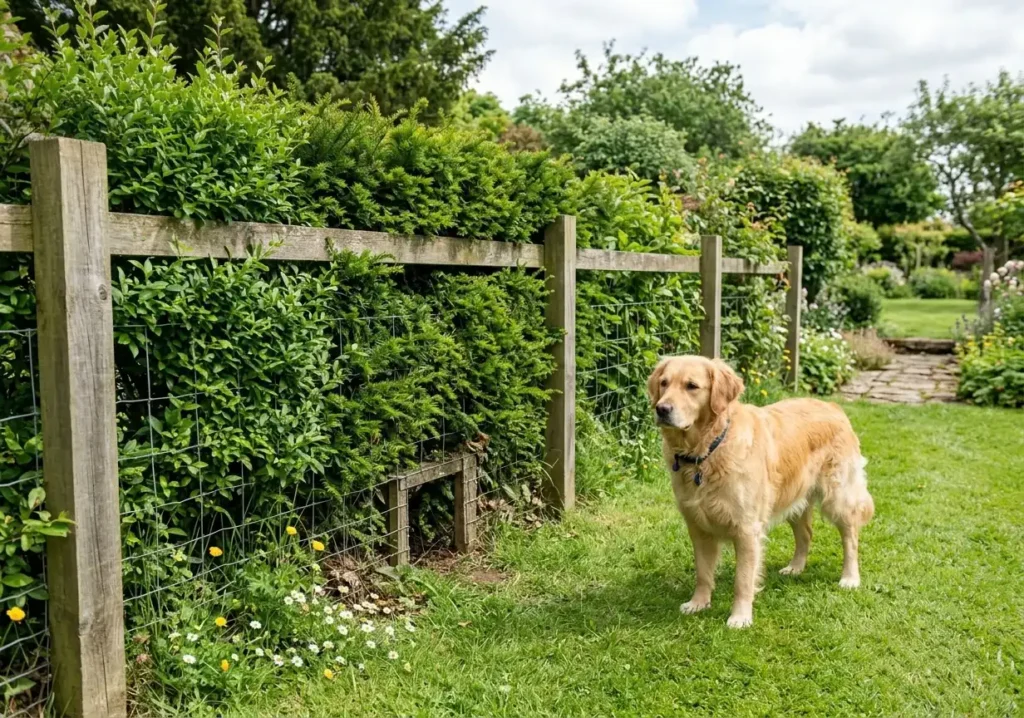
A secure boundary is the most important feature of a dog friendly garden. Check for missing panels, gaps, sharp wire, and spots where your dog has started to dig. A fence of about 1.2 meters (roughly 4 feet) high with tight mesh stops many escapes and makes digging under harder.
A smart extra from one garden designer: leave small gaps, about the size of a CD, at the base of the fence so hedgehogs can pass through. It helps local wildlife and doesn’t weaken the fence for most dogs, though you should test it against your own dog’s size and habits.
If your dog gets worked up when neighbors are noisy, add a buffer. A designer shared a case where a rescue dog kept leaping at the fence. A pergola and planting beds along the boundary created a visual barrier and calmed things down. A thick evergreen hedge can do a similar job and look like part of the design.
Create Defined Paths
Dogs love to patrol. If you don’t give them a path, they’ll make one through your lawn. Design a path on purpose, such as a loop around the edge of the yard. Use pavers, flagstone, pea gravel, or cedar mulch. Watch your dog’s habits and work with them instead of against them.
One designer built a garden around a circular path with crossing diagonal paths. The dog had several running routes, and the owners got a sense of journey through the space. Your decor can sit beside these paths, not on them.
Pick the Right Surface
The best ground cover depends on your climate, yard size, and dog.
- Natural grass is soft and familiar, but it needs repair. Expect some wear and some yellow patches.
- Self binding gravel is firm, easy to maintain, and drains well.
- Pea gravel works nicely for potty zones and paths.
- Cedar chips suit shady yards and large dogs. One Portland designer uses them even for giant breeds, with great results.
- Synthetic turf can solve mud in shady yards. Choose a short pile, since longer fibers hold more mess.
- Flagstone or concrete works well for small or older dogs who like to lounge with their people.
Be careful with wood chips if your dog likes to chew wood, and remember that bark and mulch need topping up over time.
Plan for Shade
Shade is not optional. Dogs can get sunburned and overheated. Use trees, large shrubs, sun sails, pergolas, or a decorative doghouse. Field maples, hawthorns, camellias, and deutzias are some options suggested by horticulture experts. In hot regions, plan shade for the whole day, not just one hour. Many dogs also enjoy a sunny spot, so offer both.
A raised, shady resting platform with an outdoor cushion is another winner. Dogs can relax and watch the yard from there.
Add Water
Water keeps dogs cool and entertained. Choose from:
- A shallow splash pool
- A pet safe fountain
- A dog watering system connected to a hose
- A shallow stream or a cattle trough style container that works as both decor and a big water bowl
Place water in the shade when you can. If you add a pond or pool, make sure your dog can climb out easily. Always keep fresh drinking water available in hot weather.
Include a Dig Zone
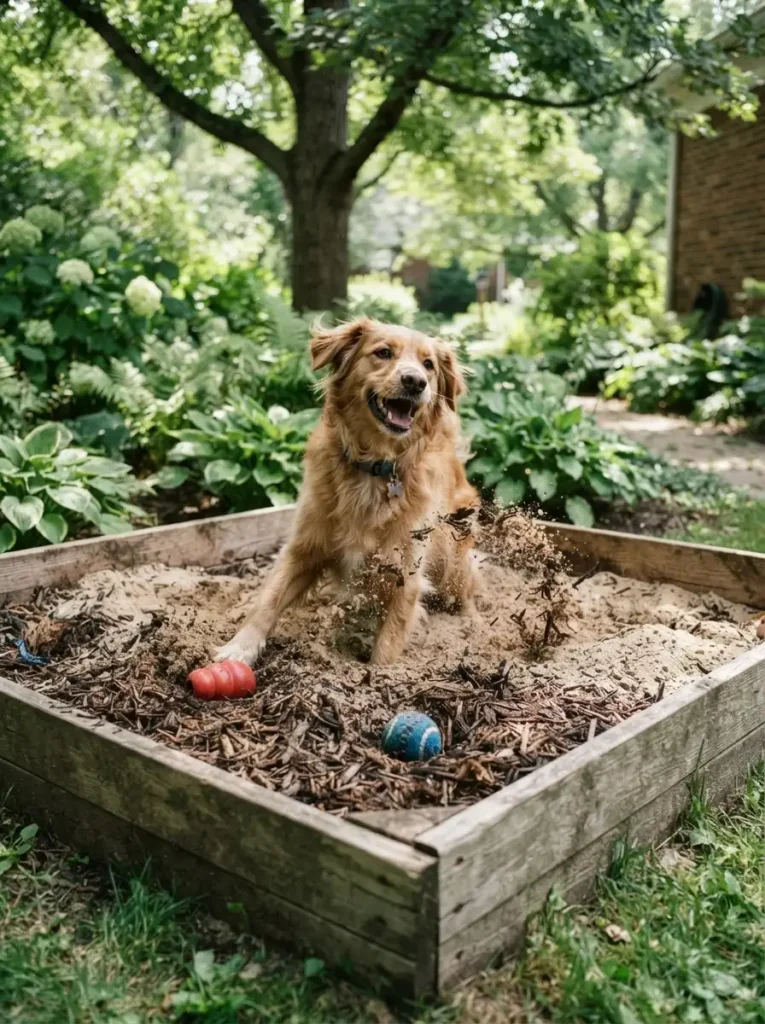
Digging is natural. Instead of fighting it, give your dog a spot. Fill a corner or sandbox with loose sand, soil, or mulch. Place it in partial shade and out of sight if you can. Bury a few smelly toys to draw interest. When you catch your dog digging in a bed, calmly guide them to the dig zone and praise them when they use it. Skip punishment, since positive training works better.
Make a Potty Spot
Dog urine can burn grass and leave yellow patches, especially in dry weather. A few fixes help:
- Water the lawn after your dog pees
- Use “dog rocks” in the water bowl, which some owners find helpful in summer
- Create a small, defined potty area with sand, bark, pea gravel, or soil
- Add a marking post, like a sturdy bush, a stump, or even a replica fire hydrant for fun
Train your dog with patience and praise. For the first few days, lead them on a leash to the spot. One note on gravel: it can be hard to clean, and cats may start using it as a toilet too.
Think About Wildflower Areas
Many dog lovers are also wildlife lovers. But dogs aren’t gentle with delicate meadow areas, and poop is nearly impossible to clean in long grass. In a small garden, a “no mow” patch can be tricky. A better option for pollinators is planting beds with flowers across all seasons. That adds food and shelter without turning the yard into a messy battleground.
Don’t Forget a Paw Wash Station
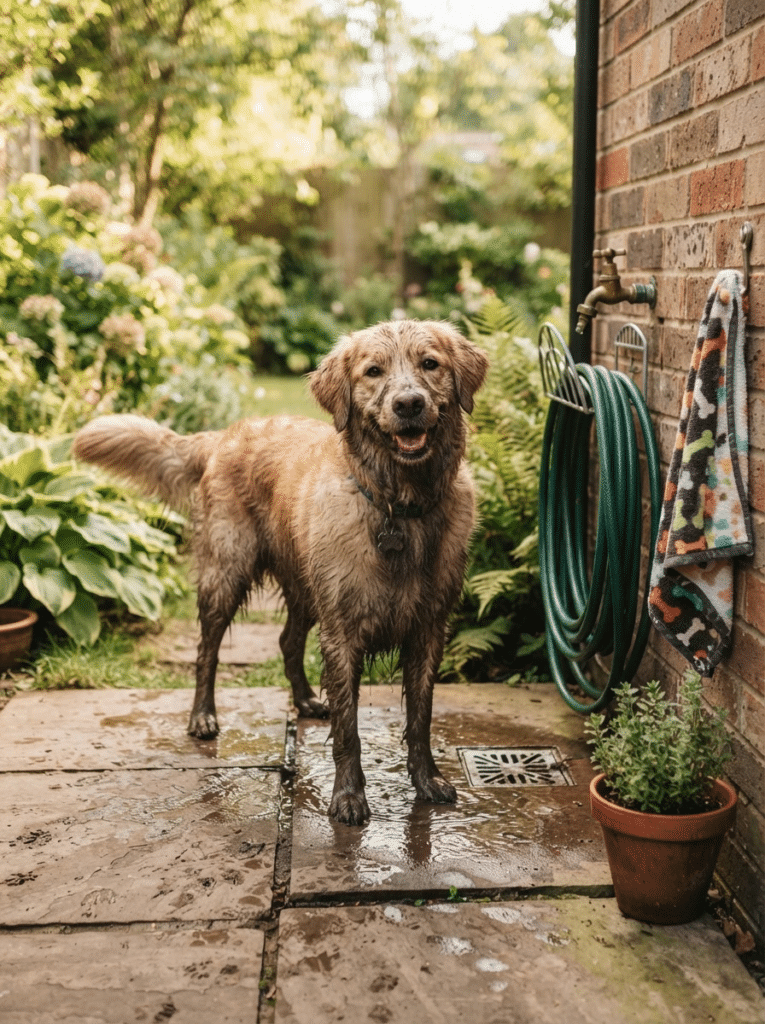
File name: outdoor-dog-paw-wash-station.jpg
This tip is gold for muddy seasons. A designer who works with many dog owners often adds an outdoor mixer tap so you can use warm water to rinse a dog. It’s nicer for you and your dog. You’ll need a drain, such as a patio that slopes to a drain, a big planting bed, or a soakaway. Good drainage overall keeps your yard from turning into a puddle and makes it more enjoyable all year.
Pet Doors and Safe Access
If you want your dog to move between the house and the yard on their own, a secure pet door can help. Automatic, chip activated models open only for your pet. This is especially helpful for puppies in training, older dogs who need more potty breaks, and dogs who need a quick retreat to a cool indoor space during hot days.
Watch for Ticks and Tool Hazards
Ticks hide in tall grass, so mow regularly. Store garden tools, cables, and chemicals where your dog can’t reach them. Leaving tools lying around is a common cause of injuries.
Fun Features That Pair Well With Dog Garden Decor
Once the basics are done, you can add features that make the garden more fun.
Mini Agility Courses
A small obstacle course can be made with simple things: tree stumps, low benches, and weave poles. Everything must be sturdy and non slip. Keep it right for your dog’s age and fitness. Older dogs benefit from slow balance exercises that don’t strain their joints.
Scent Games
Hide treats in pouches or under planters for your dog to sniff out. It’s easy, cheap, and tires out a busy mind. A tired dog is a calm dog.
A Window to the World
If your dog is friendly and doesn’t bark at everything, a small window in the fence lets them watch the neighborhood. If your dog is a barker, skip this one.
A Dog Run
If your dog is alone for long stretches, a fenced run gives them space to move and keeps the rest of the yard protected. Make it long enough for real running and add shade and water.
Small Yards, Big Ideas
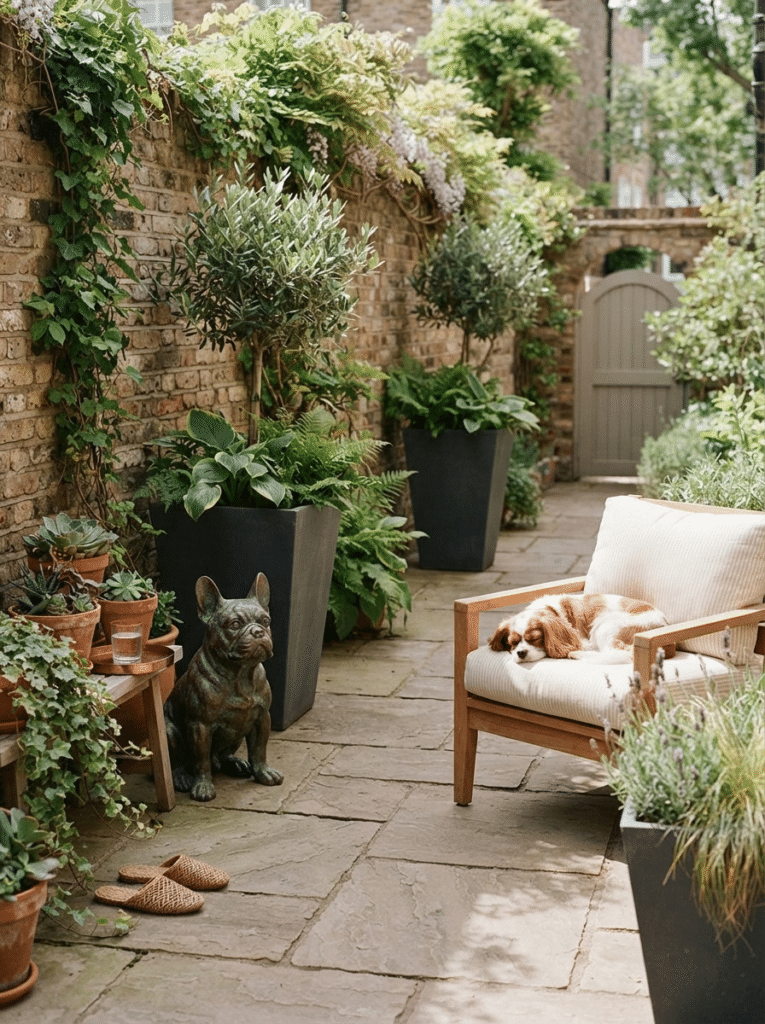
Don’t have much room? You can still enjoy dog garden decor. Some owners with small city yards focus the space on people and plants, with a discreet potty spot, while daily exercise happens at the park. Small dogs and older dogs often do well lounging on flagstone near their people. In that kind of space, a few well chosen statues and planters carry the whole design.
How to Care for Your Dog Garden Decor
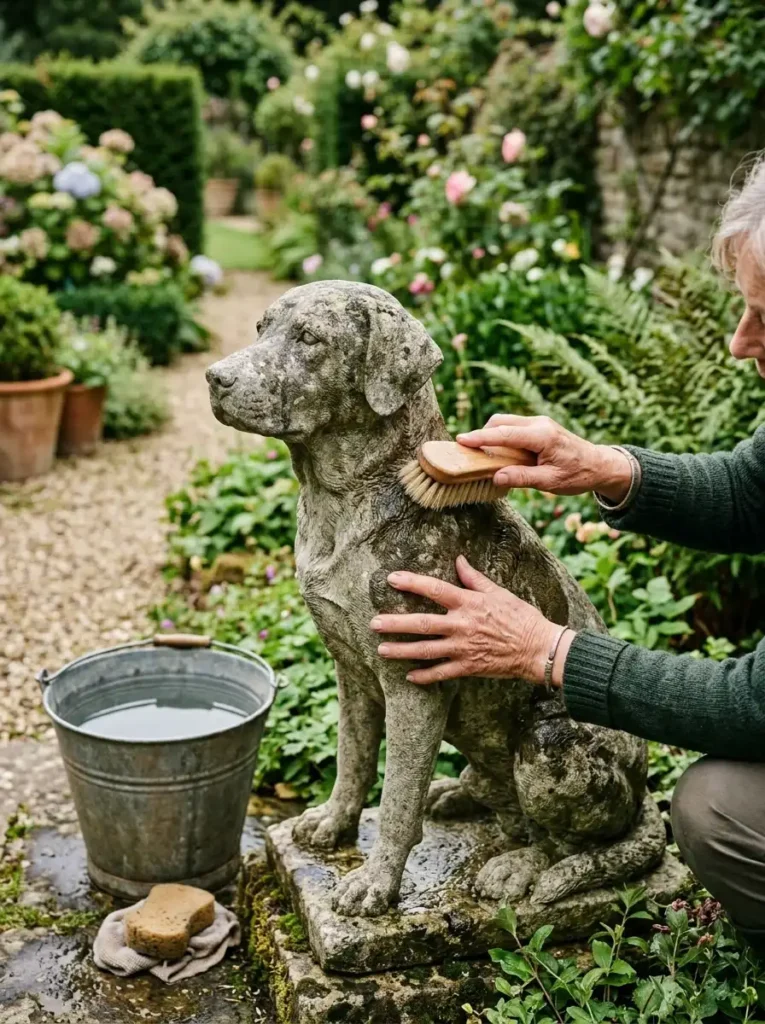
Good decor lasts when you look after it.
Stone: Rinse with water and a soft brush. Skip harsh cleaners that could leave residue where dogs lick or sniff.
Metal: Wipe down seasonally. If you want to keep a shiny finish, apply a protective wax. If you like the aged look, leave it alone.
Resin: Check for cracks and fading. Bring it in during extreme weather if you can.
Wood: Reseal every year or so with a pet safe sealant, and watch for chewing.
All pieces: Check stability after storms and after wet weather. Soft soil can shift a base, and a statue that was steady in summer can lean by spring.
Seasonal updates keep things fresh too. Add a scarf in winter, a wreath in autumn, or fresh flowers in a planter near the statue in spring.
Common Mistakes to Avoid With Dog Garden Decor
- Buying before measuring. Always mark the space first.
- Ignoring stability. Light statues tip easily.
- Putting decor where your dog runs. Build around patrol paths.
- Choosing toxic plants as backdrops. A pretty bed is not worth a vet visit.
- Forgetting shade and water. Comfort comes first.
- Using cocoa mulch or harsh chemicals. Both can harm dogs.
- Overcrowding. Three or four well placed pieces beat ten that compete.
Frequently Asked Questions
What is the best material for dog garden decor?
Stone is the best all round choice because it is heavy, durable, and weather tough. Metal is a great modern option, and resin is good for budgets and small spaces. Wood is lovely but needs the most care, especially if your dog chews.
Where should I put a dog statue in my garden?
Place a large statue at an entrance or in a focal spot you love, and use smaller ones along paths, near water, or beside flower beds. Keep decor out of your dog’s running routes and make sure heavy pieces sit on a flat, firm base.
What is black lab garden decor?
Black lab garden decor means statues, stakes, plaques, and ornaments shaped like black Labrador Retrievers. Popular choices include a seated Lab by the door, a Lab near water, or a memorial piece. Dark finishes look best against light gravel or pale flowers.
Are garden ornaments safe for dogs?
They can be, if you choose stable, non toxic, chew resistant pieces with no loose parts or sharp edges. Anchor lighter statues and avoid placing decor where your dog sprints. Also keep toxic plants and harmful mulch out of the area.
How do I keep my dog from ruining my garden?
Give your dog their own spots. Offer a dig zone, a clear path to patrol, a potty area, shade, and water. Use tough plants like lavender and sedges, add fences or dense hedges around delicate beds, and reward your dog for using the right areas.
Conclusion
The best dog garden decor works on two levels. It looks good, and it fits the real life of a dog who runs, digs, naps, and explores. Start with a material that suits your climate and your pup. Pick a size that matches your space. Choose a style that feels like you, whether that means a realistic retriever, a rustic hound, or a bold black lab garden decor piece by the pond. Then build the yard around it with safe plants, a secure fence, good shade, clear paths, and fresh water.
You don’t need to do everything at once. Pick one change this weekend. Measure a spot for a statue, swap out one toxic plant, or set up a small dig zone. Small steps add up fast.
Ready to get started? Browse dog garden decor in the materials and styles that fit your yard, and give your dog a garden that feels like a true home. If this guide helped, share it with a fellow dog lover and tell us about your own garden in the comments.