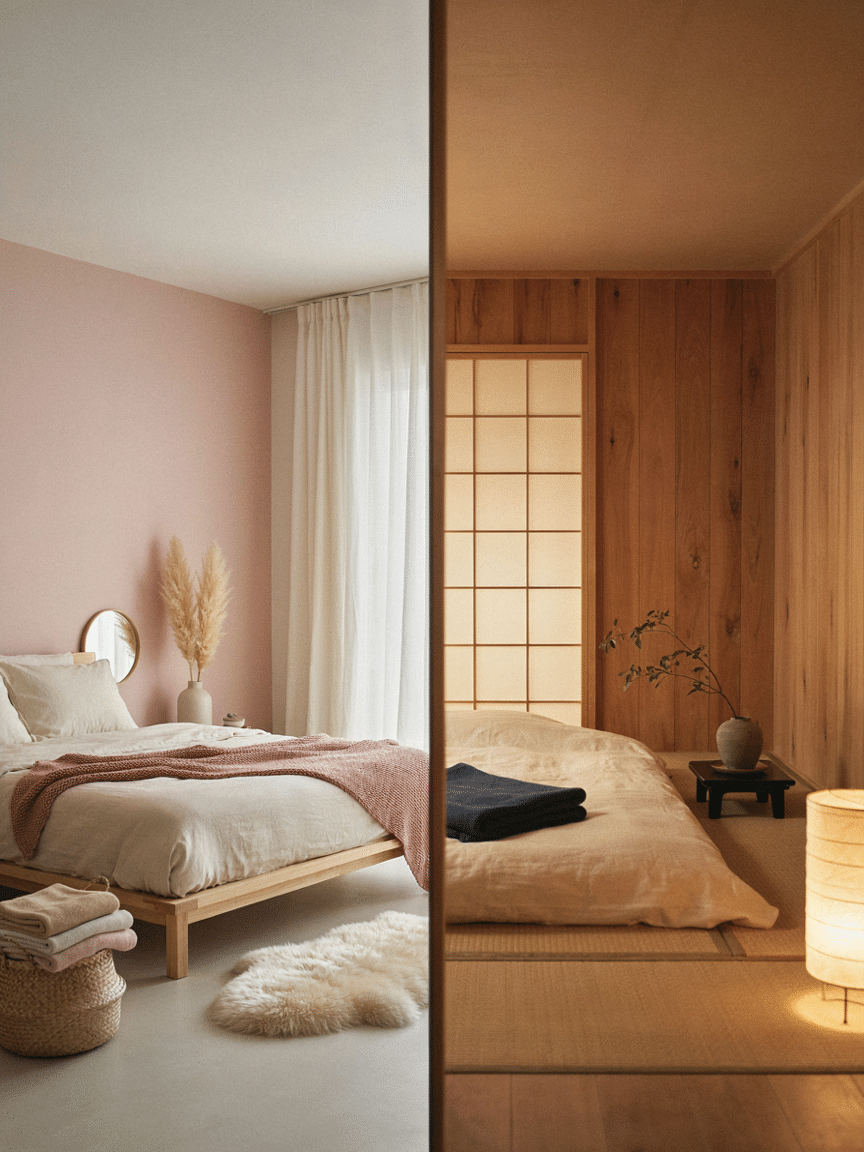
Scroll through enough interior design content and you will notice korean bedroom decor and japanese bedroom decor get lumped together constantly, as if they were the same aesthetic wearing two different labels.
They are not. Both styles share a love of calm, uncluttered spaces, but the details that make each one feel authentic are genuinely different, and mixing them up is the fastest way to end up with a room that looks vaguely Asian inspired rather than intentionally styled in either direction.
This guide breaks down what actually defines each style, from color palette and furniture choices to lighting and layout. You will also find a clear side by side comparison so you can tell the two apart at a glance, practical advice for blending elements of both if that is the look you actually want, and answers to the questions people ask most often before starting a room refresh.
By the end you will know exactly which direction fits your taste and how to execute it without guessing.
It helps to understand upfront why this confusion happens so often in the first place. Both aesthetics rose in popularity around the same time, largely through social media and interior design content that frequently mislabeled one for the other.
Add in the fact that both styles genuinely do share a preference for calm, uncluttered rooms over busy maximalist ones, and it becomes easy to see why so many people end up blending the two without realizing it. None of that makes the distinction any less real once you look closely at the specific choices each tradition actually makes.
What Defines Korean Bedroom Decor
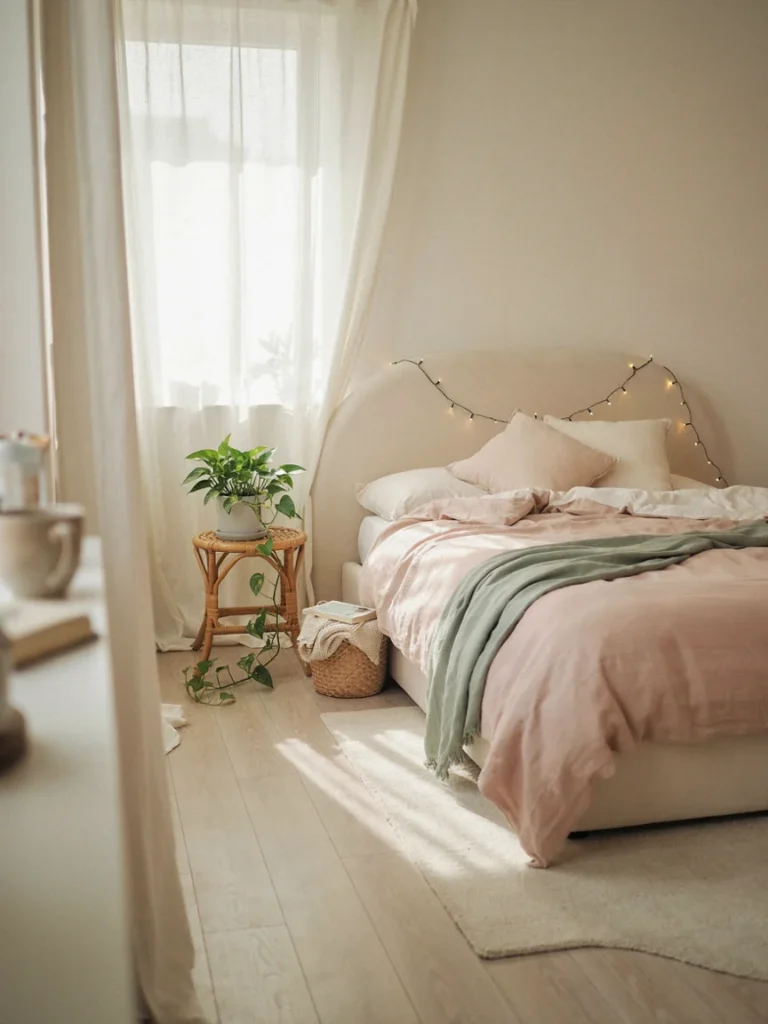
Korean bedroom decor, often associated with the clean, soft aesthetic seen throughout Korean interior content and lifestyle media, centers on a few consistent ideas, which can also inspire seasonal touches like Christmas bedroom decor DIY projects.
The palette leans toward soft neutrals, cream, beige, dusty pink, and sage green, occasionally paired with pastel accents that feel gentle rather than saturated. White is used generously as a base, but it is almost always a warm white rather than a stark, cool one.
Furniture in this style tends to be low profile and rounded. Platform beds sit close to the floor, nightstands and dressers favor soft curved edges over sharp corners, and a general sense of airiness runs through the whole room. Storage is usually built in or concealed, since visual clutter works directly against the calm this style is trying to create.
Textiles carry a lot of the personality here. Waffle knit throws, linen bedding in soft neutral tones, and a single plush rug in a muted color all show up constantly. Lighting stays warm and layered, often built around a simple pendant, a small table lamp, and sometimes a strand of warm fairy lights tucked along a headboard or shelf for a soft evening glow.
Decor stays intentionally minimal but rarely feels cold. A small gallery of simple framed prints, a single trailing plant, and a scattering of candles or ceramic objects on a nightstand tend to be the extent of it. The overall effect reads as fresh, soft, and quietly aspirational, the kind of bedroom that photographs beautifully in natural morning light.
Mirrors deserve special mention here too, since they show up constantly in this style and serve a genuinely practical purpose beyond decoration. A large, simply framed mirror leaning against a wall bounces available light around the room, which reinforces the bright, airy quality this style depends on while also doubling as a functional dressing mirror in a room that otherwise avoids visual clutter.
What Defines Japanese Bedroom Decor
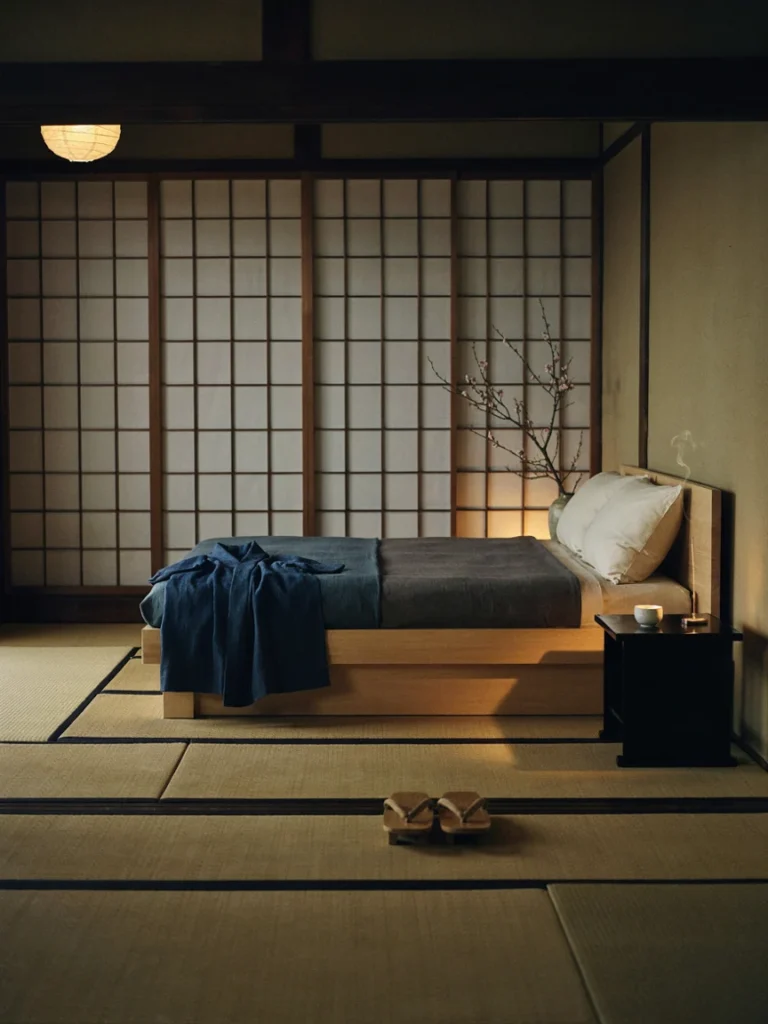
Japanese bedroom decor draws from a much older design tradition, and the difference shows in almost every choice, starting with the philosophy behind the room rather than just its color scheme.
The Principles Behind Japanese Style Bedroom Decor
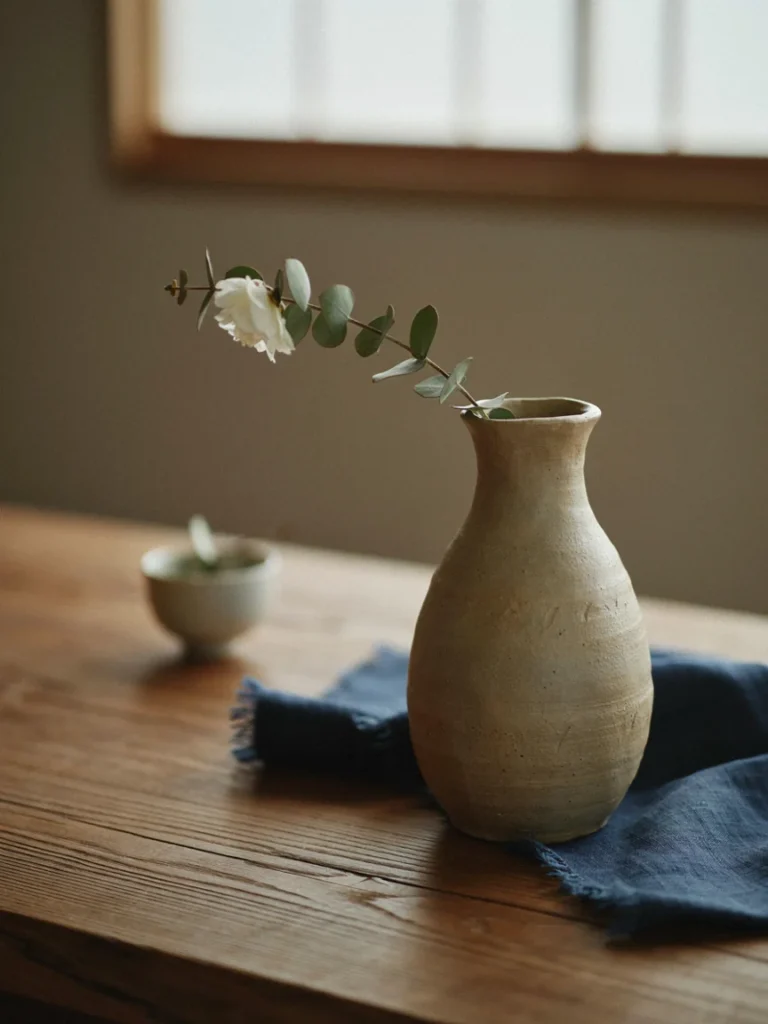
Traditional Japanese interiors are shaped by two closely related ideas, wabi sabi and ma. Wabi sabi celebrates imperfection and the natural beauty of aged, simple materials rather than polish and symmetry.
Ma refers to the intentional use of empty space, treating what is left out of a room as just as important as what is included. Together these principles explain why authentic japanese style bedroom decor often looks sparser and more deliberate than other minimalist aesthetics, since every object in the room needs to earn its place.
These are not just abstract design theories either. Wabi sabi in particular shows up in very concrete choices, a wood grain left visible rather than painted over, a slightly uneven ceramic vase chosen over a perfectly symmetrical one, a single crack in a piece of pottery repaired visibly rather than hidden.
Understanding this underlying philosophy makes it much easier to shop for the right pieces, since the goal is never flawless uniformity the way it might be in a more conventional modern style.
Furniture and Layout in Japanese Bedroom Decor Ideas
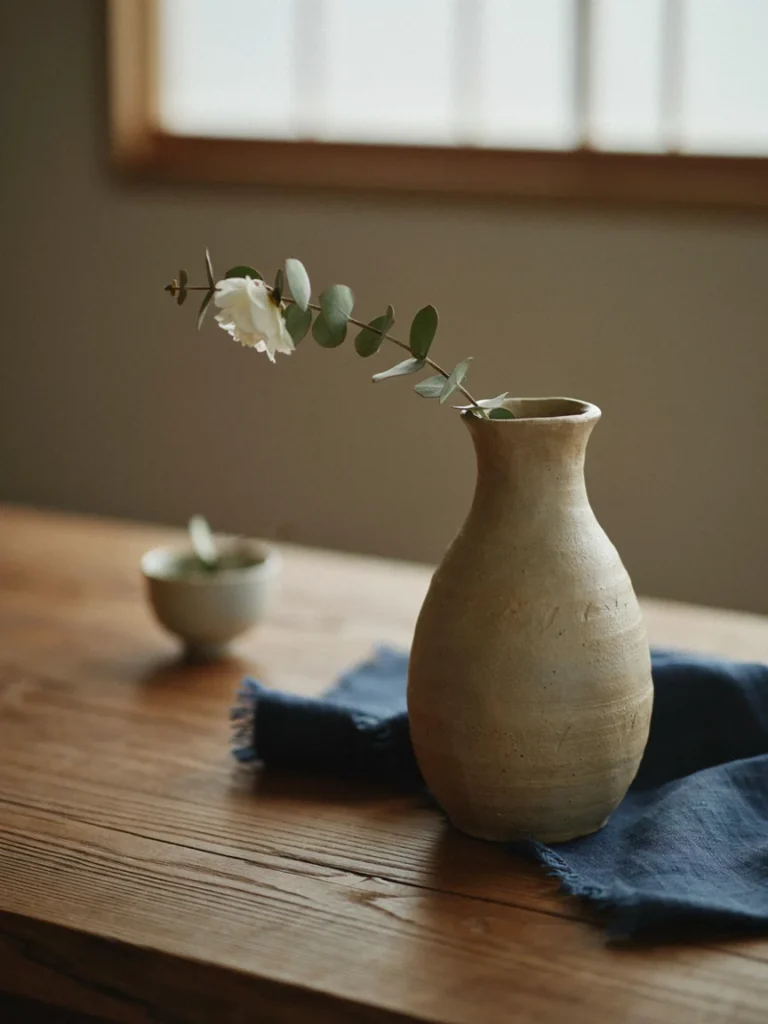
Low furniture defines this style even more strongly than in the Korean equivalent. A traditional futon laid directly on a tatami mat, or a very low platform bed, is one of the most recognizable japanese bedroom decor ideas, and it reflects a genuine cultural sleeping tradition rather than a purely aesthetic choice.
Shoji screens, sliding paper panels in wood frames, appear as room dividers, closet doors, or window coverings, diffusing light softly rather than blocking it entirely.
Storage in this style is almost always hidden, often built directly into the walls or floor level cabinetry, which keeps the visible room as uncluttered as possible. Natural materials dominate, particularly light unfinished wood, woven tatami or rush matting, and paper or linen textiles rather than anything glossy or synthetic.
Color and Material Choices for Japanese Inspired Bedroom Decor
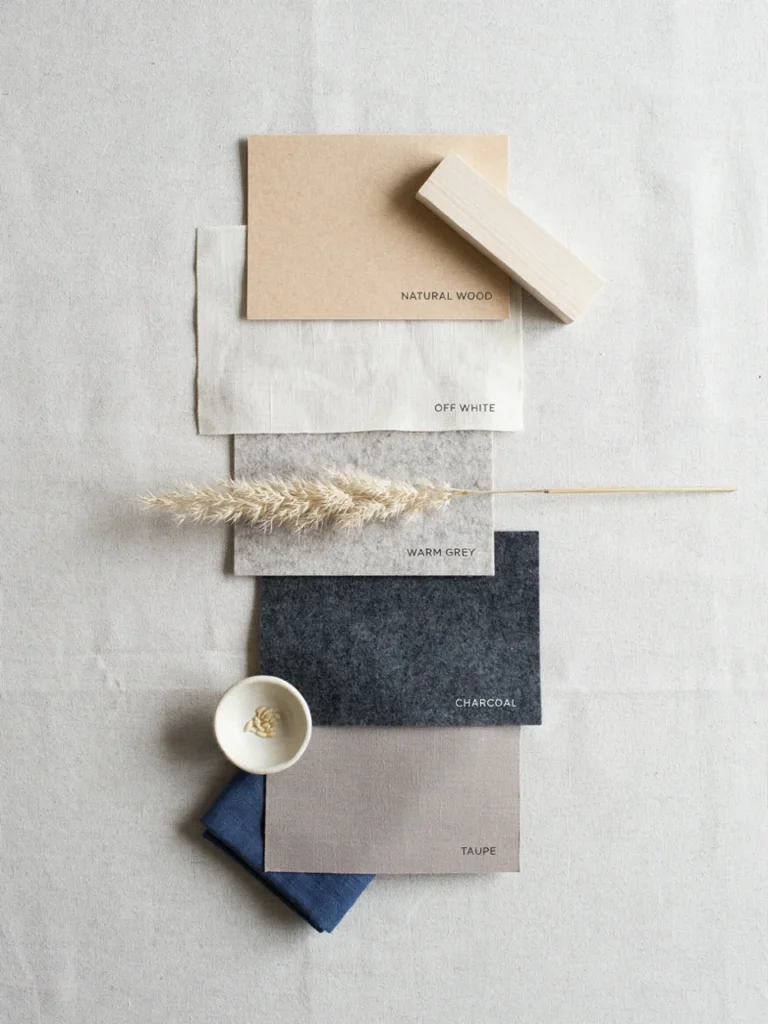
The palette for japanese inspired bedroom decor stays deliberately restrained. Natural wood tones, off white, warm grey, and deep charcoal or black used sparingly for contrast make up the vast majority of the color story.
Unlike the pastel accents common in Korean styling, Japanese interiors rarely introduce bright or saturated color at all, relying instead on the natural variation in wood grain and textile texture for visual interest.
Lighting follows the same restraint. Paper lantern style fixtures, either genuine washi paper or a modern equivalent, diffuse light into a soft, even glow rather than a bright, directional beam. Overhead lighting is often avoided entirely in favor of low, ambient sources placed at multiple points around the room.
Key Differences Between Korean and Japanese Bedroom Decor
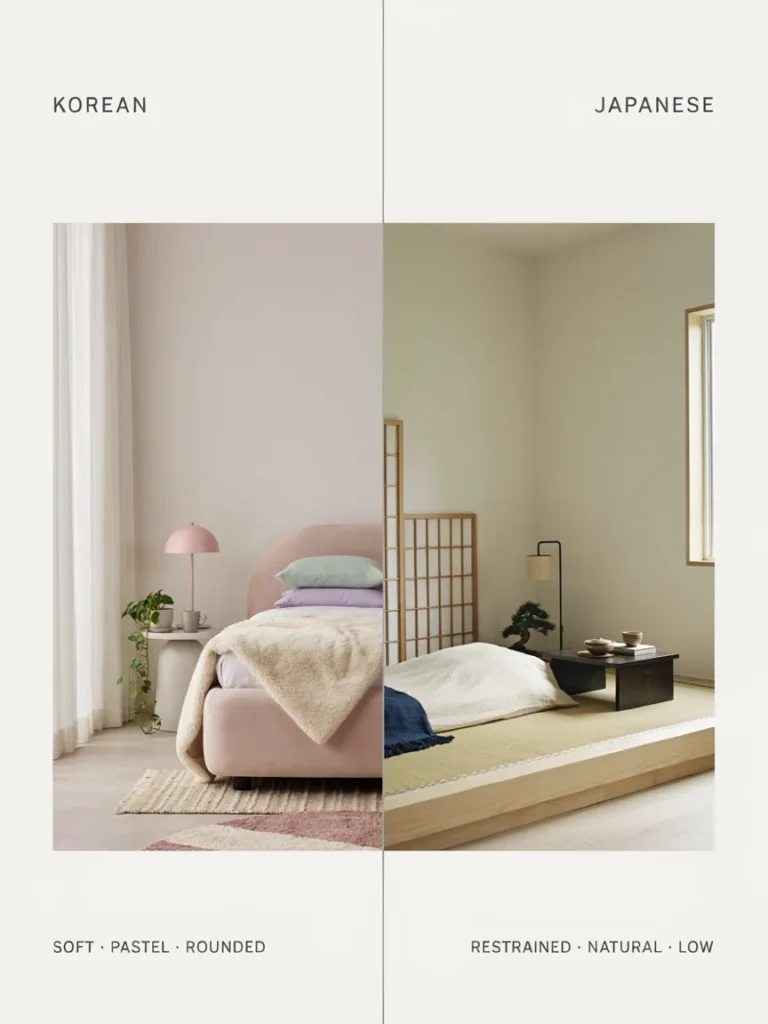
Understanding these distinctions side by side makes it much easier to shop and style with intention rather than blending the two by accident.
Color is the fastest tell. Korean bedroom decor favors soft pastels and warm neutrals, while japanese bedroom decor sticks closer to natural wood tones and a more restrained, almost monochrome palette. If a room includes dusty pink or sage green, it is reading as Korean. If it stays entirely in wood, off white, and charcoal, it is reading as Japanese.
Furniture silhouette tells a similar story. Korean styling favors soft, rounded edges and platform beds that sit a bit higher off the floor. Japanese styling goes lower still, often all the way to a floor level futon, and favors straight, simple lines over curves.
Decoration density differs too. Korean bedrooms, while minimal compared to a maximalist style, still typically include a few personal touches, framed prints, a plant, some candles. Japanese bedrooms push restraint further, often leaving walls almost entirely bare and treating a single well chosen object as more powerful than a small collection of them.
Finally, the materials used tell you which tradition a room is actually drawing from. Korean decor leans on textiles, soft rugs, knit throws, and linen bedding, to create warmth. Japanese decor leans on natural raw materials themselves, wood grain, paper, and woven matting, to create the same sense of calm through a different route entirely.
A simple way to keep these distinctions straight while shopping is to ask what is doing the work of creating warmth in a given piece. If the answer is texture and softness, like a knit throw or a plush rug, it belongs to the Korean tradition. If the answer is the material’s natural character, like unfinished wood grain or the texture of handmade paper, it belongs to the Japanese one.
How to Blend Korean and Japanese Inspired Bedroom Decor
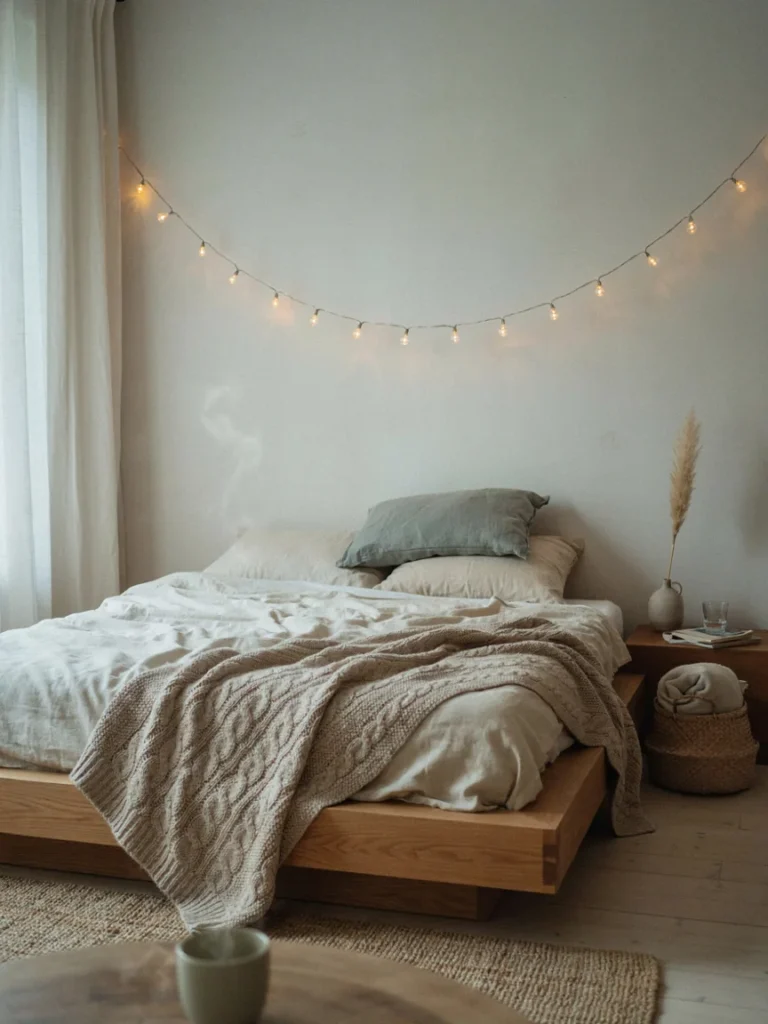
Plenty of people are drawn to elements of both styles, and there is nothing wrong with combining them thoughtfully, as long as it is done with intention rather than by accident.
A practical approach is to let one style lead the room’s structure while the other contributes smaller accents. A Japanese inspired bedroom decor foundation, low furniture, natural wood, a restrained palette, can be softened with a Korean influenced textile layer, a waffle knit throw or a linen duvet in a warm neutral tone. This keeps the room grounded in one clear tradition while borrowing warmth from the other.
Lighting is an especially easy place to blend the two, since both styles already favor warm, layered light over anything harsh or overhead. A paper lantern style fixture paired with a small strand of warm string lights borrows convincingly from both traditions without feeling contradictory.
Avoid combining the boldest signals from each style in the same space, a bright pastel accent wall alongside a stark, empty Japanese style room, since the contrast reads as confused rather than intentional. Pick which tradition will define the color and furniture, and let the other simply add texture on top.
A useful test before finalizing a blended room is to imagine describing it to someone else in a single sentence. If you can say a Japanese inspired room warmed up with soft Korean textiles, the blend has a clear direction.
If the description requires listing five unrelated elements from both traditions with no obvious lead, the room likely needs more editing before it reads as intentional rather than accidental.
Which Style Actually Fits Your Room and Personality
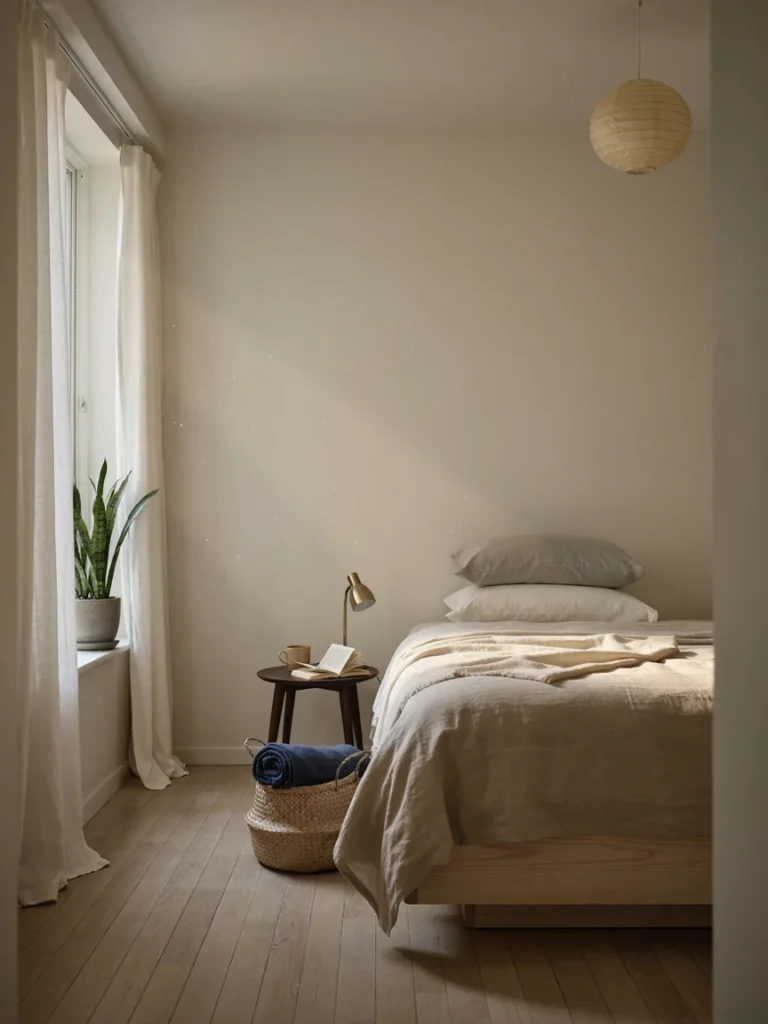
Beyond aesthetics alone, a few practical factors help determine which direction will genuinely work better in your specific space.
Consider your room’s natural light first. Korean bedroom decor, with its soft pastel palette, tends to look its best in rooms with plenty of natural daylight, since the pastels can read as flat or muddy under weak or artificial light alone. Japanese bedroom decor, leaning on natural wood and warm ambient lighting, handles dimmer rooms more gracefully, since the style was never designed to depend on bright daylight in the first place.
Think honestly about how you actually use decorative objects too. If you enjoy displaying photos, plants, and small personal items, the slightly more forgiving Korean approach will likely feel more comfortable to live with day to day.
If you find visual clutter genuinely stressful and gravitate toward very bare, uncluttered spaces already, the stricter restraint of Japanese styling may suit your natural habits better rather than fighting against them.
Floor level furniture is also a real physical consideration, not just an aesthetic one. A traditional futon or very low platform bed, central to authentic japanese bedroom decor ideas, requires getting up and down from a much lower height than a standard bed frame.
This is worth testing in person before committing, particularly for anyone with knee or mobility concerns, since the low profile that defines the look is not simply a style choice but a genuine physical experience that not everyone finds comfortable long term.
Budget Friendly Ways to Style Either Look
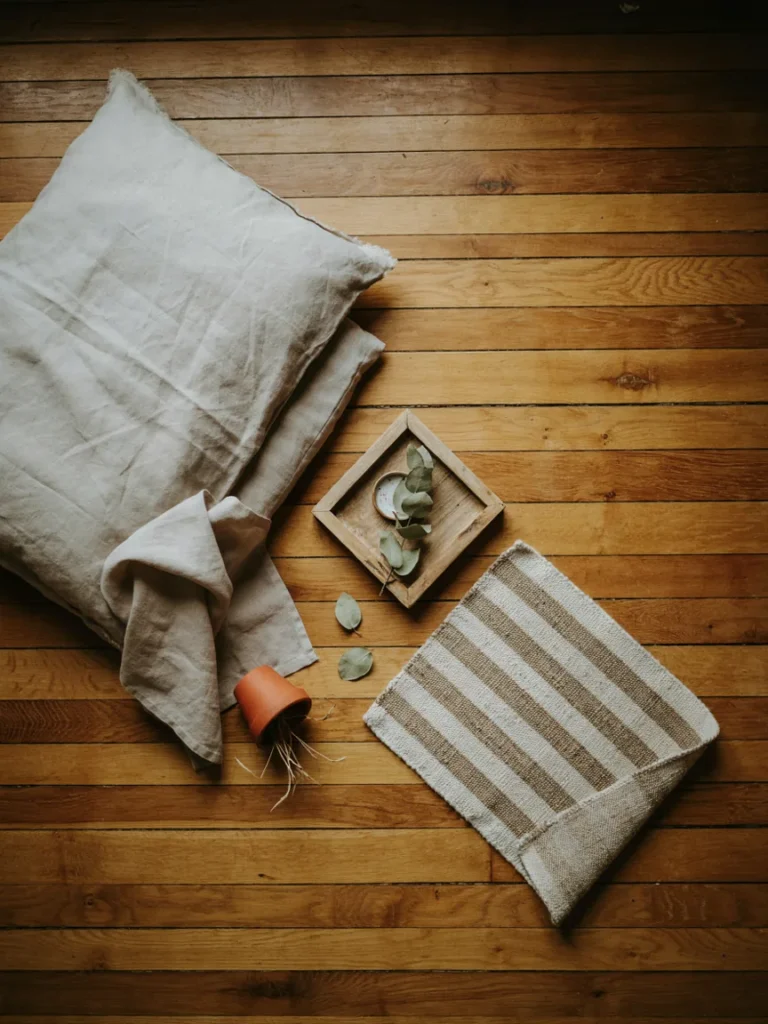
You do not need to import furniture to get either aesthetic right.
Start with bedding and textiles. For a Korean influenced room, a linen duvet cover in a soft neutral or pastel tone does more for the overall look than almost any other single purchase. For a Japanese direction, a simple cotton or linen bedding set in off white or charcoal achieves the same effect.
Shop secondhand for low furniture. Platform beds and low profile nightstands can be harder to find new at a reasonable price, but secondhand marketplaces frequently carry exactly this kind of furniture at a fraction of retail cost, since low profile pieces have fallen in and out of mainstream popularity over the decades.
Use paint to control the palette cheaply. A single wall in warm white, soft beige, or muted charcoal shifts the entire mood of a room for the cost of one can of paint, which is considerably cheaper than replacing furniture to match a new color direction.
Add natural materials gradually. A woven rug, an unfinished wood tray, or a simple paper lantern light fixture can be introduced one at a time as budget allows, rather than requiring a full room overhaul in a single shopping trip.
Declutter before buying anything new. Both styles depend heavily on restraint, and clearing visible clutter costs nothing at all while doing more for the overall mood than most individual purchases could achieve on their own.
Common Mistakes When Styling Korean or Japanese Bedroom Decor
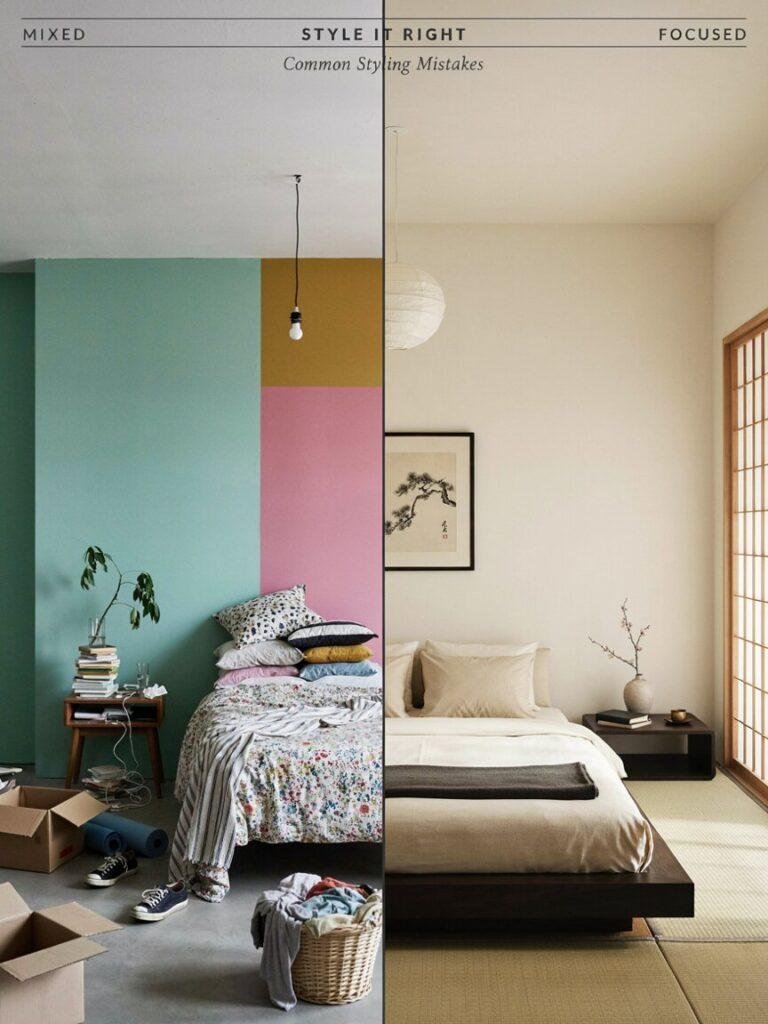
A handful of avoidable missteps show up constantly in attempts at either style.
Treating both styles as interchangeable. Shopping for generic Asian inspired decor without distinguishing between the two traditions is the single most common mistake, and it usually results in a room that reads as neither style clearly.
Overfilling a Japanese style room. The restraint at the core of this aesthetic gets lost quickly if too many decorative objects creep back in. A single well chosen item on a shelf does more than five smaller ones competing for attention.
Choosing bright white over warm white. Both styles rely on warmth, and a stark, cool toned white paint or bedding choice undercuts that instantly, regardless of which direction you are aiming for.
Skipping the lighting plan. Harsh overhead lighting fights against the soft, layered mood both styles depend on. Warm bulbs and multiple smaller light sources matter just as much as furniture and color choice.
Forgetting scale. Furniture designed for a larger traditional bedroom can overwhelm a smaller modern room. Both styles actually work particularly well in compact spaces, provided furniture is chosen at an appropriately low, streamlined scale rather than assuming bigger always reads as more luxurious.
Frequently Asked Questions
What is the main difference between korean bedroom decor and japanese bedroom decor?
Korean bedroom decor favors soft pastels, rounded furniture, and layered textiles for warmth, while japanese bedroom decor sticks to natural wood tones, very low furniture, and a more restrained, minimal approach to decoration. Color palette and furniture silhouette are the fastest ways to tell them apart.
What colors work best for japanese style bedroom decor?
Natural wood tones, off white, warm grey, and charcoal used sparingly for contrast define this palette. Bright or saturated colors are rare in authentic Japanese styling, which relies on material texture rather than color for visual interest.
Can I mix korean and japanese inspired bedroom decor in the same room?
Yes, as long as one style leads the overall structure and color while the other contributes smaller accents like textiles or lighting. Combining the boldest elements of both at equal intensity tends to read as confused rather than intentional.
What furniture is essential for japanese bedroom decor ideas?
A low platform bed or floor level futon is the most defining piece, often paired with hidden storage and simple wood furniture with straight, uncomplicated lines. Shoji screens are a strong secondary addition if privacy or light diffusion is needed.
Is korean bedroom decor considered minimalist?
It is minimalist compared to a maximalist style, but it typically allows more personal decorative touches, like framed prints, plants, or candles, than the stricter restraint found in Japanese styling. It sits somewhere between full minimalism and a softer, cozier aesthetic.
Which style works better in a room with limited natural light?
Japanese bedroom decor tends to hold up better in dimmer rooms, since its natural wood tones and warm ambient lighting were never designed to depend on strong daylight. Korean styling, with its soft pastel palette, generally looks best in rooms that receive plenty of natural light throughout the day.
Conclusion
Getting either Korean bedroom decor or Japanese bedroom decor right starts with understanding that they are genuinely different traditions rather than one broad Asian-inspired bedroom decor look.
Choose your color palette first, soft pastels and warm neutrals for Korean styling, restrained wood tones and quiet contrast for Japanese, then build furniture, lighting, and textiles around that decision rather than mixing signals from both directions at once.
Start with the single change that will move the needle most, a new bedding set, a lower profile piece of furniture, or a warmer lighting setup, and build outward from there. A room styled with a clear direction in mind will always read as more intentional than one assembled from a scattered mix of ideas that never quite settled on either tradition.
Give the room time to develop, too. Both of these styles reward patience over speed, since the most convincing versions of either look tend to be assembled gradually rather than purchased all at once. Live with your first few changes for a few weeks before adding more, and let the direction you have already chosen guide every purchase that follows.
Ready to transform your space? Browse our full collection of korean and japanese bedroom decor pieces to find what fits your style and your room.