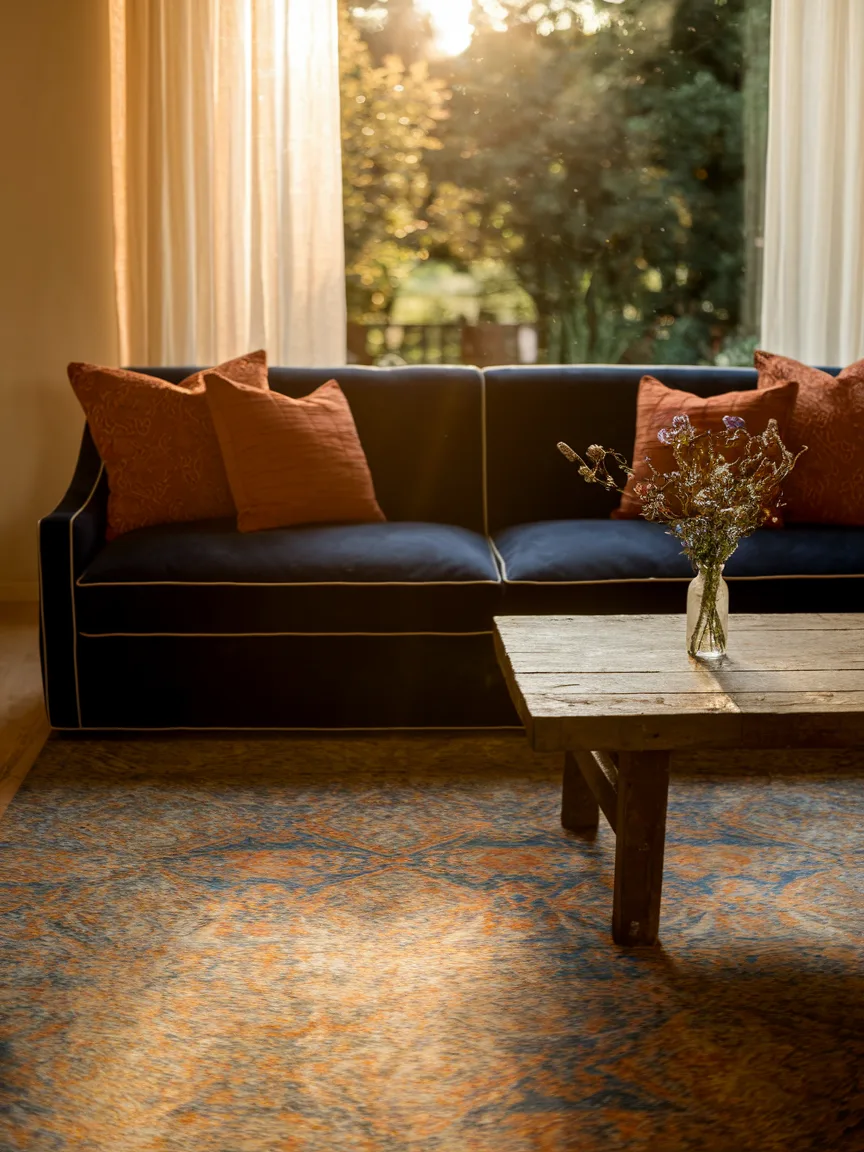
Blue and orange living room decor works because the two colors sit opposite each other on the color wheel, so each one makes the other look brighter and richer. For a balanced look, choose one color as your base, use the other as an accent, and soften both with neutrals like cream, white, gray, or wood tones.
The best part is that you do not need a big budget or a full makeover. A few pillows, a rug, and some art can shift your room’s whole mood in a weekend.
Many people love this pairing but worry it will look loud, like a sports team room. Others are not sure which shades go together or how much of each color to use. This guide answers those questions. You will learn how to pick the right shades, follow a simple balance rule, and choose furniture, textiles, and art that work together.
We will look at orange and blue living room decor for different moods, and at navy blue and orange living room decor for a more grown up feel. You will also find a comparison table, budget ideas, common mistakes, and answers to common questions.
Why Blue and Orange Work So Well Together
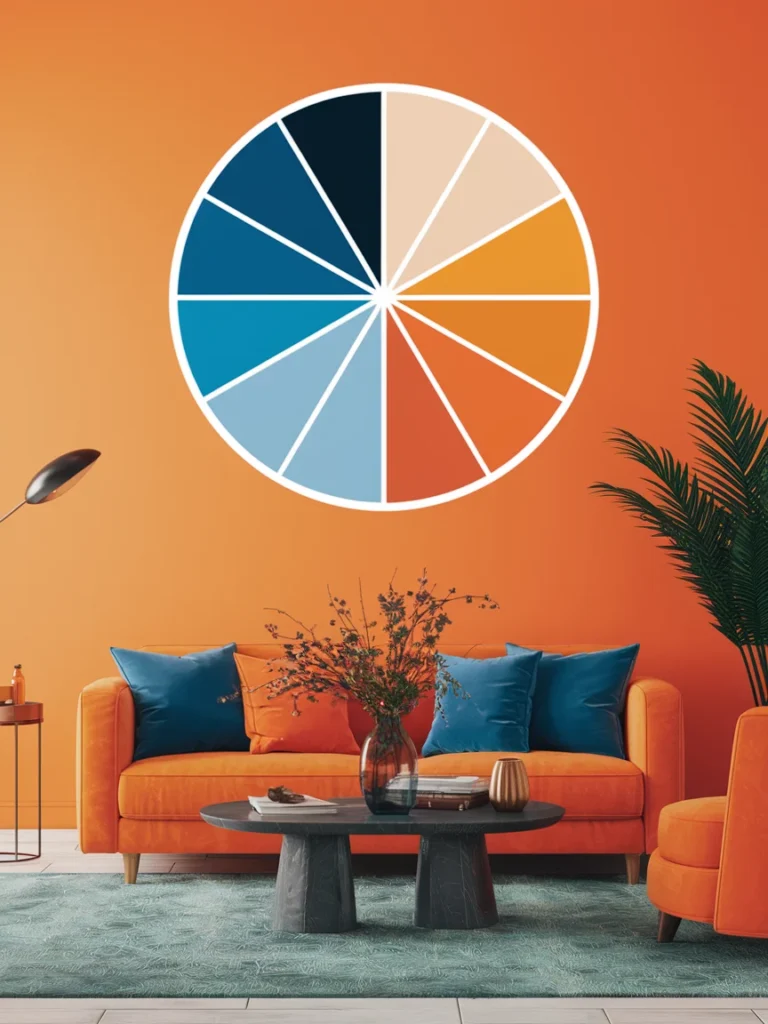
Blue and orange are complementary colors, which means they are opposites on the color wheel. Opposites create strong contrast, and that contrast gives a room energy. Blue feels calm and cool. Orange feels warm and friendly. Together they create a lively space without being chaotic, making them a great combination for cabin living room decor.
This pairing also shows up in nature all the time. Think of a sunset over the ocean or a desert sky at dusk. Your eye already finds these colors pleasing, so a room built on them often feels natural and welcoming.
The Feeling Each Color Brings
Blue is linked with calm, trust, and rest. Orange is linked with warmth, comfort, and fun. In a living room, that mix makes sense. You want a space where people can relax, but you also want it to feel alive when friends visit. Using both colors gives you a room that does both jobs.
Why It Works in Almost Any Style
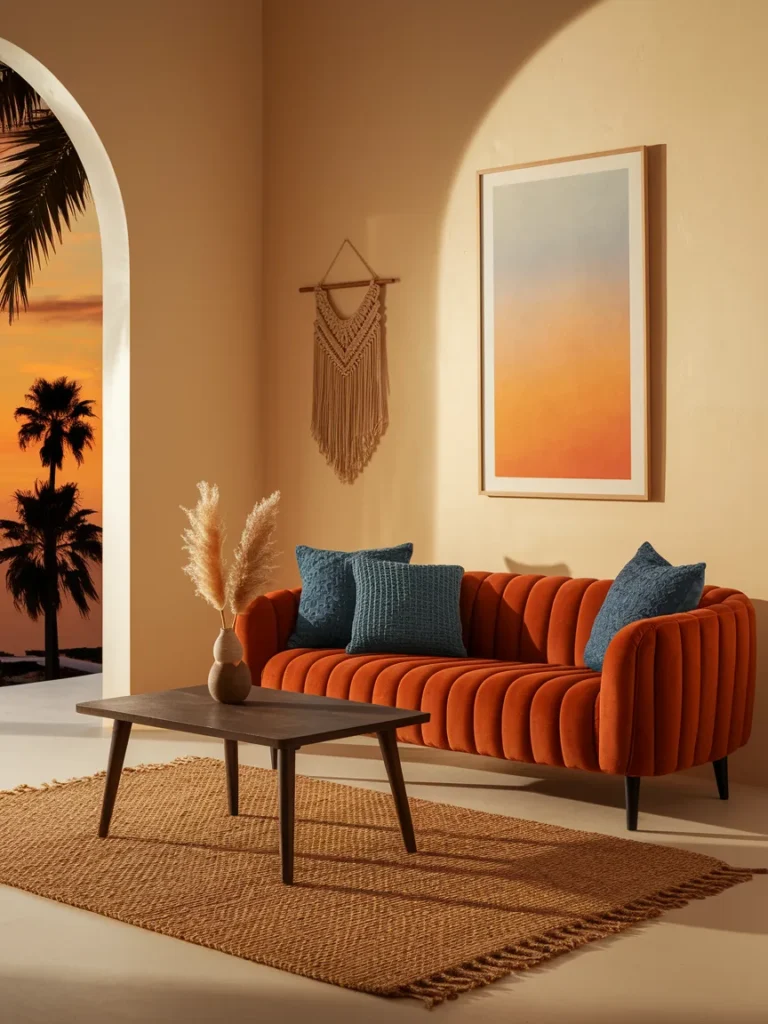
You can use this color pair in modern, coastal, mid century, farmhouse, boho, and traditional rooms. A modern room might use a navy sofa and a single burnt orange chair. A boho room might use a patterned rug with both colors and a pile of mixed pillows. The colors stay the same, but the shapes and textures change the style.
Blue and Orange vs. Other Color Pairs
Compared with red and green, blue and orange feels fresher and less holiday like. Compared with gray and yellow, it feels warmer and richer. If you want a bold pair that still feels comfortable at home, this one is a strong choice.
Choose the Right Shades
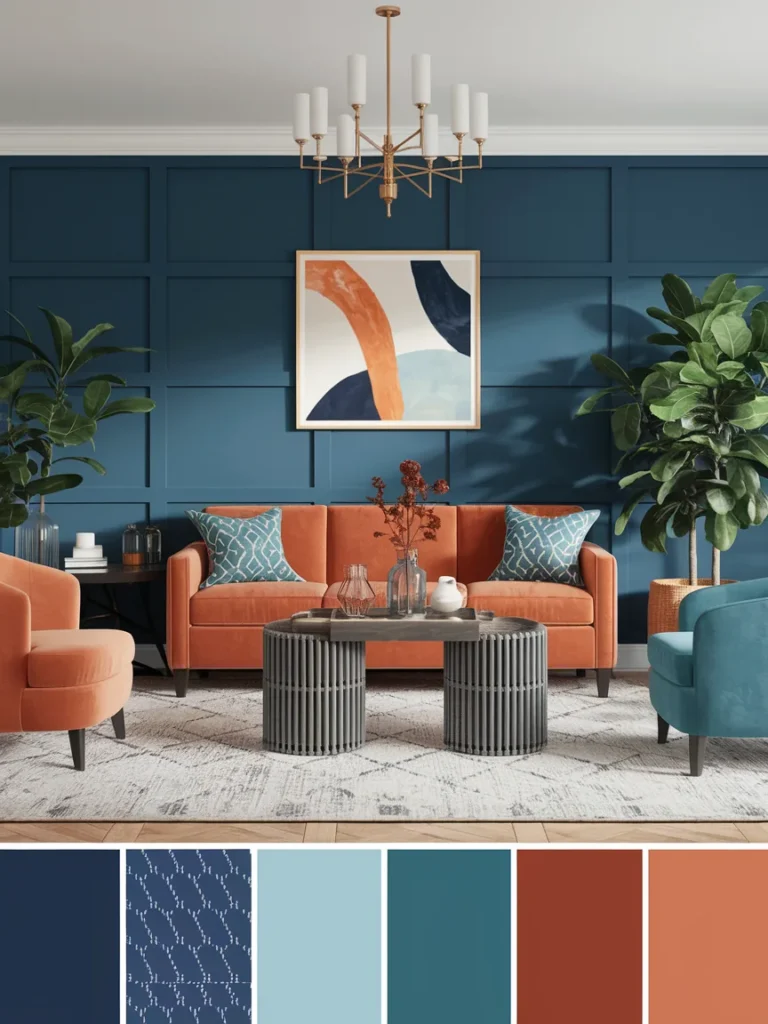
The shades you pick matter more than the colors themselves. Bright blue and bright orange together can feel harsh. Softer or deeper versions feel more polished.
Navy Blue and Orange Living Room Decor
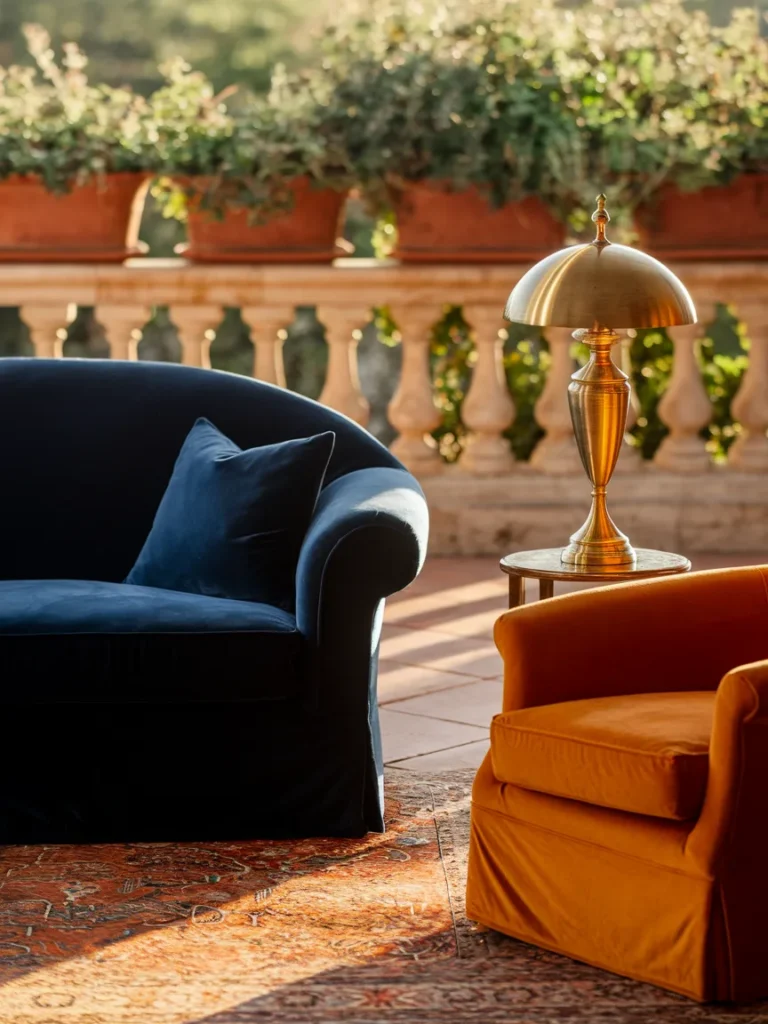
Navy blue and orange living room decor is the most popular version of this pairing, and for good reason. Navy is deep and steady, so it acts almost like a neutral. Burnt orange, rust, or terracotta looks rich against it. This combination feels classic and confident. It suits leather sofas, wood tables, and brass accents.
Soft Blue and Peach or Apricot
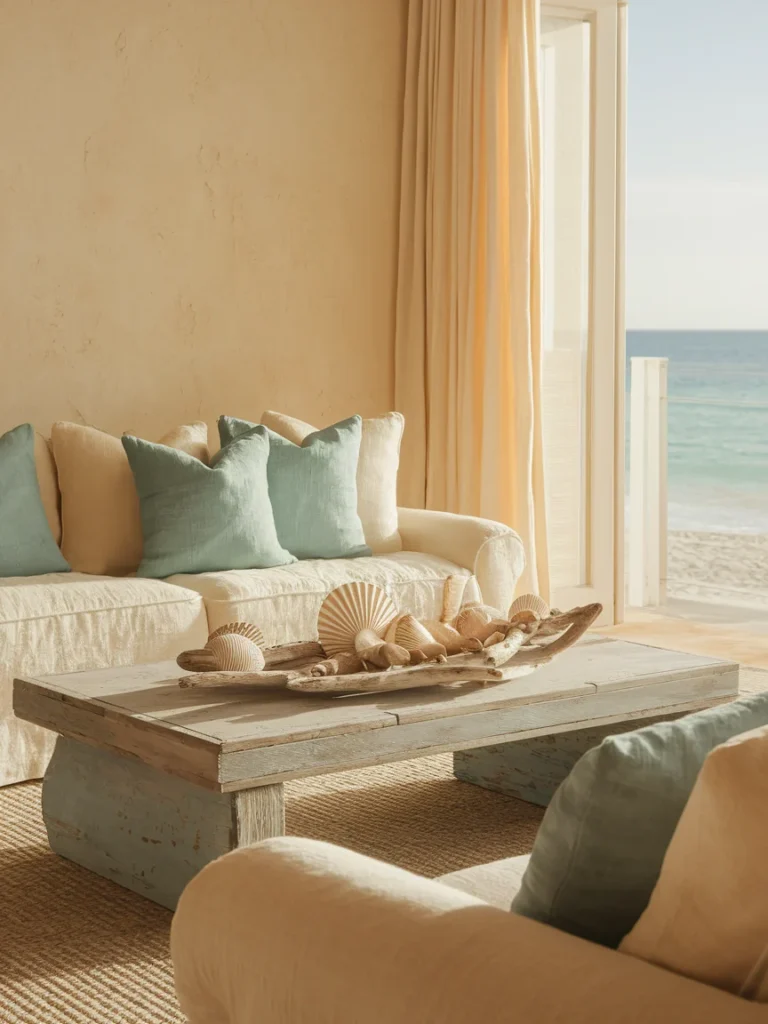
For a lighter, airier feel, try sky blue, powder blue, or soft aqua with peach, apricot, or coral. This version works well in coastal rooms and small spaces with lots of daylight. It feels relaxed and sunny.
Teal and Burnt Orange
A teal and burnt orange pairing feels bold and a little retro. Teal sits between blue and green, and it looks lovely with burnt orange. It works well in mid century rooms with wood furniture and simple lines.
Dusty Blue and Terracotta
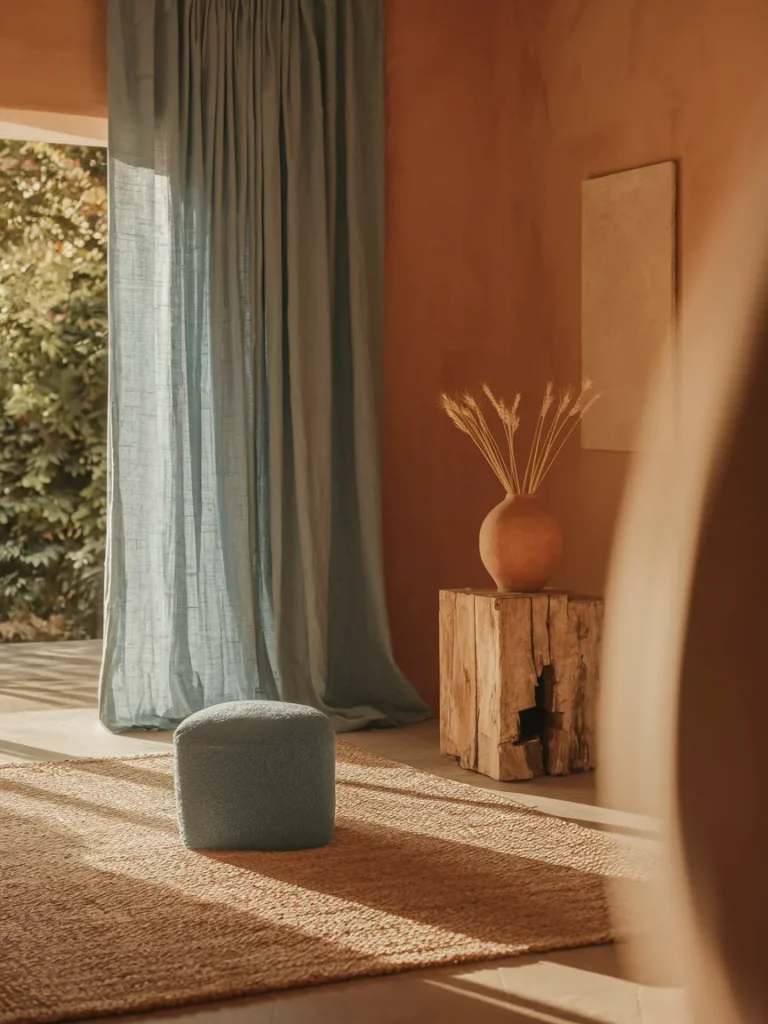
Dusty blue and terracotta create a calm, earthy look. Both colors are muted, so the room feels soft and grown up. This version pairs well with linen, jute, and natural wood.
A Simple Way to Test Shades
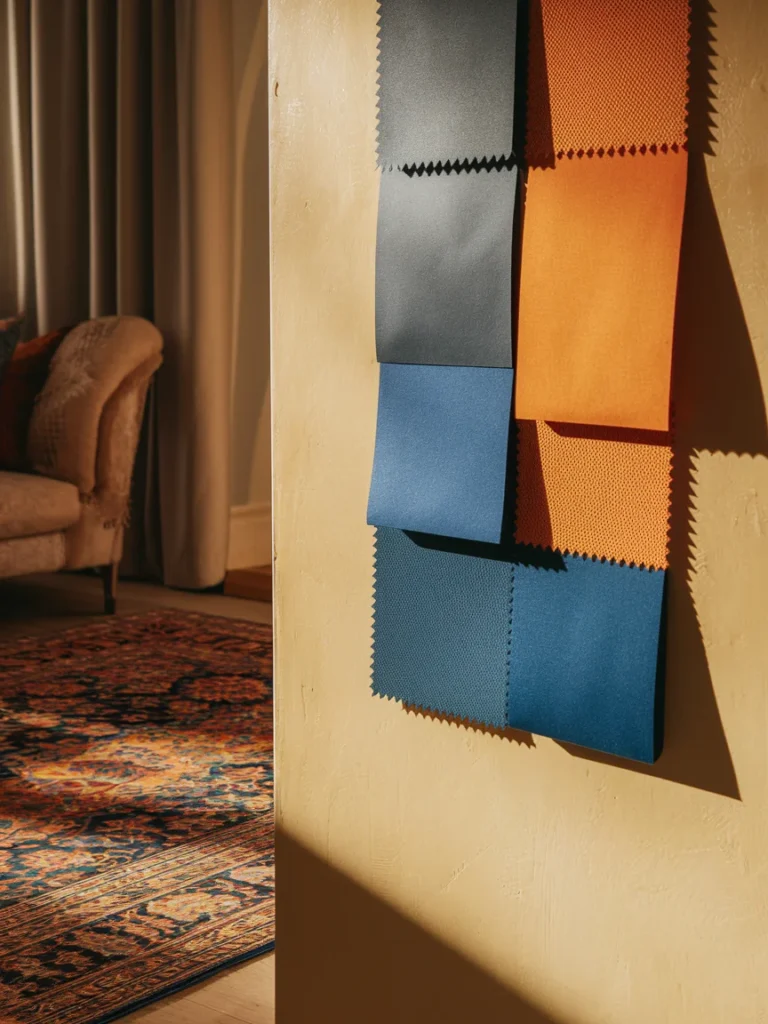
Before you buy, test your colors together. Hold fabric swatches side by side, or put paint samples on a wall and look at them in morning and evening light. Colors change under different light, and a shade that looks perfect in the store may feel too bright at home.
How to Balance the Colors in Your Room
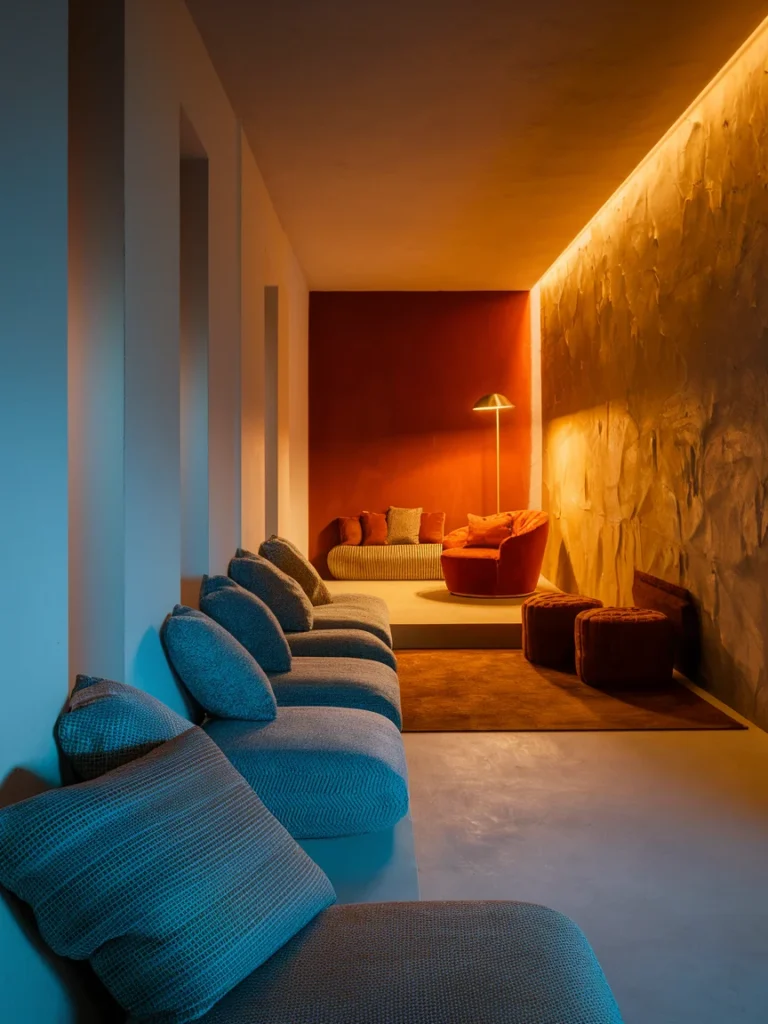
The biggest mistake with this pairing is using equal amounts of each color. Balance is what keeps the room calm.
Use the 60 30 10 Rule
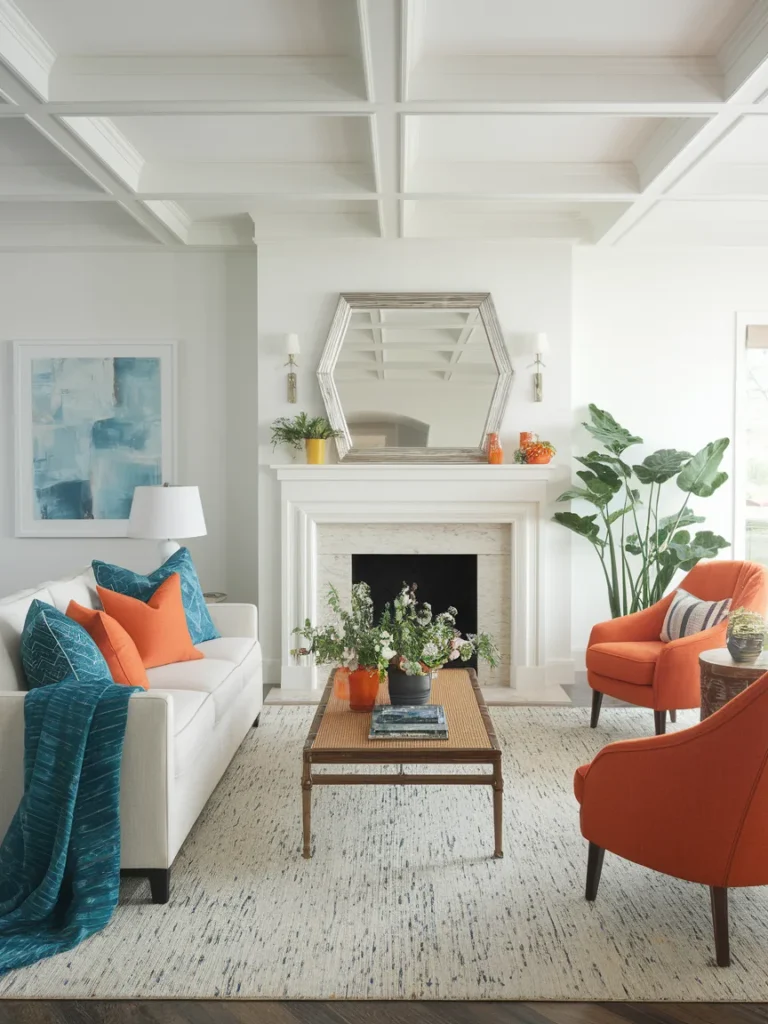
This simple rule works for almost any room. Use about 60 percent of a main color, 30 percent of a second color, and 10 percent of an accent. For blue and orange living room decor, try this:
- 60 percent: A neutral such as cream, white, gray, or wood tones
- 30 percent: Blue, in the sofa, walls, or curtains
- 10 percent: Orange, in pillows, art, and small accessories
You can flip the blue and orange if you prefer a warmer room, but keep orange as the smaller share unless you want a very bold look.
Let One Color Lead
Choose one color to be the star and one to be the supporting actor. If blue leads, use orange in small touches. If orange leads, use blue to calm it down. Trying to give both colors equal attention makes a room feel busy.
Repeat Each Color at Least Three Times
To make the room feel planned, repeat each color in at least three places. For example, use orange in a pillow, a vase, and a piece of art. Use blue in the sofa, a rug, and a lamp. Repetition ties the room together and stops any single item from looking random.
Add Neutrals to Rest the Eye
Neutrals give the eye a place to rest. White walls, a cream rug, a gray throw, or a light wood table all help. Without neutrals, the room can feel like a color explosion.
Orange and Blue Living Room Decor by Room Element
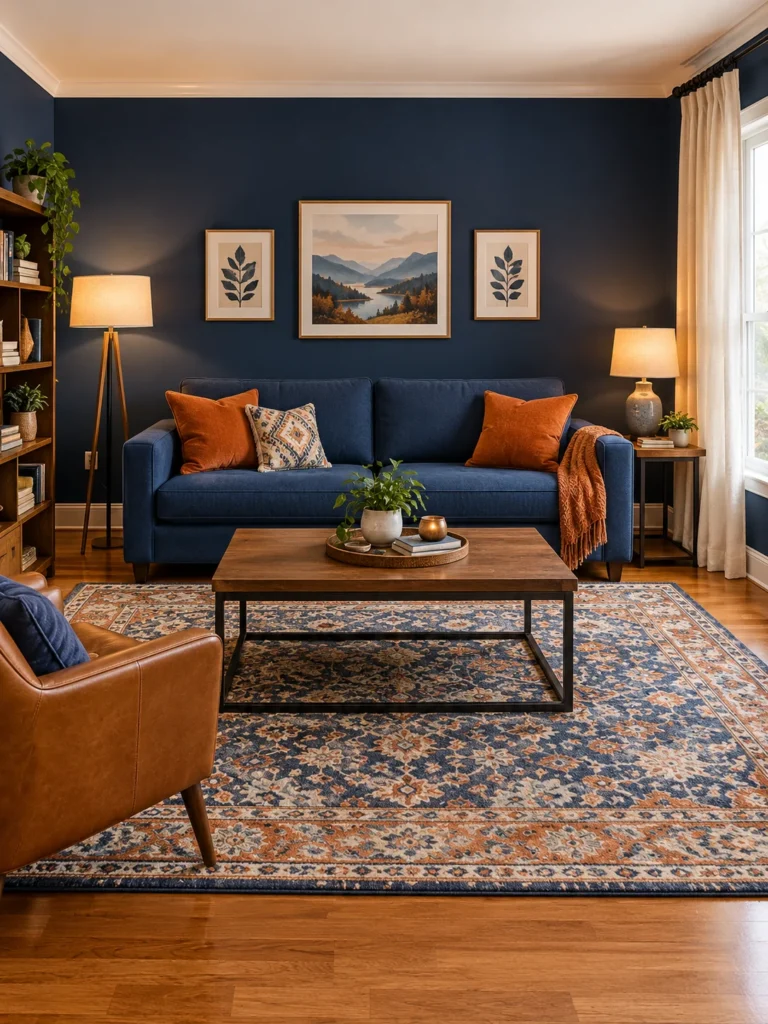
Now let us walk through the main parts of a living room and how to use these colors in each one.
Walls and Paint
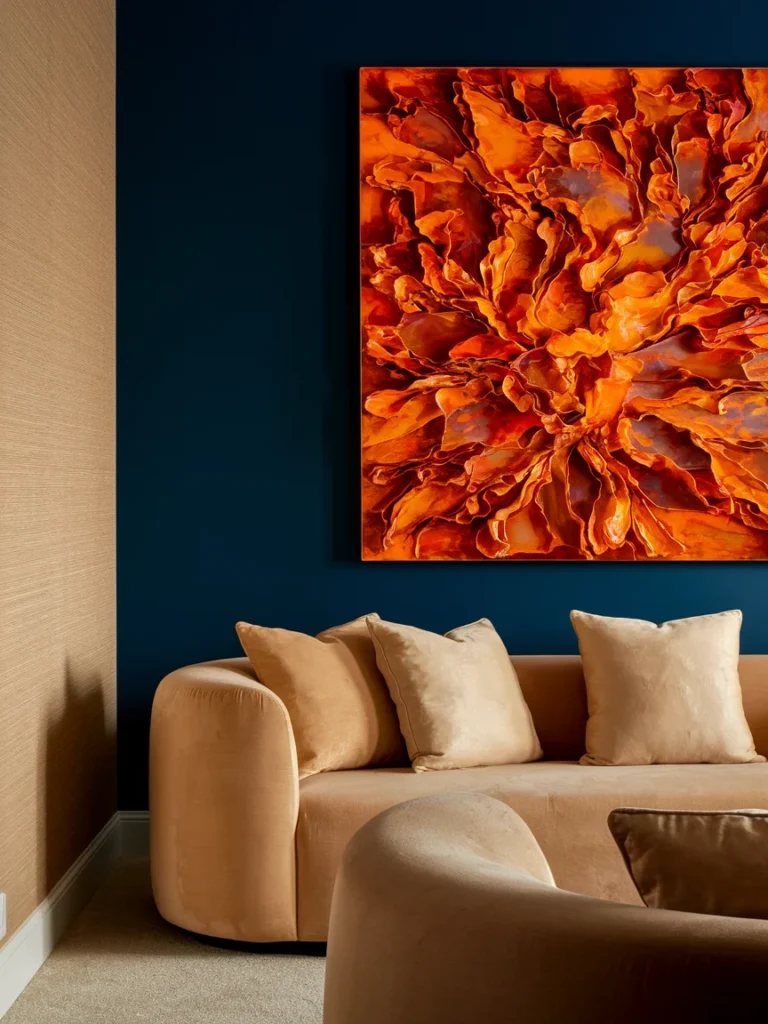
If you love bold color, a navy or deep blue accent wall makes a striking backdrop. If you prefer something softer, paint the walls warm white or light gray and bring in color elsewhere. Avoid painting every wall orange, since it can feel heavy. If you rent, peel and stick wallpaper or large art can add color without paint.
Sofas and Chairs
A navy or blue sofa is a strong base, and a rust or burnt orange chair adds a pop. If you already own a neutral sofa, you do not need to replace it. Add blue and orange through pillows and throws. Leather in a caramel or tan tone also pairs well with both colors.
Rugs
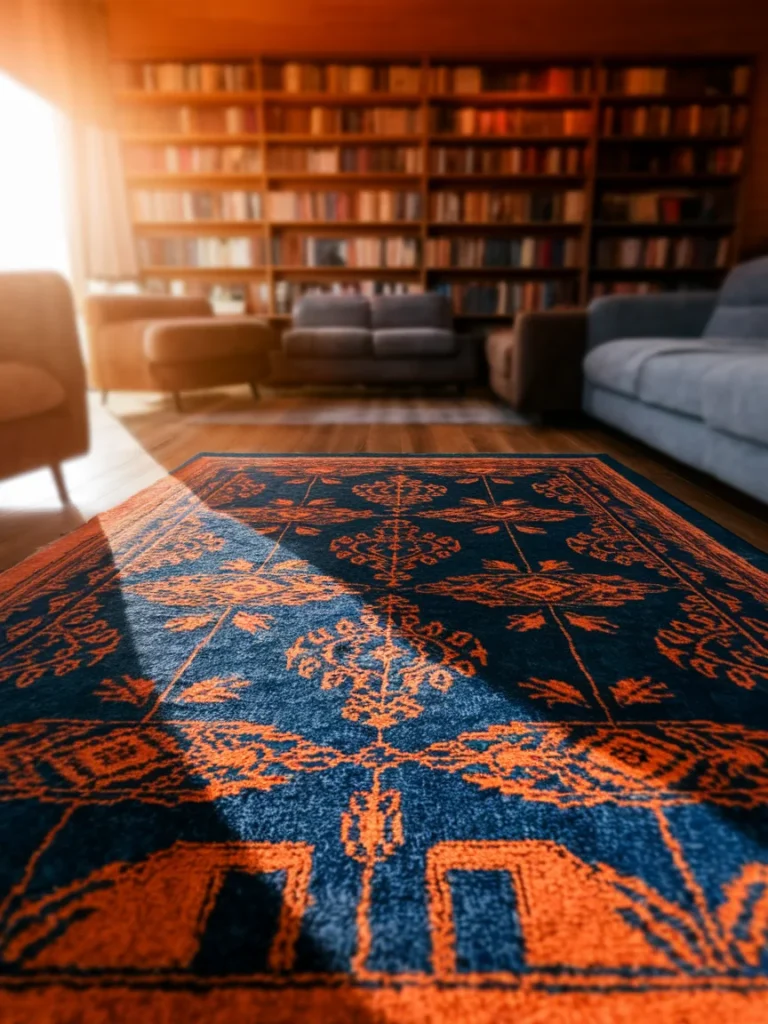
A rug with both colors can tie the room together fast. Look for patterns such as geometric shapes, stripes, or a faded vintage style. A patterned rug also makes it easier to pick pillows, since you can match the colors already inside it.
Pillows and Throws
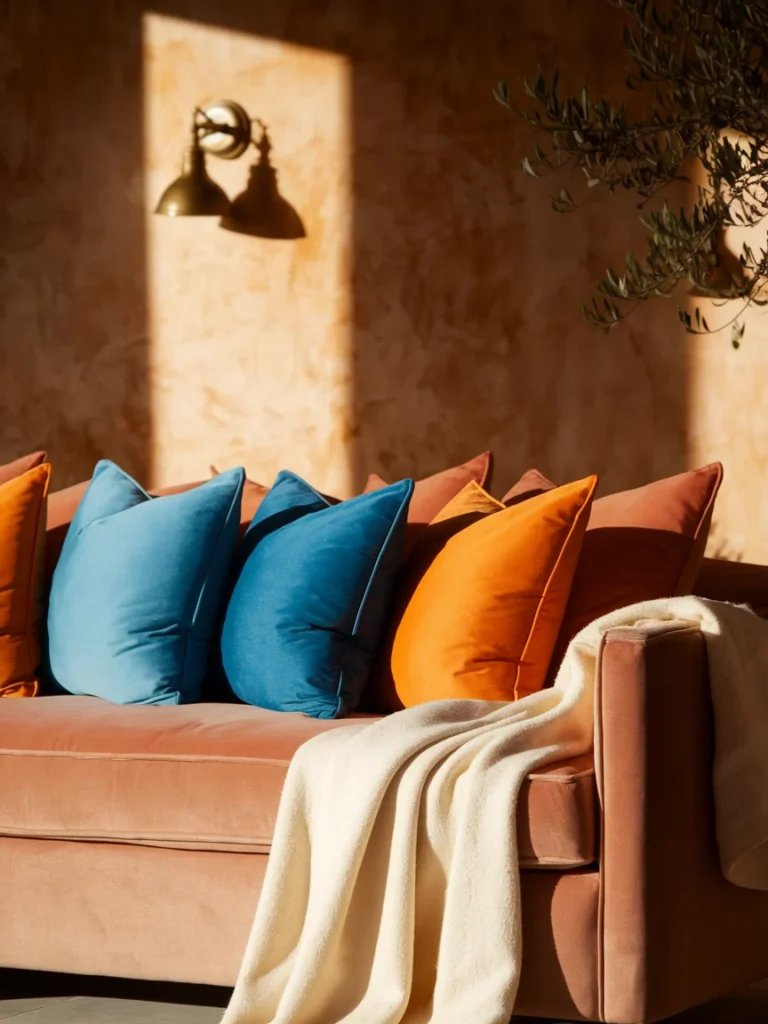
Pillows are the easiest and cheapest way to try this look. Mix solid blue pillows with orange patterned ones, or the other way around. Add a cream throw or a chunky knit blanket in a neutral shade to soften the mix. Keep to three to five pillows so the sofa does not look crowded.
Curtains
Curtains in a soft blue, cream, or gray keep the room calm. If you want a stronger look, choose a pattern that includes both colors in small amounts. Hang the rod high and wide to make windows feel larger.
Lighting
Warm bulbs make orange look richer and keep blue from feeling cold. Choose lamps with simple shapes in brass, white, or black. A blue ceramic lamp or an orange glass lamp can act as a small accent.
Comparison Table: Popular Blue and Orange Combinations
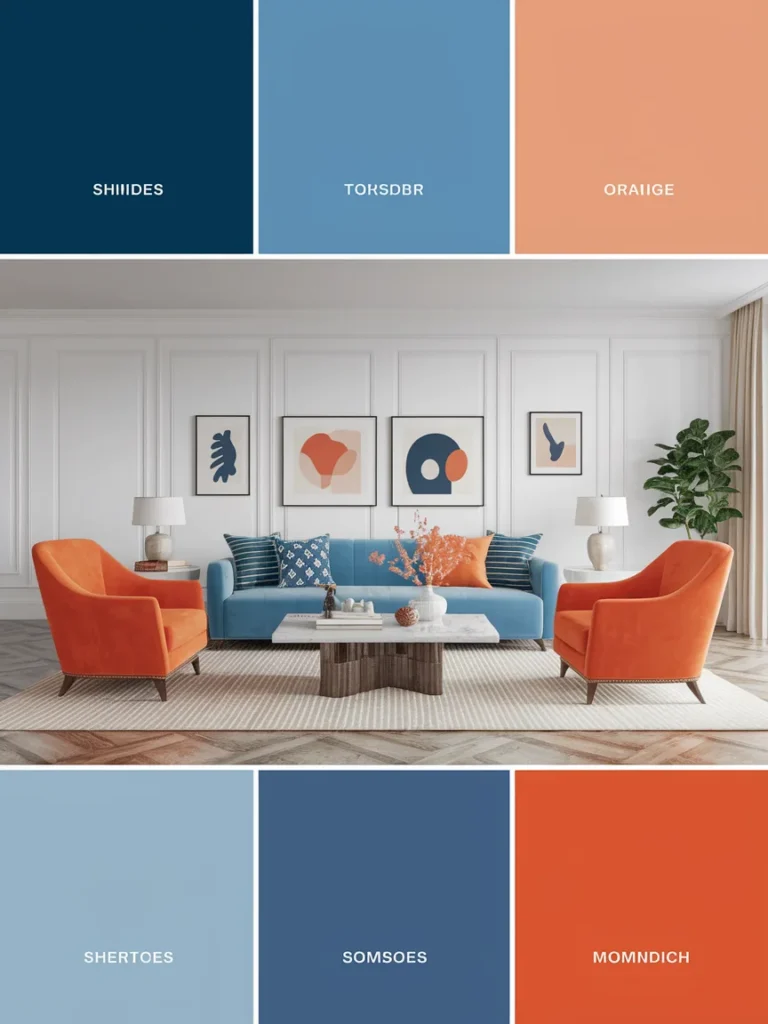
Different shade pairs create different moods. This table shows how the most popular options compare so you can pick the best fit for your room.
| Shade Pair | Mood | Best Style | Best Neutrals | Best Materials |
| Navy and burnt orange | Bold, classic, confident | Modern, traditional | Cream, white, gray | Leather, wood, brass |
| Sky blue and peach | Light, sunny, relaxed | Coastal, cottage | White, sand | Linen, cotton, rattan |
| Teal and burnt orange | Retro, rich, lively | Mid century, eclectic | Cream, walnut tones | Velvet, wood, metal |
| Dusty blue and terracotta | Calm, earthy, soft | Boho, farmhouse | Oatmeal, beige | Jute, linen, clay |
| Bright blue and bright orange | Playful, high energy | Modern, kid friendly | White, light gray | Cotton, plastic, glass |
If you are unsure, start with navy and burnt orange or dusty blue and terracotta. Both are easy to live with and work in most rooms.
Accessories, Art, and Finishing Touches
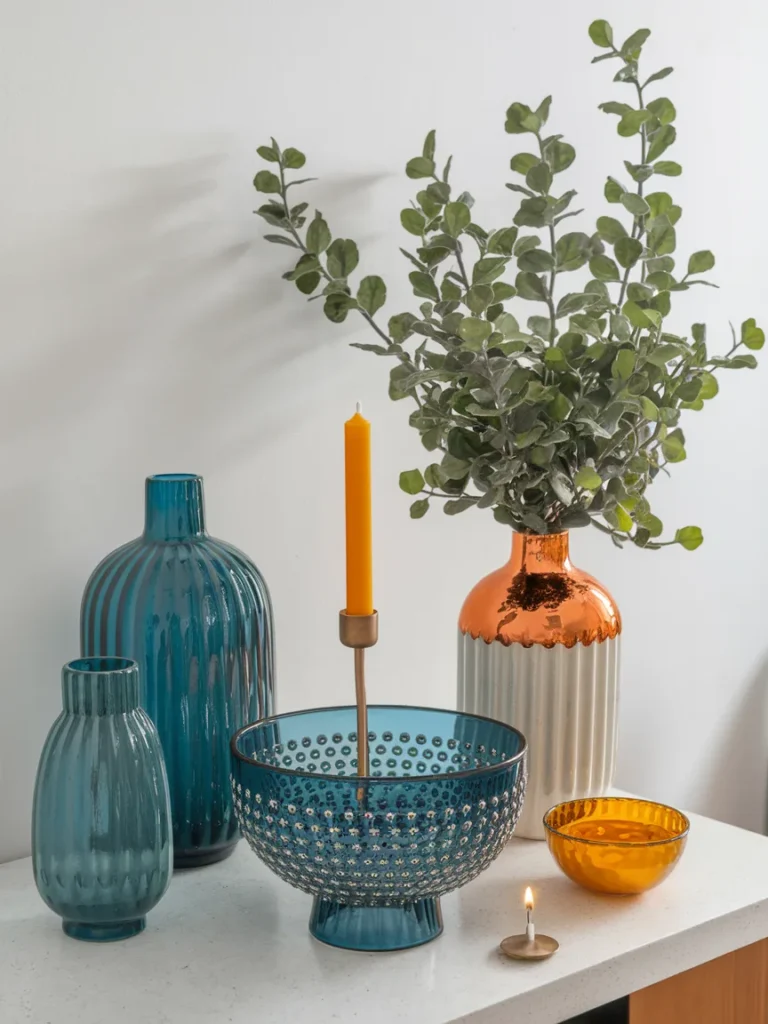
Once the big pieces are in place, small details bring the room to life.
Wall Art and Mirrors
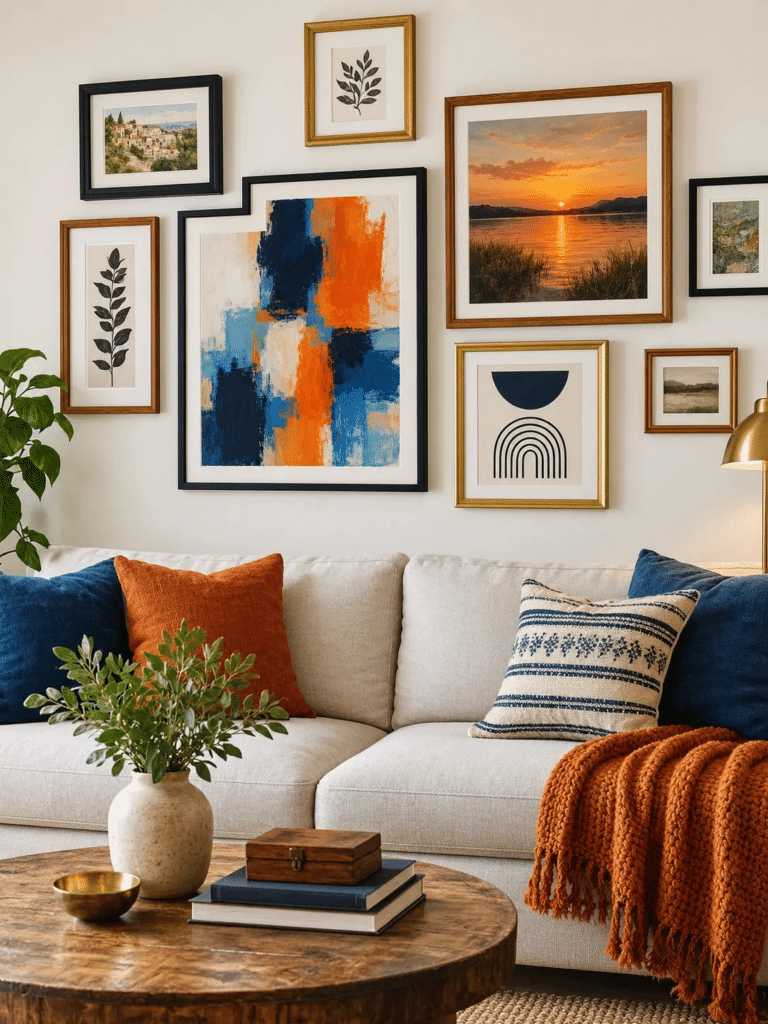
Choose art that includes both colors, such as an abstract painting, a landscape at sunset, or a simple print with blue and orange shapes. Gallery walls can mix frames in black, wood, and brass. Keep the art in a small range of colors so the wall feels calm.
Vases, Bowls, and Decor Objects
Blue ceramic vases, orange glass bowls, and brass candle holders look great on a coffee table or shelf. Group items in threes and vary their heights. Leave space so each piece can stand out.
Plants and Greenery
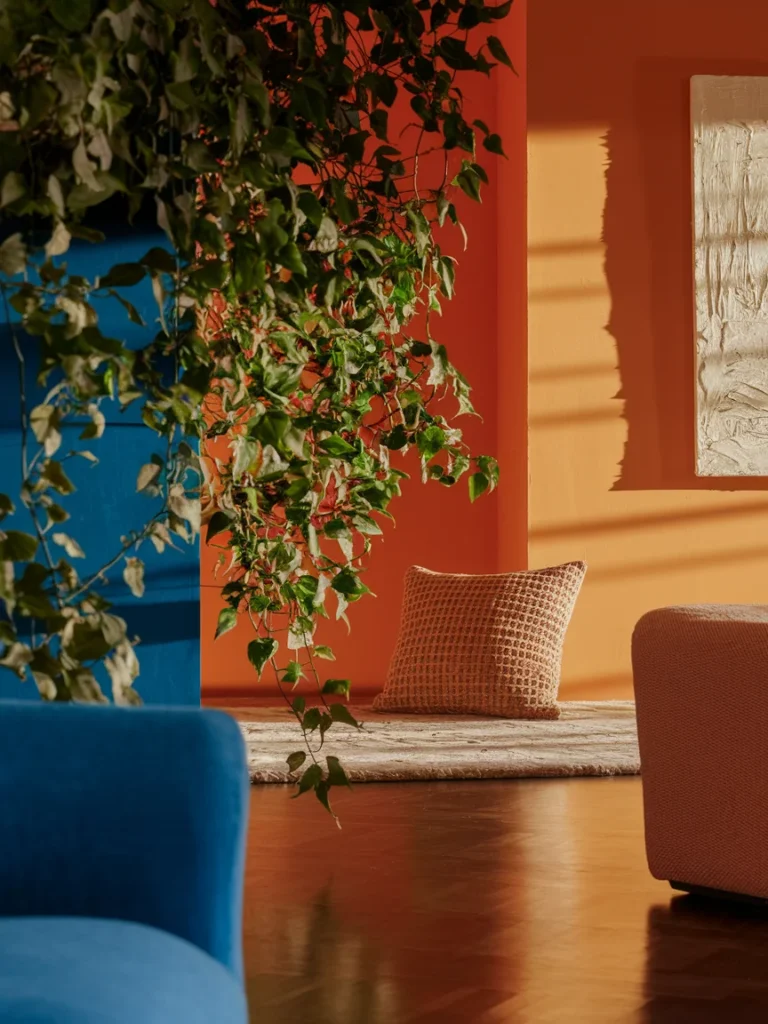
Green is a natural friend to both blue and orange. A leafy plant, a fern, or a bundle of dried grasses adds life and softens strong colors. Place a plant near an orange pillow or a blue chair for a fresh look.
Books, Baskets, and Trays
Stack books with blue or orange spines on the coffee table. Use a woven basket for extra blankets, or a wood tray to hold candles and a small dish. These items add texture and keep the colors from feeling flat.
Budget Friendly and DIY Ideas
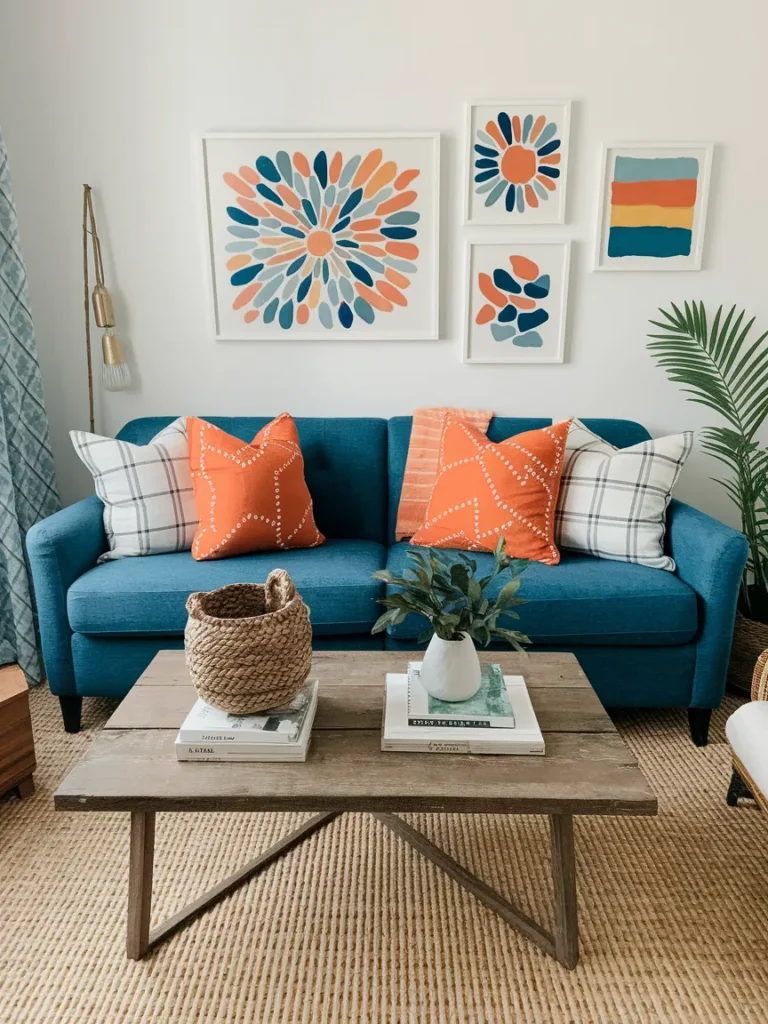
You do not need to spend much to get this look. Many of the best updates cost very little.
Where to Spend and Where to Save
Spend on items you use daily, such as a comfortable sofa and a quality rug. Save on pillows, throws, vases, and art, which are easy to find secondhand or at discount shops. If you change your mind later, small items are easy to swap.
Simple DIY Projects
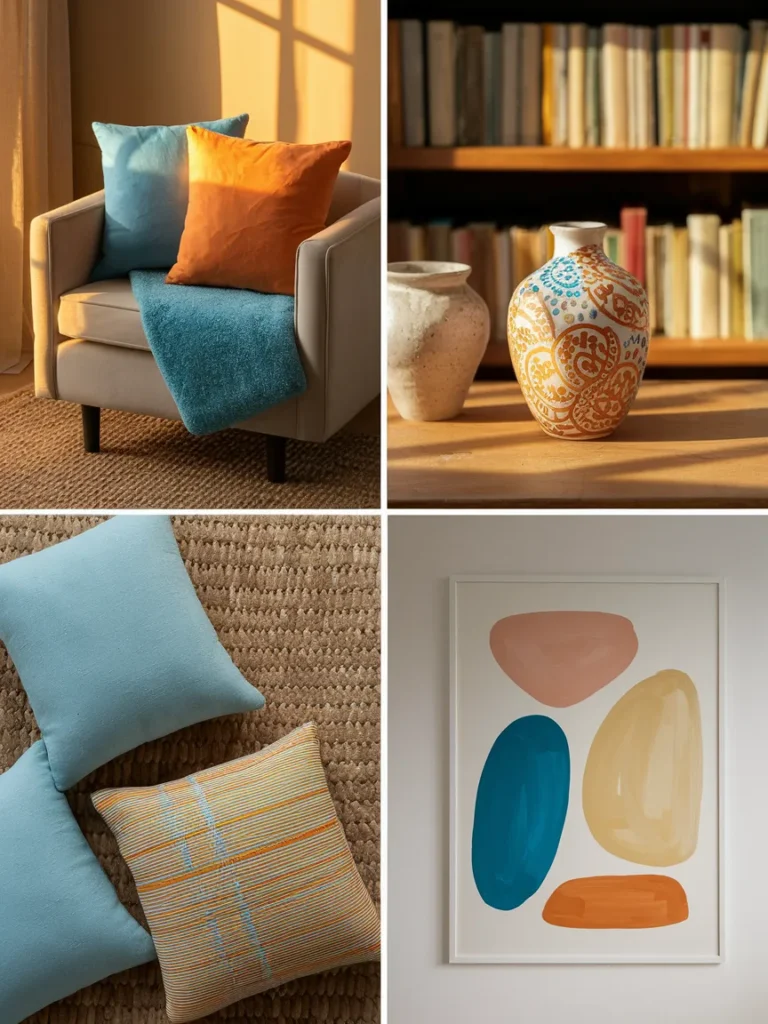
- Pillow covers: Sew or wrap fabric in blue or orange over old pillows.
- Painted vase: Coat a plain jar in matte navy or terracotta paint.
- Color block art: Paint a simple blue and orange shape design on canvas.
- Fabric wall hanging: Hang a piece of patterned fabric on a wooden dowel.
- Framed swatches: Frame paint chips or fabric squares for a modern mini gallery.
Always test paint on a small area first, and work in a well ventilated space.
Quick Wins Under Fifty Dollars
- Add two orange pillows to a blue or gray sofa.
- Place a blue vase with dried stems on a table.
- Swap a cool bulb for a warm one.
- Hang one large piece of art in blue and orange tones.
- Add a cream throw to soften the colors.
Common Mistakes With Blue and Orange Living Room Decor
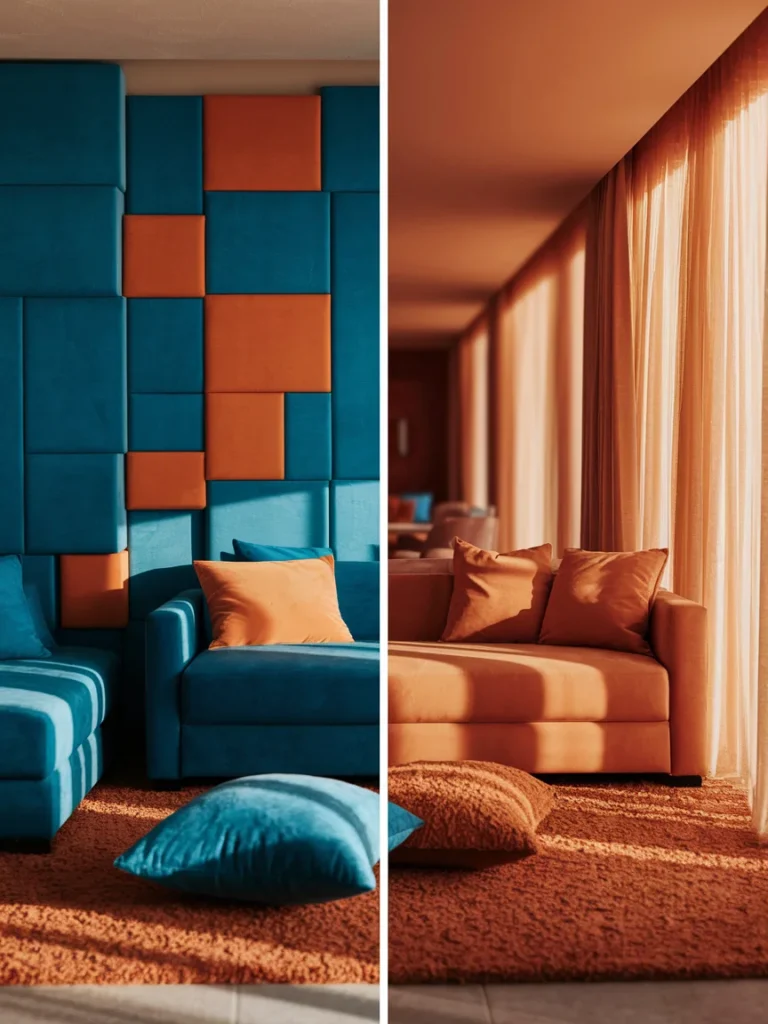
Even a great color pair can go wrong. Watch out for these common mistakes:
- Using equal amounts of both colors. Let one color lead and use the other as an accent.
- Choosing shades that are too bright. Deep or muted versions feel more polished.
- Skipping neutrals. Without a calm base, the room feels busy.
- Adding too many patterns. Pick one bold pattern and keep the rest simple.
- Forgetting lighting. Cool bulbs make orange look flat. Use warm light.
- Matching everything perfectly. Slight variations in shade look more natural.
- Ignoring the room’s natural light. A north facing room may need warmer tones, while a sunny room can handle cooler blues.
Frequently Asked Questions
What is blue and orange living room decor?
Blue and orange living room decor is a color scheme that pairs shades of blue with shades of orange. Because they are opposites on the color wheel, they create strong contrast and a lively, welcoming feel. Neutrals such as cream, white, and wood help keep the look balanced.
What shades of blue and orange go best together?
Navy and burnt orange are the most popular pair. Dusty blue with terracotta creates a soft, earthy look, and teal with burnt orange gives a retro feel. For a light and sunny room, try sky blue with peach.
How much orange should I use in a blue living room?
Use orange as an accent, about 10 percent of the room. Pillows, art, vases, and a small chair are good places to start. You can add more if you like a bolder look, but keep blue or neutrals as the main colors.
How do I decorate with navy blue and orange in a small room?
Keep walls light, use navy on one large item such as a sofa or curtains, and add orange through pillows and art. Add a mirror and warm lighting to make the room feel open. Avoid using too many patterns.
Does orange and blue living room decor look dated?
Not when you choose modern shades and keep the balance right. Muted tones like terracotta and dusty blue feel current, and simple shapes with natural materials keep the look fresh. Avoid bright, matching sets and mix in texture instead.
Conclusion
Blue and orange living room decor is a bold yet friendly way to bring energy and comfort into your main room. Start by choosing shades that fit your mood, whether that is navy and burnt orange or dusty blue and terracotta. Follow the 60 30 10 rule, let one color lead, and add neutrals to keep the room calm. Use pillows, rugs, art, and plants to repeat your colors, and avoid common mistakes like using too many patterns or skipping warm light.
You do not have to change everything at once. Pick one idea from this guide, such as adding two orange pillows to your sofa, hanging a blue and orange print, or swapping in warm bulbs, and try it this week. Small steps add up to a room that feels vibrant and welcoming. Ready to begin? Grab a few swatches, choose your favorite pair, and start styling.