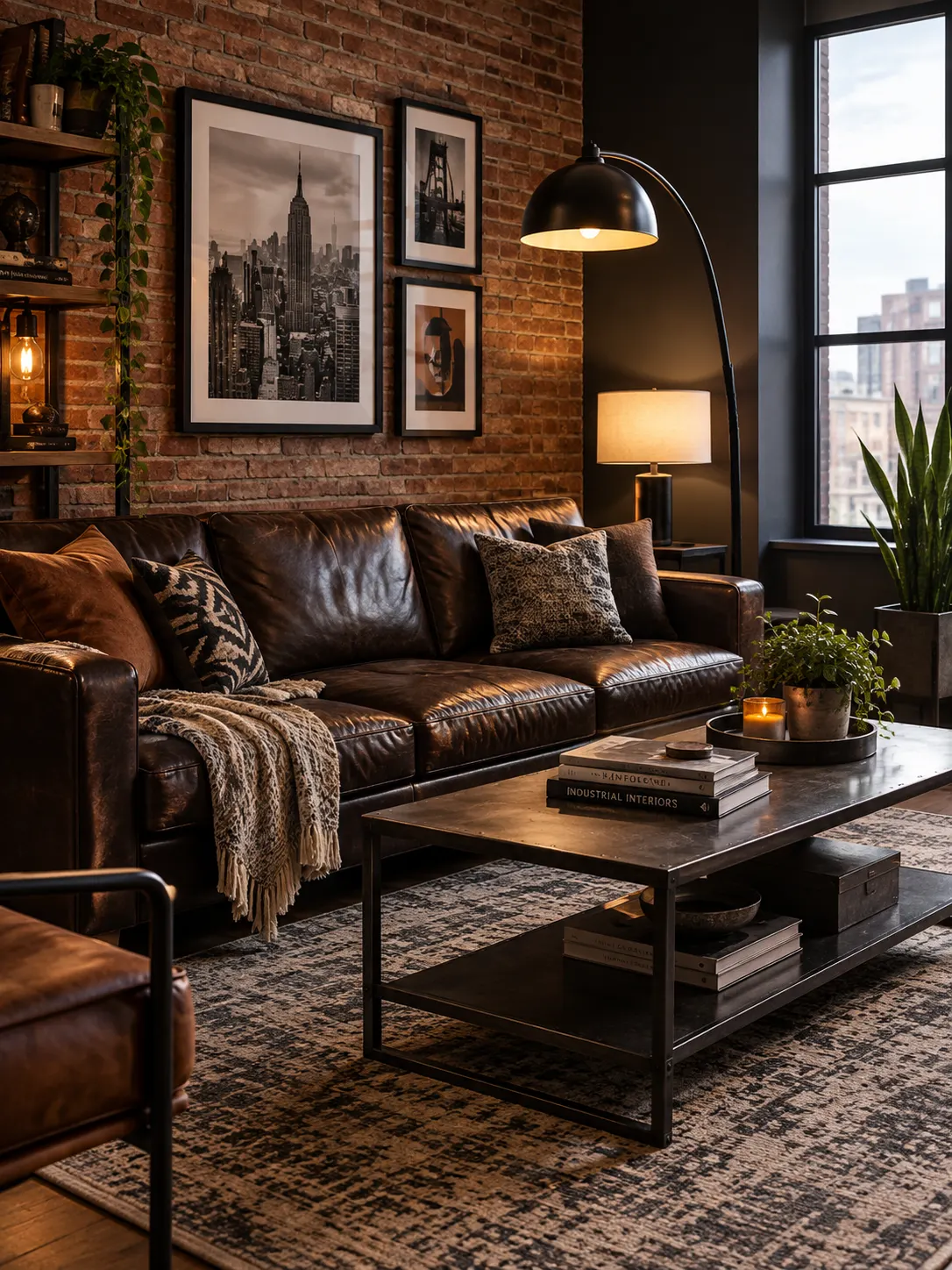
If your living room feels a little too safe, too much like every other neutral toned room on a home decor feed, urban decor living room style might be exactly what you are missing. This look is built on contrast, texture, and personality, not quiet, matching everything to a beige couch.
It draws from city energy, streetwear culture, industrial materials, and sometimes even a moodier gothic edge, all mixed together into a space that actually feels like someone lives there with a point of view. This guide breaks down how to build that look room by room, including how gothic living room decor and hypebeast living room decor fit into the bigger picture, without turning your space into a theme park version of either style.
Whether you are starting from a blank apartment or slowly transforming a room you already live in, the goal is the same. You want a space that feels curated, not cluttered, and confident, not chaotic. That balance is easier to hit than people think once you understand a few core principles.
By the end of this guide, you will know how to build a strong furniture foundation, layer in gothic and hypebeast influences without overdoing either one, use lighting to shape the room’s mood, and pull walls, texture, and materials together into a space that feels intentional from every angle.
What Urban Decor Living Room Style Actually Means
Urban decor living room design pulls inspiration from city living itself; think exposed brick, raw materials, industrial lighting, and a color palette that leans dark and moody rather than soft and pastel. It is less about a strict rulebook and more about an attitude. The rooms that nail this look tend to feel a bit rough around the edges on purpose, mixing polished pieces with raw, unfinished textures. Living room cabinet decor ideas can complement this aesthetic by combining functional storage with bold objects, industrial accents, and textured finishes.
At its core, this style borrows from a few overlapping influences. Industrial design brings in metal, concrete, and exposed structural elements. Streetwear and hypebeast culture bring in bold graphics, collectible objects, and a focus on standout statement pieces.
Gothic influences bring in dark colors, dramatic lighting, and a slightly theatrical edge. You do not need to use all three at once. Most great urban living rooms lean more heavily into one or two of these while borrowing small accents from the others.
The common thread across all of it is confidence. Urban decor is not a style for people who want their living room to disappear into the background. It is meant to be noticed, talked about, and lived in hard.
Core Colors and Materials
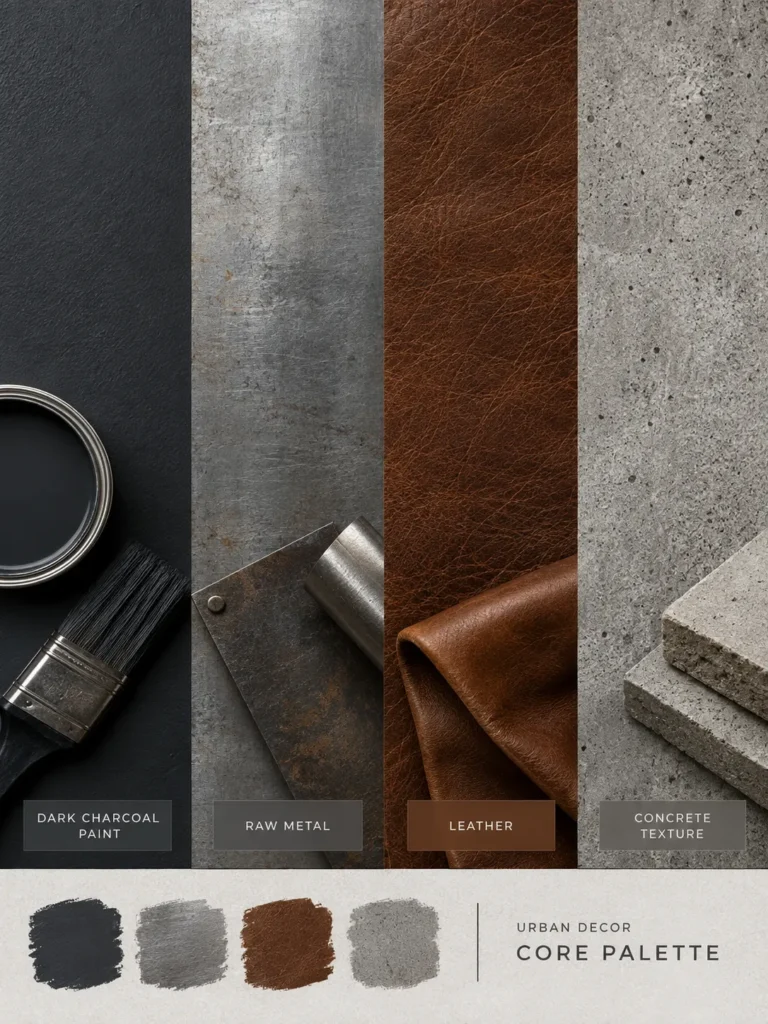
Most urban decor living room spaces build around a dark, neutral base, think charcoal, black, deep gray, or even a warm concrete tone, then add contrast through metal accents, leather, and the occasional bold graphic or color pop.
Raw materials like unfinished wood, brick, steel, and concrete show up constantly because they read as authentic rather than manufactured. This is very different from the soft, all white minimalist look that dominates a lot of home decor content. Urban style embraces texture and a bit of grit instead of smoothing everything out.
Who This Style Tends to Suit
Urban decor living room design tends to appeal most to people who already gravitate toward bold choices elsewhere in their life, whether that shows up in the way they dress, the music they listen to, or the neighborhoods they are drawn to. It also works well for anyone living in a genuinely urban space, like a loft or converted warehouse unit, where architectural features like exposed pipes, ductwork, or brick already lean into the aesthetic.
That said, you do not need an actual industrial building to pull this off. Plenty of standard apartments and suburban homes take on this style successfully through paint, lighting, and furniture choices alone.
Building the Foundation With Furniture
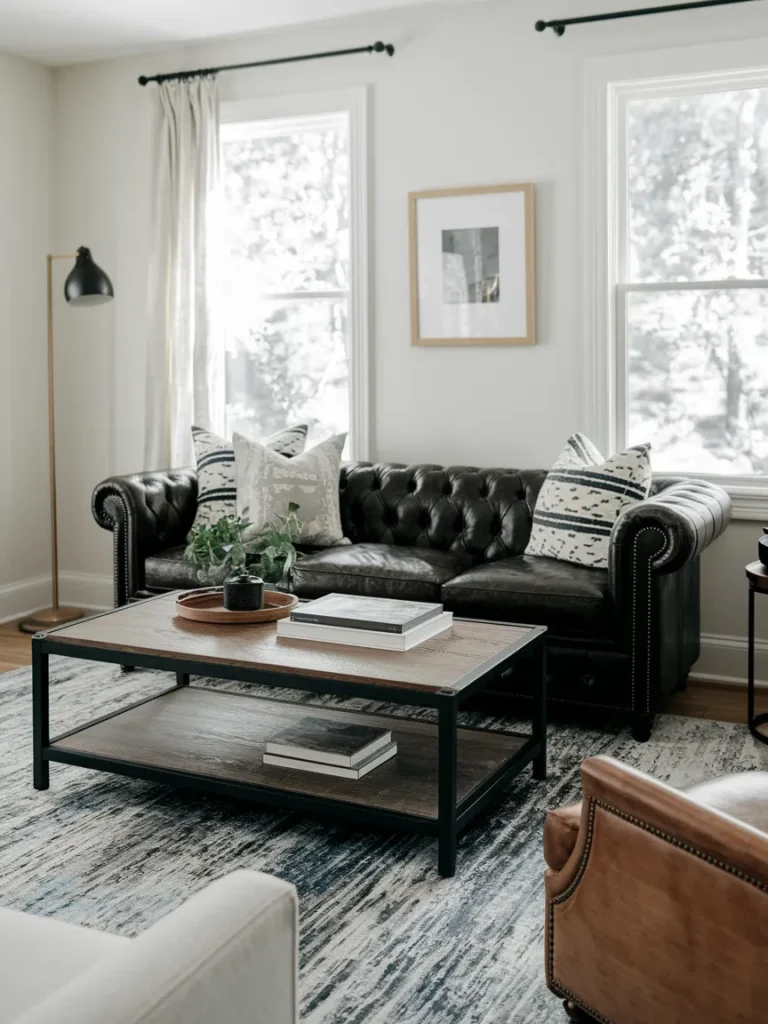
Before touching a single decor item, the furniture in an urban decor living room needs to set the tone. Think low profile sofas in leather or dark boucle, metal framed coffee tables, and shelving units that show off raw materials like blackened steel or reclaimed wood.
A leather sofa, whether in black, cognac, or deep brown, tends to work harder than almost any other single piece in this style. It brings in texture, holds up well to daily use, and pairs naturally with both the industrial and gothic sides of the aesthetic. If leather is not in the budget or not your preference, a heavily textured boucle or wool sofa in a dark, muted tone can achieve a similar mood.
Coffee tables and side tables are a great place to introduce metal. Blackened steel, wrought iron, or even raw unfinished metal frames add an industrial backbone to the room. Pair a metal framed table with a slab of reclaimed wood or a thick slab of stone for the tabletop itself, and you get that mix of rough and refined that defines this look.
Choosing Statement Furniture Pieces
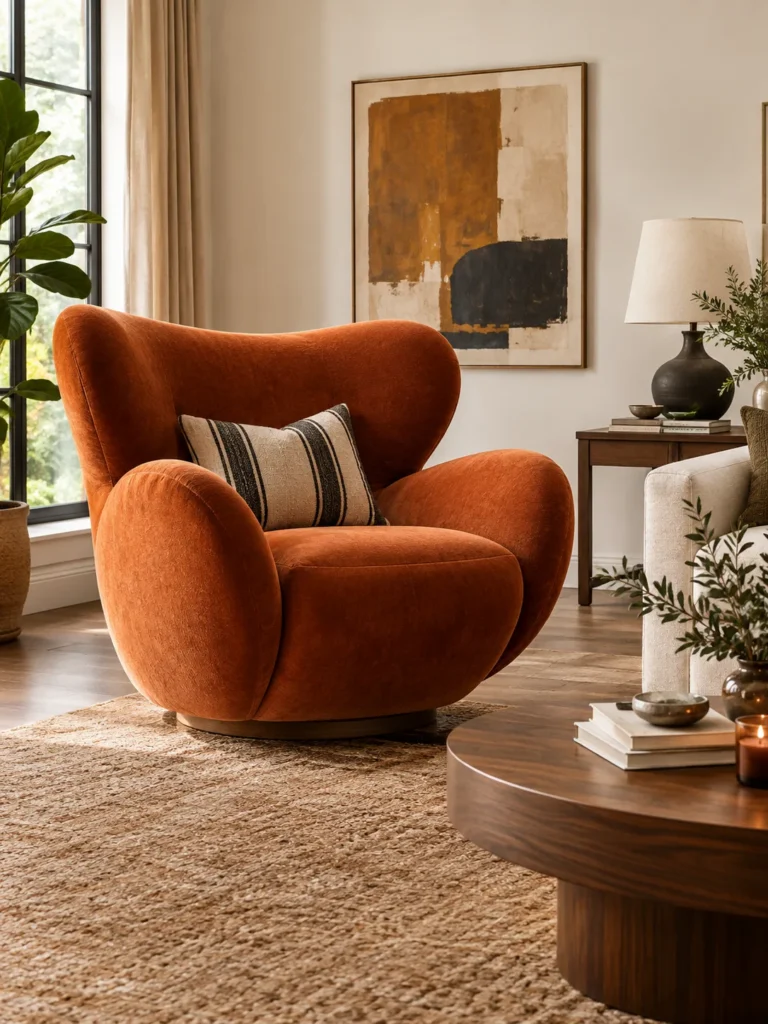
Every urban decor living room benefits from at least one piece that acts as a clear focal point. This could be an oversized armchair with dramatic lines, a sculptural coffee table, or a bold accent chair in a saturated color against an otherwise dark palette. The goal is one strong anchor piece rather than several competing ones. Too many statement pieces fighting for attention can push the room from bold into chaotic.
Shelving and Storage That Fit the Aesthetic
Open shelving units built from raw metal piping or blackened steel frames do double duty in an urban decor living room. They provide practical storage while also becoming a display surface for books, collectibles, or small plants.
Avoid boxy, enclosed storage pieces with a glossy finish, since these tend to read as more corporate or traditional than the raw, exposed quality this style depends on. If you already own furniture that feels too polished, consider swapping hardware or adding a matte black finish to bring it closer in line with the rest of the room.
Gothic Living Room Decor Elements Worth Borrowing
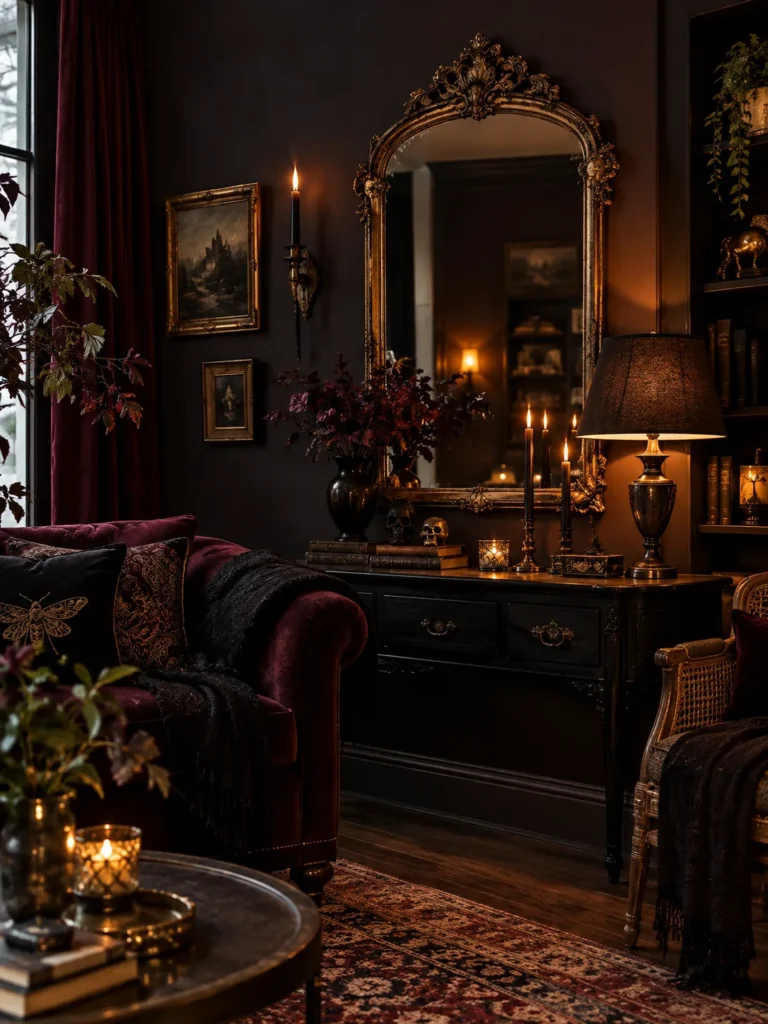
Gothic living room decor brings drama, and even a small dose of it can push a standard urban space into something more distinct and memorable. This does not mean covering every wall in black or filling the room with candelabras. It means borrowing a few key elements that read as gothic without tipping into costume territory.
Dark, moody wall colors are one of the easiest entry points. Deep charcoal, near black, or even a rich burgundy on a single accent wall instantly shifts the mood of a room. Pair this with warm, layered lighting rather than a single harsh overhead fixture. Table lamps, wall sconces, and even a few candles create the kind of shadow and depth that gothic spaces rely on.
Ornate mirrors and dark framed artwork are another strong gothic touch. A large mirror with an aged black or antique brass frame adds both function and drama. Dark, moody artwork, whether abstract or figurative, reinforces the tone without requiring you to commit to anything overly literal like skulls or crosses unless that is genuinely your taste.
Velvet and other rich, heavy fabrics also carry gothic weight. A velvet throw pillow, a tufted velvet accent chair, or heavy curtains in a deep jewel tone all add texture and a sense of luxury against the harder industrial materials common in urban decor.
Balancing Gothic Drama With Everyday Livability
The risk with gothic living room decor is going too far and ending up with a room that feels more like a stage set than a place to actually relax. Keep gothic elements to two or three focused touches, like a dark accent wall, one dramatic light fixture, and a few rich textiles, rather than layering every gothic cue into a single room. This keeps the space feeling intentional and livable rather than like a costume shop.
Gothic Accents That Are Easy to Undo
If you are renting or simply want to test the gothic side of this style before committing, focus on accents that are easy to remove or change later. Curtains, throw pillows, candle holders, and a single piece of dark artwork all deliver strong gothic mood without requiring paint or permanent changes. This lets you experiment with how far you want to lean into the drama before making bigger commitments like an accent wall.
Hypebeast Living Room Decor and Streetwear Influence
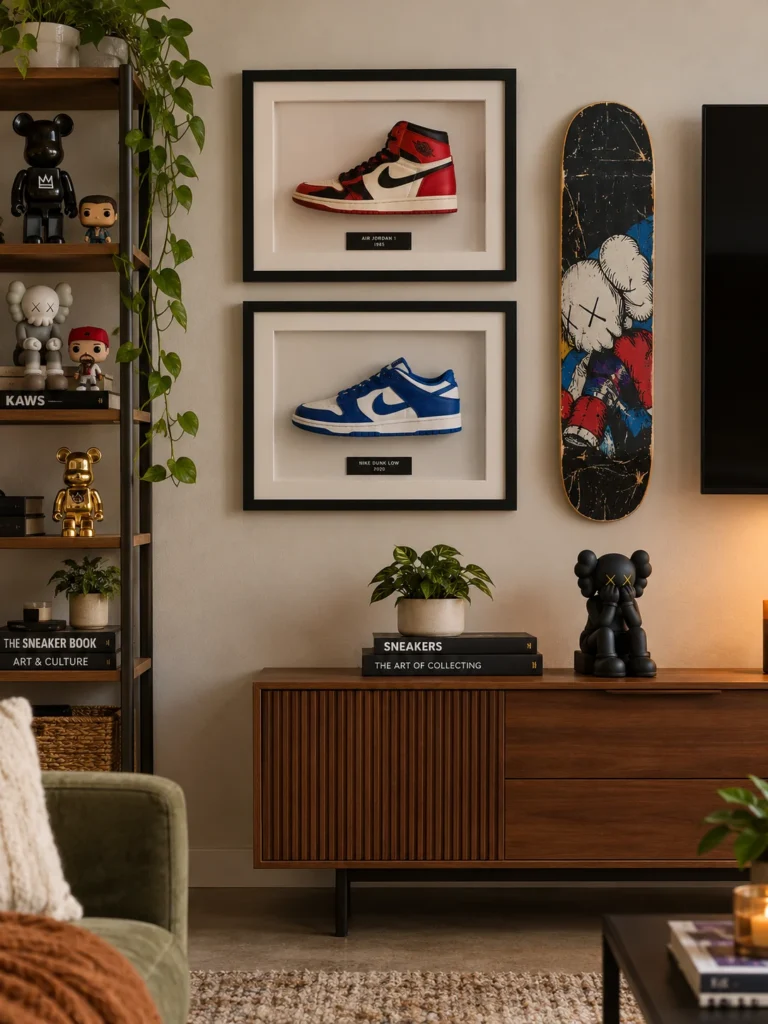
Hypebeast living room decor brings a completely different energy into the mix, one built around collectible culture, bold graphics, and displaying items that usually mean something personal to the owner. This might include framed sneakers, skateboard decks mounted as wall art, graphic tees framed like fine art, or collectible figures displayed on open shelving.
The key to making this work in a full living room, rather than just a bedroom or closet, is treating these items like genuine art pieces rather than casual clutter. A framed sneaker deserves the same wall placement consideration as a piece of art. A shelf of collectible figures should be lit and arranged with the same care you would give a display case in a gallery.
Graphic elements also play a role here. A bold logo print, a piece of street art inspired canvas, or even a neon sign can act as a strong focal point against the darker, more industrial backdrop common in urban decor. The contrast between a loud graphic piece and a moody, textured room is part of what makes hypebeast living room decor feel so striking when it is done well.
Displaying Collectibles Without Looking Cluttered

The line between a curated hypebeast display and a cluttered mess comes down to spacing and repetition. Group similar items together, such as all sneakers on one shelf or all figures in one case, rather than scattering them randomly around the room. Leave visible breathing room around each grouping, and resist the urge to display every single item you own at once. A rotating display, where you swap out pieces every few months, often looks more intentional than trying to show everything simultaneously.
Framing and Mounting Tips for Collectibles
Investing in proper display cases or shadow box frames makes a noticeable difference in how collectible items read within a living room. A sneaker sitting loose on a shelf looks casual, while the same sneaker in a clear acrylic display case or a shadow box frame reads as a deliberate art object. The same logic applies to graphic tees, which look far more intentional framed behind glass than pinned or draped over furniture. This small investment in presentation is often what separates a genuinely stylish hypebeast display from a room that just looks messy.
Lighting That Sets the Urban Mood
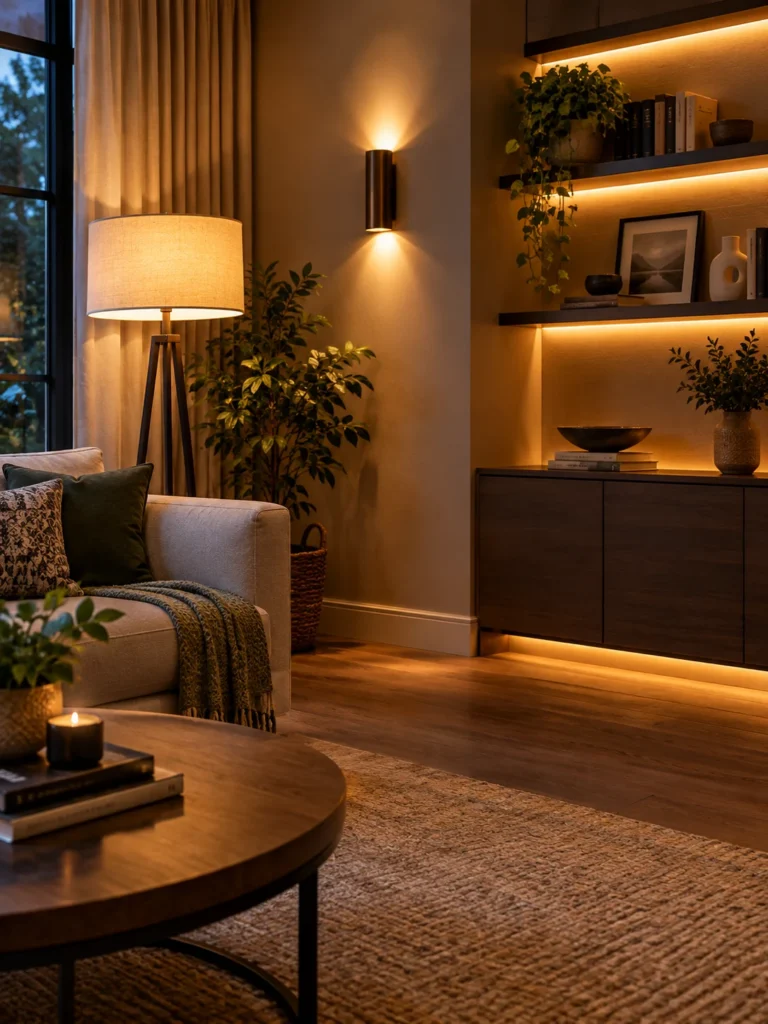
Lighting might be the single most underrated tool in urban decor living room design. A harsh overhead light flattens the entire mood, no matter how good the furniture and decor are. Urban spaces rely on layered lighting, meaning multiple light sources at different heights doing different jobs.
Start with ambient lighting, usually a dimmable overhead fixture or a few floor lamps that fill the room with soft, general light. Add task lighting where needed, like a reading lamp near a chair. Finally, add accent lighting, which is where a lot of the mood actually comes from. This could mean a strip of warm LED lighting behind a shelving unit, a dramatic floor lamp with an industrial metal shade, or even a single neon sign as a piece of wall art.
Warm toned bulbs, generally in the 2700 to 3000 kelvin range, read as cozier and more flattering against dark walls and industrial materials than cooler, bluer light. Save cooler toned lighting for spaces where you want a more clinical, modern edge, which can work if your version of urban decor leans more minimalist and less gothic.
Statement Light Fixtures as Decor
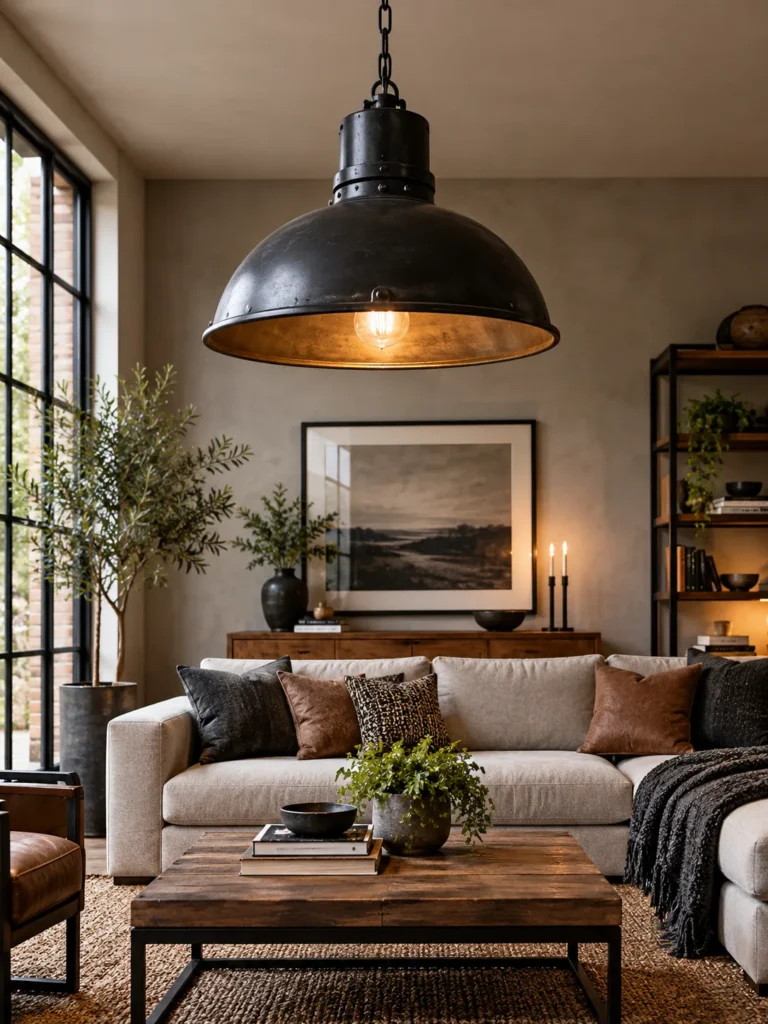
A bold light fixture can function as both practical lighting and a major decor statement at the same time. Oversized pendant lights in black metal, sculptural floor lamps, or even repurposed industrial fixtures like old factory lights all fit naturally into this style. Because lighting sits at eye level or above, a striking fixture often becomes one of the first things people notice when they walk into the room.
Textures, Materials, and Layering
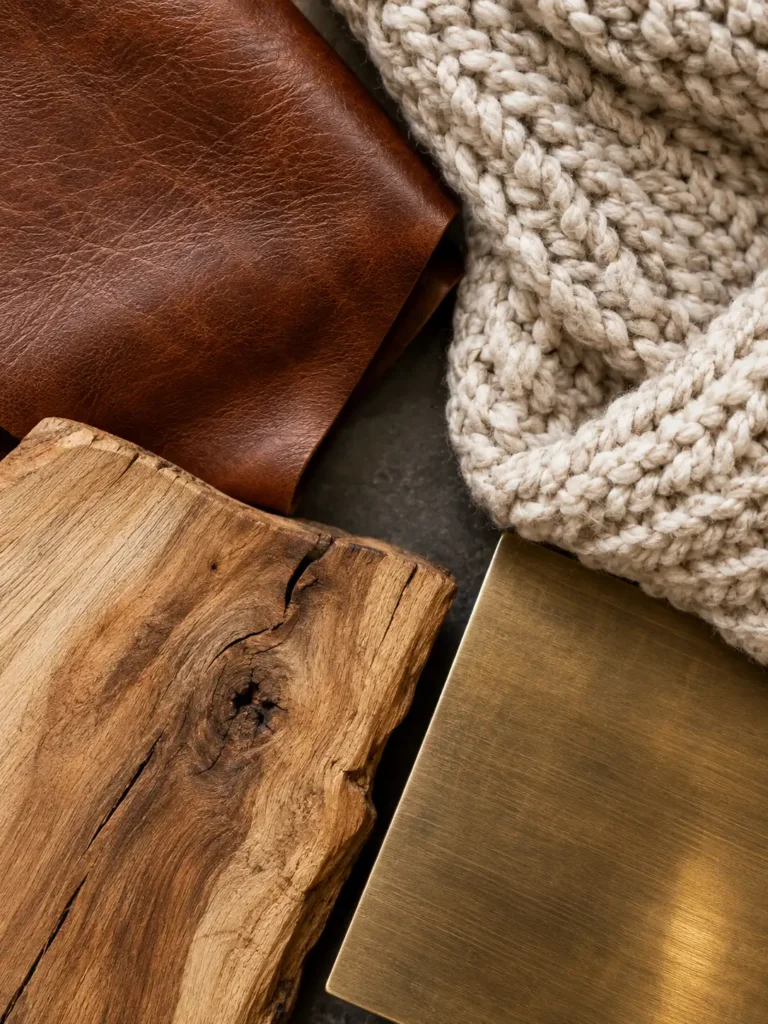
Texture is what keeps an urban decor living room from feeling flat or one note, especially when the color palette leans heavily toward black, gray, and other dark neutrals. Without variation in texture, a dark room can start to feel like a single flat block of color instead of a layered, interesting space.
Mix hard and soft materials deliberately. Pair a leather sofa with a chunky knit throw. Set a metal framed coffee table against a thick, textured area rug. Combine smooth concrete or polished metal surfaces with raw wood grain and rough brick. Every added texture gives the eye something new to notice, which keeps a dark, moody room from reading as boring or heavy.
Rugs deserve special attention here since floor space often gets ignored in favor of walls and furniture. A textured wool or shag rug in a deep charcoal or black tone grounds the room while adding warmth underfoot, something a room full of hard industrial materials genuinely needs.
Layering Textiles Without Softening the Look Too Much
It is possible to add too much soft texture and accidentally undercut the harder, edgier feel that defines urban decor. If a room starts to feel more like a cozy cabin than a city loft, scale back on soft textiles like oversized knit throws and lean back into harder materials like leather, metal, and exposed wood. A single well placed throw or textured pillow is usually enough contrast without tipping the balance too far toward soft and cozy.
Wall Treatments and Art for Urban Spaces
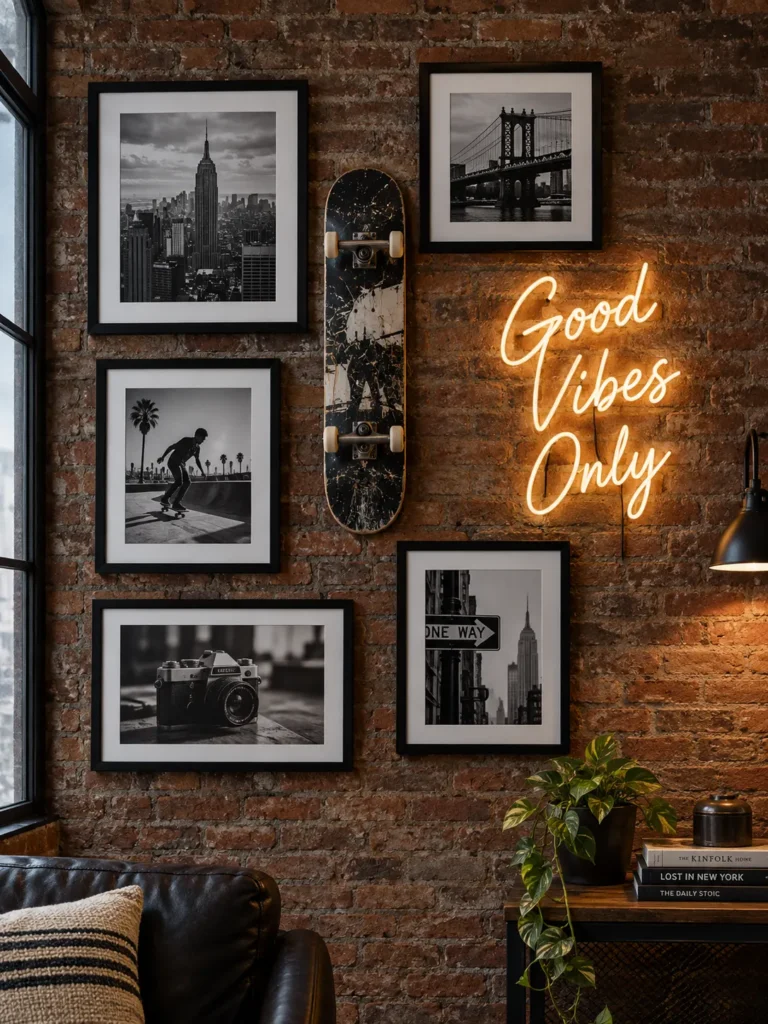
Walls carry a huge amount of the visual weight in this style, so it is worth thinking through them carefully rather than treating them as an afterthought once the furniture is in place.
Exposed brick, if you already have it, is a huge asset and often needs very little additional decoration to read as urban. If you do not have exposed brick, brick veneer panels or a faux finish can approximate the look in a rental friendly way. Dark paint, whether a true black or a deep charcoal, works well on a single accent wall if covering the whole room feels like too much commitment.
For art, look for pieces with bold contrast, whether that means black and white photography, graphic prints, or abstract pieces with strong dark tones. Gallery walls work well in this style too, especially when mixing framed art with unconventional pieces like a mounted skateboard deck or a neon sign, blending the gothic and hypebeast influences into one cohesive wall.
Rental Friendly Ways to Get the Look
If painting or installing brick veneer is not an option in a rental, removable wallpaper in a dark brick or concrete pattern can approximate the same effect without violating a lease. Large scale framed art or tapestries can also cover significant wall space with bold, dark visuals, giving you a similar mood shift to paint without touching the actual wall surface. Command strips rated for heavier items now make it possible to hang even larger mirrors and art pieces without drilling, which keeps this whole style accessible to renters as much as homeowners.
Frequently Asked Questions
What is urban decor style in a living room?
Urban decor living room style pulls from industrial materials, dark color palettes, and city inspired textures like exposed brick and metal. It often blends influences from streetwear culture and moodier gothic elements to create a bold, personal space rather than a soft, neutral one.
Can gothic and hypebeast styles work together in the same room?
Yes. Gothic elements like dark walls, velvet textiles, and dramatic lighting pair well with hypebeast touches like framed collectibles and bold graphic art, since both styles share a dark, high contrast base palette that lets each influence stand out without clashing.
Is urban decor too dark for a small living room?
Not necessarily. Using dark colors on one accent wall instead of the whole room, combined with layered lighting, allows a small space to take on urban style without feeling cramped or overly heavy.
How do I add hypebeast decor without it looking cluttered?
Group similar collectible items together, such as sneakers on one shelf or figures in one case, and leave visible space around each grouping. Rotating your display every few months also helps keep things feeling curated instead of overwhelming.
What is the easiest way to start an urban decor living room on a budget?
Start with lighting and textiles, since a warm toned lamp, a textured throw pillow, and a dark accent rug can shift the mood of a room significantly without requiring new furniture or major renovations.
Conclusion
Urban decor living room style is really about confidence and contrast. Dark, moody bases give you room to layer in gothic drama through lighting and textiles, or hypebeast personality through collectibles and bold graphics, without either influence overwhelming the space. Start with a strong furniture foundation, build out your lighting layers, and let texture do the work of keeping your living room decor feeling rich instead of flat.
Pick one section of this guide, whether that is swapping in warmer lighting or finally framing that sneaker collection, and start there. A bold living room does not happen all at once. It builds one confident choice at a time.