
Bedroom office decor is the skill of making one room do two jobs without letting either job win. You want a desk that feels like a real workspace at 10 a.m. and a bed that feels like a rest spot at 10 p.m. That sounds tricky, but the right layout, colors, lighting, and storage make it easy to pull off.
Remote and hybrid work has become normal for millions of people, and many homes have no spare room. A bedroom is private, quiet, and close to your things, so it makes sense as a workspace. The catch is that work habits can creep into sleep habits. Good bedroom office decor ideas solve both sides of that problem.
The best bedroom office decor keeps the work zone and the sleep zone clearly separate. Put the desk in a window corner or along one wall, ideally with your back to the bed. Use a calm color palette, three layers of lighting, closed storage that hides work items, and one visual divider such as a rug, curtain, or bookshelf. At the end of the day, put your work gear away.
In this guide, you will learn:
- Why a bedroom office needs a different plan than a regular office
- How to choose the right spot and layout
- Bedroom office decor ideas for walls, color, plants, and style
- Smart furniture and storage that serve both sleep and work
- How to set up lighting, seating, and sound for comfort
- How to keep work from taking over your rest
- A simple budget plan and the mistakes to avoid
Why Bedroom Office Decor Needs Its Own Plan
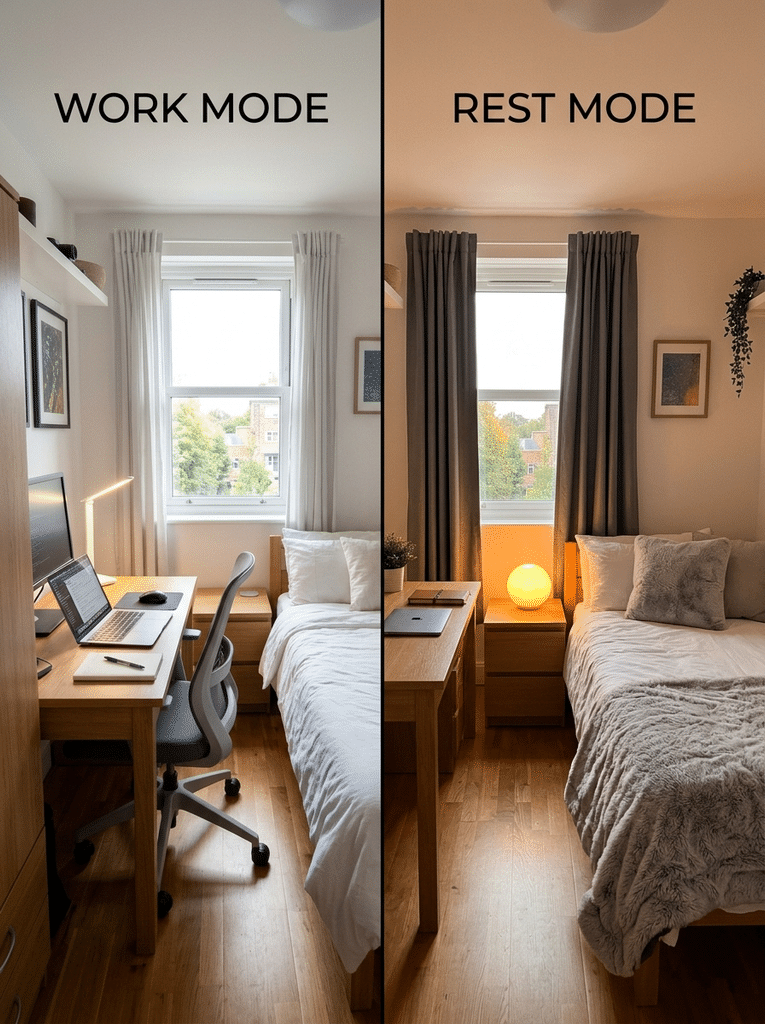
A regular office only has to support work. A bedroom office has to support work and sleep, and those two goals pull in opposite directions. Work wants bright light, a firm chair, and a clear head. Sleep wants dim light, a soft bed, and a quiet mind. Understanding this balance is also helpful when learning how to remodel guest room spaces, especially if you want one room to function as both a comfortable bedroom and a practical workspace.
If you ignore that tension, the room ends up in a messy middle. Papers pile up beside the pillows. Your laptop glows from the bed. Your brain starts linking where you rest with where you answer emails.
Good bedroom office decor fixes this by giving each activity its own zone. Designers who work on shared rooms often say the same thing: the room should meet six basic needs.
- Comfort for your body: a proper desk height, a supportive chair, and a screen at the right level
- A calm look: clear surfaces and hidden cables
- Enough storage: but not so much that it swallows the room
- Smart use of space: floor and wall space used with care
- Light where you work: not just one fixture on the ceiling
- A flexible plan: one that can change if your work or your home changes
Before you buy anything, ask yourself one simple question: how do I want this room to feel? Think about colors you love, furniture you already own, and the mood you want at your desk and in your bed. Starting with feeling instead of function keeps the room personal, and that matters because you will spend many hours in it.
Plan Your Bedroom Office Layout Before You Decorate
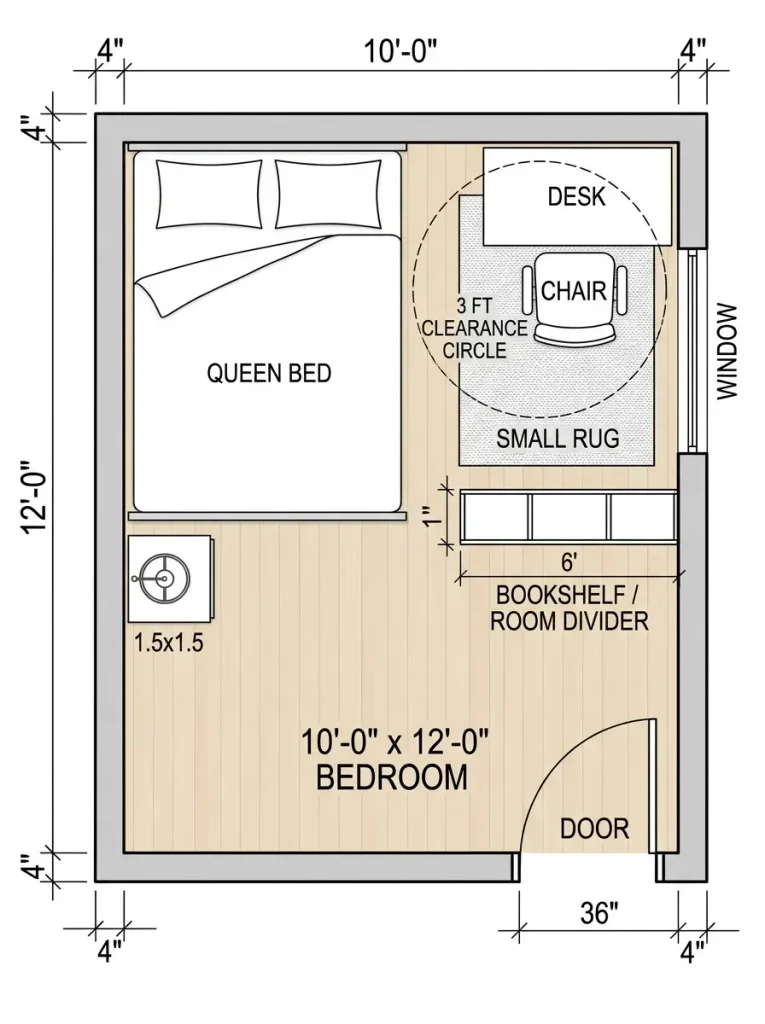
Decor works best when the layout is right first. A pretty desk in the wrong spot will still feel wrong.
Pick the Right Spot
Use these rules to find the best place for your desk.
- Find a window corner. Natural light, fresh air, and a view help you stay alert and cut down on eye strain. A corner beside the window is often the best spot in a small room.
- Set the desk sideways to the window. If you face the window, glare washes out your screen. If your back is to it, you become a dark shape on video calls. A desk placed sideways to the window gives you soft light from the side.
- Keep your distance from the bed. Face away from the bed if you can. Even a few steps of separation helps your mind switch modes.
- Give yourself a good wall to face. Many people on video calls sit in front of the same wall all day. Style that wall on purpose with shelves, art, or a textured panel, and it becomes your professional backdrop.
- Try the closet. A closet office, sometimes called a “cloffice,” lets you close the doors when the day is done. Take out the rods, add a shelf for a desk, and install a light.
- Look at alcoves. A niche beside a chimney or a space under a window can hold a slim desk.
Choose a Layout for Your Room Size
Here are the layouts that work best in a bedroom.
- Single wall layout: The desk runs along one wall with shelves above and storage below. It is simple, tidy, and good for small rooms.
- L shaped corner desk: This gives you more surface for a laptop, monitor, and paperwork, and it creates a natural sense of enclosure that helps focus.
- Floating desk with shelves above: A wall mounted desk with open shelves overhead makes a full workstation in under two meters, or about six feet, of wall. The floor stays open, which makes the room feel larger.
- Fold away or hidden desk: A cabinet desk or drop leaf desk closes up after work. This is a great option if your bedroom is very small.
- Spare room that also hosts guests: Pick furniture that moves easily. A sofa bed or a Murphy bed turns an office into a guest room with little effort.
Know the Numbers
A few measurements keep you comfortable.
- A single monitor desk should be at least 60 cm (24 inches) deep and 120 cm (47 inches) wide.
- For two screens, go to 150 to 180 cm (59 to 71 inches) wide.
- If you use a large monitor, choose a desk 70 to 75 cm (28 to 30 inches) deep so the screen is not too close to your eyes.
- Leave about 90 cm (3 feet) behind the desk for your chair.
In total, a basic workstation needs roughly a 4 by 5 foot footprint.
Bedroom Office Decor Ideas for Walls, Color, and Style
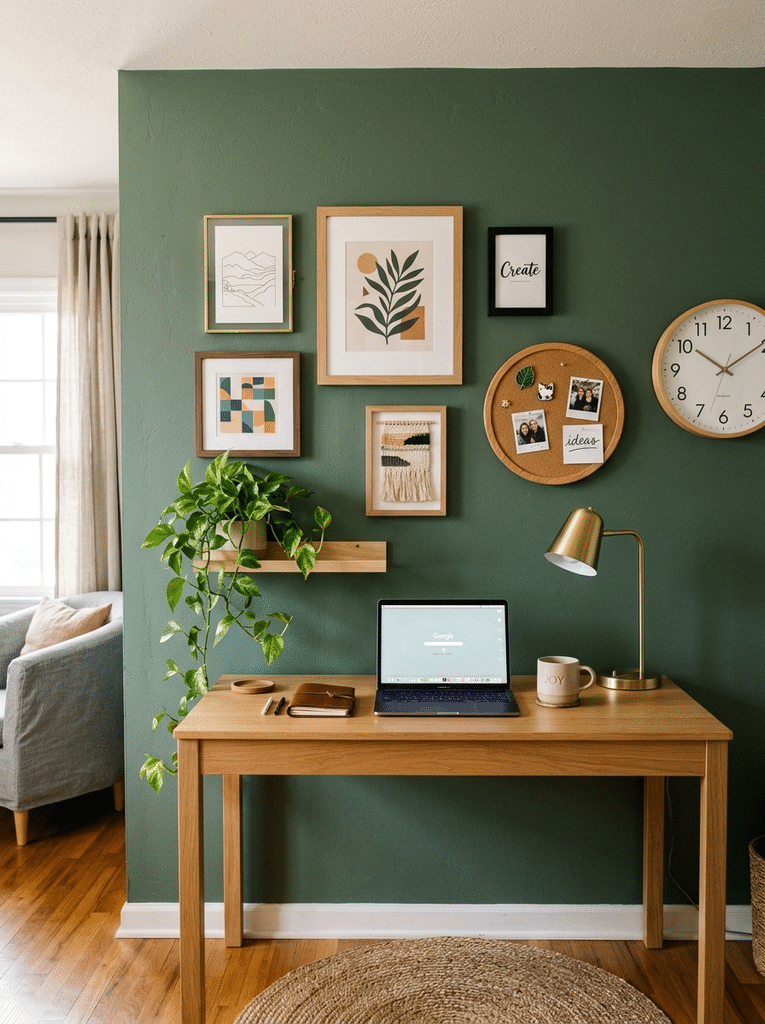
This is the fun part. These bedroom office decor ideas make the workspace look planned instead of squeezed in.
Choose a Calm Color Palette
Color sets the mood faster than anything else. Three families work well for a bedroom office.
- Soft neutrals: Warm whites, creams, and light grays feel clean and help the mind settle. They also make a small room look bigger.
- Nature inspired greens: Muted sage or olive tones add quiet depth and echo the greenery outside your window.
- Deep, dark tones: Navy, charcoal, or dark green walls feel cozy and focused. They work well in a bedroom because they feel like a cocoon at night.
Pick one or two main colors and one accent. Too many colors and textures create visual noise, which makes it harder to concentrate. Test paint samples on the wall and look at them in morning and evening light, because the same color can change a lot during the day.
Create a Backdrop Wall Behind the Desk
A feature wall gives your desk area definition and makes the workspace feel different from the bed area. You have several budget friendly options.
- Painted accent wall: A deep color behind the desk costs very little and makes a big change.
- Wallpaper on one wall: A single wall of wallpaper adds personality. It is more expensive than paint, so use it on one wall only. A floral or soft pattern is a nice middle ground between cozy and video-call-ready.
- Wood slat or textured panel: This adds warmth and helps absorb sound.
- Chalkboard wall: If you like to plan by hand, a chalkboard painted section is fun and useful for lists, meeting times, and ideas.
- Pegboard: A pegboard keeps tools and notes in view without taking up desk space.
Add Wall Art and Useful Accents
Your wall decor can be both pretty and useful.
- Hang framed art, family photos, or a print with words that inspire you.
- Add a pinboard or a magnetic board for notes and deadlines.
- Install a large wall clock so you can keep track of the workday without checking your phone, which can lead you into scrolling.
- Keep the arrangement simple. Three to five pieces in a tidy group look better than a crowded wall.
Use Paint to Mark the Work Zone
Here is a trick that costs almost nothing. Paint the desk area a different color from the rest of the room. You can paint the wall behind the desk, the desk itself, or even a simple shape on the wall such as an arch or a block of color. A durable paint finish, such as eggshell, lets you update furniture and even floors in colors you love. The eye reads the painted area as “the office,” which helps you feel the shift into work mode.
Bring In Plants and Natural Touches
Plants make a workspace feel alive and calm. They are also a nice link between the bed area and the desk area.
- Real plants with low care: Pothos handles indirect light and infrequent watering. A succulent likes a bright window spot. Snake plants and spider plants are also easy to keep.
- Faux plants: If you travel a lot or struggle to keep plants alive, a high quality artificial plant never needs water or pruning.
- Hanging planters: A hanging pot or macrame holder adds greenery without using any floor or desk space.
- Natural materials: Wood, rattan, jute, and linen all add warmth and soften the look of tech gear.
Layer Soft Touches: Rugs, Curtains, and Shades
Soft items turn a desk corner into a room.
- Rug: A small round jute rug under the desk marks the work zone and keeps costs low. It also helps absorb sound.
- Curtains: Hang curtain rods close to the ceiling and let the fabric fall to the floor. This makes the ceiling look taller and gives the window a finished look.
- Shades: If the room doubles as a guest room, shades give privacy. Adhesive paper shades are a cheap, no tools choice that still lets in soft, filtered light, which is also kind to plants.
Match Bedroom Office Decor to Your Style
- Modern and minimalist: White or light gray walls, a slim desk, one lamp, and nothing extra
- Boho and cozy: Warm woods, woven baskets, a printed rug, and many plants
- Scandinavian: Light wood, white walls, soft linen, and simple black accents
- Dark and moody: A deep wall color, brass lamp, and wood furniture for a library feel
- Creative and colorful: A mix of three or four colors from one palette, pulled in through art, a painted dresser, and accessories
Smart Furniture and Storage for a Bedroom Office
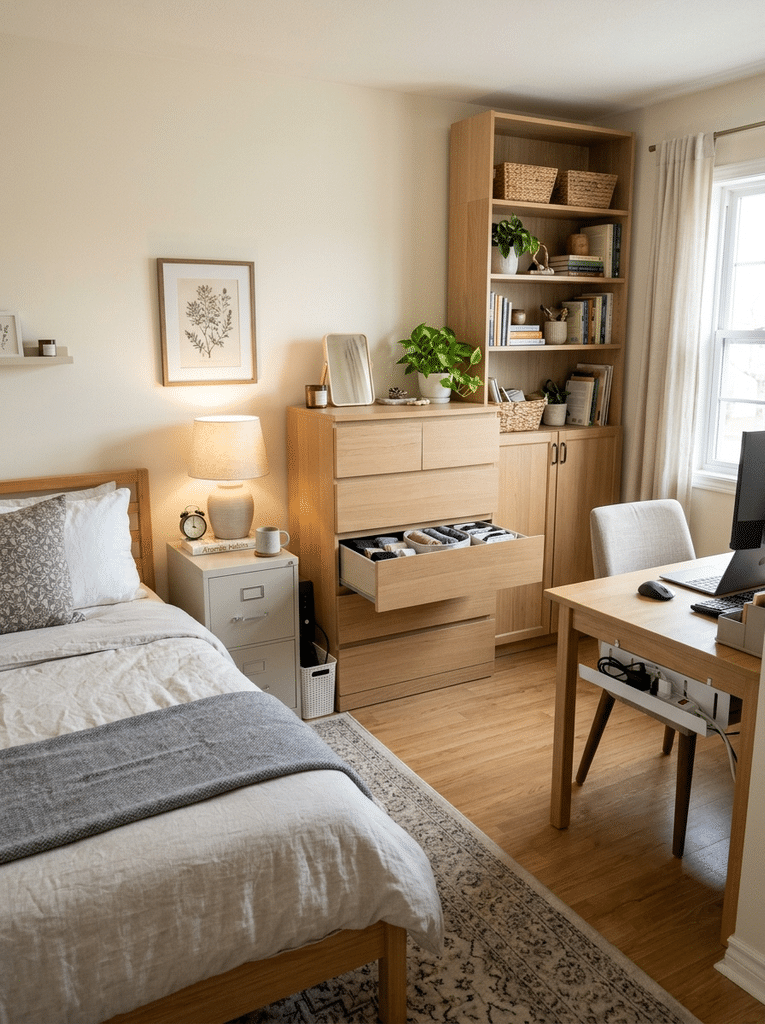
In a bedroom, every piece of furniture should earn its place. Aim for items that do two jobs.
Choose Furniture That Works Twice
- A filing cabinet that doubles as a nightstand: Put it beside the bed with a power strip behind it. Guests get a side table, and you keep your files.
- A desk that doubles as a vanity or dresser: One surface, two purposes.
- A nightstand turned into a desk: Look for one with drawers and enough legroom.
- A dresser with a work drawer: Use some drawers for clothes and others for supplies. A painted secondhand dresser is a fun, low cost project.
- A storage ottoman or bench: It gives you a seat and a hidden place for files or chargers.
- A chair that suits both work and reading: Choose a supportive one so it works for long hours and for relaxing.
Mix Open and Closed Storage
- Open shelves show off books, plants, and objects. They also make a lovely video backdrop. Wall mounted shelves save floor space.
- Closed cabinets or drawers hide cables, chargers, and papers so the room looks calm at night.
- A lockable drawer is smart for important documents and devices.
- Floor to ceiling storage on one wall gathers everything in one place and looks like part of the room when finished in a matching color.
Plan more storage than you think you need. A home office that runs out of storage within a few months quickly turns into clutter that spreads from the desk to the rest of the room.
Build It to Last
If you are having furniture made or buying flat pack pieces, pay attention to the material. Shelves and desks carry monitors, files, and equipment every day. Sturdy plywood about 18 to 19 mm thick keeps desks and shelves from sagging, and a smooth board takes paint and laminate well. If you spend many hours in a small room, look for low emission boards, since these release fewer fumes than cheaper options.
Hide the Cables
Visible cables make even expensive setups look messy. Fix them with these steps.
- Choose a desk with a cable hole or channel
- Mount a cable tray under the desk to hold power strips and chargers
- Use clips or tubes to guide cords along a leg or the wall
- Go wireless with your keyboard and mouse when you can
Lighting, Comfort, and Sound in a Bedroom Office
A pretty room that hurts your back or strains your eyes is not good. Comfort comes first.
Use Three Layers of Light
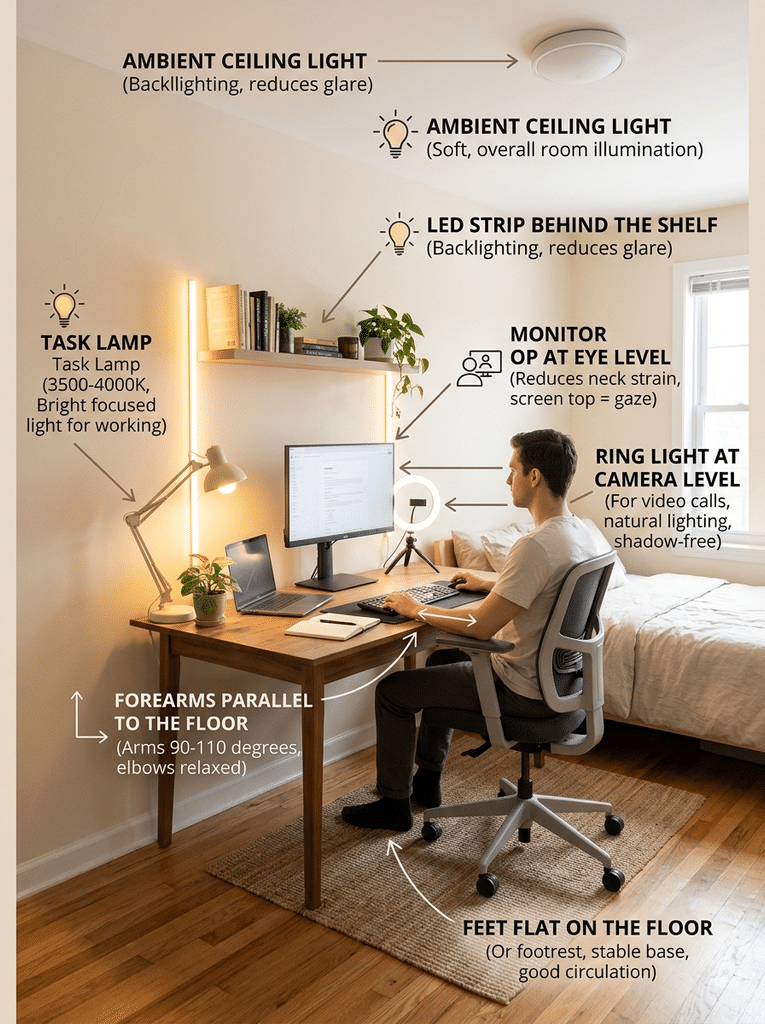
One ceiling fixture is not enough. It creates shadows right where you work. Use three layers instead.
- Ambient light: A ceiling light or soft cove light that fills the room evenly
- Task light: An adjustable desk lamp with warm to neutral white light, about 3500 to 4000K, placed so it does not reflect off your screen
- Accent light: LED strips behind a shelf or monitor to soften the contrast between a bright screen and a dark wall
For the bedroom side, add a warm lamp with a dimmer. In the evening, switch off the bright task light and use soft, warm light so your body can wind down.
If you take video calls, place a soft ring light or panel at eye level just behind your camera. It makes a clear difference in how you look on screen.
Set Up Your Seat and Screen
A good chair is the single best purchase for anyone who works from home. Check these points.
- Seat height: Your feet rest flat on the floor, and your knees bend at about 90 degrees.
- Lower back support: The backrest follows the curve of your lower spine.
- Armrests: Your elbows rest at about 90 degrees when your hands are on the keyboard.
- Seat depth: Leave two or three finger widths between the seat edge and the back of your knees.
- Desk height: Your forearms stay parallel to the floor when you type.
- Screen height: The top edge of the monitor sits at or just below eye level. If your desk is fixed, a monitor riser or arm fixes this fast.
Never use your bed as a desk. It gives no back support and teaches your brain that the bed is for work.
If you can, add a standing desk converter. Standing for 30 to 60 minutes a day can help your energy and posture. Also take short breaks. Every 20 minutes, look at something about 20 feet away for 20 seconds to rest your eyes.
Control the Sound
Bedrooms often have soft surfaces, but hard floors and bare walls can still make calls echo. A few simple fixes help.
- A rug under the desk
- Curtains on the window
- A fabric chair
- A bookshelf full of books, one of the best natural sound absorbers
- A wall panel or wood slats behind the desk
How to Keep Work and Sleep Separate
This is the part most guides skip, and it is the most important for your wellbeing. When a bedroom turns into an office, the line between work time and rest time can blur. Your mind needs clear signals.
Use Visual Dividers
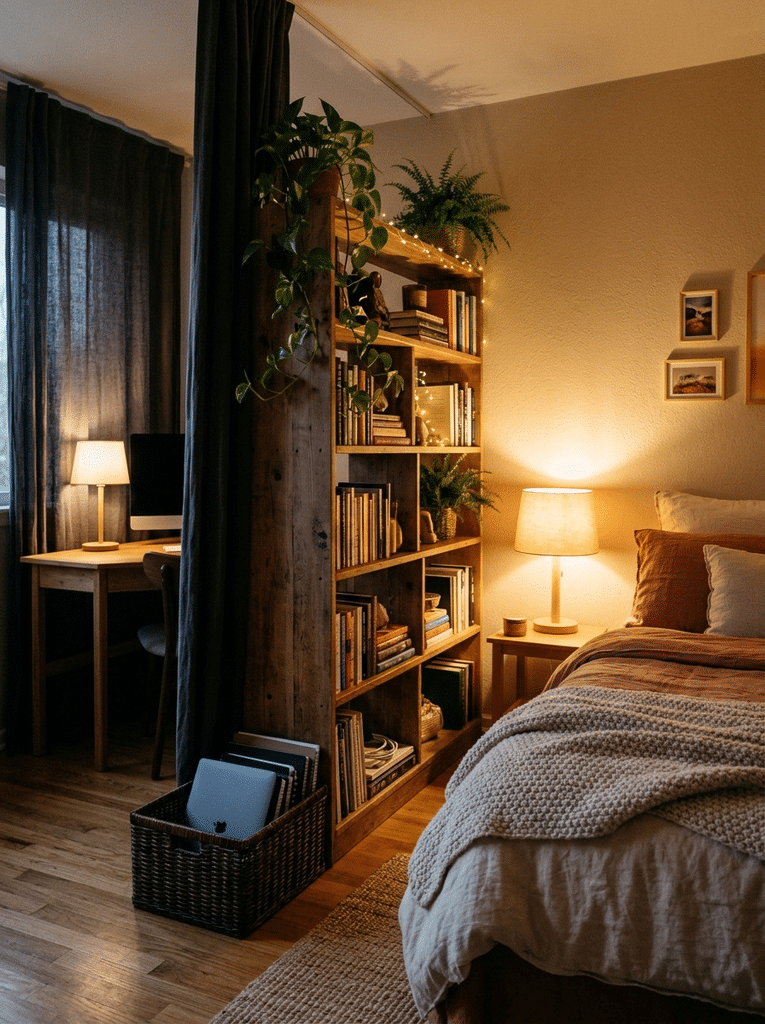
- A rug under the desk that marks the work area
- A curtain on a ceiling track that you can pull across the desk after work
- An open bookshelf or room divider between the bed and desk
- A folding screen that is easy to move and store
- Plants and pictures around the desk, if you are on a budget
Change the Room at Day’s End
Treat the room like a stage that changes with the scene.
- When work is done, close the laptop and put it in a drawer, cabinet, or closet
- Clear the desktop and tuck notes away
- Pull a throw blanket over the desk chair or bring out a favorite book
- Switch from the task lamp to a warm lamp
- Close the curtain or fold the screen
Build a Shutdown Ritual
A short routine tells your brain the workday is over. Write tomorrow’s top three tasks, turn off the monitor, tidy the desk, and say “done” out loud if it helps. Then do something different, like stretching or reading. Try to stop screen use at least an hour before bed, because bright screens can make it harder to wind down.
Keep the Mood Calm
Natural light, plants, and soft colors help the mind move from work to rest. Keep strong colors and busy patterns on the desk side, and use gentler tones near the bed.
A Simple Budget Plan and Common Mistakes
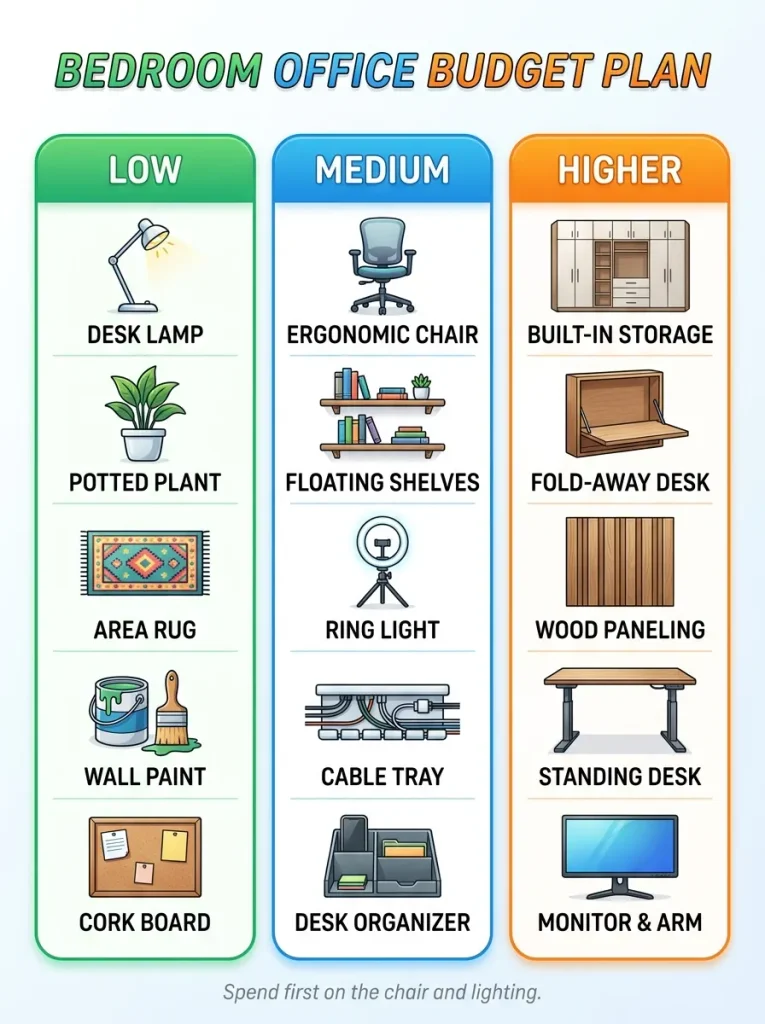
You do not need to spend a lot. Here is a plan for three budgets.
- Low budget: Move a small desk or table to the window corner. Add a lamp, a pinboard, a plant, and a rug. Paint one wall. Use a curtain or screen as a divider.
- Medium budget: Add a good chair, an L shaped desk or floating desk, wall shelves, and a ring light. Buy a cable tray and a few baskets.
- Higher budget: Order custom built in storage, a hidden or fold away desk, wallpaper or wood panel backdrop, and a standing desk.
If money is tight, spend it on the chair and lighting first. Those two affect comfort the most.
Mistakes to Avoid
- Poor lighting: A single ceiling light makes shadows on your work area.
- Too many colors or textures: It makes the room feel busy and hard to focus in.
- Ignoring ergonomics: A desk that looks great but sits at the wrong height will hurt by afternoon.
- Too little storage: Clutter will spread across the room.
- Facing the bed: If you look at your bed all day, it is harder to stay in work mode and harder to relax at night.
- Working from the bed: It harms posture and teaches the brain to link the bed with stress.
- Forgetting guests: If the room doubles as a guest room, plan for privacy, a power outlet by the bed, and furniture that moves.
Frequently Asked Questions
Is it OK to work in your bedroom?
Yes, it is fine to work in your bedroom if you create a separate work zone and keep work out of your bed. Use a real desk and chair, keep it away from the bed, and put work items away at night so the room still feels restful.
Where should I put a desk in a small bedroom?
Put the desk in a corner near a window, sideways to the glass so you get side light without glare. Use a slim or L shaped desk and add wall shelves above it to save floor space. If you can, face away from the bed.
How do I separate my work area from my sleeping area?
Use a visual divider like a rug, a curtain, a bookshelf, or a folding screen. Paint or decorate the desk area differently from the bed area, and hide your laptop and papers in closed storage at the end of the day.
What color is best for bedroom office decor?
Soft neutrals, muted greens, and deep tones such as navy or charcoal work best. Light colors make a small room feel open, greens feel calm and natural, and dark shades feel cozy. Keep to one or two main colors plus a single accent.
How much space do I need for a bedroom office?
A basic workstation needs about a 4 by 5 foot area. That covers a 120 by 60 cm desk plus roughly 90 cm for your chair. Wall mounted desks, fold away desks, and closet offices can work in even less floor space.
Conclusion
Great bedroom office decor is not about spending big or owning a huge room. It is about giving work and rest their own space, choosing a calm palette, lighting the room in layers, hiding the clutter, and putting the laptop away when the day ends. Adding a touch of pampas grass bedroom decor, such as a vase of soft, feathery plumes, can bring natural texture and warmth to your workspace. Even one change, like moving your desk to the window corner or adding a lamp and a rug, will make the room feel more balanced.