
Fox gloves gardening is a tale of two gloves. One is the tall, bell shaped foxglove flower that makes cottage gardens look like a storybook. The other is the pair of gardening gloves you should wear while you work with it. Foxgloves are lovely, bee friendly, and easy to grow, but every part of the plant is poisonous if eaten. That is why a good pair of gloves, a few simple habits, and a little planning matter just as much as sun and soil.
This guide covers both sides. You will learn how to grow foxgloves from seed or plants, when they bloom, how to prune them for a second flush, and how to save seed. You will also learn how to stay safe, including which gloves to pick: elbow length gloves, thorn proof gloves for rose and briar borders, claw gloves for planting, child sizes for young helpers, and pretty floral styles that still protect your hands.
Foxgloves (Digitalis purpurea) grow best in dappled shade and moist, well drained soil. Most are biennial, so they make leaves in year one and flower in year two. Eating any part of the plant can be deadly, so keep it away from edible crops, children, and pets, wear gloves when you cut or handle it, and wash your hands afterward.
In this guide, you will learn:
- What foxgloves are and why their life cycle surprises new gardeners
- How to handle them safely and choose the right gloves for each job
- How to grow foxgloves step by step
- How to prune, deadhead, and save seed
- Which varieties and companion plants look best
- How to fix common problems
Fox Gloves Gardening Basics: What You Are Growing
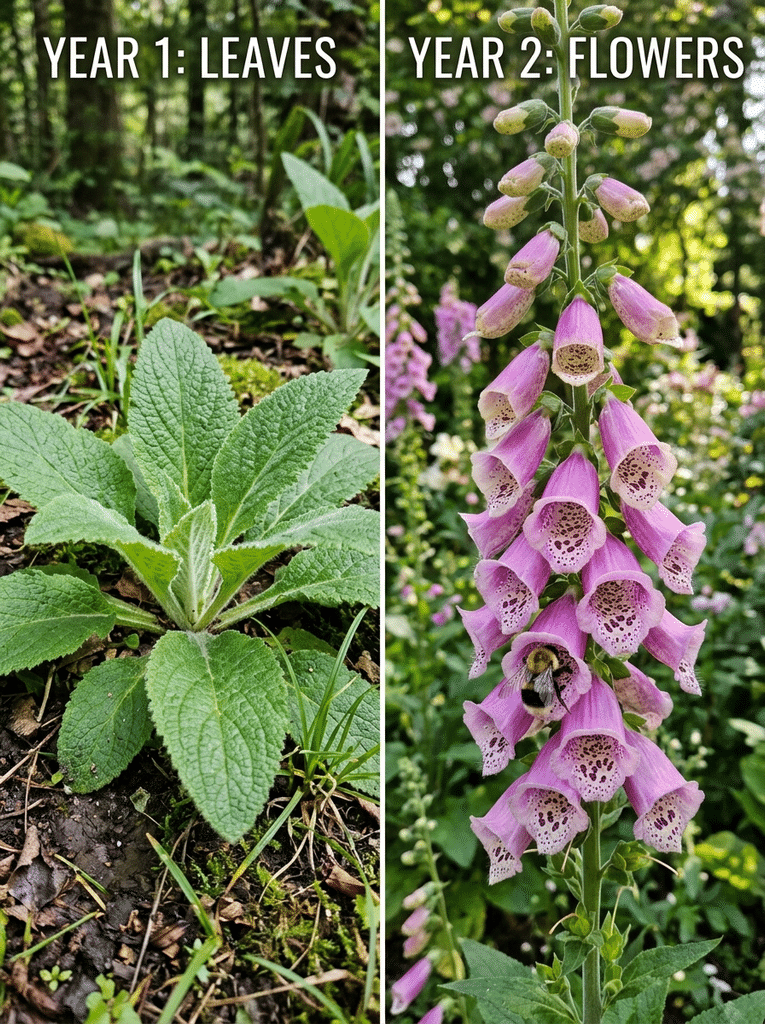
The common foxglove, Digitalis purpurea, is native to Europe. It has tall spikes of tubular flowers, often spotted inside, in purple, rose, pink, apricot, yellow, or white. It blooms for two to three months from late spring, and in a mild climate, the first flowers can open as early as May. Spikes commonly reach three to six feet. For more practical garden tips, a copper for gardening guide can help you explore ways to use copper in garden accessories and decorative features.
The Biennial Secret
Most foxgloves are biennial. That means a two year life cycle.
- Year one: The plant forms a low rosette of leaves.
- Year two: A tall flower spike rises, the plant flowers, sets seed, and then usually dies.
Some types act differently. A few are short lived perennials, such as Digitalis grandiflora, Digitalis lutea, and Digitalis parviflora, and they can flower for several years. Some seed series are bred to flower in the first year. These are called FYF, short for first year flowering, and the Camelot and Dalmatian series are well known examples. If a seed packet does not say FYF, assume the plant is biennial.
A plant bought in full bloom from a nursery is usually in its second year, so it may die after flowering. It may drop seed first, though, and new plants will often appear nearby.
Where the Name Comes From
One old story, an Irish legend, says foxes wore the flowers on their paws to quiet their steps through the hedgerows. That is how the “glove of a fox” got its name. It is a fun fact to share with visiting children, as long as you also teach them to look and not touch or taste.
Medicine and Poison in One Plant
Foxglove contains cardiac glycosides, which affect the heart. Doctors have used digitalis drugs from this plant family to treat heart failure and some heart rhythm problems for more than 200 years. The same chemicals are poisonous at very low doses. This is why you should never eat, brew, or experiment with any part of the plant.
How to Identify Foxglove Leaves
Foxglove leaves are green, oval, soft and hairy, with blunt teeth along the edge, and they can grow up to 30 cm (12 inches) long. Young leaves can look like comfrey, borage, great mullein, or green alkanet, so be careful if you forage or grow edible leaves. Never plant foxgloves beside vegetables or herbs, because the leaves can be mistaken for edible ones. When in doubt, wait until the plant flowers to confirm what it is.
Fox Gloves Gardening Safety: Handling the Plant and Choosing the Right Gloves
Let’s talk about risk in a calm, clear way. Foxglove is dangerous mainly if swallowed. Many gardeners handle it with bare hands and have no trouble, and millions of people grow it every year. Still, some sources advise caution with handling, and some people have sensitive skin. The easy, sensible path is to wear gloves and wash up.
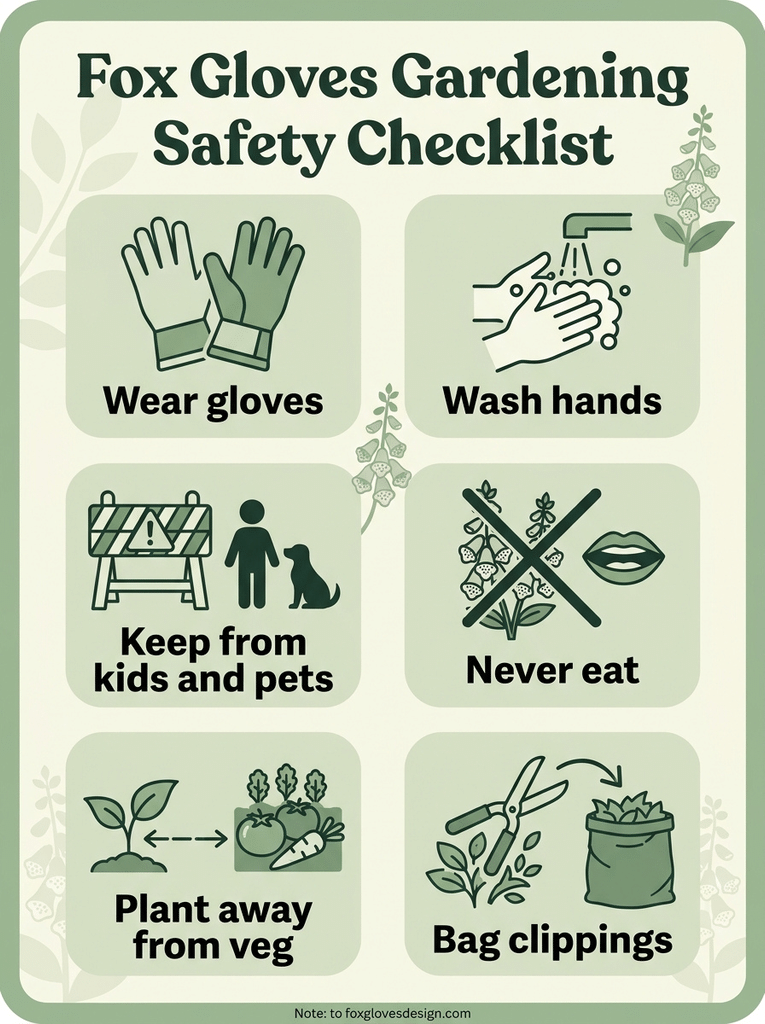
Simple Safety Rules
- Wear gloves when cutting, pulling, or clearing foxglove, and when you handle seed.
- Wash your hands with soap and water after you finish, even if you wore gloves.
- Keep your hands away from your face and mouth while you work.
- Plant away from edibles. Keep foxgloves out of the vegetable bed, herb patch, and fruit area.
- Think about kids and pets. If you have a puppy that chews plants, toddlers, or children who put things in their mouths, you may want to skip foxgloves for now or plant them where little ones cannot reach.
- Teach older children how to spot foxgloves and explain why they must never eat any part.
- Bag your clippings and keep them away from pets and livestock.
- Know what to do in an emergency. If someone swallows any part of the plant, call your local poison control center or emergency number right away. Do not wait for symptoms.
Choose Gloves by Material
Not all gloves protect equally. Here is what to look for.
- Nitrile or latex coated palms: These block moisture and sap better than plain cotton. A snug coated glove is the best everyday choice for foxglove work.
- Leather: Goatskin or cowhide is tough, flexible, and good against thorns.
- Plain cotton fabric: This is comfortable but can soak up sap and hold it against your skin, so it is the weakest option for foxgloves.
- Fit: Pick gloves that are snug but let your fingers bend. A loose glove slips and makes you clumsy.
- Cuffs: A longer cuff keeps stems and seed from sliding down your wrist.
After the job, wash your gloves in soapy water, rinse them well, and let them dry. Do not toss them where children or pets can chew them.
Elbow Length Gardening Gloves
Elbow length gardening gloves cover your hand and forearm, often reaching 14 to 18 inches long. They are great for foxgloves because the spikes are tall and leafy, and you often reach deep into a crowded border to cut stems or pull spent plants. The long cuff keeps leaves, seeds, and soil off your wrists and arms. Choose a pair with a stretchy cuff so it stays in place, and a coated palm for grip.
Thorn Proof and Briers Gardening Gloves
Cottage gardens often mix foxgloves with roses, brambles, and other prickly plants. When you tidy that kind of bed, you need a different glove. Thorn proof gardening gloves and briers gardening gloves use thick leather or layered, puncture resistant fabric to protect your hands from spikes.
A few tips:
- No glove is truly thorn proof, so think of the label as “thorn resistant.”
- Look for a puncture rating. Many European gloves are tested to a standard called EN 388, where a higher puncture number means better protection.
- Pick long gauntlet cuffs when you work around roses and briars.
- Make sure you can still feel small stems. Gloves that are too thick make it hard to pinch out seedlings.
Claw Gardening Gloves
Claw gardening gloves have hard plastic claws on the fingertips. They are fun and useful for loosening soil, making small holes for seedlings, and scratching in compost around foxglove plants. They are handy when you plant foxglove plugs or scatter seed into open soil.
But use them with care. The claws can damage roots and young seedlings if you dig too close. They are not the right tool for cutting stems or pulling weeds right beside a rosette. Many gardeners keep a pair for soil work and a second pair for pruning.
Child Gardening Gloves
If children garden with you, give them child gardening gloves that fit their small hands. Gloves that are too big fall off, and then kids pull them off to work. A good child glove has a snug cuff, a soft coated palm, and a bright color so it is easy to spot in the garden.
Gloves are only one layer of safety, though. If young children visit the garden, set clear rules about which plants are “look only,” and supervise them closely. Many families choose to plant foxgloves in a back border that children do not enter.
Floral Gardening Gloves
Floral gardening gloves prove you do not have to choose between style and safety. A pretty print hides soil stains and makes a fine gift. Check that the palm is coated and the stitching is strong, because some decorative gloves use thin fabric that offers little protection. A floral print with a nitrile palm is a good match for foxglove work and looks right at home in a cottage border.
How to Grow Foxgloves Step by Step
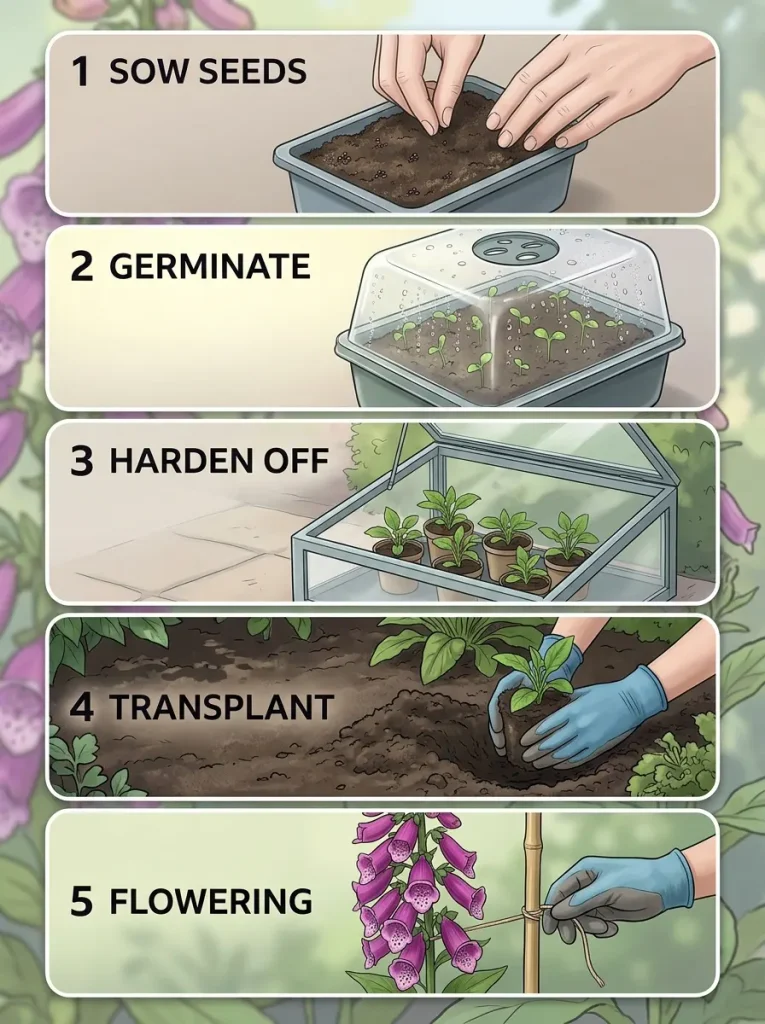
Foxgloves are easy once you understand their timing. Here is a simple plan.
Pick the Right Spot
- Light: Most foxgloves like dappled shade or morning sun with afternoon shade. Full sun in a hot climate can scorch them. A few species, such as Digitalis parviflora and Digitalis obscura, prefer full sun, so check your plant tag.
- Soil: Rich, moist, well drained soil is best. Avoid soil that is very wet or very dry. Add compost before planting.
- Space: For a border, leave about 12 to 18 inches between plants. For cut flowers, 9 to 12 inches is enough.
- Shelter: Tall spikes can bend in wind or under their own weight, so pick a spot with some shelter.
Choose Seed or Plants
Seed is cheap and gives you many plants. Nursery plants give you flowers sooner, but check the tag. Many are in their second year and will flower this season, then die back.
Sow Seed Indoors
- Start seed about 6 to 8 weeks before your last spring frost.
- Use a tray of fine seed compost. Scatter the tiny seeds on the surface and do not cover them, because they need light to sprout.
- Cover the tray with a clear lid or a sheet of glass, and keep it cool and bright.
- Be patient. Germination can take up to 3 weeks.
- When seedlings have a few true leaves, move them into small pots.
- Harden them off outdoors for a week before planting out after your last frost.
From sowing to flower, plan on roughly a year for biennial types. If you sow in May, expect flowers the following May.
Try the Fall Planting Trick
You can speed things up and avoid having plants in the garden all summer.
- Sow seed in trays in midsummer.
- When the seedlings are 6 to 8 weeks old, move them to the garden in early fall, in spots left by spent annuals.
- Let them build strong roots before the ground freezes.
- They will bloom the following spring.
Sow Directly Outdoors
You can scatter seed straight into the garden in late summer. This is easy but less reliable, because the seed is tiny and can wash away or get lost among weeds. Press seed onto bare soil and keep it lightly moist. Foxgloves prefer open soil with little competition.
Plant in Spring or Fall
Plant nursery plants in spring or autumn. Dig a hole as deep as the root ball, loosen the roots gently, set the plant in, firm the soil, and water well. Wear your gloves, since you are handling roots and leaves.
Grow Foxgloves in Containers
Foxgloves do well in big, sturdy pots, such as barrels and large troughs. Use a loam based mix with plenty of compost and good drainage. Water often in hot weather, because pots dry out fast.
Feed, Water, and Support
- Water regularly, especially in dry spells, so the soil stays moist.
- Feed with a balanced fertilizer or compost in spring.
- Stake tall types in windy spots or if the spikes are heavy. A bent plant is common, and a simple stake or a ring of twine fixes it.
- Mulch around the plants to hold moisture and keep weeds down.
Pruning, Deadheading, and Saving Seed
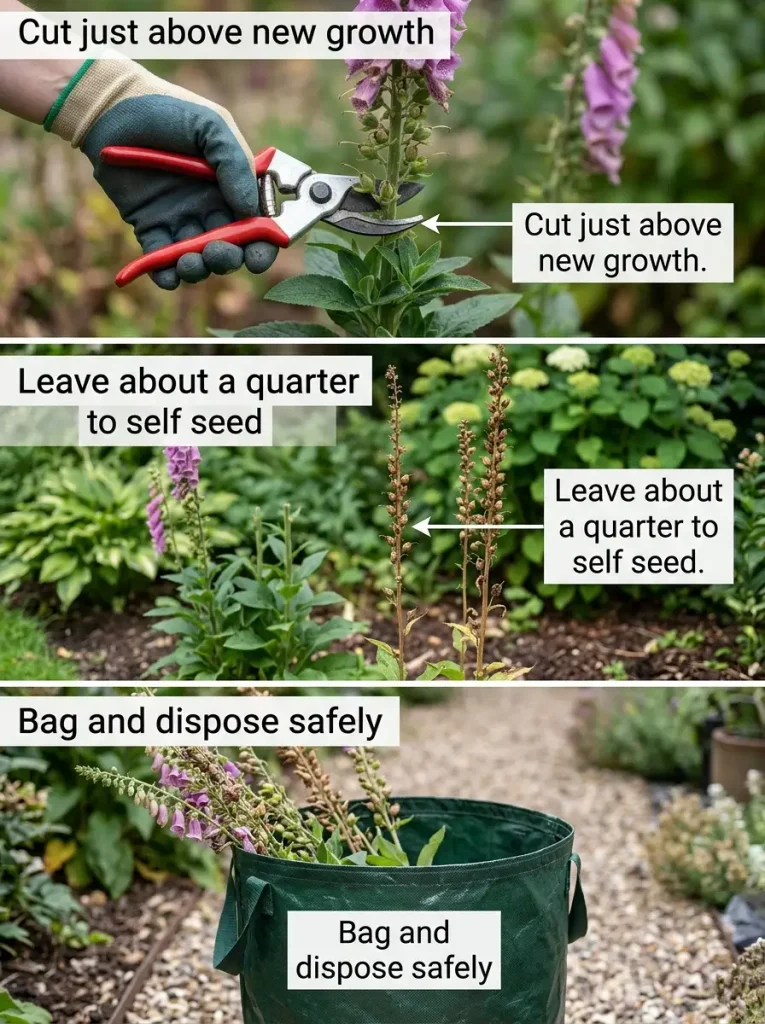
Care is simple, but timing matters. Pruning and seed saving also mean contact with the plant, so wear your gloves for all of it.
Prune for a Second Flush
Many foxgloves flower again if you cut the main spike after the first blooms fade. Do this early rather than late in the season for the best result.
- Wear gloves and use clean, sharp pruners.
- Cut the spent flower stem just below the lowest flower, about 1 to 2 cm (half an inch) above new growth.
- Water and feed lightly. Smaller side spikes should follow within a month or two.
Leave Some for Seed
If you want more plants next year, do not remove every spike. A good rule is to leave about a quarter of the stems standing so the seed pods can dry and ripen. About a month later, when the pods are dry, shake the stems over open soil. This spreads seed where you want it and avoids a border full of seedlings.
Some gardeners go further and skip deadheading entirely. They let stalks turn brown, and the seed spills out with the wind. This makes a loose, “controlled chaos” garden, and the tallest plants often grow from seed that falls on its own. Another tip is to cut spent stalks and lay them on the soil where you want new plants.
Collect Seed by Hand
From about August, you can collect ripe seed. Shake dry seed pods into a paper bag, label it, and store it in a cool, dry place. Wash your hands afterward. Foxglove seed is tiny, so keep the bag away from children.
Clear Out After Flowering
By midsummer, plants can look untidy. Biennial plants that have set seed can be dug up. Perennial types can be cut back from mid autumn to spring. Always bag the clippings and keep them away from pets and livestock.
Move Plants at the Right Time
The best time to move a foxglove is early spring, before it starts to grow toward flowering. Dig up as much of the root ball as you can to keep stress low.
Best Foxglove Varieties and Garden Design Ideas
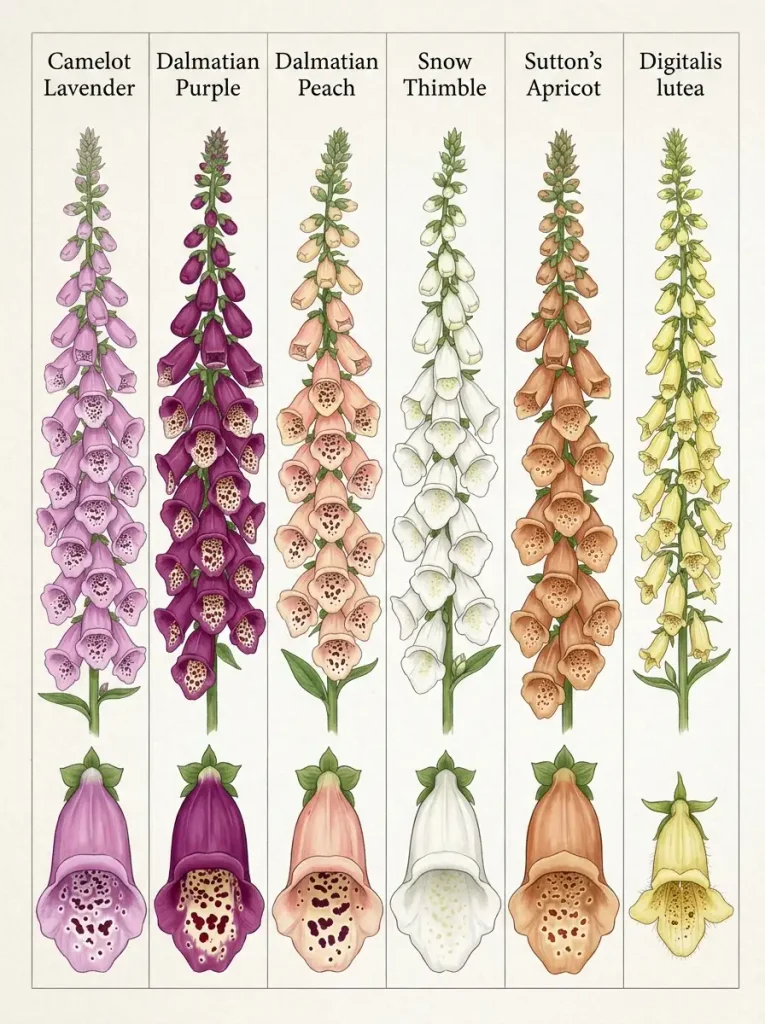
Choosing the right variety makes the garden look planned and keeps you from waiting longer than you need to.
Popular Foxglove Varieties
- Digitalis purpurea: The classic native, with tall pink or purple spires. Biennial. About 2 m (6 feet) tall.
- Dalmatian series (such as Dalmatian Peach, Purple, and White): Shorter, compact, and first year flowering, so you do not have to wait. Great for cut flowers and small gardens.
- Camelot series (Lavender, Rose, White): Also first year flowering, with soft colors that blush in evening light.
- Sutton’s Apricot: A pretty apricot pink variety, about 1 m (3 feet) tall.
- Snow Thimble: A pure white type with little speckling.
- Excelsior Group: Tall, with flowers all around the stem in white, pink, or mauve.
- Pam’s Choice: White flowers with deep maroon spots, up to 1.5 m (5 feet).
- Digitalis lutea: A small perennial with pale yellow flowers, about 60 cm (2 feet).
- Digitalis grandiflora: A perennial with large, warm yellow flowers, about 1 m (3 feet).
- Digitalis parviflora: A perennial with small brown flowers packed tightly on the spike. Likes full sun.
- Digitalis x mertonensis: A rose or strawberry colored hybrid that behaves as a short lived perennial.
The spots inside the flower can be dark or light, so pick the “freckled” look that you like.
How to Plant for Fullness
- Plant in drifts. Groups of five, seven, or more look better than single plants.
- Use a zigzag pattern instead of straight rows, so the border looks natural.
- Plant two years in a row. Because most foxgloves are biennial, a second planting the next year means you have flowers every year.
- Mix heights. Put tall types at the back and shorter Dalmatian types at the front.
Good Companion Plants
Foxgloves look lovely with ferns, hostas, hellebores, geraniums, roses, delphiniums, and sweet peas. In woodland style borders, they glow against dark foliage. If you plant them among roses and brambles, bring your thorn proof gloves for tidy up days.
Foxgloves for Pollinators
Foxgloves are a gift to bees. Bumblebees can see ultraviolet light, and the spots inside each flower work like a landing strip, guiding them to the nectar. As they crawl in, pollen brushes onto their backs and passes to the next flower. This is also why seedlings can be a surprise mix of colors, since bees mix pollen between plants. The leaves also feed the caterpillars of some moths, which are food for baby birds, so a few chewed leaves are not a problem.
Foxgloves as Cut Flowers
Foxglove spikes add height and movement to bouquets. To get the best vase life:
- Cut at the right stage. Harvest when one or two bottom flowers are open. Once bees pollinate a flower, it browns and drops quickly.
- Cut early in the morning, before bees are active.
- Wear gloves and use clean pruners.
- Condition the stems. Let them sit in cool water overnight before arranging.
- Keep them away from fruit. Foxgloves are sensitive to ethylene gas from ripening fruit, which can make blooms fade fast.
- Keep the vase out of reach of children and pets, and wash your hands after arranging.
Fox Gloves Gardening Problems and How to Fix Them
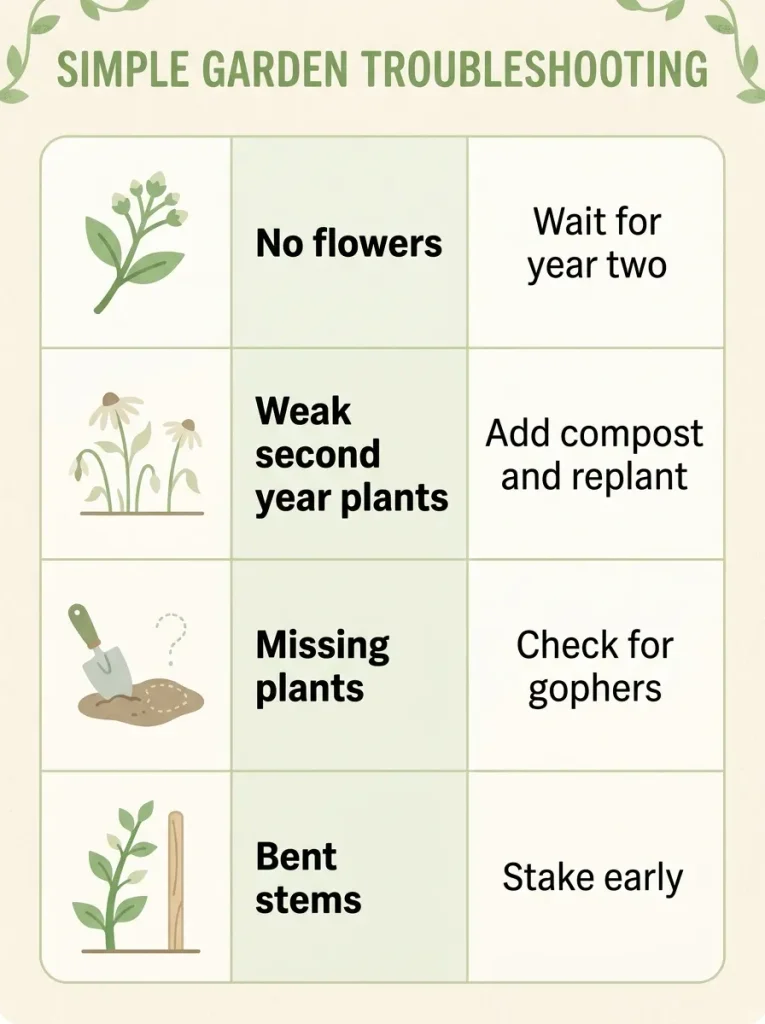
Even easy plants have off days. Here are the most common issues.
My Foxgloves Will Not Flower
Almost always, the plant is in its first year. Biennial foxgloves flower in year two. If a plant has grown big but still has no spike, it may be saving energy to flower in year three, which can happen if it did not grow enough in year one. It will bloom, just later than expected.
The Second Year Plants Look Weak
If the second round of flowers is small or the stems are thin, the soil may be tired, or the plants may be crowded. Add compost, thin seedlings, and water well. Replacing plants with fresh seedlings every year also keeps the patch strong.
Plants Vanish Overnight
If a plant suddenly wilts with its top cut away from its roots, a gopher or mole may be to blame. Foxgloves are usually left alone by animals, but burrowing pests sometimes eat the roots. Plant in wire lined raised beds, or set plants inside thin plastic pots with holes in the base, sunk into the ground. Roots can grow through the holes, but the plant is harder to pull down.
Deer and Other Animals
Foxgloves are often called deer resistant, but hungry deer may still nibble them in some places. If deer are a problem, use fencing or plant tougher barriers nearby.
Slugs and Caterpillars
Slugs and snails usually leave mature foxgloves alone, but young seedlings are tender, so protect them. Moth caterpillars may chew a few leaves, and that is part of a healthy garden.
Tall Stems Bend or Fall Over
Heavy spikes can flop in wind and rain. Stake early with a bamboo cane or twine, and plant in a sheltered spot. A bent plant is not dead, so tie it up gently.
Is Foxglove Invasive?
In some regions, such as parts of the western United States, foxglove is treated as an exotic plant that can spread. Check your local rules before planting it near wild areas. If you want to avoid self seeding, deadhead before the pods ripen.
Poisonous Plants in Your Garden
Foxglove is not alone. Many common garden plants are toxic if eaten, including delphinium, larkspur, tulips, lilies, hydrangea, lily of the valley, and clematis. Good habits, such as gloves, hand washing, labeling plants, and supervising children, protect you from all of them.
Frequently Asked Questions
Do I need gloves for fox gloves gardening?
Yes, it is smart to wear gloves. Foxglove is poisonous if eaten, and while touching it is low risk for most people, gloves protect you from sap and seed and from any skin sensitivity. Choose coated gloves, wash your hands afterward, and never touch your mouth or eyes while working.
What are the best gloves for pruning foxgloves?
A snug glove with a nitrile coated palm is a good choice for pruning foxgloves. If you reach into a crowded bed, elbow length gardening gloves protect your forearms. If roses or briars grow nearby, wear thorn proof gardening gloves with a long cuff.
Are foxgloves safe around kids and pets?
Foxgloves can be dangerous if a child or pet eats any part of the plant. If you have young children or a pet that chews plants, it is safest to skip them or plant them out of reach. If you do grow them, supervise closely and teach older children never to taste any plant.
How long do foxgloves take to flower?
Most foxgloves are biennial, so they flower in their second year, about a year after sowing. First year flowering types, such as the Camelot and Dalmatian series, can bloom in the first season. Perennial types flower every year for a few years.
Can I grow foxgloves in pots?
Yes. Use a large, sturdy pot with a loam based mix and plenty of drainage. Water often in hot weather, place the pot in dappled shade, and stake tall spikes. Bring your gloves when you repot or cut the plant back.
Conclusion
Foxglove gardening rewards you with tall, bee loving flowers and a classic cottage look. It also asks you to be a careful gardener. Know your plant, keep it away from edibles, children, and pets, and wear gloves that suit the job. An organized gardening rack keeps your gloves and tools within easy reach, while elbow length gloves protect your arms, thorn proof gloves handle roses and briars, claw gloves speed up planting, child sized gloves let little helpers join the fun in safe spaces, and a floral pair can make the work feel a little brighter.
Ready to begin? Pick your spot, choose one or two varieties, and buy a good pair of gloves this week. Sow seed or plant in spring or fall, and plan to plant again next year so you get flowers every season. Share a photo of your first foxglove spire with a fellow gardener, and enjoy the show.