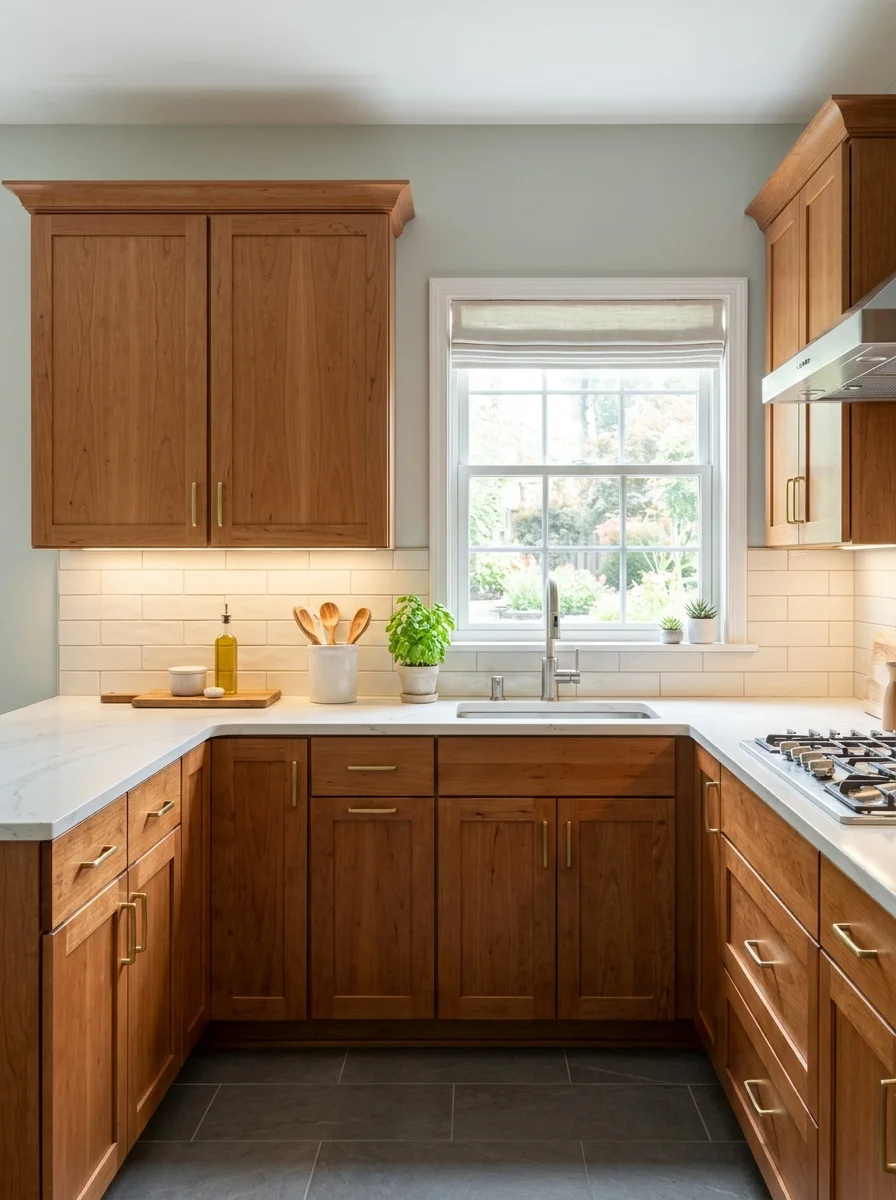
Cherry kitchen cabinets have a rich, warm look that few other woods can match. They start out light and pinkish, deepen into a glowing reddish brown, and feel classic in a way that painted cabinets sometimes do not. But if you own them, or you are thinking about buying them, you probably have questions. Are they out of style? What color goes with them? What should the floor look like? Can you update them without painting?
The short answer is that cherry is not dead. What dates a cherry kitchen is usually everything around the wood: beige granite, orange tinted floors, heavy trim, and walls that make the red look even redder. Change those, and the cabinets can look fresh again. This guide walks you through what cherry wood is, how it ages, which colors and floors work, how to update it without paint, and how to care for it.
Quick answer: Cherry kitchen cabinets are not outdated when you pair them with the right finishes. Choose white or warm white counters, a simple backsplash, a clearly different floor, soft wall colors like warm white, taupe, or muted green, and warm metal hardware. If the look feels heavy, update the surroundings first. Paint the cabinets only when the other changes cannot solve the problem.
In this guide, you will learn:
- What cherry wood color is, and how cherry changes over time
- The difference between light, natural, and dark cherry cabinets
- Whether cherry cabinets are out of style, and how to make them look modern
- Colors that go with cherry wood, including paint and wall palettes
- What color wood floor to use with cherry cabinets
- How to update cherry cabinets without painting
- How to clean, care for, and buy cherry cabinetry
What Is Cherry Wood Color? Facts About Cherry Kitchen Cabinets
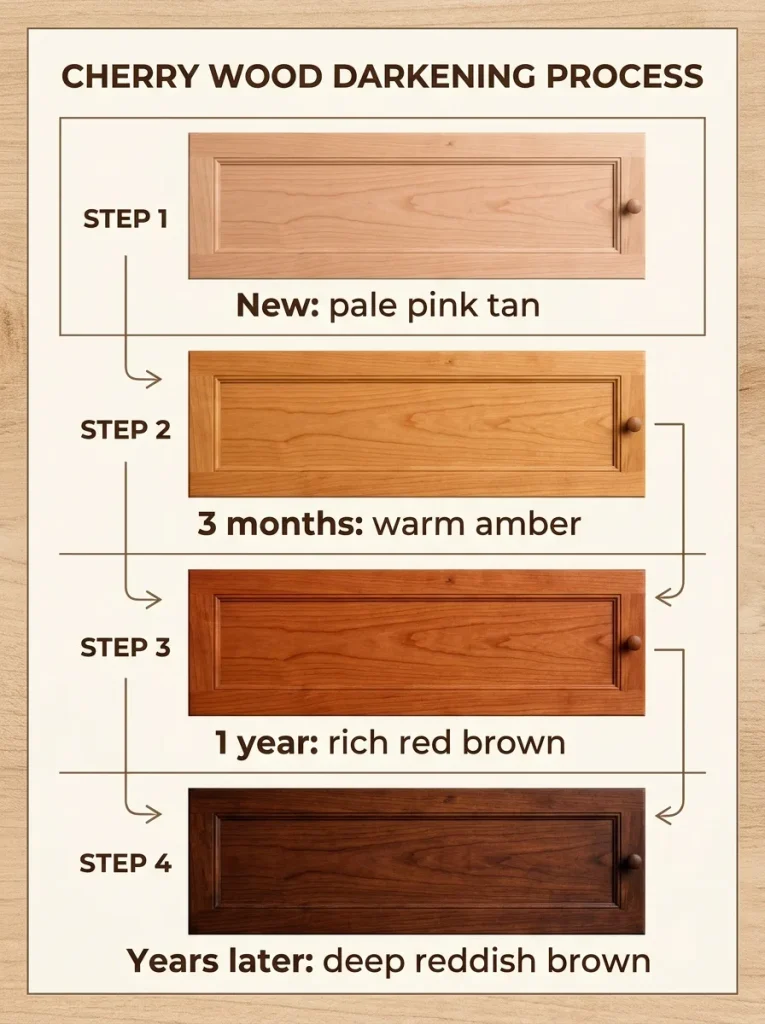
Before you decide how to style cherry, it helps to know what it actually is.
What Is Cherry Wood Color?
Cherry cabinets are made from black cherry, a fine grained American hardwood. When the wood is new, it looks pale pinkish tan. With time and light, it deepens toward a rich reddish brown. Most of that change happens in the first two to three months, depending on how bright the room is, and then it slows down. Natural finishes show the change the most, and dark stains hide most of it.
The grain of the Kitchen wood is gentle and smooth, with a soft natural glow. Small pin knots, gum streaks, and pale sapwood are normal. No two kitchen doors match exactly, and that is part of their natural charm.
Real Cherry vs. Cherry Stain
Be careful with the word “cherry.” Many cabinets sold as “cherry” are actually maple, oak, or birch with a red brown stain. Real cherry has a smooth, closed grain and changes color as it ages. A cherry colored stain on another wood stays more or less the same. If you are buying, ask for the species in writing. If you already own cabinets, you may have red oak or stained maple, and the same style advice still applies.
“Brazilian cherry” is also a different wood. It is a trade name for a tropical wood called jatoba, which is much harder than American cherry and often used for floors. If you have Brazilian cherry floors, remember it is not the same as your cherry cabinets.
How Hard Is Cherry?
Cherry is softer than oak or maple. On a common hardness scale used by the USDA Forest Products Laboratory, cherry rates about 950, while northern red oak is about 1,290, white oak about 1,360, and hard maple about 1,450. That means cherry can dent more easily on drawer fronts and door edges. In a careful home it holds up well, and a good factory finish takes most of the daily wear. In a very busy kitchen, a harder wood or a painted finish may last longer.
Good to Know About Staining
Cherry takes a clear finish beautifully, but it is not easy to stain at home. Some stains can blotch, which means they soak in unevenly and leave dark, cloudy patches. Factories avoid this with sealers and toners. That is one reason to buy cherry cabinets prefinished and to judge the stain on a real door sample.
Cherry Cabinet Pieces Beyond the Kitchen
Cherry is not only for kitchens. A cherry china cabinet is a classic dining room piece, and a cherry entertainment cabinet gives a living room a warm, furniture style look. Cherry kitchen units, as they are often called in the UK, work the same way as American cabinets. If your cherry furniture sits near your kitchen in an open plan home, try to keep the wood tones in the same family so the spaces feel connected.
Cherry Cabinet Types: Light, Natural, Dark, and Modern Styles
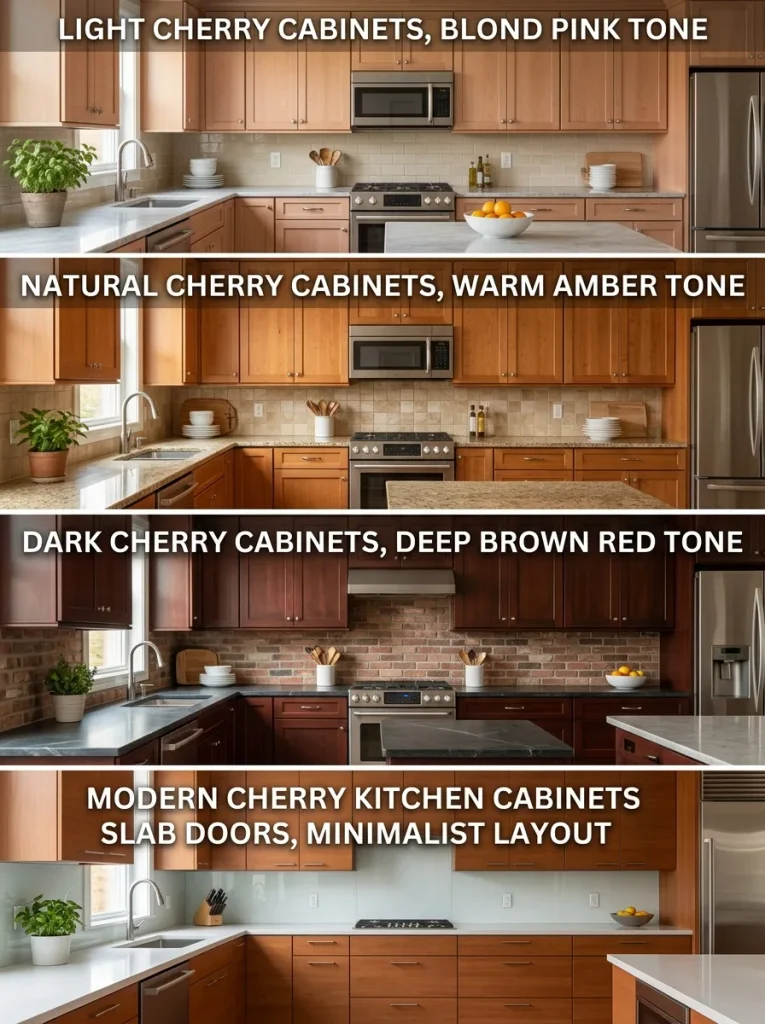
Cherry comes in several looks. Knowing which one you have, or want, helps you choose what goes around it.
Light Cherry Cabinets
Light cherry cabinets have a soft blond pink tone, usually when the wood is new or finished with a clear coat or a light toner. They feel airy and calm, and they are easier to pair with pale counters and light floors. They will still deepen with time, so plan for a warmer look than you see on day one.
Natural Cherry Cabinets and Natural Cherry Wood Cabinets
Natural cherry cabinets show the wood with only a clear finish. You see the grain, the sapwood streaks, and the color shift as the wood ages. This is the look people love best, because it ripens beautifully. Natural cherry wood cabinets change the most, so keep the fruit bowl, calendar, and appliances moving in the early months. Objects left against a door can leave a lighter shadow that takes a long time to even out.
Dark Cherry Cabinets
Dark cherry cabinets have a deep red brown or espresso leaning stain. They feel formal and rich, and they hide the color shift and pale streaks well. The risk is heaviness. Dark wood needs light around it, such as light counters, pale walls, and good lighting, or the room can feel closed in.
Modern Cherry Kitchen Cabinets
You can absolutely have a modern look in cherry. Modern cherry kitchen cabinets and modern cherry wood kitchen cabinets often use these features:
- A simple slab or narrow shaker door
- A natural or light finish
- A frameless, clean box with slim lines
- Minimal hardware or slim pulls
- A painted island or tall pantry to break up the wood
Contemporary cherry kitchen cabinets follow the same idea. Keep the lines clean, the surfaces clear, and the palette quiet, and the warm wood becomes the star instead of a throwback.
Cherry Cabinet Doors: Which Style Fits?
Your cherry cabinet doors set the tone of the kitchen. Door style should match your home’s design.
- Shaker: One of the longest lasting styles. It suits traditional, transitional, and modern homes.
- Slab (flat): Clean and simple. Best for modern kitchens, and it shows off cherry’s grain.
- Raised panel: Detailed and formal. Suits traditional homes, though heavy profiles can feel dated.
- Inset: The door sits flush inside the frame. It looks refined but costs more.
- Arched or cathedral: Softer and more traditional. These can work, but they are harder to modernize.
If your doors are a plain rectangle or square profile with no exposed hinges and the finish is in good shape, you have what designers call decent bones.
Are Cherry Cabinets Out of Style? Are Cherry Cabinets Outdated?
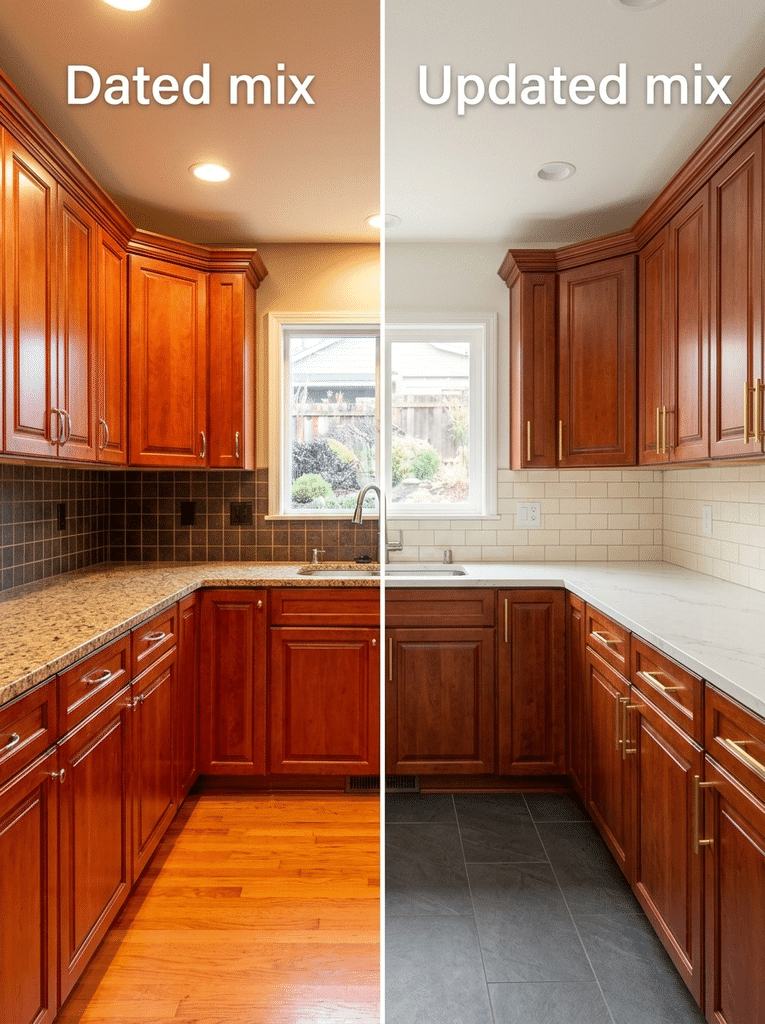
This is the question most people have. Here is an honest answer.
Are Cherry Cabinets Out of Style?
Not exactly. Many homes from the 1990s and 2000s had cherry cabinets with a strong orange red stain, heavy raised panels, beige granite, and tile floors. That whole combination became the “dated” look, and the cabinets took the blame. Today, warm wood is coming back in kitchens, and natural or lighter cherry fits that mood well.
Are Cherry Cabinets Outdated?
They can be, if the room around them is. Designers often point out that it is not always the cabinets that date a kitchen. It is the friends they keep. Outdated granite, old tile or vinyl floors, wood floors that do not match the cabinets, and the wrong wall color can all drag a room down. When you fix those, the cabinets often look great.
What Really Makes a Cherry Kitchen Look Dated?
- Strong orange red stain with no contrast around it
- Beige or busy red brown granite
- A floor with the same orange tone as the cabinets
- Beige walls with an orange or pink undertone
- Heavy crown, soffits, or valances
- Oil rubbed bronze or very yellow brass hardware
- Mismatched appliance colors
How to Make Cherry Cabinets Look Modern
Here is a simple plan.
- Quiet the surroundings. Use simple white or warm white counters, a plain backsplash, and a calm wall color.
- Pick a different floor. Choose one that clearly contrasts with the wood. More below.
- Add light. Under cabinet lights and better fixtures make dark wood glow.
- Change the hardware. Slim pulls in satin brass, polished nickel, or black look current.
- Simplify. Remove trim, valances, and clutter, and keep counters clear.
- Add contrast. A painted island, white upper cabinets, or open shelves break up a big wall of wood.
- Demote the cabinets from lead role. Make the floor, backsplash, or walls more interesting so the cabinets are one star in the room, not the only one.
- Match your appliances. Choose stainless steel or one consistent finish, so the eye has fewer things to figure out.
If you want a bigger change without full replacement, refacing is an option. You keep the cabinet boxes and swap the doors and drawer fronts for a simpler style like shaker or slab.
Colors That Go With Cherry Wood: Paint, Palettes, and Walls
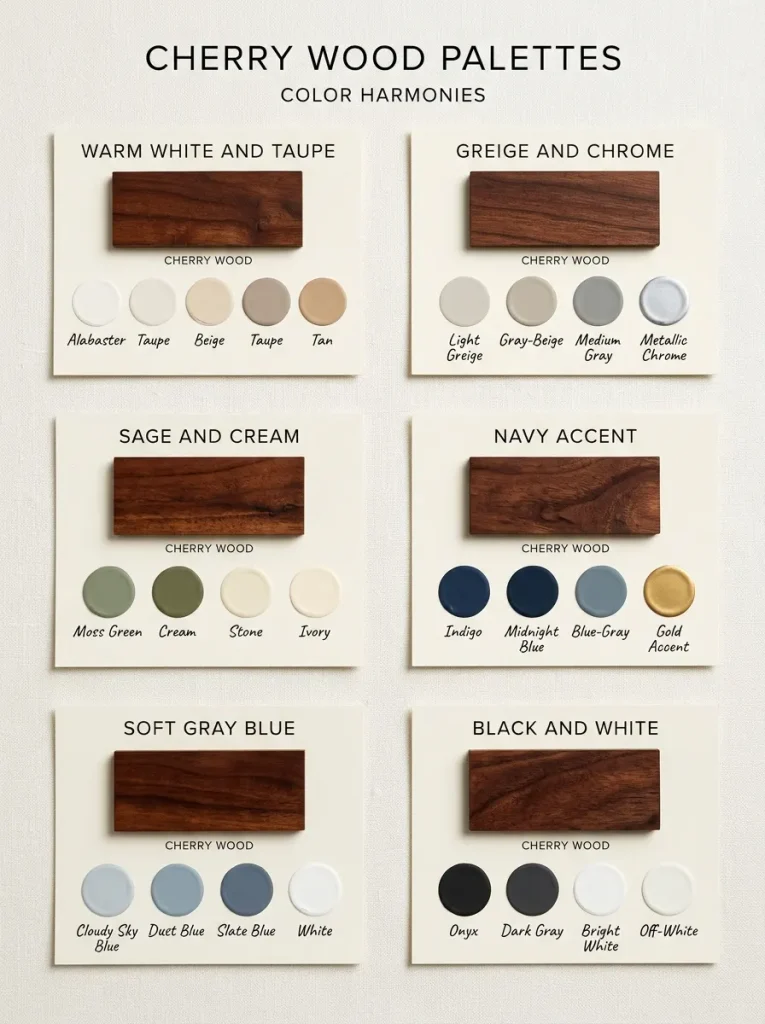
Color is where most cherry questions live. Let’s cover what colors go good with cherry wood, how to build a cherry wood color palette, and which paint colors match.
What Colors Go Good With Cherry Wood?
Cherry has red undertones, so the best colors either calm the red or sit comfortably beside it. These colors go with cherry wood:
- Warm whites and creams: Soft, clean, and easy. Avoid stark cool white next to a dark stain.
- Taupe and greige: Warm gray browns that quiet red tones.
- Soft sage and olive greens: Green sits opposite red on the color wheel, so it calms and balances it.
- Muted gray blue: Cool and soft, a fresh contrast to warm wood.
- Deep navy or charcoal: Works as an accent in a bright room.
- Black: Works in small doses, such as hardware, light fixtures, or a black countertop.
How Wall Colors Behave Next to Cherry
An important rule: nothing makes cherry less red. You cannot tone it down with paint. What you can do is choose colors that do not make it look even redder.
- Red friendly colors such as off white to light taupe feel natural beside red wood. Taupe is often safer than beige, since some beiges lean orange pink and make the wood look redder.
- Green and blue colors can either avoid red tones or accent them on purpose. Opposites attract and make each other stronger.
- Too much gray can look cold and bluish next to red wood. A gray that looks neutral on the chip can turn icy in your kitchen.
Cherry Wood Color Palette Ideas
Here are palettes to try. Pick one, and repeat each color in a few places.
- Greige, taupe, cream, and chrome: A calm, neutral look. Chrome or polished nickel keeps it fresh.
- Warm white, cream, and brass: Bright and classic, with a soft metal glow.
- Sage, cream, and wood: Natural and gentle. Great with natural cherry.
- Gray blue, white, and nickel: Cool and clean, a nice contrast to red wood.
- Warm white with a navy island: Bold and modern. The island can be navy while the cherry stays on the perimeter.
- Black, white, and cherry: Dramatic and crisp. Use black in small, repeated touches.
Cherry Wood Paint Colors Match: How to Choose
Use this order of priority when you pick a wall color.
- Backsplash: Fussier than cabinets, so it comes first.
- Cabinets: Most wood finishes offer some flexibility.
- Countertop: Fits next.
- Flooring: Fits last, since it covers the least visual space on the wall.
Paint colors that often work with red toned woods include warm off whites, soft light taupes, and gentle greens. Some well known examples that designers mention are Sherwin Williams Egret White and City Loft, and Benjamin Moore Pale Oak. Always test samples first, because lighting changes everything.
Best Paint Color With Dark Cherry Cabinets
If you have dark cherry cabinets, use these ideas.
- Warm whites and pale creams give the dark wood room to breathe.
- Light greige or taupe looks calm and modern.
- Soft sage green adds life and softens the red.
- Muted gray blue adds a cool contrast if your cherry is not too orange.
- A deep accent wall such as navy works only if the room has plenty of daylight.
- Avoid dark walls everywhere, which can make the room feel heavy.
Test Before You Paint
- Paint or tape large samples next to your cabinets
- Look at them in morning light, noon light, and evening lamp light
- Check them next to your counter, backsplash, and floor
- Choose the one that makes the wood look warm and rich, not redder
What Color Wood Floor With Cherry Cabinets? Plus Counters, Backsplash, and Hardware
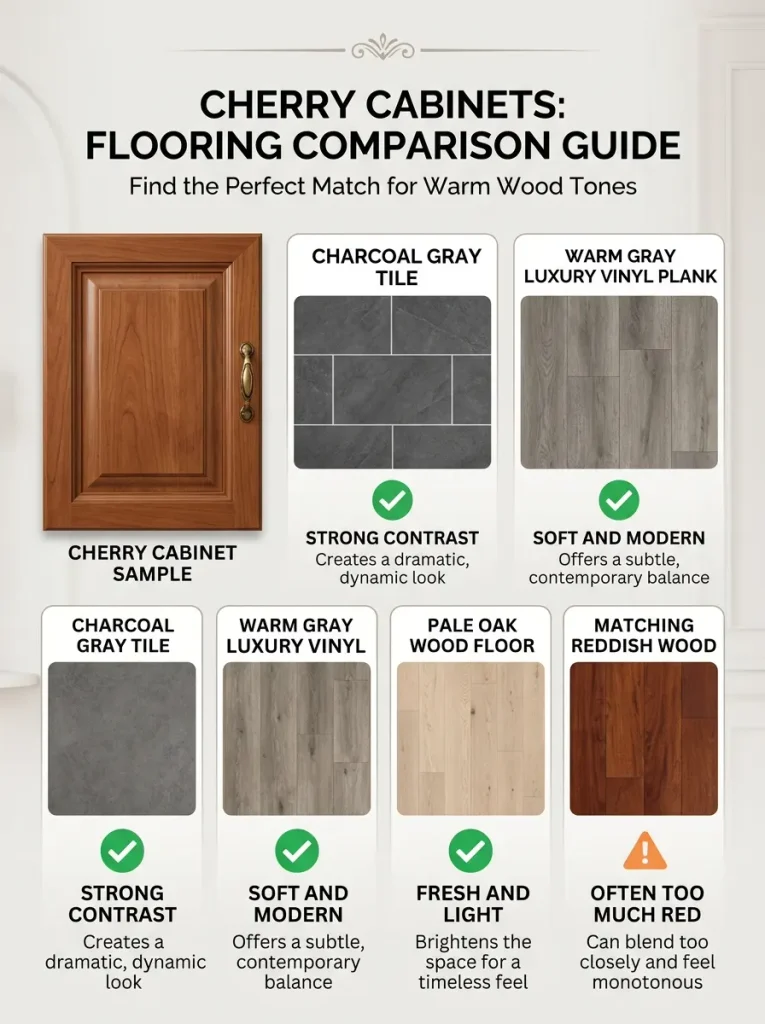
The floor is one of the biggest decisions with cherry. Here is how to choose it, plus the other finishes that complete the look.
What Color Wood Floor With Cherry Cabinets?
If you want a wood floor, you have three safe choices.
- A clearly lighter floor. Pale oak or a light natural wood brightens the room and contrasts with the red wood. This works nicely with light or natural cherry.
- A clearly darker floor. A deep brown or gray brown floor grounds the room. Make sure it is a different tone, not just a slightly darker red.
- A floor that picks up the red hue on purpose. Some designers say a wood floor should echo the reddish hue of the cabinets, since a floor that is a near miss can make the cabinets look off. If you go this way, match the undertone closely and use samples.
What to avoid:
- Gray washed or yellow toned woods, which often clash with red cherry
- Another reddish wood that is a shade off, which looks like a mistake
- Orange toned floors, which add too much of the same color
- Wood look tile or vinyl next to real wood floors, which looks fake
Tile and Vinyl Floors With Cherry Cabinets
A dark charcoal gray or blackish floor is a great contrast to red stained wood and works with many countertops. Charcoal slate tile is a classic example. A warmer gray taupe floor gives a softer look. If you use tile, a small grout line of about 1/8 inch looks crisp. If you choose luxury vinyl, look for one with a grout line, so it does not look unreal.
Always get samples and compare them with your counter and backsplash in your own light, because online photos can mislead.
Countertops That Work With Cherry
Red stained wood is picky about its partners. Good choices are:
- White quartz with warm veining: A reliable favorite. The contrast stays strong even as the wood darkens.
- Soft marble look surfaces: Gentle and classic.
- Honed light granite: Works if it is calm.
- Dark charcoal or black: A timeless option, especially with lighter wood.
Use care with busy red brown granite that competes with the wood, and with black counters next to very dark cherry.
Backsplash Ideas
Subway tile is almost always a safe and affordable choice with cherry. It is timeless and quiet.
- White or cream subway tile works with most counters.
- Handmade look tile adds charm.
- A slab backsplash (where the countertop material runs up the wall) looks clean and modern.
- Keep the backsplash simpler than the counter, since the wood already provides pattern.
- Avoid dark glass or tile in the same red brown family.
Hardware and Faucets
- Polished nickel and satin nickel look lovely with cherry.
- Satin or aged brass adds warmth, but avoid very bright, yellow brass, which can clash with red woods.
- Black looks striking and low contrast, especially on a darker stain.
- Oil rubbed bronze can look like an early 2000s detail unless the rest of the kitchen supports it.
- Chrome is clean and bright, though it can feel stark on a dark stain.
Measure existing hole spacing before you buy new pulls, so you do not have to fill and redrill the wood.
Appliances and Lighting
- Stainless steel works well with cherry. Black appliances against dark cherry can feel heavy.
- Under cabinet lights, new pendants, and warm bulbs highlight the depth of the wood.
How to Update Cherry Cabinets Without Painting
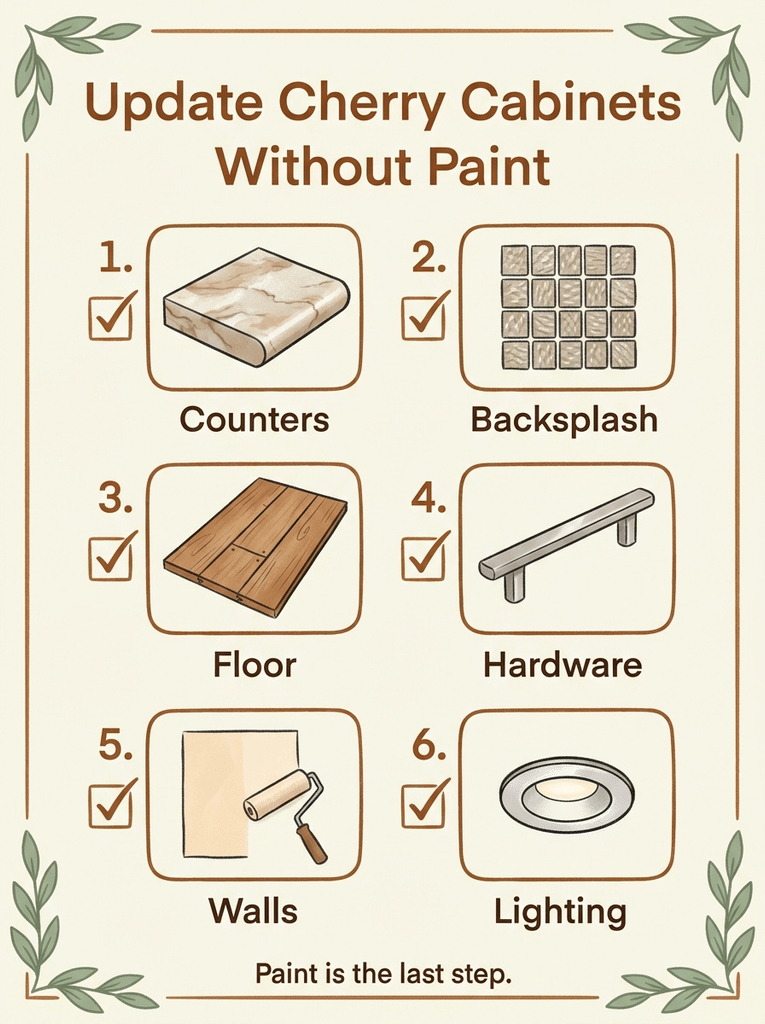
Many homeowners love their wood and do not want to paint it. You do not have to. Here is how to update cherry cabinets without painting, in the best order.
Step 1: Replace Dated Counters
Dark, busy granite is often the biggest culprit. Swapping it for white or warm white quartz makes a huge difference and reuses every cabinet. If your countertop is staying, let it guide your backsplash and wall color.
Step 2: Refresh the Backsplash
A simple white or cream subway tile is affordable and quick. If your counter is black, white subway tile looks sharp.
Step 3: Fix the Floor
An orange toned or dated floor can undo a kitchen. A new charcoal, warm gray, or pale oak floor changes the whole mood. This is more expensive, but it often has the biggest impact after counters.
Step 4: Change the Hardware and Faucet
New pulls and knobs are one of the cheapest upgrades. Longer pulls in satin brass, nickel, or black look current. Match the faucet finish to your hardware.
Step 5: Repaint the Walls and Trim
Wall color is the most affordable change. Move from beige or gold to warm white, taupe, or soft green. Use a clean, warm white trim so the wood stands out.
Step 6: Upgrade the Lighting
Add under cabinet lights, replace dated fixtures, and use warm, bright bulbs. Good light lifts dark wood more than almost any paint color.
Step 7: Add Contrast With an Island or Open Shelves
A painted island in navy, sage, or warm white gives the eye somewhere new to look. A wall of cherry broken up by open shelves or glass front uppers feels lighter.
Step 8: Simplify and Style
Clear the counters, remove heavy valances, and add a few plants, a wood cutting board, and a simple rug. A calm kitchen makes cherry look intentional.
Don’t Match Old Cherry With New Cherry
If you need to add a new cabinet or door, remember that new wood starts lighter than aged cherry. Even in the same stain name, the new piece may stand out for a long time. A deeper stain narrows the gap, or you can use a different material for the addition.
When Painting Does Make Sense
Sometimes the finishes just cannot agree, or the budget only covers paint. In that case, painting your cabinets can give a kitchen a new life. If you go that way:
- Price new painted doors or refacing first, since you are covering an expensive wood
- Clean and sand the wood well, and use a bonding primer
- Choose a warm white, soft greige, sage green, or a deep island color
- Keep the floors, counters, and backsplash if they still work
If the cabinets are in great shape, many designers suggest keeping them stained when you can, but a good paint job is better than a kitchen you dislike.
Care, Buying Tips, and Mistakes to Avoid
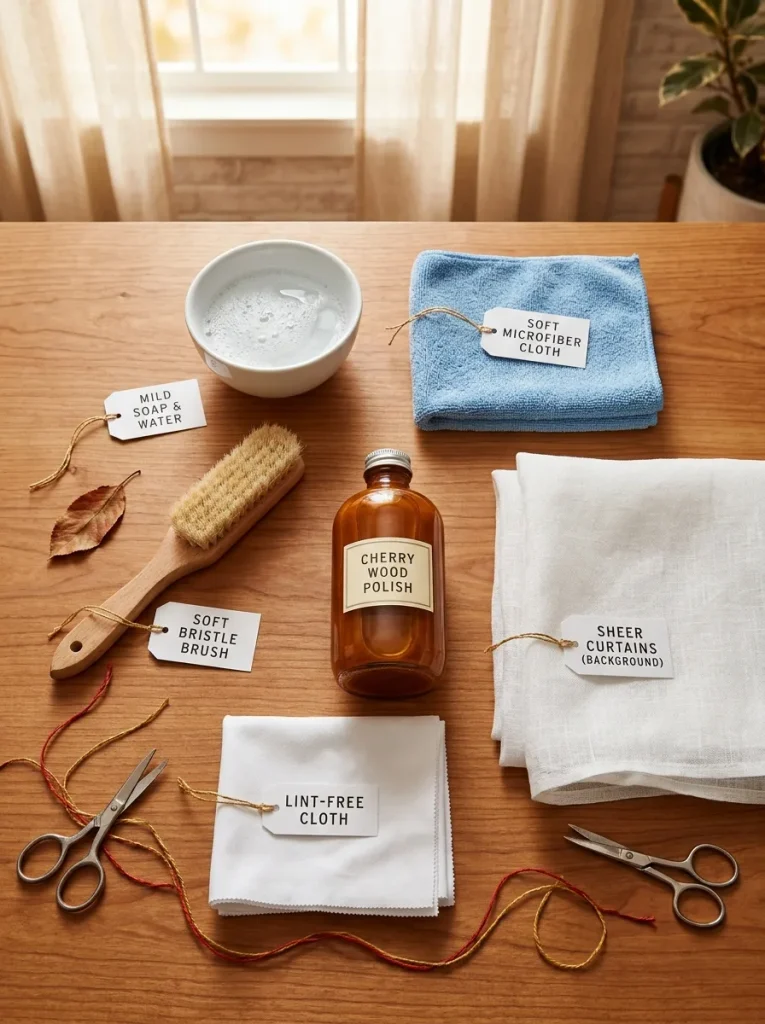
Good care keeps cherry looking beautiful for decades.
How to Clean Cherry Kitchen Cabinets
What you need: soft microfiber cloths, mild dish soap, distilled water, a soft bristle brush for crevices, and a lint free cloth for buffing.
- Dust often. Wipe with a dry microfiber cloth to remove dust and crumbs.
- Mix a gentle cleaner. Use about 1 teaspoon of mild dish soap in 2 cups of warm distilled water.
- Wring the cloth well. It should be damp, not wet.
- Wipe with the grain. Work in small sections and do not scrub.
- Rinse and dry. Wipe with a cloth dampened with plain water, then buff dry right away.
- Treat stains gently. For a stubborn spot, test a small paste of baking soda and water on a hidden area first.
- Clean the hardware. Wipe knobs and pulls with a damp cloth to avoid grime buildup.
If you want to polish, use a product made for your finish and follow the cabinet maker’s advice. Polishing every few months is common, but too much product can leave residue.
What to Avoid
- Bleach, ammonia, and harsh or abrasive cleaners
- Steam or soaking wet cloths, which can harm the finish and joints
- Steel wool or stiff brushes
- Sanding or refinishing one door, which exposes lighter wood that takes months to catch up
- Leaving spills, especially acidic liquids like lemon juice
Protect the Color
- Shade harsh sun with sheer curtains or UV film so the wood ages at an even pace
- Move objects on the counter and wall so they do not leave a shadow
- Keep spare doors or fillers in the light, not in a dark garage
- Use the factory touch up kit for small chips
- Use the exhaust fan to reduce grease buildup
Cost and Buying Notes
Cherry is usually sold in made to order and semi custom lines, so you will often get a quote instead of a fixed price. Cherry also costs more than many woods because there is more waste in finding clear, evenly colored boards. If you want the red brown look for less, a cherry tone stain on birch or another wood is cheaper, but it will not age like real cherry. Ask for door samples, and compare them in your own kitchen light.
Common Mistakes to Avoid
- Ordering new doors to match old cherry. They will look lighter for a long time.
- Choosing a floor that is a near match. It looks like a mistake.
- Using beige walls with an orange undertone. They make the wood look redder.
- Using stark cool white next to a dark stain. It can look harsh.
- Going too dark all over. Dark cabinets, dark counters, and dark floors make a heavy room.
- Skipping samples. Colors change in your light.
- Forgetting hardware and lighting. They are small changes with big results.
- Rushing to paint. Try the other updates first.
Frequently Asked Questions
Are cherry kitchen cabinets out of style?
Not if you style them well. Cherry itself is a classic wood, and warm wood is popular again. What looks dated is a strong orange red stain paired with beige granite, an orange floor, and heavy trim. Update the surroundings and cherry can look modern.
What colors go well with cherry wood?
Warm white, cream, taupe, greige, soft sage green, and muted gray blue all go well with cherry. White or warm white quartz counters and a simple cream or white subway tile backsplash keep the look fresh. Use deep navy or black as small accents.
What color wood floor goes with cherry cabinets?
Choose a floor that is clearly lighter or darker than the cabinets, such as pale oak or a deep brown, or pick a charcoal or warm gray tile or vinyl. Avoid gray washed or yellow toned wood and any reddish floor that is just a shade off from the cabinets.
How do I update cherry cabinets without painting?
Start with the finishes around them. Replace dated counters, add a simple backsplash, update the floor, change the hardware, repaint the walls in warm white or taupe, and improve the lighting. Add a painted island or open shelves for contrast. Paint the cabinets only if these steps are not enough.
How do I clean cherry kitchen cabinets?
Dust with a microfiber cloth, then wipe with a damp cloth and a mild mix of dish soap and warm distilled water, following the grain. Rinse with a damp cloth and buff dry right away. Avoid bleach, ammonia, steam, steel wool, and soaking wet cloths.
Conclusion
Cherry kitchen cabinets are not a problem to fix. They are a warm, rich material that needs the right partners. Choose calm counters and a simple backsplash, a floor that clearly contrasts, soft wall colors, warm hardware, and good lighting. Care for the wood gently, and let it deepen into a color no paint can match.