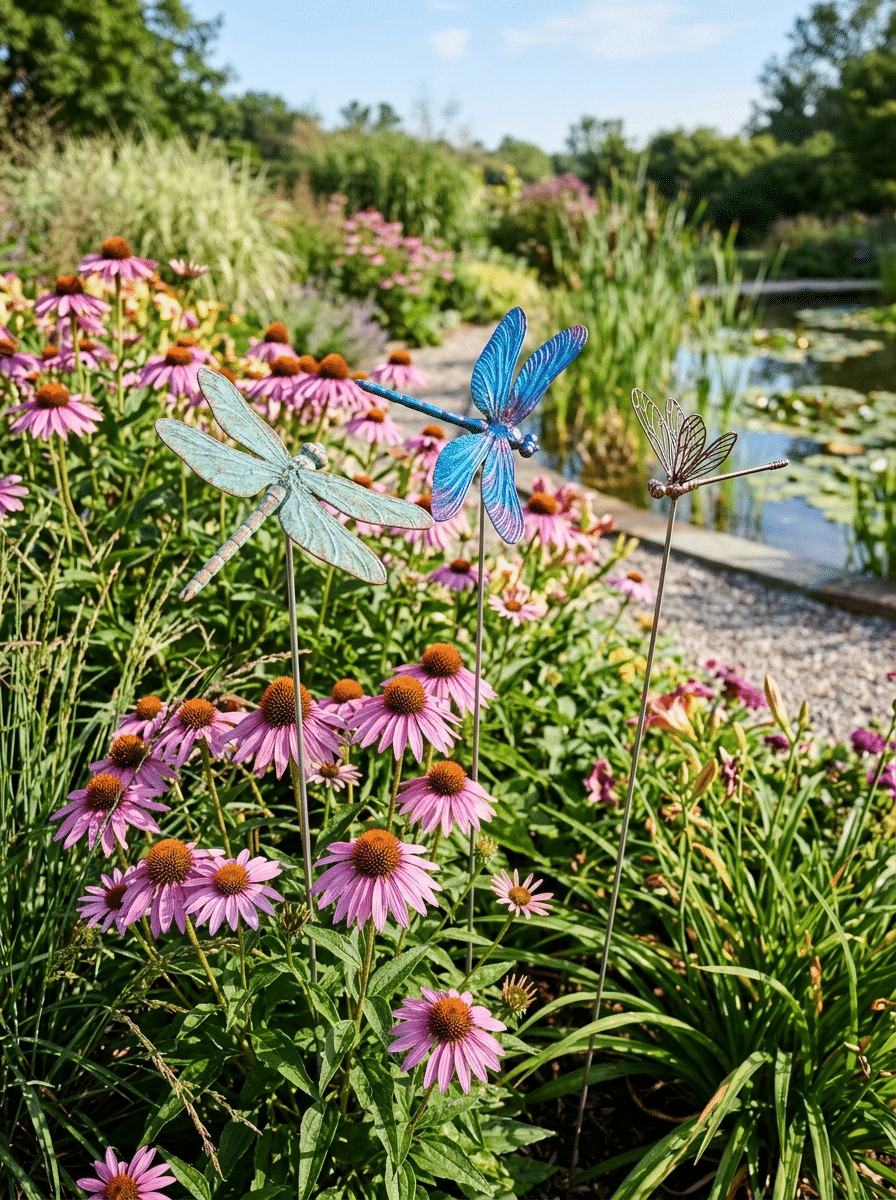
Dragonfly garden decor adds light, color, and a little bit of magic to any yard. A bright wing catching the sun above your flower bed can make people smile, and it works in a tiny pot on a balcony just as well as in a big backyard. Better still, you can choose from simple stakes, handmade pieces, and even a pond that welcomes real dragonflies.
This guide covers it all. You will learn which dragonfly garden stakes to buy, how copper and other metals compare, where to place each piece, and how to make your own DIY dragonfly garden decor from rocks, wire, and old household items. You will also learn how to bring real dragonflies into your garden, since they hunt mosquitoes and are a joy to watch.
Quick answer: The easiest way to add dragonfly garden decor is with a metal dragonfly garden stake pushed into a flower bed or pot. Pick copper or powder coated metal for the longest life, group stakes in odd numbers at different heights, and place them where sun can catch the wings. For a handmade look, try rock art, wire, or repurposed parts. For real dragonflies, add a shallow pond with plants and perches.
In this guide, you will learn:
- What dragonflies symbolize and why they suit a garden
- How to choose metal, copper, and spring wing dragonfly stakes
- Dragonfly yard art ideas for every corner of your garden
- DIY dragonfly garden decor projects, from rock art to repurposed parts
- How to attract real dragonflies with a pond, plants, and perches
- Style, care, budget, and safety tips
Why Choose Dragonfly Garden Decor?
Dragonflies are among the most loved garden insects, and a dragonfly garden ornament is a lovely choice for good reason.
A Symbol With Meaning
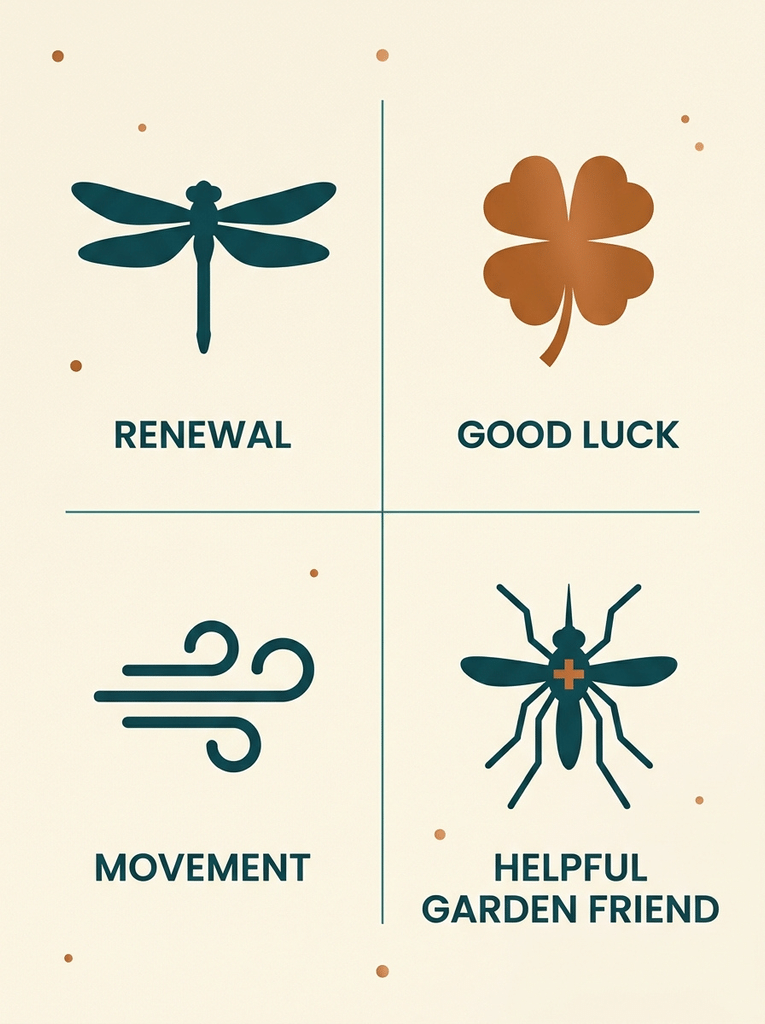
In many cultures, dragonflies symbolize renewal, positive energy, and the power of life. Because they live near wind and water, they are also associated with change. Their short adult life reminds many people to appreciate each day. Some gardeners view dragonflies as good luck charms, making a stake or sculpture feel personal. For retailers and garden enthusiasts exploring a wholesale garden decor buyer’s guide, dragonfly-themed ornaments can also offer meaningful designs that appeal to customers. One homesteader even built a large dragonfly from rocks to honor her mother, a Master Naturalist, because the dragonfly is the logo of that group.
Movement and Light
Metal wings catch sunlight, and spring wings flutter in the breeze. Even in winter, when the flower beds are quiet, a copper or colored dragonfly adds a spark of interest.
Good for Real Gardens
Real dragonflies are helpful. Their young, called nymphs, live in water and feed on small creatures, especially mosquito larvae. Adults hunt flying insects, including mosquitoes. Decorating with dragonflies is a nice way to celebrate that, and you can go one step further by making your garden friendly to them.
Works in Any Space
You can add one tiny stake to a pot on a porch or build a large rock dragonfly in a meadow bed. Dragonfly outdoor decor scales to your space and budget.
Dragonfly Garden Stakes: Metal, Copper, and More
Stakes are the most popular way to add dragonfly garden decor. They are easy to use, cost little, and can go almost anywhere. Here is how to choose.
Types of Dragonfly Stakes
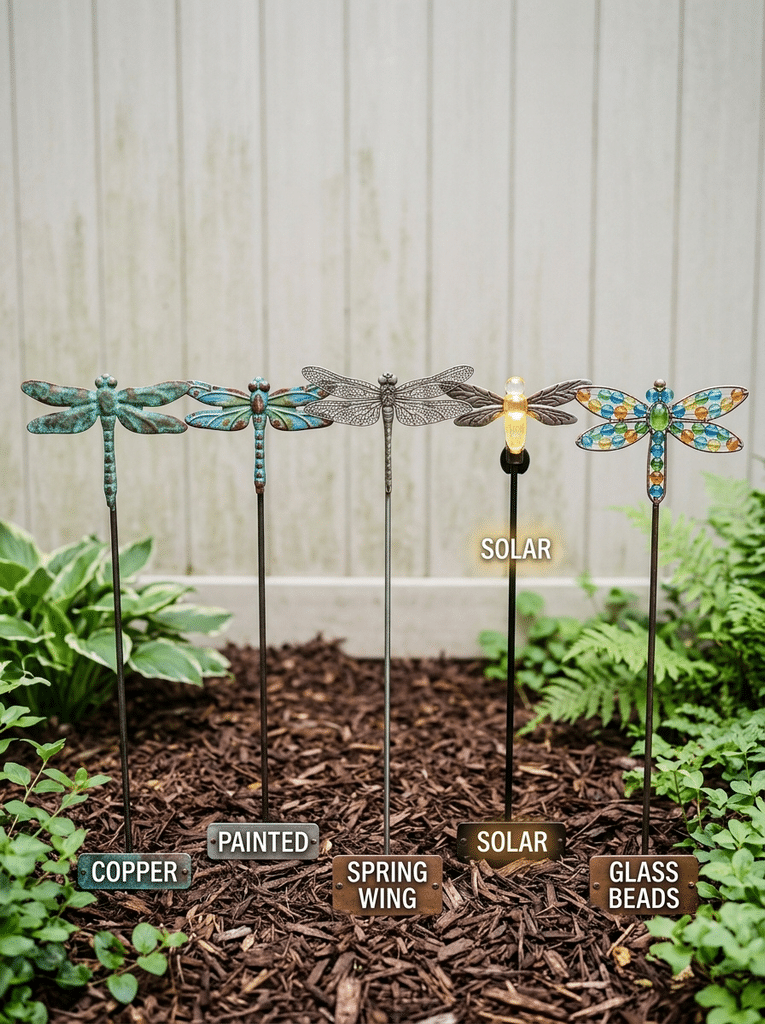
- Metal dragonfly garden stake: Usually made of steel, iron, or aluminum, with painted or powder coated wings. Look for a weather and fade resistant finish.
- Copper dragonfly garden stake: Copper looks warm and rich, and it ages beautifully. It can stay bright and shiny or turn green over time, called a patina. Both looks are lovely, so pick the one you prefer.
- Dragonfly on a stick: The simple, classic version, with a body and wings on a thin rod you push into the soil. These work well in pots and small beds.
- Spring wing stakes: Light wings on a small spring move with every breeze, which gives your garden a lively, fluttering look. These are often what people mean when they search for windy wings garden stakes, a style where the wings move or spin in the wind.
- Spinning stakes: Metal blades that turn like a wind spinner add motion and color from far away.
- Solar dragonfly stakes: A small solar light in the body or wings glows softly at night.
- Glass and bead stakes: Colorful glass or beads catch the sun like stained glass.
- Wooden or recycled stakes: Rustic pieces made from reclaimed wood and metal fit cottage gardens.
Metal Compared: What Lasts Longest
- Copper: Weather resistant, does not rust, and develops a green patina if left alone. Soft enough to bend, so it may need a gentle touch in strong wind.
- Stainless steel: Strong and rust resistant, with a modern, silver look.
- Powder coated steel or iron: Strong and affordable. The coating protects against rain, but scratches can rust, so touch them up.
- Aluminum: Light and rust free, though it can tip in strong wind without a good stake.
- Plastic or PVC: Cheap and colorful, good for pots and temporary use, though sun can fade it over time.
What to Check Before You Buy
- Height: Most stakes are 24 to 48 inches tall. Taller stakes suit the back of a bed, and short ones fit pots.
- Rod thickness: A thicker rod bends less in wind.
- Weather finish: Look for rust and fade resistance.
- Wing detail: Realistic veins and layered wings look more natural.
- Sets: A set of three or five in different sizes often costs less per piece.
How to Install Dragonfly Yard Stakes
- Water the soil first if it is dry and hard.
- Push the stake straight down, about 6 to 12 inches for tall pieces, or as far as it goes.
- Wiggle gently while pushing so you do not bend the rod.
- Check that it stands straight and adjust the angle so the wings face the sun.
- Firm the soil around the base.
In very hard or rocky ground, make a pilot hole with a thin metal rod first. For tall pieces in windy spots, a thicker rod or a short length of rebar tied behind the stake adds strength.
Placement Tips
- Group in odd numbers. Three or five stakes look more natural than a pair.
- Use different heights. Put tall ones in the back and short ones in front.
- Face the sun. Wings shine best in morning or afternoon light.
- Put one near a pond or birdbath. The theme feels natural.
- Keep them away from mowers and trimmers.
A quick myth check: some sellers say dragonfly clips keep insects away. There is little proof that a decorative dragonfly repels pests, so enjoy it as decor, and rely on real dragonflies and standard pest care instead.
Dragonfly Yard Art Ideas for Every Corner of the Garden
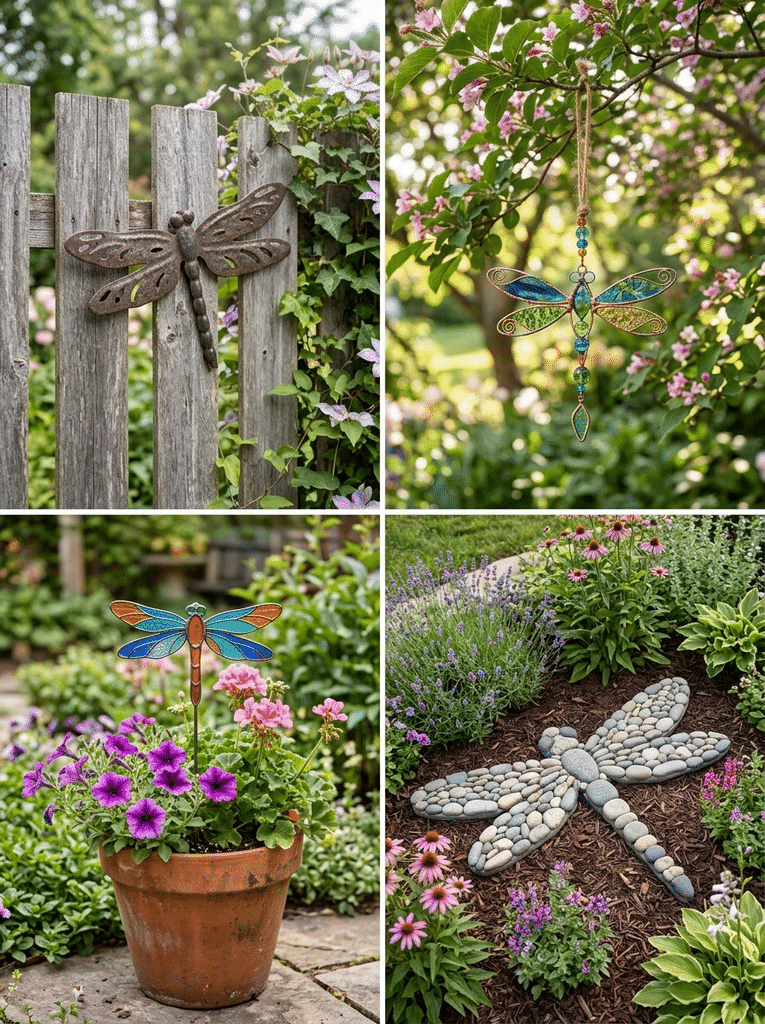
Here are dragonfly garden decor ideas to try in different spots.
1. In a Flower Bed
Place a dragonfly stake in the middle of a bed where flowers are tall and bright. Purple coneflowers, black eyed Susans, and ornamental grasses make a natural backdrop. A copper dragonfly looks stunning against purple and yellow blooms.
2. In a Container Garden
Container gardens are quick and flexible. Push a small dragonfly on a stick into a pot of flowers or herbs. Terracotta, glazed ceramic, and plastic planters all work. A metal bird or insect stake also adds charm to indoor plants.
3. On a Fence or Gate
Hang or mount a flat metal dragonfly on a fence post, gate, or garden wall. A mounted piece is out of the way of mowers and looks neat in a small yard.
4. Near a Pond or Water Feature
A dragonfly stake at the edge of a pond makes the scene feel complete. Blue and green wings look like they belong near water.
5. As a Suncatcher
Hang a wire dragonfly with glass beads or marbles from a branch or shepherd’s hook. The sun turns it into a colorful glow, and it moves gently in the breeze.
6. As Rock Art
A large dragonfly made of rocks becomes a bold focal point in a flower bed. More on this in the DIY section.
7. On a Trellis or Arbor
Attach a lightweight dragonfly to a trellis with clips or wire. It looks as if it has landed on the vine.
8. Along a Path
Place a row of small stakes along a walkway, spaced a few feet apart, so the eye follows the path.
9. On a Garden Wall or Shed
A metal wall dragonfly or a painted wooden one adds interest to a blank wall. Group it with a few butterfly or bee decorations for a pollinator theme.
10. With a Birdbath
A dragonfly stake near a birdbath or a shallow dish of water ties the theme together.
11. In a Solar Light Display
Solar dragonfly stakes glow softly at night and add an evening surprise to your garden. Scatter them in a loose group.
12. On a Porch or Balcony
Use a spring wing stake in a pot, or hang a small metal dragonfly on a hook. A few well placed pieces make a small space feel finished.
13. In a Fairy or Miniature Garden
Tiny dragonflies on thin stakes suit a small garden scene with stones, moss, and miniature plants.
14. As a Seasonal Accent
Add a bright dragonfly to spring planters, and swap in a copper piece for fall. Metal pieces handle most weather, so you can leave them out in many climates.
15. As a Gift
A copper dragonfly stake makes a thoughtful gift for a gardener, a nature lover, or someone who needs a reminder of renewal.
DIY Dragonfly Garden Decor: Projects You Can Make
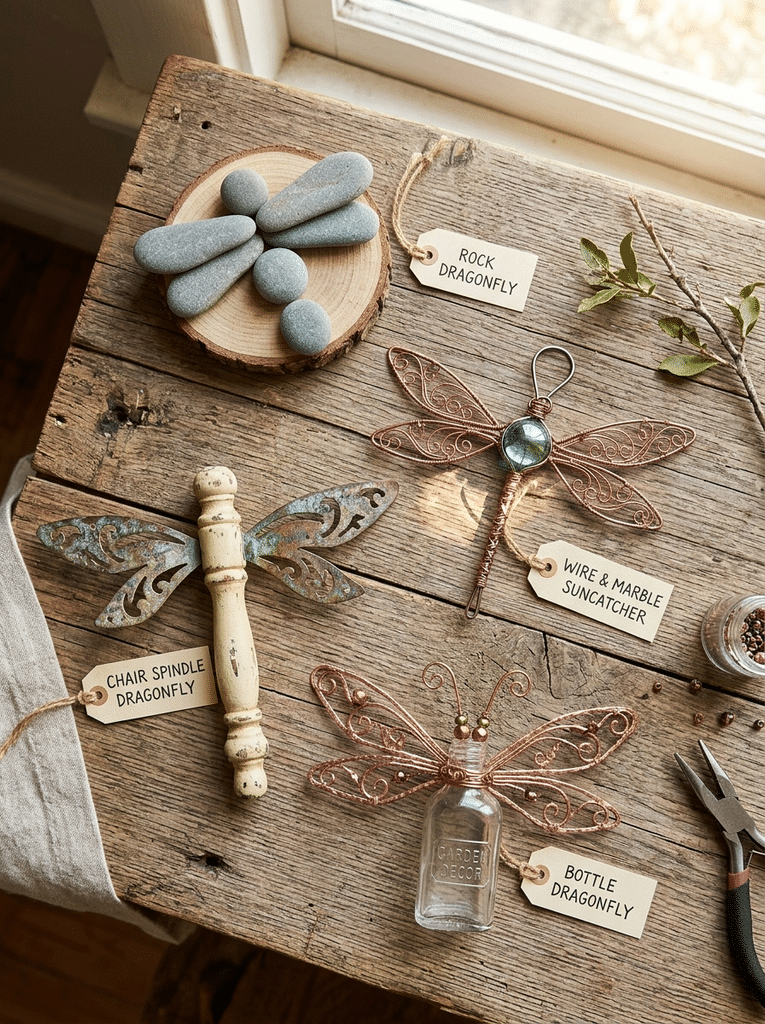
Handmade pieces feel personal and often cost very little. These DIY dragonfly garden decor ideas use stones, wire, and things you may already own.
Project 1: Dragonfly Rock Art
A rock dragonfly makes a big, bold focal point for almost no money.
What you need:
- Round stones in graduating sizes, from larger to smaller, for the body
- A large flat stone, such as flagstone, for the wings
- Chalk to mark the wing shapes
How to make it:
- Gather stones. Use river rocks, pasture rocks, or stones left over from other projects. You need enough to make a body about 3 feet long, with about 8 to 10 stones from larger to smaller.
- Pick your wing stone. Flagstone is sold in single pieces at many home stores for a few dollars each.
- Mark the wings. Use chalk to draw four wing shapes on the flat stone. Simple triangle or teardrop shapes work well.
- Cut the stone safely. Cutting stone by hand with a hammer and chisel often breaks in the wrong place. A small angle grinder with a masonry disc works better. Score along the chalk line, then use metal wedges and a hammer to split the stone along the cut.
- Wear safety gear. Use safety glasses, a dust mask, and work gloves. Work outdoors or in a well ventilated space, since stone dust is not safe to breathe.
- Lay it out. Place the stones in a line from large to small for the body, with a larger stone at the head. Set the four wings on either side.
- Step back and adjust. Move pieces until the shape looks right.
If cutting stone feels like too much, buy ready made flat stones or use thin slate pieces, or let the wings be rounded flat stones laid in pairs.
Project 2: Dragonfly From Repurposed Parts
Old household items make unique dragonfly stakes.
- Body: A wooden chair spindle, a table leg, an old bobbin, or a stack of washers.
- Wings: Metal flashing cut into wing shapes, decorative hinges, ceiling fan blades, or wire frames covered with screen and woven with copper wire.
- Eyes and antennae: Bolts, beads, scrapbook grommets, and thin wire.
- Mount: A screw eye and hook for a fence, or a rod pushed into the soil.
Tips:
- Sketch your shape first.
- Cut metal wings with tin snips and file the edges smooth.
- Attach wings with small screws or strong wire.
- Paint with outdoor spray paint in bright or natural colors.
- Seal with a clear outdoor coating.
One crafter trimmed a fan blade bracket so it fit snugly on a table leg and screwed the wings to the back. Using what you find keeps each piece one of a kind.
Project 3: Wire and Marble Suncatcher
- Bend thick craft wire into a body with two pairs of wing loops.
- Fill each loop with a flat marble or a glass bead strung on thin wire.
- Add a bead head and wire antennae.
- Hang it from a branch or a shepherd’s hook.
Project 4: A Bottle Dragonfly
You can turn a small glass bottle into a dragonfly body. Paint the inside, add stripes outside, make wings from copper wire, and use a small flat stone or bead for the face. One tip from a crafter: leave a small gap or tiny tube so air and moisture can escape, because trapped heat and water can damage the paint inside.
Project 5: Kitchen Whisk Dragonfly
A wire whisk can become a dragonfly with a bit of bending. Use the wires as wings, a long skewer as the body, and beads for eyes. It costs very little and takes an afternoon.
Project 6: Painted Stone Dragonflies
Paint small smooth stones with dragonfly patterns in blue, green, and gold, then seal them with outdoor varnish. Tuck them in pots and beds for pops of color.
Weatherproof Your DIY Pieces
- Use outdoor paint and a clear sealer
- Choose rust resistant screws and wire
- Check pieces each season and touch up chips
- Mount firmly so wind does not knock them over
Welcome Real Dragonflies: Pond, Plants, and Perches
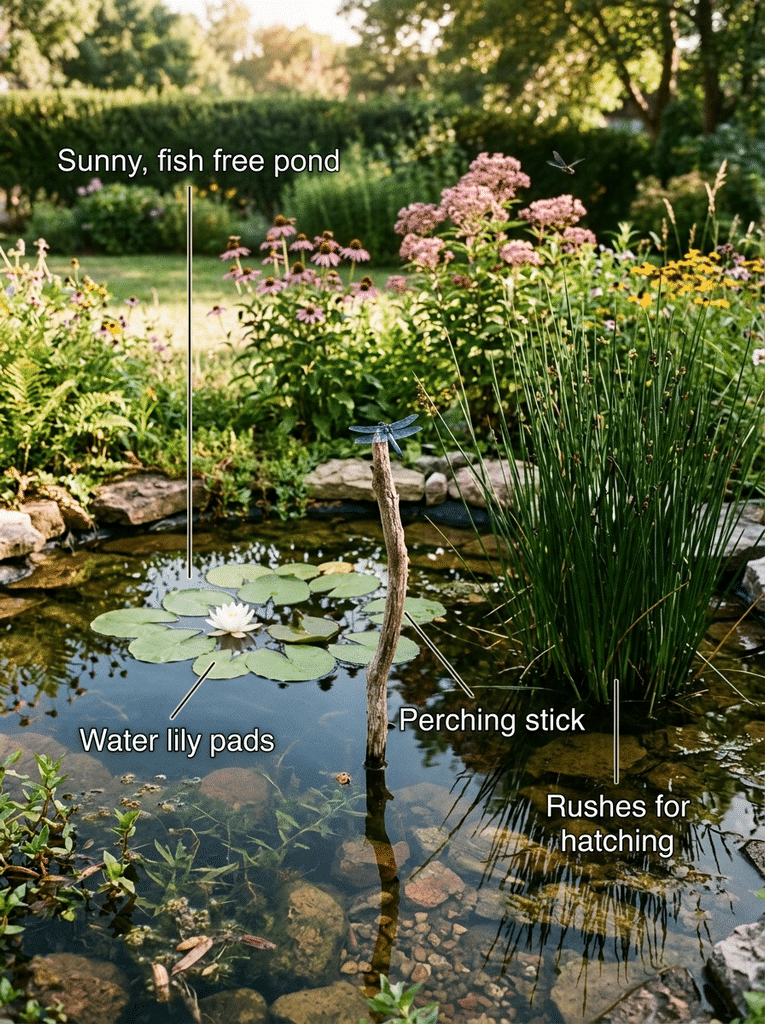
A decorative dragonfly is lovely, but a real one is even better. Dragonfly populations are shrinking as their habitats disappear, and you can help by giving them a place to live in your own yard. The good news is that even a small pond works.
How Dragonflies Live
Dragonflies need two kinds of habitat.
- Water: Where females lay eggs, and where the young nymphs hatch, grow, and hunt. The nymph stage can last several seasons, depending on the species.
- Land: Where adults hunt, rest, and find mates. Plants and grasses attract the insects that adults eat.
When a nymph is ready, it crawls out of the water, splits its skin, and the adult dragonfly crawls out and dries its wings. This takes a few hours, and the new adult is soft and pale at first.
Build a Simple Dragonfly Pond
You do not need a big pond. A small one, such as 6 feet by 4.5 feet and about 2 feet deep at the deepest point, can be dug in a weekend or two.
- Pick a sunny spot. Dragonflies love warm, open water.
- Dig the hole. Make shallow edges for plants and one deeper section.
- Lay a pond liner, fill with water, and trim the edges.
- Bury the edges and tamp them down. Cover them with rocks or logs.
- Add rocks of different sizes on the bottom so larvae can hide.
- Plant it. See the list below.
- Add a perching stick or two for territorial males.
Do Not Add Fish
Fish eat baby dragonflies. If your goal is a dragonfly pond, leave them out. Mosquitoes are not a problem, because nymphs and adults eat them, so a healthy pond usually helps reduce them.
Pond Plants That Help
- Hardy water lilies: Floating pads give larvae a place to cling and adults a landing spot. Pick two or three colors for a long bloom season.
- Arrowhead (Sagittaria): Arrow shaped leaves and white summer flowers.
- Rushes and sedges: Upright stems where nymphs climb out to become adults.
- Cattails and aquatic grasses: Support for hatching.
- Marsh marigold: Yellow spring flowers.
- Swamp milkweed: Pollinator friendly and good for wet soil.
- Blue eyed grass: A small, iris like edge plant.
- Mare’s tail or milfoil: Underwater plants that add oxygen.
Plants Around the Pond
Adults need flowers that attract small insects. Choose plants that bloom all summer, in a mix of heights.
- Black eyed Susan
- Coneflower
- Joe Pye weed (tall, likes moist soil)
- Borage
- Yarrow
- Sage
- Summer blooming heather
- Clematis, for a vertical touch
- Tall, clumping grasses for structure and perches
Keep the Pond Healthy
- Top up water in summer, since a small pond loses water to heat
- Add floating plants like water hyacinth or water lettuce if algae grows
- Use an aerator or a small solar fountain if the water turns warm, though some fountains are optional
- Avoid chemicals and pesticides, because they harm dragonflies and other wildlife
- Add organic treatments only when needed
Protect Your Pond
Raccoons can tip plants and damage a small pond. Some gardeners net the pond at night. A deeper pond with steep sides is harder for raccoons to reach. Cats may catch dragonflies near a pond, so consider where cats roam in your area.
What You Might See
A perching stick often becomes a favorite spot for a male dragonfly who guards his territory. On hot days, a dragonfly may hold its tail high, which helps it stay cool by reducing the area exposed to the sun. If you look closely, you may find empty nymph skins on plant stems, which show that adults have emerged.
Combine Decor and Habitat
Place a dragonfly stake near the pond to tie the scene together. A copper dragonfly looks right at home beside a lily pond. Just remember that decor is decoration, and real dragonflies need water and plants.
Style, Color, and Placement Tips for Dragonfly Outdoor Decor
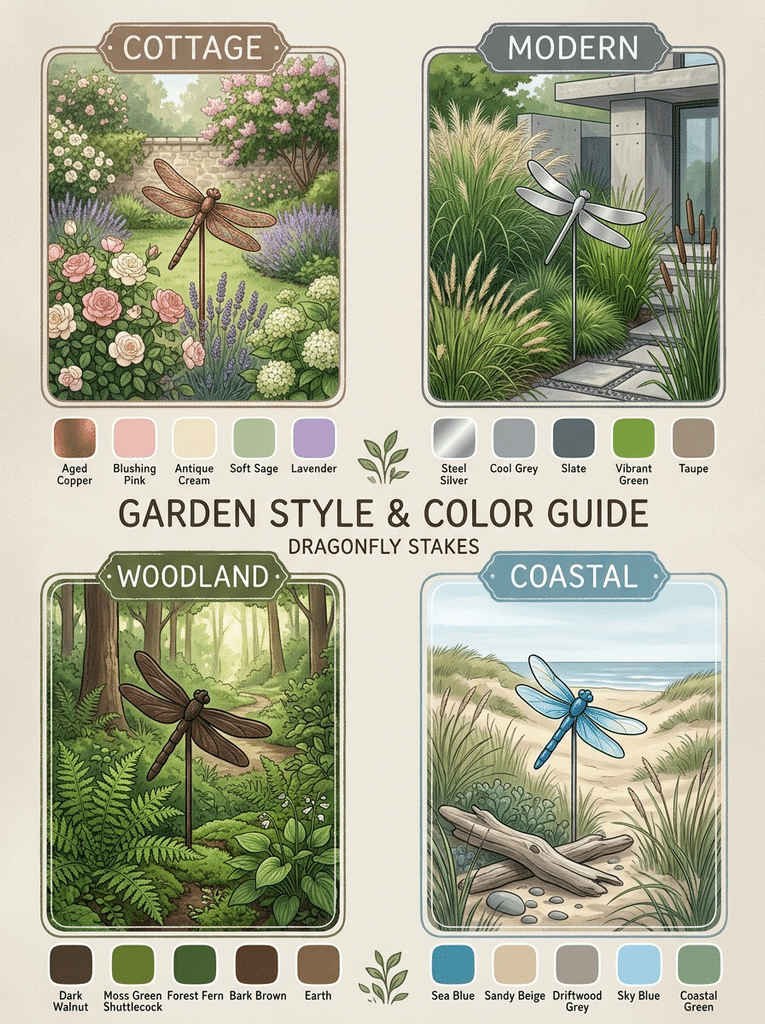
Good dragonfly outdoor decor looks planned. Here is how to match it to your garden.
Match Your Garden Style
- Cottage: Copper dragonflies among roses, foxgloves, and daisies.
- Modern: Stainless or black metal dragonflies with grasses and clean lines.
- Woodland: Rustic wood or aged metal dragonflies among ferns and hostas.
- Coastal: Blue and teal glass dragonflies with beach grasses and white stones.
- Colorful and playful: Bright painted dragonflies with zinnias, marigolds, and cosmos.
- Wildlife garden: Natural colors, stone art, and a pond.
Choose Colors Wisely
- Copper and bronze look warm with green foliage and purple flowers.
- Blue and green feel natural beside water.
- Red and orange pop in green beds and look like real flame skimmers.
- Iridescent finishes shimmer in the sun.
- Neutral metals blend into subtle gardens.
Mind Scale and Spacing
- A tiny stake gets lost in a big bed, so use a taller piece or a group.
- A very large dragonfly can overpower a small patio.
- Leave space between pieces so each has room to stand out.
- Keep the total count modest. Too many ornaments can make the garden look busy.
Think About Light
- Place metal and glass pieces where they will catch sun for part of the day
- Use solar stakes in shady spots that get a little daylight
- Avoid hiding a piece behind tall plants that will grow over it by midsummer
Pair With Other Garden Friends
Dragonflies look lovely beside butterfly, bee, and bird decor. A bee made from a bottle, a metal butterfly, and a bird stake in a planter create a small insect and bird scene. Container gardens, hanging baskets, and wind spinners also pair well with dragonfly pieces.
Care, Safety, Budget, and Mistakes to Avoid
A little care helps your dragonfly decor last for years.
Care Tips
- Copper: Leave it to develop a green patina, or polish it and apply a clear outdoor sealer to keep it shiny.
- Painted metal: Touch up chips with outdoor paint, and wipe off dirt with a damp cloth.
- Rust: Brush off light rust and repaint right away.
- Spring wings: Check the spring joint each season for wear.
- Solar stakes: Wipe the panel and replace weak batteries every year or two.
- Rock art: Pull weeds around the stones and brush off dirt.
- Winter: Most metal stakes stay out in mild winters. In harsh climates, bring delicate pieces inside or store solar stakes to protect batteries.
Safety
- Sharp edges: Metal wings can be sharp. File edges smooth and place them out of reach of small children.
- Eye level: Tall stakes with sharp tips can hurt if someone falls on them. Cap the tops or choose rounded rod ends.
- Mowing: Keep stakes away from lawn mowers and string trimmers.
- Stone cutting: Use safety glasses, a dust mask, and gloves when cutting stone.
- Chemicals near ponds: Avoid paints and sealers that can leak into water.
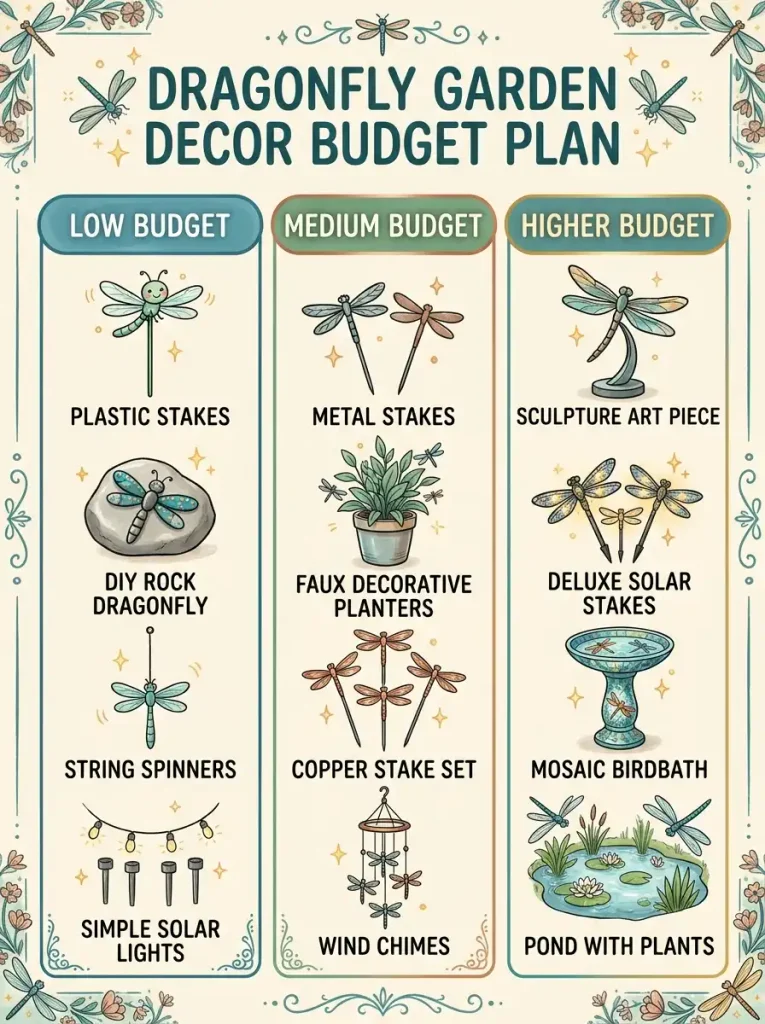
Budget Plan
- Low: Plastic or spring wing stakes in pots, painted stones, and a repurposed DIY piece.
- Medium: A set of metal or copper dragonfly stakes, a solar stake or two, and a small rock dragonfly.
- Higher: Large copper sculptures, a custom piece, and a small dragonfly pond with plants and a fountain.
If you can only spend a little, put your money into one good copper or metal piece, and fill the rest with DIY.
Mistakes to Avoid
- Buying thin, cheap stakes for windy spots. They bend or fall over.
- Placing stakes in deep shade. Wings need light to shine.
- Using too many pieces. Too much decor makes the garden look cluttered.
- Skipping the anchor. Tall stakes need to be pushed in firmly.
- Mixing too many colors. Pick a small palette.
- Adding fish to a dragonfly pond. They eat the young.
- Using pesticides. They harm real dragonflies.
- Forgetting maintenance. A quick check each season saves money.
Frequently Asked Questions
What is the best material for a dragonfly garden stake?
Copper is one of the best materials for a dragonfly garden stake because it does not rust and develops a soft green patina over time. Stainless steel and powder coated steel are also strong choices. Plastic stakes cost less but fade faster in the sun.
How do you install a dragonfly stake in the garden?
Push the stake straight into moist soil, about 6 to 12 inches deep for tall pieces, wiggling gently so you do not bend it. Face the wings toward the sun, check that it stands straight, and firm the soil around the base. In hard ground, make a small pilot hole first.
Does copper dragonfly decor turn green?
Yes. Copper left outdoors slowly develops a green patina, which many people find beautiful. If you prefer a shiny look, polish it and apply a clear outdoor sealer every year or two.
How can I attract real dragonflies to my garden?
Add a shallow, sunny pond without fish, with plants like water lilies, rushes, and arrowhead, plus a perching stick. Plant summer flowers and tall grasses nearby, and avoid pesticides. Dragonflies need both water for their young and plants for adults.
Can I make my own dragonfly garden decor?
Yes. You can make dragonflies from stones, wire and marbles, chair spindles, flashing, bottles, or even a kitchen whisk. Use outdoor paint and sealer, mount pieces firmly, and wear safety gear when cutting stone or metal.
Conclusion
Dragonfly garden decor works because it is easy, cheerful, and full of meaning. A single copper stake in a pot, a handmade rock dragonfly, or a small pond with real visitors can turn an ordinary yard into a place people want to linger. For added variety, combine these accents with outdoor crane garden decor, such as elegant metal crane sculptures beside a pond or among tall ornamental grasses. Start with one idea that fits your space, add a few pieces over time, and let the garden grow into your own.
Ready to begin? This weekend, choose a sunny spot and place a dragonfly stake or build a DIY piece. If you have space, plan a small pond and add a perching stick and a few summer flowers. Take a photo of your finished garden, and enjoy watching light, wings, and real dragonflies make it come alive.