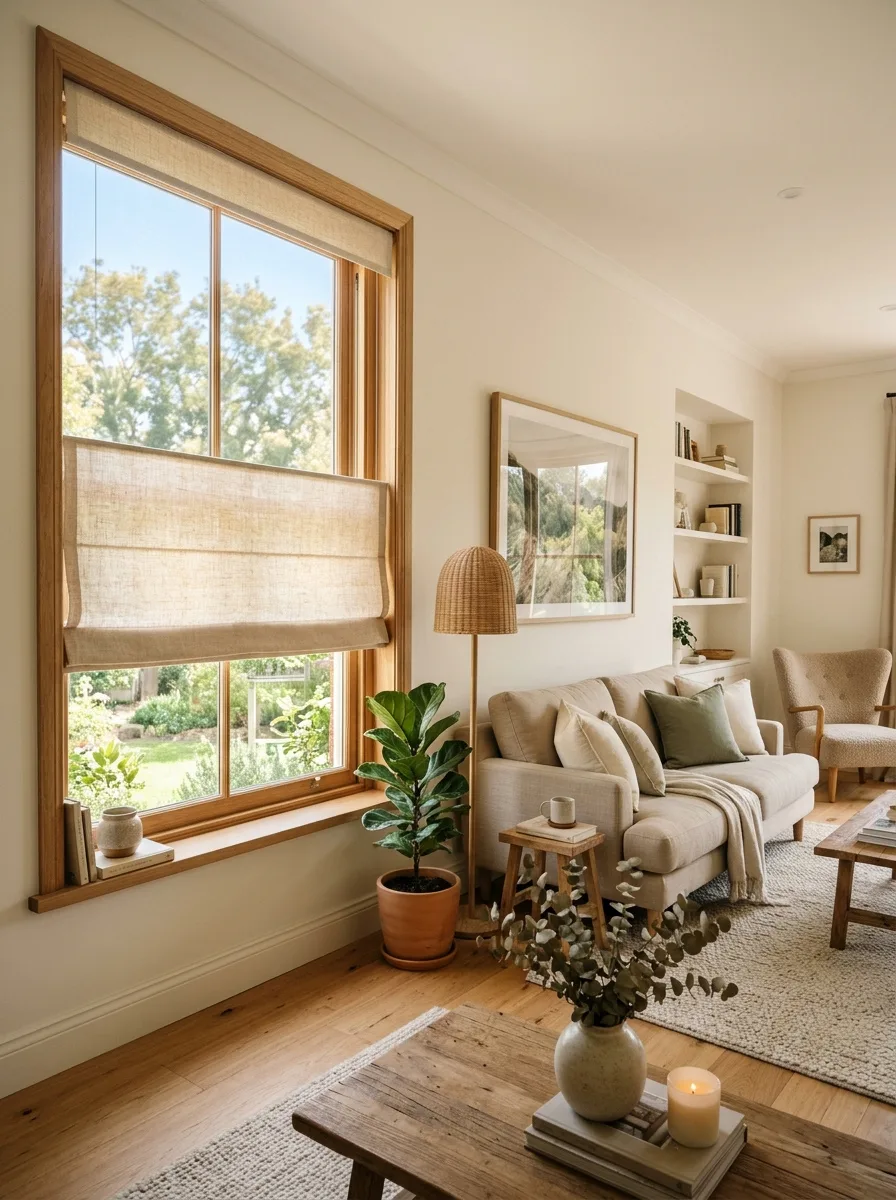
Covering a window should not turn a bright room into a cave. Yet that is exactly what happens when a shade is too heavy, too dark, or the wrong style for the space. Roman shades solve this problem better than almost any other window treatment. They soften glare, add privacy, and bring a layer of fabric and texture that plain blinds and basic rollers rarely match.
In this guide, you will learn what Roman shades are, how the main styles differ, and which fabrics filter light best. We compare light filtering, room darkening, and Roman shades blackout options. We also cover bay windows, show you how to measure and mount, and walk through two DIY routes. By the end, you will have a clear plan for choosing the right Roman window shades for your home.
What Are Roman Shades?
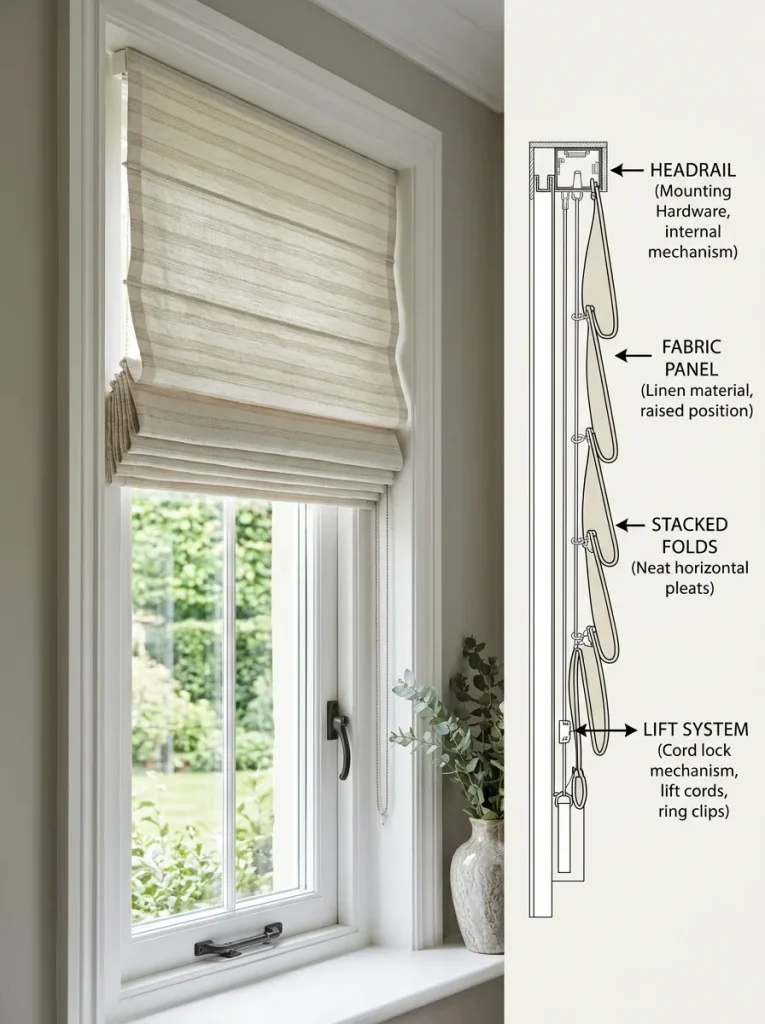
Roman shades are fabric window shades that fold into neat, stacked pleats when you raise them and hang as a flat or softly curved panel when you lower them. Because the fabric filters daylight instead of blocking it, Roman shades keep a room bright while adding privacy and style. For a seasonal touch, you can also coordinate their colors with fall window painting ideas, using warm autumn shades such as burnt orange, golden yellow, and deep red to create a cozy look.r
People who search for Roman shades, Roman window shades, or Roman shades for windows are usually looking for the same thing. They want a window covering that looks soft and tailored, works in real life, and does not make the room feel gloomy. A Roman shade delivers that balance. When it is fully raised, the fabric gathers at the top of the window and leaves most of the glass clear. When it is lowered, it becomes a clean fabric panel that diffuses the sun.
Here is what makes them popular:
- Soft look: Fabric folds add warmth that hard blinds cannot.
- Light control: You can pick sheer, light filtering, room darkening, or blackout fabrics.
- Flexible styles: Flat, relaxed, and hobbled folds suit modern, cozy, and traditional homes.
- Neat stacking: The folds stack at the top, so they take up little space and keep the view open.
- Easy layering: They pair well with curtains, valances, and drapes.
Choose the Right Roman Shade Style
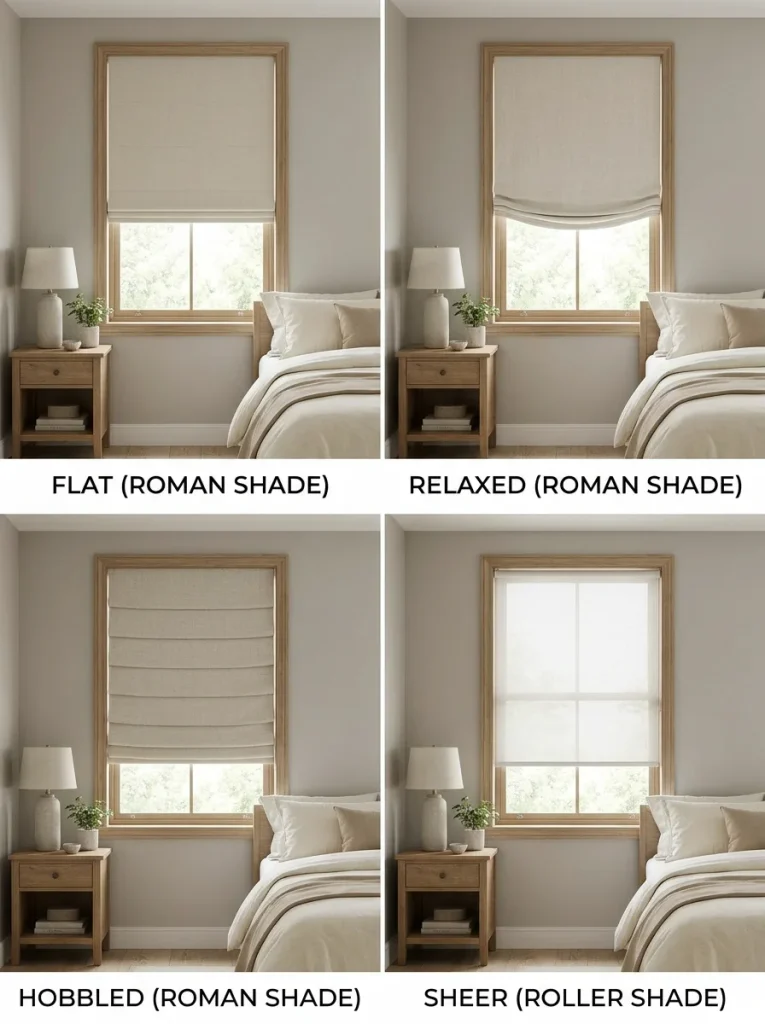
The shape of the fold changes the whole mood of the room. Before you shop for fabric, decide which style fits your space.
Flat Roman Shades
Flat Roman shades hang as a smooth, unpleated panel when lowered. Folds only appear when you raise the shade. The result is sleek, modern, and tidy. This style is a great choice if you love a pattern, since a flat panel shows stripes, checks, and prints clearly. It also suits kitchens, home offices, and modern living rooms.
Relaxed Roman Shades
Relaxed Roman shades have a gentle, soft dip at the bottom edge when lowered. There are no crisp horizontal lines, just a calm, slightly draped look. Many people describe them as a cozy blanket for a window. They fit cottage, farmhouse, coastal, and casual spaces very well. They also make small windows feel more welcoming, and the folds catch shadows nicely as the sun moves through the day.
Hobbled Roman Shades
Hobbled shades, sometimes called looped shades, keep their soft folds even when fully lowered. This style adds volume and a traditional, layered look. It works well in dining rooms, formal living rooms, and bedrooms. Keep in mind that the extra folds use more fabric, so the shade can filter a bit less light than a flat style made from the same material.
Sheer Roman Shades
Sheer Roman shades use thin, see through fabric. They let in a lot of daylight and give a bright, airy feel. The trade off is privacy. During the day, people outside usually cannot see in clearly, but at night, when your lights are on, they can. If you love the look of sheer fabric, layer it with curtains or add a light filtering liner in rooms where privacy matters.
Quick style guide:
- Modern or minimal home: flat
- Cozy, casual, or farmhouse home: relaxed
- Traditional or formal room: hobbled
- Bright room with a view to protect: sheer, layered with curtains
The Best Fabrics for Roman Shades
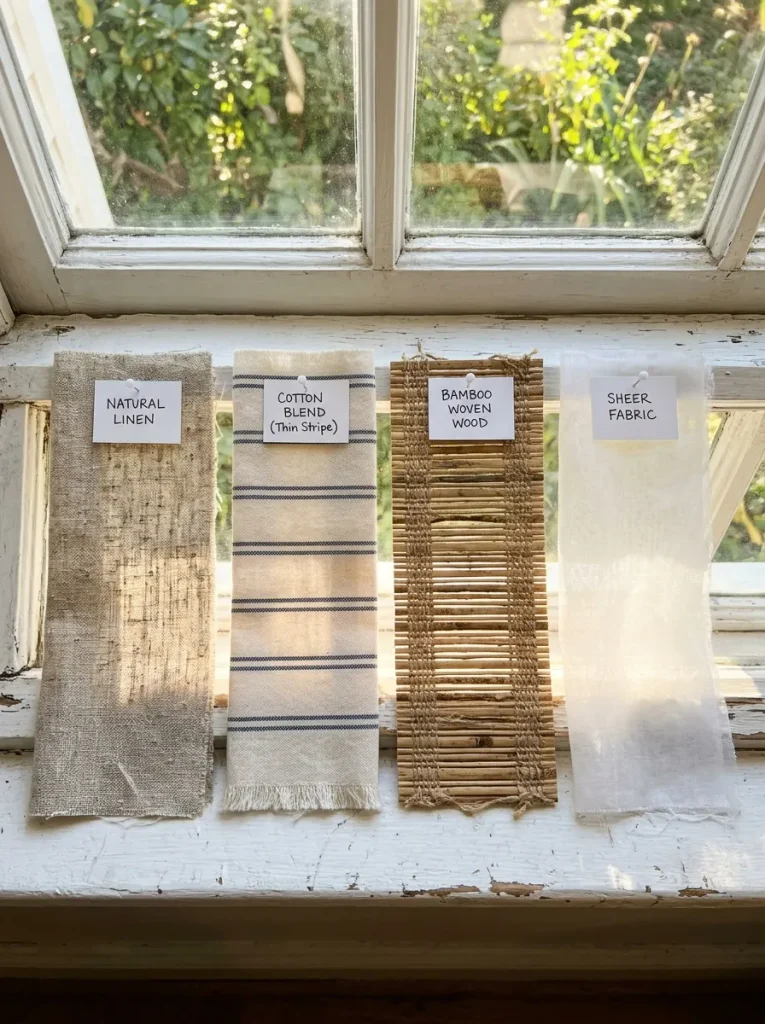
Fabric controls how much light comes through, how the shade hangs, and how much work it takes to keep clean. Here are the most popular options.
Linen Roman Shades
Linen roman shades are a favorite for a reason. Linen has an airy, slightly uneven texture, and when sunlight hits it, the fabric seems to glow. You can see the weave, which keeps the shade from looking stiff or fussy. Linen can wrinkle and stretch a little, especially in humid rooms, but most people see those small creases as part of the charm. If you want a relaxed, natural look, linen is hard to beat.
Cotton Blends and Other Fabric Roman Shades
Pure linen can be a bit unpredictable. A cotton and linen blend gives you a similar texture with crisper folds and better behavior. Blends are often easier on the budget too, and they suit dining rooms and entryways where you want a tidier look. Polyester blends add stain and fade resistance, which helps in sunny rooms and kitchens.
When you shop for fabric Roman shades, keep three tips in mind:
- Look for the words light filtering. This means the fabric diffuses the sun instead of blocking it.
- Choose a quiet pattern. A thin tone on tone stripe or a small woven check adds interest without shouting. Bold prints can feel heavy and compete with the rest of the room.
- Ask for a fabric sample. Hold it up to the window and check how it looks in morning light and evening light.
Bamboo and Woven Wood Roman Shades
Bamboo roman shades bring natural texture and warmth. Woven from bamboo, reeds, grasses, or jute, they scatter light into a warm glow and look great in sunrooms, dining nooks, coastal homes, and Japandi spaces.
Most woven wood shades are light filtering by default, which means you will see some daylight through the gaps in the weave. If you want a bamboo woven wood cordless room darkening Roman shade, ask for a privacy or blackout liner. The liner sits behind the natural material and blocks most of the light while keeping the pretty texture on the front. A cordless lift is also a smart choice, since it removes loose cords and gives you a cleaner look. Because natural shades can be heavy, check the lift system and the maximum width before you order. It is also best to keep them away from steamy bathrooms, where moisture may harm natural fibers.
Pick Colors That Make Light Feel Warm
Color changes how daylight feels in a room. Stark, cool white can look a little chilly when the sun shines through. Warm white, cream, ivory, flax, and oatmeal tones glow instead. If you are nervous about commitment, start with a soft neutral. You can add personality through pillows, art, or curtains, and let the window stay calm.
Light Control: Filtering, Room Darkening, and Blackout
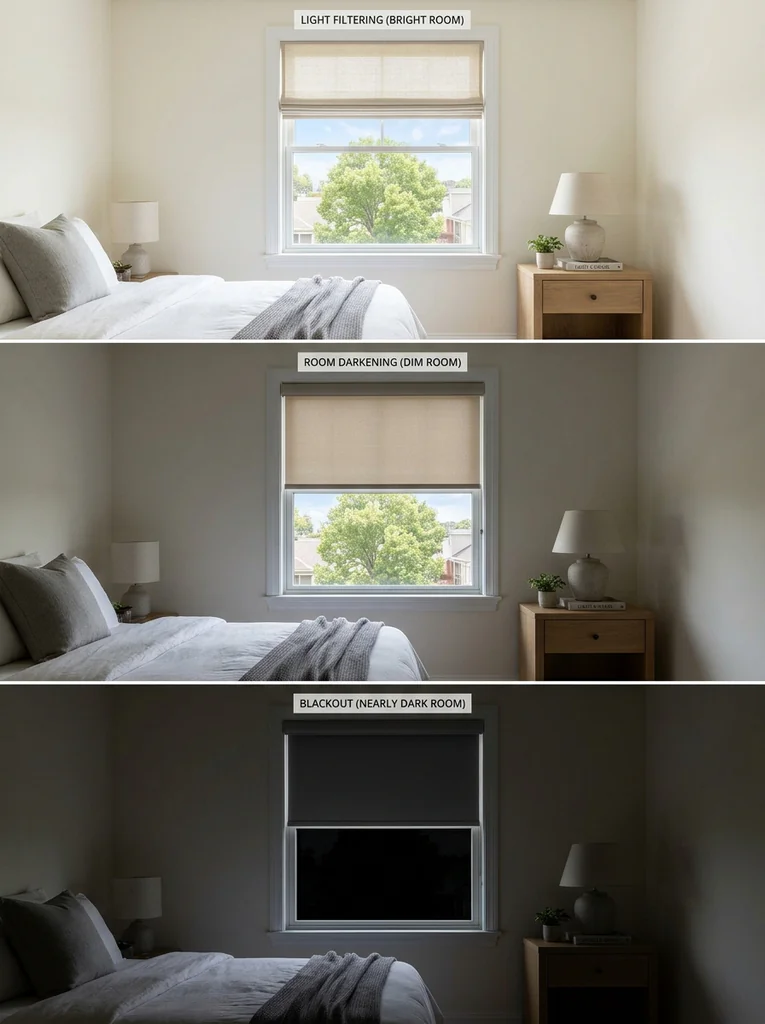
This is the part where many buyers get stuck. The three terms sound alike, but they act very differently.
- Light filtering: The fabric glows and softens the sun. The room stays bright, and you get daytime privacy.
- Room darkening: The fabric blocks most light. The room feels dim, but a little light can still pass through.
- Blackout: A special lining blocks nearly all light for the darkest possible room.
A simple rule: if you want a bright room, choose light filtering. If you want to sleep late or watch movies, choose room darkening or blackout.
Roman Shades Blackout Options for Bedrooms and Nurseries
Roman shades with blackout fabrics work best in bedrooms, nurseries, and rooms for people who sleep during the day. A blackout lining is sewn behind the main fabric, so you keep the soft look while blocking glare at the same time. For seasonal decorating, you can also pair these window treatments with Halloween window painting ideas, such as spooky silhouettes, pumpkins, and ghost designs, to create a festive autumn atmosphere.
One thing to know before you buy: even a good blackout shade can let thin lines of light slip around the edges. To reduce this, use an outside mount that overlaps the window frame by a few inches on each side, or add side channels. You can also pair the shade with curtains that run past the edges. If a room needs near total darkness, such as a nursery or a media room, plan for these details early.
Add a Liner Only Where You Need It
You do not need to line every shade. In living rooms, kitchens, and hallways, an unlined light filtering fabric keeps the space bright and beautiful. In a bedroom, a light filtering liner adds privacy after dark without losing the gentle morning glow. In a room where you need real darkness, add a blackout liner. Matching the liner to the room, instead of choosing one option for the whole house, gives you the best of both worlds.
A warning about going too dark: a room darkening shade in a sunroom or kitchen can make the space feel like someone switched off a lamp. If a room is gloomy after you install shades, the cause is often the fabric choice, not the style.
Do Roman Shades Help With Heat and Noise?
A little. A thicker fabric, especially one with a thermal or blackout lining, adds a barrier between the glass and the room. This can reduce the heat that enters in summer and the chill that creeps in during winter. Heavier fabric also softens echo in rooms with large windows. These effects are modest, and a snug fit matters more than the fabric weight. Think of Roman shades as a helpful extra layer, not a replacement for good windows.
Roman Shades for Windows in Every Room
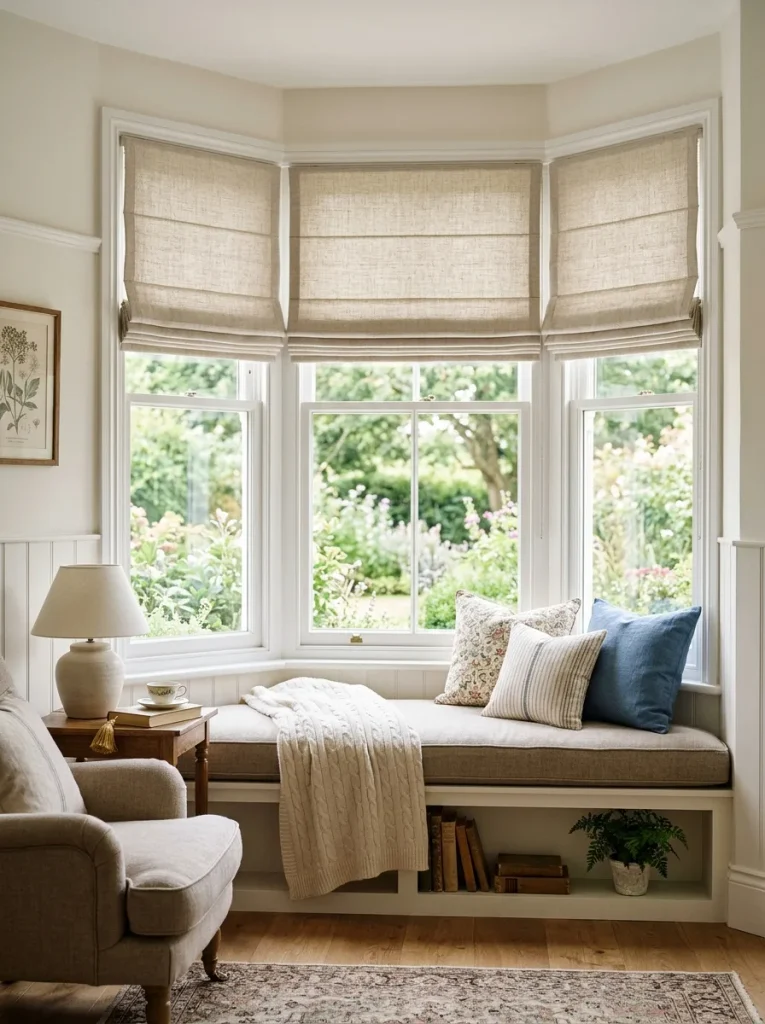
The right Roman window shades depend on the room. Here is how to match them to your space.
Roman Shades for Bay Windows
Bay windows bring in plenty of light and add space to a room, but their angles make window treatments tricky. Roman shades for bay windows are a strong choice because they stack neatly at the top, keep the view open, and do not add the bulk that heavy drapes can. When raised, they let in the full light. When lowered, they turn each window section into a clean panel.
Follow these tips for roman shades in bay windows:
- Use one shade per section. A typical bay has three sections, and each one needs its own shade. Bow windows may have four or five.
- Measure every section separately. Walls and angles are rarely perfect, so do not assume the sections match.
- Keep the look consistent. Use the same fabric, fold style, and mounting height on every shade so the bay reads as one clean design.
- Check the corners. Leave a small gap at each angle so neighboring shades do not rub together or catch when raised.
- Plan for the window seat. If you have a bench or cushion, make sure the shade bottom clears it.
- Go cordless. Without cords, the shades hang neatly and the bay looks calmer.
In a kitchen bay, choose a washable, moisture resistant fabric. A simple valance can add a finished look if you like a bit more detail.
Kitchens and Bathrooms
Kitchens need daylight more than almost any other room, but they also get steamy and splattery. A washable cotton or polyester blend is a smart pick for the window over the sink. Here is a handy trick: keep the shade raised in the morning for full sun, and lower it halfway when the afternoon gets too bright. That gives you privacy at the bottom of the window and sky at the top. In bathrooms, choose moisture resistant fabrics and keep natural materials such as bamboo away from direct steam.
Bedrooms and Nurseries
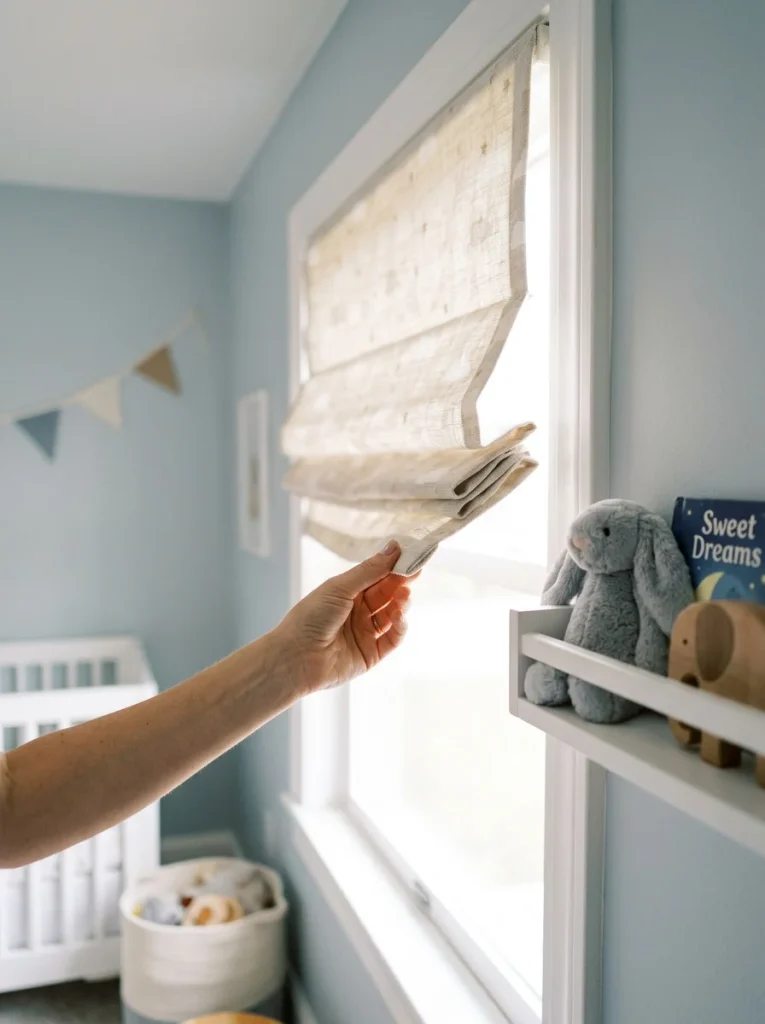
Sleep is the priority here. Use a room darkening or blackout liner, and always pick cordless lifts in a child’s room. Light colors on the front keep the room feeling soft during the day, while the liner handles the night.
Living and Dining Rooms
These rooms are about mood. Relaxed or hobbled styles add depth, and light filtering fabrics keep the space glowing. A warm neutral shade is easy to pair with almost any wall color.
Very Wide Windows
Roman shades can work on wide windows, but a very wide panel may sag or fold unevenly. In that case, split the window into two or three shades that sit side by side. If your window is extra wide and you want a simpler look, a roller shade may be easier to operate.
How to Measure and Mount Roman Shades
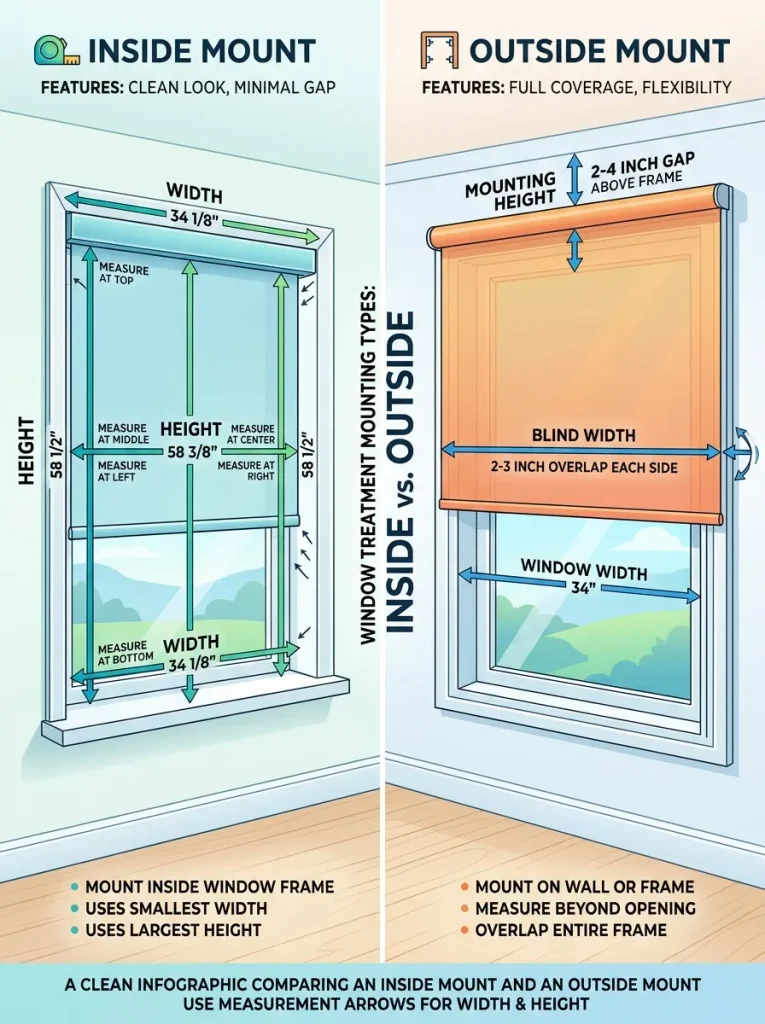
Good measuring prevents gaps, light leaks, and returns. You will need a steel tape measure, a pencil, and a notepad.
Inside Mount or Outside Mount?
An inside mount fits within the window frame. It looks clean and shows off your trim. It needs enough frame depth, so check the depth listed for the shade you want.
An outside mount sits on the wall or trim above the window. It covers more glass, hides uneven trim, and blocks more light. It is the best option for blackout shades.
Measuring Steps
- For an inside mount, measure the width at the top, middle, and bottom of the frame. Use the smallest number.
- Measure the height on the left, center, and right. Use the longest number.
- For an outside mount, measure the area you want to cover. Add about 2 to 3 inches on each side so the shade overlaps the frame.
- Write every number down and double check it. If you order custom shades, give the exact numbers and let the maker adjust for fit.
Try Mounting Higher Than the Frame
Here is a design trick that works in almost any room. Mount your shade 2 to 4 inches above the window frame, or even closer to the ceiling. When the shade is raised, the folds sit above the glass instead of in front of it, so you get more daylight and a larger looking window. The higher line also tricks the eye into seeing taller ceilings, which is a win in rooms with a low ceiling.
Roman Shades With Curtains
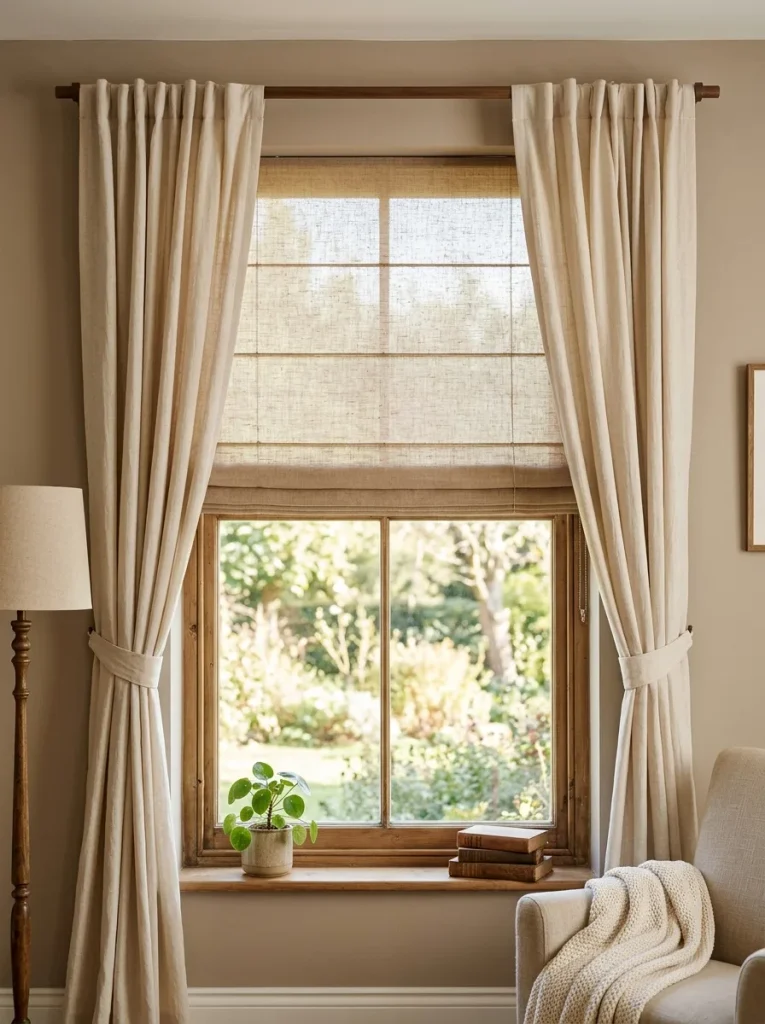
Layering is where Roman shades really shine. Roman shades with curtains give you control and softness together. The shade handles glare and privacy, while the curtains add movement, color, and a framed look.
Here is how to do it well:
- Hang the shade closest to the glass and the curtains outside it.
- Place the curtain rod about 4 to 6 inches above the window frame, and let it extend a few inches past each side so the curtains do not cover the glass when open.
- Keep the curtains light. A loose cotton or linen blend in a similar tone keeps the window from feeling heavy.
- Mix with care. A solid shade with patterned curtains, or the other way around, looks balanced. Two bold patterns together can compete.
- Open and close with the day. Leave curtains open in daytime so the window looks framed, then close them at night for a snug, tucked in feel.
Be sure the curtain rod sticks out far enough to clear the shade, so both can move freely.
Roman Shades vs. Roller Shades
Roller shades and Roman shades are often compared. Both are good, but they suit different needs.
- Look: Roller shades are sleek, flat, and modern. Roman shades are soft, textured, and decorative.
- Light control: Roller shades come in a very wide range, from solar screens to blackout. Roman shades give warm, diffused light, and they can also be lined for darkness.
- Cost: Roller shades usually cost less because of their simple build. Roman shades often cost more because of the fabric, folds, and lining.
- Care: Roller shades are quick to wipe. Roman shades need gentler care because of the folds.
- Best rooms: Roller shades work well in offices, media rooms, and modern kitchens. Roman shades suit bedrooms, living rooms, dining rooms, and cozy spaces.
The short answer: choose a roller shade for a crisp, simple look and easy daily use, and choose a Roman shade when you want warmth, texture, and a more finished look.
DIY Roman Shades: Two Easy Paths
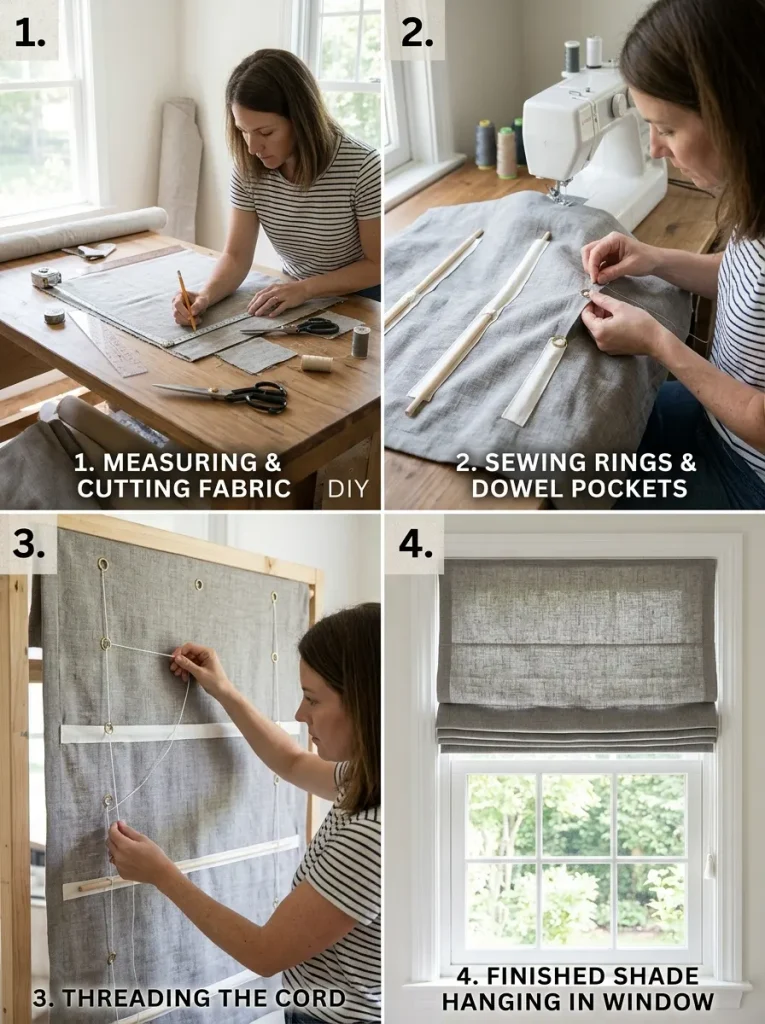
If you like projects, you can make your own Roman shades and save money. Here are two popular routes.
How to Make DIY Roman Shades From Fabric
You will need fabric, lining, sewing supplies or fabric tape, small rings, thin dowels, cord, a mounting board, and a screw eye for each ring column.
- Measure the window, then cut your fabric a few inches wider and longer than the finished size to allow for hems.
- Cut the lining to match, and attach it to the fabric with a sewn or taped edge.
- Mark fold lines about 6 to 8 inches apart across the back.
- Add dowels in channels or pockets at each fold line to keep the pleats neat.
- Sew small rings at the ends of each dowel pocket, lined up in columns.
- Thread the cord through the rings and the screw eyes on the mounting board.
- Attach the fabric to the board and install it above the window. Pull the cord to check that the folds stack evenly.
An easy fix for beginners: use fabric tape or a hot glue gun instead of sewing. Try a plain, medium weight fabric first, since patterns need careful alignment.
Blinds to Roman Shades DIY
This hack turns an old set of blinds into a Roman shade. It works best with inexpensive mini blinds or faux wood blinds.
- Take the blinds down and lay them on a flat surface.
- Remove most of the slats, leaving one every 6 to 8 inches to act as fold supports.
- Cut fabric to the width and length of the blind, adding a small allowance for the hem.
- Attach the fabric to the headrail and to each remaining slat with strong fabric glue or double sided tape.
- Hang the blinds again and test the lift cord. The shade should rise and fold at each slat.
Be careful with cords. Loose cords are a danger to small children and pets. If you can, choose a cordless blind as your starting point, and keep any cords tied up and out of reach.
Care, Safety, and Cost
Cleaning: Vacuum gently with a brush attachment, working from top to bottom. Spot clean stains with a damp cloth and mild soap. Always check the care label before you wash anything, because lined shades and natural fabrics usually should not go in a washing machine.
Safety: Dangling cords can harm children and pets. Cordless lifts, or lifts with cords that are out of reach, are the safest choice. Safety rules for window coverings have tightened in recent years, so check what applies where you live. Motorized shades are another cord free option if you want extra convenience, especially for tall or hard to reach windows.
Cost: Prices vary a lot. Ready made shades cost less, while custom shades with premium fabric, blackout lining, motorization, or odd sizes cost more. Pay attention to the lining, lift system, and fabric quality, since you will touch and see them every day. A made to order shade often makes sense for bay windows and unusual sizes, where a precise fit matters.
Frequently Asked Questions
What are Roman shades?
Roman shades are fabric window shades that fold into soft, stacked pleats when raised and hang as a flat or gently curved panel when lowered. They come in flat, relaxed, and hobbled styles, and in fabrics from sheer to blackout.
Do Roman shades block light?
It depends on the fabric and lining. Light filtering Roman shades soften sunlight but still let the room feel bright. Room darkening and blackout versions use thicker fabric or special lining to block most or nearly all light.
Can you put Roman shades in a bay window?
Yes. Roman shades work very well in bay windows. Use one shade for each window section, measure each section on its own, and keep the fabric, fold style, and height the same across all of them for a clean look.
Are Roman shades hard to clean?
Not really. Regular light vacuuming with a brush attachment keeps dust away, and spot cleaning handles most stains. Check the care label first, since lined and natural fabric shades need gentle care.
Are Roman shades safe for kids and pets?
They can be, as long as you avoid loose cords. Choose cordless lifts or motorized shades for any room used by children or pets.
Conclusion
Roman shades give you something rare in window design. They add privacy and style without taking away the light. Pick a style that matches your room, choose a fabric that filters the sun the way you like, and add a liner only where you truly need darkness. Measure carefully, mount a little higher than the frame for extra brightness, and layer with curtains if you want more softness. You can also complement your window treatments with creative window art to add personality and make your space feel more inviting.
Here is your next step. Walk through your home and note which windows need light filtering and which need blackout. Order a few fabric samples and hold them up at different times of day. Then measure one room and make your first choice. If you feel stuck or have a tricky bay window, talk with a window treatment specialist who can measure and guide you. Your bright, comfortable, beautifully dressed windows are closer than you think.