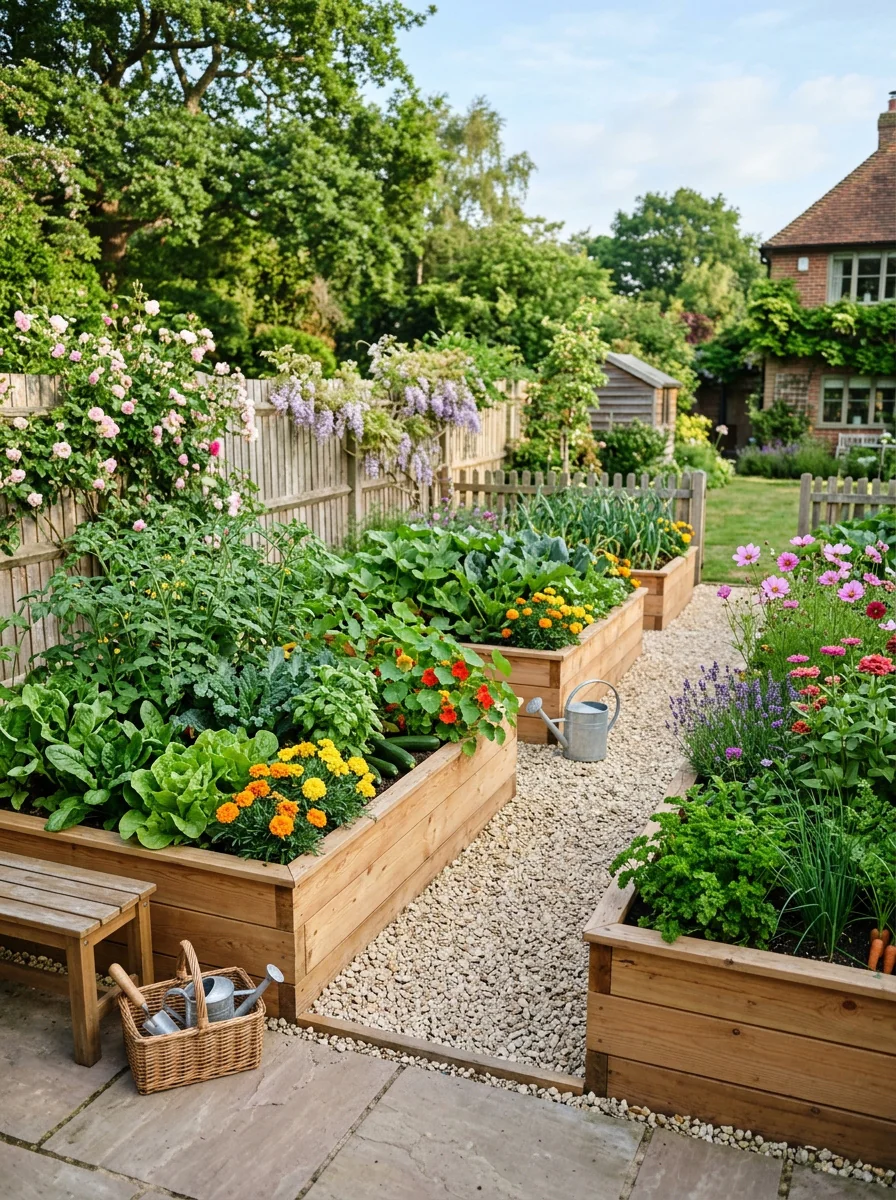
Raised garden beds can turn a patchy, hard to manage yard into a tidy space that grows food and looks planned. They warm up sooner in spring, drain better after rain, and put your plants at a height that is easier on your back. They also give your backyard clear lines, which is why so many people use them as the backbone of their garden design.
But a bed is more than a box of dirt. The material, size, soil, and layout all decide whether your garden feels organized or messy. This guide covers how to choose between metal and cedar, how big to build, what to fill the bed with, and 15 raised garden bed ideas you can copy. You’ll also get a simple plan for building a raised bed with legs, plus care tips and answers to common questions.
Why Raised Garden Beds Work So Well
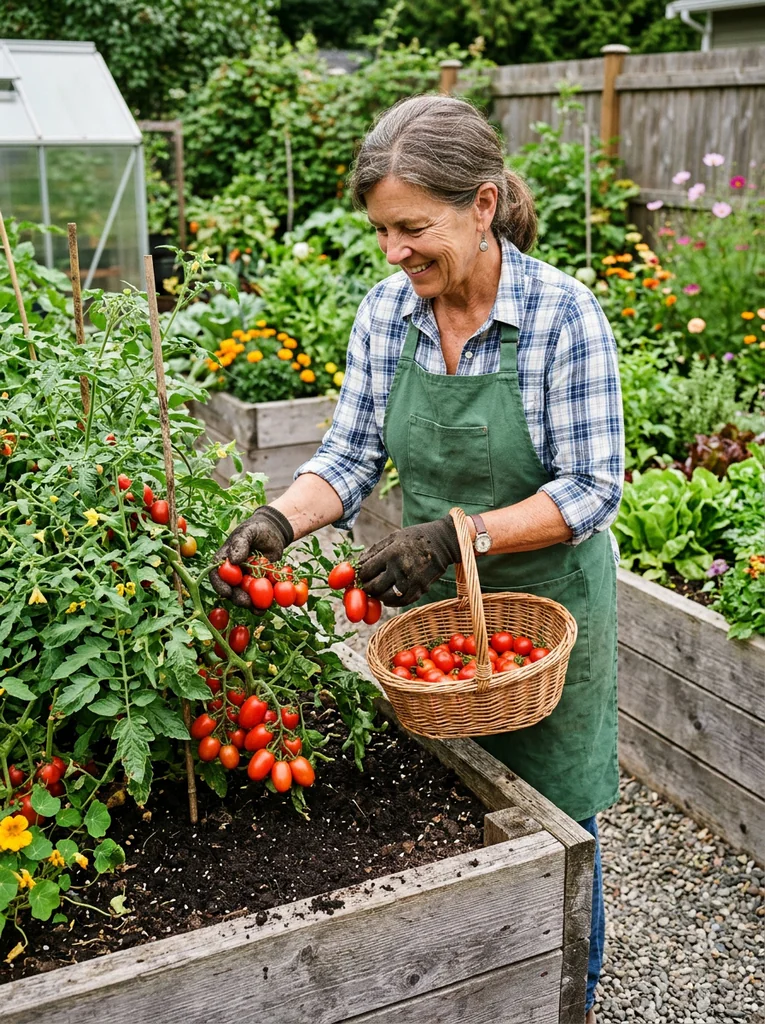
Quick answer: Raised garden beds work well because they let you control the soil, improve drainage, reduce weeds, and bring the garden up to a comfortable working height.
A raised bed is any planting area where the soil sits above the ground and you don’t walk on it. That last part matters. When you never step on the soil, it stays loose, and roots can grow deep.
Here are the main benefits:
- Better soil control. You choose the mix, so poor or rocky ground is no longer a problem. This helps in cities and new housing areas where soil is often packed hard.
- Safer growing in some yards. If your ground has lead or other heavy metals, growing in raised beds with clean soil can lower the risk.
- Better drainage. Extra water drains away from the roots, which helps prevent root rot. Soggy yards benefit the most.
- Earlier planting. The soil in a raised bed warms faster in spring, so you can start sooner.
- Fewer weeds. Tough perennial weeds are often less of a problem in a bed than in open ground.
- Easier access. Raised beds reduce bending and kneeling, and they open up gardening for people with physical limits.
- A place to garden anywhere. A bed can sit on a patio, in a very wet spot, or in an area where in ground gardens are not allowed.
Pick the sunniest spot you have. Tomatoes, peppers, and eggplants need at least 6 to 8 hours of direct sun each day. If your space gets only a few hours of light, grow lettuce, baby kale, scallions, radishes, and beet greens instead. Also place the bed near a water source, because you will water often.
Raised Garden Bed Materials: Metal, Cedar, and Wood Compared
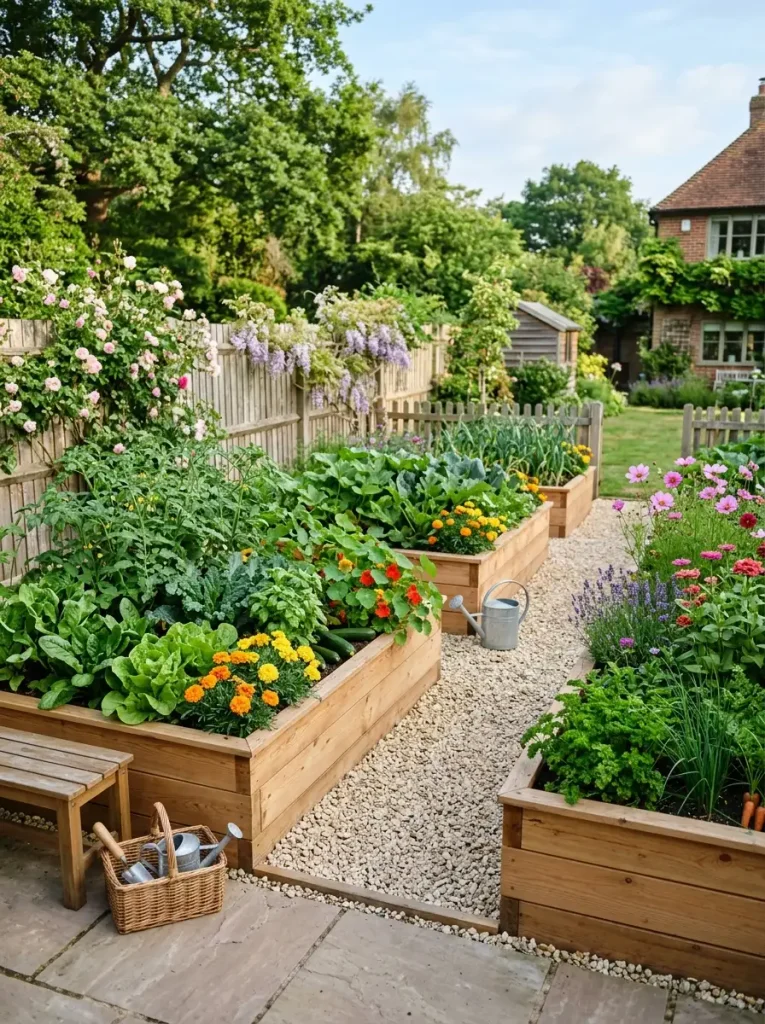
The material changes how long the bed lasts, how it looks, and how safe it is for food. Here is how the most common choices compare.
Cedar Raised Garden Beds
A cedar raised garden bed is a favorite for good reason. Cedar resists rot, smells great, and weathers to a soft silver tone. Hardwoods like cedar and hemlock cost more than pine or fir, but they last much longer. Cedar is a good pick if you want a natural look that blends into a backyard, especially when paired with flowers, greenery, and charming dragonfly garden decor for a touch of personality.
Wooden Raised Garden Beds on a Budget
Wooden raised garden beds made from pine or fir cost less. Untreated softwood often lasts around five years, so plan to replace boards eventually. If you want to stretch your money, check the cutoffs at a lumber yard, since people often leave short pieces behind that sell cheap.
Be careful with treated wood. Avoid old lumber and railroad ties, and never use wood treated with copper, chromium, and arsenic (CCA) around food. If you use pressure treated lumber, make sure it is labeled for ground contact, and consider lining the inside edges.
Metal Raised Garden Beds
Metal raised garden beds have clean lines and a modern look. Galvanized steel is popular because it can stay rust resistant for decades and often comes in panels about 24 inches wide, which gives a nice depth. Metal beds cost more than wood but last longer. Wood corners are often used to join the panels.
Three cautions apply to metal garden beds:
- Metal heats up in strong sun, so plant tougher crops near the edges.
- Some prefabricated beds sold online have tested positive for lead, so buy from sellers who clearly state their beds are safe for food.
- Zinc from a galvanized coating can leach into very acidic soil (a pH below 5). Add a liner or choose stainless steel if this worries you.
Bricks, Pavers, and Fabric Bags
Bricks and pavers look sharp and match many landscape styles, but they cost more, and some can raise your soil pH. Fabric grow bags are cheap and handy, yet they act like containers, so treat them that way and water more often.
What About Kits?
If you shop for a Costco raised garden bed or any other ready made kit, check the material, board thickness, size, and whether the seller says it is food safe. Kits save time, but compare them against the cost of building your own.
How Big Should Your Raised Garden Beds Be?
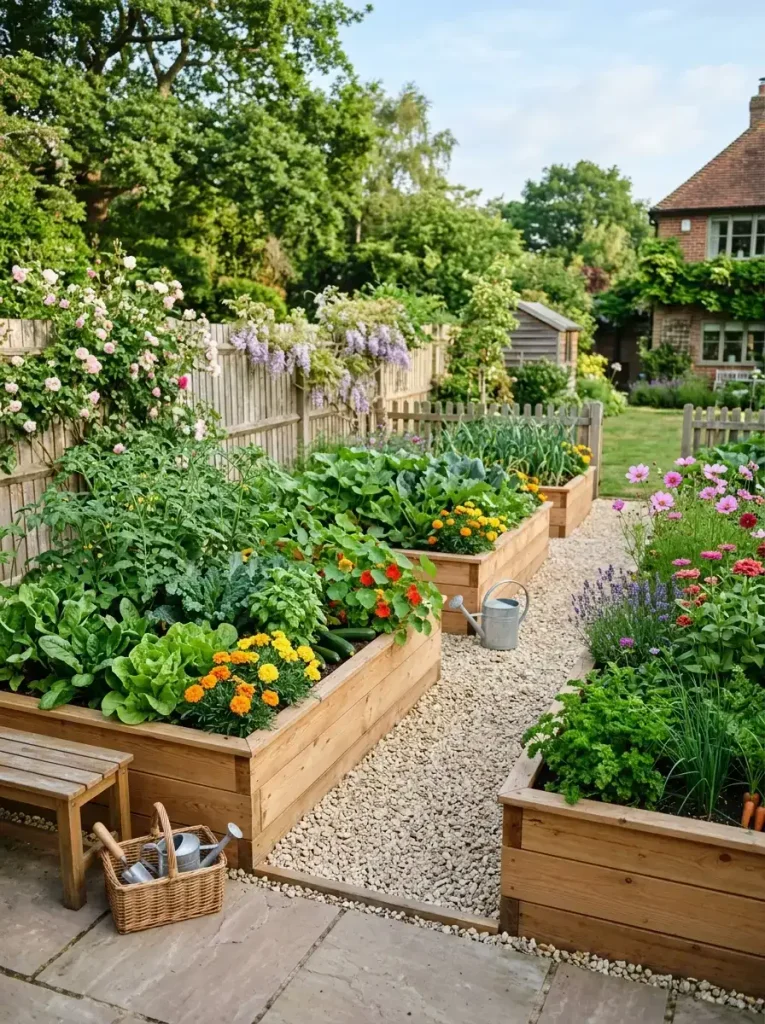
Size affects how easy the bed is to use and how good it looks.
Width: Choose a width you can reach across. If you can reach only one side, keep the bed to about 2.5 feet wide. If you can reach both sides, go up to 4 or 5 feet. This way you never have to step in and pack the soil down.
Length: Common sizes are 4 by 4 feet, 4 by 8 feet, and 8 by 8 feet. If you use boards, shorter ones (6 feet or less) are less likely to warp or snap. Place boards with the heartwood side facing in, so any warping curves slightly outward.
Height: Many gardeners need only a few inches of lift. For a more finished look and easier work, 18 to 24 inches feels right and gives the yard real structure. On hot pavement, a bed 1 to 2 feet tall can help buffer the heat. For wheelchair users, about 27 inches is a comfortable height. Children do better with low sides.
One more tip: several smaller beds beat one long bed. Smaller beds make crop rotation easy and look neat when they match.
Raised Garden Bed Dirt: The Best Soil Mix
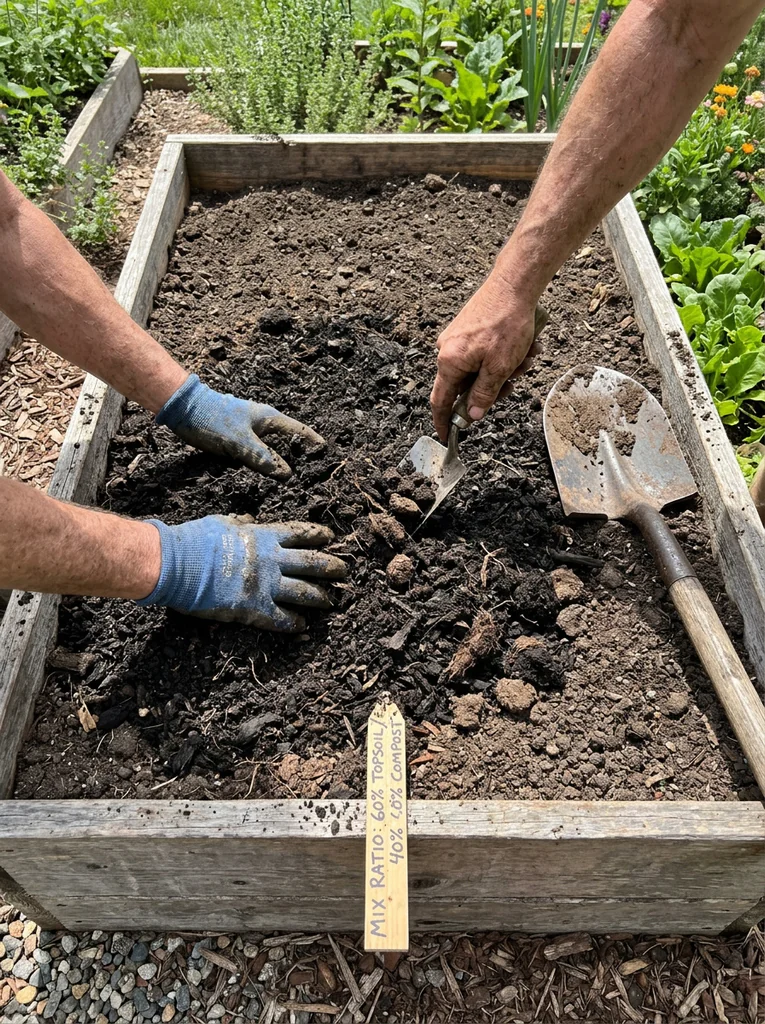
What goes inside matters as much as the frame. The right raised garden bed dirt is the biggest factor in plant health.
The simple recipe: Mix about one half to two thirds loam or sandy loam topsoil with one third to one half plant based compost. If your topsoil is heavy clay, add some sand for a looser texture.
A few rules keep the mix working:
- Buy in bulk. Topsoil sold by the cubic yard costs much less than individual bags. If you prefer bags, look for ones labeled raised bed mix.
- Skip pure potting soil. It dries out too fast for a full bed.
- Don’t overdo compost. Too much dries out quickly and can repel water. Keep adding a little each year instead.
- Go easy on manure. It adds a lot of phosphorus, so use it only if a soil test says you need it.
- Avoid peat and coconut coir as the main fill. They dry out the soil and are better for pots.
For very tall beds (over 2 feet), you can fill the bottom with sticks, leaves, and rough compost, then top with soil. This lasagna style layering cuts cost, but the pile will sink, so plan to add soil each season.
Do you need a bottom layer? Usually no. A barrier can stunt root growth. Instead, remove the grass, loosen the ground with a shovel or broadfork, and set the bed on top. Add hardware cloth under the bed only if mice or chipmunks are a problem. On a patio, use a liner that lets water pass through, such as landscape fabric.
15 Raised Garden Bed Ideas for a Beautiful, Organized Backyard
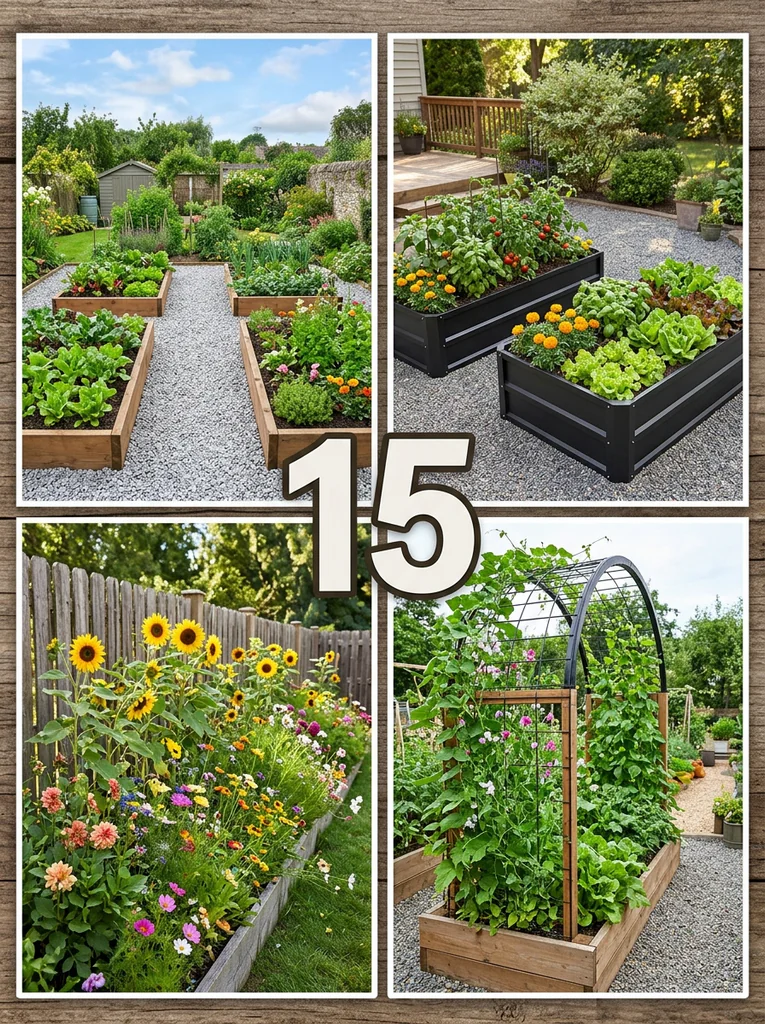
Here are 15 raised garden bed ideas, from layout to finishing touches. Pick the ones that match your space and budget.
1. Start with One Clean Shape
Pick one shape and stick with it. Simple rectangles work best because repetition makes a yard feel planned. In a small space, lay out two matching beds side by side with a walkway in between. You can add more later.
2. Choose One Material for Every Bed
Mixing cedar, cinder blocks, and pallet wood makes a yard look cluttered. Use the same wood, stain, and finish on every bed. If cedar is out of budget, pine with a food safe sealant is a good stand in.
3. Go Modern with Metal Raised Garden Beds
For a sleek look, try metal raised garden beds in weathered steel or black. Modern raised garden beds hold crisp edges and make green leaves stand out. Plant sturdy herbs like rosemary and lavender near the sun baked sides.
4. Paint Wooden Beds a Deep Color
Dark charcoal, forest green, or navy makes plants glow. Use exterior paint that is safe for edibles, paint only the outside, give it two coats, and let it cure before you add soil.
5. Get the Height Right
Beds around 18 to 24 inches tall give the yard shape and save your back. Add a flat cap rail about six inches wide along the top. It gives you a spot to rest tools or sit with a coffee.
6. Build a Raised Bed with Legs
Legged beds put the soil at waist height. They work well on patios and decks, and they are great for people who can’t bend easily. See the step by step plan later in this guide.
7. Fill the Paths Like You Mean It
The space between beds matters as much as the beds. Lay landscape fabric, then cover it with pea gravel or wood chips. Keep paths about 3 feet wide so a wheelbarrow fits. Thin steel or stone edging keeps the gravel in place.
8. Lean on Symmetry
Mirror two or four beds around a center path, then place a pot, birdbath, or bench at the middle. Symmetry is a simple trick that makes a backyard look designed. You can loosen it by planting tall grasses on one side and soft blooms on the other.
9. Use the Fence Line
A long, narrow bed about two feet deep along a fence turns wasted space into growing space. Plant sunflowers, climbing beans, or cut flowers behind lower crops. It also makes a small yard look wider.
10. Plant a Soft Border at the Base
Tuck low plants like alyssum, thyme, or marigolds around the foot of each bed. They soften hard edges, discourage weeds, and attract bees. Creeping thyme smells wonderful when you step on it.
11. Add Height with Trellises
A trellis or obelisk gives a flat bed a focal point. Grow sweet peas, pole beans, cucumbers, or clematis. Match the trellis color to the beds so everything feels connected.
12. Light the Garden at Night
Warm white solar lights along the cap rail or small stake lights among the plants turn your beds into glowing lanterns. Avoid harsh blue light. Soft light makes the garden feel like an outdoor room.
13. Mix Edibles and Flowers
Don’t keep vegetables and flowers apart. Zinnias between tomatoes and nasturtiums beside lettuce look pretty and draw pollinators. This is one of the best raised vegetable garden bed ideas for a garden that feels full but tidy. Repeat three or four favorite plants across the beds to keep the look calm.
14. Try an In Ground Raised Mound
The simplest option needs no frame at all. Build flat topped mounds of soil about 6 to 8 inches high, then edge them with mulch paths. This works well for raised garden bed landscaping on a tight budget, and the soil stays loose because you never step on it. Keep the sides intact so the mound doesn’t slump onto the path.
15. Finish with One Perfect Seat
Place a bench, a pair of chairs, or even a sturdy stool near the beds. It gives you a reason to sit and enjoy your work. Many gardeners say this one detail makes the whole backyard feel complete.
How to Build a Raised Garden Bed with Legs
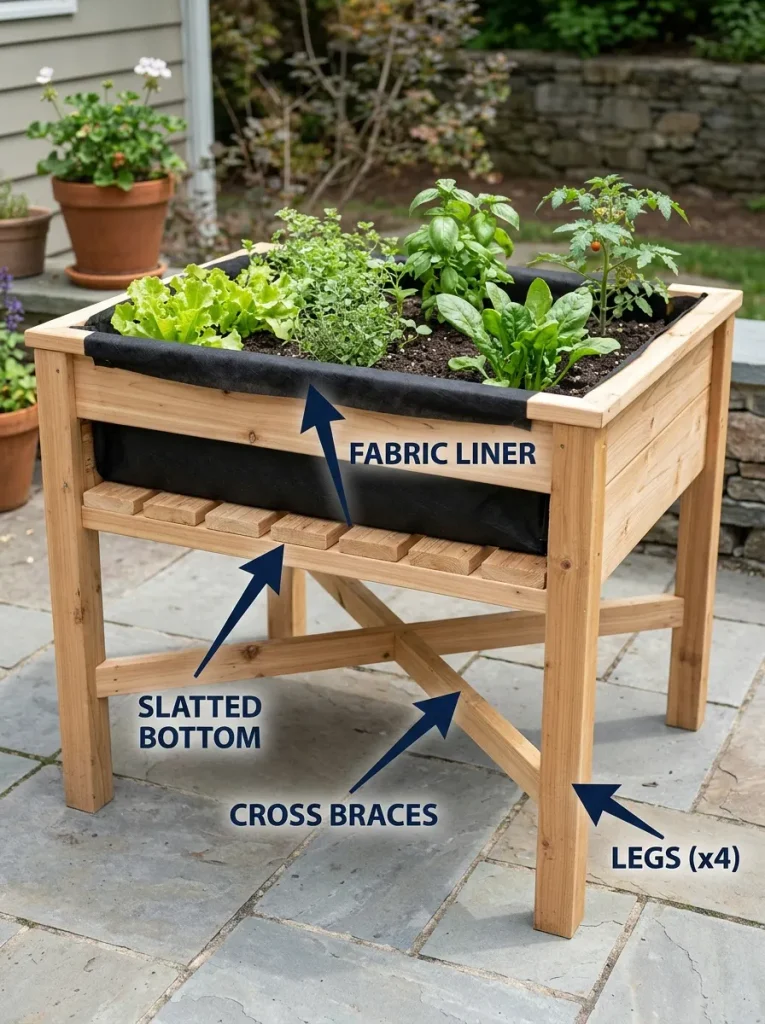
A legged bed is a raised planter on a stand. It is lighter than a ground bed and sits at a comfortable height, but soil is heavy, so build it strong. A damp bed can weigh several hundred pounds, so use sturdy wood and don’t rush the frame. For added character, complement the surrounding space with outdoor crane garden decor to create a peaceful, nature-inspired backyard.
What you need: four 4 by 4 inch posts for legs, two by six boards for the sides, boards or slats for the bottom, exterior screws, hardware cloth or landscape fabric, a drill, a saw, and a level.
- Plan the size. A bed about 2 feet wide and 4 to 6 feet long is easy to reach. Keep the soil depth to 8 to 12 inches so the weight stays manageable.
- Pick the leg height. Cut legs to 24 to 34 inches, depending on how tall you are and whether you want to sit or stand.
- Build the box frame. Join the side boards with exterior screws, and use corner brackets or wood blocks for extra strength.
- Attach the legs. Screw each leg to the inside corners of the frame, using at least two long screws per side.
- Add cross braces. Fix horizontal rails between the legs about halfway down. This stops the stand from wobbling.
- Make the bottom. Fasten slats with small gaps for drainage, then line the inside with landscape fabric so soil stays in, but water flows out.
- Set it level. Place the bed on firm, flat ground and check with a level.
- Fill and plant. Use a lighter mix with extra compost, and choose shallow rooted crops like lettuce, herbs, strawberries, and radishes.
Water a raised bed more often, because it dries out faster than a ground level bed.
Keep Your Raised Garden Beds Healthy All Season
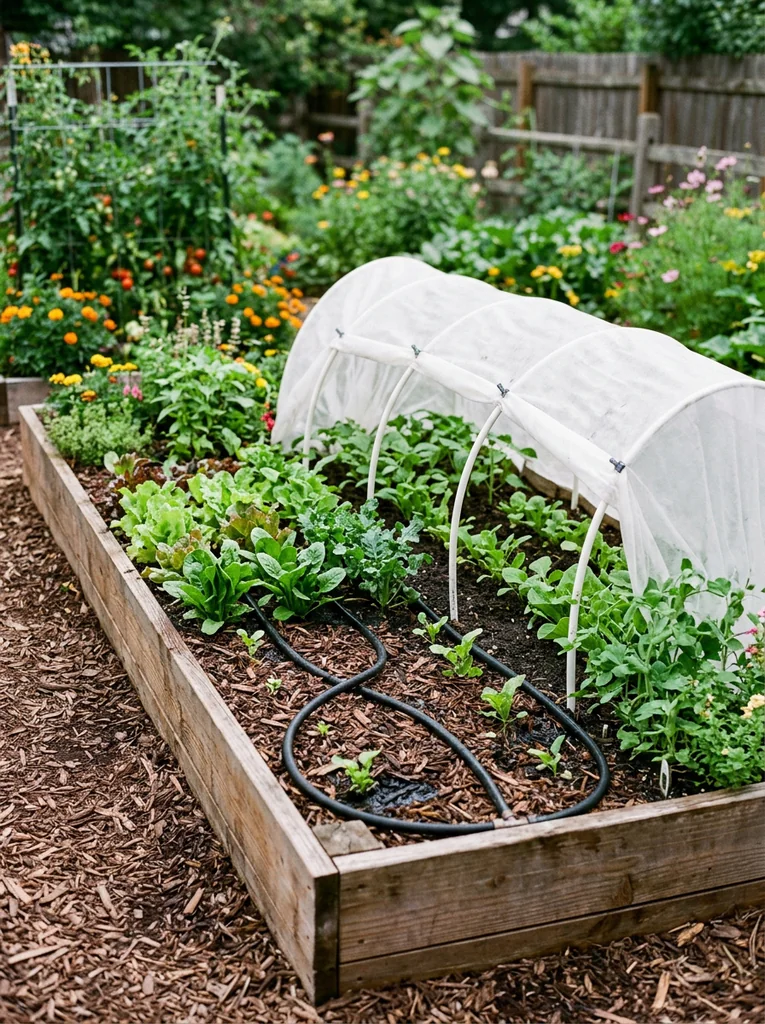
Once your beds are set up, a few habits keep them productive.
Water smartly. Raised beds dry out faster than open ground, and taller beds dry out the fastest. Water deeply, close to the soil, and avoid splashing the leaves, which helps prevent disease. A soaker hose or drip kit saves time, and kits work best on low walls. For a low tech option, bury an olla, a ceramic pot that slowly releases water as the soil dries. A mulch layer also holds moisture and keeps weeds down.
Feed the soil. Test your soil every two to three years and add compost or fertilizer based on the results. Heavy yearly compost can build up salts and phosphorus, so don’t pile it on.
Rotate your crops. Avoid planting the same plant family in the same bed for 3 to 4 years. For example, don’t grow tomatoes, peppers, eggplants, or potatoes in one bed back to back. Several small beds make this easy.
Protect your plants. Add netting or a short fence to keep rabbits out. Hoops with row cover or plastic extend the season, and a simple cold frame lets you grow spinach and lettuce earlier in spring and later in fall.
Fix common problems.
- Beds that dry out too fast need more mulch and deeper watering.
- Warped boards need shorter lengths or a stake on the outside for support.
- Dull, flat beds need height, a trellis, or a colorful border.
- Weeds in the paths need landscape fabric under gravel or mulch.
Frequently Asked Questions
What is the best material for raised garden beds?
Cedar is a top choice for wood because it resists rot and looks natural, while galvanized steel is a strong pick for a modern look and long life. Choose a material that is safe for food, and avoid old treated lumber and railroad ties.
How deep should raised garden beds be?
For most vegetables, 10 to 12 inches of good soil is enough. Many gardeners build beds 18 to 24 inches tall for comfort. Taller beds give roots more room but need more soil and more frequent watering.
What should I fill a raised garden bed with?
Use a mix of about half to two thirds loam topsoil and half to one third plant based compost. Buy topsoil in bulk to save money, and don’t use only potting soil.
Do I need to line the bottom of a raised garden bed?
Usually not. A solid barrier can stunt roots. Clear the grass, loosen the soil, and set the bed on top. Use hardware cloth if mice or chipmunks are a problem, and use landscape fabric on a patio.
Are metal garden beds safe for vegetables?
Yes, when you buy from a trusted seller. Galvanized steel is widely used, though zinc can leach into very acidic soil. Check that the product is rated for food, and add a liner or choose stainless steel if you are concerned.
Conclusion
Raised garden beds give you control over soil, water, and layout, and they make your backyard look cared for. Choose a material that fits your budget and style, size your beds so you can reach the middle, fill them with a good soil mix, and add a few design touches like clean paths, a trellis, and a place to sit.