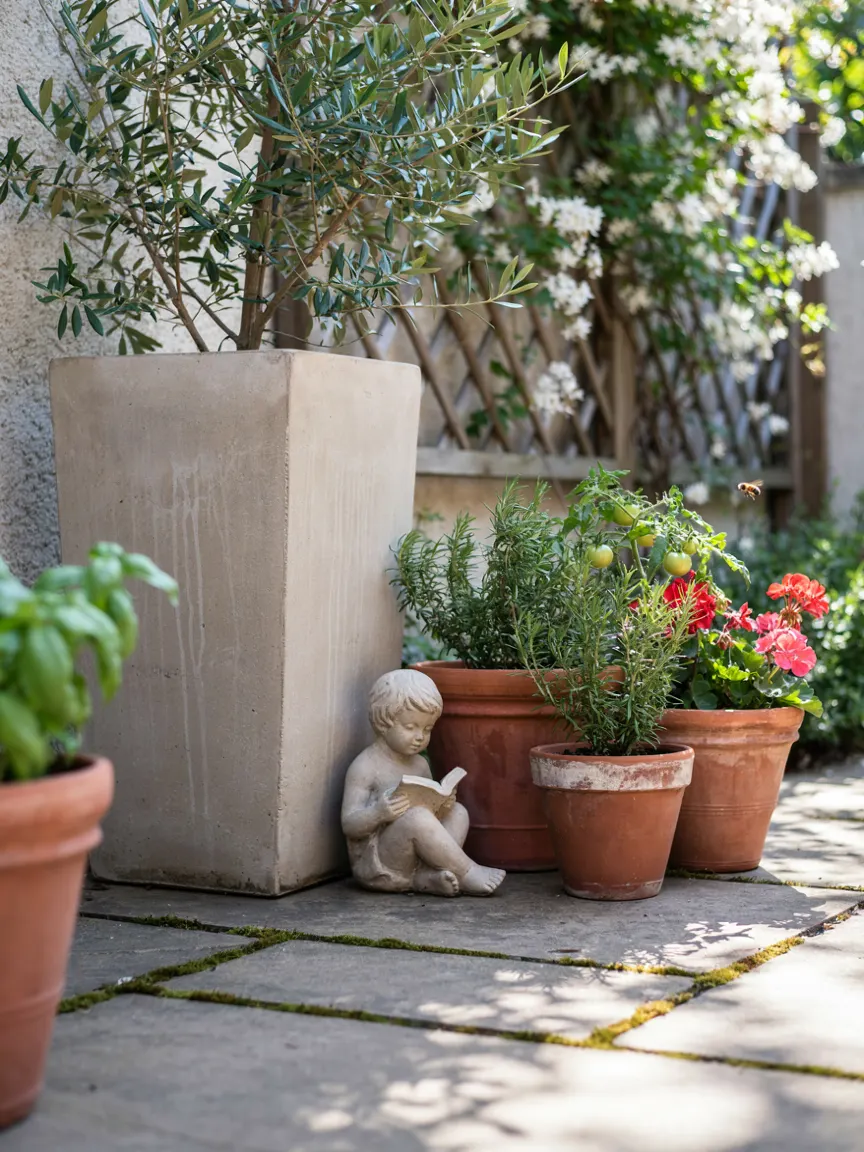
Some garden materials come and go with trends. Concrete garden decor and terracotta garden decor are not among them. Both have been used in outdoor spaces for centuries, and for good reason: they’re durable, versatile, and age in a way that actually improves the look of a garden rather than wearing it down.
If you’ve ever walked past a weathered concrete urn covered in a thin layer of moss, or a terra cotta pot with that classic sun faded orange color, you already understand the appeal. These materials don’t try to look new forever. They settle into a garden and become part of it.
This guide covers everything you need to know before adding concrete or terracotta pieces to your own outdoor space. You’ll learn the real differences between the two materials, how to choose pieces that suit your climate, which items tend to crack or crumble over time, and how to arrange them so your garden feels curated instead of cluttered. By the end, you’ll know exactly where to start.
What Makes Concrete Garden Decor Different From Other Materials
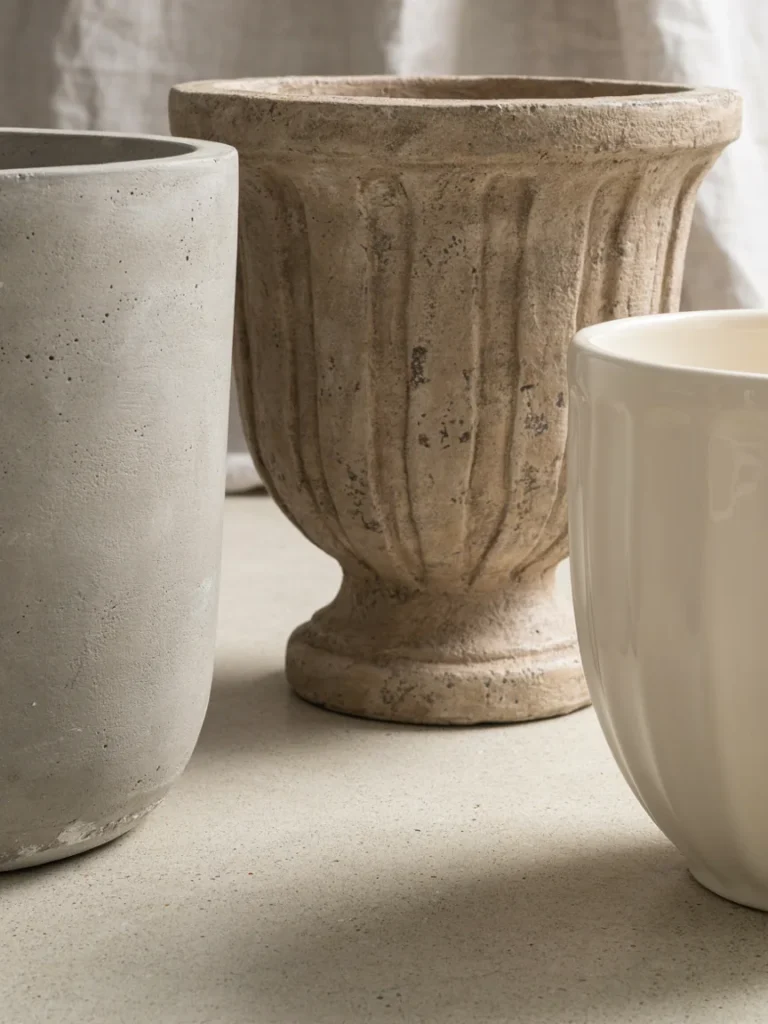
Concrete garden decor refers to any outdoor decorative piece made from poured or cast concrete, including planters, statues, birdbaths, stepping stones, and garden edging. Unlike resin or plastic alternatives, concrete has real weight and mass, which gives it a grounded, permanent presence in a garden.
For anyone exploring an animal garden decor guide, concrete animal statues are also a durable choice for adding character and a natural focal point to outdoor spaces.
There are a few common types of concrete decor worth knowing:
- Standard cast concrete: poured into molds and cured, this is the most affordable and widely available option
- Cast stone: a refined form of concrete made with finer aggregates, often used to mimic the look of natural carved stone
- Hypertufa: a lightweight, porous mix of concrete, peat, and perlite, popular for handmade trough planters and alpine gardens
- Fiber reinforced concrete: blended with fiberglass or fiber strands for extra strength and reduced weight, often used in larger planters
Each type serves a slightly different purpose. Standard concrete works well for statues and heavy planters that won’t be moved often. Hypertufa is ideal for smaller, hand crafted pieces. Fiber reinforced concrete strikes a balance for larger pots that still need to be somewhat manageable to lift.
Understanding Terracotta and Terra Cotta Garden Decor
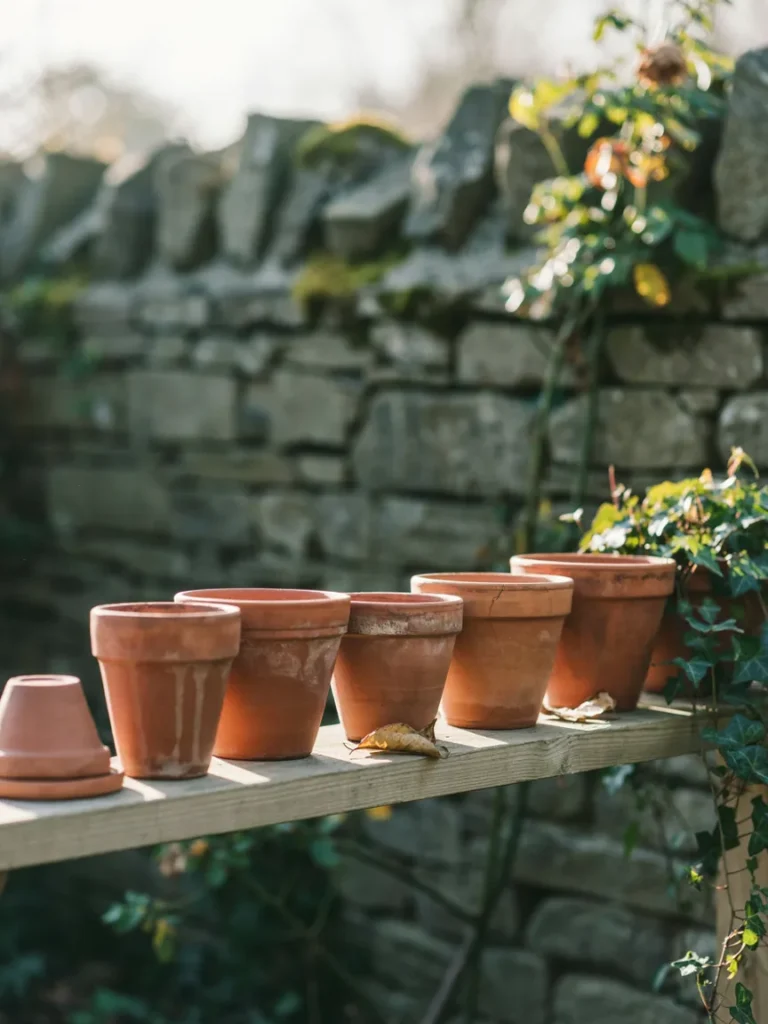
Terracotta garden decor, sometimes written as terra cotta garden decor, is made from fired clay and has an even longer history than concrete in garden design. The word itself comes from Italian, meaning baked earth, which is a fairly accurate description of the material and the process.
Terracotta is porous by nature, which is actually an advantage for plant health. It allows soil to breathe and excess moisture to evaporate through the walls of the pot, reducing the risk of root rot. This is one reason experienced gardeners often prefer terracotta pots for herbs, succulents, and Mediterranean plants that dislike sitting in wet soil.
There are two general categories to know:
- Standard terracotta: unglazed, porous, and the most traditional option, typically in the familiar warm orange color
- Glazed terracotta: coated with a ceramic glaze, which reduces porosity but adds color options and slightly better frost resistance
Both types are widely used for planters, though standard unglazed terracotta remains the most popular choice for anyone wanting that classic, timeless garden look.
Concrete vs Terracotta Garden Decor: Which One Fits Your Space
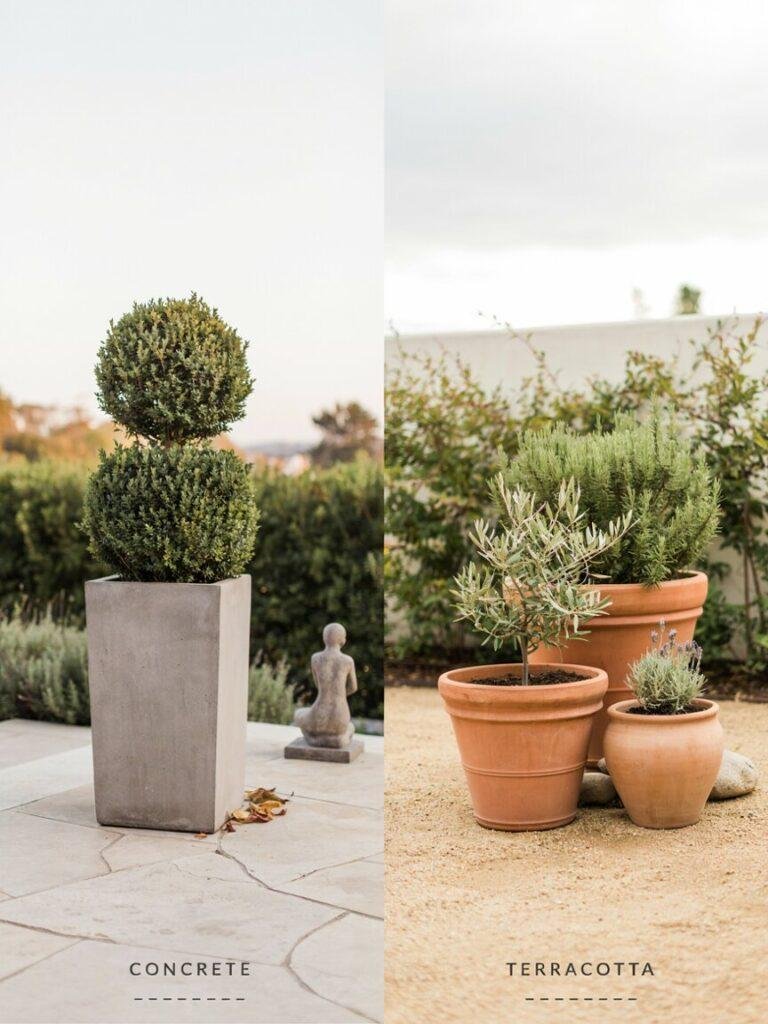
Choosing between concrete and terracotta garden decor often comes down to weight, climate, and the overall look you’re going for.
Weight and Portability
Concrete pieces are significantly heavier than terracotta of a similar size. A large concrete planter can weigh well over 100 pounds once filled with soil, which makes it a poor choice for anyone who rearranges their garden seasonally. Terracotta, while still substantial, is generally easier to lift and move, especially in smaller pot sizes.
Climate and Frost Resistance
This is where the two materials really diverge. Standard terracotta is porous and absorbs water, which means it can crack in freezing temperatures if moisture inside the clay expands. Gardeners in cold climates often need to bring terracotta pots indoors or into a shed for winter. Concrete, particularly dense, well sealed concrete, tends to handle freeze thaw cycles better, though it is not entirely immune to cracking over many years of exposure.
Aesthetic and Style
Concrete tends to suit modern, minimalist, and industrial garden styles thanks to its smooth, neutral gray tone. Terracotta leans naturally toward Mediterranean, rustic, and cottage style gardens because of its warm, earthy color. Neither material is locked into one style completely, but this is a helpful starting point if you’re unsure which direction to take.
Budget
Terracotta is typically less expensive at smaller sizes, making it accessible for anyone starting a garden on a budget. Concrete decor, especially larger statues and cast stone pieces, tends to carry a higher price point due to the weight of material and manufacturing process involved.
Popular Types of Concrete and Terracotta Garden Decor
Planters and Pots
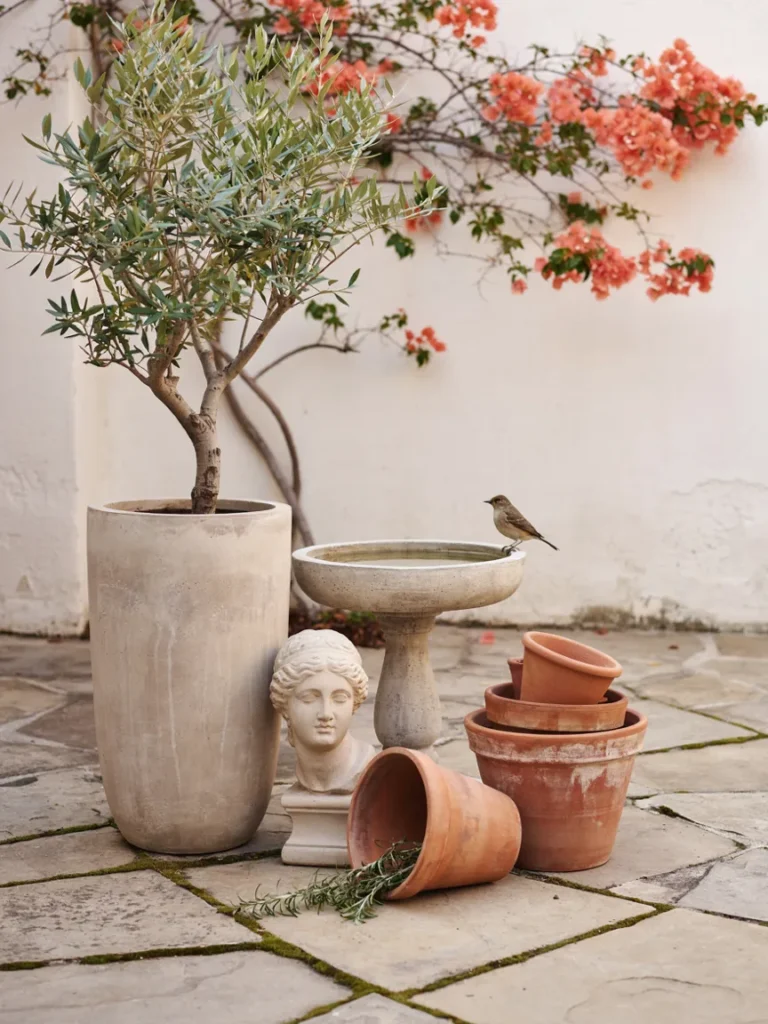
The most common entry point into concrete garden decor and terracotta garden decor alike is the humble planter. Concrete planters range from simple cylindrical shapes to elaborate carved urns, while terracotta pots come in nearly every size, from tiny herb pots to large floor standing vessels. Both materials pair well with almost any plant, though their porous or non porous nature should factor into your watering routine.
Statues and Figurines
Concrete has long been the material of choice for garden statues, from classical figures to modern abstract sculptures. The weight of concrete keeps statues stable outdoors even in strong wind, and the material holds fine sculptural detail extremely well. Terracotta statues exist too, often in the form of smaller decorative figures or animal shapes, though they are less common for large scale garden statuary.
Birdbaths and Fountains
A concrete birdbath is one of the most enduring garden decor choices available, largely because the material’s weight keeps it stable and its surface develops an attractive weathered patina over time. Terracotta birdbaths also exist, typically in a shallow bowl style, but require more care in freezing climates.
Garden Edging and Stepping Stones
Concrete is widely used for garden borders, edging, and stepping stones because it can be poured into nearly any shape and holds up to foot traffic and weather exposure far better than lighter materials.
Troughs and Hypertufa Planters
For gardeners who enjoy a more handmade, artisanal look, hypertufa troughs offer a lightweight concrete alternative that’s popular in alpine and rock gardens. These pieces often develop moss and lichen growth over time, which many gardeners consider part of the appeal rather than something to prevent.
How to Choose the Right Piece for Your Garden
Match the Scale to Your Space
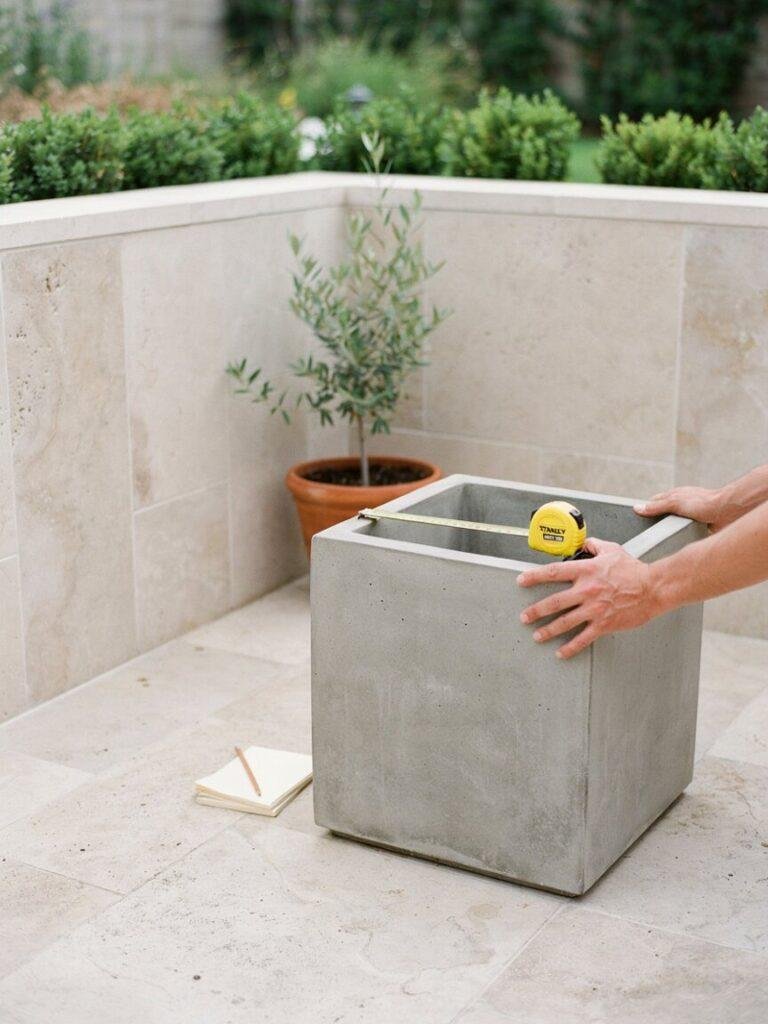
A large concrete urn can easily overwhelm a small balcony or courtyard, while a tiny terracotta pot can disappear entirely in a sprawling backyard. Before buying, measure the space where the piece will sit and consider how it will look from your main viewing point, whether that’s a kitchen window, a patio seating area, or the front entrance.
Consider How Often You’ll Move It
If you like to rearrange your garden seasonally or bring plants indoors for winter, lean toward lighter terracotta or fiber reinforced concrete rather than solid cast concrete. If a piece is meant to stay in one place permanently, such as a garden focal point or entryway statue, solid concrete’s weight becomes an advantage rather than a drawback.
Think About Drainage
Not all concrete and terracotta planters come with drainage holes. For healthy plants, always check that a pot has proper drainage, or be prepared to drill one yourself using a masonry bit if the piece doesn’t already have one.
Factor In Your Climate
Gardeners in regions with harsh winters should either choose frost resistant concrete and glazed terracotta, or plan to move porous unglazed terracotta indoors before the first freeze. This single decision prevents the most common cause of cracked pots.
Caring for Concrete and Terracotta Garden Decor
Cleaning
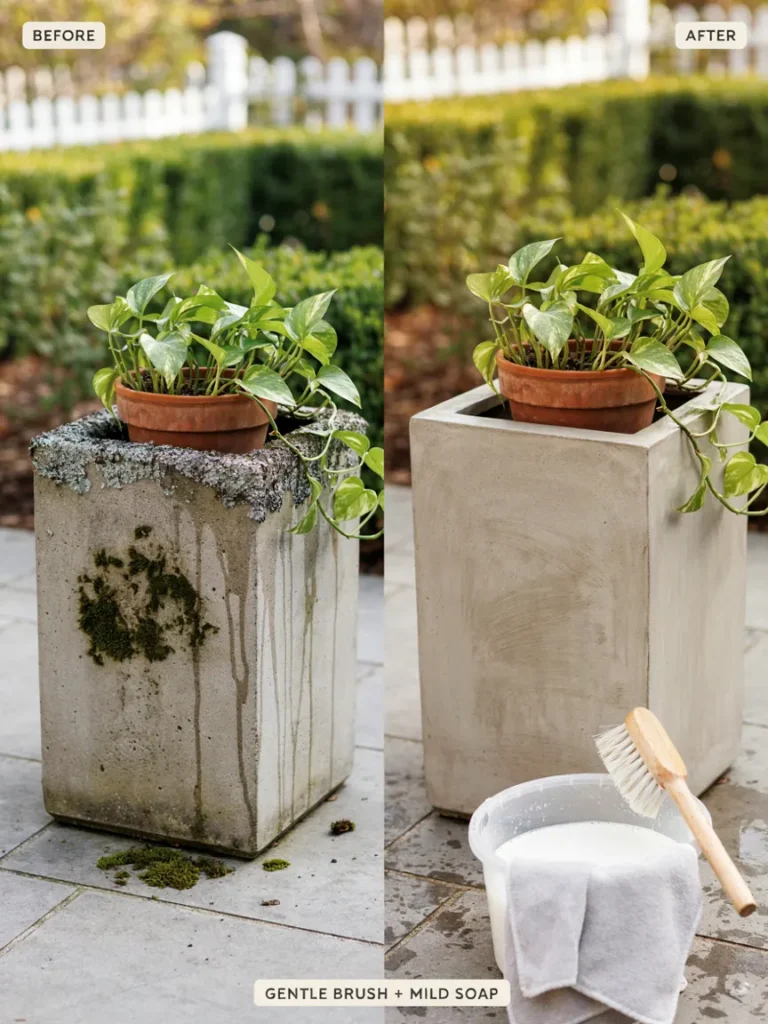
Both materials can be cleaned with a soft brush, mild soap, and water. Avoid pressure washing terracotta at close range, as the force can chip the surface. For concrete, a soft bristle brush handles most dirt, algae, and mineral buildup without damaging the surface.
Sealing
Sealing is optional but recommended for anyone who wants to slow down natural weathering. A breathable masonry sealer applied to concrete helps resist staining without trapping moisture inside. Terracotta can also be sealed on the interior to reduce porosity if you prefer a longer stretch between waterings, though many gardeners intentionally leave it unsealed for the health benefits porous clay provides to plant roots.
Winter Protection
In freezing climates, empty terracotta pots of soil and water before winter, then store them in a garage, shed, or covered area. Concrete pieces generally tolerate outdoor winters better, but elevating planters slightly off the ground with pot feet allows water to drain freely and reduces the risk of cracking from trapped moisture that freezes and expands.
Repairing Minor Damage
Small chips and cracks in concrete can often be patched with a concrete repair compound, while minor terracotta chips are usually better left alone or embraced as part of the material’s natural character, since clay is more difficult to repair invisibly.
Styling Ideas for Concrete and Terracotta Garden Decor
Create Height Variation
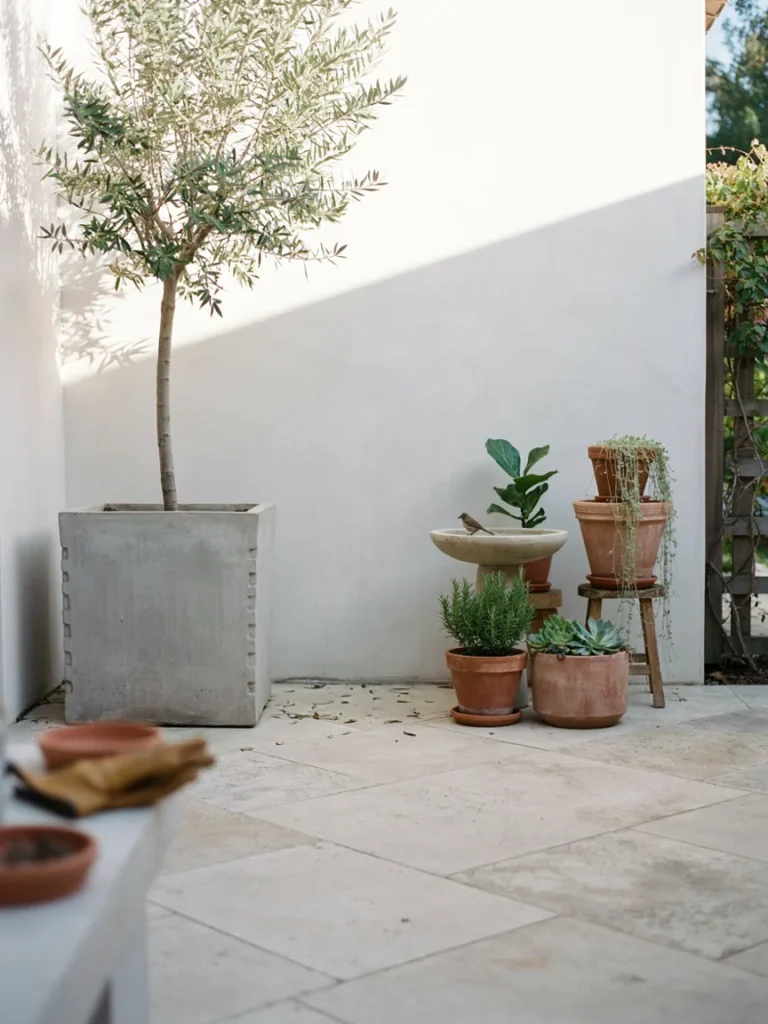
Group planters of different heights together rather than lining them up in a single row. A tall concrete urn paired with medium and small terracotta pots creates a layered, intentional looking display.
Mix Materials Intentionally
Concrete and terracotta don’t need to be used separately. Pairing a smooth gray concrete planter next to a warm orange terracotta pot creates contrast that makes both pieces stand out more than either would alone.
Use Repetition for a Cohesive Look
Lining a pathway with matching terracotta pots, or placing two identical concrete urns on either side of an entrance, creates symmetry that instantly reads as more polished and deliberate.
Let Weathering Happen
Resist the urge to constantly clean every trace of age from concrete and terracotta pieces. A little moss, a slight patina, or a few water stains are part of what makes these materials feel timeless rather than artificial.
Anchor a Focal Point
A single large concrete statue or oversized terracotta urn placed at the end of a path or in the center of a garden bed naturally draws the eye and gives the space a sense of destination.
Frequently Asked Questions
Is concrete or terracotta better for garden decor?
Neither material is universally better.
Concrete offers more weight, stability, and frost resistance, making it ideal for permanent statues and large planters, while terracotta offers a lighter, more affordable option with better drainage properties for plant health.
Will terracotta pots crack in winter?
Standard unglazed terracotta can crack in freezing temperatures because the porous clay absorbs water, which expands when frozen. Moving pots indoors for winter, or choosing glazed terracotta or frost resistant concrete instead, helps prevent this.
How do I stop moss from growing on concrete garden decor?
A mild bleach solution or a dedicated outdoor cleaner can remove moss, though many gardeners choose to leave light moss growth in place since it contributes to the weathered look concrete decor is known for.
Can concrete planters be used for all types of plants?
Yes, as long as the planter has adequate drainage. Concrete’s non porous nature means it holds moisture longer than terracotta, so it works especially well for moisture loving plants, while drought tolerant plants may need a well draining soil mix to avoid overly wet roots.
How much does concrete garden decor typically cost?
Small concrete planters often start around $20 to $40, while larger statues, urns, and cast stone pieces can range from $100 to several hundred dollars depending on size and detail.
Conclusion
Concrete garden decor and terracotta garden decor both offer something increasingly rare in outdoor design: materials that actually improve with age instead of simply wearing out. That natural aging also gives Garden Decor a more authentic, lived-in character over time.
Whether you choose the smooth, grounded presence of a concrete statue, the warm familiarity of a terra cotta pot, or a thoughtful mix of both, these pieces have a way of making a garden feel established rather than staged.
Start with one or two pieces that suit your climate and the amount of care you’re realistically willing to give them, then build outward as your space and taste evolve. A garden built around durable, well chosen materials tends to look better every year, not worse.
Ready to find pieces that fit your garden’s style and climate? Browse our full collection of concrete and terracotta garden decor to find the right starting point for your space.