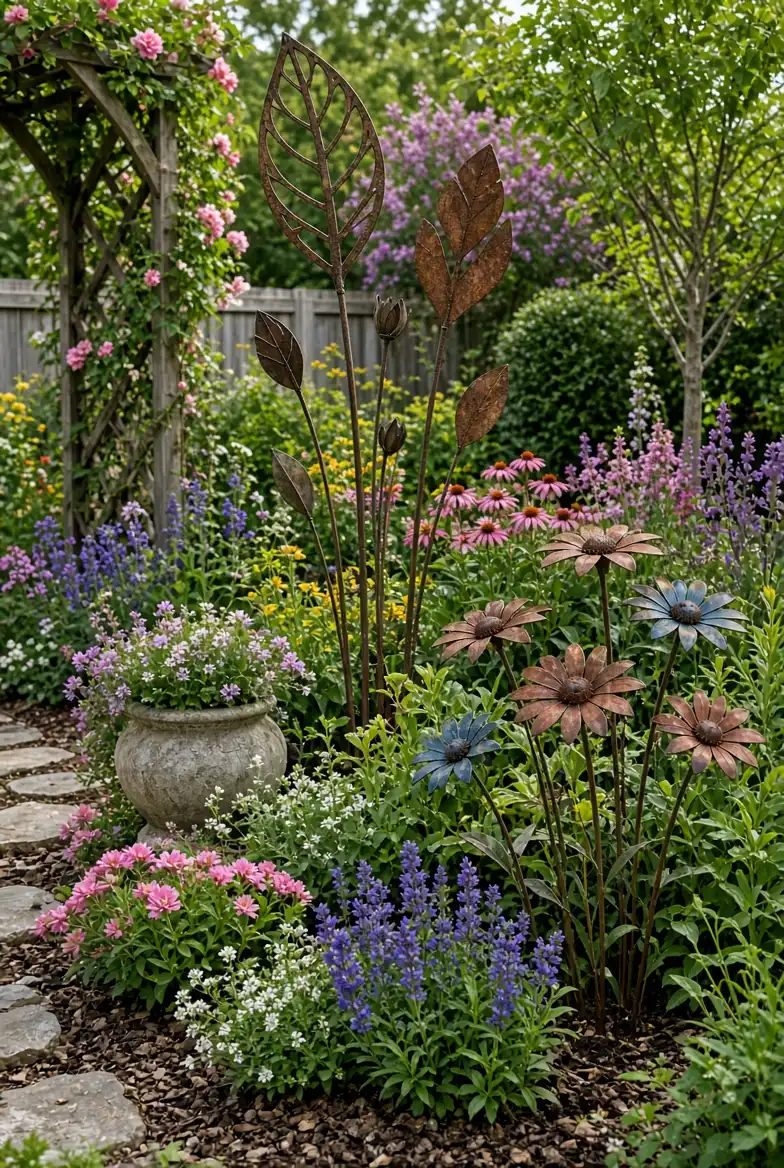
If you have ever bought a decorative piece for your garden only to watch it fade, warp, or fall apart after one season, you already know why so many people are switching to garden decor metal instead. Metal has become the go to material for outdoor styling because it survives rain, sun, and temperature swings far better than wood, resin, or fabric based decor.
This guide covers how to choose the right metal pieces, including popular metal garden flowers outdoor decor options, and how to place and care for them so your yard looks polished season after season instead of needing constant replacement.
Whether you are starting with a completely bare yard or looking to upgrade a few tired pieces, the same basic principles apply. You want decor that matches your garden’s style, holds up to real weather, and gets placed in a way that actually enhances the plants and layout around it rather than competing with them.
By the end of this guide, you will know which metal finishes perform best outdoors, how to choose between different styles of metal garden flowers and sculptures, how to place and pair decor with real landscaping, and how to keep everything looking sharp with just a small amount of regular care.
Why Garden Decor Metal Holds Up Better Than Other Materials
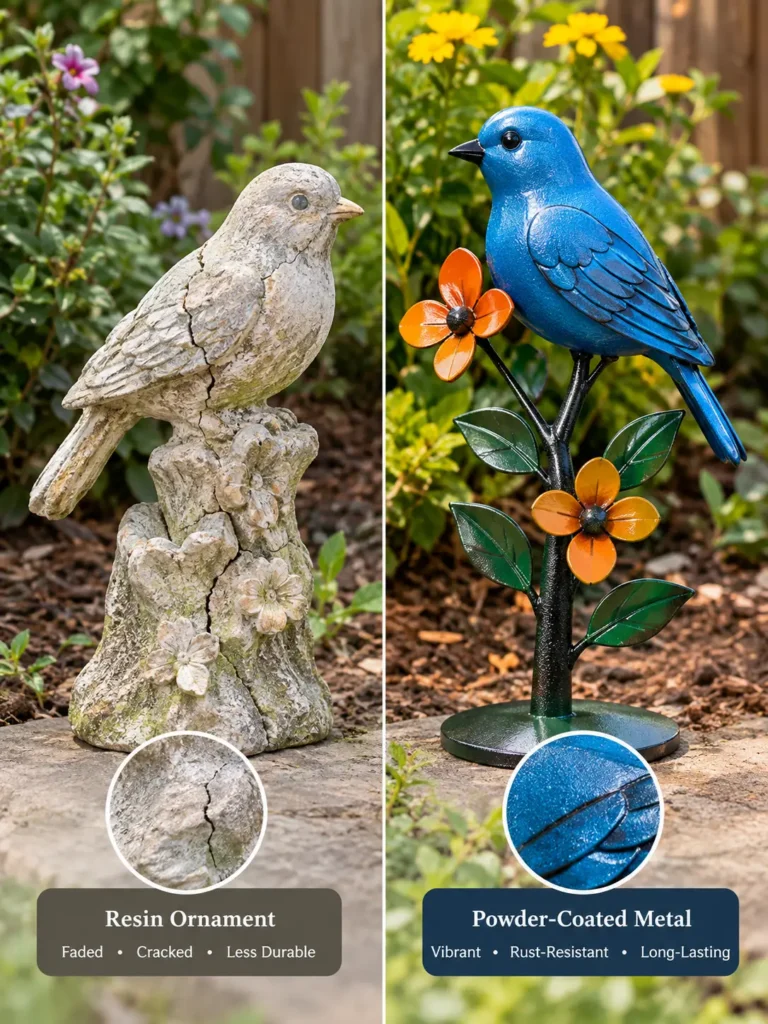
Garden decor metal pieces last because metal, especially when properly treated or coated, resists the two things that destroy most outdoor decorations: moisture and UV exposure. Wood swells, cracks, and rots when it gets wet repeatedly. Resin and plastic pieces fade and become brittle under constant sun.
Fabric-based decor, like fabric flags or cloth wrapped ornaments, breaks down within a season or two in most climates. For durable inspiration, butterfly garden decor ideas can also include metal butterfly pieces that add visual interest without requiring frequent replacement.
Metal, by contrast, can be engineered specifically to handle these conditions. Powder coated steel resists rust for years. Aluminum naturally resists corrosion without heavy treatment. Copper develops an attractive weathered patina instead of breaking down, which many gardeners actually prefer over a brand new shiny finish.
Beyond durability, metal also holds detail and shape better than most alternatives. A metal garden flower can have thin, precise petals that would snap or droop if made from a softer material. This allows for more intricate, realistic designs that keep their shape through wind, rain, and years of exposure.
Cost Over Time Versus Cheaper Materials
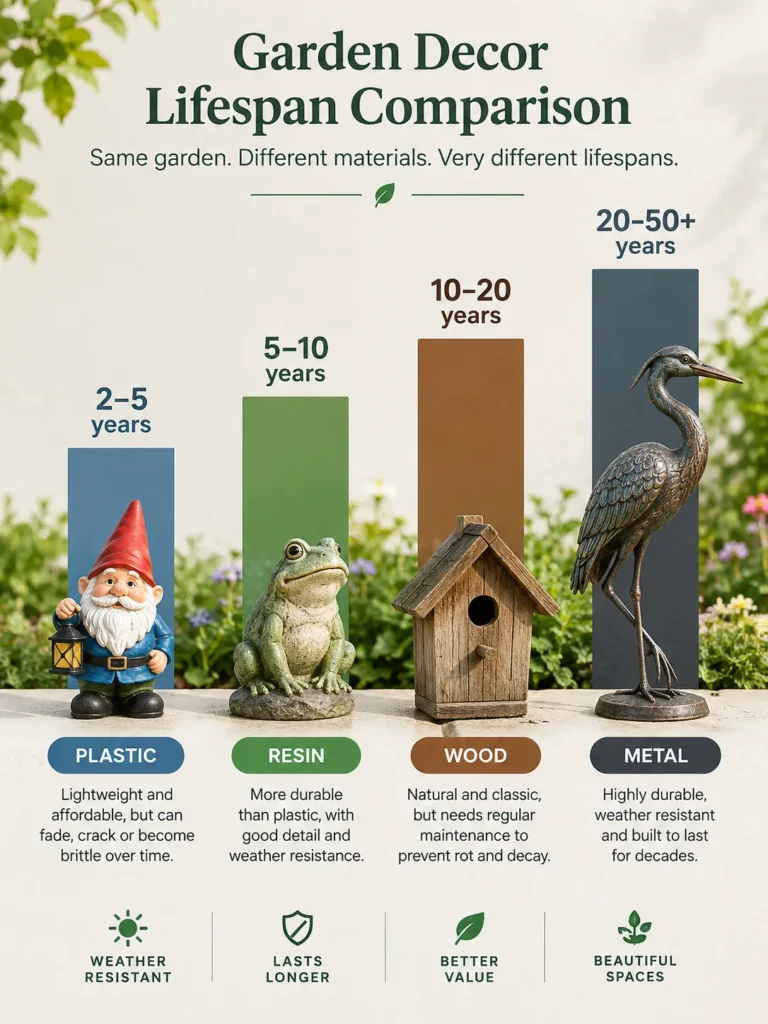
While metal garden decor often costs more upfront than plastic or resin alternatives, it tends to work out cheaper over time. A quality metal piece can last a decade or longer with basic care, while cheaper materials often need replacing every one to three years depending on your climate. When you calculate the cost per year of actual use, metal decor frequently comes out ahead, especially for larger statement pieces that would be expensive to keep repurchasing.
Environmental Durability Across Different Climates
Climate plays a real role in how well any material performs outdoors, and metal generally adapts better across a wider range of conditions than its alternatives. In humid, rainy regions, properly coated metal resists the mold and rot that plague wood based decor.
In hot, sun intense climates, metal resists the UV breakdown that causes plastic and resin to become brittle and discolored within a year or two. Even in coastal areas with salt air, which can be tough on some metals, choosing stainless steel or marine grade aluminum provides strong resistance where standard steel might struggle.
Popular Metal Garden Flowers Outdoor Decor Styles
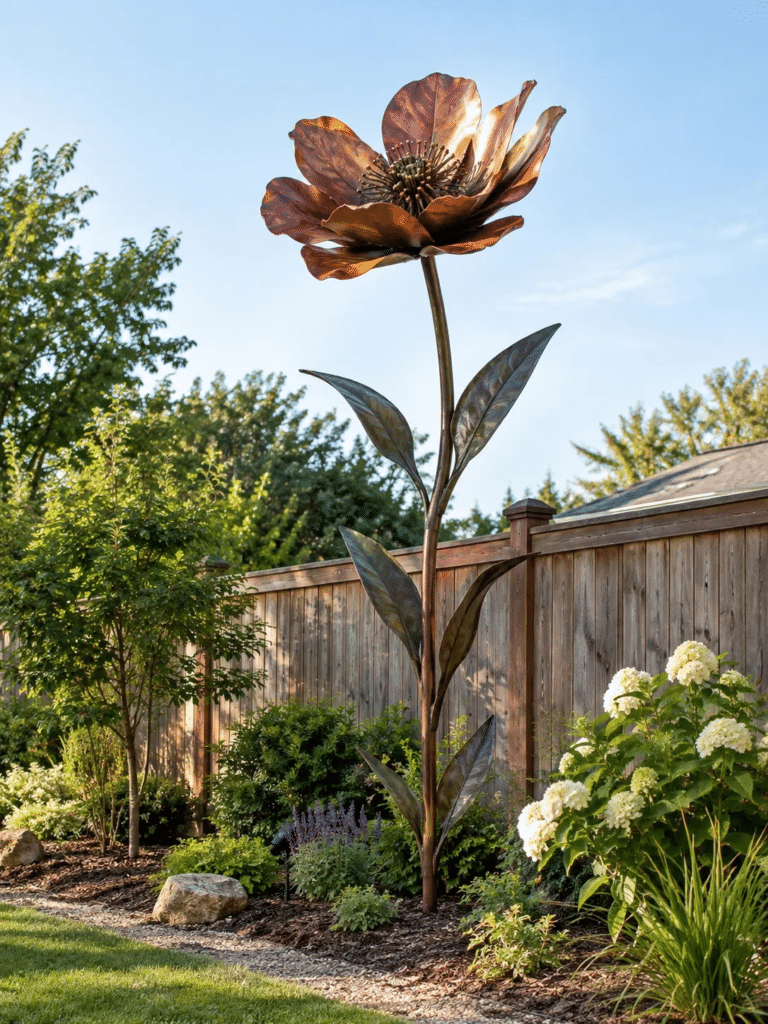
Metal garden flowers outdoor decor has become one of the most popular categories within this space, largely because it gives you the color and shape of real flowers without any of the maintenance, and it works in spots where actual planting is not practical, like gravel paths, fence lines, or shaded corners where flowers struggle to grow.
Large scale metal flowers, often standing two to four feet tall, work well as focal points along a fence line or at the corner of a garden bed. These oversized pieces read almost like sculpture and hold up as a strong visual anchor even from a distance across the yard.
Smaller metal flower stakes, usually paired in clusters of three or five, work best tucked among real plants where they blend in as an extension of the garden rather than standing out as an obvious decoration. This approach mirrors how real flowers grow in clusters, which makes the metal pieces feel more natural within the bed.
Painted metal flowers, often finished in bright reds, yellows, blues, or purples, bring color to a garden even during seasons when real blooms are not out. Unpainted or raw metal flowers, left to develop a natural patina, tend to suit more rustic or farmhouse style gardens where a weathered look is part of the appeal.
Matching Flower Style to Garden Aesthetic
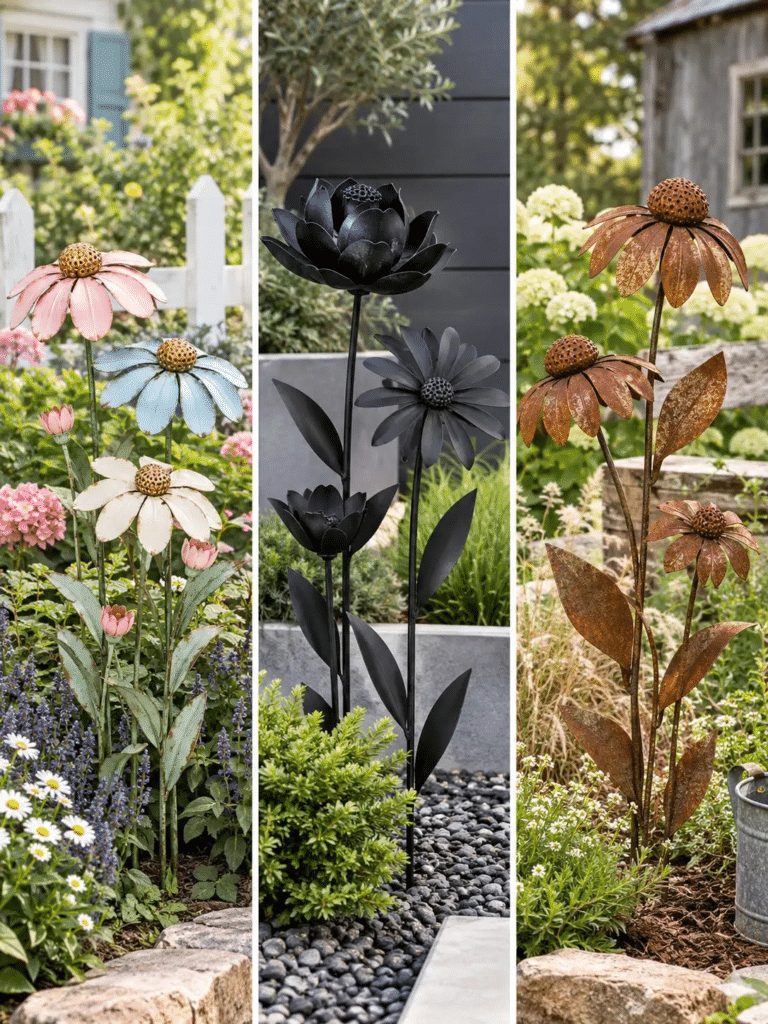
A cottage style garden generally pairs well with painted metal flowers in soft, romantic colors like pale pink or lavender, while a modern or minimalist garden tends to look better with simple, monochrome metal flowers in black or white. Rustic and farmhouse gardens often lean into raw, unpainted metal that develops rust or patina naturally over time, treating that aging process as part of the design rather than something to prevent.
Mixing Flower Sizes for a More Natural Look
Real flower beds rarely feature blooms all at the same height and size, and metal garden flowers look most convincing when they follow that same logic. Combining one or two larger statement flowers with several smaller stakes at varying heights creates a more organic, layered look than a uniform row of identical pieces.
This mixed sizing approach also makes it easier to fill oddly shaped garden beds, since you can adjust which size piece goes where based on the available space.
Choosing Metal Finishes That Perform Outdoors
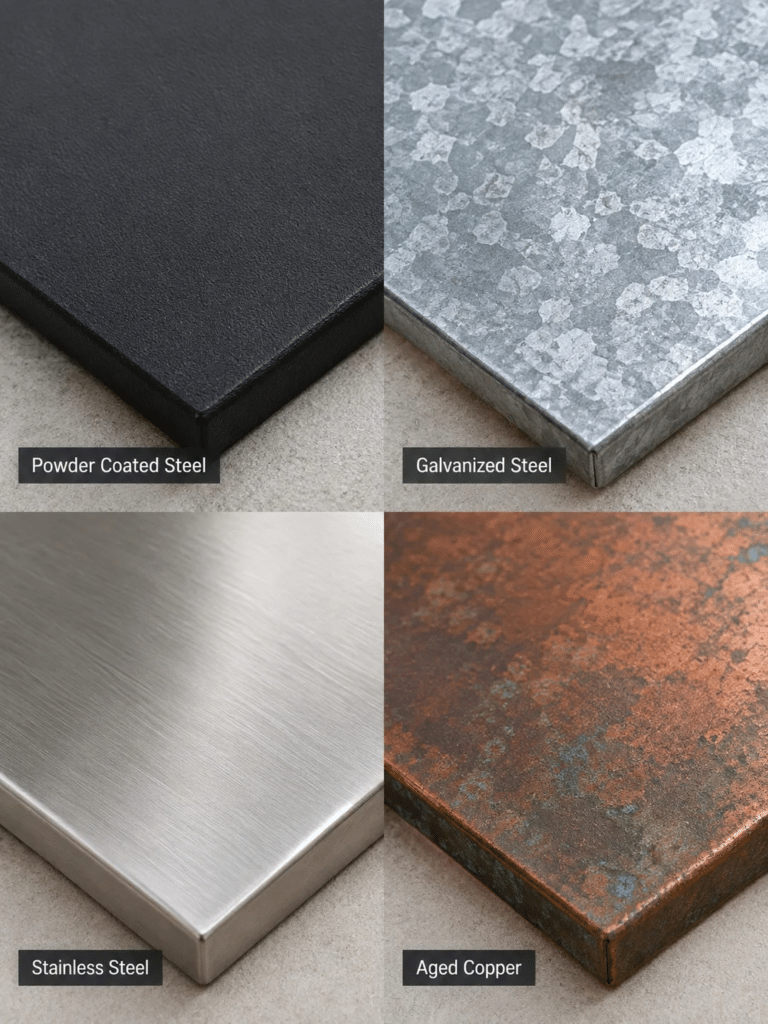
Not all metal is created equal when it comes to outdoor use, and understanding the basic finish types helps you avoid pieces that will not hold up as well as expected.
Powder coating is one of the most durable and common finishes for garden decor metal. This process bonds a protective, colored coating directly to the metal surface, creating strong resistance against rust, chipping, and fading. Most quality metal garden stakes and sculptures sold for outdoor use rely on powder coating for their color and protection.
Galvanized metal goes through a zinc coating process that protects the underlying steel from rust, even without paint. This gives galvanized pieces a distinctive silvery, slightly textured look that works well in industrial or modern garden styles.
Stainless steel resists rust naturally due to its chromium content, making it a strong long term choice, though it typically costs more than powder coated steel. This material works particularly well for sleek, modern garden sculptures where a clean metallic finish is part of the intended look.
Copper and bronze age naturally over time, developing a greenish or brownish patina that many gardeners consider a feature rather than a flaw. If you prefer the bright, original metal tone to stay consistent, these materials require regular polishing, but most people let the patina develop naturally since it tends to look intentional and attractive.
Avoiding Poor Quality Metal Decor
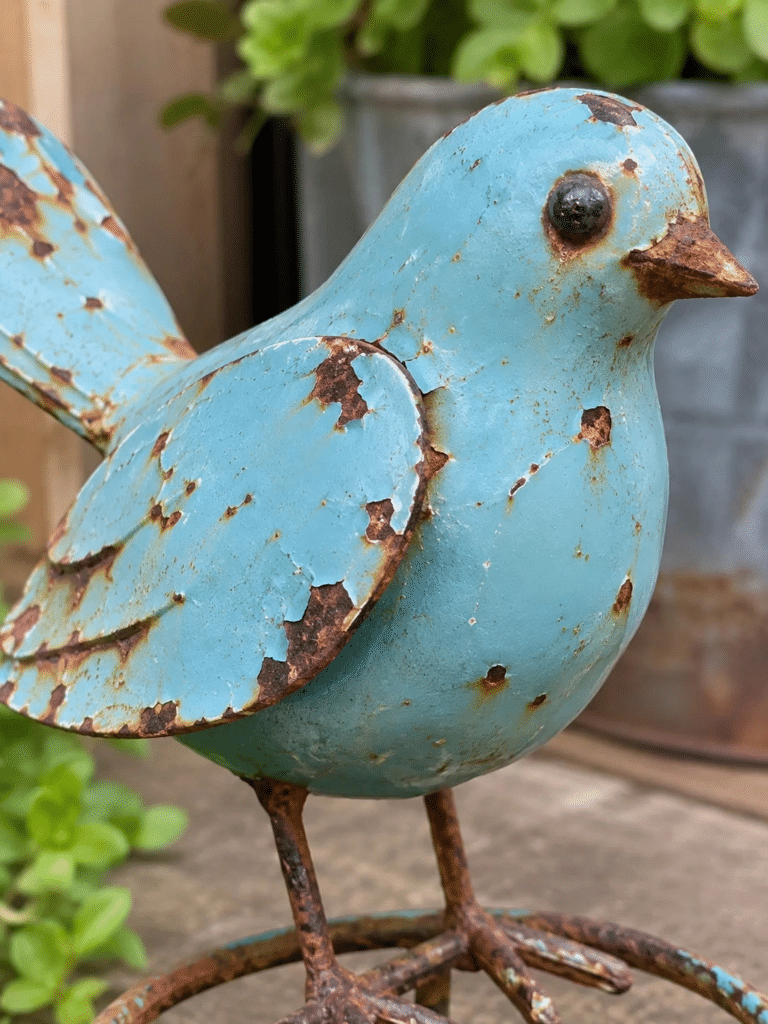
Not every metal piece sold for outdoor use is actually built to handle real weather exposure long term. Thin, untreated metal with only a basic paint layer, rather than true powder coating, will rust and chip far faster than properly finished pieces.
Before buying, check product descriptions for terms like powder coated, galvanized, or stainless steel, and be cautious of pieces that only mention being painted metal without specifying any additional protective process.
Reading Product Descriptions Like a Pro
When shopping online, product photos alone rarely tell you enough about how a piece will hold up outdoors. Look specifically for wording around gauge thickness, since thicker metal generally resists bending and denting better than thin sheet metal.
Reviews mentioning how a piece has held up after a full season or year outdoors are often more reliable than the manufacturer’s own marketing claims, so it is worth scrolling through customer feedback before committing to a larger or more expensive piece.
Placement Tips for Garden Decor Metal Pieces
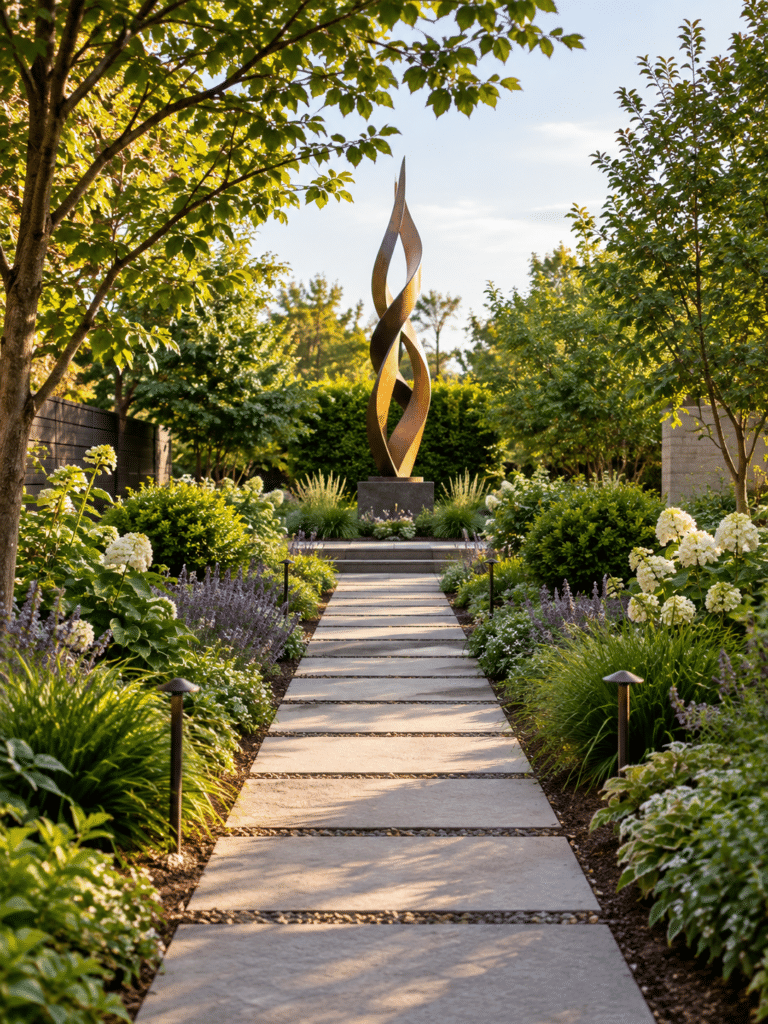
Where you place metal garden decor matters just as much as which pieces you choose. Good placement makes decor feel like a natural part of the landscape, while poor placement can make even beautiful pieces look randomly scattered or out of place.
Large statement pieces work best as focal points, placed where sight lines naturally lead, such as at the end of a path, in the center of a circular bed, or against a plain fence that could use visual interest. Avoid placing large pieces directly in high traffic areas where they might get bumped or where lawn equipment could damage them during regular maintenance.
Smaller metal garden flowers and stakes work best in clusters rather than scattered individually across a large space. Grouping three or five pieces together in a single bed creates a stronger visual impact than spreading the same number of pieces thinly across the entire yard.
Height variation matters here just like it does with indoor decor. Pair a tall metal sculpture with a few shorter flower stakes nearby to create a layered look rather than everything sitting at a single uniform height.
Considering Sight Lines From Inside the House
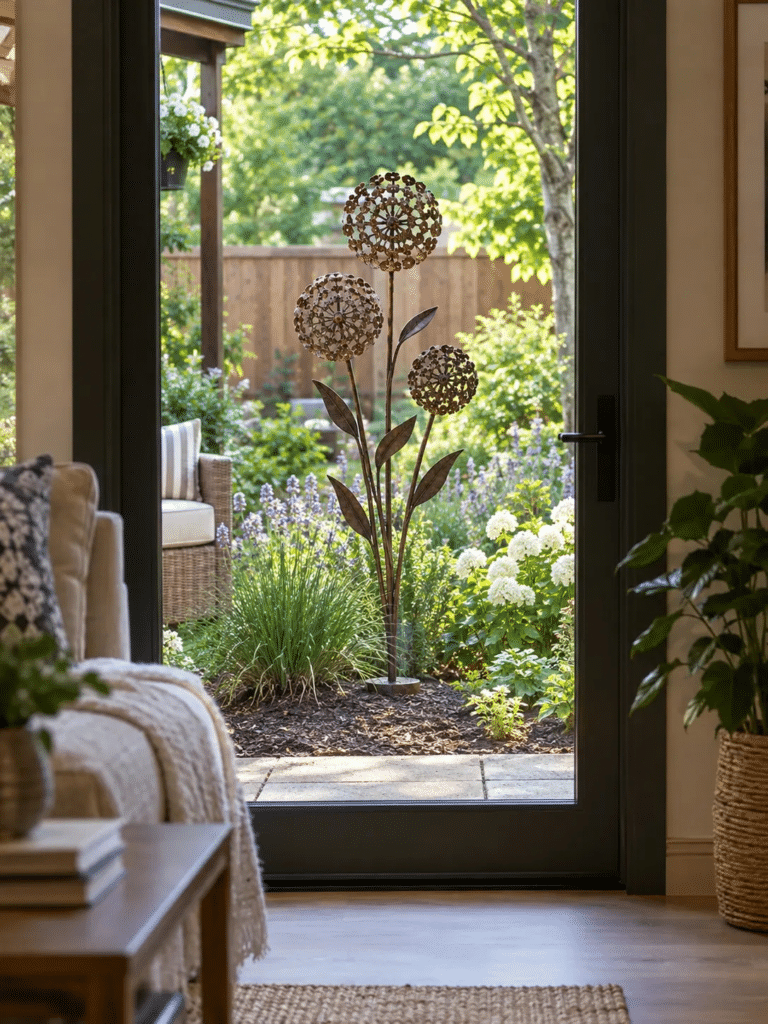
A detail many people overlook is how their garden decor looks from inside their home, particularly from windows facing the yard or a back patio door. Placing a striking metal piece somewhere visible from your favorite indoor vantage point means you get to enjoy the decor even when you are not actually outside in the garden, which extends the value of the piece well beyond the time you spend physically in the yard.
Accounting for Wind and Ground Stability
Taller metal pieces, especially those with a narrow stake base, can shift or tip over during strong wind if they are not anchored properly. Pushing stakes deep enough into the soil, generally at least six to eight inches for taller pieces, helps keep them stable through most weather. In looser or sandy soil, adding a small amount of gravel or a wider decorative base around the stake can provide extra stability without detracting from the overall look.
Mixing Metal Decor With Real Plants and Landscaping
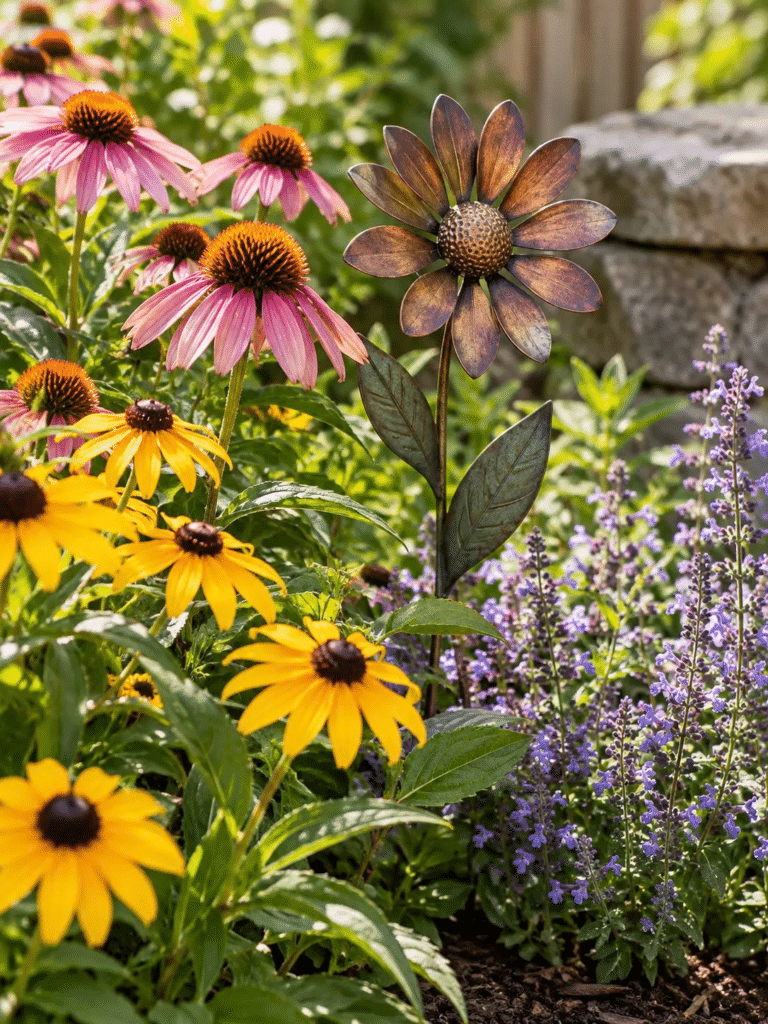
The best gardens rarely rely on decor alone. Garden decor metal pieces work hardest when they complement real plants and landscaping features rather than standing in isolation on bare mulch or gravel.
Metal flowers and stakes look most natural when placed among real greenery, allowing the metal pieces to peek through foliage the way a real flower would emerge from surrounding plants. This blending effect softens the artificial nature of the decor and makes the whole bed feel more cohesive.
Color coordination between metal decor and real plants strengthens this effect further. A red metal flower placed near red blooming plants, or a black metal sculpture set against silvery foliage plants like dusty miller or artemisia, creates intentional visual harmony instead of the metal piece feeling randomly dropped into the space.
Metal decor also fills gaps effectively during transitional seasons when real plants are not yet blooming or have already finished for the year. A cluster of metal flowers in an otherwise bare early spring bed keeps the space looking intentional while everything else is still getting established.
Using Metal Decor in Low Plant Areas
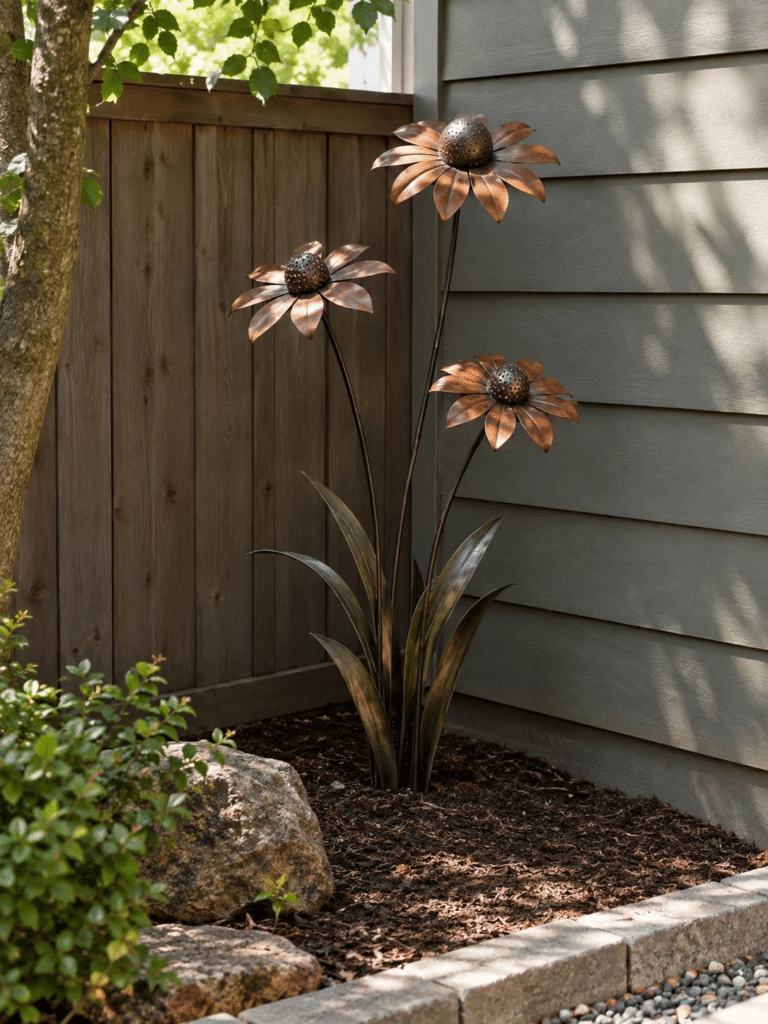
Not every part of a yard supports thriving plant growth, whether due to shade, poor soil, or foot traffic. These low growth areas are ideal spots for garden decor metal pieces, since metal decor thrives regardless of sun exposure or soil quality.
A shaded corner that struggles to grow flowers can instead host a striking metal sculpture or a cluster of metal flowers, turning a problem area into a design feature instead of a bare, awkward gap in the landscaping.
Pairing Metal Decor With Container Gardens
Metal decor is not limited to in ground beds. Container gardens on patios, balconies, or porches also benefit from a small metal accent, whether that means a single decorative stake in a large planter or a small metal sculpture positioned next to a cluster of pots. This approach works especially well for renters or anyone with a smaller outdoor space, since containers and their accompanying decor can be rearranged or moved entirely as needs change.
Maintenance and Care for Long Lasting Metal Garden Decor
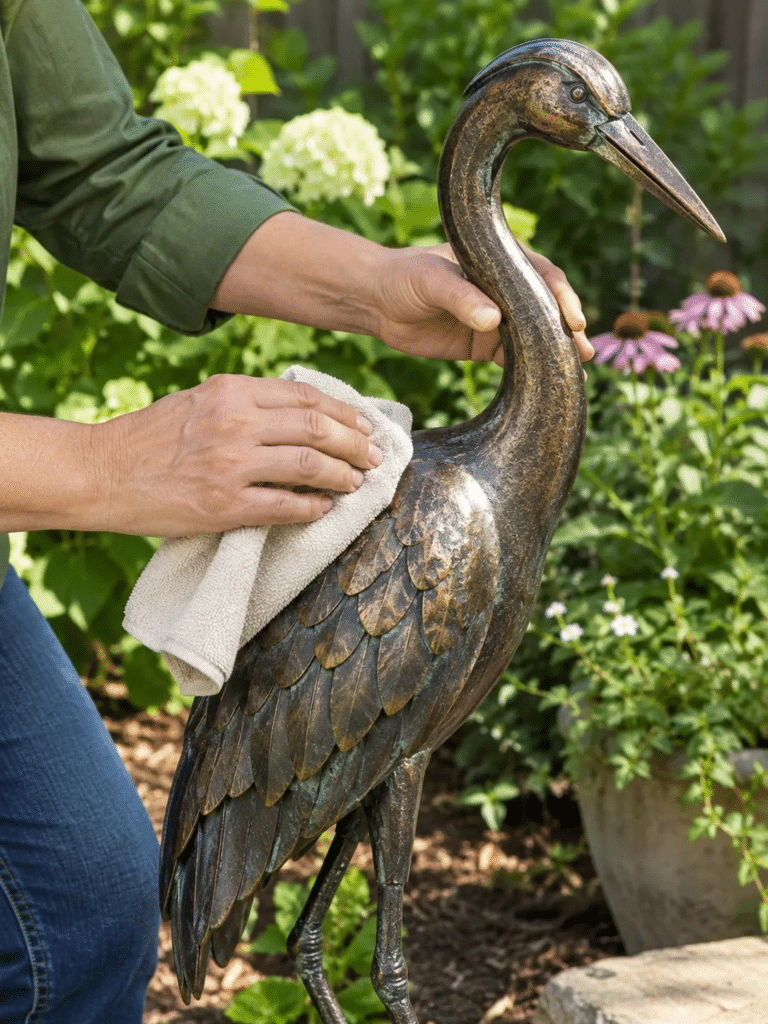
Even the most durable metal garden decor benefits from occasional care to keep it looking its best for as long as possible.
Wipe down painted or powder coated pieces periodically with a damp cloth to remove dirt, pollen, and mineral deposits from rain and sprinklers. Avoid abrasive scrubbing pads, which can scratch protective coatings and create small openings where rust can eventually start.
Inspect pieces occasionally for small chips or scratches in the coating, particularly after storms or heavy winds that might cause pieces to knock against fences or other hard surfaces. Small touch up paint, matched to the original finish, can prevent minor chips from developing into larger rust spots over time.
For copper and bronze pieces where you want to preserve the original bright finish rather than let patina develop, occasional polishing with a metal specific cleaner keeps the surface looking fresh. If you prefer the natural aging process, no maintenance is needed here, since patina actually protects the underlying metal rather than damaging it.
In regions with harsh winters, consider whether your pieces are rated for freeze and thaw cycles or whether they would benefit from being moved to a garage or shed during the coldest months. Most powder coated and galvanized steel pieces handle winter conditions well, but delicate or thinner pieces may last longer with seasonal storage.
Cleaning Schedule Recommendations
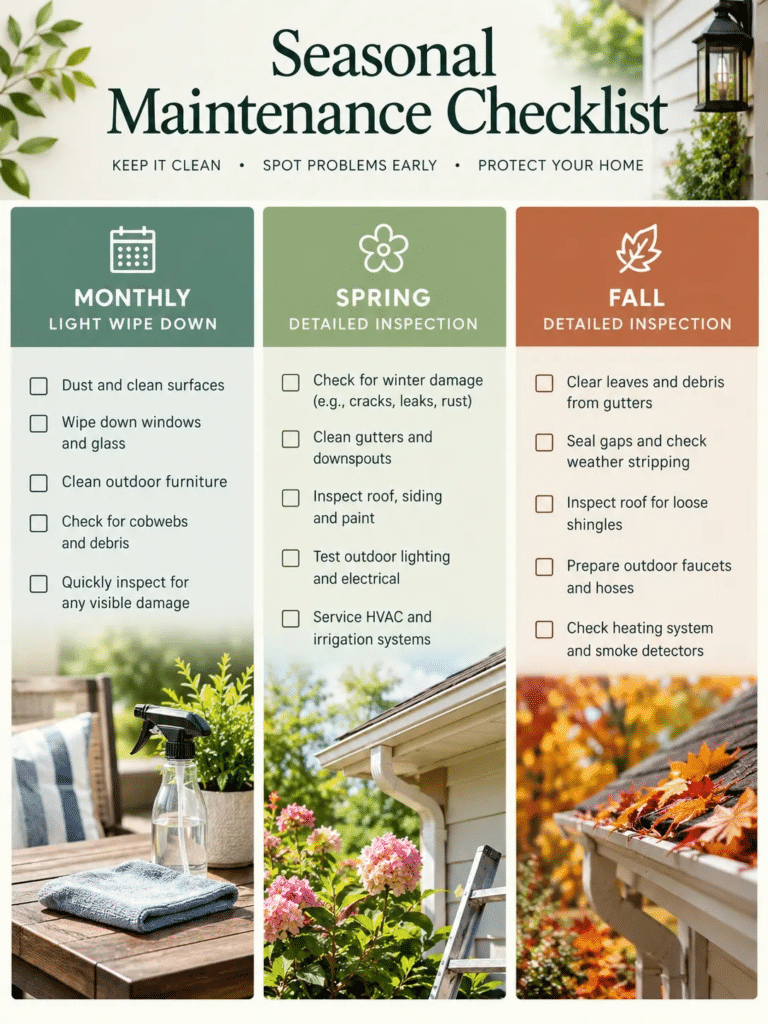
A light wipe down every month or two during the active growing season keeps most metal decor looking fresh without requiring much effort. A more thorough inspection once or twice a year, ideally in early spring before the growing season ramps up and again in late fall before winter weather sets in, gives you a chance to catch small issues before they become bigger problems.
When to Repair Versus Replace
Small rust spots or chipped paint are usually worth repairing with touch up paint or a clear protective sealant, especially on larger or more expensive statement pieces.
However, if a piece has developed significant structural rust, meaning the metal itself has started to weaken or flake rather than just the surface coating, it is generally safer to replace it rather than risk it breaking apart later. Structural rust, especially on taller stakes exposed to wind, can eventually lead to a piece snapping or toppling, so it is worth checking the base and any thin support points during your seasonal inspections.
Frequently Asked Questions
What type of metal lasts longest in outdoor garden decor?
Stainless steel and galvanized steel tend to last the longest outdoors due to their natural rust resistance, while powder coated steel also performs well as long as the coating remains intact without significant chips or scratches.
Does metal garden decor rust over time?
Untreated metal will eventually rust, but powder coated, galvanized, and stainless steel pieces are specifically designed to resist rust for many years. Copper and bronze develop a natural patina instead of traditional rust, which most gardeners consider a decorative feature rather than damage.
How do I keep metal garden flowers from fading?
Choose pieces with powder coated finishes rather than basic painted metal, since powder coating resists UV fading far better than standard paint. Placing pieces in partial shade, when possible, can also help preserve color over time in especially sunny climates.
Can metal garden decor be left outside all winter?
Most powder coated and galvanized metal pieces can safely stay outside through winter, but thinner or more delicate pieces may benefit from being moved to a covered space during extreme cold or heavy snow to extend their lifespan.
How many metal decor pieces should I add to a garden bed?
Grouping three to five pieces together in a single bed tends to create the strongest visual impact, rather than scattering a large number of individual pieces thinly across the entire yard.
Conclusion
Garden decor metal earns its popularity honestly. It holds up to real outdoor conditions far better than most alternative materials, and it offers enough variety in style and finish to fit nearly any garden aesthetic, from cottage charm to sleek modern minimalism. This makes metal garden decor a practical and stylish choice for outdoor spaces.
Start with the right finish for your climate, choose metal garden flowers and outdoor decor pieces that match your existing style, and place everything thoughtfully among your real plants rather than treating decor as a separate afterthought.
Pick one bare or struggling area of your yard, add a small cluster of metal flowers or a single statement piece, and see how much life it brings to that corner. From there, you can expand your metal garden decor collection bed by bed as your outdoor space continues to take shape.