
There is something about a frog statue that makes people smile. Maybe it is the wide grin, or the way a little green figure looks perfectly at home tucked beside a fern. Whatever the reason, frog garden decor has quietly become one of the most loved categories in outdoor styling, and it shows up in everything from tidy suburban front beds to wild cottage gardens overflowing with flowers.
But here is the thing most buyers learn the hard way. A frog statue that looks adorable in a product photo can turn into a faded, chipped lump after one winter. Or it arrives three times smaller than expected. Or it sits in a corner of the yard where nobody ever sees it.
This guide walks you through all of it. You will learn the materials that actually survive outdoors, the styles that suit different garden personalities, how to size and place your pieces so they look intentional instead of random, and how to keep everything looking good for years. By the end, you will know exactly what to buy and where to put it.
Why Frog Garden Decor Is So Popular

Frogs occupy a sweet spot in the world of garden ornaments. They are playful without being childish, natural without being boring, and small enough that one piece rarely overwhelms a space. If you are following an animal garden decor guide, frog ornaments are also an easy way to add personality while keeping the garden’s natural feel.
Part of the appeal is cultural. In many traditions around the world, frogs symbolize good luck, rain, renewal, and prosperity. Gardeners who like a little meaning behind their choices often gravitate toward frog decor for that reason. Others simply love amphibians, or grew up near a creek, or want something that feels alive in a bed full of quiet greenery.
There is also a design reason. Most garden statues are either very formal, like classical figures and urns, or very casual, like gnomes. Garden frog decor sits comfortably in the middle. A weathered stone frog looks right at home in an elegant shade border. A bright ceramic one adds color to a plain patio. The same animal works across wildly different styles.
Then there is the practical side. Frogs live near water in real life, which means frog decor has a natural excuse to gather around ponds, fountains, birdbaths, and rain chains. If you already have a water feature, frog pieces give you an easy way to decorate it without the result looking forced.
One more thing worth knowing. A frog statue does not attract real frogs, and it will not control insects. If you want actual amphibians in your yard, you need shade, damp ground cover, a shallow water source, and no pesticides. The statues are purely decorative, and that is fine. Just do not buy one expecting it to do a job.
Types of Garden Frog Decor by Material
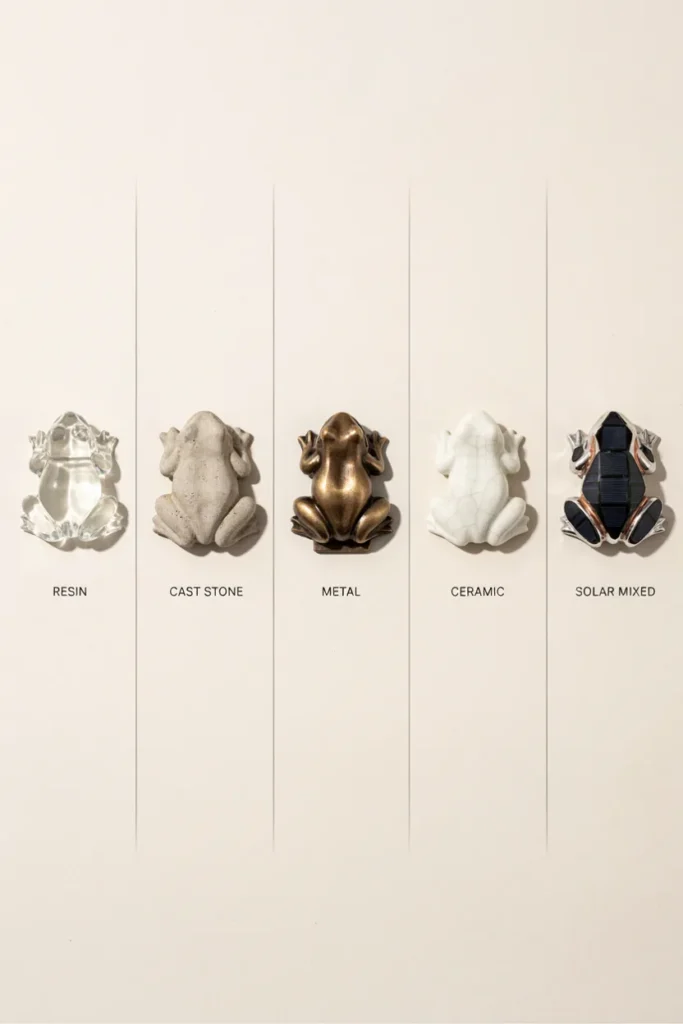
Material is the single biggest factor in how long your piece lasts and how much it costs. It also shapes the look. A concrete frog reads as timeless and heavy. A painted resin frog reads as cheerful and casual. Neither is better. They just belong in different gardens.
Resin and Polyresin
Resin is far and away the most common material for frogs for garden decor, and there is a good reason. It is light, cheap, and takes fine detail beautifully, which means you get expressive faces, webbed toes, and texture that heavier materials cannot match at the same price.
The downside is sun. Cheaper resin fades badly, sometimes within a single summer, and the paint can flake once moisture works into a crack. If you buy resin, look for pieces that specifically mention UV resistant coating or outdoor rated finish. A resin frog on a shaded porch will outlive the same frog baking on a south facing wall by several years.
Resin is also light enough to blow over in a storm, so a small stake or a dab of outdoor adhesive on a paver goes a long way.
Best for: color, detail, tight budgets, covered or shaded spots.
Cast Stone and Concrete
If you want a frog that looks like it has been in the garden since before you moved in, this is the material. Cast stone and concrete frogs are heavy, solid, and they weather into soft grey and green tones that look better every year as moss and lichen settle into the texture.
They handle wind, rain, and sun without complaint. The main weakness is freezing. Water gets into the pores, expands when it freezes, and cracks the piece over several winters. A yearly coat of masonry sealer solves most of that. So does tipping the piece so water does not pool in any hollow spots before the first hard freeze.
The other tradeoff is weight. A medium concrete frog can run twenty pounds or more, which makes rearranging your beds a workout instead of a whim.
Metal
Metal frog decor for garden use comes in two very different flavors. There are realistic cast pieces in bronze or brass, which are beautiful and expensive, and there are cut steel silhouettes and folk art style welded frogs, which are affordable and graphic.
Powder coated steel is the most practical choice for year round outdoor use. It shrugs off weather and needs almost nothing from you. Copper and untreated iron develop a patina over time, green on copper and warm rust on iron, which many gardeners actively want. If you do not want rust, avoid raw iron and check that any steel piece is coated, not just painted.
Metal frogs work especially well in modern and minimalist gardens, where their clean lines contrast nicely against soft foliage.
Ceramic and Terracotta
Glazed ceramic frogs bring color that no other material matches. Deep greens, glossy blues, speckled browns, hand painted details. They are often the prettiest pieces in the category and the most fragile.
Ceramic chips when knocked over and cracks when water freezes inside an unglazed base. That does not rule them out. It just means they belong somewhere protected, like a covered porch, a sheltered patio shelf, or a spot among plants where nothing will bump them. In cold climates, plan to bring them inside for winter.
Terracotta behaves similarly and is even more porous, so it needs sealing and winter storage in most regions.
Best for: porches, patios, colorful accents, mild climates.
Glass, Solar, and Mixed Materials
This is the fastest growing corner of the category. Solar frog lights, glass mosaic frogs, frogs holding little lanterns, frogs with glowing eyes, and resin frogs with embedded solar panels that light a path after dark.
Quality varies enormously. The decorative body usually outlasts the electronics, and cheap solar units often fail within a season or two once moisture reaches the battery compartment. Look for a sealed housing, a replaceable rechargeable battery, and a panel that gets real direct sun rather than dappled shade.
When they work, they are wonderful. A row of small solar frogs marking the edge of a path is genuinely useful and not just cute.
Best for: pathways, evening interest, gift giving.
Quick Material Comparison
| Material | Lifespan Outdoors | Maintenance | Typical Price |
| Resin | 2 to 5 years | Low, but fades | Low |
| Cast stone or concrete | 10 plus years | Seal yearly in cold climates | Medium |
| Metal | 10 plus years | Very low | Medium to high |
| Ceramic | 5 plus years if protected | Winter storage needed | Low to medium |
| Solar or mixed | 1 to 3 years for electronics | Battery replacement | Low to medium |
Popular Styles of Frog Decor for Garden Spaces
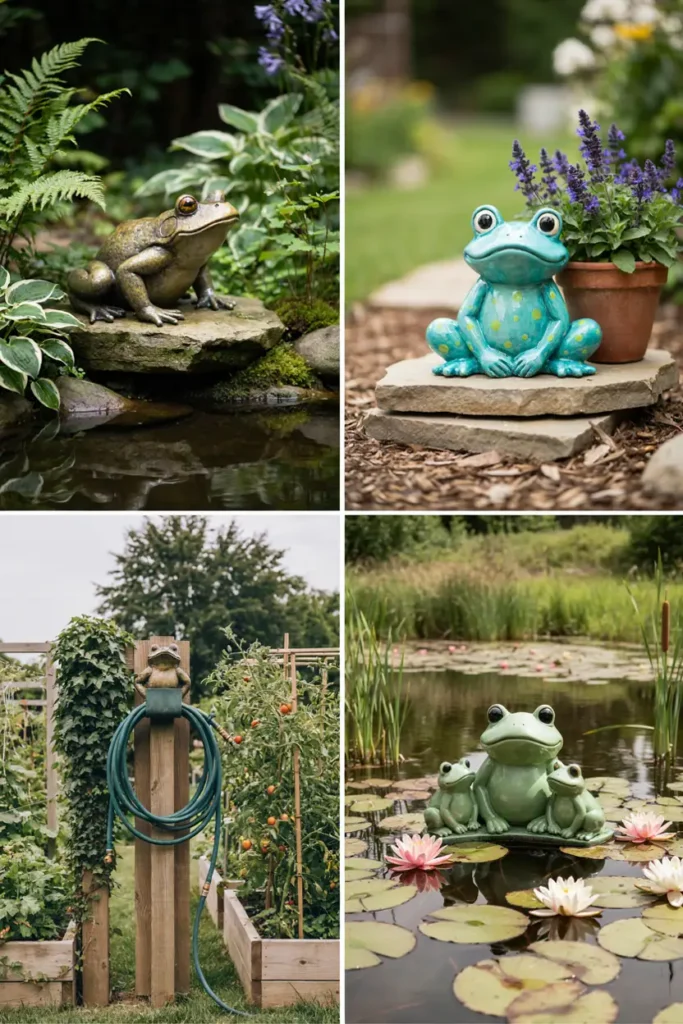
Once you have settled on material, style is the next decision. Mixing too many looks in one yard is the fastest way to make a garden feel cluttered, so it helps to pick a direction and stay close to it.
Realistic and Naturalistic Frogs
These are sculpted to look like actual species, with accurate proportions, textured skin, and natural coloring in browns, greens, and greys. Placed among hostas or at the edge of a pond, a realistic frog can genuinely fool a visitor for a second, which is half the fun.
Naturalistic pieces suit woodland gardens, native plantings, and any space where you want the decor to blend rather than announce itself. They also age gracefully, since dirt and moss only make them look more convincing.
Whimsical and Storybook Frogs
Frogs reading books, frogs holding umbrellas, frogs wearing crowns, frogs sitting cross legged in meditation, frogs playing tiny instruments. This is where garden frogs decor gets its reputation for charm.
These pieces work best in cottage gardens, kids areas, and casual backyards where the goal is personality rather than realism. A word of caution, though. Whimsical pieces have strong character, which means two or three is usually plenty. A dozen starts to look like a collection rather than a garden.
Functional Frog Decor
Some of the best frog pieces do a job as well as look good.
Frog planters hold succulents, trailing ivy, or small annuals in a hollow back or basin. Frog spitters sit at the edge of a pond or fountain and arc a stream of water into the basin, adding sound and movement. Frog door stops, boot scrapers, hose guides, and key hiders all serve real purposes around the yard. There are also frog shaped stepping stones and address plaques.
Functional pieces are a smart pick if you like decor but hate clutter, since each one earns its place twice over.
Pond and Water Feature Frogs
Because real frogs live around water, this is where frog decor looks most natural. A stone frog perched on a rock at the pond edge, a floating resin lily pad frog, a frog spitter tucked into the waterfall, or a small group resting on the shore all make sense visually.
If you are buying for a pond, check that the piece is rated for submersion or constant splashing. Many resin and ceramic items are not, and constant moisture will break them down much faster than normal outdoor exposure.
Vintage and Antique Style
Aged bronze finishes, verdigris patina, and weathered cast iron give frog garden decor a sense of history. These suit formal gardens, brick courtyards, and homes with older architecture. Reproduction pieces with an applied patina cost a fraction of true antiques and look nearly as good once they have spent a season outside.
How to Choose the Right Frog Garden Decor for Your Space
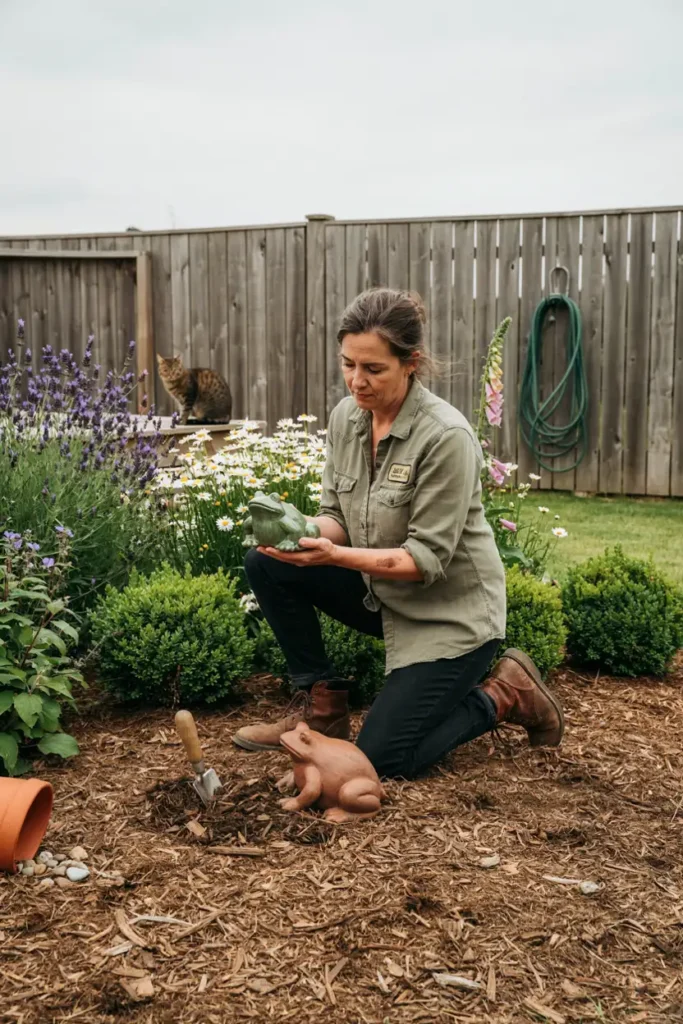
Here is where most buying mistakes happen. Five quick checks will save you money and regret.
Get the Scale Right
This is the number one problem. Product photos rarely show scale, and people order a frog they imagine is the size of a football and receive one the size of a lemon.
Always read the dimensions, then measure them out with your hands or a ruler before ordering. As a rough guide, pieces under six inches disappear unless they sit on a stone, a step, or a pot rim where they are elevated and close to a walkway. Pieces between eight and fourteen inches are the sweet spot for garden beds. Anything over eighteen inches needs open space around it, like a lawn corner or the entrance to a bed, or it will look crowded.
Match the Material to Your Climate
Think honestly about your worst weather. Hard freezes argue for powder coated metal and sealed cast stone. Intense summer sun argues against cheap resin, which will fade. Heavy rain and humidity argue against untreated wood and unsealed terracotta. Coastal salt air is hard on everything except sealed stone and quality coated metal.
If your climate is rough in more than one direction, buy metal or sealed stone for the permanent pieces and treat resin and ceramic as seasonal decor you bring in.
Consider Sun and Shade
Sun fades paint. That is unavoidable. Save your most colorful ceramic and painted resin pieces for shaded beds, covered porches, and north facing spots. Put stone and metal in full sun where fading does not matter.
This one rule alone will double the life of your brightest pieces.
Set a Budget Before You Browse
Frog garden decor ranges from a few dollars for a tiny resin figure to several hundred for a cast bronze sculpture. The temptation is to buy many cheap pieces, which is exactly how gardens end up looking cluttered.
A better approach is to decide the total you want to spend, put roughly half of it into one strong focal piece, and spread the rest across two or three supporting items. One good frog plus a couple of small ones looks deliberate. Nine small ones look like a yard sale.
Let It Reflect You
The best garden decor tells you something about the people who live there. If you love the sound of water, get a spitter. If you garden with kids, get something silly they will look for every time they come outside. If you like quiet elegance, a single weathered stone frog under a fern says more than a whole collection.
Buy what genuinely makes you happy rather than what is trending, because you are the one who will see it every day.
Where to Place Frog Garden Decor for the Best Effect
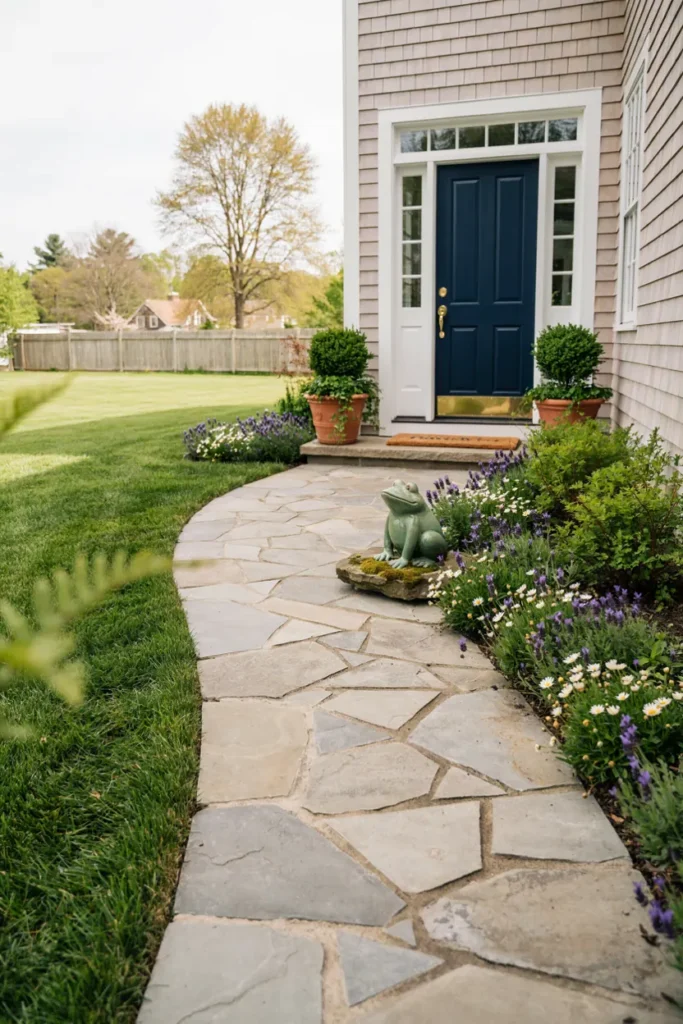
A great piece in the wrong spot is wasted. These placement ideas consistently work.
At the edge of water. Pond rims, fountain basins, birdbaths, and rain barrels are the most natural homes for frog decor. The association is built in, so nothing looks staged.
Peeking out from foliage. Tuck a frog partly behind hostas, ferns, heuchera, or ornamental grasses so it is discovered rather than displayed. Partial concealment makes a small piece feel like a secret instead of an ornament.
Along a path. Place pieces where people actually walk, low and close to the edge, spaced far enough apart that each one gets its own moment. Solar frogs are perfect here since they also add light.
On a step, wall, or pot rim. Elevating a small frog brings it to eye level and makes it visible from a distance. A frog sitting on the lip of a large planter is one of the easiest high impact placements there is.
Near an entry. A frog by the front door, on a porch shelf, or beside the steps greets people arriving. This is where whimsical pieces shine, since guests see them up close.
In view from a window. Think about where you stand at the kitchen sink or sit at your desk. A piece placed in that sightline gets enjoyed daily rather than only when you are outside.
A few quick rules that pull it all together. Group in odd numbers, usually threes, since even groupings look staged. Vary the height so pieces are not all sitting at ground level. Leave real space between items so each one can be seen on its own. And keep the total count low enough that plants stay the main event.
Caring for Garden Frogs Decor Season After Season
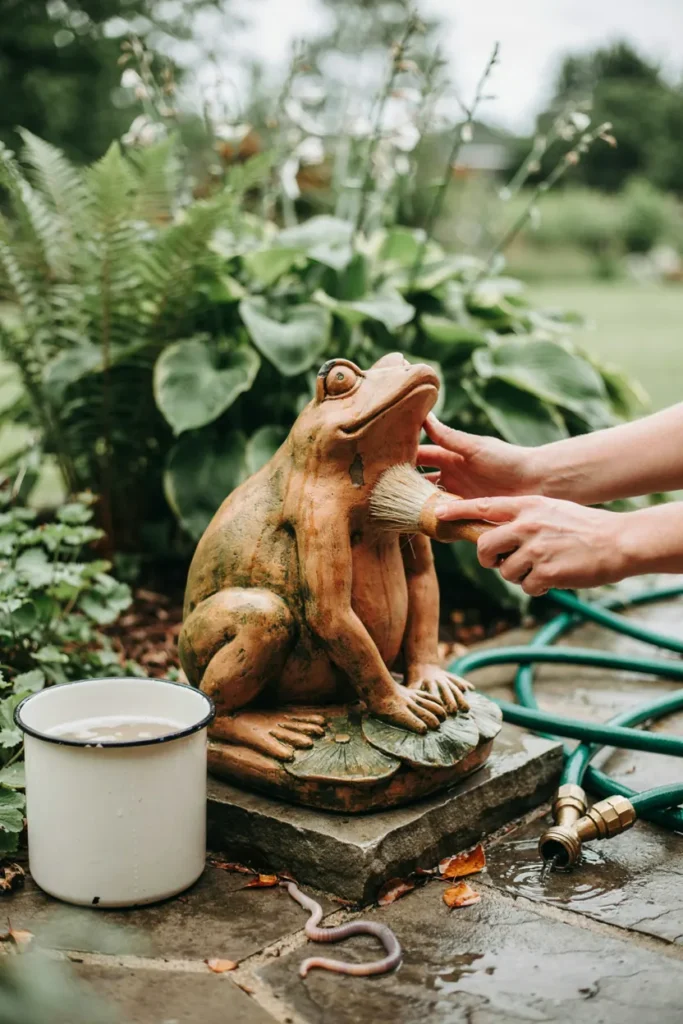
None of this takes much time, and it is the difference between decor that looks loved and decor that looks neglected.
Clean it twice a year. Rinse off pollen, dust, and bird droppings with a garden hose in spring and again in late summer. For stuck on grime, use a soft brush and mild dish soap. Skip the pressure washer, which strips paint and etches soft stone.
Decide about moss. On stone and concrete, moss and lichen usually improve the look, so leave them. On painted resin and glazed ceramic, they read as dirty, so scrub them off.
Seal what needs sealing. Concrete and cast stone benefit from masonry sealer every one to two years in freezing climates. Unglazed ceramic and terracotta need the same treatment. Apply it on a dry, mild day and let it cure fully before rain.
Catch rust early. Check metal pieces every spring. A small rust spot treated with a wire brush and rust inhibiting primer stays small. Ignored, it spreads under the coating and becomes a hole.
Touch up paint. Keep a small bottle of outdoor acrylic in a matching color. Chips on resin and ceramic are easy to fix in five minutes and stop moisture from getting underneath.
Bring the fragile pieces in. Before the first hard freeze, move ceramic, terracotta, cheap resin, and anything solar into a garage, shed, or basement. This one habit will add years to those items.
Move things occasionally. Shifting pieces around protects the grass or soil under them and lets you refresh a bed without spending anything.
Budget Friendly and DIY Frog Garden Decor Ideas

You do not need a large budget to make this work.
Thrift stores, estate sales, and end of season clearance racks are full of garden statues, often at a fraction of retail. Late fall is the best time to shop, since garden centers clear stock rather than store it.
Repainting is the easiest upgrade. A faded resin frog cleaned, primed, and repainted with outdoor acrylic in two or three colors, then sealed with a clear outdoor topcoat, looks brand new for the cost of a few small paint pots.
Painted river rocks make charming small frogs and cost nothing beyond paint. Round the body, add two pebble eyes with glue, paint in green and cream, seal it, and tuck it among low plants.
Concrete casting is a fun weekend project if you are handy. Silicone frog molds are inexpensive, quick setting concrete mix is cheap, and you can produce several matching pieces to group together.
You can also reuse what you own. An old ceramic frog planter that cracked can still sit as decor with a succulent tucked in the opening. A chipped statue can be turned so the damage faces away from the path.
Frequently Asked Questions
Does frog garden decor attract real frogs?
No. A statue does not affect wildlife. If you want real frogs, provide shade, damp leaf litter or ground cover, a shallow water source with sloped sides so they can climb out, and avoid pesticides. The decor is purely visual.
What is the most durable material for frog decor for garden use?
Powder coated metal and sealed cast stone last longest outdoors, often ten years or more with minimal care. They handle sun, rain, and temperature swings far better than resin or ceramic.
Can I leave frog garden decor outside in winter?
Metal and properly sealed cast stone can stay out year round in most climates. Ceramic, terracotta, low cost resin, and solar pieces should come indoors before hard freezes, since trapped moisture expands when it freezes and cracks them.
How many frog statues are too many for one garden?
There is no fixed number, but a useful test is whether the plants still feel like the main feature. If visitors notice the statues before the garden, it is time to edit. Most yards look best with one focal piece and two or three small supporting pieces.
Where is the best place to put a frog statue?
Near water features, along paths, tucked partly behind foliage, or elevated on a step or planter rim. Prioritize spots you pass daily or can see from a favorite window, since decor you never look at adds nothing.
Do solar frog lights actually work well?
The better ones do. Look for a sealed battery compartment, a replaceable rechargeable battery, and place them where the panel gets several hours of direct sun. Units left in shade or with sealed in batteries tend to fail within a season or two.
Conclusion
Frog garden decor is one of the easiest ways to give a yard character without a redesign. As part of your overall Garden Decor, the formula is simple. Pick a material that matches your climate, choose a style that matches your garden’s personality, get the scale right before you order, and place each piece where it will actually be seen. Then keep the total count low enough that your plants stay the star.
If you are just starting, resist the urge to buy a whole set. Choose one piece that genuinely makes you smile, put it somewhere you pass every day, and live with it for a season. You will quickly learn what size works in your space and what style you keep coming back to. Build from there, one thoughtful frog at a time.