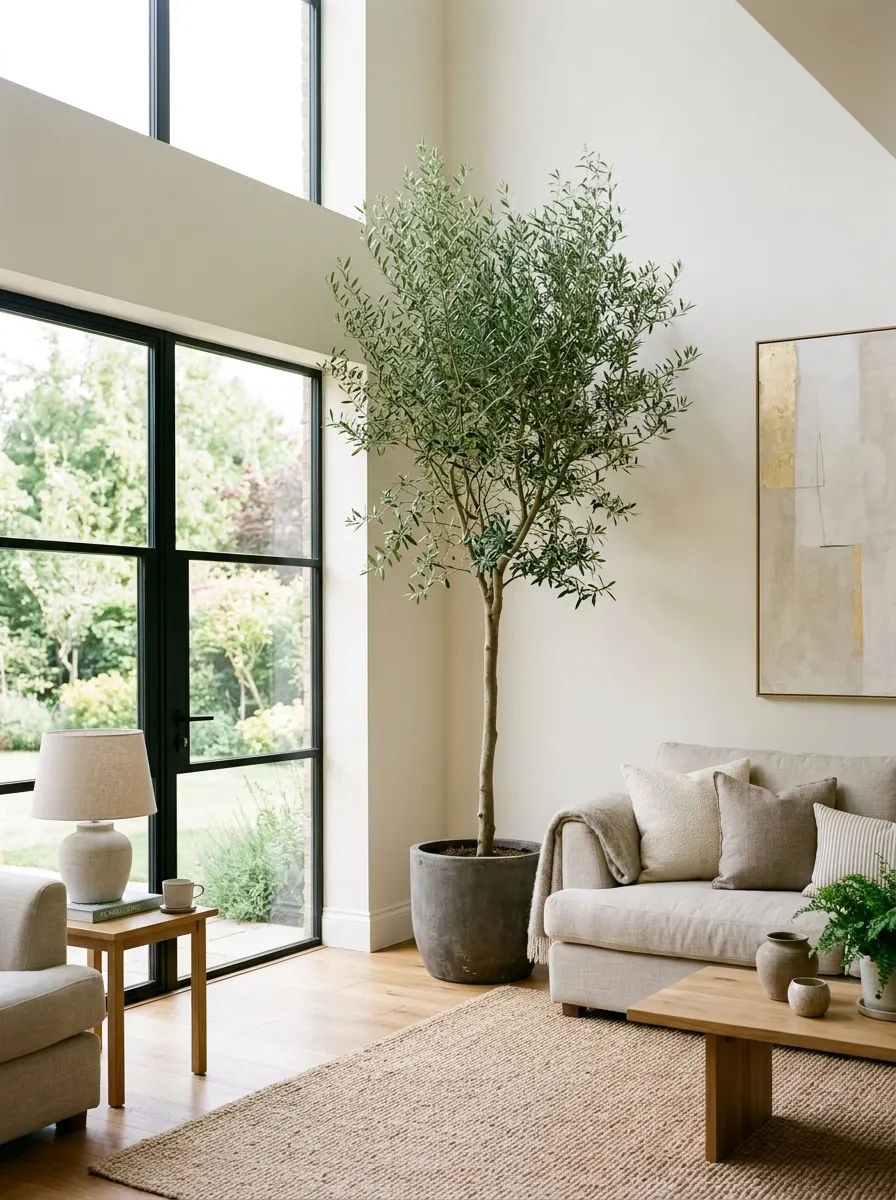
An olive tree in living room corners does something very few plants can do. It adds height, soft texture, and a calm Mediterranean mood without shouting for attention. Its silver green leaves match almost any color palette, and its twisty trunk gives a plain room a natural focal point. The hard part is not buying the tree. The hard part is knowing where to put it, what size to pick, and how to style it so it looks like a real design choice instead of an afterthought.
This guide walks you through all of it. You’ll learn how to choose between a real and a faux tree, how to pick the right height, and 22 practical ways to style your tree, plus the mistakes to avoid and answers to the questions people ask most.
Why an Olive Tree Works So Well in a Living Room
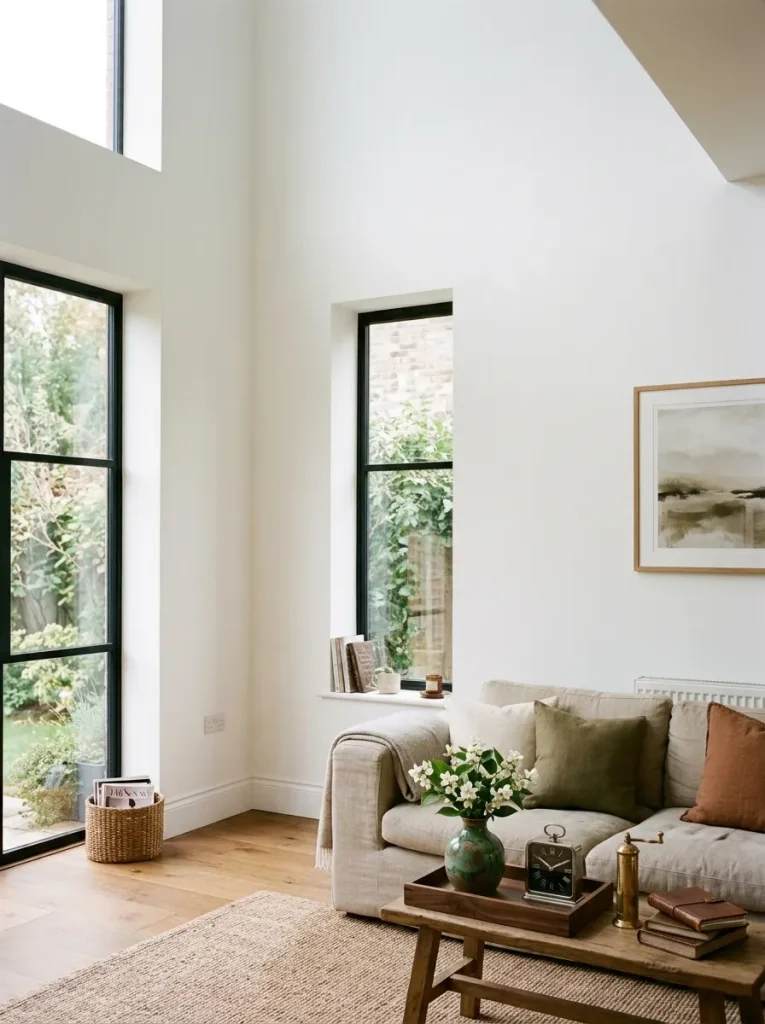
An olive tree works beautifully in a living room because its tall, airy shape adds height and softness, its muted green leaves complement nearly every color scheme, and its sculptural trunk creates a natural focal point that blends effortlessly with Christian living room decor.
Think of an olive tree as a living column. It draws the eye upward and fills the empty vertical space above your sofa, side tables, and rugs. Most living rooms have plenty of horizontal shapes, like sofas, coffee tables, and TV stands. A tree breaks that pattern in a gentle way.
The color helps too. Olive leaves sit between green and gray, so they look good beside warm woods, white walls, beige linen, black metal, and stone. The tree also has a timeless feel. It borrows from old Mediterranean gardens, so it never looks like a short lived trend. That is why olive tree indoor decor shows up in modern apartments, cozy family homes, and designer showrooms alike.
Real vs Faux: Choose Before You Style
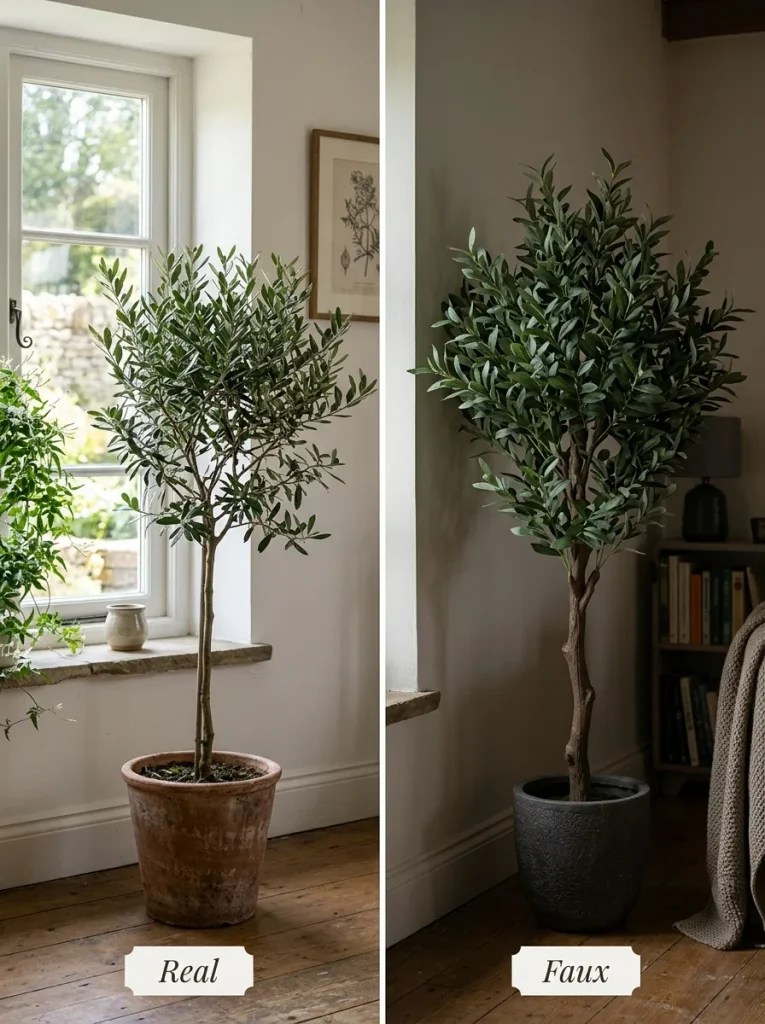
Your first decision is whether to buy a living tree or an artificial one. Both can look great, but they ask very different things from you.
A real indoor olive tree needs a lot of light, ideally six or more hours of direct sun each day. That usually means a bright south or west facing window. It also dislikes sudden temperature swings and dry heated air in winter. Overwatering or underwatering can lead to yellow leaves and leaf drop. A real tree can also drop leaves or fruit, and it may look thin during slow seasons.
An artificial olive tree indoor option avoids these problems. It needs no watering, no pruning, and no sunshine. It keeps the same shape all year and works in dim rooms, north facing rooms, and apartments with small windows. If you want a fake olive tree in living room spaces with low light, this is the easy route.
Quality matters a lot with a faux olive tree in living room settings. Look for matte leaves, not shiny ones. The best leaves are slightly darker on top and silvery underneath. Look for a textured, uneven trunk rather than a smooth, uniform one. Pet owners may like faux trees because there is no soil to dig in, though you should still keep fake plants away from chewing pets.
How to Pick the Right Size and Shape
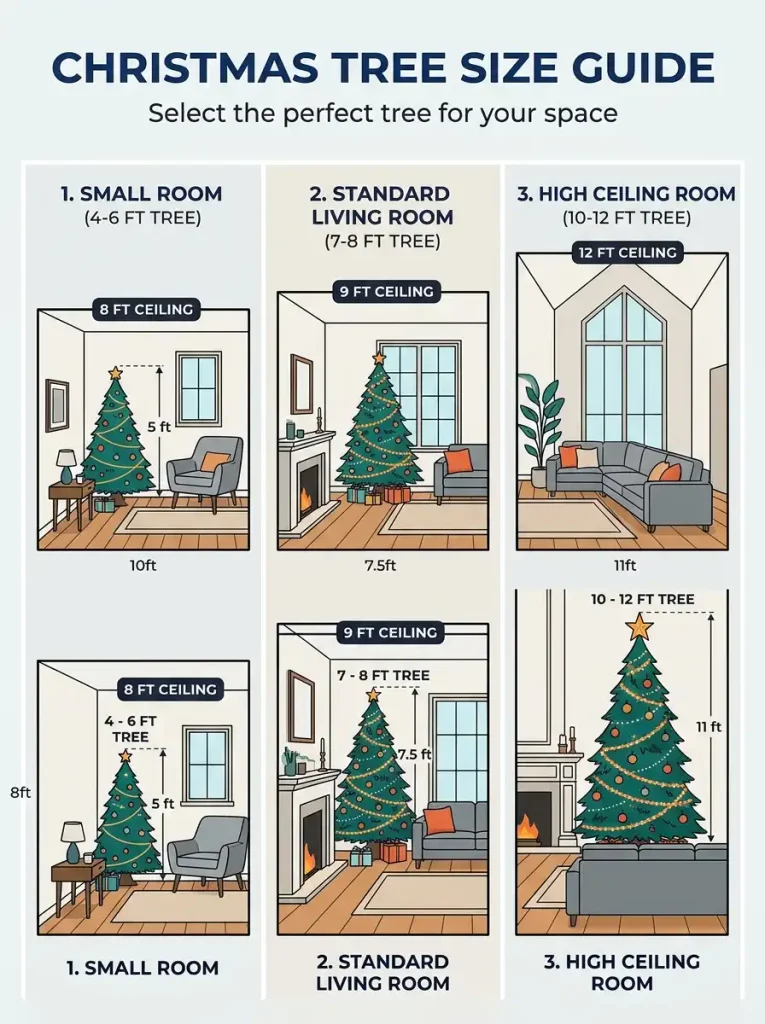
Size is the number one reason an olive tree looks right or wrong. Use these simple guides.
- Standard ceilings (about 9 feet): Choose a tree between 7 and 8 feet tall. Six and a half feet is the lowest height that still looks right. Above 8 feet, the crown can touch the ceiling and lose its shape.
- High or vaulted ceilings: Go for 10 to 12 feet if you want a dramatic statement piece.
- Small living rooms: A medium tree around 4 to 6 feet fits better and still adds height.
- Very low ceilings (under 8 feet): Skip the tall tree. Choose a shorter tree, a tabletop version, or tall olive branches in a vase.
Use the furniture test. If the tree seems to disappear behind your sofa, it is too small. A living room tree should feel like furniture scale, not accent scale.
Next, think about shape. A full, rounded canopy feels lush and relaxed, so it suits layered, cozy rooms. An open, airy canopy with visible branches feels more graphic and suits minimalist rooms. If floor space is tight, choose a slim tree. Many tall faux trees are thin, which helps in narrow spots beside a sofa or in a hallway style living area. Some trees, such as Arbequina styles, have denser leaves and heavier trunks, so they look like a mature garden tree. Standard styles are wispier and lighter.
22 Beautiful Ways to Style an Olive Tree in Your Living Room
Here are 22 ideas, grouped in a simple order: placement first, then planters, then shaping, then the finishing touches. Pick the ones that fit your room.
1. Anchor an Empty Corner
Corners are the classic spot, and they work well. A corner often feels unfinished, and a tree gives it weight. The tree needs enough width and fullness so it doesn’t look lost against the wall behind it. Leave a little breathing room so the branches can spread.
2. Stand It Beside the Sofa
A tree next to a sofa or accent chair creates a vertical partner for all that low furniture. It makes the seating area feel framed. Make sure people can see the tree from where they sit, so it becomes part of the room instead of something at the edge.
3. Flank the Fireplace with a Pair
Two trees of equal height on each side of a fireplace create symmetry that feels planned and calm. This works best in traditional, Mediterranean, or classic rooms. Match the trees in height and planter so the pair looks like a set.
4. Use One Tree as a Visual Full Stop
In a larger room, place a single tree at the far end of the seating group. It tells the eye where the conversation area ends and the rest of the room begins. It is a quiet way to organize space without adding walls or shelves.
5. Frame a Window
Place the tree near a window so soft daylight can touch the leaves. This makes a real tree happier and helps a faux tree look more believable. Keep it a little off to the side so it doesn’t block the view or the curtains.
6. Soften the TV Wall
Black screens and media units can feel hard and cold. A tree placed at one side of the TV console adds natural softness and breaks up the flat, dark surface. Keep the branches clear of vents and speakers.
7. Add Height Beside Curtains or Bookshelves
Stand your tree next to curtain panels, a tall bookcase, or a wardrobe wall. These tall items give the tree a backdrop, and the layered look feels rich. The airy leaves soften the straight lines of shelves and fabric.
8. Place It Near a Mirror
A mirror reflects the branches and makes the tree look fuller. It also bounces light around the room. Set the tree so the mirror shows a nice side view, not just the back of the pot.
9. Pick a Raw Terracotta Pot
Terracotta fits the olive tree’s Mediterranean roots. Its warm, earthy color and rough finish feel natural beside the gray green leaves. Choose a matte or lightly aged finish rather than a glossy glaze.
10. Go Modern with a Neutral Planter
Matte white, beige, matte black, or textured cement planters keep the focus on the branches. A clean base is your best friend in a modern or minimalist room. Ribbed stone or fiberglass planters add subtle detail without stealing attention.
11. Hide the Base with a Basket and Moss
Most faux trees come in a plastic base. Slip the base inside a woven basket, then cover the top with a layer of moss at the soil line. Rattan and seagrass baskets add warmth and texture, and the tree suddenly looks planted.
12. Match the Pot to the Trunk, Not the Height
A pot that is too small makes a tree look rootless. Size the planter to the width of the trunk base, not to how tall the tree is. For tall faux trees, add some weight, like clean stones or sand in the base, so it stays steady around kids and pets.
13. Fluff and Shape It After Unboxing
Most faux trees arrive squashed in a box. Take time to pull each branch away from the trunk and spread the leaves apart. Work from the bottom up. Skipping this step is the most common reason a good tree looks fake. Leave some open space between branches, because those gaps are part of the olive tree look.
14. Add Movement with Curves
Real olive branches don’t grow in perfectly straight lines. Gently bend some branches into soft curves. Keep most of a branch straight and curl just the tip, or curve a whole branch for more drama. This one small trick makes a big difference.
15. Embrace Imperfection
Too perfect looks too fake. Let some branches point up, some sideways, and a few drop down. Rotate the trunk a little off center so the tree looks different from each side. A real tree is never the same from every angle, and yours shouldn’t be either.
16. Thin Out the Faux Olives
Real olive trees only carry fruit for a few months of the year. If your faux tree looks crowded with fake olives, remove a few or even most of them. Less is more. A tree with just a handful of olives often looks more real than a heavy one.
17. Layer with Warm Neutrals
Olive trees look wonderful with warm woods, beige tones, textured rugs, and soft linen throws. This mix creates the cozy warm minimalism many people love. Add a woven basket, a ceramic vase, or a small piece of wall art nearby to complete the scene.
18. Light It at Night
A floor lamp or a small warm LED uplight near the base throws gentle shadows on the wall and highlights the branches after dark. Choose warm white bulbs for a cozy glow. This is one of the easiest ways to make the tree feel alive in the evening.
19. Match It to Your Style
Pick the tree and planter to suit your room. Mediterranean rooms like terracotta, white plaster, and full canopies. Organic modern rooms like stone, wood, and natural fibers. Minimalist or Japandi rooms suit an airy, open tree in a plain pot. Nordic spaces look good with cooler tones and simple shapes.
20. Build a Small Vignette
Place a side table next to the tree and style it with a ceramic vase, a stack of books, and a candle. The tree becomes the tall part of a mini scene. Keep the items in odd numbers and different heights for a balanced look.
21. Group It with Other Plants
If you want a greener corner, put a shorter plant, such as a snake plant, or a trailing plant in front of the tree. Different heights and leaf shapes add depth. Keep the olive tree as the tallest piece so it stays the star.
22. Use It to Zone an Open Plan Space
In an open plan home, a tall tree can mark the line between the living area and the dining area. It separates the zones softly without blocking light or views while adding a fresh touch that complements spring living-room decor ideas. If your living room doubles as a work area, place the tree behind your desk chair for a calm, natural video call backdrop.
Common Mistakes to Avoid
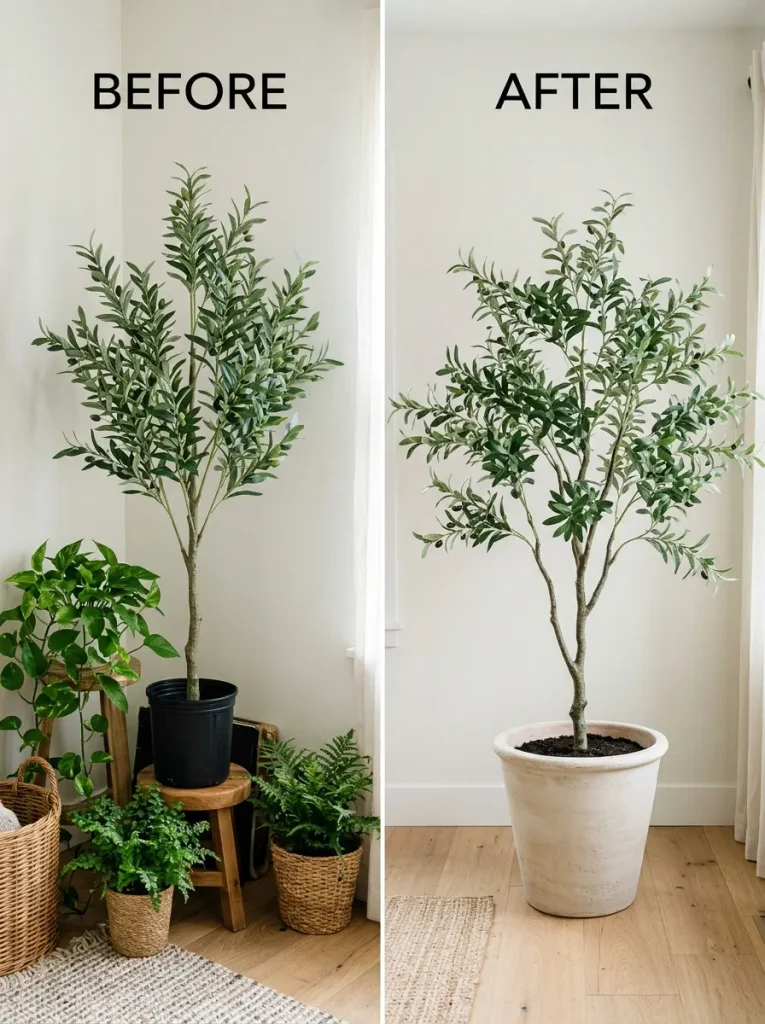
Even a beautiful tree can look off if you slip on the basics. Watch out for these.
- Choosing a tree that is too short for the ceiling or too small for the room
- Using leaves that look shiny, plastic, or too bright green
- Leaving all the branches pointing straight out, as shipped from the factory
- Picking a small, glossy, or brightly colored planter that fights the tree
- Squeezing the tree into a tight corner with no space around it
- Blocking a doorway, a path, or the line of sight into the room
- Placing a dense, heavy canopy in a room that needs something lighter
Simple Care Tips
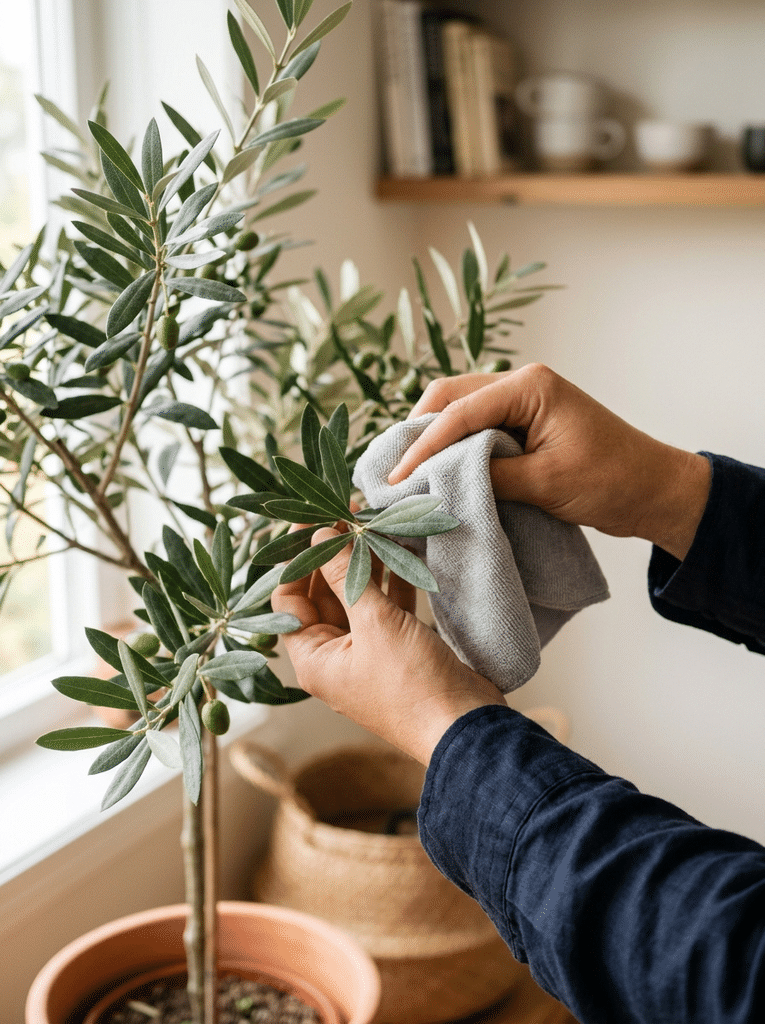
For a real tree: Give it the brightest spot you have. Water when the top inch or two of soil feels dry, and let extra water drain out. Turn the pot a quarter turn each week so all sides get light. Keep it away from heaters and cold drafts.
For a faux tree: Dust it every few weeks with a soft cloth or a feather duster. A cool blast from a hair dryer also helps clear dust from the leaves. Reshape a few branches now and then to keep the natural look. Keep the tree out of constant harsh sun, which can fade the leaves over time.
Frequently Asked Questions
Can you put an olive tree in a living room?
Yes. An olive tree suits a living room well because it adds height, texture, and a calm look. A real one needs lots of bright light, while a faux olive tree in living room spaces works even in dim rooms.
What size olive tree is best for a living room?
For a room with 9 foot ceilings, a tree between 7 and 8 feet is usually best. Rooms with higher ceilings can take a 10 to 12 foot tree, and smaller rooms suit a 4 to 6 foot tree.
Is a fake olive tree in living room decor worth it?
For most homes, yes. A good faux tree needs no light, water, or pruning, and it looks the same all year. Pick one with matte leaves and a textured trunk, then shape the branches so it looks natural.
Where should I place an olive tree in my living room?
The best spots are an empty corner, beside the sofa, next to a window, or beside a fireplace or bookshelf. Leave space around the tree so its shape can be seen clearly, and keep it away from walkways.
How do I make an artificial olive tree look real?
Fluff the branches after unboxing, curve some of them, and avoid a perfectly even shape. Remove extra faux olives, hide the plastic base with a basket and moss, and place the tree near soft light.
Which olive tree looks better in my living room?
A realistic olive tree with natural-looking branches, muted green leaves, and a slightly textured trunk looks best in most living rooms. Choose a size that complements your furniture without overwhelming the space.
ISO a convincing olive or other faux tree (to fill a corner of a living room)?
Look for a faux olive tree with varied leaf tones, flexible branches, and a realistic trunk. Choose a 5–7-foot tree and place it in a woven basket or ceramic planter to fill an empty corner beautifully.
Conclusion
An olive tree in living room design is one of the simplest ways to make a space feel finished. Pick the right height, choose a planter that suits your style, shape the branches with care, and give the tree room to breathe. Whether you go with a real tree or a lifelike faux one, a little planning turns a plant into a true focal point.