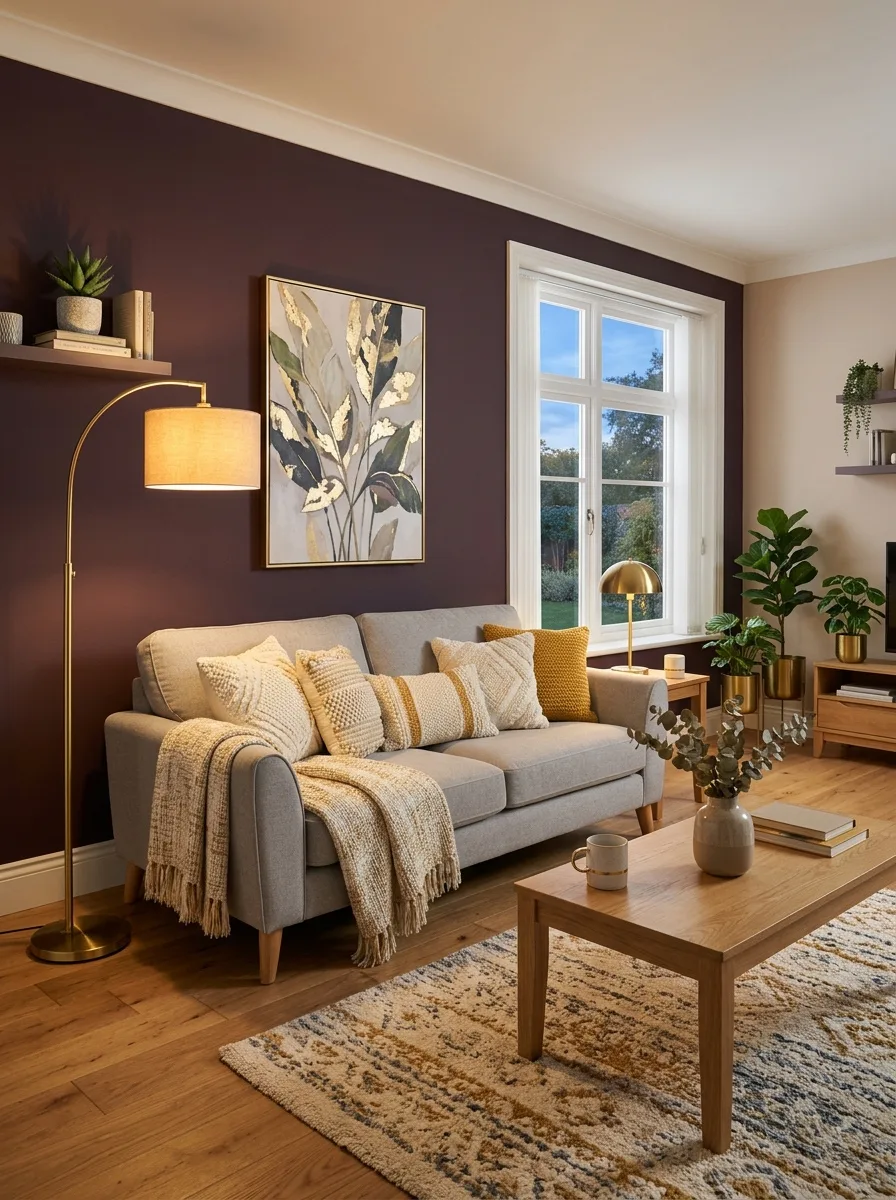
Purple living room walls are one of the boldest and most rewarding choices you can make for your home. They can feel calm like a lavender field, rich like a velvet theater curtain, or cozy like a cup of tea on a rainy night. The trick is knowing which shade to pick, what to pair it with, and how much to use. Get those three right, and your living room looks planned, not risky.
This guide walks you through the whole process. You will see how different purples change a room, how to choose a purple color combination that works, and which colors sit beside purple on the wheel. You will also find purple decor ideas, black and purple room ideas, tips for a red and purple room, and purple room ideas for adults who want something grown up and stylish. At the end, you get a simple painting plan and the mistakes to skip.
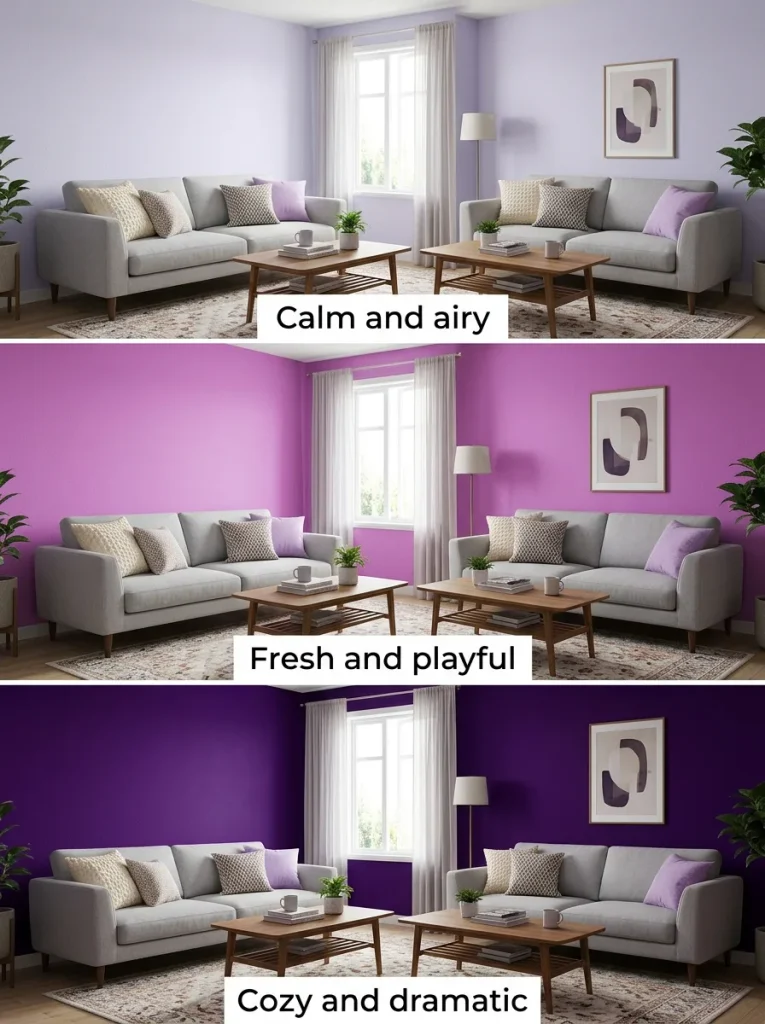
Quick answer: The best purple wall color for a living room depends on your light and mood. Soft lilac and dusty mauve make a room feel airy and calm. Mid tone orchid and amethyst add energy. Deep plum and aubergine feel cozy and dramatic. Pair purple with warm white, gray, beige, gold, or wood tones, test samples on your wall for a few days, and use a darker purple on just one wall if you are unsure.
In this guide, you will learn:
- Why purple works on living room walls
- How to choose the right shade, undertone, and finish
- The best purple color combinations, including the purple complementary color
- Purple decor and purple room decor ideas for every style
- Black and purple room ideas, and how to handle a red and purple room
- Purple room ideas for adults
- How to test, paint, and avoid common mistakes
Why Choose Purple Living Room Walls?
Purple has a long history as a color of luxury and creativity. In the past, purple dye was hard to make and costly, so it was linked with royalty. Today, you can buy it in any paint store, but it still feels special. When exploring ideas for designing a living room, consider using purple on an accent wall, paired with soft neutrals, warm lighting, and complementary decor to create a space that feels both elegant and inviting.
The Mood of Purple
Purple is made by mixing red and blue. That is why it can feel two ways at once. The blue side is calm and quiet. The red side is warm and expressive. A purple wall color living room can feel relaxing in the evening and welcoming when friends come over.
Color psychology is not a strict science, and everyone reacts differently. Still, designers see the same patterns again and again:
- Light purples such as lilac and lavender feel soft, open, and restful.
- Mid tone purples such as orchid and amethyst feel creative and lively.
- Deep purples such as plum, aubergine, and grape feel rich, cozy, and private.
Why Purple Beats Plain Neutrals
Gray and white walls are safe, but they can feel flat. Purple living room walls add depth without needing lots of furniture or art. A single purple wall can make a room feel finished, because the color becomes the art. Purple also pairs well with natural materials like wood, leather, linen, and stone, so it looks at home in both modern and traditional spaces.
Will Purple Make a Room Look Smaller?
Not always. Lighter purples reflect more light and make a room feel open. Darker purples absorb light, so they can make walls feel closer. But a dark color can also hide corners and make a room feel snug and wrapped, which many people love in a living room. If your room is small and dim, choose a light or mid tone purple, or use a dark shade on one wall only.
Where Purple Works Best in a Living Room
- Behind the sofa: This is the classic spot, because it frames where people sit and gives you a natural focal point.
- Around a fireplace or built in shelves: Dark purple makes books and objects pop.
- On the ceiling or trim: A lighter or darker purple on the ceiling or baseboards makes a subtle, designer look.
- All four walls: Best with soft shades in rooms with good light, or deep shades in rooms meant for evenings and movies.
Best Purple Wall Color Living Room Shades
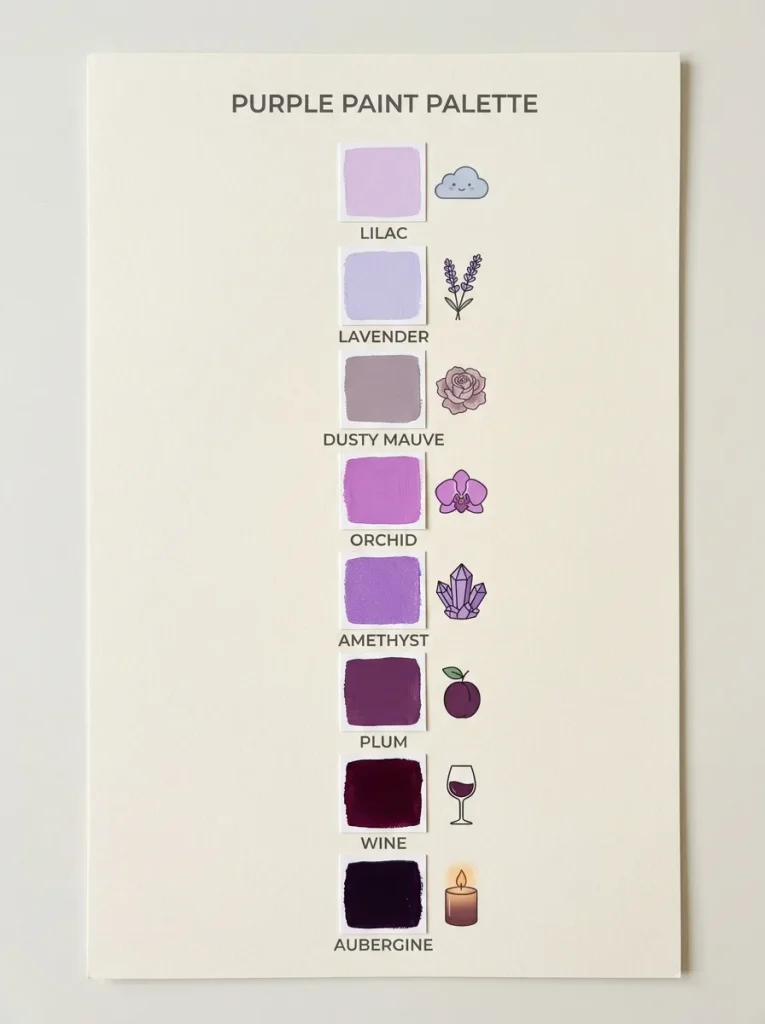
There are hundreds of purples, so it helps to group them. Here are the shades most often used on living room walls.
Light and Soft Purples
- Lilac: A pale, cool purple with a touch of gray. It feels fresh and gentle, and it looks lovely with white trim.
- Lavender: A bit bluer and more floral than lilac. It brings a spa like calm to a room.
- Dusty mauve: A grayed purple with a pinkish tone. It is one of the easiest purples to live with, and it fits modern and vintage rooms alike.
Mid Tone Purples
- Orchid: A bright but not harsh purple, with warmth and playfulness.
- Amethyst: A jewel tone that feels rich without being too dark. It works well as an accent wall.
Deep Purples
- Plum: A purple with red in it. It feels warm and works well with wood furniture.
- Wine: A purple leaning toward burgundy, deep and cozy.
- Aubergine (eggplant): A very dark purple, close to black in low light. It feels moody and sophisticated and looks best in rooms with soft lighting.
Understand Undertones
Every purple leans toward blue or toward red.
- Blue undertone purples feel cool and calm. They look best with gray, silver, and cool white.
- Red undertone purples feel warm and cozy. They look best with cream, gold, brass, and wood.
To spot an undertone, hold the paint chip next to a pure white sheet of paper. A blue undertone looks icy and slightly gray. A red undertone looks warm and slightly pink.
How Light Changes Purple
- North facing rooms have cool, steady light that can make purple look bluer or grayer. Pick a warmer purple to balance it.
- South facing rooms get warm, strong light that can make purple look brighter and redder. Cooler purples can look great here.
- Evening lamp light is usually warm, and it pulls purple toward red. Check your sample at night too.
- Rooms with little daylight can look gloomy in a light gray purple. A warm mid tone or deep shade often looks better than a pale one.
Pick the Right Finish
- Matte: Hides wall flaws and looks velvety, especially in dark purples. Easier to touch up, but less washable.
- Eggshell: A soft sheen that wipes clean. The best all around choice for living rooms.
- Satin: Good for trim and doors, where you want durability and a little glow.
Purple Color Combination Ideas That Work
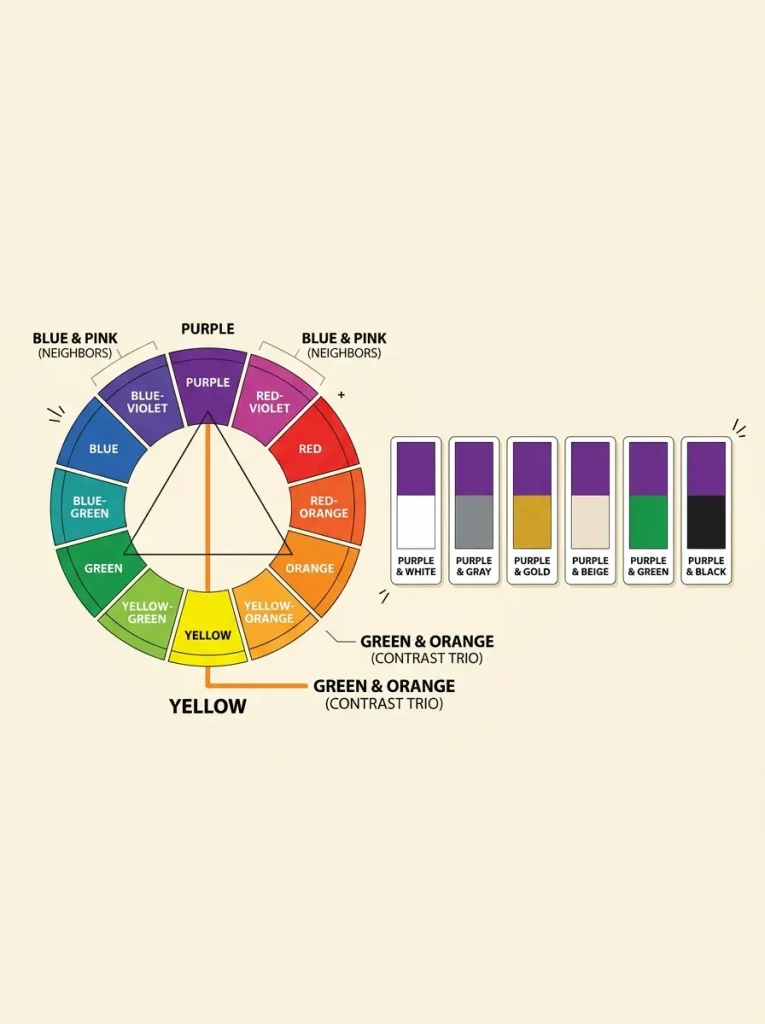
Purple looks best when you plan the supporting colors. Here is how to build a purple color combination that feels balanced.
Know the Purple Complementary Color
On the traditional color wheel, the purple complementary color is yellow. Complementary colors sit across from each other and make each other look brighter. A touch of yellow, gold, mustard, or butter on a plum or violet wall adds energy and light. You do not need much. A pair of mustard pillows or a brass lamp is enough to make the purple glow.
Colors Next to Purple
Colors beside purple on the wheel, called analogous colors, make a soft, flowing scheme.
- Purple and blue: Cool, calm, and serene. Great for a relaxed living room.
- Purple and pink: Warm and romantic. Try dusty mauve with blush cushions.
- Purple and red: Bold and rich. See the red and purple room section below.
The Top Purple Color Combinations for Living Rooms
- Purple and white: Clean and bright. Since purple is a cool color, choose warm white trim so the room does not feel chilly. Soft purple with white lets the color shine without crowding the room.
- Purple and gray: Calm, modern, and easy. Light gray walls with a purple sofa or a purple wall with a gray sofa both work. Keep the background gray or white and add darker wood to give the room character.
- Purple and beige: Warm and welcoming. This is a great pair for rooms with less natural light, because beige softens the purple and adds warmth.
- Purple and gold: Regal and glamorous. Use brass lamps, gold frames, and metallic accents against a deep plum wall.
- Purple and green: Bold but fresh. Purple brings richness and green brings life. Try olive or sage pillows with a lavender wall, or add plants.
- Purple and teal: A modern pair with depth. Teal chairs against an amethyst wall look striking.
- Purple and brown or wood: Warm and grounded. Dark walnut, leather, and oak all look wonderful with plum and aubergine.
- Purple and black: Dramatic and chic. More on this below.
Use the 60 30 10 Rule
This simple rule keeps the room balanced.
- 60%: the main color, often a neutral such as white, cream, or gray
- 30%: the second color, such as purple on a wall and a sofa
- 10%: the accent, such as gold, mustard, or green
If the purple is on all four walls, think of purple as your 60% and use neutrals for the rest.
Black and Purple Room Ideas
Dark and purple room ideas are ideal for creating a dramatic, evening friendly living room. Black adds sharp lines and contrast, while purple brings softness, depth, and a touch of luxury.
- Use matte black metal for picture frames, shelves, curtain rods, and lamp bases.
- Choose a charcoal or black sofa with plum cushions.
- Pick a deep purple wall and keep other walls lighter so the room does not feel like a cave.
- Add gold, brass, or copper accents so the room has some warmth and shine.
- Bring in mirrors and glass to bounce light.
- Layer lighting with table lamps, a floor lamp, and candles. Dark rooms need many small lights.
- Balance with a light rug or cream curtains so the black does not feel heavy.
How to Handle a Red and Purple Room
A red and purple room can look rich and bold, or messy if it is not planned. Here is how to get it right.
- Pick reds with blue in them, such as burgundy, berry, cranberry, and wine. These sit close to purple on the color wheel and blend easily.
- Avoid orange leaning reds, such as tomato or brick, next to cool purples. They can clash.
- Let one color lead. For example, make the wall plum, and use burgundy in pillows, a rug, or a throw.
- Add a calming neutral, such as cream, gray, or warm white, to give the eye a rest.
- Add a metallic, such as brass or gold, to tie the two colors together.
- If your room already has red walls, bring in purple through a rug, bedding or pillows, and a few art pieces, rather than repainting at once.
Purple Decor and Purple Room Decor Ideas for Every Style
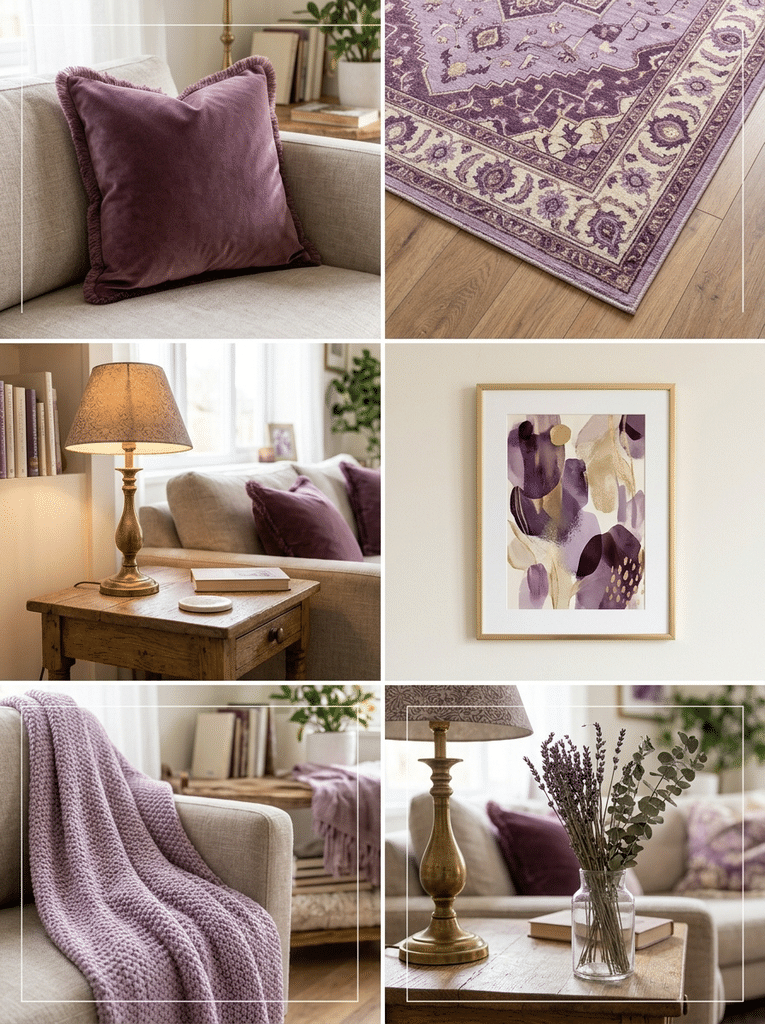
Paint is only the start. Purple decor ties the whole room together. These purple room decor ideas work with almost any wall color.
Soft Furnishings
- Velvet cushions in plum or lilac add richness.
- Throws in lavender or heather add texture and cozy color.
- Curtains in a soft mauve or a purple patterned fabric frame your windows.
- Rugs with purple in the pattern connect the walls to the floor. A good tip is to go darker for the rug and lighter for the soft furnishings.
Furniture
- A purple sofa or an armchair makes a bold statement if your walls are neutral.
- Wood furniture in walnut, oak, or mahogany warms up cool purples.
- Glass and metal tables keep a dark purple room light and modern.
Art and Accessories
- Hang art with a hint of purple so the room feels connected. Matching the violet shade in a painting with a purple cushion is an easy trick.
- Add mirrors to bounce light around the room.
- Use ceramics and vases in cream, gold, or soft green to rest the eye.
Lighting
- Pick warm bulbs for evenings so the purple glows.
- Use brass or gold lamps with deep plum walls.
- Add a dimmer so you can change the mood from bright to cozy.
Plants and Nature
Greenery looks great against purple walls. Try fiddle leaf figs, ferns, snake plants, or trailing pothos. Dried flowers such as lavender and eucalyptus add a natural, calm touch.
Purple Decor by Style
- Modern: Lilac or dusty mauve walls, white trim, clean lines, and one bold art piece.
- Glam: Deep plum or amethyst walls, gold mirrors, velvet sofas, and crystal lamps.
- Boho: Soft lavender walls, woven baskets, rattan chairs, and layered rugs.
- Traditional: Wine or aubergine walls, dark wood, leather chairs, and framed art.
- Scandinavian: Pale lilac, white oak, linen curtains, and simple black accents.
- Moody and dark: Aubergine on walls and trim, black accents, and candlelight.
Pattern and Wallpaper
If you do not want to paint all four walls, try one wall of wallpaper with a purple pattern. A geometric purple and gray print works well behind a desk or media wall. Removable wallpaper is a good choice for renters.
Purple Room Ideas for Adults: Keep It Stylish and Grown Up
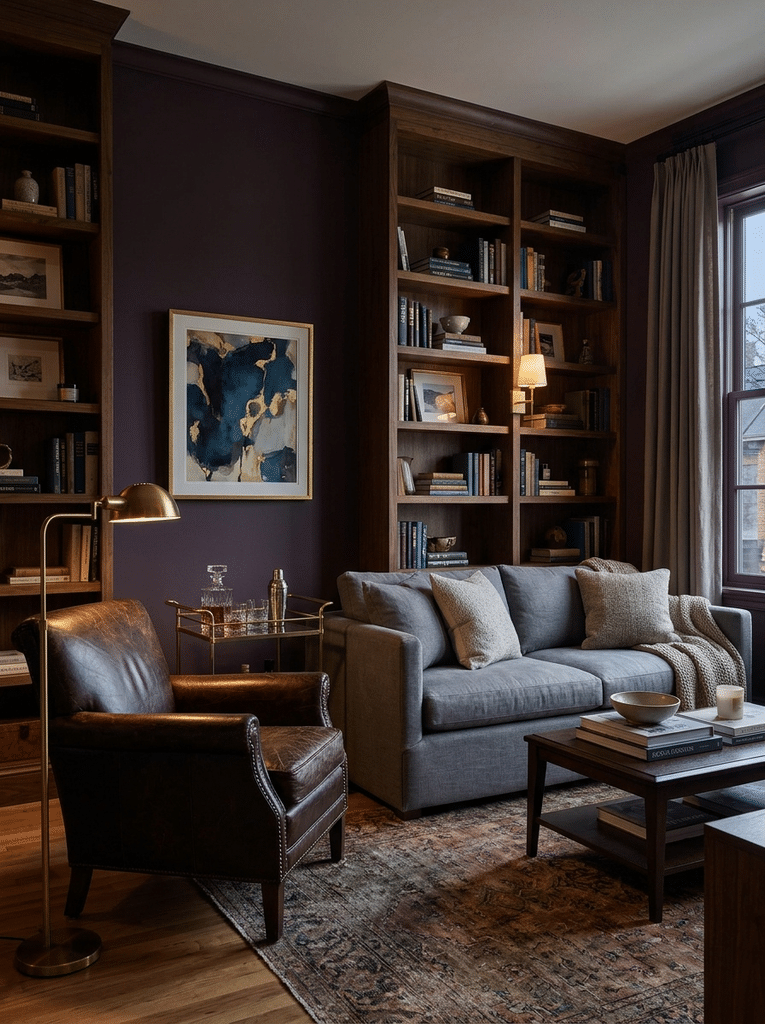
Some people worry that purple can feel childish. It does not have to. Purple room ideas for adults lean on depth, texture, and restraint. Here is how to keep the look polished.
Choose Grown Up Shades
Grayed and deep purples, such as dusty mauve, plum, wine, and aubergine, look more mature than bright, candy colored purples. If you love lighter shades, pick lilac with a gray base.
Mix Natural Materials
Pair purple with leather, wood, linen, wool, stone, and metal. These textures make the color feel earthy and refined.
Create Cozy Zones
- A reading corner: Deep purple wall, a leather chair, a brass reading lamp, and a small bookcase.
- A conversation area: Two sofas facing each other, a round coffee table, and a rug in neutral tones.
- A drinks corner: A small bar cart or console in dark wood against an aubergine wall.
- A gallery wall: Frames in black or gold against mauve or plum walls make art stand out.
Keep Accessories Simple
Choose a few quality items instead of many themed accessories. A set of velvet pillows, one bold piece of art, and a good lamp will do more than a dozen small ornaments.
Think About Feng Shui
Some feng shui advisers suggest using purple in moderation in living spaces and saving larger amounts for calm areas such as meditation or healing rooms. You do not need to follow this rule, but it is a good reminder that one strong accent wall often feels better than purple everywhere.
Use Trims and Ceilings Wisely
For a designer look, try painting the baseboards in a darker purple, the walls in a mid tone, and the ceiling in a lighter shade of the same family. This color flow makes the room feel wrapped and luxurious. If this feels too bold, paint the trim in warm white and let the walls do the work.
Purple Room Ideas for Small Living Rooms
- Use a light or mid tone purple to keep the room open.
- Paint one wall only, often the one behind the sofa.
- Pick slim furniture and keep floors visible.
- Add mirrors opposite windows.
- Keep other walls and ceilings white or soft cream.
- Choose curtains that match the walls so the room looks bigger.
How to Test, Paint, and Avoid Mistakes
You do not need to be a pro to paint a purple living room. You just need a little patience and a good plan.
Step by Step Painting Plan
- Pick three samples. Choose one light, one mid tone, and one dark purple that you like, and note the undertones.
- Paint test squares. Paint each sample about two feet wide on two different walls, one near a window and one in a darker corner.
- Watch for two or three days. Look at the samples in the morning, at noon, and at night with lamps on. Pick the one you still like in every light.
- Prep the walls. Fill holes, sand lightly, wipe off dust, and tape the trim.
- Prime if needed. Dark purples and big color changes usually need a tinted primer, which helps the color look rich in fewer coats.
- Cut in first. Use a brush along the ceiling, trim, and corners.
- Roll two coats. Let the first coat dry fully before the second.
- Remove tape while the paint is slightly wet, or score the edge so it peels clean.
As a rough guide, one gallon covers about 350 to 400 square feet per coat. A typical living room needs one to two gallons for two coats. Check your paint can for exact coverage.
Where to Put the Purple
If you are not ready to paint every wall, try one of these.
- The wall behind the sofa: The classic accent wall.
- The fireplace wall: Draws the eye and adds drama.
- The wall behind a TV: Dark purple helps screens blend in.
- An alcove or nook: Great for a bold color in a small space.
- A purple ceiling: A surprise that lifts the eye.
Common Mistakes to Avoid
- Skipping samples. Paint chips are tiny and can look very different on a big wall.
- Ignoring undertones. A blue purple can look cold next to warm wood, and a red purple can clash with cool gray.
- Painting a dark color in a dim room without lighting. Add lamps, mirrors, and light colored furniture.
- Using too many colors. Stay with one or two supporting colors plus metal and wood.
- Choosing a loud shade for all four walls in a small room. Save the brightest purple for one wall.
- Forgetting the floor and furniture. Check that your sofa and rug still look good against the purple.
- Skipping primer on dark colors. You may need extra coats and the color may look patchy.
- Forgetting to match trim. Warm white trim usually looks better with warm purples, and cool white trim with cool purples.
Frequently Asked Questions
Is purple a good color for living room walls?
Yes, purple can be a great choice for living room walls. Soft shades like lilac and dusty mauve feel calm and open, while deep shades like plum and aubergine feel cozy and dramatic. Test samples in your own light and pair purple with warm white, gray, beige, gold, or wood tones.
What colors go with purple walls in a living room?
Purple goes well with white, gray, beige, gold, green, teal, and wood tones. The purple complementary color is yellow, so mustard or gold accents make purple look brighter. For a bold look, try purple with black or burgundy, and keep one color in the lead.
Which purple shade is best for a small living room?
A light or mid tone purple such as lilac, lavender, or dusty mauve is best for a small living room because it reflects light and keeps the room open. If you love dark purple, use it on one wall only and add mirrors and lamps.
Can I mix red and purple in a living room?
Yes, but choose carefully. Pick reds with blue undertones, such as burgundy, wine, or berry, and let purple lead on the walls. Add cream or gray to calm the room, and use gold or brass to tie the colors together.
How do I stop a purple living room from looking childish?
Choose grayed or deep shades like mauve, plum, or aubergine, and mix in natural materials like wood, leather, and linen. Keep accessories simple, use one or two supporting colors, and add art and metal accents for a grown up look.
Conclusion
Purple living room walls give you something rare: a color that feels both calm and bold. The best results come from a simple plan. Pick a shade that fits your light, choose a clear purple color combination, add purple decor in small doses, and test everything before you paint. If you love expressive interiors, you can also bring in dopamine decor living room ideas through colorful cushions, playful artwork, and contrasting accents. Whether you prefer soft lilac, rich plum, a black-and-purple mood, or even a red-and-purple room, the same rules apply: one color leads, a few colors support, and good lighting ties it together.
Ready to begin? Pick three purple samples today, paint test squares on your walls, and live with them for a few days. Choose the one you still love at night, then start with a single accent wall. Share a photo of your finished purple living room with friends, and enjoy a space that finally feels like you.