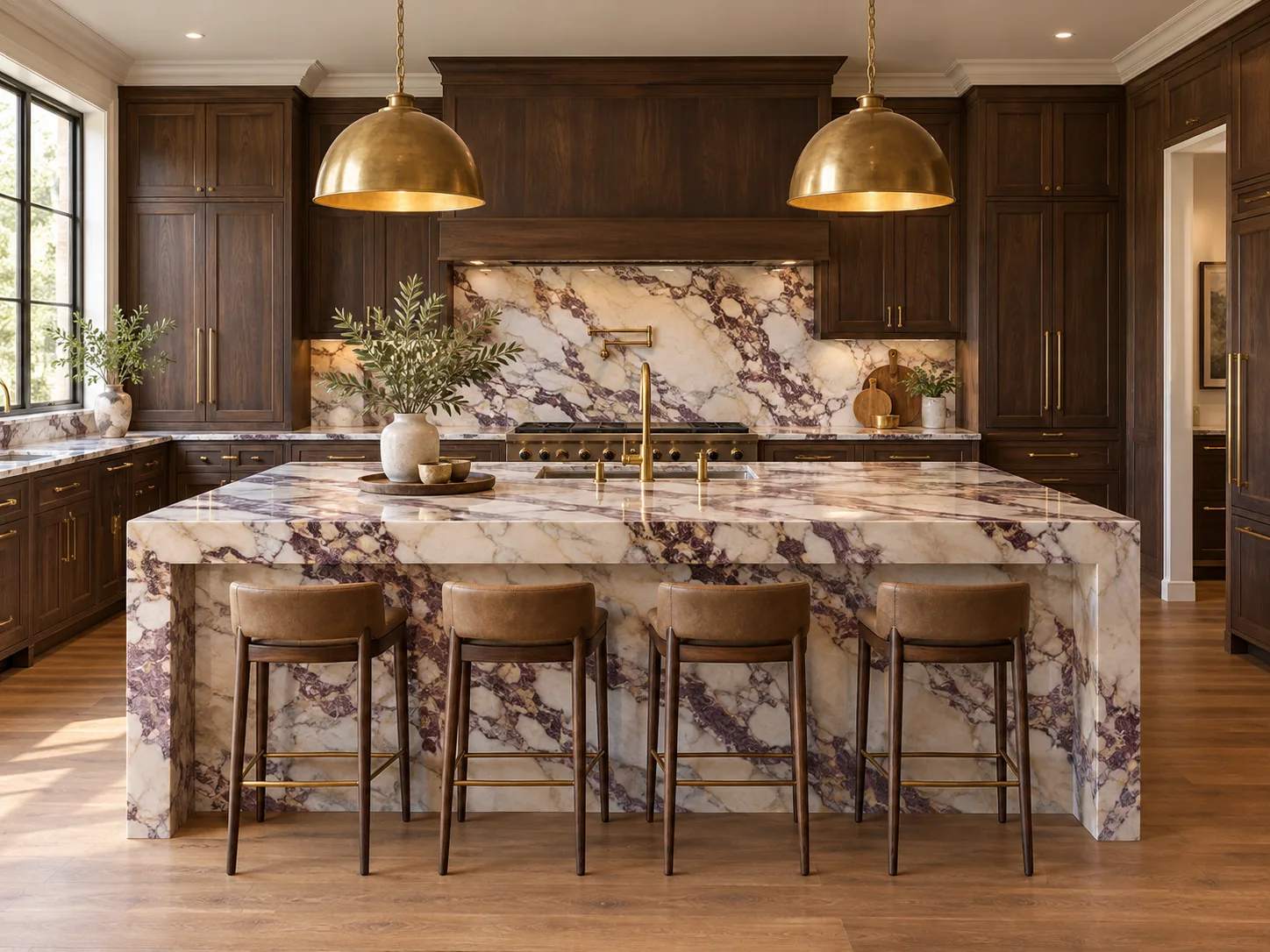
A viola marble kitchen is not a quiet kitchen. It is a kitchen with a showpiece. Sweeping purple and lilac veins run across a creamy ivory stone, and every slab looks like a painting. If you have seen it on a social feed or in a design magazine, you know why people stop and stare. It can turn an island, a backsplash, or a whole wall into the first thing you see when you walk in.
But viola marble is also a bold, demanding choice. It is not a neutral stone, it needs the right partners, and the person who cuts and installs it makes a huge difference. This guide helps you decide if it is right for you. You will learn what Calacatta Viola and Breccia Viola are, where to use them, what cabinets, floors, colors, and metals go with them, how to buy and install the stone, and how to care for it. You will also get honest cautions, so you can enjoy the look without regret.
Quick answer: A viola marble kitchen works best when the stone is the single star. Use Calacatta Viola on one main surface, such as the island, a backsplash, or the countertops, and keep everything else calm. Pair it with warm woods like walnut or dark oak, brass or aged metals, and soft warm walls. Pick your slab in person, hire an experienced fabricator, seal the stone, and wipe up acids fast.
In this guide, you will learn:
- What viola marble is, and how Calacatta Viola differs from Breccia Viola
- The best places to use it, from a Calacatta Viola marble kitchen island to Breccia Viola marble tiles in a kitchen
- Cabinets, wood tones, floors, colors, metals, and lighting that suit it
- Ideas by style, plus a bar or coffee niche
- The honest pros and cons, and who should think twice
- How to buy, plan, and install the stone
- Care, cleaning, and mistakes to avoid
What Is Viola Marble? Calacatta Viola, Breccia Viola, and Why It Is Trending
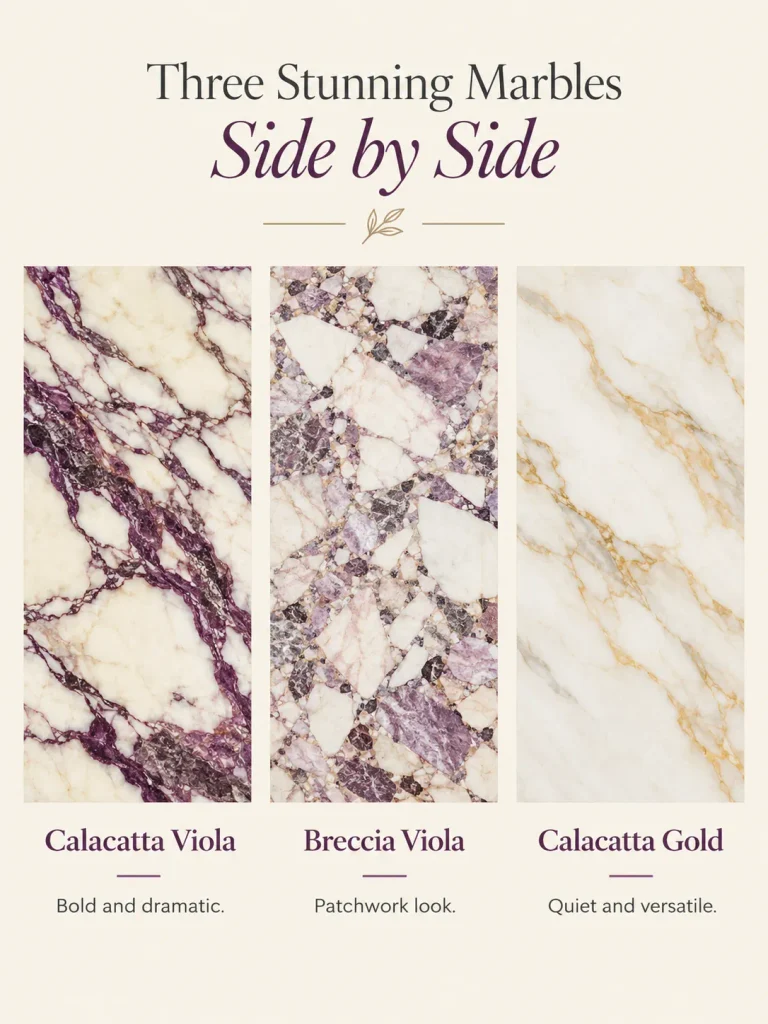
Viola is the Italian word for violet, and that name tells you everything about this stone.
What Is Calacatta Viola?
Calacatta Viola is a natural marble with a creamy white or ivory background and dramatic purple, plum, and sometimes burgundy veining. Some slabs lean pink, and others lean gray lilac. Every slab is different, so the one you choose in person will not match any photo exactly. The stone is often sourced from Italy and sold under several names, such as Calacatta Viola, Calacatta Viola Extra, and Calacatta Vagli Viola. Names vary by supplier, so always look at the actual slab.
What Is Breccia Viola?
Breccia is a word for stone made of angular broken fragments that are naturally cemented together. Breccia Viola marble has a patchwork look, with chunks of lilac, plum, and cream. It looks bolder and more broken up than the long, flowing veins of Calacatta Viola. Some suppliers also use the name Calacatta Viola Breccia. Paired with cherry kitchen cabinets, its rich colors create a warm, elegant contrast. Because patterns vary, breccia stones are popular as tiles for floors, backsplashes, and bathrooms, where the repeating pieces blend into one rich surface.
How Calacatta Viola Differs From Other Marbles
Classic Carrara and Calacatta Gold have soft gray or gold veining. They work almost anywhere. Viola is not like that. It has violet veining and often a pinkish ground, so it reads as a color, not a neutral. If you love plum, mauve, burgundy, and pink, it can feel magical. If you want a quiet, versatile stone, a calmer marble may suit you better.
Why Is It Trending?
- A move away from minimalism. Designers and homeowners are choosing richer, more decorative natural materials. Calacatta Viola was even named a worktop of the year in one magazine feature.
- Warm, moody color. People want kitchens with depth, warm wood, and jewel tones.
- Art you can touch. A big slab looks like a painting, but it is also a working surface.
- Social media. It looks stunning in photos, and that spreads fast.
Is a Viola Marble Kitchen Timeless?
This is where opinions split, and you deserve both sides. Fans call it dramatic, glamorous, and like art. Some designers say it is a trend that may feel dated later, because it is so bold. Others point out that natural stone has been used in palaces and grand homes for centuries. The honest answer is that it depends on how much of it you use and how you style it. A single hero surface is far easier to live with than stone on every wall.
Where to Use a Viola Marble Kitchen: Island, Countertops, Backsplash, Tiles, and Hood
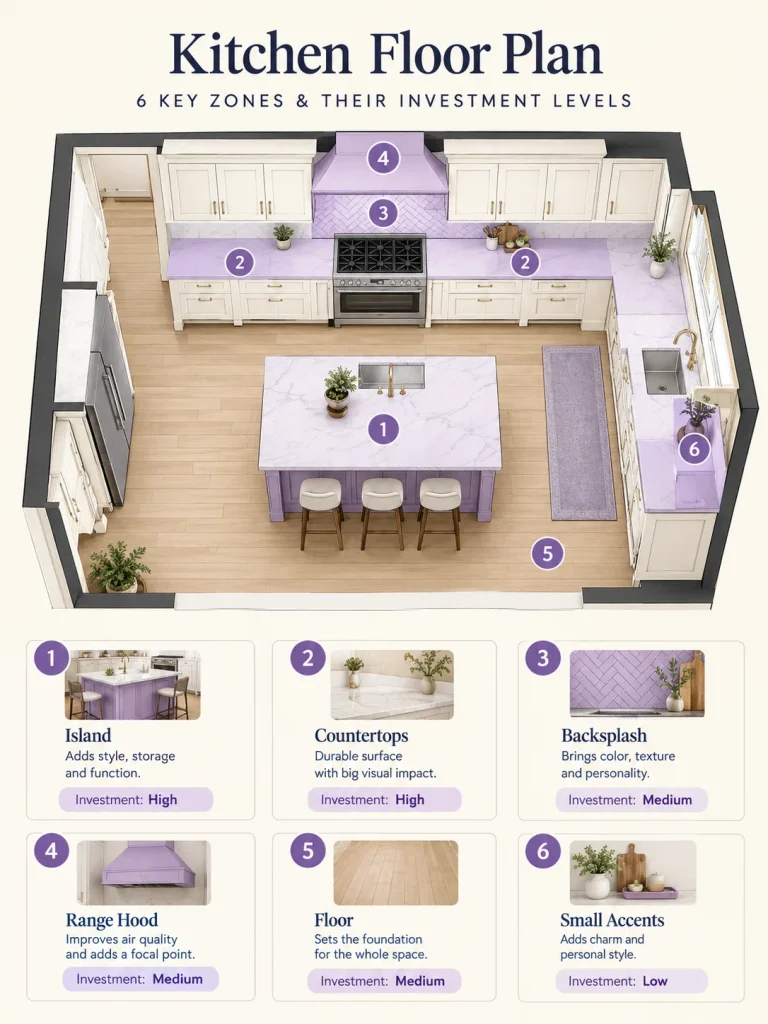
You do not need to cover the whole room. Where you use viola marble matters as much as how much you use.
Calacatta Viola Marble Kitchen Island
The island is the most popular place, and it is easy to see why. It sits in the middle of the room, so it becomes the focal point.
- Waterfall edge: A mitered edge lets the veining flow down the sides like one block of stone. Ask the fabricator to match the veins at the corners so it looks carved from one piece.
- Thick edge: A thicker profile makes the stone feel substantial.
- Quiet base: Use simple cabinets in warm white, taupe, or walnut so the stone leads.
- Brass bar stools and pendants: Warm metals echo the gold tones in the veining.
A Calacatta Viola marble kitchen island gives you luxury exactly where people gather, and it keeps the rest of the kitchen calm.
Calacatta Viola Marble Kitchen Countertops
Calacatta Viola marble kitchen countertops give you daily luxury you touch every morning. They also take the most wear, so think carefully.
- Honed finish: A soft matte surface hides etch marks better than a high gloss polish and gives a painterly look.
- Mix materials: Some designers use a calmer countertop, such as a solid Dekton or quartz, and save the viola for the backsplash. This keeps the drama on the wall and the work surface practical.
- Keep seams few: Large slabs mean fewer seams, so the pattern flows.
Backsplash and Full Height Wall
A viola backsplash gives you the look with less stone than a countertop.
- Run the slab all the way to the ceiling for a dramatic wall in a smaller kitchen.
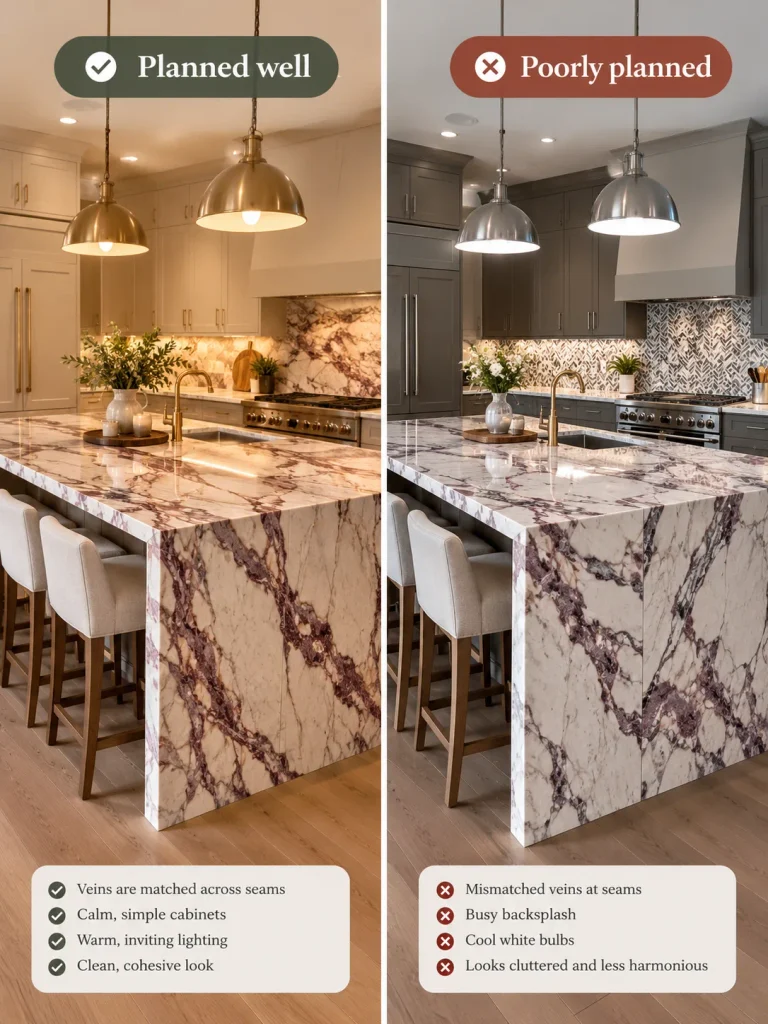
- Match the veins across seams so the pattern reads as one piece.
- Pair it with quiet perimeter counters in white or honed quartz.
- Add under cabinet LED lights to make the veining glow at night.
- Try a bookmatched wall, where two mirrored slabs make a butterfly pattern. Use it on one wall only.
Breccia Viola Marble Tiles in a Kitchen
Breccia Viola marble tiles in a kitchen are a great way to get the look in a more flexible, often more budget friendly form.
- Backsplash: Tiles in a larger format give fewer grout lines and a richer look.
- Floor: A viola marble floor, even in herringbone, makes the whole room feel like a jewel box. Use honed or textured tiles for better grip, because polished marble can be slippery when wet.
- Border or inlay: A marble border around a floor or a small viola inlay adds tailored detail without covering the whole room.
- Grout color: Choose a grout close to the stone’s ivory ground, not stark white, so the lines fade into the pattern.
- Sealing: Seal the tile and the grout, because both soak up spills.
Range Hood and Fireplace Style Features
Wrapping a range hood in bookmatched viola slabs turns a hard working appliance zone into a sculpture. Keep the backsplash around it calm, and seal the stone well, because heat and grease rise there. The same idea works for a fireplace surround or a bar alcove, which some designers have lined in viola for instant glamour.
Small Accents and Clever Uses
- A marble tray, board, or lamp base gives you the look cheaply
- A matching marble sill in front of a window
- A sink or a small vanity top in the powder room
- A slab used to wrap an awkward pipe or column, so it looks planned
Quick Guide to Where to Splurge
| Where to use it | Investment | Why it works |
| Waterfall island | High | The veining flows over the edge like art |
| Full height backsplash | Medium | Big impact with less stone than a countertop |
| Countertop run | Medium to high | Daily luxury, but more wear |
| Range hood | High | Turns the hood into a focal point |
| Breccia Viola tiles | Medium | Flexible, with a rich patchwork look |
| Small accents | Low | Tests the look cheaply |
Cabinets, Floors, Colors, and Metals That Go With Viola Marble
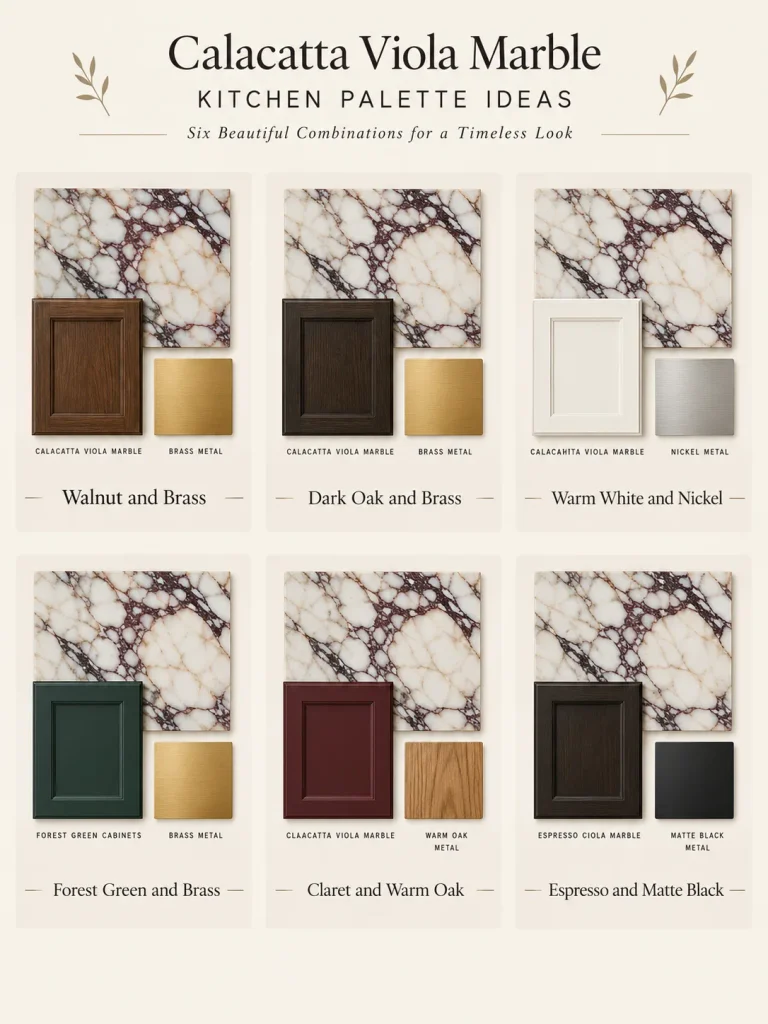
Viola marble is a strong personality. It needs supporting players that make it shine without fighting it.
The One Pattern Rule
A good rule from color experts is to use only one pattern in your hard finishes, such as stone, tile, and floors. Everything else should be plain and calm. Viola is so strong that it often needs a bold supporting player, but the core idea still holds: the stone is the star, and the rest should support it.
Cabinet Colors and Woods
- Walnut: Deep walnut with a violet red tone is one of the best partners. Designers often use walnut in two stains for depth.
- Dark oak: A dark oak kitchen with brass handles and viola counters is a Danish favorite. The warm wood and the marble link the kitchen to the rest of a minimalist home.
- Warm white or taupe: Flat front cabinets in a soft neutral let the veining take the lead.
- Forest green or sage: Green sits opposite purple on the color wheel, so it makes the veining pop.
- Claret or burgundy: A warm, deep red works well with oak details for a rich, bold room.
- Espresso or charcoal: Dark cabinets make the stone glow like a jewel. Test large samples next to your slab.
- Natural white oak: A lighter oak can balance the busy pattern and give a soft, warm look.
Be Careful With Mid Tone Woods
Viola marble is picky about wood tones. It tends to look best next to deep, violet red walnut finishes, or with pale oak at the lighter extreme. Wood tones in the middle can pull yellow or orange next to the pink and purple, and they may clash. Always hold your wood samples against the actual slab, in your own light.
Floors That Work
- Rich wood floors: A deep or warm wood floor balances viola well.
- Pale oak: A light wood floor keeps the room fresh and bright.
- Black and white checkerboard: If you want a tile floor, a bold supporting floor can stand up to the stone’s strong pattern.
- Herringbone wood: Adds movement without competing.
- Avoid a floor that is a near match to your cabinets, since a small color difference looks like a mistake.
Wall Colors
- Warm whites and plaster: A calm backdrop for the stone.
- Limewash: A soft, textured wall that adds an organic feel.
- Light gray: A cool, quiet partner for a bold counter.
- Deep plum plaster: For a moody, purple on purple look, some designers tie the walls to the veining. This works best in small rooms like a powder room.
- Warm brown: A single warm brown throughout the kitchen can feel rich and unified.
Metals and Hardware
- Unlacquered brass: Warm and glowing, and it develops a patina over time. It echoes the gold tones in the stone.
- Aged bronze: A softer, moodier option if brass feels too yellow.
- Matte black: A crisp, modern edge that frames the veining like a picture frame.
- Gunmetal steel: A cool, modern contrast with high gloss walnut.
- Repeat the metal in three places, such as pulls, the faucet, and lighting.
Lighting
- Use warm 2700K bulbs. Cool white bulbs can turn the purple veining flat and gray.
- Hang pendants about 30 inches above the counter so sight lines stay open.
- Add under cabinet LEDs and picture lights over a stone wall or hood.
- Put everything on a dimmer so the mood can change from morning to evening.
Natural Textures That Ground the Stone
Designers often suggest balancing polished marble with raw, natural materials. Warm woods, patinated metals, limewashed walls, linen, and woven baskets all help the stone feel grounded and inviting instead of cold.
Make a Red Thread
One designer idea is to repeat a color or material through the whole house so the kitchen feels connected. A family home in Copenhagen, for example, linked its kitchen to the minimalist rooms around it using warm wood tones and Calacatta Viola marble. You can do the same by repeating a violet in pillows, a warm wood in shelves, or a brass tone in lamps.
Appliances
Stainless steel, panel ready appliances, and a statement range all work. A restored or color matched range can add character. Choose one main finish and avoid too many competing surfaces.
Calacatta Viola Kitchen Ideas by Style
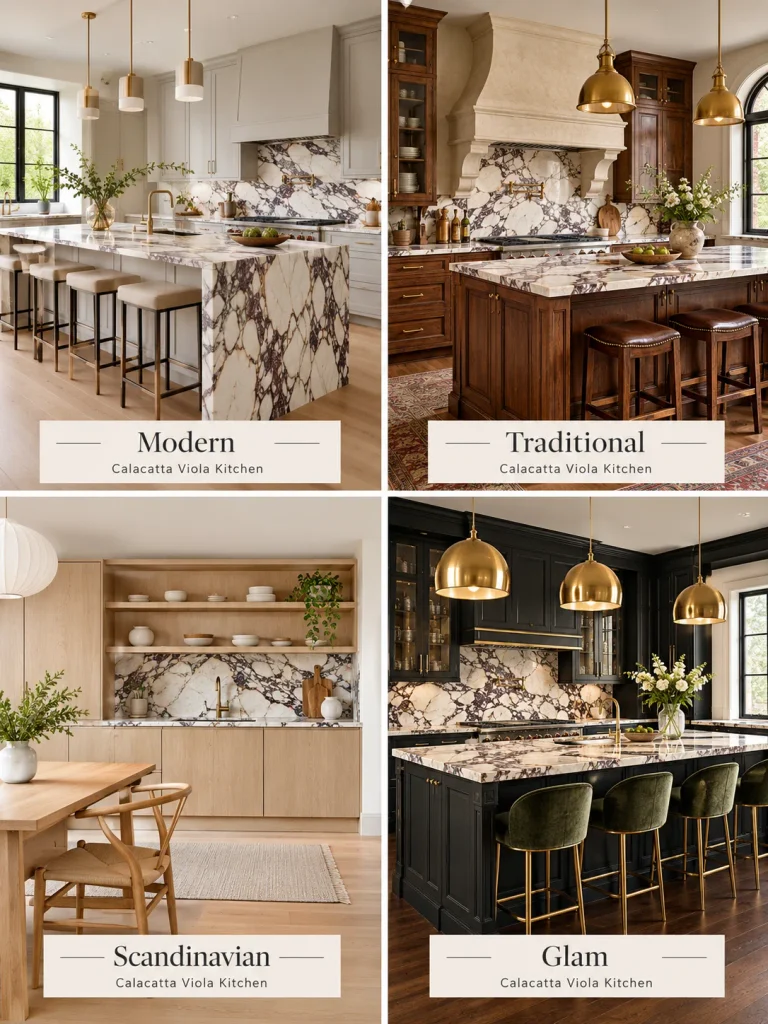
A Calacatta Viola kitchen can suit many different homes. Here is how to style it.
Modern and Sleek
- Slim shaker or flat front cabinets
- A waterfall island in viola with a quiet base
- Matte black or gunmetal hardware
- Honed finish and minimal decor
Cabinet profile matters with bold stone. Slim shaker keeps the lines calm so the marble can speak, like a tailored suit that lets the jewelry shine.
Old World and Traditional
- Custom cabinets in walnut or a deep color
- A stone clad hood and a classic range
- Aged brass pendants and hardware
- A farmhouse sink in fireclay white with a brass bridge faucet
Scandinavian and Minimalist
- Pale oak or white oak cabinets
- A viola backsplash as the single feature
- Light walls and simple lighting
- Warm wood and plants for softness
Glam and Moody
- Dark cabinets in charcoal, espresso, or deep green
- Gold or brass pendants and stools
- A statement hood
- Glass front cabinets lit from inside
Colorful and Playful
Some designers use viola with bold colors. A red island with light gray walls and a viola counter, or colorful cabinet fronts with a viola worktop, gives a modern, art like look. If you love color, let the veining guide your palette, as one homeowner did with plum and pink tones through her whole house.
Farmhouse and Cottage
- Honey toned wood floors and open shelving
- Vintage brass finds and linen curtains
- A worn wool runner
- Handmade ceramics in cream and sage
A Bar or Coffee Niche
A small viola niche is a smart way to try the look. Line the back and counter with one slab, add a slim LED strip, and keep the coffee gear tidy. It becomes a tiny jewel box, and guests will notice it first.
Styling Tips
- Keep open shelves simple. Use white ceramics and one green plant, and leave room for the stone to breathe.
- Avoid busy patterned dishes that fight the veining.
- Let one hero surface carry the drama.
- Edit your counters. Three well chosen objects look richer than ten.
Is a Viola Marble Kitchen a Smart Choice? Pros, Cons, and Honest Cautions
A dramatic material deserves an honest look. Here are the real pros and cons.
Pros
- Striking beauty. Every slab is unique, and a big surface looks like art.
- Light friendly. The pale ground bounces light and brightens a room.
- Warm and rich. It adds color and depth that plain white stone does not.
- A natural material. Marble is natural stone, and with proper care it can last for decades.
- Works with many styles. It can look modern, traditional, or glam with the right partners.
- Can add appeal for buyers who love design. Rare stones can attract attention, though results vary by market and taste.
Cons and Cautions
- It is not neutral. The pink ground and violet veining mean it always reads as color. Be sure you love plum, mauve, and pink for the long term.
- It is busy. Many people find the pattern overwhelming in a large amount.
- It may not be timeless. Some designers worry that it is a trend. Opinions are split, and you should choose it because you love it, not because it is popular.
- It is picky about woods and floors. Mid tone woods can clash.
- Installation skill matters a lot. The directional veining means careless cuts and seams can ruin the look. Some homeowners have been disappointed when the result looked very different from the photos.
- It needs care. Marble can etch and stain.
- It costs more. Viola marble is a premium stone, and fabrication adds to the price.
- Resale taste varies. A buyer who dislikes it may want to replace it.
Think Small First
The smartest way to try the trend may be a smaller application. A designer might suggest a powder room, a bathroom vanity, a bar niche, or a backsplash before covering a whole kitchen. The kitchen sets the tone for the whole house, and it is an expensive room to redo if you fall out of love with a demanding finish.
Who Should Think Twice?
- People who want a quiet neutral they will never tire of
- People who dislike purple or pink tones
- Busy families who do not want to wipe up spills right away
- Anyone not ready to hire an experienced fabricator
Alternatives
If you love the look but not the care or cost, consider a viola look porcelain slab or quartz, which resists staining better. You can also use real viola marble on a small area and a calmer surface for the rest. Always see samples side by side in your light.
How to Buy, Plan, and Install Calacatta Viola Marble
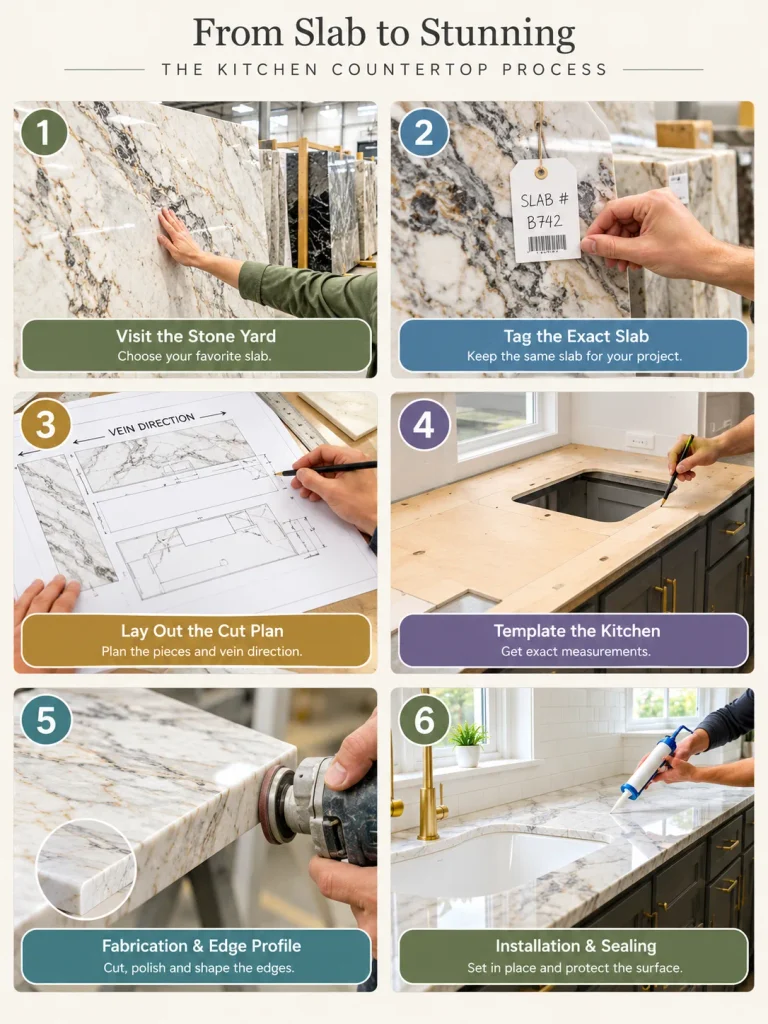
Good planning protects your investment. Here is how to do it well.
Step 1: Choose the Slab in Person
Photos and small samples cannot show the full pattern. Visit a stone yard, look at the actual slabs in daylight, and pick the exact one you will use. Ask for the slab to be tagged so you get what you chose.
Step 2: Plan the Layout and the Vein Direction
Veining runs in a direction. A good fabricator will lay out where the cut pieces will go, so the veins flow across the island and into the waterfall sides. Ask to see the layout, and photograph it so you can approve vein placement before cutting. Some fabricators charge a templating or layout fee, and it is worth it.
Step 3: Ask About Bookmatching
Two mirrored slabs can create a butterfly pattern on a wall or hood. It looks rare and intentional, but it needs careful planning.
Step 4: Pick the Finish
- Polished: Shiny and bright. Shows the color strongly, but also shows etching and scratches.
- Honed: Matte and soft. Hides etching better and feels calm.
- Leathered: Textured and more forgiving, but it can hold dirt in the texture.
Step 5: Pick the Thickness and Edge
Standard thicknesses are often around 2 cm and 3 cm. A thicker edge or a mitered edge makes the stone look chunkier. A simple eased or square edge keeps the focus on the veining.
Step 6: Hire an Experienced Fabricator
Ask these questions:
- Have you worked with Calacatta Viola or similar high contrast marble before?
- Can I see photos of past jobs, or visit one?
- How do you plan seams, and where will they go?
- Will I approve the layout before you cut?
- What happens if a slab breaks or a seam looks wrong?
- What sealer do you use, and what warranty do you offer?
Step 7: Get Written Quotes
Prices vary widely by slab quality, size, edge, and region. Ask for quotes in writing, with all fabrication, edges, cutouts, and installation included. Compare at least two or three.
Step 8: Plan the Timeline
Slab selection, templating, fabrication, and installation can take weeks. Order the stone early and do not remove old counters until the slab is ready, if you can.
Step 9: Seal and Protect
Have the stone sealed after installation. Ask the installer how often to reseal, and follow the sealer maker’s instructions. Some sources suggest resealing every six to twelve months depending on use, but your sealer may differ.
Care, Cleaning, and Mistakes to Avoid
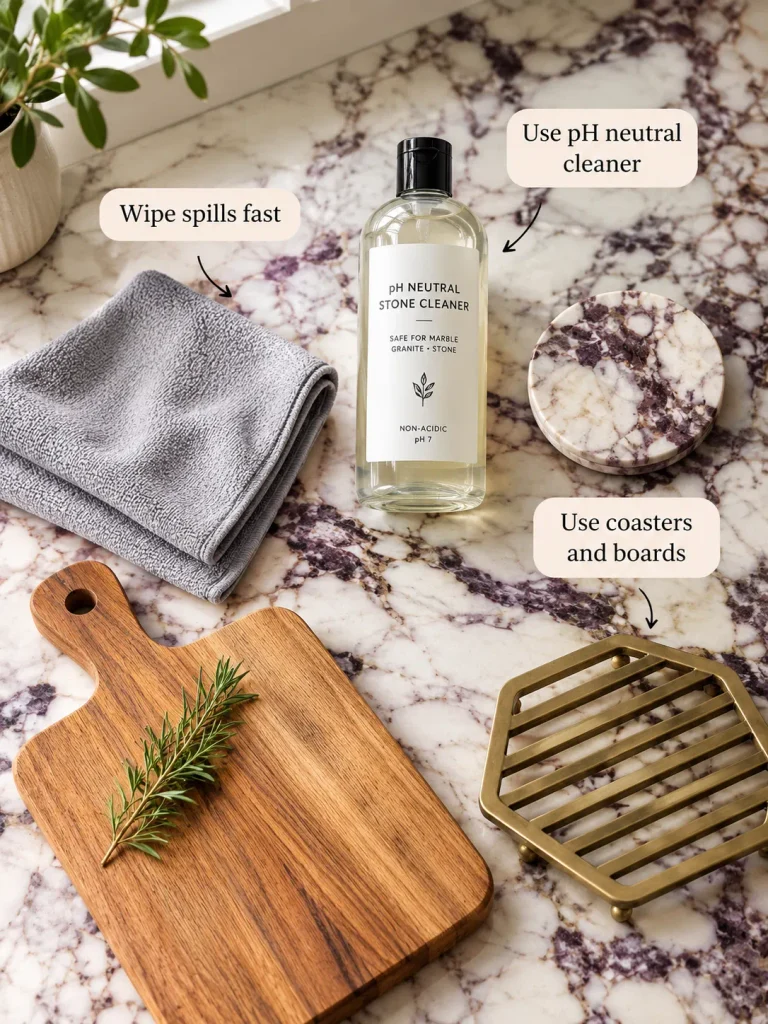
Marble is beautiful, but it is a natural, softer stone. A few habits keep it looking its best.
Daily Care
- Wipe spills quickly, especially acids like lemon juice, vinegar, wine, tomato sauce, and coffee
- Use a soft cloth and a mild or pH neutral stone cleaner
- Dry the surface to prevent water spots
- Use cutting boards, coasters, and trivets
Weekly and Yearly Care
- Clean with warm water and a gentle stone soap
- Check the seal by dropping a few drops of water on the stone. If it soaks in and darkens, it may be time to reseal.
- Reseal as your installer or sealer maker recommends
- Have a pro polish or hone the stone if it dulls or etches badly
What Is Etching?
Etching is a dull, light mark that acids leave on polished marble. It is not a stain but a tiny chemical burn on the surface. A honed finish hides it much better, which is why many people choose honed viola marble for busy kitchens.
What to Avoid
- Vinegar, lemon, and other acidic cleaners
- Bleach, ammonia, and harsh or abrasive cleaners
- Scouring pads and steel wool
- Setting hot pans directly on the stone
- Standing water, especially around the sink
- Heavy items dropped on edges
Common Mistakes to Avoid
- Choosing from a small sample only. Always see the full slab.
- Using viola everywhere. One hero surface is enough.
- Hiring the cheapest fabricator. Poor seams and cuts show immediately on high contrast stone.
- Ignoring undertones. Hold wood, tile, and paint samples against the slab.
- Using cool white bulbs. They flatten the purple.
- Skipping the sealer. Marble can stain without it.
- Putting polished viola on a slippery floor. Choose honed or textured tile for floors.
- Busy dishes and decor. They fight the veining.
- Following a trend without loving it. Choose what you will enjoy for years.
Frequently Asked Questions
What is a viola marble kitchen?
A viola marble kitchen uses natural marble with purple or violet veining, most often Calacatta Viola, for surfaces like the island, countertops, backsplash, or hood. The stone has a creamy ground and dramatic purple veins, so it works best as the single statement material in the room.
What goes well with Calacatta Viola marble?
Deep walnut, dark oak, warm white, taupe, forest green, and claret cabinets all work well. Brass, aged bronze, and matte black hardware suit it, and warm wood floors or pale oak keep it balanced. Use warm 2700K lighting, and avoid mid tone woods that can look yellow or orange next to the stone.
Is Calacatta Viola marble hard to maintain?
It needs the same care as other marble. Seal it, wipe up acids like lemon juice and vinegar right away, use a pH neutral cleaner, and use boards and trivets. A honed finish hides etching better than a polished one.
Can I use Breccia Viola marble tiles in a kitchen?
Yes. Breccia Viola marble tiles work well on backsplashes and floors. Choose honed or textured tiles for floors, seal the tile and grout, and pick a grout close to the stone’s ivory ground. Look at the real tile first, because breccia patterns vary a lot.
Is a viola marble kitchen a good idea for resale?
It depends on your market and your buyers. It can attract people who love bold design, but it is not a neutral choice, and some buyers may dislike it. Using it on one hero surface and keeping the rest of the kitchen calm makes it easier to live with and easier to change.
Conclusion
A viola marble kitchen can be spectacular, but only when you plan it with care. Choose one hero surface, such as a Calacatta Viola island or a backsplash. Pair it with warm walnut or dark oak, espresso kitchen cabinets, brass or aged metals, warm lighting, and calm walls. Choose your slab in person, hire an experienced fabricator, seal the stone, and treat spills quickly. If you are not sure, start with a smaller feature and see how it feels.
Ready to begin? This week, visit a stone yard or request samples. Hold your cabinet, wood, and paint samples against a real slab in your own light. Photograph the pieces you love, ask two or three fabricators for quotes, and pick one surface to make your star. Take a before photo, and enjoy the moment your kitchen goes from nice to unforgettable.