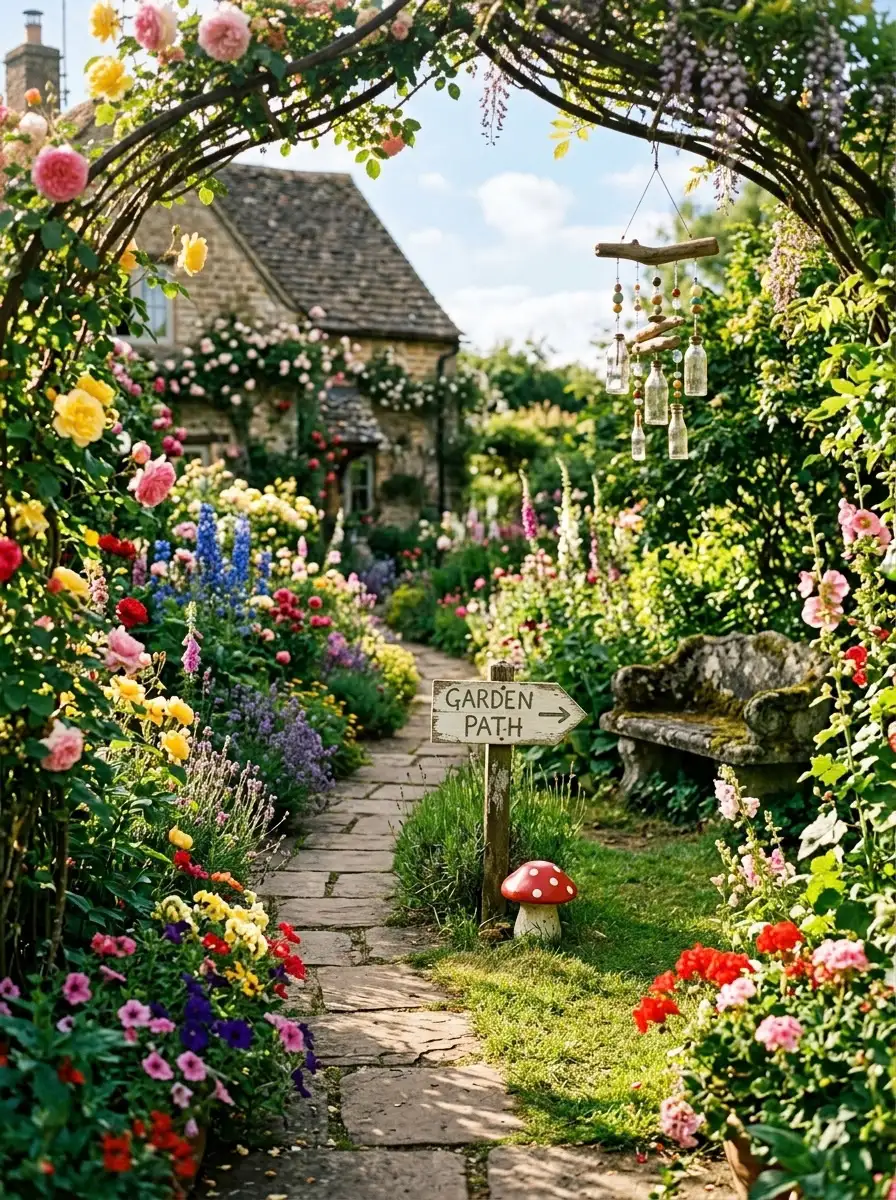
Whimsical garden decor is any playful, imaginative touch that makes your outdoor space feel like a small story waiting to be found. It might be a tiny door at the base of a tree, a teapot full of flowers, or a row of painted rocks along a path. It is decor that makes people smile before they even know why.
Maybe your garden looks tidy but a little flat. Maybe you love the idea of fairy houses, quirky art, and bright surprises, but you worry about going overboard. That is a fair concern. The trick is knowing where to add the fun and where to leave room to breathe.
In this guide, you’ll learn what makes decor whimsical, how to pick a style, and where to place each piece. You’ll also find ideas for fairy gardens, upcycled treasures, lighting, and unusual garden decor that gets people talking. We’ll finish with budget tips, care advice, common mistakes, and answers to popular questions. Let’s dig in.
What Does Whimsy Garden Decor Actually Mean?
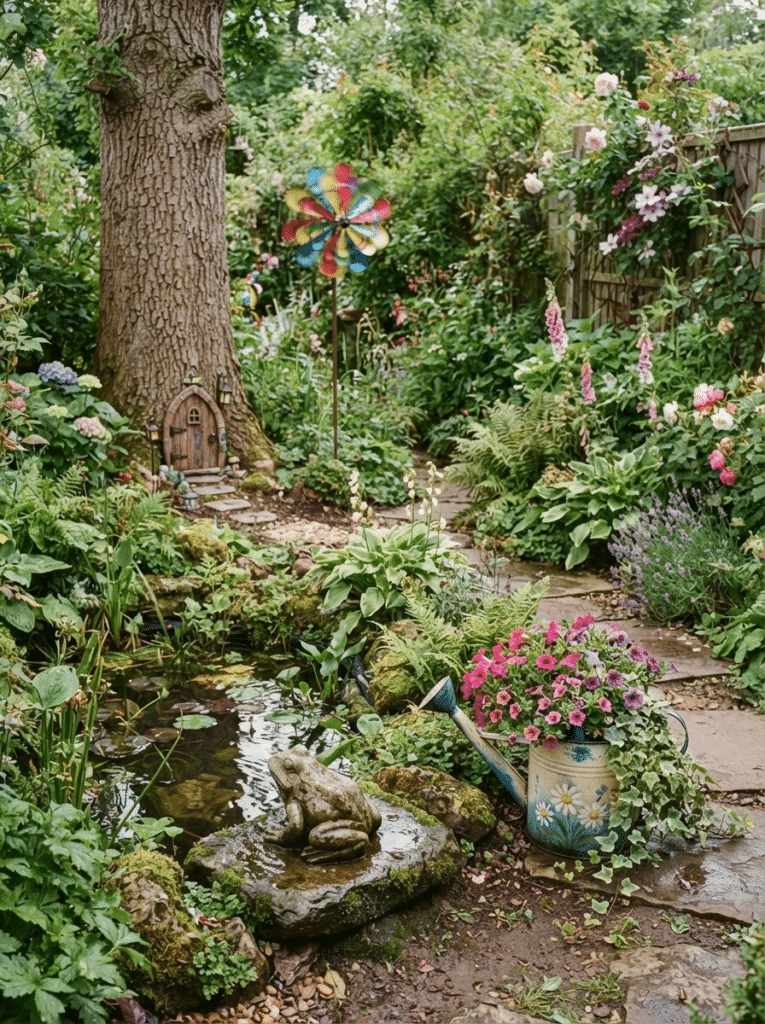
Whimsical garden decor uses playful, charming, and often unexpected objects to add personality, humor, and a sense of wonder to a yard, patio, or balcony. It rarely follows strict design rules. Instead, it follows feeling. If a piece makes you or your guests smile, it probably belongs. Creative garden decor metal ideas, such as quirky sculptures, decorative signs, or playful plant holders, can add even more character while keeping the space fun and inviting.
Whimsical decor sits somewhere between art and play. Some pieces are pretty, some are funny, and some are just a little strange. What they share is a lightness that a formal garden often lacks.
The Traits of a Whimsical Garden
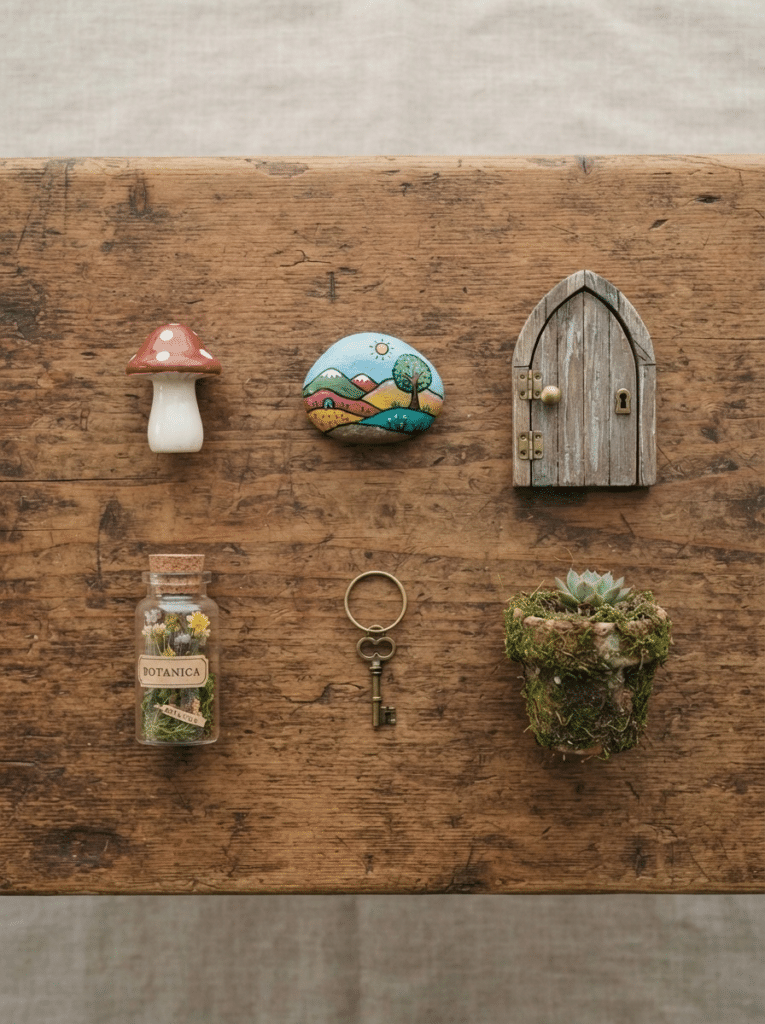
Most whimsical gardens share a few common traits.
- Surprise: Pieces tucked in spots where people find them by chance.
- Small scale details: Tiny doors, miniature houses, and little figures that reward a closer look.
- Bright or unexpected color: A pop of turquoise, sunny yellow, or hot pink among the green.
- Repurposed objects: Old boots, teapots, and ladders turned into planters or displays.
- Movement and sound: Wind spinners, chimes, and flags that respond to a breeze.
- A touch of humor: Frogs in hats, gnomes in odd poses, or a sign with a silly message.
Whimsy Versus Kitsch: Where Is the Line?
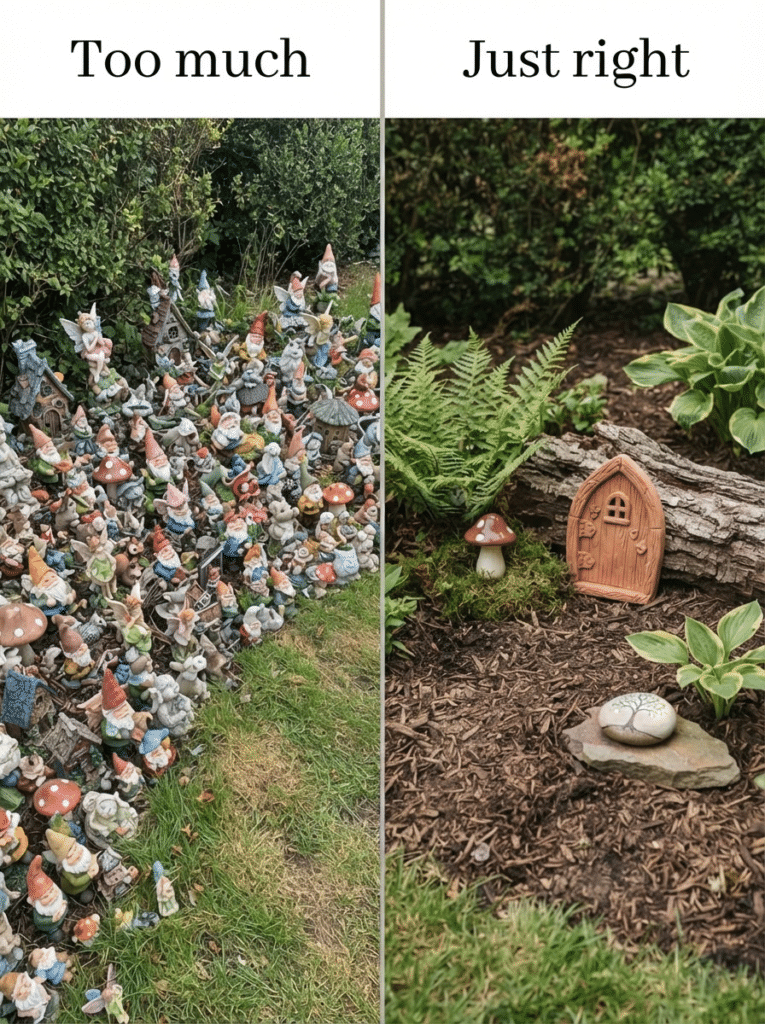
There is a fine line between charming and chaotic. Kitsch usually means too many items, all shouting at once, with no link between them. Whimsy works when each piece has room around it and a reason to be there. A good test: if you can’t see the plants because of the decor, pull a few items back.
Whimsical Garden Decor Styles to Try
Choosing one style makes shopping easier and stops the space from feeling random. You can still mix a little, but a main theme gives the eye something to follow. Here are some popular directions.
Fairy and Storybook Gardens
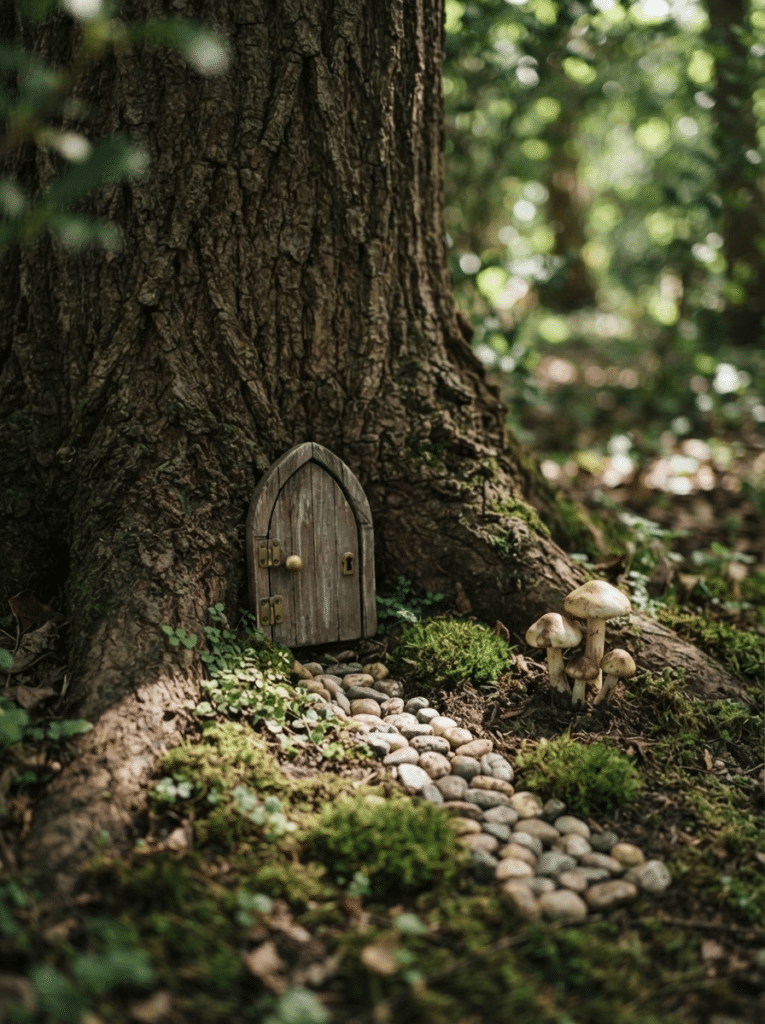
This style draws from fairy tales. Think tiny doors, miniature cottages, toadstools, and stepping stones. Soft colors and natural materials like wood, moss, and stone keep it gentle. It works well in shady areas, where moss and ferns grow happily and the little details glow.
Retro and Vintage Fun
Old fashioned lawn ornaments, pastel metal chairs, flamingos, and enamel signs bring a nostalgic feel. This style loves color and a sense of humor. It suits patios and small yards where you want a lively, happy mood.
Recycled and Upcycled Art
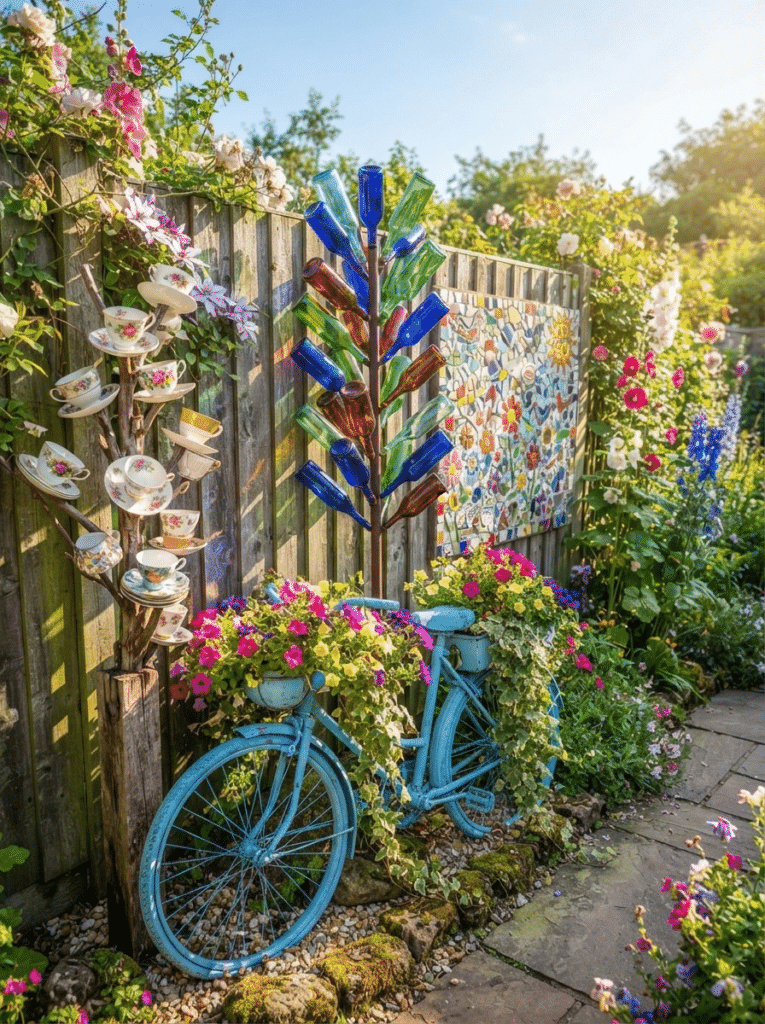
Many of the best whimsical pieces started life as something else. Old bikes, wheelbarrows, kettles, and glass bottles all get a second act as planters and art. This style is friendly to your wallet and to the planet, and every piece has a story.
Color Pop Gardens
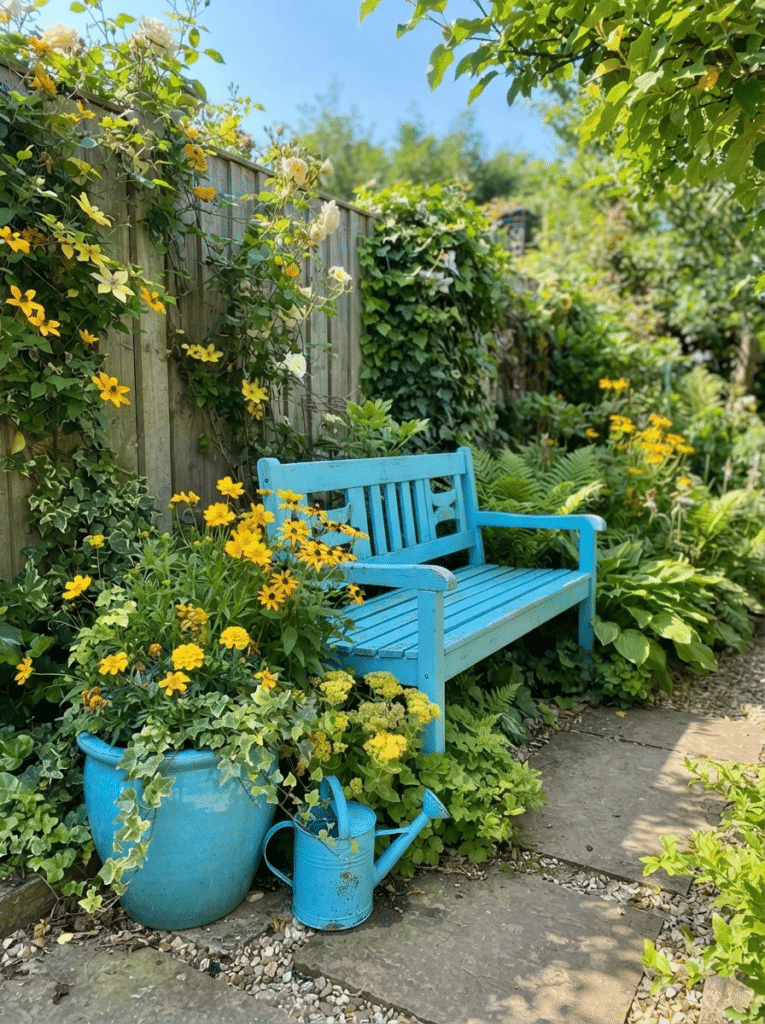
A color pop garden uses one or two bold shades to tie everything together. Paint a bench in bright blue, add a matching pot, and place a few yellow accents nearby. Repeating the same color across the yard keeps the fun feeling planned instead of random.
Woodland and Nature Inspired Whimsy
Carved wooden faces, stacked stones, acorn shaped ornaments, and driftwood sculptures give a quiet, magical mood. This style blends into planting beds easily and works best when you choose muted, earthy tones.
Fairy Gardens and Miniature Scenes
Miniature scenes are one of the most loved forms of whimsical garden decor. They are small, easy to build, and endlessly changeable. You can make one in a pot, a wooden crate, or right in your flower bed.
How to Build a Simple Fairy Garden
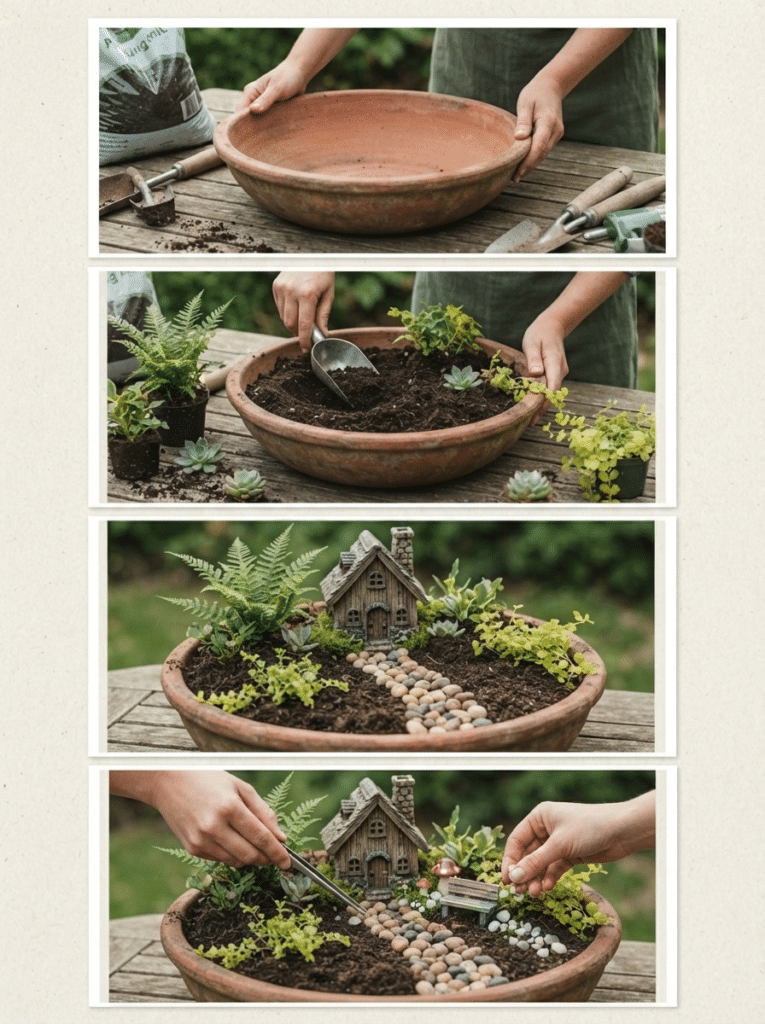
Follow these easy steps.
- Pick a container. A wide, shallow pot with drainage holes works best. Old wooden boxes and wheelbarrows work too.
- Add soil. Use a good potting mix. Mound it slightly so the scene has hills and levels.
- Choose small plants. Good options include baby tears, creeping thyme, Irish moss, miniature ivy, and small succulents. Match plants to the light they need.
- Place a focal point. A tiny house, arch, or bench should sit where people see it first.
- Lay a path. Use pebbles, crushed shells, or flat stones.
- Add details. A few small figures, a mirror pond, or a tiny lantern finish the scene.
- Water gently. Use a small watering can or spray bottle so you don’t wash the soil away.
Choose the Right Scale
Keep all your pieces in a similar size range. A giant gnome next to a tiny cottage looks odd, and it breaks the illusion. Pick one scale, such as small figures about two to three inches tall, and stick with it. Plants should also stay small so they don’t overwhelm the scene.
Care Tips for Miniature Gardens
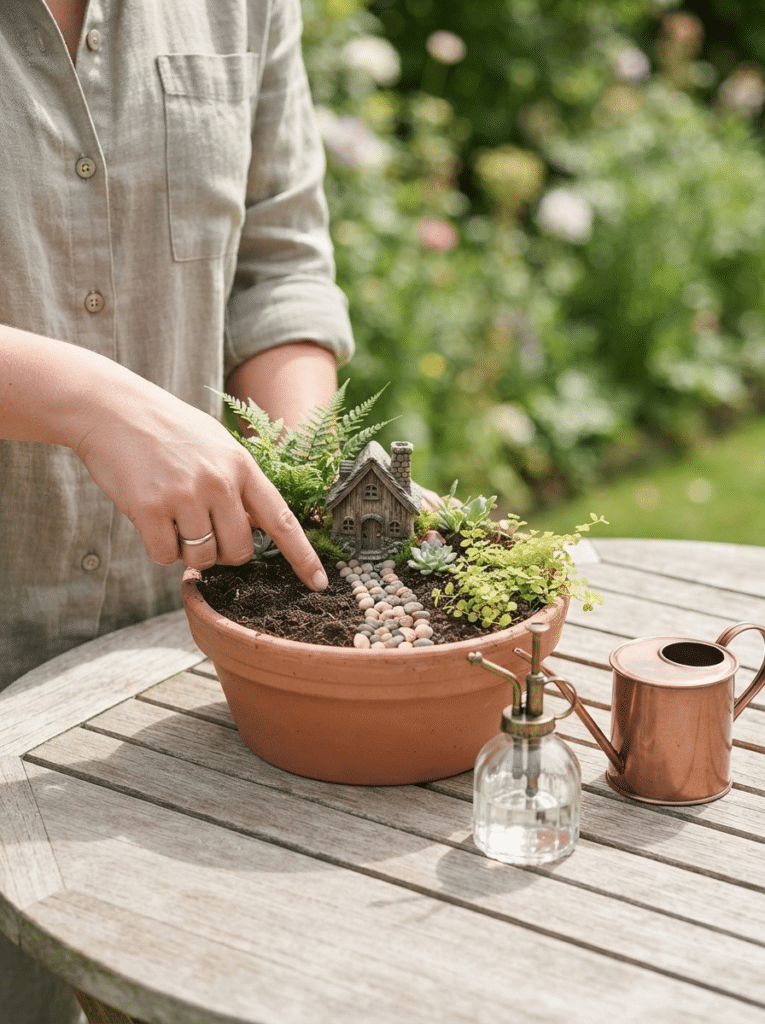
Most fairy gardens fail because of the wrong plants or too much water. Group plants with similar needs, use soil that drains well, and check moisture with your finger before watering. In colder areas, bring delicate scenes indoors or into a sheltered spot for winter. Painted or glued pieces should be sealed with an outdoor safe finish.
Unusual Garden Decor That Gets People Talking
If you want a yard that people remember, add a few unusual garden decor pieces. These are the items that make visitors stop, point, and ask where you found them. Here are ideas that work well.
Bottle Trees
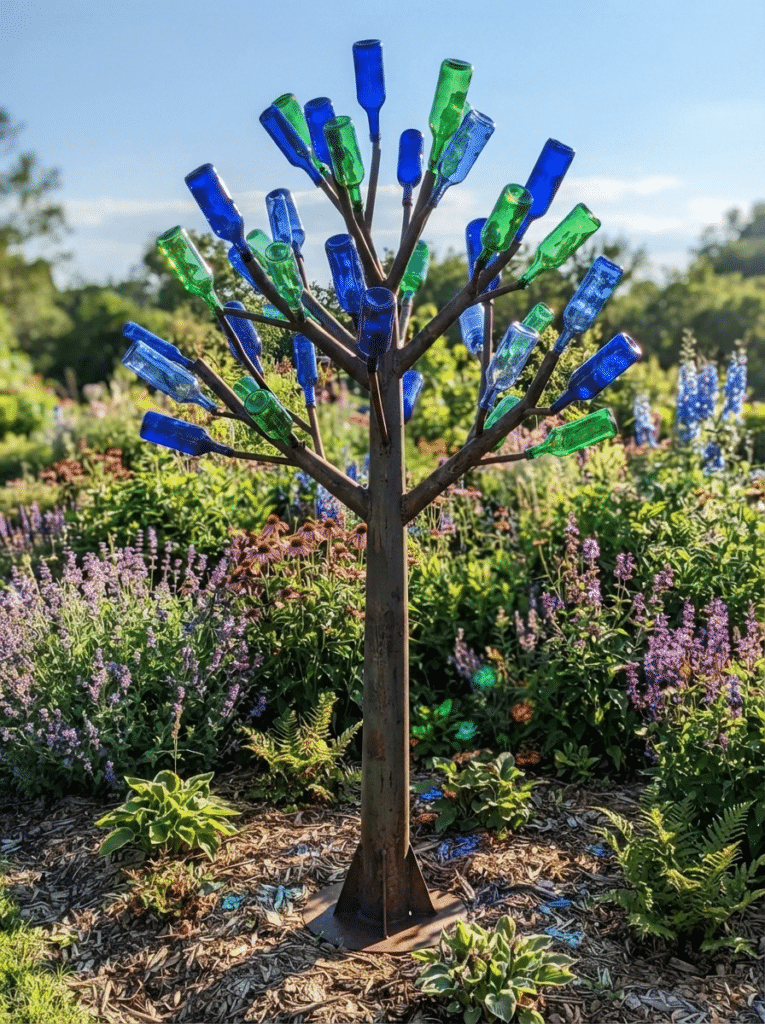
A bottle tree is a metal or wooden frame with colored bottles slipped over the branches. It is a long standing folk tradition in parts of the American South. Blue bottles are the most popular, and they glow beautifully in the sun. Bottles can be sharp if they break, so place your tree away from areas where children play barefoot.
Planters From Everyday Objects
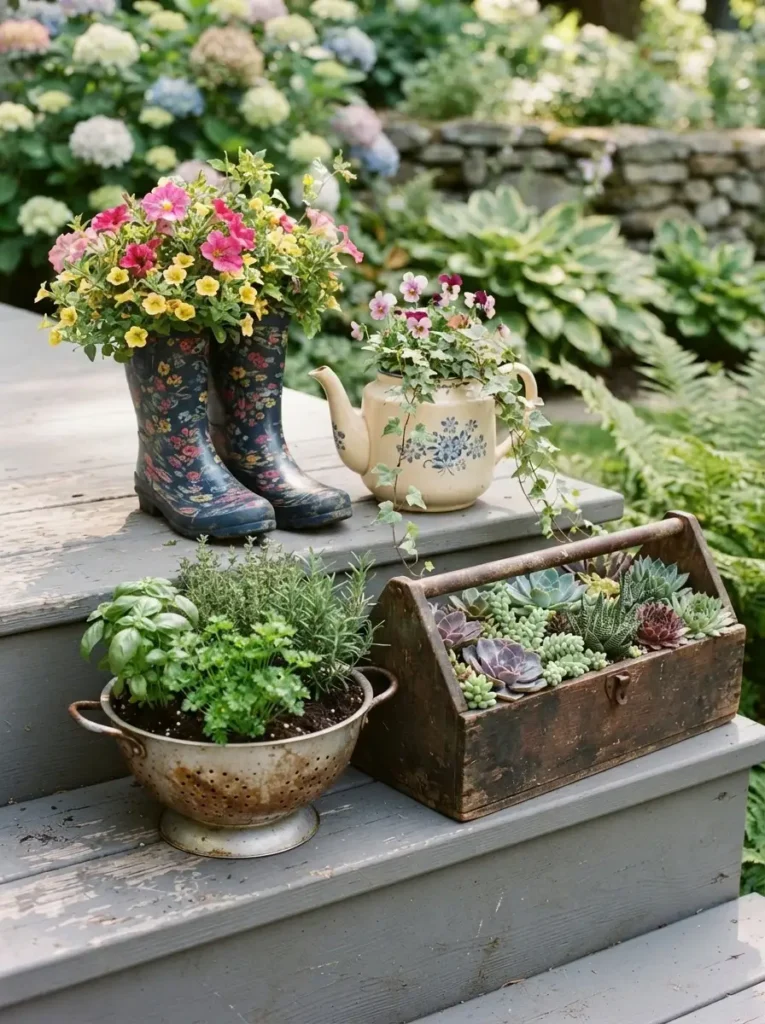
Almost anything that can hold soil can hold plants. Try rain boots, teapots, colanders, old sinks, birdcages, or even a toy truck. Just drill a few small holes in the bottom for drainage. If the item is metal, expect it to rust over time, which many people consider part of the charm.
Doors, Windows, and Frames
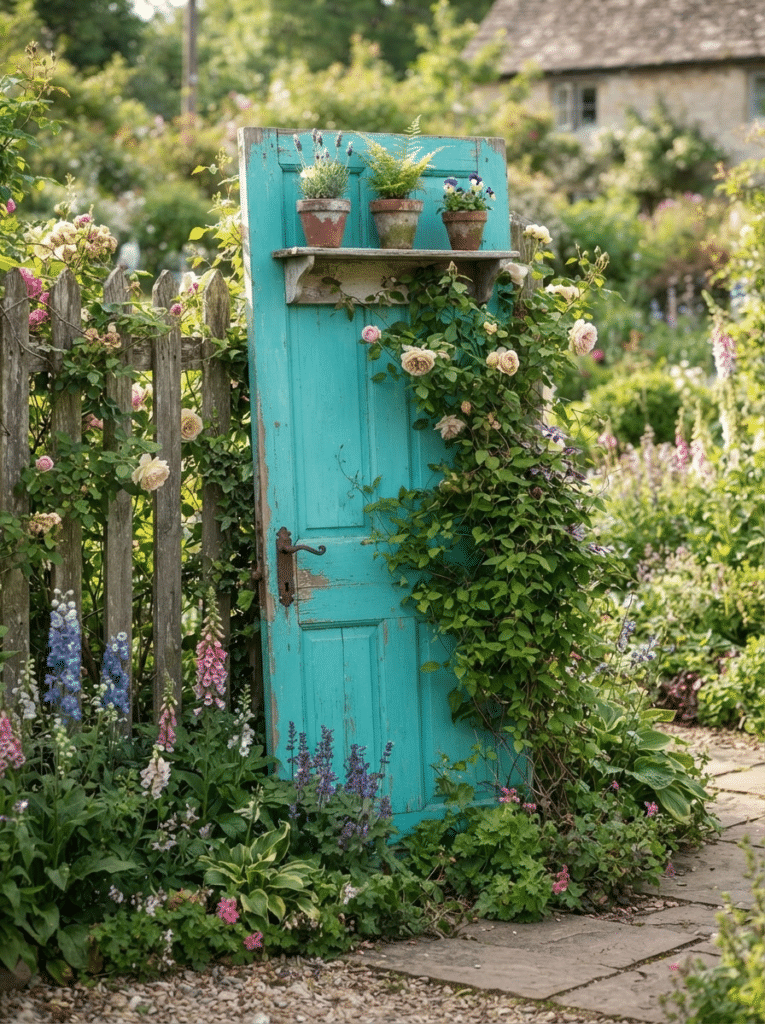
Old doors, window frames, and picture frames make quirky garden art. Lean a painted door against a fence, hang an empty frame on a wall and let a vine grow through it, or mount a mirror in a window frame to reflect flowers. It adds depth and a surprise for the eye.
Kinetic Art and Wind Toys
Pieces that move add a lively feel. Wind spinners, whirligigs, mobiles, and chimes turn every breeze into a small performance. Choose weather resistant materials like powder-coated metal, and secure taller pieces well so a storm doesn’t knock them down.
Oversized and Giant Pieces
One big surprise can be more fun than ten small ones. A giant metal dragonfly, a huge concrete mushroom, or a big painted watering can catches the eye from across the yard. Use only one or two oversized items and give them plenty of space.
Where to Place Whimsy Garden Decor
Placement can matter more than the piece itself. The same little statue looks lost in the middle of a lawn but perfect nestled beside ferns. Use these spots as a guide.
Create a Welcome at the Entrance
Your entrance sets the mood. A painted sign, a pair of bright planters, or a small archway tells visitors that something fun lies ahead. Keep it simple so the first impression feels warm rather than crowded.
Hide Surprises Along Paths
A winding path with small surprises encourages people to slow down and look. Place a small piece just around a bend or behind a plant. Guests will feel like they discovered a secret.
Use Trees, Fences, and Walls
Vertical spaces are great for whimsy. Hang lanterns from tree branches, mount a wooden sign on a fence, or attach a set of colorful pots to a wall. Anything on a wall or tree adds height, which keeps the garden from feeling flat.
Add Whimsy to Small Spaces and Balconies
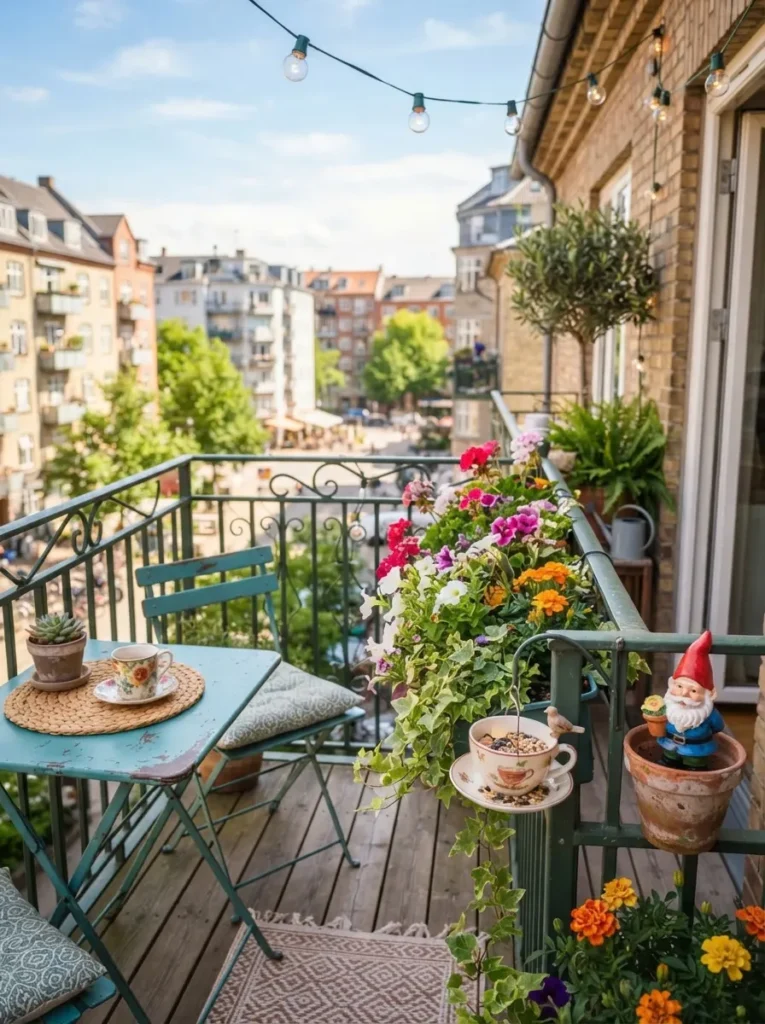
You don’t need a big yard. On a balcony, choose a few small pieces such as a hanging teacup feeder, a mini fairy scene in a pot, or a string of lights. Use the railing and walls to save floor space. A small space with a clear idea often looks better than a big one with no plan.
Lighting and Color for a Magical Mood
Light and color change how every piece feels. A simple gnome can look ordinary at noon and enchanting at dusk. Plan for both day and night.
Solar Lights and Lanterns
Solar lights are easy to install and cost nothing to run. Try lanterns in trees, jar lights on a table, stake lights along beds, or star shaped lights near a fairy scene. Choose warm white bulbs for a cozy look. Cool white lights can feel harsh.
Use Color With Purpose
Pick two or three main colors and repeat them. If your bench is turquoise, echo it in a pot or a small sign. Repetition connects the pieces and keeps the whimsy tidy. Green plants act as a calm backdrop, so bright colors show up well against them.
Add Reflections Safely
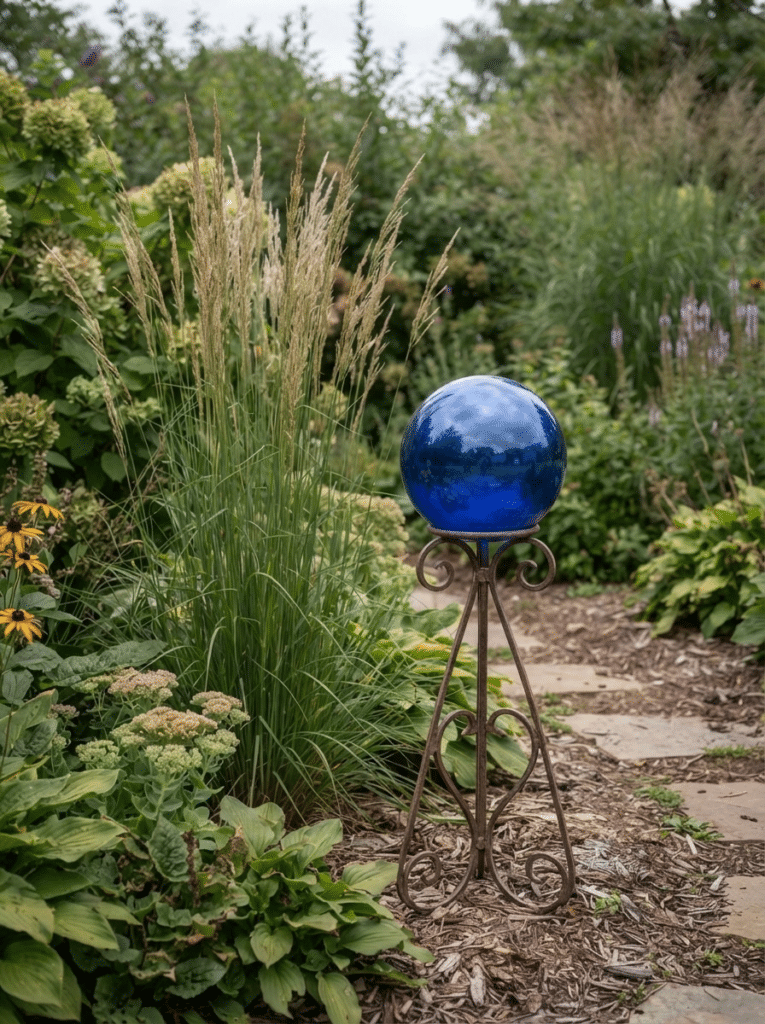
Mirrors, gazing balls, and shiny glass reflect light and add sparkle. Place them thoughtfully. Strong reflections can focus sunlight and scorch nearby leaves, and a mirror can confuse birds. Set shiny items where they catch light without aiming it at plants or windows, and avoid large clear mirrors in open spaces where birds fly.
DIY and Budget Friendly Whimsy Garden Decor
Whimsical decor doesn’t need a big budget. In fact, handmade pieces often have the most charm. Here are simple projects and money saving ideas.
Easy DIY Projects
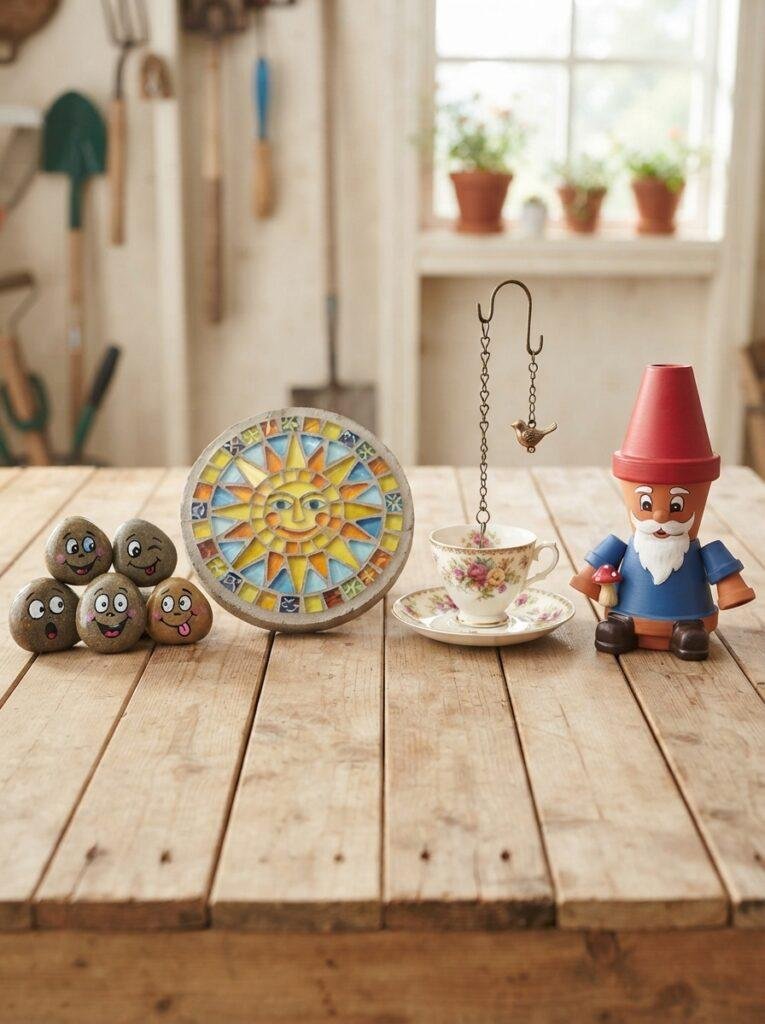
- Painted rocks: Collect smooth stones, paint them with outdoor acrylic paint, and seal them with a clear outdoor sealer.
- Terracotta pot people: Stack and paint small pots to make gnomes, flowers, or figures.
- Teacup bird feeders: Glue a teacup to a saucer and hang it from a branch.
- Mosaic stepping stones: Press broken tile or glass pieces into quick setting cement in a mold.
- Bottle edging: Bury glass bottles neck down along a bed for a colorful border.
- Wind chimes from old spoons: Bend and hang old metal spoons from a branch or a hoop.
Where to Find Cheap Treasures
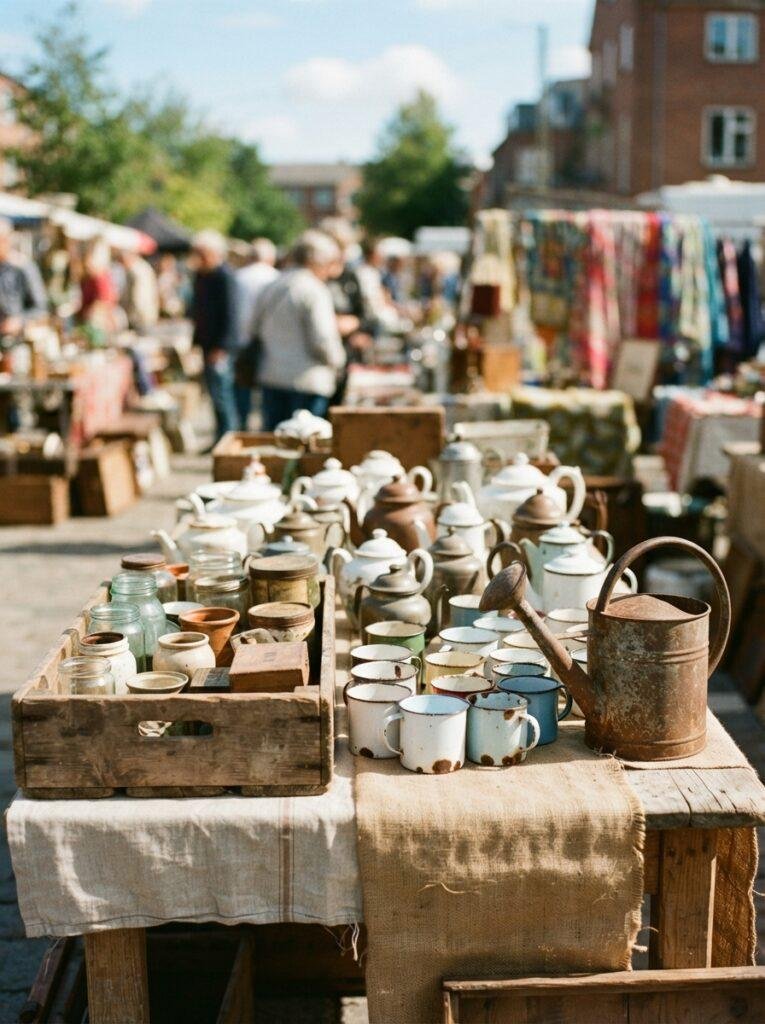
Flea markets, garage sales, thrift stores, and online swap groups often have old pots, tools, and odd containers for very little. Ask friends if they have chipped dishes or broken furniture they plan to toss. Keep your eyes open on walks and check neighborhood curb sales.
Spend Smart and Save Where You Can
Put your money into pieces that face weather every day, like sturdy planters, quality solar lights, and good outdoor paint. Save on small accents such as painted rocks and found objects. If you keep a rotating collection, you can swap items with the seasons for a fresh look without spending much.
Keeping Your Whimsical Garden Safe and Long Lasting
Outdoor decor faces sun, rain, wind, and frost. A little care keeps your pieces looking good for years.
Pick Weather Ready Materials
Concrete, powder coated metal, treated wood, and resin all handle weather well. Ceramic and glass look lovely but can crack in freezing temperatures, so bring them inside for winter. Plastic may fade in strong sun, so pick UV resistant versions or place it in shade.
Seal, Clean, and Store
Apply an outdoor sealer to painted items once a year. Wipe off dirt with a soft brush and mild soapy water. In areas with hard winters, store delicate pieces in a dry place. A yearly refresh keeps colors bright.
Think About Safety
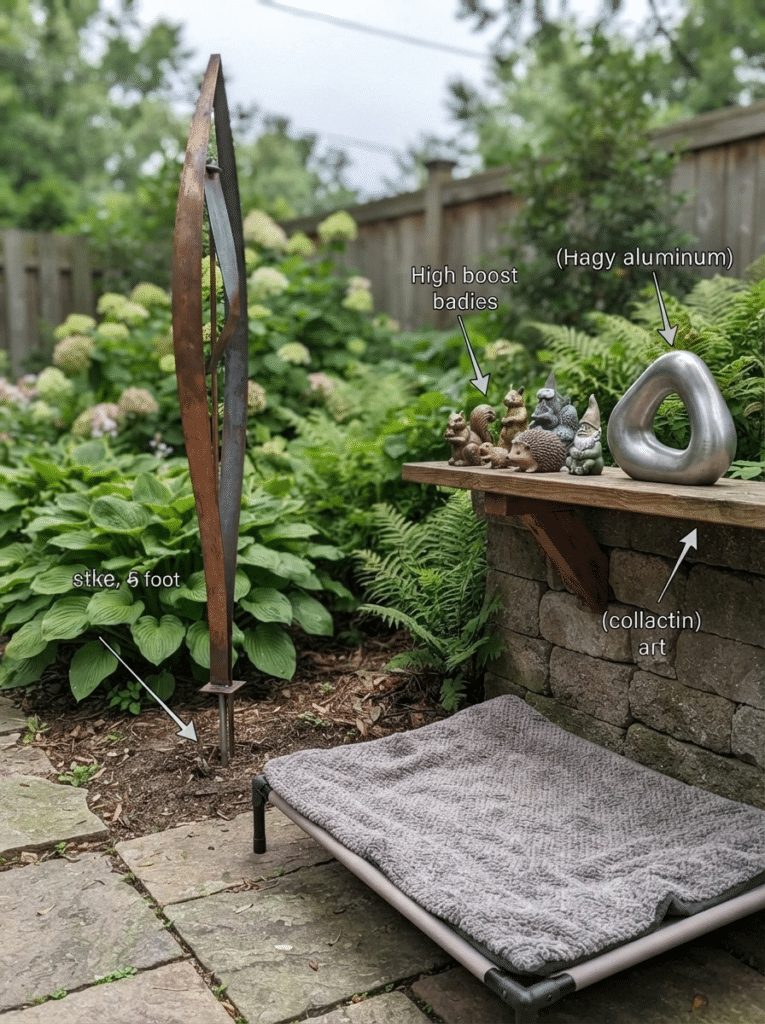
Check for sharp edges on metal and broken glass pieces, and keep them away from paths where children play. Secure tall items so they don’t tip. If you grow food, use non toxic, food safe paints on any item that touches soil or edible plants. Be careful with pieces near pets, since small figures can be chewed or swallowed.
Common Mistakes to Avoid
Even happy gardens can go wrong. Here are common problems and how to avoid them.
- Adding too much at once. Start with a few pieces and add more over time.
- Ignoring scale. Mixed sizes can look messy unless you do it on purpose.
- Forgetting the plants. Decor should support the garden, not replace it.
- Placing everything in a line. Group items in odd numbers, like threes, and vary heights.
- Choosing cheap materials that fade fast. A few well made pieces beat many flimsy ones.
- Skipping drainage. Planters without holes lead to root rot.
- Using clashing colors. Choose a small palette so everything looks connected.
- Leaving decor out in every storm. Bring fragile items in for harsh weather.
Frequently Asked Questions
What is whimsy garden decor?
Whimsical garden decor is playful, imaginative outdoor decor that adds charm and surprise to a garden. Examples include fairy doors, painted planters, wind spinners, and quirky sculptures. The goal is to make the space feel fun, personal, and a little magical.
What are some unusual garden decor ideas?
Popular unusual garden decor ideas include bottle trees, planters made from old boots or teapots, painted doors, giant metal sculptures, and mosaic stepping stones. Repurposed items work especially well, since they add character and cost little.
How do I add whimsy to a small garden or balcony?
Choose a few small, high impact pieces such as a hanging teacup feeder, a miniature fairy scene in a pot, or a string of warm lights. Use walls and railings to save floor space. Stick to one color palette so the space feels calm rather than crowded.
What materials last longest outdoors?
Powder coated metal, concrete, treated wood, and resin hold up best to sun and rain. Ceramic and glass are beautiful but can crack in freezing weather, so store them indoors in winter. Sealing painted items once a year also helps them last.
Is whimsy garden decor safe for pets and kids?
Most pieces are safe when placed with care. Avoid small items that could be swallowed, sharp metal edges, and broken glass. Use non toxic paints and sealers, especially near vegetable beds. Secure tall or heavy items so they can’t tip over, and supervise young children near ponds or glass pieces.
Conclusion
Great whimsy garden decor comes down to a few simple choices. Pick a style that makes you smile, keep the scale and colors consistent, and hide little surprises where people can find them. Add unusual garden decor pieces with a story, such as a bottle tree or an old door turned into art, and let lighting turn everything magical at dusk. Above all, leave room for the plants, since they are the heart of the garden.
You don’t have to finish everything in a weekend. Start with one small corner and a few pieces you love, then grow the scene over time. Each addition makes the space feel more like yours.