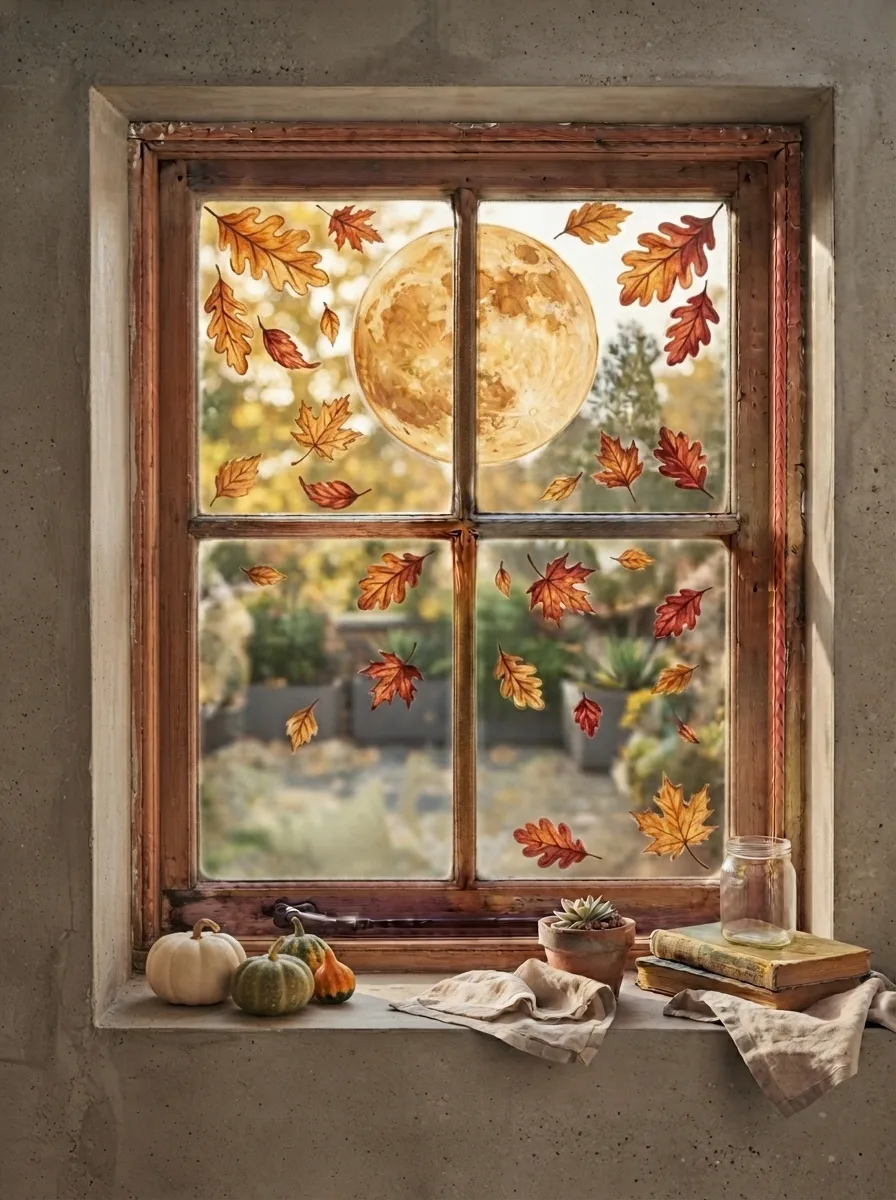
A plain window can become one of the coziest spots in your home with a little paint and an afternoon. These fall window painting ideas work for beginners, kids, and anyone who wants seasonal color without buying more decor. You do not need to be an artist. A few leaves, a row of pumpkins, or a simple moon can look great from the inside and from the street.
In this guide, you will find 25 designs, from soft and modern to rustic and playful. You will learn which paints are safe for glass, how to prep and mask the window, how to stop drips, and how to take it all off when the season ends. You will also see how shops and cafes use fall window art to bring in customers.
What Are the Best Fall Window Painting Ideas?
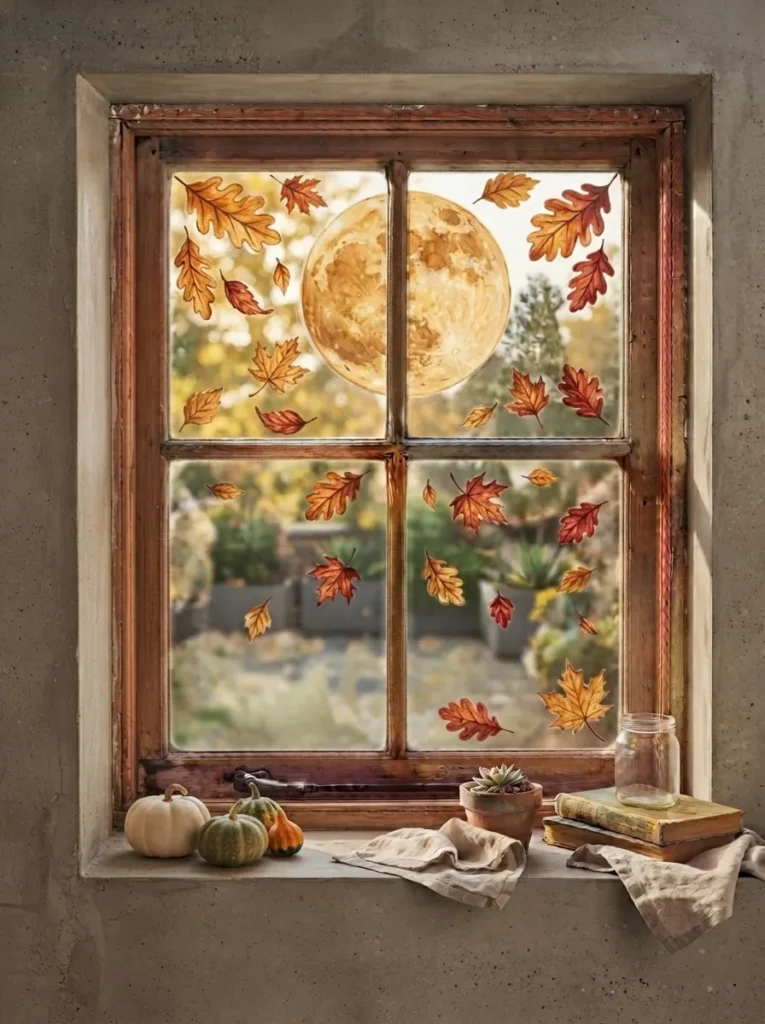
The best fall window painting ideas use simple shapes in warm colors. Leaf borders, pumpkin vines, wheat stalks, acorns, and harvest moons are the top picks. Paint them with washable window paint or markers, keep to three or four colors, and leave the center of the glass open so light and views come through.
A quick way to choose:
- Easiest for beginners: a leaf cascade, a harvest moon, or a corner of acorn branches.
- Best for kids: handprint trees, pumpkin patches, and smiling scarecrows.
- Best for small windows: a single wreath or a low border.
- Best for modern homes: a minimal leaf border or a ginkgo drift in muted colors.
Supplies and Prep for Fall Window Painting
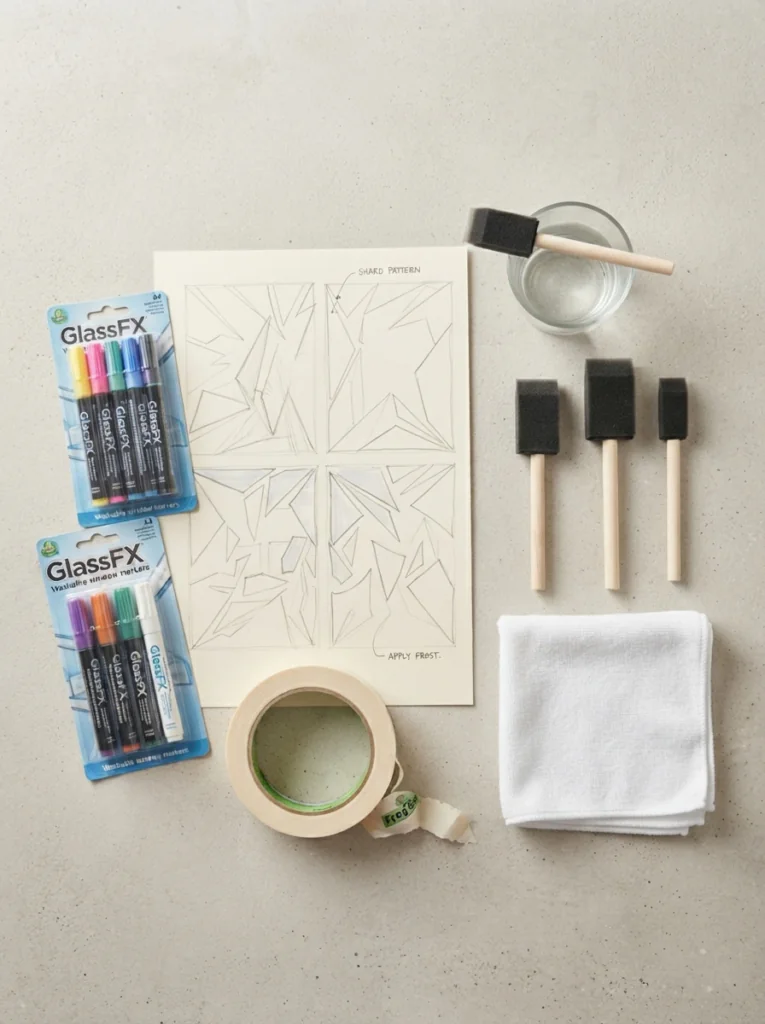
Good prep makes fall window painting faster, cleaner, and less stressful. Spend ten minutes here and you will save time later.
Choose the Right Paint
Paint made for glass or windows is the safest bet. Washable window markers and paint sticks are easy, tidy, and loved by kids. Washable tempera paint is another common choice for temporary designs. Many interior water based acrylic paints will stick to glass too, but standard acrylic is made to be permanent once it dries, so it can be hard to remove. If you want your art to come off easily, choose products labeled washable or made for windows, and follow the directions on the label.
Thin and Prep Your Paint
If your paint feels thick, add a small splash of water. If it will not stick well, stir in a few drops of dish soap per cup of paint. Do not over thin it, because runny paint drips. Always test a small corner first.
Pick Your Tools
You do not need fancy brushes. Foam brushes leave no brush marks, and fine bristle brushes give cleaner lines. Paint markers work well for details. Sponges are great for filling big shapes like leaves or moons.
Decide Inside or Outside
You can paint either side of the glass. Choose the side you want to be seen most, and think about weather. Paint on the inside stays safe from rain and wind. If you have tinted windows, check how your art looks from the other side, since colors can be harder to see through tint.
Clean, Sketch, and Mask
Wipe the glass with glass cleaner and let it dry. Draw your design on paper, then tape it to the opposite side of the glass as a tracing guide. If your window has dividers, or you’re worried about the frame and sill, mask those areas with painter’s tape and paper. Use low stick tape so you do not leave residue.
Cozy Fall Window Painting Ideas for Your Home
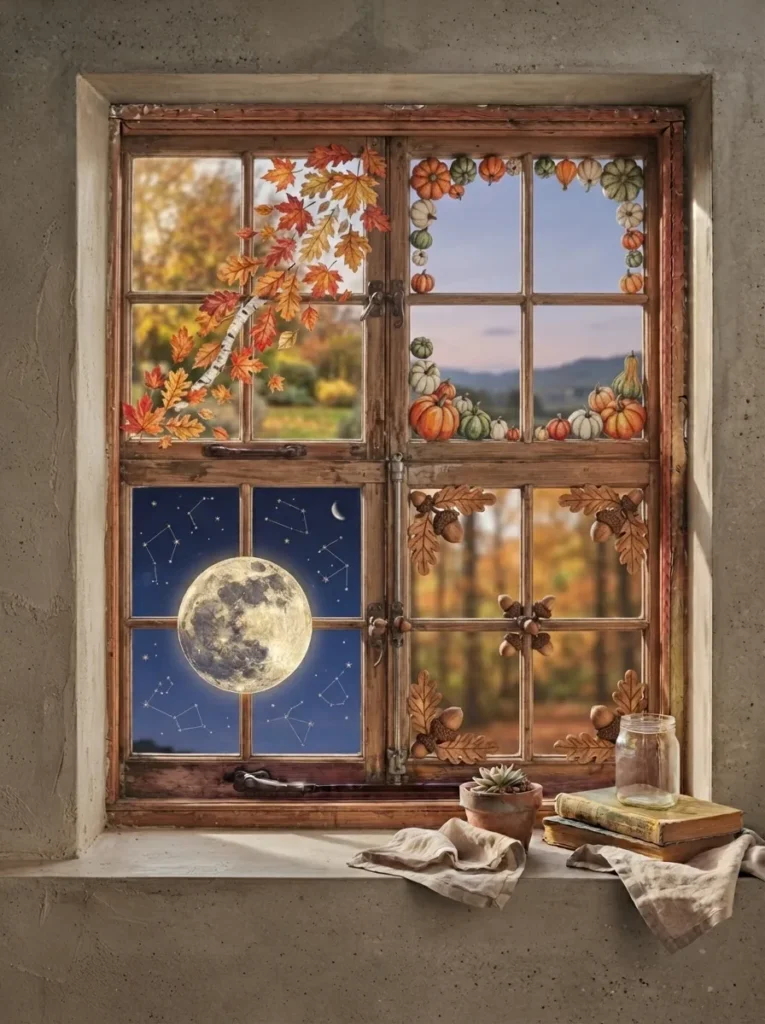
These designs lean warm and welcoming. Most need only three or four colors. Pick one that fits your room, then repeat a color from your pillows, wreath, or table so the window feels part of the space.
Leaf and Floral Designs
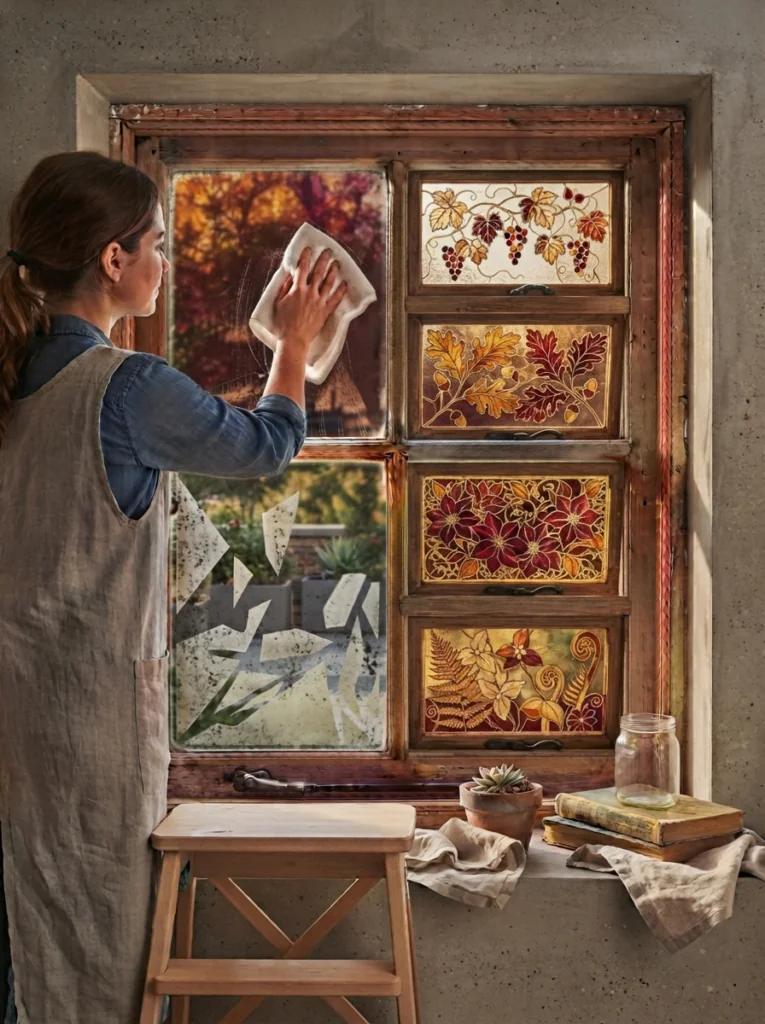
1. Leaf Cascade
Paint leaves in amber, burgundy, and gold down one side of the window. Make them different sizes so they look like they are tumbling, and leave the middle open. This is one of the easiest and prettiest fall window painting ideas for living rooms.
2. Falling Leaf Swirl
Start with large leaves in one corner and make them smaller as they drift diagonally across the glass. Mix maple and birch shapes. The movement makes a wide window feel lively.
3. Maple Wreath Circle
Lightly sketch a circle, then build a wreath with maple leaves, tiny berries, and a few mini pumpkins. It creates one clear focal point and looks great on a front window.
4. Autumn Floral Arch
Paint an arch of rust flowers, golden stems, and sage leaves around the window. Put the fullest blooms low and let the stems thin out toward the top. It frames the view instead of covering it.
5. Sunflower Harvest
Place big sunflowers in the lower corners with wheat stems between them. Honey gold and terracotta feel sunny and cheerful, especially in a bright kitchen.
Harvest and Pumpkin Designs
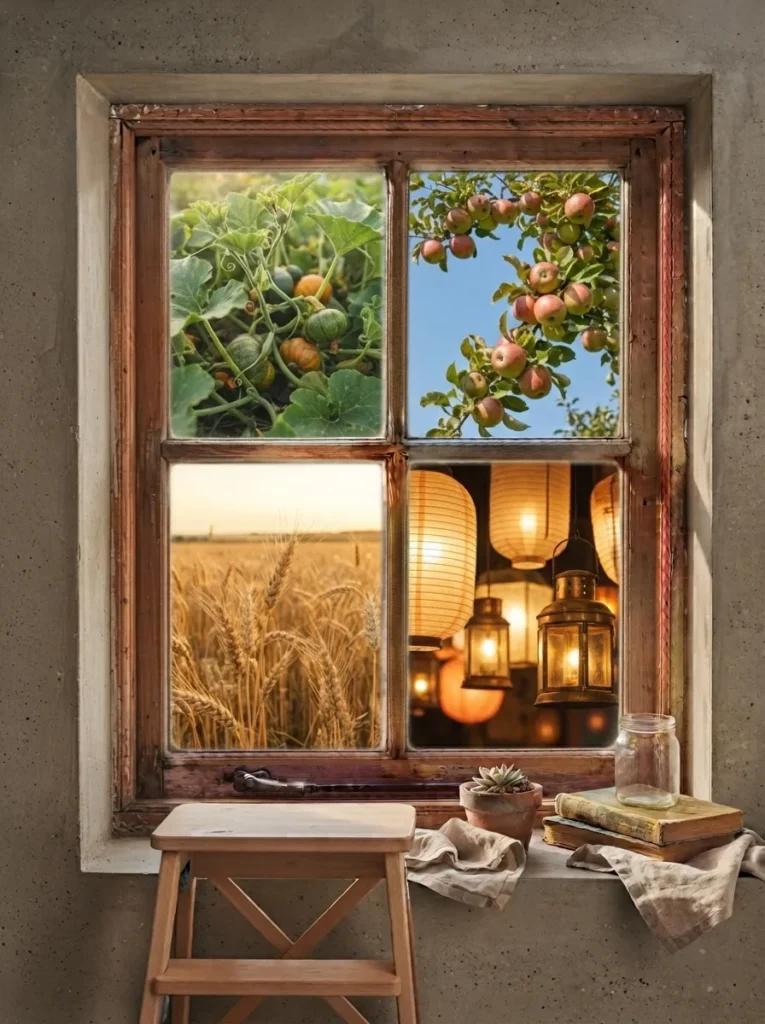
6. Pumpkin Vine Frame
Paint a thin vine around the window first, then tuck in pumpkins of different sizes. Cream, rust, and sage pumpkins look softer than all orange. Leave breathing room between clusters.
7. Apple Branch Sweep
Sweep one branch across the glass with red apples and olive leaves. Put the heaviest fruit near one side so the branch tapers. It feels fresh and works well near wood bowls or fruit decor.
8. Golden Wheat Stalks
Paint tall wheat stalks at slightly different heights. The narrow shape keeps the window airy, and honey and cream tones suit dining rooms and farmhouse spaces.
9. Scarecrow and Crows
Paint a simple scarecrow with a patched hat and one or two black crows on a fence. Keep the face friendly. This design is a favorite with kids and easy to build from basic shapes.
10. Lantern Glow
Paint lanterns with bronze frames and layered yellow and amber flames. Add a few tiny falling leaves. At dusk, light behind the glass makes the flames seem to glow.
Woodland and Scenic Designs
11. Birch Forest
Paint tall white trunks with charcoal markings and a few golden leaves. Vary the width and spacing. The vertical lines make short windows feel taller.
12. Harvest Moon Silhouette
Paint a big, muted moon with dark branches in front. It gives you one strong focal point, and small mistakes disappear in a silhouette, which makes this easy for beginners.
13. Fox in the Grasses
Add a clean fox shape along the bottom of the window with grasses, leaves, and a few mushrooms. Soft sage, russet, and cream keep it from looking cartoonish.
14. Acorn and Mushroom Corners
Place acorn branches and tiny mushrooms in the corners and keep the center clear. Group them in uneven clusters. It feels handmade and keeps views open.
15. Cozy Cottage Scene
Paint a small cottage with a pumpkin lined path, amber trees, and copper hills along the lower third. Keep distant shapes simple, and put most of the color in the foreground.
16. Steaming Mugs and Leaves
Paint two big mugs of cider with swirls of steam rising and leaves drifting past. It is simple, charming, and perfect for a kitchen or breakfast nook.
Modern and Minimal Designs
17. Ginkgo Leaf Drift
Scatter fan shaped ginkgo leaves diagonally in mustard and olive. Leave generous space between each one so every leaf looks intentional.
18. Painted Plaid
Use wide spacing between lines in muted rust, mustard, cream, and olive. Thin or crowded grids can feel heavy, so keep it airy. It echoes cozy blankets and pillows.
19. Terracotta Leaf Border
Run a restrained border of terracotta, olive, and beige leaves around the edge. Use fewer leaves with bigger gaps for a clean, modern look.
20. Tape Stencil Leaves
Use low stick painter’s tape to make leaf or acorn shapes, paint over them, then peel the tape away for crisp, clean edges. Tape gives you unlimited stencil shapes without printing anything.
Fun Techniques and Family Projects
21. Handprint Tree
Paint a trunk and branches, then press little hands in red, orange, and yellow paint for leaves. Use washable paint and an old towel under the window. Add each child’s name or age in the corner for a keepsake.
22. Frosted Morning Fog
Mix about half a cup of warm water with one third cup of Epsom salt until no more dissolves, then add three drops of dish soap. Dab it on the glass with a sponge in a misty pattern. As it dries, it creates a frosted look that pairs well with painted leaves and branches.
23. Give Thanks Lettering
Write “Give Thanks” or “Hello Fall” in bold script, then add small leaves around it. If you paint on the inside, trace a reversed version so it reads correctly outside. This design lasts from September through Thanksgiving.
24. Window Frame Garland
Paint a drooping oak garland across the top and down the sides of the window, with brown, rust, and muted green leaves. Use small overlaps and different angles so the leaves look like they are draped.
25. Paint and Layer
Mix any design above with real decor on the sill, such as small pumpkins, a branch in a vase, or a string of warm lights. The painted scene becomes the background, and the sill items add depth.
How to Paint Your Window Step by Step
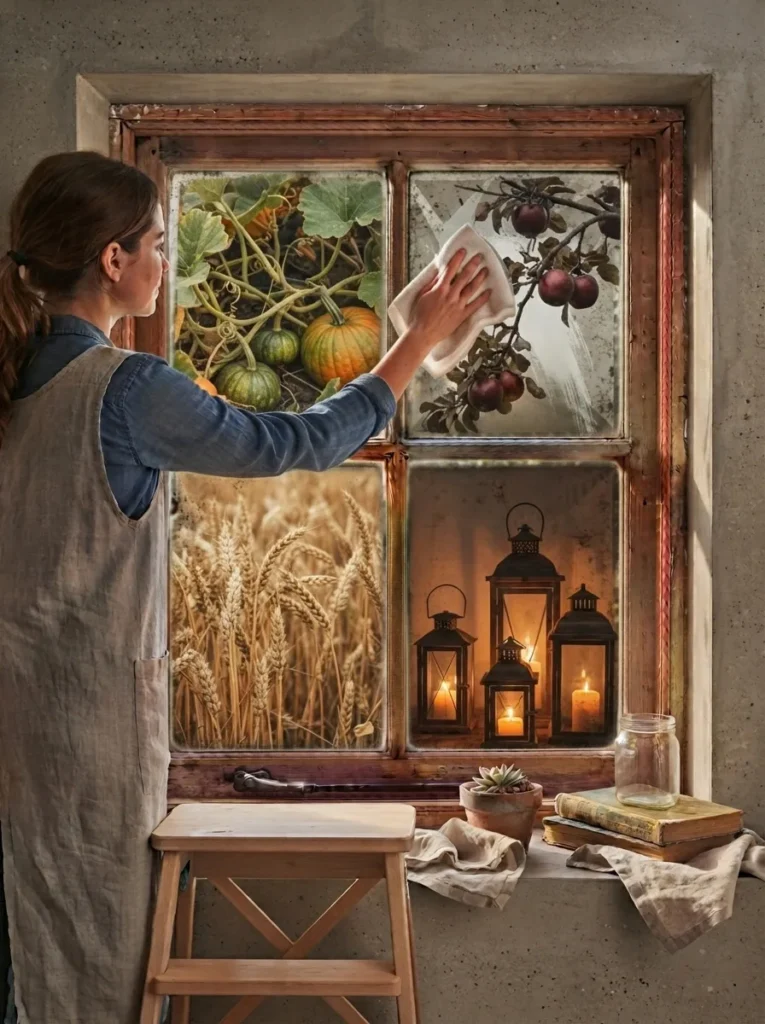
Follow these steps for any design on the list.
- Clean and mask. Wipe the glass, let it dry, and tape off frames and dividers.
- Trace your sketch. Tape the paper to the other side of the glass and lightly outline the main shapes.
- Paint large shapes first. Fill in leaves, moons, or pumpkins with thin coats. Many window painters block in the big shapes first, then add details after.
- Let it dry. Wait until each layer is dry before adding lines, faces, or highlights.
- Add details last. Use a fine brush or paint marker for veins, stems, and small shapes.
- Remove tape and step back. Peel the tape slowly and check the design from both sides and from the outside.
How to Stop Window Paint From Dripping
Drips happen when there is too much paint, or when it is too thin. These habits help:
- Use thin coats instead of one thick coat.
- Wipe extra paint off your brush before touching the glass.
- Work in small sections.
- Keep a light, steady pressure.
- Avoid painting in direct sun or high humidity, since both change how paint dries.
- Catch any drip right away with a clean, damp cloth or the edge of your brush.
Keep Your Room Bright
Paint blocks light. Opaque colors and many layers block the most. If you want a bright room, paint along the edges, use lighter or more see through colors, and leave plenty of clear space. A border or a low scene often looks better than a full pane anyway.
Fall Window Art for Shops, Cafes, and Events
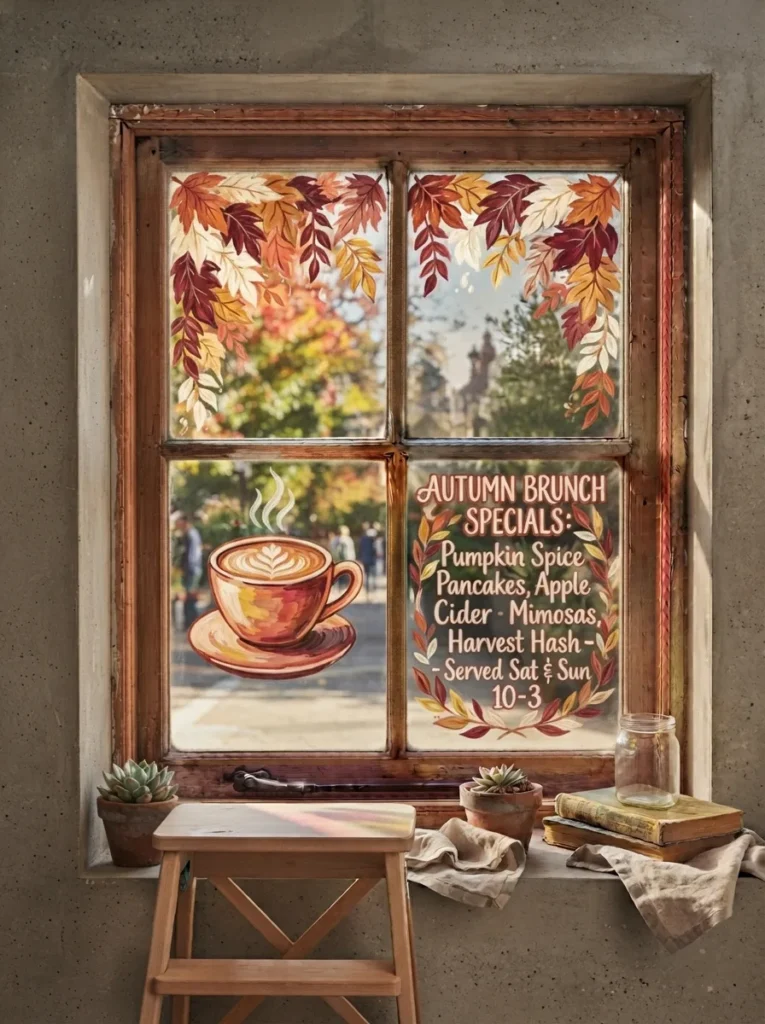
Fall window art is not only for homes. Local businesses use it to stop foot traffic and show personality. Artists who paint windows for shops often design for each location instead of using one set design.
Here are ideas you can borrow:
- Match the brand. Repaint a logo in autumn colors, such as a lotus flower in orange and gold, so the window feels like part of the shop.
- Match the cuisine. A French bistro can show famous landmarks with falling leaves. A bagel shop can show giant bagels with autumn colors.
- Add a message. Mix a Thanksgiving scene with a promotion, like a brunch deal or a seasonal special.
- Go big. Oversized leaves or giant animals make a small storefront stand out.
- Think beyond glass. Some artists add chalk art on the sidewalk for neighborhood events, such as a food walk.
If you want a pro for a big or high window, expect to pay more for ladder work. Many shops hire a painter once, then reuse a basic design each year with small changes.
For a home project, you can still borrow these tips. Use your own favorite colors, a family name, or a theme that fits your street.
Plan Your Palette and Timeline
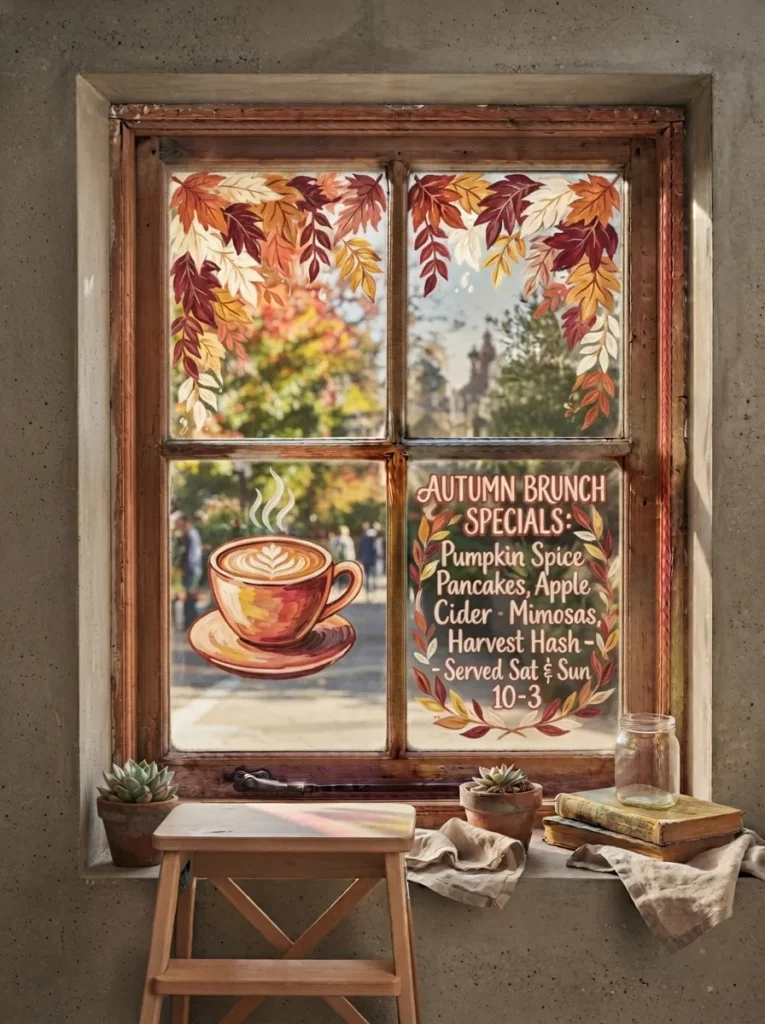
A plan keeps your window fresh and helps you avoid repainting.
Choose a Color Palette
- Warm classic: amber, rust, gold, and brown.
- Soft and neutral: cream, tan, olive, and honey.
- Moody: burgundy, deep green, copper, and charcoal.
- Modern: terracotta, olive, and beige.
Repeat one or two of these colors in a wreath, a blanket, or a table runner nearby. Many decorators say matching window art to nearby textiles and decor makes the whole room feel more connected.
Pick Your Timing
- Early September: Paint leaves, wheat, and acorns.
- October: Add pumpkins, scarecrows, and a harvest moon.
- November: Add “Give Thanks,” apples, and cozy mugs.
Many people begin painting in mid September and leave the design through Thanksgiving. If you want a Halloween look too, see our post on Halloween window ideas, then swap a few shapes.
Removal, Troubleshooting, and Safety
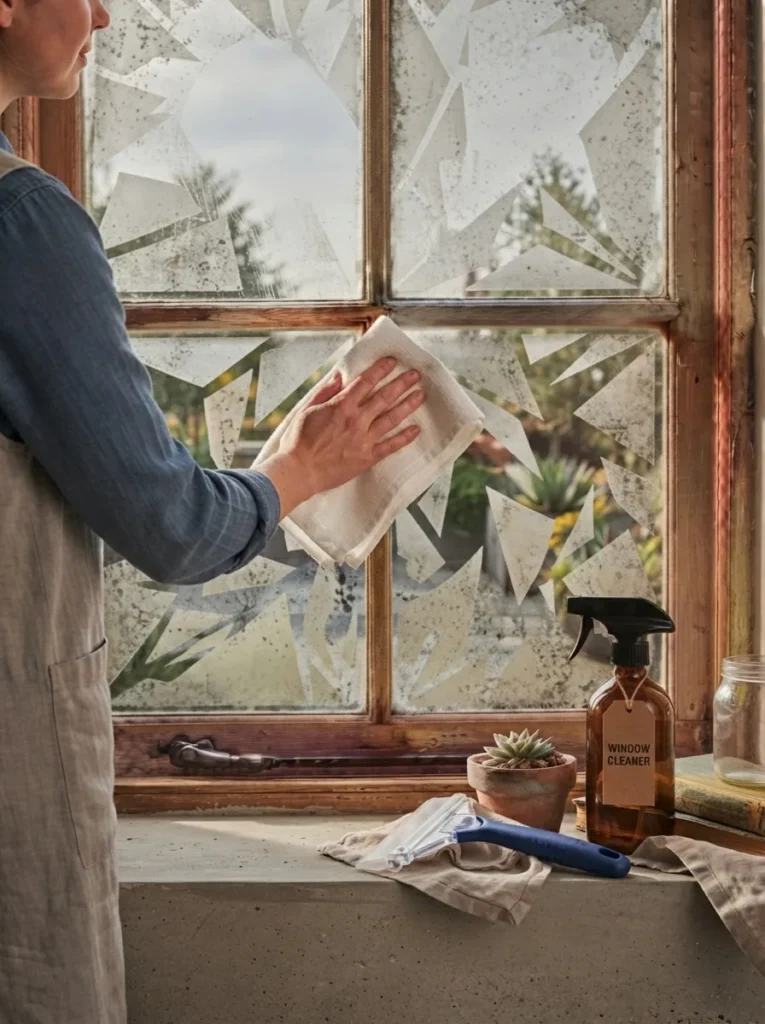
A great window is easy to clean when the season ends. Plan for removal before you start.
How to Remove Window Paint
- Check the label first. Washable paint often wipes off with a wet cloth.
- Wet the paint with window cleaner or soapy water and let it soak in for a few minutes.
- Wipe with a soft cloth or sponge.
- For stubborn standard acrylic, keep the glass and paint wet and use a razor scraper held at about a 45 degree angle. Go slowly so you do not scratch the glass.
- Finish with a regular window cleaning.
Never use sharp tools on tinted, filmed, or specially coated glass. Use the maker’s care instructions instead.
Common Problems and Fixes
- Paint beads up: The glass may have a slick coating or leftover cleaner. Clean it again with rubbing alcohol or a gentle scrub, then retest.
- Streaks: Use fewer, smoother strokes, or switch to a foam brush.
- Cracking or peeling: The paint is too thick. Use thinner coats next time.
- Colors look faint: Add a second thin layer, or paint the side that is most visible.
- Fading outside: Sun and rain can wear paint down. Paint on the inside or touch up as needed.
Safety Checklist
- Use a sturdy step stool and have someone hold it.
- Let kids paint at low heights, with an adult close by.
- Choose non toxic, washable supplies when children help.
- Keep razor blades locked away and use them only with care.
- If birds hit your windows often, remember that a few painted shapes will not prevent strikes. Keep any existing bird safety treatment in place.
Frequently Asked Questions
What paint is best for fall window painting?
Use washable window paint, markers, or washable tempera for easy cleanup. Interior water based acrylic can also work, but it is meant to be permanent when dry, so it is harder to remove. Always follow the label and test a small spot first.
Can I paint on the inside of the window?
Yes. Painting inside protects your art from weather and is easier to reach. Check how it looks from outside, and remember that words can look backward unless you trace a reversed version.
How do I remove fall window art?
Soak the paint with window cleaner or soapy water, then wipe it away. For stubborn paint, hold a razor scraper at a shallow angle on wet glass. Skip sharp tools on tinted or coated windows.
Will painting my windows make the room darker?
It can, a little. Opaque paint, dark colors, and many layers block the most light. Paint borders or low scenes, use thin coats, and leave open space to keep rooms bright.
How long does fall window painting last?
Indoors, it can stay up for the whole season. Outdoor paint may fade or wash off in rain and sun. Most people leave designs up from September until Thanksgiving, then clean them off.
Conclusion
You now have 25 fall window painting ideas, plus the tools and tips to paint, fix, and remove them with confidence. Start with one small window and one simple shape, like a leaf cascade or a harvest moon. Step outside to see how it looks, then add details if you want. This seasonal window art is meant to be fun, so enjoy the process, even if your leaves are a little wobbly.
Ready to begin? Pick your favorite design from this list, gather your washable paint and a foam brush, and paint your first window this weekend. Then snap a photo and share it, because your neighbors will love seeing what you made.