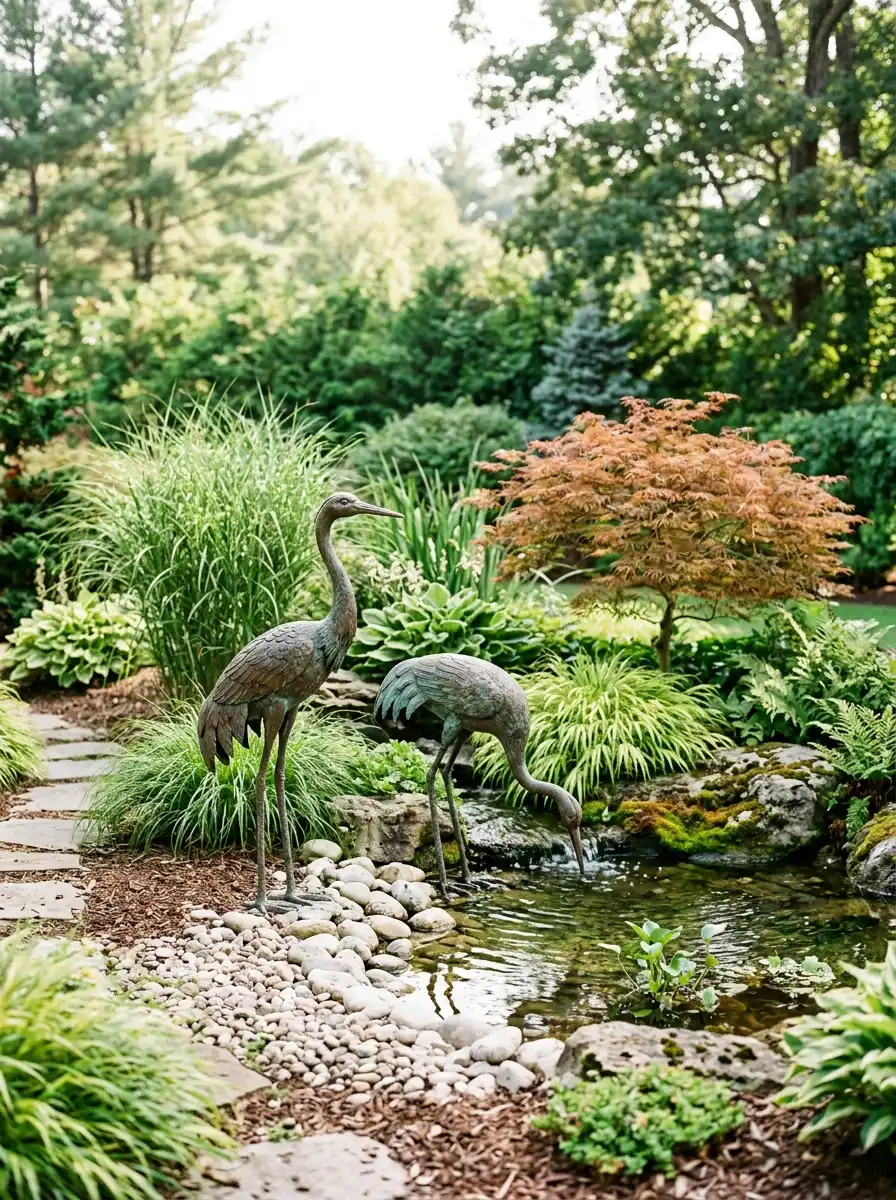
Outdoor crane garden decor adds grace, height, and a sense of calm to a yard in a way few other ornaments can. A tall, slim bird standing by the water or tucked into a flower bed makes people slow down and look. It also tells a story. In many cultures, cranes stand for long life, peace, and loyalty, so a crane is more than a pretty shape. It is a quiet symbol that you enjoy every time you walk past.
But a crane statue only works if you choose the right one and place it well. A single tall bird alone on a lawn can look lost. The wrong material can rust or crack. A pose that looks great in a catalog may disappear against a dark hedge. This guide helps you avoid those problems. You will learn how to choose between a crane and a blue heron garden statue, which materials last, where to place your piece, what to pair it with, and how to care for it.
Quick answer: For the best outdoor crane garden decor, choose a weather resistant metal or bronze crane in a pose that fits your space, such as a feeding crane for a pond or a standing crane for a flower bed. Place it in a pair or a group of three, set it against a light or open backdrop, anchor it well, and pair it with grasses, stones, and water. Clean it gently a few times a year.
In this guide, you will learn:
- Why cranes make such a strong garden statue
- How cranes, herons, and other bird garden statue styles differ
- Which materials work for metal garden decor and other outdoor pieces
- How to place your statue for the best look
- What outdoor garden decorations to pair with it
- Care, safety, budget, and mistakes to avoid
Why Choose Outdoor Crane Garden Decor?
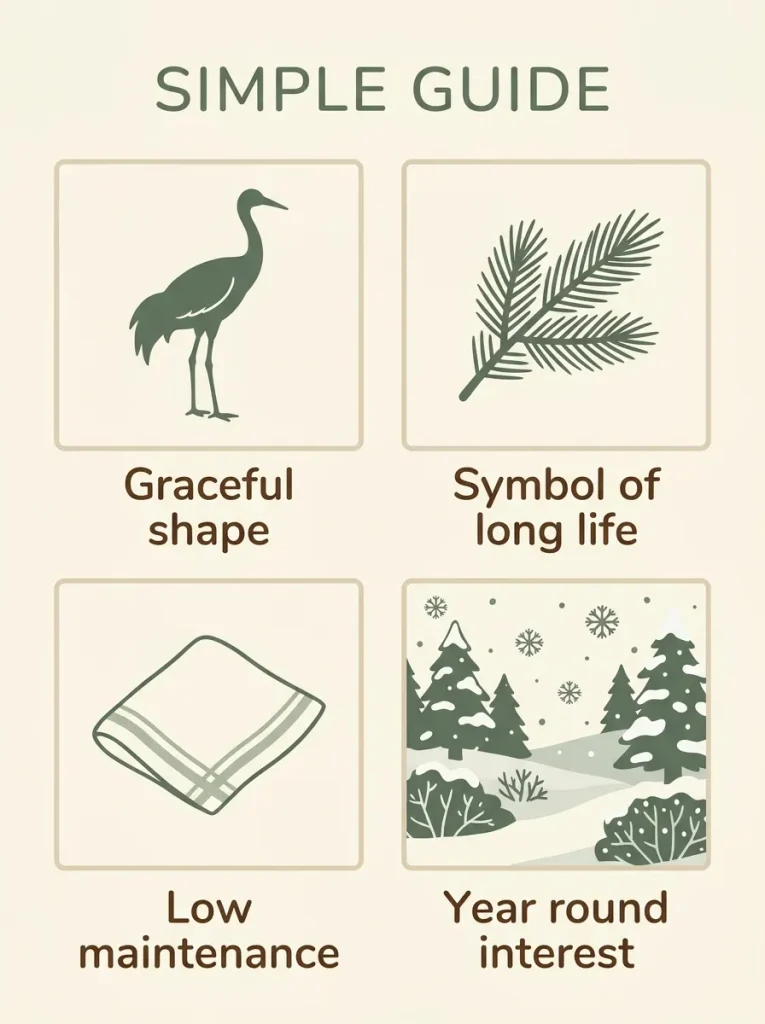
Garden decor is a low-cost way to add personality to your landscape. Unlike flowers, it does not fade when the season ends. It stays in place and keeps adding interest even when your garden is dormant. A crane is one of the best choices because of its shape, its meaning, and its easy care, making it a beautiful addition to modern garden decor that brings elegance and character to any outdoor space.
A Shape That Works in Any Garden
Cranes are tall and narrow, with long legs and a curved neck. That silhouette stands out against planting, water, and stone. It looks elegant in a modern courtyard, a cottage border, or a Japanese style garden.
A Symbol With Deep Meaning
Cranes carry rich meaning in many traditions.
- Long life: In Japanese, Chinese, and Korean culture, cranes are said to live for a thousand years.
- Peace and wisdom: They often appear with scholars and sages in classical art.
- Loyalty: Many cranes form long lasting pairs, so two cranes can stand for a loyal couple.
- Good fortune: In feng shui, a crane in the garden is believed to bring positive energy.
- Wishes: In Japan, folding a thousand paper cranes is said to grant a wish.
- Heaven and earth: In Chinese tradition, cranes carry immortals and link earth and sky.
You do not have to believe any of this to enjoy it. These stories simply add depth to something you already find beautiful.
Easy Care
A statue never needs water, pruning, or paint every year. A simple wipe with a damp cloth a few times a year keeps most pieces looking fresh. That makes outdoor crane garden decor a good fit for busy homeowners.
Pairs and Stories
One crane is lovely, but two or three tell a story. A pair of standing cranes can stand for a loyal couple. Add a smaller crane, and you have a family. Placing a flying crane near a standing one adds movement and contrast. You can build a small scene that fits your own story.
Crane, Blue Heron, or Other Bird Garden Statue: Which Should You Choose?
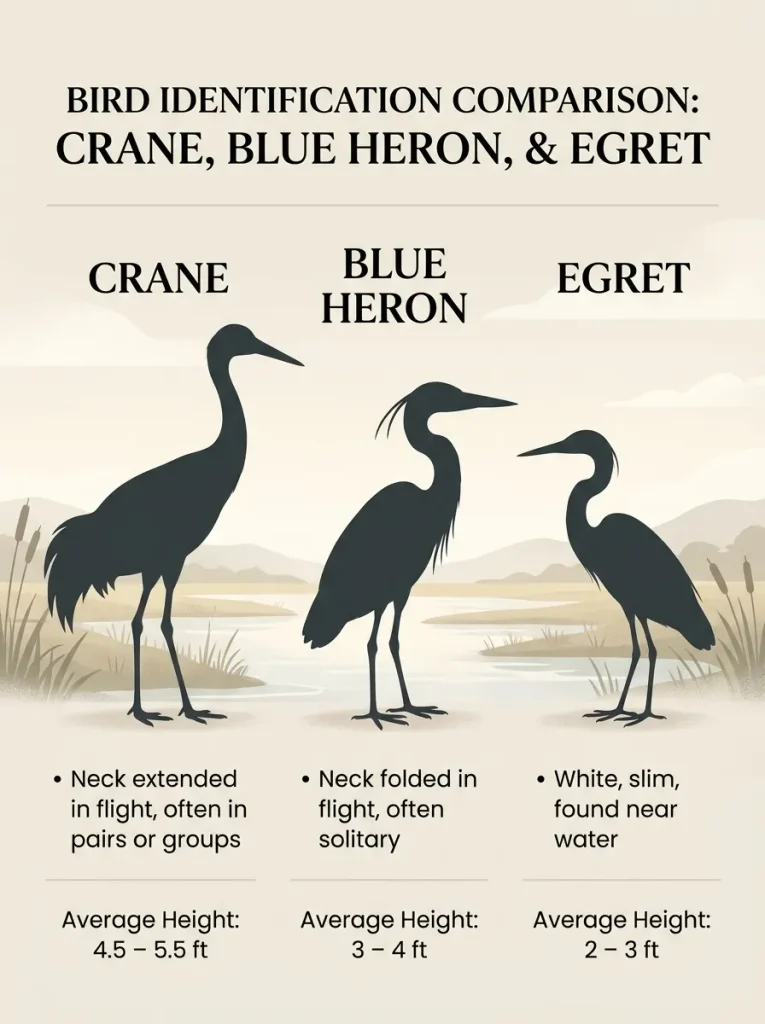
People often mix up cranes and herons, and many garden statues borrow from both. Here is how to tell them apart so you can pick the right bird garden statue.
Cranes
Cranes are tall, stately birds. In flight, they stretch their necks straight out. They often live in pairs or family groups, which is why cranes look best in twos and threes in the garden. Crane statues come in poses like standing, feeding with a bowed head, one leg lifted, or wings spread.
Blue Heron
A blue heron garden statue shows a gray blue bird with a long neck, a pointed beak, and a shaggy chest. Real herons fold their necks into an S shape in flight and often hunt alone. A blue heron statue suits a pond, a creek bank, or a naturalistic garden, and it gives a more wild, local feel than a crane. It is a very popular choice in North America.
Some pond owners place a heron statue near a pond hoping to discourage real herons, since herons tend to hunt alone. Results vary, so move the statue every few days if you try it.
Egrets, Storks, and Others
Egrets are white, slim waders that look clean and bright in a shady garden. Storks and ibises also suit water gardens. If you like the long legged look but want something different, these are good alternatives.
Choose a Pose
- Standing alert: Formal and tall. Good for entrances and gravel courtyards.
- Feeding with a bowed head: Natural and calm. Perfect for ponds and water features.
- One leg raised: Playful and graceful. A great focal point in a flower bed.
- Wings spread or flying: Dramatic and full of movement. Best for entrances, tall plinths, or wide lawns.
- Pair or family: Tells a story and feels complete.
Match Size to Space
Here are common size ranges to help you plan:
- About 60 cm (2 feet): Small patios, rock gardens, and containers
- About 75 cm (2.5 feet): Beside a pond or water feature
- About 90 cm (3 feet): Flower beds and borders
- About 120 cm (4 feet) and above: Entrances, lawns, and large gardens
- Life size (4 to 6 feet): Statement pieces for larger yards
Metal Garden Decor and Other Materials: What Lasts Outdoors?
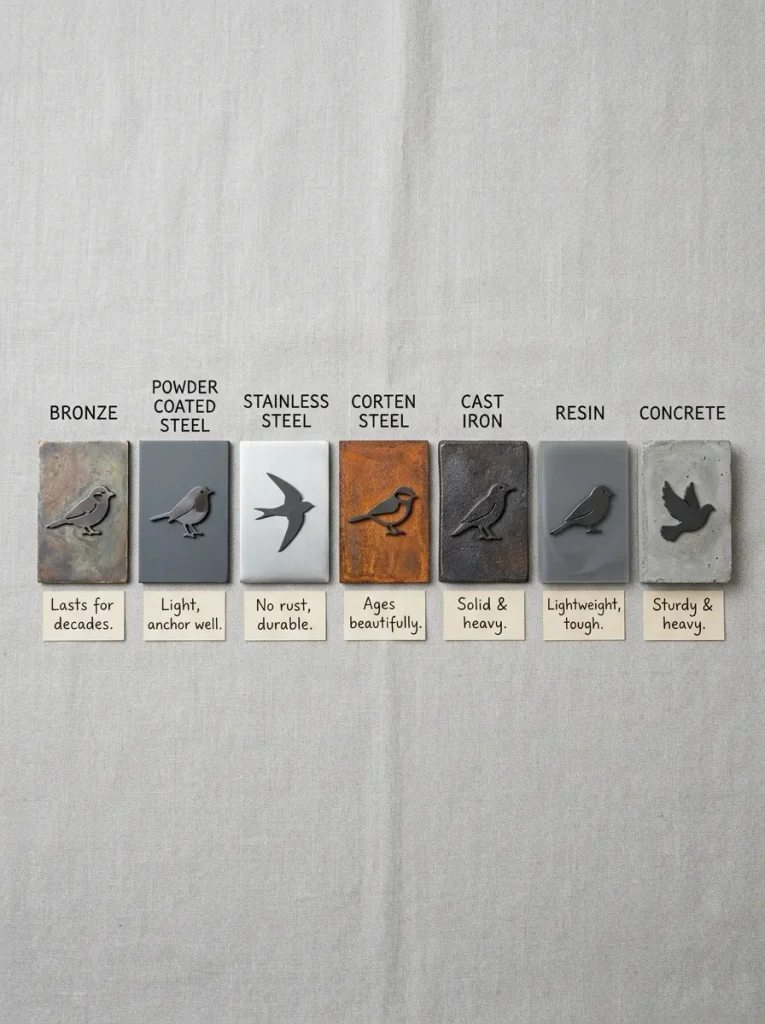
Material decides how long your statue lasts, how it looks, and how much care it needs. Here is a simple guide.
Metal Garden Decor Options
- Bronze: The long lasting choice. Bronze can live outdoors for generations, and its patina deepens and changes slowly over time. Brown patinas look warm and sculptural. Green verdigris looks natural beside plants. Bronze costs more, but it is a lifetime piece.
- Powder coated steel: Strong and affordable. A baked on coating protects against rain and fading. Check for a weather and rust resistant finish, and touch up scratches before rust starts.
- Stainless steel: Modern and bright. It resists rust well, though salty coastal air can leave light staining.
- Corten steel: A steel that forms a rich orange brown rust layer on purpose. It looks rustic and modern. Note that it can stain nearby pale stone or concrete.
- Cast iron: Heavy and sturdy, good for windy spots. It needs a sealed or painted finish to prevent rust.
- Aluminum: Light and rust free, though easy to knock over without anchoring.
- Copper: Develops a soft green patina, and works nicely in cottage and traditional gardens.
Other Materials
- Resin: Light and affordable. Choose UV protected resin so it does not fade or crack in the sun. Anchor it well.
- Concrete or stone: Heavy and stable. Seal it, because water can seep in and freeze, causing cracks.
- Wood: Warm and natural, but it weathers faster than metal.
What to Look For
- Weather resistance: Look for UV protection, rust proofing, and frost resistance. Many makers list a safe working range, such as roughly minus 30 to 50 degrees Celsius. Check the specific product details.
- A stable base: A good statue comes with a heavy base or ground stakes so it does not tip.
- Safe materials: For homes with children or pets, look for lead free finishes and smooth edges.
- Handcrafted detail: Look for fine feather texture, a natural curve in the neck, and realistic legs. These details separate a lasting statue from a cheap one.
- Honest specs: Read the size, weight, and finish details before you buy.
Match Your Patina
Choose a warm brown patina to complement stone paths and wooden features. For gardens filled with lush greenery, a green verdigris finish blends naturally with the surroundings. When placing two metal pieces close together, keep their finishes consistent or create a deliberate contrast for a balanced, intentional look.
Can You Fake an Aged Look?
You can mimic bronze on resin or concrete with paint. Use a dark base coat, a warm brown midtone, and a thin dry brushed layer of green in the recesses. It will look decorative up close and may need touch ups, but it is a nice budget option.
Where to Place Your Garden Statue: Settings, Scale, and Sightlines
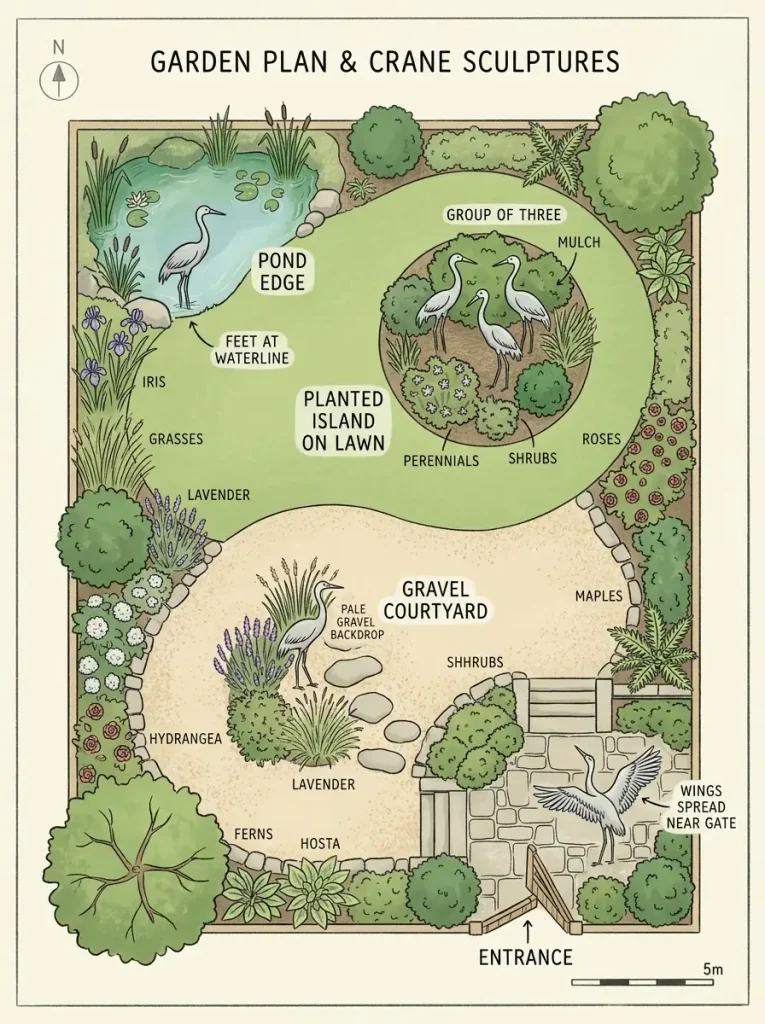
Where you put your crane matters as much as which one you buy. Here is how to place a garden statue so it looks planned.
Beside Water
This is the natural home for a crane. A feeding crane at the edge of a pond or reflecting pool completes the picture. The water doubles the bird in reflection, so even a single bird can work here. Set the feet near the waterline, not stranded a foot back on the bank.
In a Gravel Courtyard
Pale gravel is a flattering backdrop for metal and bronze. A warm brown or green patina looks crisp against gray or buff stone, and the open space around the legs looks intentional. It is a great spot for a pair of standing cranes.
On a Wide Lawn
This is the trickiest setting. Cranes are tall and narrow, so on open grass they can look like sticks from a distance. Instead of one bird on mown turf, group three at different heights, or create a planted island with low ornamental grasses and place the cranes inside it.
In a Flower Bed or Border
A crane with one leg raised looks wonderful among perennials and grasses. Keep the height slightly above the plants so the silhouette reads clearly.
At the Entrance
A flying crane with wings spread on a low plinth makes a lovely welcome near a gate or path. Do not place it so close that it fights with the house.
On a Patio or in a Container
Use a smaller 60 cm crane in a large planter, among rocks, or on a patio table. Metal bird stakes also work well in containers and small gardens.
Indoors or Under Cover
A large atrium, sunroom, or covered porch can hold a bird statue, especially polished or gilded pieces. Keep in mind that the ceiling should be at least double the height of the statue.
Use These Placement Rules
- Pairs and groups win. Place two or three cranes. A solo crane can look stranded unless it has a strong reason, such as a memorial or a pond edge. Avoid four in a row, which looks like a parade.
- Head height matters. The bird’s head should sit clearly above or clearly below a hedge top, wall cap, or water line, never exactly level with it. A head level with a hedge vanishes. About two feet above or below works well.
- Keep the plinth low or skip it. Long legs are the point. If you use a base, keep it 6 to 12 inches (15 to 30 cm) and match the stone or use dark slate.
- Give it air. Keep tall pieces about 15 feet (4.5 m) from the house so they do not compete with the building.
- Walk the route. Check the view from the gate, the door, and the kitchen window. A crane hidden from the house is half wasted.
- Plan for winter. Against bare branches in February, a statue can look harsh. Evergreen backing fixes it.
- Track the sun. Watch the site for a full day. Bronze and metal show their detail in dappled morning light and look flat in deep shade.
- Choose a contrasting backdrop. Dark hedges can flatten a dark patina. Pale stone, open sky, gravel, and water all show the silhouette better.
- Avoid mixing scales. A pair of small cranes next to a huge statue will disappear. Leave space between them.
Add Light
Solar spotlights or low uplights make your crane glow at night. Aim the light from below and slightly forward so it highlights the neck and wings. Use warm white light for a natural look.
Outdoor Garden Decorations to Pair With Your Crane
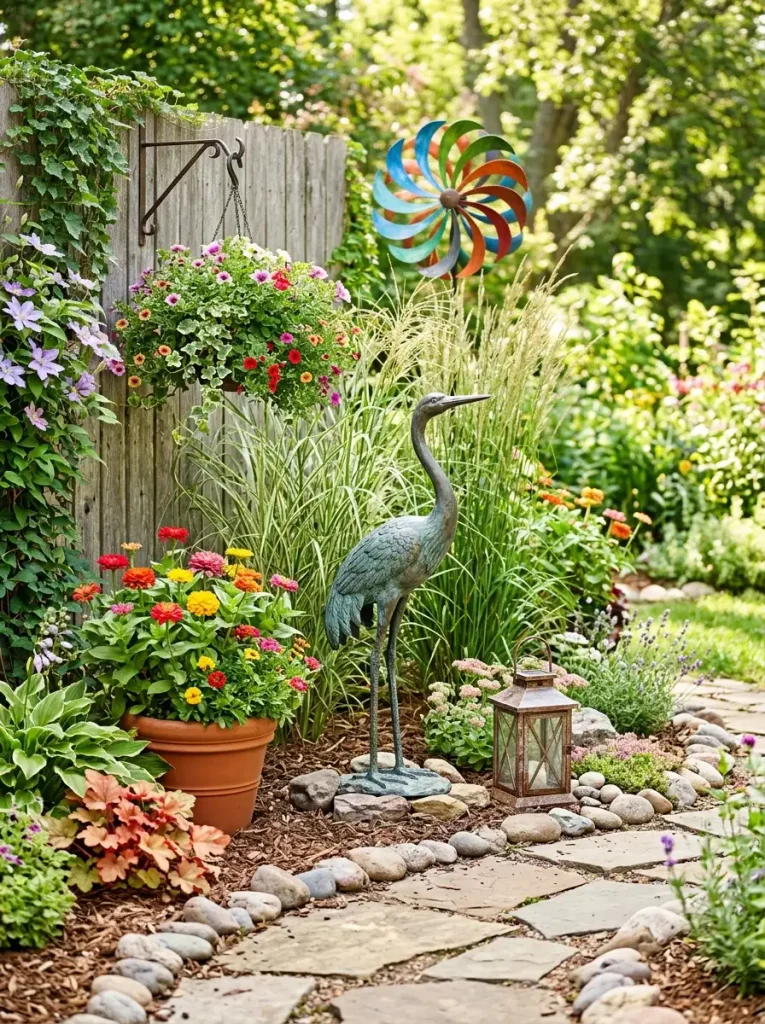
A statue looks best when it sits within a larger scene. These outdoor garden decorations work well with a crane.
Plants That Suit Cranes
- Ornamental grasses: Their soft movement echoes the crane’s shape. Choose clumping types.
- Japanese maple: Adds color and an Asian garden feel.
- Bamboo (clumping types): Great for a Japanese style look. Avoid running bamboo, which spreads fast.
- Iris and lotus: Perfect for ponds and water features.
- Hostas and ferns: Good in shady spots.
- Mondo grass and moss: Soft, low groundcover under the legs.
- Annual flowers: Zinnias bring color and attract bees and butterflies. Vinca, begonias, and marigolds fill empty beds with bright blooms.
Containers and Hanging Baskets
Container gardens are an easy, flexible way to update your landscape. Terracotta looks natural and shows off spring colors. Lightweight plastic planters are durable and easy to move. Shade planters filled with foliage brighten dim corners. Hanging baskets add a vertical element on a fence bracket or an established tree, and welcome pollinators. These help your crane feel like part of a living scene.
Wind Spinners and Garden Stakes
Wind spinners add movement and color. Look for strong poles, thick metal blades, and weather and fade resistant paint. Decorative stakes, such as solar gnomes or metal bird stakes, work well in flower beds and containers. A metal bird stake in a planter makes a small, charming echo of your larger crane.
Stones, Gravel, and Water
Use river rocks, pale gravel, and a few boulders to give a crane a natural setting. A small fountain or bubbling urn adds sound. A shallow dish of water also attracts real birds, so your garden feels alive.
Lanterns and Lighting
Stone lanterns suit an Asian look, while solar lanterns suit any garden. String lights along a fence can add warmth around a courtyard.
Create a Style
- Japanese inspired: Cranes, bamboo, a lantern, raked gravel, and a small bridge or stepping stones
- Cottage: Cranes among roses, foxgloves, and perennials, with a rustic bench
- Modern: Stainless or powder coated cranes on gravel with clean lines and grasses
- Coastal: Weathered metal cranes with beach grasses, driftwood, and white stones
- Wildlife friendly: A heron statue by a pond, native plants, and bird feeders nearby
Care, Safety, and Anchoring
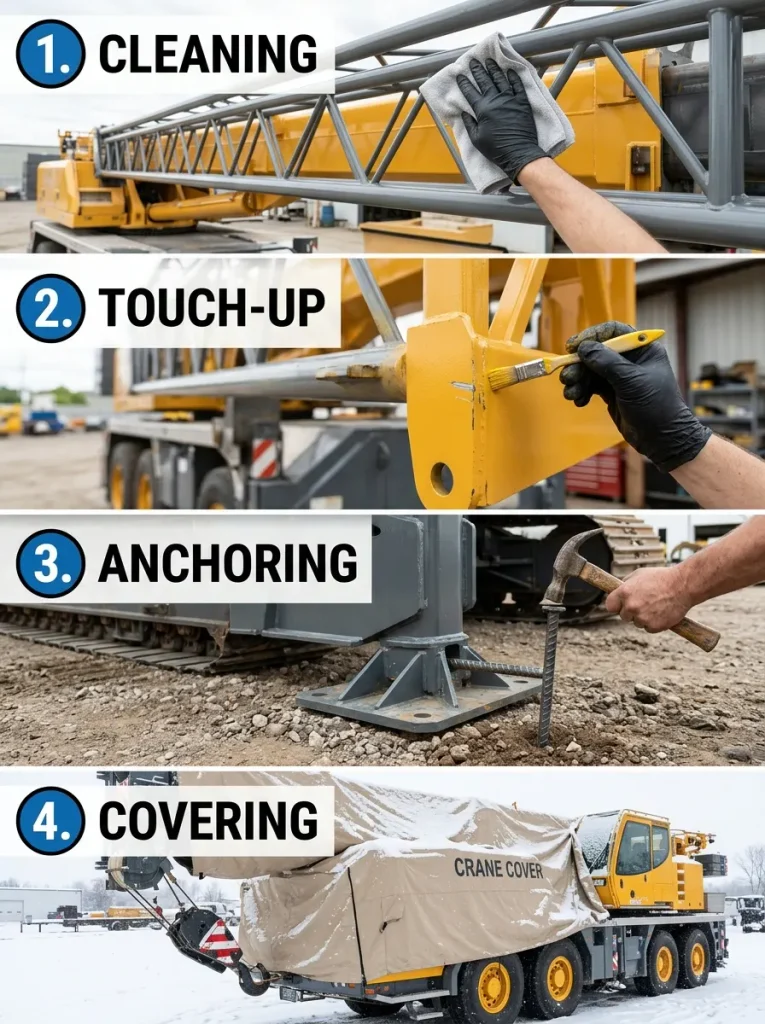
Good care keeps a statue looking beautiful for years.
Simple Cleaning
- Wipe with a damp cloth every few months
- Use mild soap and water for bird droppings and stubborn dirt
- Skip harsh cleaners, chlorine, and ammonia
- Do not use a pressure washer, which can damage finishes
- Rinse with clean water once a year, and use a soft brush in joints
Protect the Finish
- Bronze: Apply wax every two to three years on exposed pieces. Coastal sites need a little more attention because of salt.
- Powder coated steel: Touch up scratches with rust inhibiting paint as soon as you see them.
- Cast iron and Corten: Seal if you want to slow rust, or let it age naturally. Keep pale stone away from corten runoff.
- Resin: Keep out of harsh midday sun if possible, and check for cracks.
Anchor It Well
Tall, slim statues can tip in wind or when a child bumps them.
- Use the heavy base that comes with the piece
- For hollow metal legs, drive a stake or length of rebar into the soil and slide the statue over it, with the end capped for safety
- Set a flat stone or paver under the base so it does not sink in soft soil
- For heavy bronze, install a proper concrete footing
- Check the anchor after storms and after the ground freezes and thaws
Winter Care
Metal and bronze handle most weather. The concern is the base. In areas with deep freezes, water can crack concrete pads and stone footings. Make sure water drains away from the base. If you use resin or have a delicate finish, move the piece to a covered spot or cover it during harsh weather.
Drainage
Standing water at the base can stain stone and speed up rust. Place the statue so water runs away from it. If the piece is hollow, make sure drain holes are clear.
Safety
- Smooth edges: Check for sharp metal edges, especially on thin cut pieces
- Child and pet friendly materials: Look for lead free finishes
- Low plinths: Keep bases low to avoid tripping
- Capped ends: Cover any exposed rebar or spike
- Stable footing: Never place a heavy statue on a slope without a proper base
Budget Plan, DIY Ideas, and Mistakes to Avoid
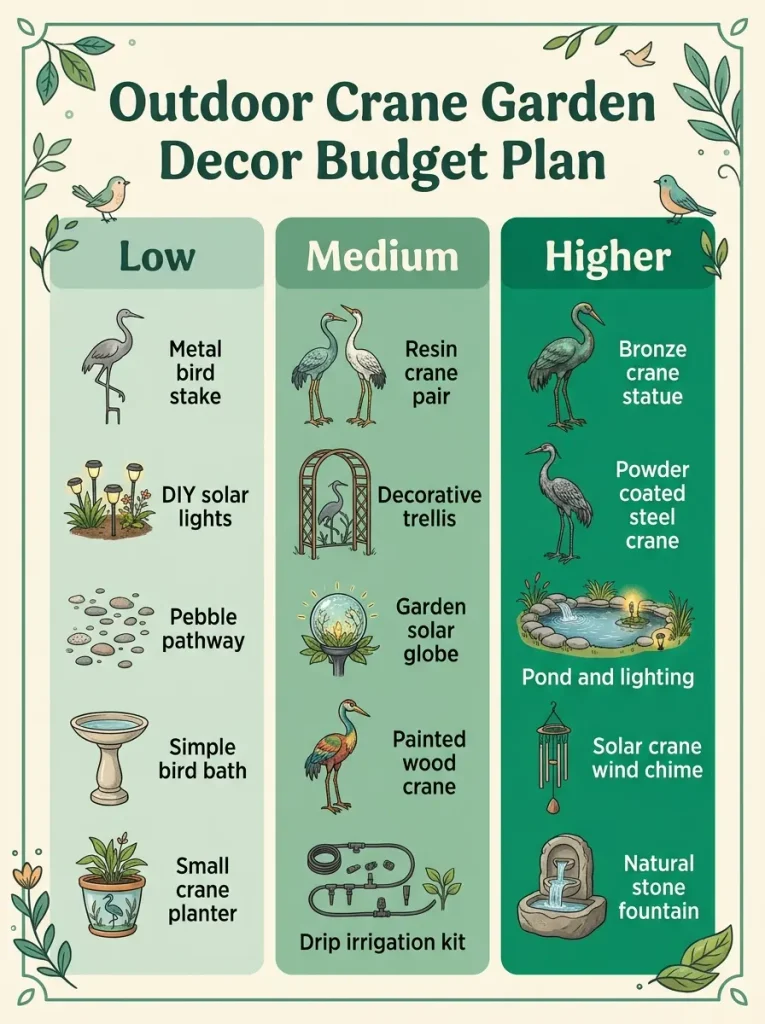
You can add outdoor crane garden decor at almost any budget.
Budget Plan
- Low: A metal bird stake or a small resin crane, a few river rocks, and a planter of annual flowers. Shop sales, secondhand finds, and end of season deals.
- Medium: A pair of powder coated or stainless steel cranes, ornamental grasses, a solar spotlight, and a wind spinner.
- Higher: A life size bronze crane pair, a custom base, a small pond or fountain, and landscape lighting. Bespoke pieces depend on scale, pose, patina, base, and shipping, so ask for a tailored quote with your site photos and size.
Easy DIY Ideas
- Faux aged finish: Paint a resin or concrete bird with dark, brown, and green layers
- Solar lights: Add a small solar spotlight at the base
- Stone surround: Build a ring of river rocks or pavers
- Pebble base: Place a bed of pale gravel under the statue to stand out
- Mini scene: Combine a bird stake, a lantern, and a pot of herbs in a planter
- Seasonal wreath: Hang a small wreath or ribbon near the crane for holidays
Common Mistakes to Avoid
- One crane alone on a lawn. Pair or group them.
- Placing it too close to the house. Give it room to breathe.
- Over using a pedestal. Tall classical bases fight the natural pose.
- Choosing the wrong backdrop. Dark on dark makes the statue vanish.
- Skipping the anchor. Tall birds fall in wind.
- Ignoring drainage. Water at the base causes stains and rust.
- Buying by photo only. Check size, weight, material, and finish details.
- Using harsh cleaners. Stick to soft cloths and mild soap.
- Mixing too many styles. Choose one look, such as Japanese or cottage, and stay with it.
- Forgetting winter. Check how the piece looks against bare branches.
Frequently Asked Questions
What is the best material for outdoor crane garden decor?
Bronze is the longest lasting choice, but powder coated steel and stainless steel are strong, affordable options for metal garden decor. Resin works for a budget, as long as it is UV protected and anchored well. Choose a material with rust and frost resistance and a stable base.
Where should I put a crane statue in my garden?
Place it beside a pond, in a gravel courtyard, in a flower bed, or near an entrance. Use a pair or a group of three, keep it away from the house, and place it against a light or open backdrop so the shape stands out. Avoid putting a single crane alone on a lawn.
What is the difference between a crane and a blue heron garden statue?
Cranes fly with their necks stretched out and often live in pairs or groups, so they look best in twos and threes. Blue herons fold their necks in flight and often hunt alone. A blue heron garden statue has gray blue feathers and suits ponds and natural gardens, while a crane feels more formal and symbolic.
How do I care for a metal garden statue?
Wipe it with a damp cloth every few months, use mild soap for droppings, and avoid pressure washers and harsh cleaners. Touch up scratches on painted steel quickly, wax bronze every two to three years, and check the anchor after storms.
What do crane statues symbolize?
In many Asian cultures, cranes stand for long life, peace, loyalty, and good fortune. A pair of cranes can symbolize a loyal couple, and a crane with a baby suggests family. Many people also enjoy cranes simply for their elegant shape.
Conclusion
Outdoor crane garden decor is a small change that makes a big difference. A pair of graceful birds near water, in a bed of grasses, or beside a gravel path can change how your whole yard feels. Choose a pose you love, pick a durable material, and place it with care. Adding plants, stones, and soft lighting creates a natural look. If you’re decorating a larger space or buying in bulk, a wholesale garden decor buyers guide can help you compare materials, styles, and prices before choosing pieces that complement your outdoor space.
Ready to begin? This week, walk around your garden and pick one spot where a crane could shine. Measure the space, note the backdrop and the sun, and decide on a pair or a group of three. Browse metal garden decor, a bird garden statue, or a blue heron garden statue that fits your style and budget, then place it, anchor it, and add one pot of flowers nearby. Take a photo when you are done, and enjoy a garden that finally has a graceful center.