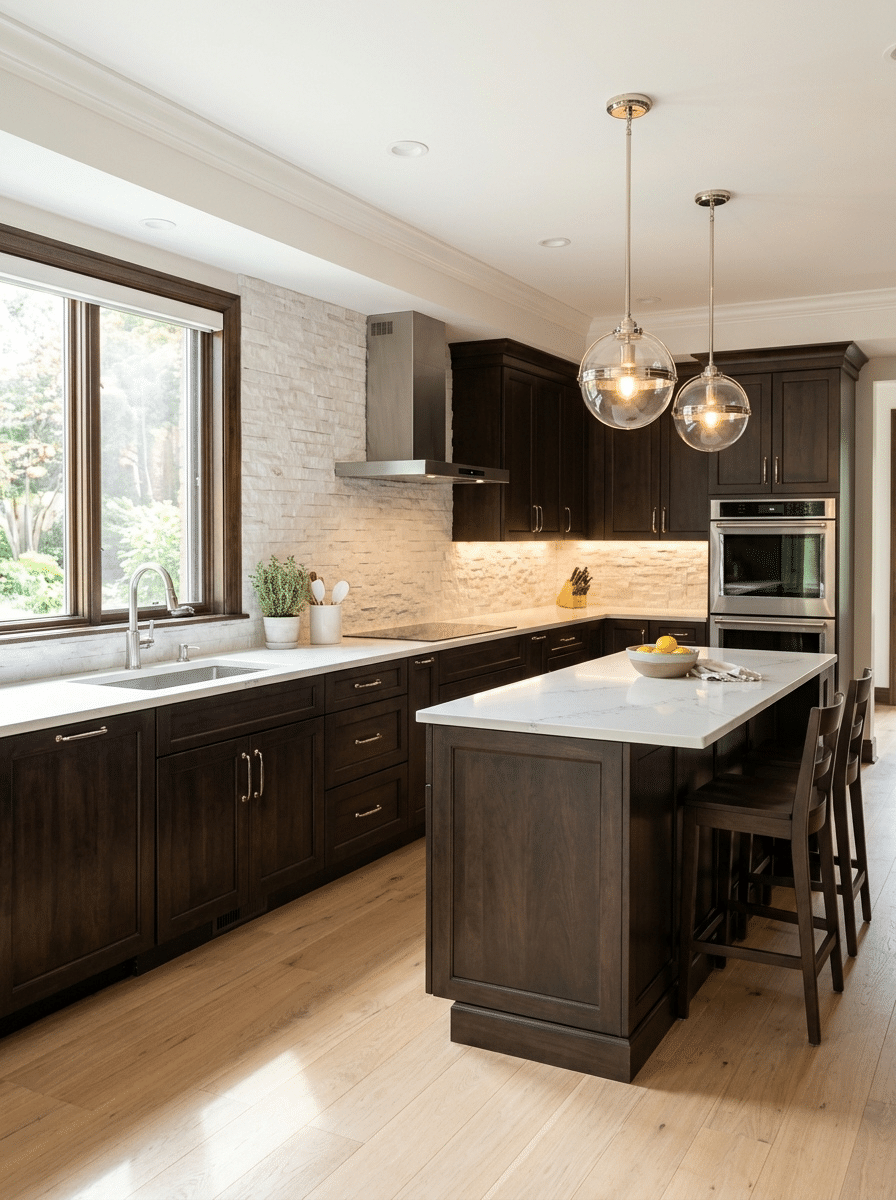
Espresso kitchen cabinets have a deep, rich brown color that feels warm, elegant, and a little bit dramatic. They can look sleek in a modern kitchen, cozy in a traditional one, and surprisingly fresh when you pair them with the right counters, paint, and lighting. But they can also feel heavy and dated if everything around them is brown. That is why so many homeowners ask the same questions: are they still in style, what goes with them, and can you paint cabinets espresso yourself?
This guide answers all of those. You will learn what espresso cabinets really are, how to pick between stain, paint, and ready to assemble shaker styles, which colors and countertops work best, how to update an older espresso kitchen, and how to care for the finish. You will also get a clear step by step plan for how to paint kitchen cabinets espresso.
Espresso kitchen cabinets are still a good choice when they are balanced with light, clean surroundings. Pair them with white or light counters, a simple backsplash, a soft wall color like warm white, sage, or gray blue, nickel or brass hardware, and strong lighting. Choose a shaker or slab door for a modern look. If your espresso kitchen feels dated, change the counters, backsplash, hardware, and walls before you replace the cabinets.
In this guide, you will learn:
- What the espresso finish is, and the woods, finishes, and door styles available
- Whether espresso kitchen cabinets are in style, with honest pros and cons
- The best counters, backsplashes, wall colors, floors, and hardware to pair with espresso
- What to check before buying espresso shaker RTA kitchen cabinets
- How to paint kitchen cabinets espresso, step by step
- How to update an older espresso kitchen without replacing it
- Care tips, cleaning steps, and mistakes to avoid
What Are Espresso Kitchen Cabinets? Finishes, Woods, and Shaker Styles
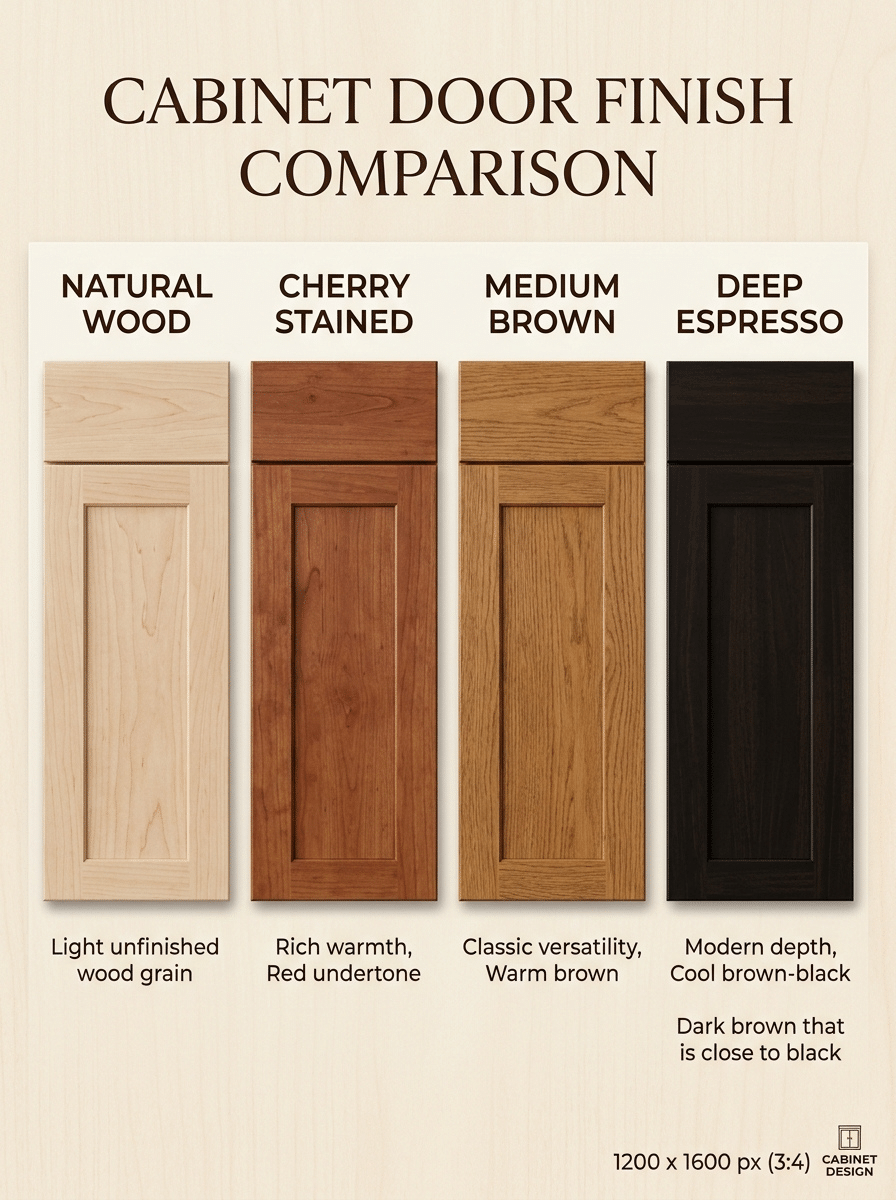
Before you decide on espresso, it helps to know exactly what you are choosing.
What Is the Espresso Color?
Espresso is a very deep brown, close to black, named after a shot of dark coffee. It sits between a rich chocolate brown and black, offering a dramatic look compared with cherry kitchen cabinets, which typically feature warmer reddish-brown tones. Some espresso finishes lean warm, with a hint of red, while others lean cool, with a gray black feel. In bright light, you often see the brown. In low light, it can look almost black. That is why testing samples in your own kitchen matters.
Common Materials Behind the Color
Espresso is a color, not a type of wood. Cabinets in this finish can be made from:
- Solid wood or wood veneer: Maple, birch, oak, and other woods take an espresso stain well. The grain can show through a stain, though darker stains hide more of it.
- Plywood and engineered wood: Strong, stable, and often used for cabinet boxes.
- MDF: A smooth engineered board that takes paint very well. It is a cost friendly choice, and it can also be finished in espresso tones.
- Thermofoil or laminate: A wrapped finish that is easy to clean. It can look consistent, but it can peel if exposed to heat or moisture.
Stain, Paint, or Wrapped Finish?
- Stain: Lets the grain show. Staining is a popular way to get the espresso look without replacing every cabinet. It works best on real wood.
- Paint: Gives a solid, even color, and works on wood and MDF. It hides more of the grain.
- Wrapped finishes: Smooth and consistent, but hard to change later.
Espresso Shaker Kitchen Cabinets and Other Door Styles
Door style changes the whole mood of espresso.
- Shaker espresso kitchen cabinets: A flat center panel inside a simple frame. Shaker is one of the longest lasting door styles, and it suits modern, transitional, and traditional homes. This is why espresso shaker kitchen cabinets are so popular.
- Slab or flat panel: Clean and sleek, best for modern kitchens. A dark slab door looks very sophisticated.
- Raised panel: More formal and traditional. In espresso, a raised panel can feel heavy, so it works best with lots of light around it.
- Distressed espresso: A worn, antique look for rustic or historic homes.
- Glass fronts: A few glass front doors in dark cabinets add light and display space.
What Does RTA Mean?
RTA stands for ready to assemble. These cabinets ship flat, and you put them together at home or hire someone to do it. Many people look at espresso shaker RTA kitchen cabinets because the style is classic, the color is rich, and the price is often lower than custom cabinets. We cover what to check in a later section.
Are Espresso Kitchen Cabinets in Style? Pros, Cons, and Honest Answers
Let’s answer the big question honestly.
Are Espresso Kitchen Cabinets in Style?
Yes, with a condition. Espresso cabinets are a classic dark finish that has been popular for many years. HGTV describes espresso as second only to white in popularity and calls it a versatile, elegant choice. Today’s trends lean toward warm wood, moody tones, and two tone kitchens, and espresso fits that mood well when it is used on purpose.
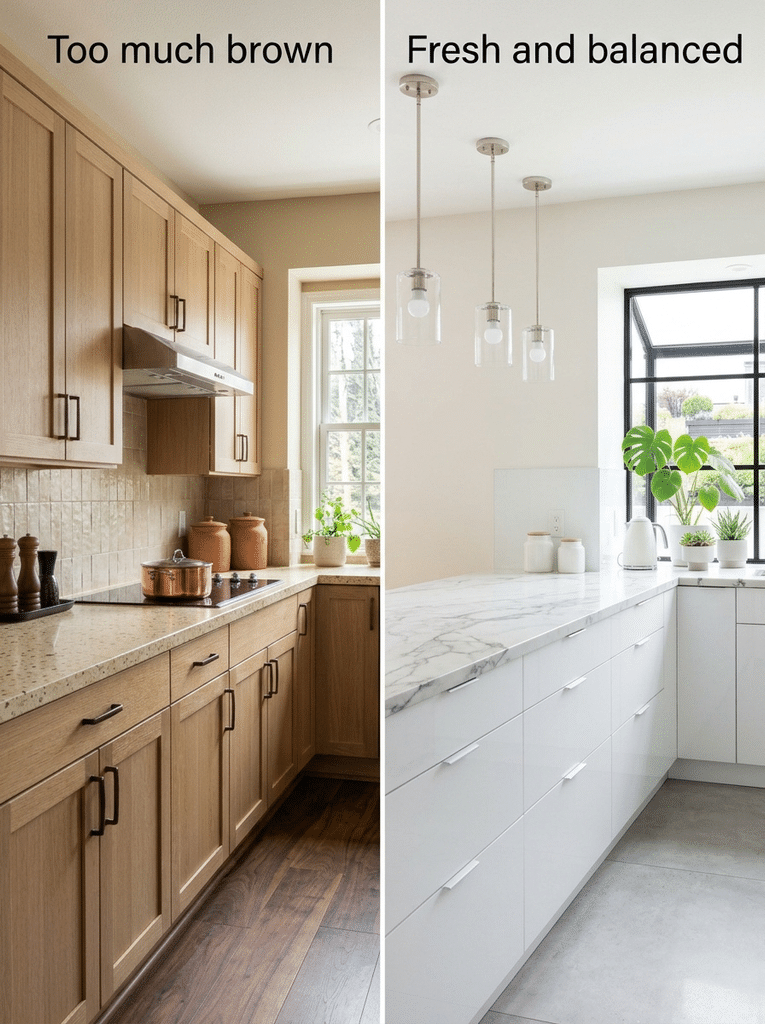
The condition is the surroundings. About ten or more years ago, a very common look was espresso cabinets with warm beige walls, medium toned spotty granite, a travertine or linear glass mosaic backsplash, dark bronze hardware, and often brown leather furniture to match. Designers describe this combination as too much brown. It tends to look muddy, heavy, and generic. The cabinets are not the problem. The friends they keep are.
Pros of Espresso Kitchen Cabinets
- Strong contrast. Espresso looks striking beside white, cream, and light colors.
- Very versatile. It pairs well with classic whites, creams, cool blues and greens, and bold accents like red, silver, and black.
- Hides some marks. Dark, matte finishes hide fingerprints, small stains, and everyday smudges better than very light colors.
- Warm and grounded. The deep tone makes a kitchen feel cozy and rich.
- Works in many styles. It can look modern with slab or shaker doors, traditional with raised panels, or rustic when distressed.
- Good for contrast kitchens. It balances a very white or very bright kitchen and ties in with warm wood floors.
Cons to Consider
- It can feel heavy. Too much dark wood in a small or dim room can close the space in.
- It shows dust. Dust, lint, and pet hair stand out on dark surfaces.
- It shows water spots and scratches. Light scratches can expose paler wood underneath, especially on stained edges.
- Glossy finishes show fingerprints. A matte or satin finish is more forgiving.
- It needs good lighting. Dark cabinets absorb light, so you need strong task and ambient light.
- It can look dated in the wrong mix. See the list below.
What Makes an Espresso Kitchen Look Dated?
- Beige walls and busy medium granite
- Travertine or glass mosaic tile backsplash
- Dark bronze or oil rubbed bronze hardware on dark cabinets
- Heavy trim, soffits, and valances
- A floor that is slightly off from the cabinet tone
- Dark leather sofas and dark wood floors in the next room
- Too many dark elements with no contrast
How to Make It Feel Current
The fix is contrast and light. Bring in white or very light counters, a simple or stacked stone backsplash, warm white or soft colored walls, nickel or brass hardware, and good lighting. You can often keep the cabinets and change everything else.
Colors and Materials That Go With Espresso Cabinets
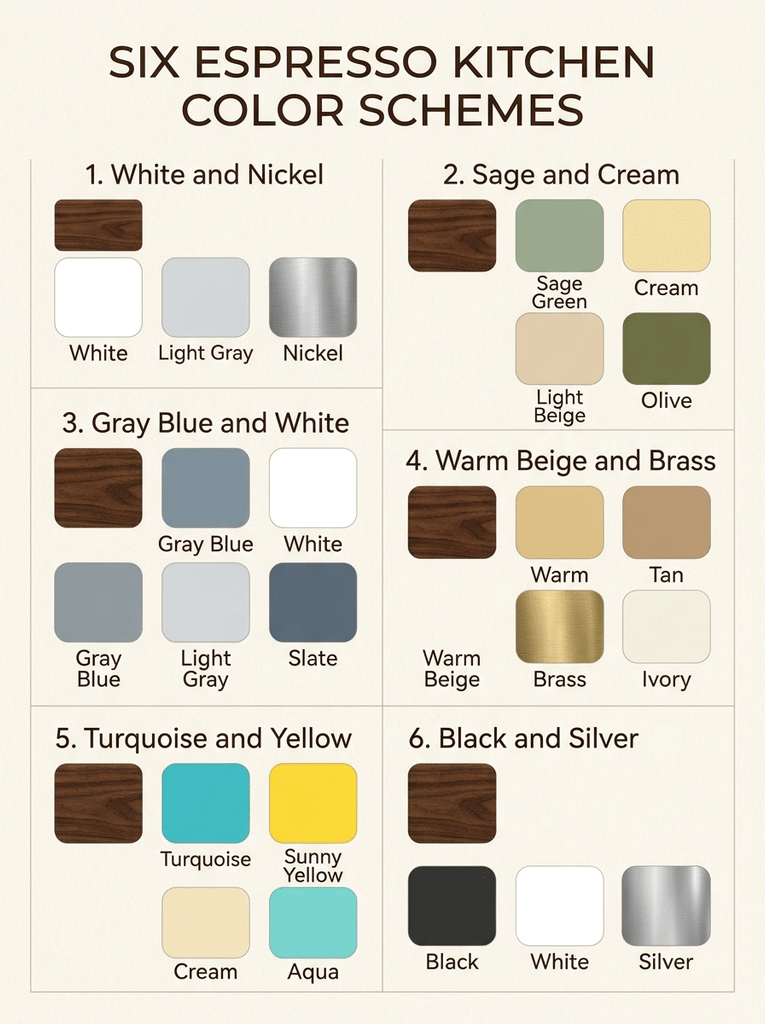
Color and material choices decide whether espresso looks heavy or beautiful. Here is a clear guide.
Countertops for Espresso Kitchen Cabinets
- White: A bright, crisp contrast that makes the kitchen feel larger. White quartz or white granite with soft veining is a classic.
- Black: Bold and dramatic, like a hotel kitchen. Best in a large, well lit space.
- Gray: Safe and balanced, and it works well with stainless steel appliances.
- Beige or warm brown: Creates a soft, natural flow, but be careful. Too much brown can feel muddy.
- Wood butcher block: Adds warmth and texture, and works well on an island.
- Light granite: Works well if the pattern is calm.
Quartz or Granite?
- Granite is natural, with unique patterns, and handles heat well. It needs sealing.
- Quartz is engineered, low maintenance, and consistent, and it resists stains.
Choose granite if you love natural stone and don’t mind sealing it. Choose quartz if you want easy care and a predictable look. Both look great with espresso.
Backsplash Ideas
- White or cream subway tile: Crisp and timeless.
- A stacked or linear natural stone tile: More modern than classic subway.
- Marble look tile: Soft and elegant.
- Glossy blue or green tile: A pop of color that makes espresso stand out.
- A monochrome mix of browns and beiges: A rich, layered look if you add texture.
- Avoid heavy tumbled travertine in beige tones, which can bring back the dated look.
Wall Paint Colors That Work
Wall color changes the whole mood. Here are reliable choices.
- Soft white or warm white: Brightens the room and lightens dark cabinets.
- Sage green: Adds a natural, calm feel.
- Warm beige or greige: Cozy and inviting, as long as the rest of the room has contrast.
- Light gray: Modern and balanced.
- Gray blue or soft blue: A cool tone that offsets all the dark brown.
- Bold accent colors: Turquoise, deep teal, or yellow in small amounts can bring life, especially on an island or chairs.
Floors With Espresso Cabinets
- Light floors: Pale oak or light tile keep the room open and bright.
- Warm walnut floors: Can look luxurious with espresso in a modern kitchen.
- Gray or stone tile: Clean and modern.
- Be careful with two wood tones. If you have two dominant wood tones, make them clearly different or match them closely. A floor that is a shade off from the cabinets can look like a mistake.
Hardware and Lighting
- Polished nickel or brushed nickel: Shows up beautifully against dark cabinets.
- Brass or brushed gold: Warm and glowing, especially with matte espresso.
- Matte black: Sleek and modern, but it can disappear on very dark doors.
- Chrome: Clean and bright.
- Bronze: Elegant, though dark bronze on dark cabinets can blend in and feel dated.
- Mix with care. Too many metal finishes look messy. Pick one main finish and one accent.
- Lighting: Add under cabinet LED strips, pendant lights over the island, and a bright ceiling light. Light brings out the depth of the color and makes the cabinets look rich instead of flat.
Open Shelving and Glass Fronts
Break up large dark runs with open shelves, glass front doors, or white uppers. They add light, and you can display plates and glassware.
Two Tone Kitchens
Espresso lower cabinets with white or light upper cabinets are a very popular pairing. The dark base grounds the room, and the light top keeps it airy. Another idea is espresso on the perimeter and a painted island in navy, sage, or white.
Appliances
Stainless steel is a safe choice with espresso. Black appliances can feel heavy with dark cabinets, unless the rest of the kitchen is very bright. Try to keep appliance finishes consistent.
Espresso Shaker RTA Kitchen Cabinets: What to Know Before You Buy
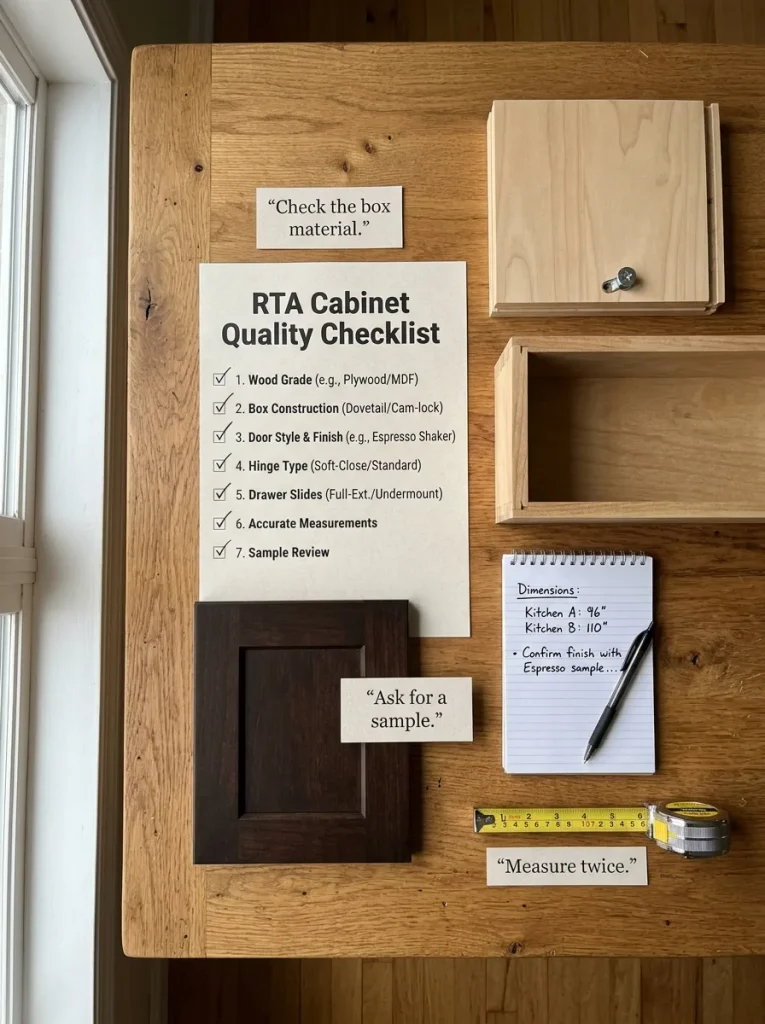
RTA lines are a smart way to get espresso shaker cabinets on a tighter budget. If you are shopping for horizon espresso shaker RTA kitchen cabinets, or any similar espresso shaker RTA line, here is how to buy wisely.
RTA vs Assembled
- RTA: Ships flat, costs less, and is easier to ship and move into tight spaces. You assemble it yourself or hire someone.
- Assembled: Arrives ready to install, costs more, and saves time.
Many people assemble RTA cabinets themselves with basic tools and a free weekend. If you are not comfortable, a handyman or installer can do it.
What to Check Before Ordering
- Box material: Look for plywood or high quality engineered board. Ask what the sides, back, and shelves are made of.
- Door construction: A shaker door should have a solid frame. Ask about the center panel and the finish.
- Finish quality: Dark colors show flaws. Look for a smooth, even coat and a protective topcoat.
- Drawer boxes: Dovetail joints and full extension, soft close slides add durability.
- Hinges: Soft close hinges are worth the upgrade.
- Warranty: Read the terms, and keep your receipts.
- Sample doors: Order a door sample in espresso and look at it next to your counters and floor, in morning and evening light. Names like espresso vary a lot between lines, so one brand’s espresso can look different from another’s.
- Extras: Order fillers, toe kicks, end panels, and trim that match the finish.
Measure and Plan
- Measure each wall, window, and appliance twice.
- Draw a layout, or ask the seller for a free design drawing.
- Check ceiling height and where uppers will sit.
- Plan for outlet and plumbing locations.
- Order a few extra hinges and screws if they are sold separately.
Why Shaker Works So Well in Espresso
A shaker door has simple lines, so the color becomes the star. It looks clean in a modern kitchen and still fits a traditional space. Shaker is also easy to pair with different hardware, from matte black to brass.
Tips for Installing RTA Cabinets
- Check each box for squareness during assembly
- Level the first cabinet, then build the rest from it
- Use a helper for upper cabinets
- Protect the finish with blankets while you work
- If you are unsure, hire a pro for installation
How to Paint Kitchen Cabinets Espresso
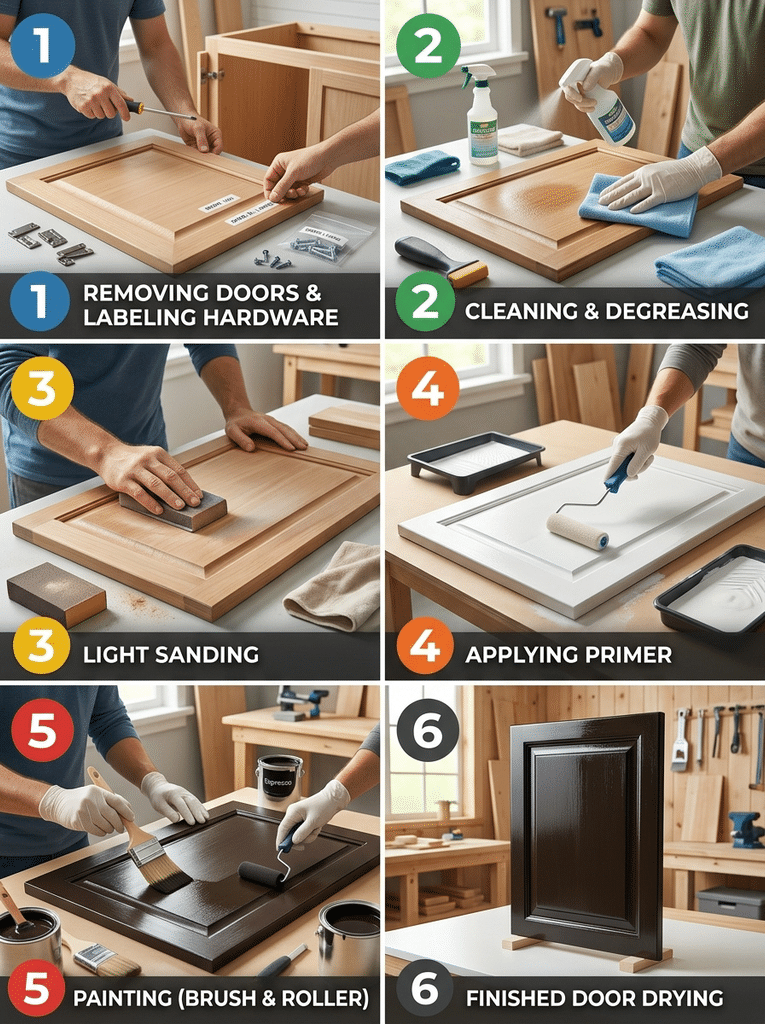
If you like the espresso look but your cabinets are lighter, painting or staining them dark is one way to get there. This is a real project that takes patience, but it can be done at home. Here is how to paint kitchen cabinets espresso.
Stain or Paint?
- Paint: Best for most cabinets, especially MDF, painted wood, or laminate. It gives an even, solid color.
- Gel stain: A thick stain that can be applied over an existing finish, with light sanding. It lets some grain show and gives a rich, wood look. It works best on real wood.
If you want a solid color and a smooth look, choose paint.
What You Will Need
- Screwdriver and labeling tape
- Degreaser or a mild cleaner
- Sandpaper (about 180 to 220 grit, plus a finer grit for between coats)
- Tack cloth or a damp microfiber cloth
- Bonding primer
- Cabinet or enamel paint in an espresso color
- A good angled brush and a small foam or microfiber roller, or a sprayer
- Painter’s tape, drop cloths, and a respirator
- Clear protective topcoat, if you want extra durability
Step by Step
- Plan and test. Paint a small spot or the back of a door first, and check the color in your light. Many espresso paints look different once dry.
- Remove doors, drawers, and hardware. Label each door and its matching cabinet with tape so they go back in the right place. Save hinges and screws in labeled bags.
- Clean well. Kitchen cabinets collect grease. Wash with a degreaser, rinse, and let them dry. Paint will not stick to greasy surfaces.
- Fill and sand. Fill holes with wood filler, let dry, and sand smooth. Lightly sand all surfaces to dull the old finish. Wipe off all dust.
- Prime. Use a bonding primer, especially on glossy, laminate, or thermofoil surfaces. A tinted primer closer to the paint color can help dark paint cover in fewer coats.
- Apply the first coat. Use thin, even coats. Brush the edges and details first, then roll the flat areas. Work in the direction of the grain.
- Let it dry, then sand lightly. Dark colors show brush marks, so a light sanding with fine grit between coats gives a smoother finish. Wipe off dust each time.
- Apply the second coat, and a third if needed.
- Add a topcoat (optional). A clear protective coat helps resist scratches and wipes.
- Let it cure. Paint feels dry in hours but takes days to weeks to harden fully. Be gentle with the cabinets for the first couple of weeks.
- Reinstall doors and hardware. Replace old pulls with new ones in nickel, brass, or black.
Tips for a Great Espresso Finish
- Use a self leveling cabinet paint, which smooths out brush marks.
- Choose a satin or low sheen finish. Matte hides flaws but can mark more easily. Glossy shows every fingerprint.
- Work in a ventilated space, and wear a respirator.
- Control dust and bugs. Dark paint shows specks, so keep the room clean and the fan off while painting.
- Do not rush. Thin coats beat thick, drippy ones.
- Paint the backs of the doors too, so the inside matches.
When to Hire a Pro
If your cabinets are in poor shape, or you want a factory smooth look, a professional spray finish can be worth it. Compare quotes for painting, refacing, and new doors before you decide.
How to Update Espresso Kitchen Cabinets Without Replacing Them
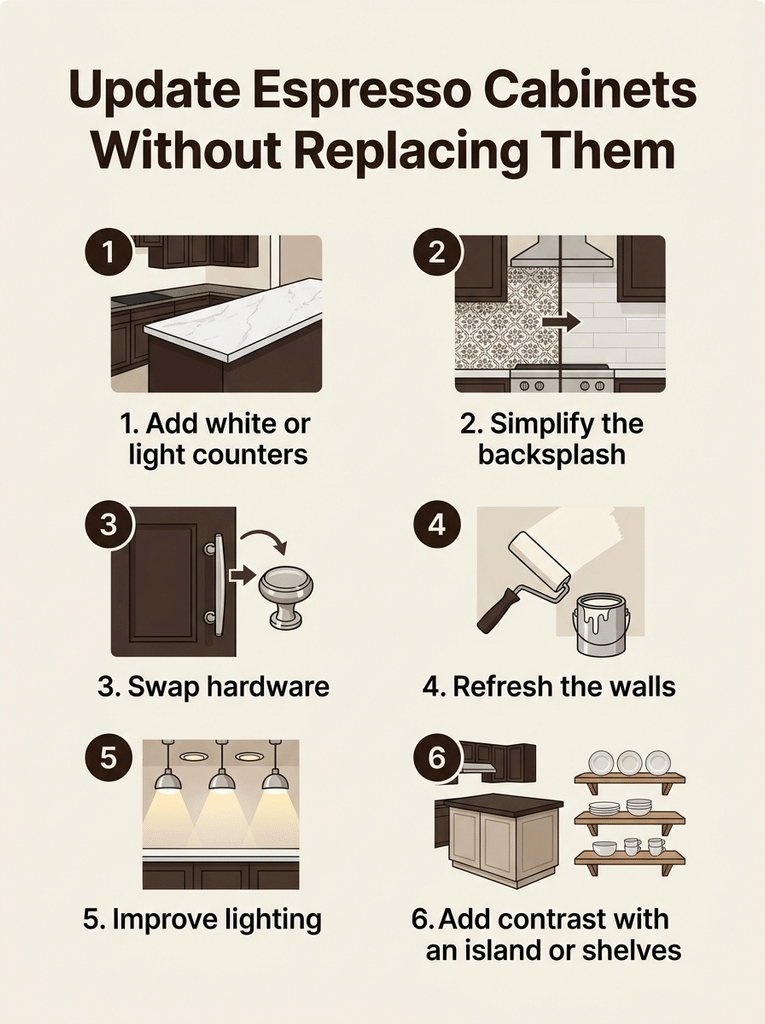
Many espresso kitchens are in great shape. They just need a lighter, fresher setting. Here is a practical plan, built on the contrast idea.
Step 1: Bring In White or Light Counters
A major update is swapping spotty beige or brown granite for white or very light counters. White surfaces make dark cabinets look sleek and modern. If you cannot change the counters, balance them with walls and a backsplash that match.
Step 2: Simplify the Backsplash
Replace travertine or mosaic glass with a clean stacked or linear natural stone, white subway tile, or a marble look tile. Keep the pattern quiet.
Step 3: Paint the Walls White or a Fresh Color
Move from warm beige to white, soft gray, sage, or gray blue. A fresh wall color is the most affordable update.
Step 4: Swap the Hardware
Replace dark bronze pulls with polished nickel, brushed nickel, brass, or matte black. Sleek nickel pulls pop on dark cabinets, and nickel pendant lights bring in matching shine.
Step 5: Upgrade the Lighting
Add under cabinet LED strips and new pendants. Light changes everything with dark wood.
Step 6: Add Contrast With an Island or Open Shelves
- Paint the island in a bright color, white, or navy. A warm toned island can also be painted to match the other cabinets for a very high contrast look.
- Add a stainless hood or a wood hood to refresh the focal wall.
- Install open shelves or glass doors to break up the dark wall.
Step 7: Try a Bold Color Palette
If you are tired of heavy brown, add color. One kitchen used espresso on the perimeter and brought in a turquoise island, brassy pendants, light counters and backsplash, and yellow upholstered chairs. The bold palette made the dark cabinets feel current and joyful, and the owner did not need to repaint her warm gold walls. Get rid of muddy finishes, and go with white or bold color.
Step 8: Extend the Look to Other Rooms
Espresso also works outside the kitchen.
- Living room: Espresso built ins or floating shelves look lovely against white walls. Add white pillows, a textured rug, and light linen chairs to keep the space balanced.
- Laundry room: Espresso cabinets with white counters, a light floor, and blue gray walls look fresh.
- Bathrooms: Espresso lower cabinets look smart in an all white room, with brass or polished nickel hardware.
Step 9: Consider Refacing
If the boxes are in good shape but the doors look tired, refacing replaces doors and drawer fronts with a new espresso or modern style. It costs less than full replacement. You can also restain wood cabinets, though stain results depend on the original finish.
Step 10: Check Your Wood Tones
If your floor and cabinets are two different browns, make them clearly different or match them closely. A floor slightly redder or lighter than the cabinets can look off.
Care, Cleaning, and Mistakes to Avoid
Dark cabinets are easy to love and simple to care for, once you know the habits.
Daily, Monthly, and Yearly Care
Daily
- Wipe with a soft, dry or slightly damp microfiber cloth
- Clean up spills right away, especially oils, sauces, and acidic liquids
- Use the exhaust fan while cooking to cut grease
Monthly
- Dust the tops of doors and moldings, where dust shows on dark finishes
- Check hinges and pulls, and tighten loose screws
- Wipe handles and pulls with a damp cloth
Yearly
- Deep clean the cabinet faces and the insides
- Check the caulk and seals around the sink and dishwasher
- Re seal stone counters if needed, and touch up small chips with a matching touch up kit
How to Clean Espresso Cabinets
- Dust with a dry microfiber cloth.
- Mix a few drops of mild dish soap in warm water.
- Wring a soft cloth until it is damp, not wet.
- Wipe in the direction of the grain, working in small sections.
- Wipe again with a cloth dampened with plain water.
- Dry right away with a clean towel, which also prevents streaks and water spots.
- Test any new cleaner or polish on a hidden spot first.
What to Avoid
- Bleach, ammonia, and harsh or abrasive cleaners
- Steel wool or scrubbing pads
- Soaking the cabinets or leaving wet cloths on the doors
- Silicone heavy polishes that leave a film
- Letting dust build up, which can look gray on dark finishes
Protect the Finish
- Use bumpers on doors and drawers to prevent chips
- Keep hot pans and appliances away from the cabinet fronts
- Use matte or satin finishes if you dislike fingerprints
- Keep a small touch up kit for scratches that show lighter wood
Common Mistakes to Avoid
- Too much dark everywhere. Dark cabinets, dark counters, dark floors, and dark walls make a heavy room.
- Poor lighting. Dark finishes need strong, layered light.
- Mixing too many metals. Choose one main finish and one accent.
- Skipping samples. Espresso looks different in every light.
- Ignoring undertones. A red brown espresso can clash with a cool gray floor.
- Overdecorating the counters. Keep surfaces simple and clean.
- Choosing glossy finishes in a busy family home. They show every fingerprint.
- Rushing a paint job. Thin coats, good prep, and patience matter.
- Not planning for dust. Wipe often, or choose a medium brown if you hate seeing dust.
Frequently Asked Questions
Are espresso kitchen cabinets in style?
Yes, when they are balanced with light surroundings. Espresso is a classic dark finish that remains popular, especially in modern and two tone kitchens. What looks dated is the older combination of espresso with beige walls, spotty granite, travertine tile, and dark bronze hardware. Add white counters, a simple backsplash, fresh paint, and nickel or brass hardware to modernize it.
What color countertops go with espresso kitchen cabinets?
White, light gray, and black countertops all work well. White quartz or granite gives the strongest contrast and makes a kitchen feel bigger. Black is dramatic and best in a bright space. Warm beige can work but may feel too brown. Wood butcher block adds warmth to an island.
How do I paint kitchen cabinets espresso?
Remove and label the doors, clean and degrease, lightly sand, apply a bonding primer, then brush and roll two thin coats of espresso colored cabinet paint, sanding lightly between coats. Add a clear topcoat if you want extra durability, and let the paint cure for days to weeks before heavy use.
Are espresso shaker RTA kitchen cabinets a good choice?
They can be a good budget friendly choice if you check the quality. Look at the box material, the door construction, the finish, soft close hinges, and the warranty. Order a door sample in espresso to compare with your counter and floor, and measure carefully before you order.
Do espresso cabinets make a kitchen look small?
They can in a small or dim kitchen, because dark colors absorb light. To keep it open, use white or light counters, a light floor, warm white walls, bright lighting, and open shelves or glass doors. A two tone kitchen with espresso lowers and light uppers is another good fix.
Conclusion
Espresso kitchen cabinets are not a trend to fear. They are a rich, classic base that needs the right partners. Bring in white or light counters, simple tile, a fresh wall color, nickel or brass hardware, and plenty of light, and the dark wood looks rich and modern instead of heavy. Choose shaker or slab doors for a clean kitchen look, check RTA quality carefully, and paint or update with patience.
Ready to begin? This week, hold paint and counter samples next to your espresso cabinets in morning and evening light. Pick one upgrade to start with, such as new hardware, a lighter wall color, or under-cabinet lighting. Take a before photo, and enjoy watching your kitchen turn from dark and dated into warm, modern, and truly yours.