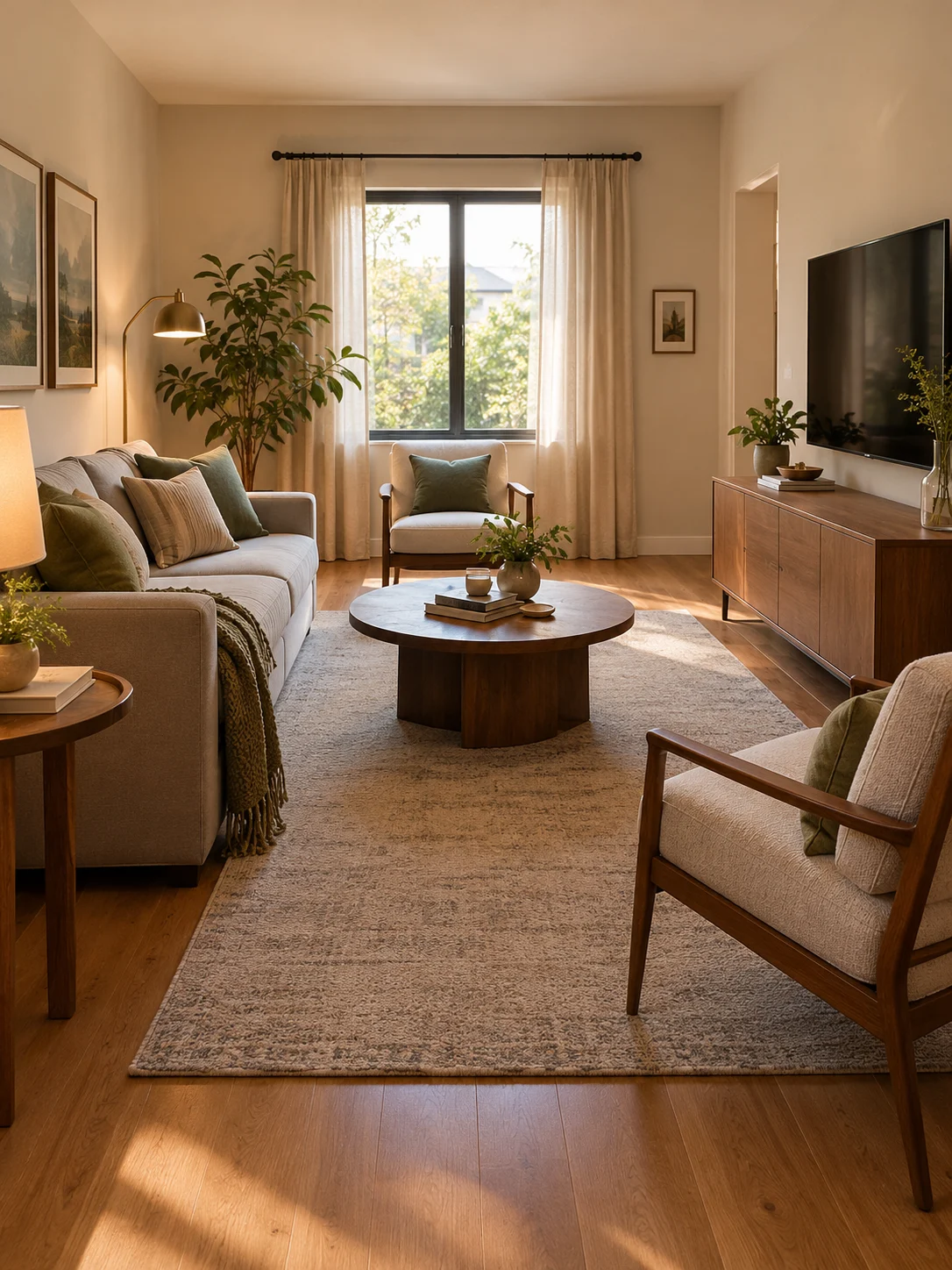
It is easy to fall in love with a sofa in a store and regret it at home. The size feels too big, the seat feels too firm, or the color looks wrong in your light. If you want to choose living room furniture the smart way, you need a plan before you shop. A good plan looks at your room, your daily habits, and your budget, not just a pretty photo.
This guide walks you through each step in plain language. You will learn how to measure, pick the right furniture size, test comfort, plan your layout, compare materials, and set a budget that works. You will also find a quick style guide, a mistakes list, and answers to common questions. By the end, you can buy with confidence and avoid costly returns.
Start With Your Room and Your Routine

The best way to choose living room furniture is to begin with how you live, not with what looks good online. Whether you prefer a cozy neutral space or want to explore teal living room decor ideas, spend a little time understanding your needs first, and every later choice gets easier.
Decide What the Room Needs to Do
Ask one simple question: what happens here most often? Some rooms are built for movie nights. Others host guests, kids, reading time, or work calls. Pick one primary job and one secondary job for the room.
For example:
- Primary: family TV time. Secondary: casual talks with guests.
- Primary: hosting friends. Secondary: quiet reading.
- Primary: relaxing in a small apartment. Secondary: hidden storage and flexible seating.
Write this down. When you are tempted by a beautiful piece that does not support these jobs, you will know to skip it.
Measure Everything Twice
A piece that looks perfect in a showroom can feel huge at home. Before you shop, record these numbers:
- Room length and width
- Wall lengths, especially the wall for the sofa
- Door widths and the swing area of each door
- Window positions and sill heights
- Power points, vents, and switchboards
- Hallway and stair widths, since the furniture has to fit through them on delivery day
Add one more tip: leave breathing space. A room feels open and calm when every piece has room around it.
Test Sizes With Painter’s Tape
This is a free trick that saves money. Mark the sofa, coffee table, chairs, and TV unit on the floor with painter’s tape, using the exact size from the product page. Walk through the room, sit where the sofa would be, and open the doors. If the tape shapes feel tight, the real furniture will feel tighter. Live with the tape for a day or two before you buy.
Find the Focal Point and the Anchor Piece
Every room needs a visual anchor. This might be a TV wall, a fireplace, a large window, or built in shelves. Once you know it, place your biggest piece first. In most homes, that is the sofa. Choose it based on size and comfort, then pick everything else to match it.
Choose Living Room Furniture by Size and Proportion
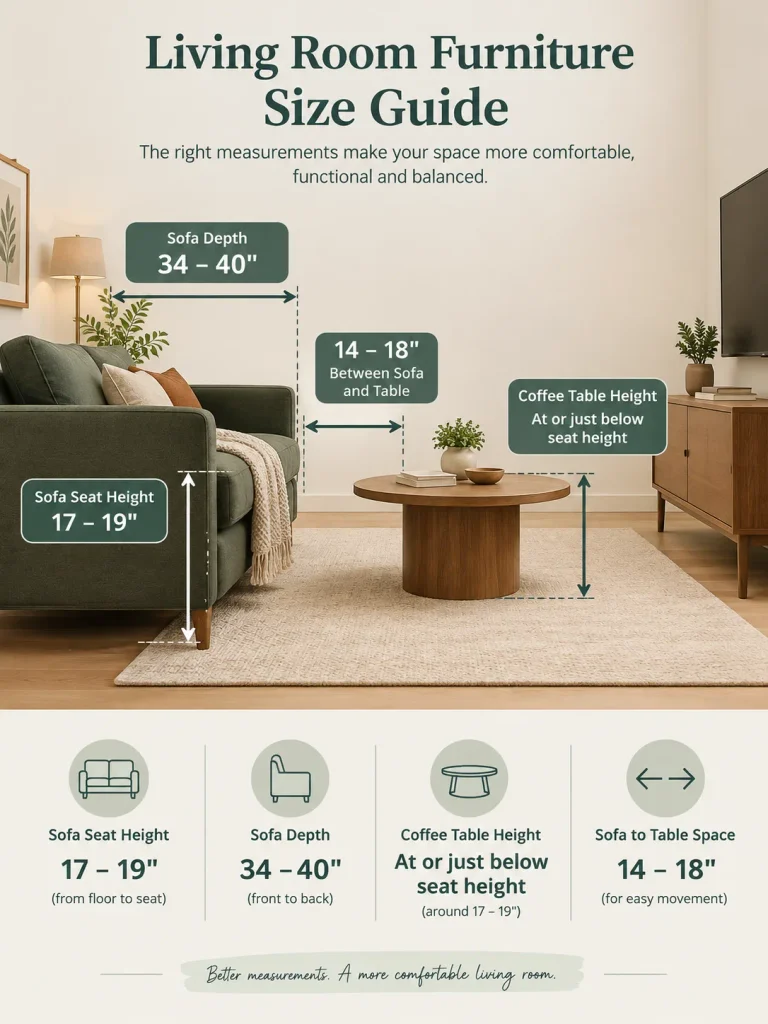
Furniture size is where most buying mistakes happen. A good rule is that furniture should feel generous without looking bulky. Oversized sofas, thick arms, and heavy shapes make a room feel crowded fast.
Sofa Size
Sofas come in many sizes, so match the sofa to the room and the people who use it.
- Two seater (about 4 to 5 feet wide): Good for small rooms or as a second seat.
- Three seater (about 6 to 7.5 feet wide): The most common choice for a medium room.
- L shaped sofa or sectional (often 8 to 10 feet or more): Best for open plan spaces and large families.
Here are a few numbers that help:
- Most sofa seats sit 17 to 19 inches high.
- Seat depth of about 21 to 24 inches suits most people. Deeper seats are great for lounging but can feel hard to get out of.
- Leave at least 3 feet of walking space in front of the sofa.
- A sofa should leave a few inches on each side wall if possible, so the room does not feel stuffed.
Coffee Table Size
The coffee table should relate to the sofa. A common rule is to make it about two thirds the length of the sofa. Keep it at or just below the seat height, and leave 14 to 18 inches between the table and the sofa so you can reach a drink without leaning. Round or oval tables help in tight rooms because there are no sharp corners to bump. Nesting tables are another smart choice, since you can pull them out for guests and tuck them away later.
Chairs and Side Tables
Accent chairs should be a little smaller than the sofa so they do not compete with it. Pair them with a small side table within easy reach. Do not place oversized side tables at both ends of the sofa in a small room. One good table is better than two crowded ones.
TV Unit Size and Distance
The TV unit should be a bit wider than the TV, with room for a soundbar and décor. For distance, a handy guide is to sit about 1.5 to 2.5 times the screen’s diagonal size away. Comfort matters more than any fixed number. Sit where your neck stays neutral and your eyes feel relaxed. If the TV feels too close, move seating back a little. Wall mounting the TV frees floor space in small rooms.
Rug Size
A rug that is too small makes furniture look like it is floating. Choose a rug large enough so at least the front legs of the sofa and chairs sit on it. For many medium rooms, an 8 by 10 foot rug works well.
Sizing for Small and Large Rooms
| Room Type | Smart Furniture Size Choice |
| Small room or apartment | Two or three seater, slim arms, raised legs, nesting tables, wall mounted shelves |
| Medium room | Three seater plus two accent chairs, round coffee table |
| Large room | L shaped sofa or sectional, larger table, separate seating zones |
| Long, narrow room | Sofa plus a reading chair, split into two zones with a rug |
Comfort Matters More Than Looks
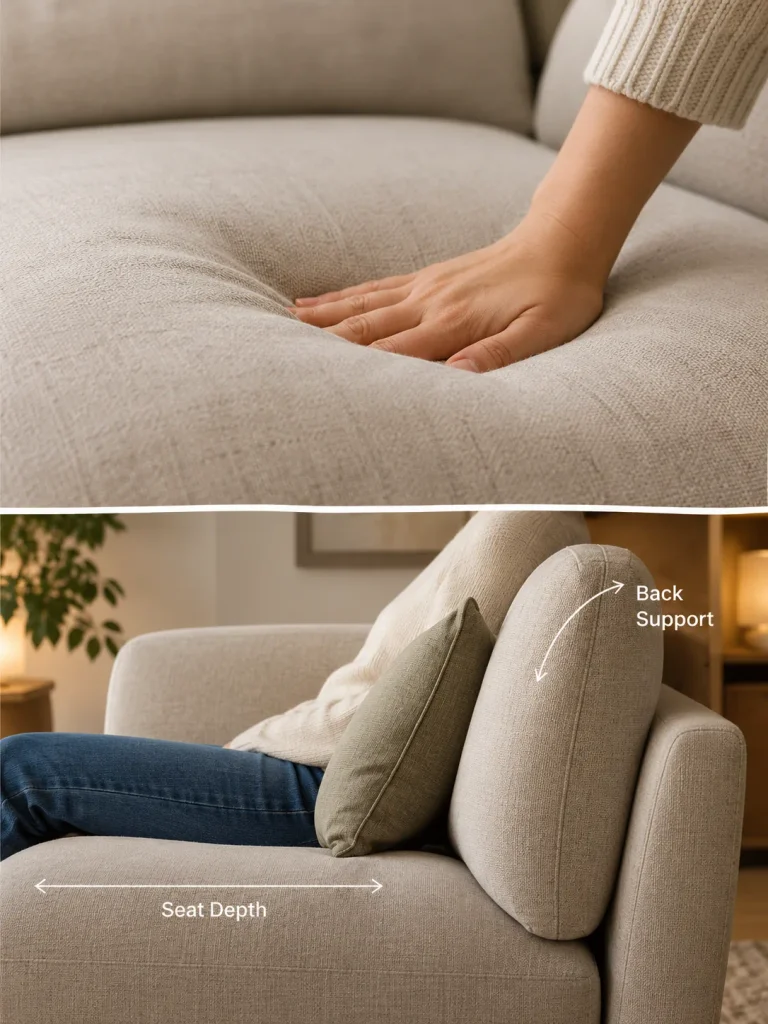
A sofa can look amazing and still be uncomfortable. Since you will use it every day, test comfort before you buy.
The Sit Test
If you can visit a store, sit on the sofa for at least five minutes. Check these points:
- Seat depth: Can you sit back with your feet flat on the floor? If your feet dangle, the seat is too deep.
- Back support: Does your lower back feel supported, or do you slouch?
- Cushion feel: Firm cushions hold their shape longer. Very soft cushions feel cozy at first but can sag.
- Arm height: Can you rest your arm without hunching your shoulder?
- Getting up: Can you stand up easily without pushing hard?
If you are buying online, read the exact seat height, depth, and cushion fill on the product page, and check the return policy. A trial period or easy return option is worth a lot.
Cushion Fill and Frame
Look at what is inside. High resiliency foam, often wrapped in fiber, keeps its shape for years. Frames made from solid or kiln dried wood last longer than thin particleboard frames. These details are rarely shown in photos, so ask the seller.
Think About Your Household
Comfort also depends on who lives with you.
- Kids: Choose sturdy frames, rounded corners, and fabrics that wipe clean.
- Pets: Pick tightly woven fabrics or leather that resist claws and hair. Removable, washable covers help a lot.
- Tall people: Look for a higher back and deeper seat.
- Older adults: Choose a firmer, slightly higher seat that is easier to get out of.
- Movie lovers: A deep sofa or a chaise adds lounging space.
Choose Colors You Can Live With
Neutral shades like beige, gray, and warm white make a timeless base. You can add color through cushions, throws, and art, which are cheap to change. Light colors can make a small room feel open, while deeper shades feel cozy. Check swatches in your own room, since daylight and lamps change how colors look.
Plan a Living Room Furniture Layout That Flows
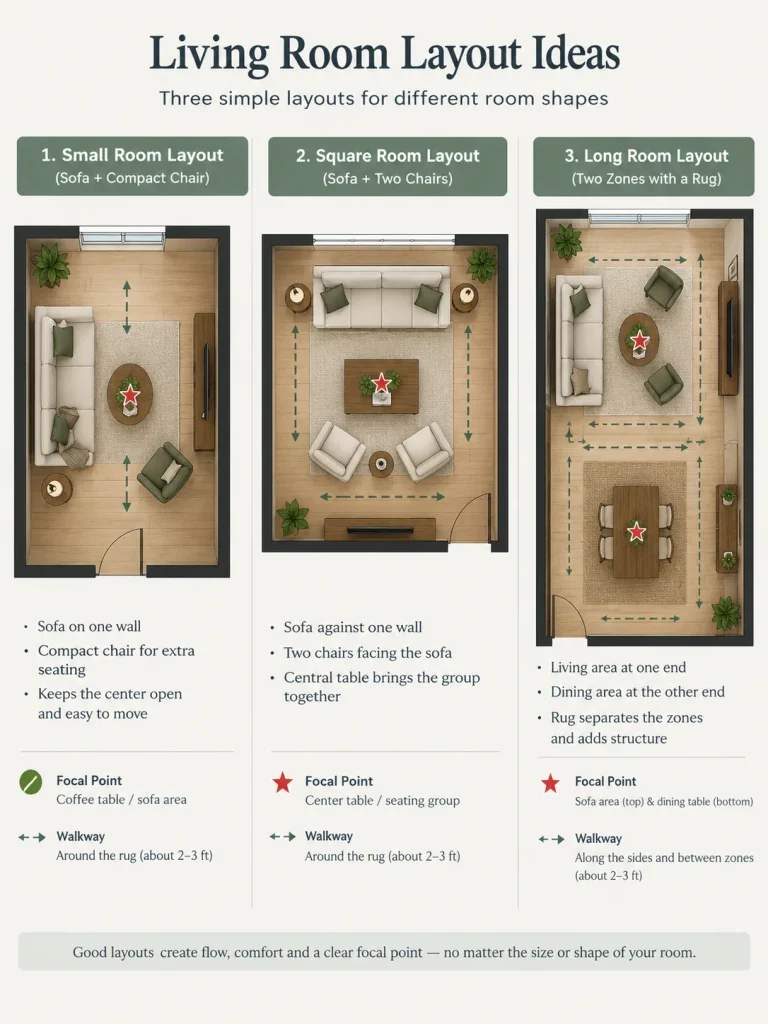
A good layout makes the same furniture feel bigger, calmer, and easier to use. Do this step before you buy, because layout decides which sizes will work.
Start With Flow
Stand at the main entrance and trace the path to the sofa, TV, window, and kitchen. If the path zigzags around furniture, the layout needs editing. Do not make people walk through the conversation zone. Keep walkways about 30 to 36 inches wide.
Match the Layout to Your Room Shape
| Room Shape | Best Layout Idea | Why It Works |
| Small room | Sofa on one wall plus a compact chair | Keeps the center open |
| Square room | Sofa and two chairs around a coffee table | Creates a balanced talking zone |
| Long, narrow room | Two zones divided by a rug or console | Breaks the tunnel effect |
| Open plan room | Floating sofa or L shaped sofa | Separates living and dining without a wall |
| TV focused room | Sofa centered to the screen with angled chairs | Supports viewing and talking |
| Fireplace room | Seating faces the fireplace with flexible chairs | Makes the feature wall the star |
Tips for Special Rooms
- Rectangular rooms: Do not line everything along one wall. Create a seating zone and a second zone, such as a reading nook or study corner. Angle the sofa slightly, or float seating around a central table in a large hall.
- Open plan homes: Let furniture act as the wall. A sofa with its back to the dining area creates a soft divider. Use a rug and lamps to define each zone.
- Rooms with several doors: Keep main paths open first, then build the seating area between them.
- TV and fireplace together: If both compete, angle chairs inward or use a swivel chair so people can face either one.
Build for Conversation
A living room should not feel like a waiting room. Place seats close enough that people can talk without raising their voices, within about 8 feet of each other. Two chairs angled toward a sofa feel warmer than every seat facing the TV in a straight line.
Plan Storage Early
Clutter ruins a good layout. Remotes, chargers, toys, books, and cables all need a home. A TV unit with closed cabinets, a storage ottoman, a console with drawers, or wall shelves keep things tidy. Closed storage gives a clean look, while open shelves are better for a few displayed items. For media heavy rooms, choose a unit deep enough for consoles and cables.
Common Layout Mistakes
- Pushing every piece against the walls
- Buying a sofa before measuring
- Choosing a rug that is too small
- Blocking windows, doors, or natural light
- Placing the TV too high
- Forgetting side tables and lamps
- Using many small pieces instead of fewer useful ones
- Making every seat face the TV with no conversation angle
Rethink the Layout When
- Guests are unsure where to sit
- People walk through the middle of the seating area
- One corner always collects clutter
- The coffee table is always too far away
- The room looks styled but does not feel relaxing
Try the new layout for a week before you add more furniture.
Compare Living Room Furniture Materials
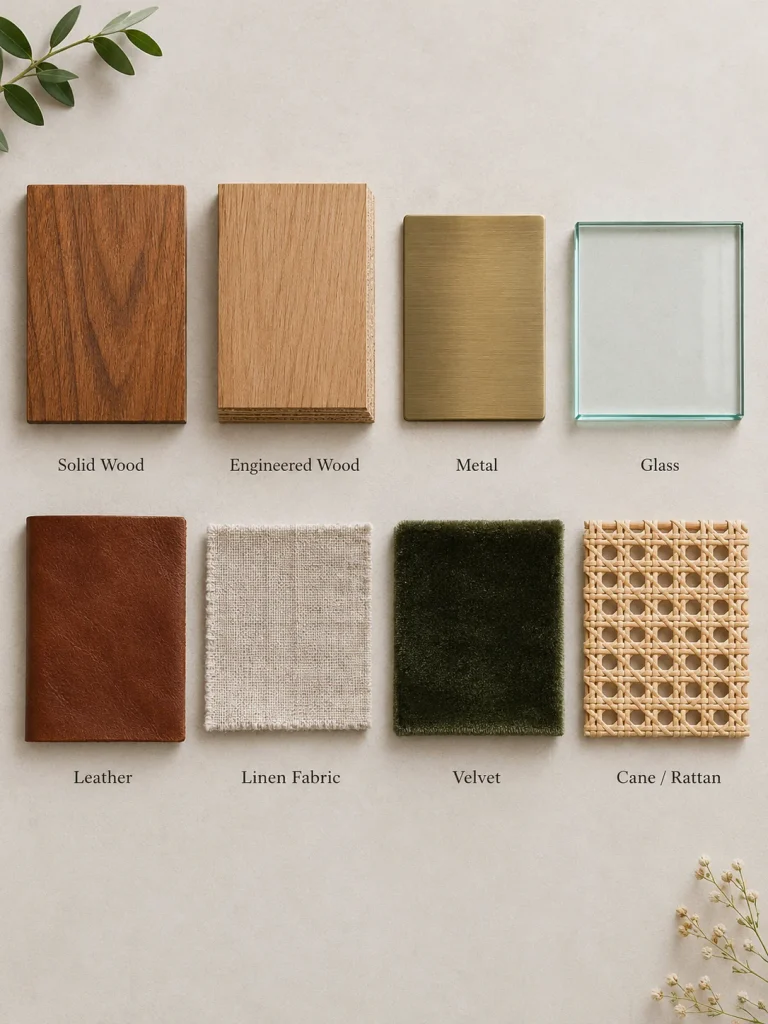
Materials affect how furniture looks, feels, lasts, and costs. Here is a simple comparison.
| Material | Strengths | Watch Out For | Best For |
| Solid wood (teak, sheesham, oak, walnut) | Strong, long lasting, can be refinished | Higher price, heavier | Frames, tables, TV units |
| Engineered wood or plywood | Budget friendly, stable, many finishes | Weaker if wet, harder to repair | Storage units, TV units |
| Metal | Slim, modern, sturdy | Can feel cold, may scratch | Table legs, shelves, frames |
| Glass | Makes rooms feel open | Shows fingerprints, can break | Coffee tables, side tables |
| Leather | Wipes clean, ages well | Can scratch, needs conditioning | Sofas for busy homes |
| Fabric | Soft, many colors | Can stain, needs care | Sofas, chairs |
| Velvet | Rich look and feel | Can show marks and pet hair | Formal or glam rooms |
| Cane and rattan | Light, natural texture | Can snag, less sturdy | Chairs, accents |
Choose by Lifestyle
Families with young kids or pets often prefer sturdy surfaces and easy care upholstery. If you want a formal look and have a quiet household, you can choose based on looks. Mixing materials, like a wooden table with a fabric sofa and a metal lamp, keeps a room interesting and warm.
Pick Finishes That Age Well
Natural woods with matte or satin finishes hide scratches better than glossy ones. Textured fabrics hide wear better than flat, smooth ones. Choose materials that look good as they age, not just on day one.
Mix Modern With Personal Character
A modern room does not have to look cold. Wood warms clean lines, and textured fabrics, plants, and handmade décor add personality. Pick a few pieces that work together instead of mixing too many styles.
Set a Smart Budget for Living Room Furniture
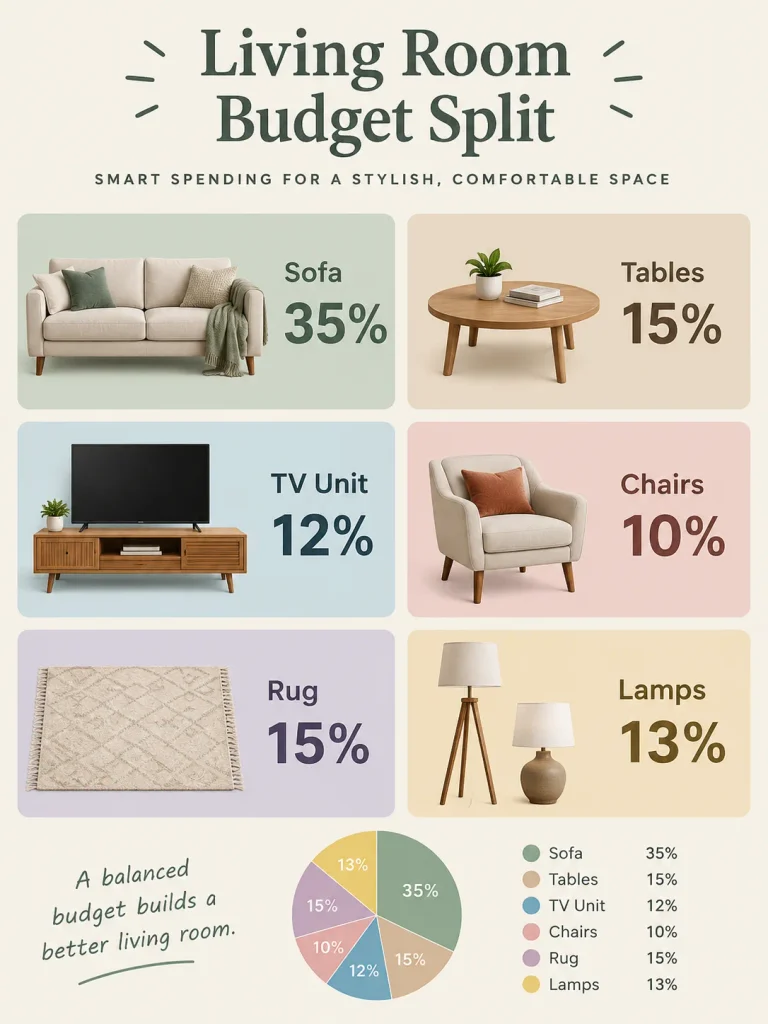
Good furniture does not have to mean the most expensive furniture. It means spending in the right places.
Spend More Where You Use It Most
Put the biggest share of your budget into the pieces that get daily use, mainly the sofa. A rough starting plan looks like this:
| Item | Share of Budget |
| Sofa or sectional | 35 to 40 percent |
| TV unit and storage | 15 to 20 percent |
| Coffee table and side tables | 10 to 15 percent |
| Accent chairs or ottoman | 10 to 15 percent |
| Rug and lighting | 10 to 15 percent |
| Décor and cushions | 5 percent |
This is only a guide. Adjust it for your home. If you do not own a TV, spend that share on a better chair or rug.
Judge Value, Not Just Price
Compare construction, materials, comfort, and care needs rather than looks alone. A well made sofa that lasts ten years can cost less over time than a cheap one you replace in three. Ask about the frame material, cushion fill, and warranty.
Smart Ways to Save
- Buy the sofa new and shop secondhand for tables, chairs, and shelves.
- Choose simple designs, which usually cost less than heavily detailed ones.
- Use neutral big pieces and add trends through cushions, throws, and art.
- Buy in phases: sofa first, then the table and storage, then décor.
- Watch for seasonal sales, but only on pieces you have already measured and tested.
- Skip full sets if you do not need them. A set can force you to buy pieces you will not use.
Plan for Hidden Costs
Remember delivery, assembly, rug pads, curtains, lamps, and bulbs. Add about 10 percent to your plan for extras.
Do Not Chase Every Trend
A piece that looks bold online may not suit your room, family, or daily life. Focus on timeless shapes and let small accessories bring in the trends. That way your room still looks good when styles change.
Pick a Style and Add Flexibility
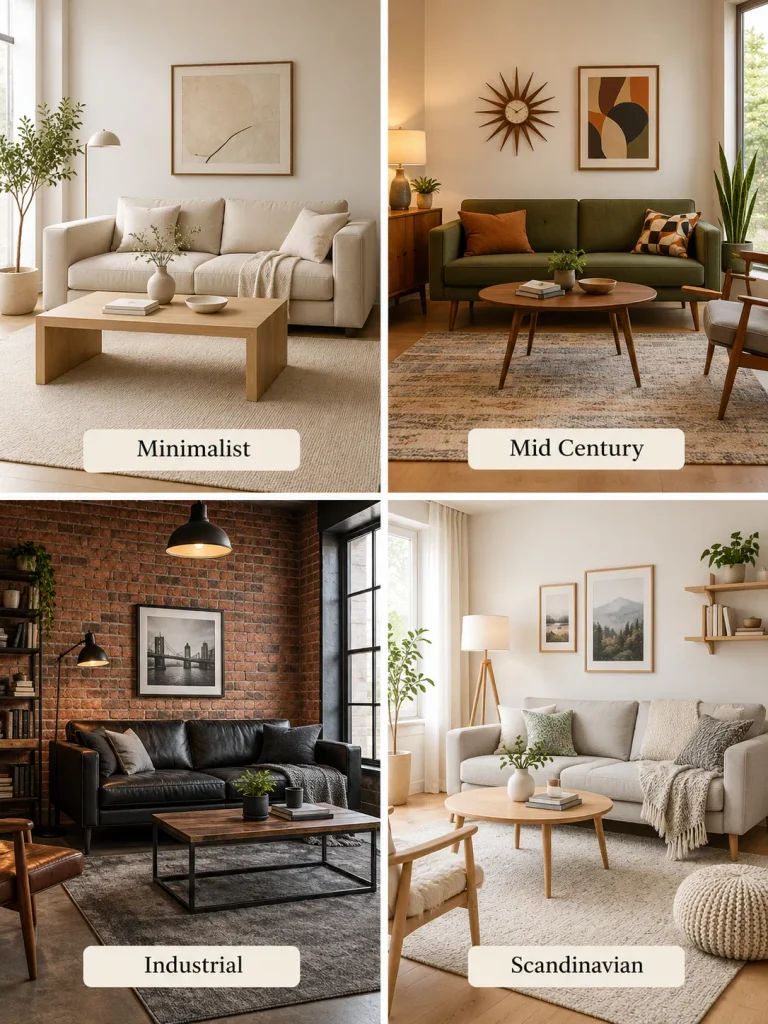
A clear style helps you say no to pieces that do not fit. You do not need to follow one style strictly, but a direction keeps your choices consistent.
Popular Living Room Styles
- Minimalist: Clean lines, few pieces, and calm colors like beige and white. Great for a clutter free home.
- Modern: Low profile furniture, a natural wood coffee table, metal lights, and one bold accent color.
- Industrial: Exposed brick, black metal, a leather or black sofa, wooden tables, and soft rugs for warmth.
- Scandinavian: Light wood floors, white and gray tones, simple shapes, and cozy wool textures.
- Mid century: Wooden legs, nested tables, accent chairs, and warm earth tones like mustard.
- Traditional: Elegant shapes, symmetry, rich fabrics, and a large painting over the sofa.
- Rustic or farmhouse: Solid wood, natural fabrics, and handmade pieces that feel warm and lived in.
- Transitional: A mix of classic and modern with soft textures, neutral tones, and gentle curves.
- Eclectic: Mixed textures and bold colors, kept neat by repeating one or two elements.
If your home is in India or a similar climate, earthy tones, solid wood, and cane pair well with a modern shape and keep rooms bright and breathable.
Choose Flexible Pieces
Homes and lives change. You may add a baby, a work from home desk, or more guests. Flexible furniture adapts easily:
- Movable accent chairs
- Nesting tables
- Modular sofas that can be rearranged
- Storage ottomans that work as seats
- Sofa beds for guests in small homes
Layer the Lighting
Furniture looks better in good light. Use three layers: ceiling light for general brightness, a floor or table lamp for reading, and accent light such as LED strips behind a TV unit or on shelves. Warm bulbs around 2700K to 3000K feel cozy. A dimmer lets you change the mood from bright family time to soft evenings.
Repeat Don’t Match
Furniture does not need to match. A better approach is to repeat one or two things, such as a wood tone or a metal finish, and let shapes and textures vary. This looks collected and calm, not like a showroom.
Frequently Asked Questions
How do I choose living room furniture for my room size?
Measure your room, then match the furniture size to it. Small rooms suit a two or three seater with slim arms and a round table. Medium rooms fit a three seater plus two chairs. Large rooms can handle an L shaped sofa or separate zones. Mark the sizes with painter’s tape before you buy.
What should I buy first for a living room?
Buy the sofa first. It sets the layout and is the piece you use most. After that, choose the rug, coffee table, storage, chairs, and lighting, in that order, so everything matches the sofa’s size and style.
How much space should be between living room furniture?
Leave 14 to 18 inches between the sofa and coffee table, and keep main walkways about 30 to 36 inches wide. Allow at least 3 feet of walking space in front of the sofa so people can pass easily.
What is the best material for living room furniture?
It depends on your lifestyle. Solid wood lasts the longest, leather is easy to wipe clean, and tightly woven fabric suits families with kids and pets. Engineered wood is a good budget choice for storage units. Pick the material that fits your daily habits and care level.
How much should I spend on living room furniture?
Set a total budget first, then put the biggest share, around 35 to 40 percent, into the sofa. Spend less on pieces you use rarely. A well made piece that lasts for years is better value than a cheap one you replace soon.
Conclusion
When you choose living room furniture with a plan, the room feels comfortable, balanced, and easy to use. Start with how you live, measure carefully, choose the right size, test comfort, plan the layout, compare materials, and spend your budget where it matters most. Thoughtful living room decor brings everything together, creating a welcoming space that reflects your style. A few smart choices beat a room full of impulse buys.
Ready to begin? Grab a tape measure and painter’s tape today. Mark out your sofa and table, trace the walking paths, and write down your budget. Then shop with your list in hand. You will make better choices, avoid returns, and end up with a living room you truly enjoy.