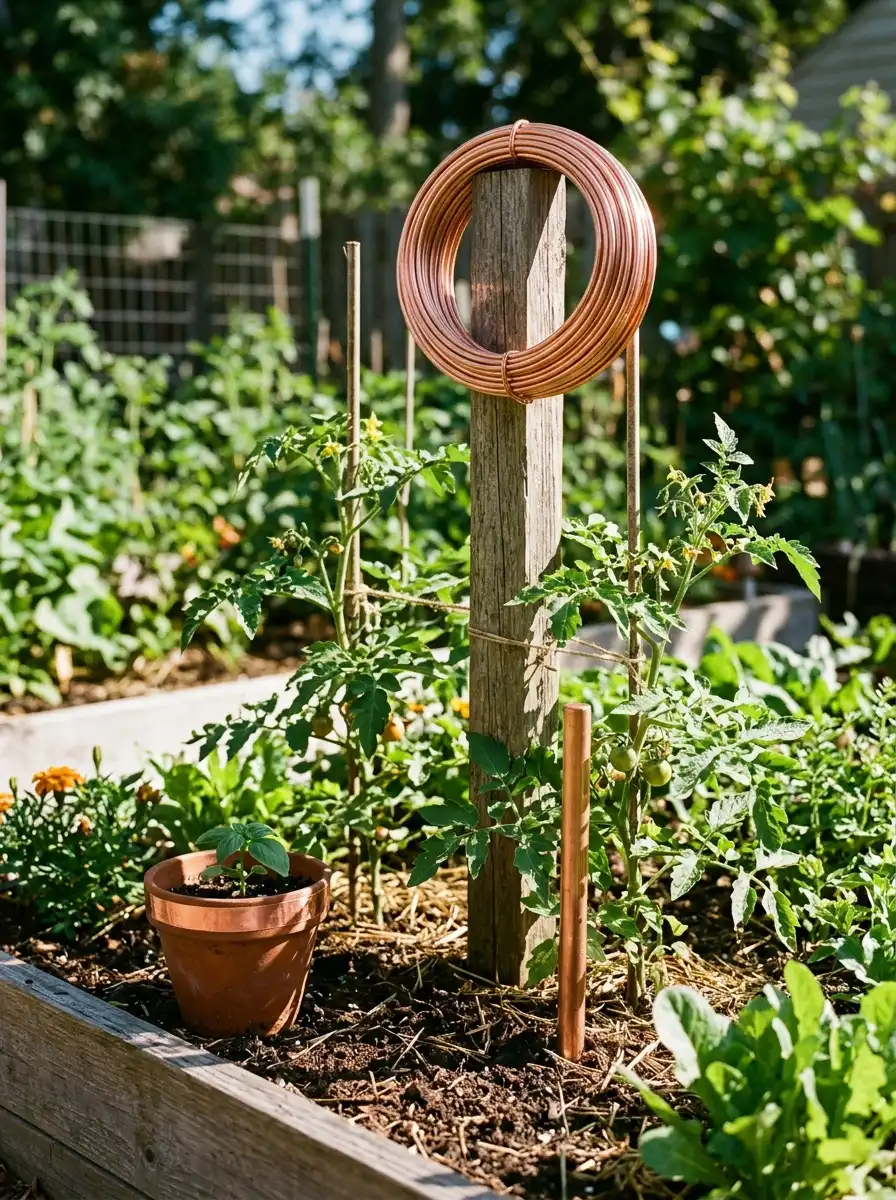
Copper for gardening is having a moment. Scroll through any gardening feed and you will see shiny coils poking out of tomato beds, copper tape wrapped around pots and bold claims about bigger harvests with no fertilizer. Some of it rests on solid plant science. Some of it is still a hopeful experiment. If you want to know which is which, this guide sorts it out.
You will learn the three main ways gardeners use copper, how copper works as a plant nutrient, what electroculture gardening copper wire is, what the evidence says about it, and how to make and place copper wire and a copper rod for gardening. You will also get a simple way to test it fairly in your own yard, plus safety rules and common mistakes.
It is used in three ways. First, as a trace nutrient that plants need in tiny amounts. Second, as a barrier that slugs tend to avoid. Third, as wire or rods in electroculture, a method that claims copper antennas boost growth. The nutrient role is proven. The barrier role gets mixed results. The electroculture role lacks strong proof, but it is cheap and low risk to test.
What Is Copper for Gardening? Three Ways Gardeners Use It
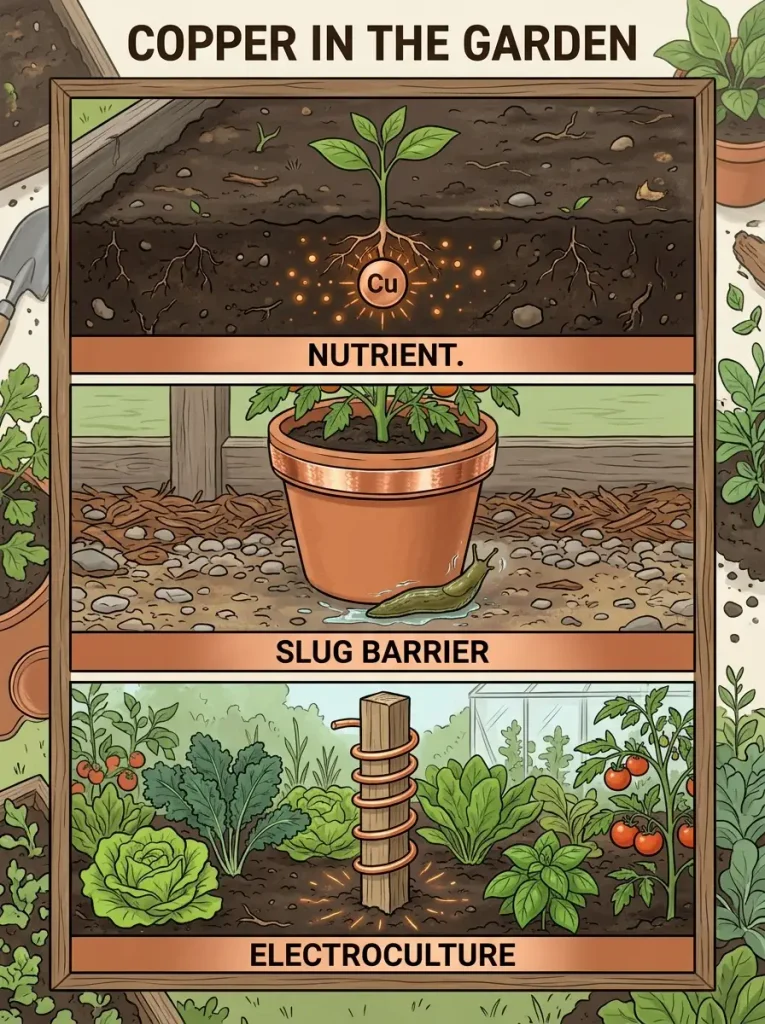
People use the phrase “copper for gardening” to mean very different things, which can cause a lot of confusion. Whether you’re exploring copper as a plant nutrient, using copper tape to deter slugs, or experimenting with unproven methods, it helps to understand the differences. Just as a vertical gardening tower offers a space-saving way to grow plants, choosing the right gardening method starts with knowing what works and what still needs testing.
| Use | What it is | How strong is the evidence? | Typical cost |
| Plant nutrient | Tiny amounts of copper in soil that plants need to grow | Strong. Copper is an essential element | Low, only if soil needs it |
| Slug and snail barrier | Copper tape or mesh around pots and beds | Mixed. Some gardeners see results, others do not | Low to moderate |
| Electroculture | Copper wire or rods used as antennas | Weak. Many claims, little solid proof | Very low |
Copper as a Nutrient
Plants need copper in very small amounts to grow properly. Soils naturally hold it, and a healthy garden usually has enough. We cover this in detail below, because it is the part of copper for gardening that science backs most clearly.
Copper as a Pest Barrier
Many gardeners wrap copper tape around raised beds and pots to keep slugs and snails out. The idea is that the metal gives soft bodied pests an unpleasant feeling when they cross it. Some people swear by it. Others find slugs cross it anyway, especially when the tape is dirty or broken.
Copper in Electroculture
Electroculture is the practice of using atmospheric electricity or magnetism to stimulate plant growth. In the garden, that usually means copper wire coils or copper rods set near plants. This is where most of the buzz, and most of the debate, comes from.
Copper as a Plant Nutrient: Deficiency, Toxicity and Safe Use
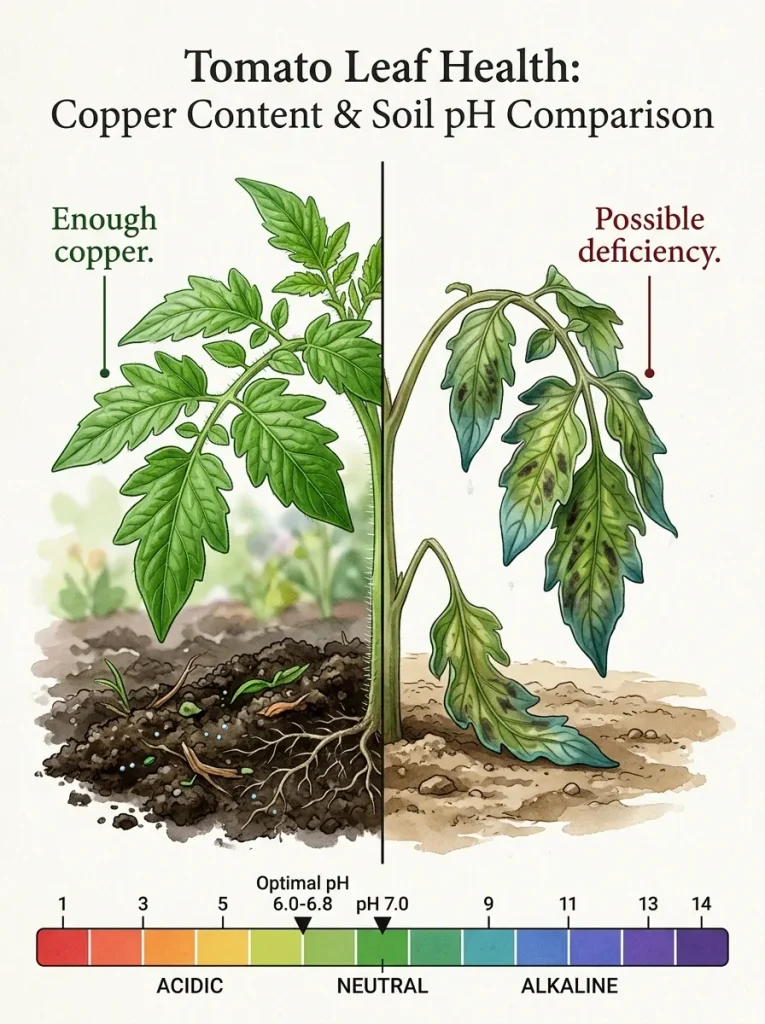
Before you buy any wire, it helps to know that copper itself is an essential plant element. Soils naturally contain copper, usually somewhere between 2 and 100 parts per million, with an average near 30. Most plants hold roughly 8 to 20 parts per million inside their tissue. Without enough, plants fail to grow normally.
Which Soils Run Low in Copper
Two things matter most: soil pH and organic matter.
- Peaty and acidic soils are the most likely to be low in copper.
- Very alkaline soils, above about 7.5, and soils where pH has been raised, make copper harder for plants to use.
- Lots of fresh organic matter can tie up copper for a while. Once the material breaks down fully, copper is released again.
Signs of Too Little Copper
Low copper can cause poor growth, late flowering and even sterile plants. Watch for wilting and leaf tips that turn a bluish green. In grain crops, tips can turn brown and look like frost damage. Keep in mind that soil tests for copper are not always reliable, so careful watching of your plants matters as much as the lab number.
How to Add Copper Safely
If you truly have a deficiency, the usual fixes are copper sulfate, copper oxide, or copper chelate. Farm rates are measured per acre, which is far too much for a backyard, so do not guess. Follow the label and your soil test, and apply the minimum. Copper can be spread on soil, banded in the soil or sprayed on leaves. Most gardeners will never need to do this at all.
Signs of Too Much Copper
Copper toxicity is more common than most people think, and it usually comes from repeated use of fungicides that contain copper. Affected plants look stunted and bluish, then turn yellow or brown. Too much copper also lowers seed germination, plant vigor, and iron uptake. The tricky part is that copper does not dissolve easily, so it can stay in soil for years and is hard to remove. Treat copper sprays carefully and avoid using them again and again in the same spot.
Electroculture Gardening Copper Wire: The Claims, the History and the Evidence
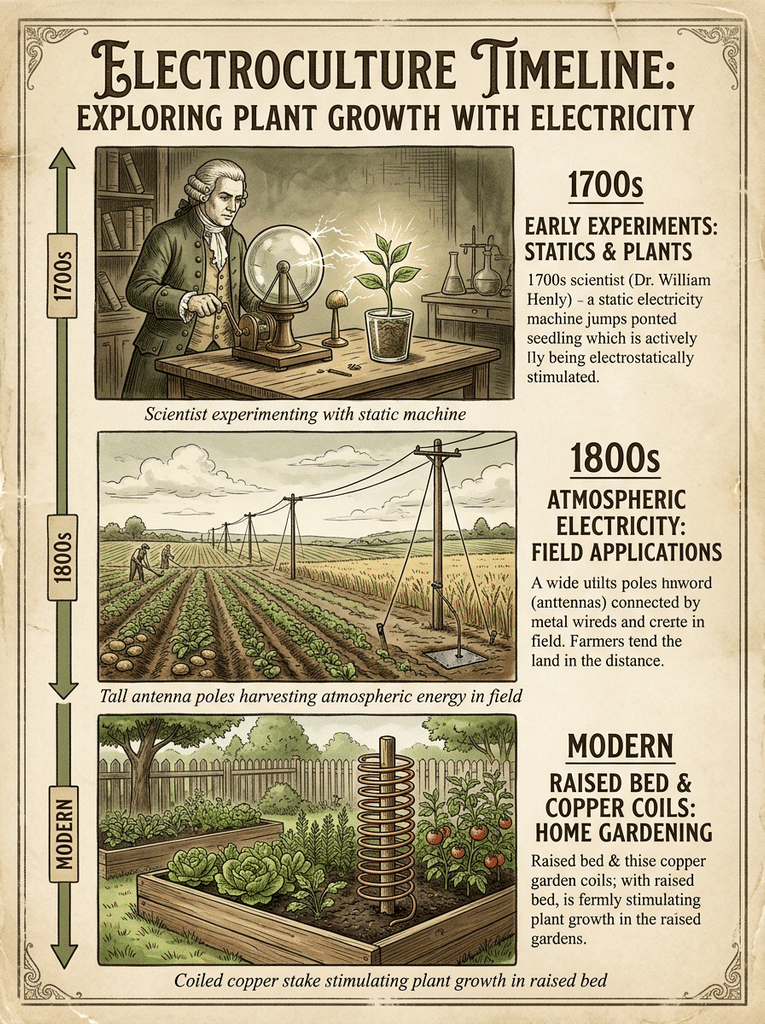
Electroculture gardening copper wire setups look simple. A coil of bare copper sits on a stake in the soil, and the gardener expects better growth. Here is where the idea came from, what people claim, and what the evidence actually shows.
A Short History
The idea is older than most people expect. During the 1700s, scientists experimented with static electricity on plants, reporting faster germination and higher yields. By the 1800s, French agronomist Justin Christofleau had developed antenna systems and claimed they improved crop production. In the early 1900s, several patents were filed, while reports from across Europe continued to describe promising results. Later, chemical fertilizers and industrial farming took over, and interest faded. The recent comeback comes from gardeners looking for low cost, chemical free methods.
What Gardeners Claim
People who use copper wire for gardens often report:
- Taller, sturdier stems
- Bigger leaves and fruit
- Earlier blooms and harvests
- Fewer aphids and slugs
- Soil that stays moist longer
- Less need for fertilizer
How the Idea Is Said to Work
The common explanation is that a copper antenna collects natural electrical energy from the air and passes it into the soil, where it stimulates roots and soil life. Some versions say the wire must touch the ground. Others say only the coil above the ground matters. People disagree, and nothing has settled the question.
What the Evidence Really Says
Here is the honest picture. Home and garden editors who have looked into electroculture say proof is thin. Some experienced gardeners point out that a plain copper wire with no power source does not create a field on its own, and that no clear mechanism has been shown. A few small studies have looked at electric or magnetic stimulation of plants, and some report gains, but they usually use controlled equipment, not a coil on a stake. Popular articles also tend to cite long lists of studies that readers often cannot find or confirm.
So should you skip it? Not necessarily. A few things are true at once:
- The claims are not proven.
- Copper wire is cheap and generally safe in a small garden.
- Gardeners who see better growth may be seeing better care, because people who try a new method tend to watch their plants more closely.
The smartest approach is to treat it as an experiment, which is exactly what the test in section five helps you do.
How to Make and Use Copper Wire for Gardening and a Copper Rod for Gardening
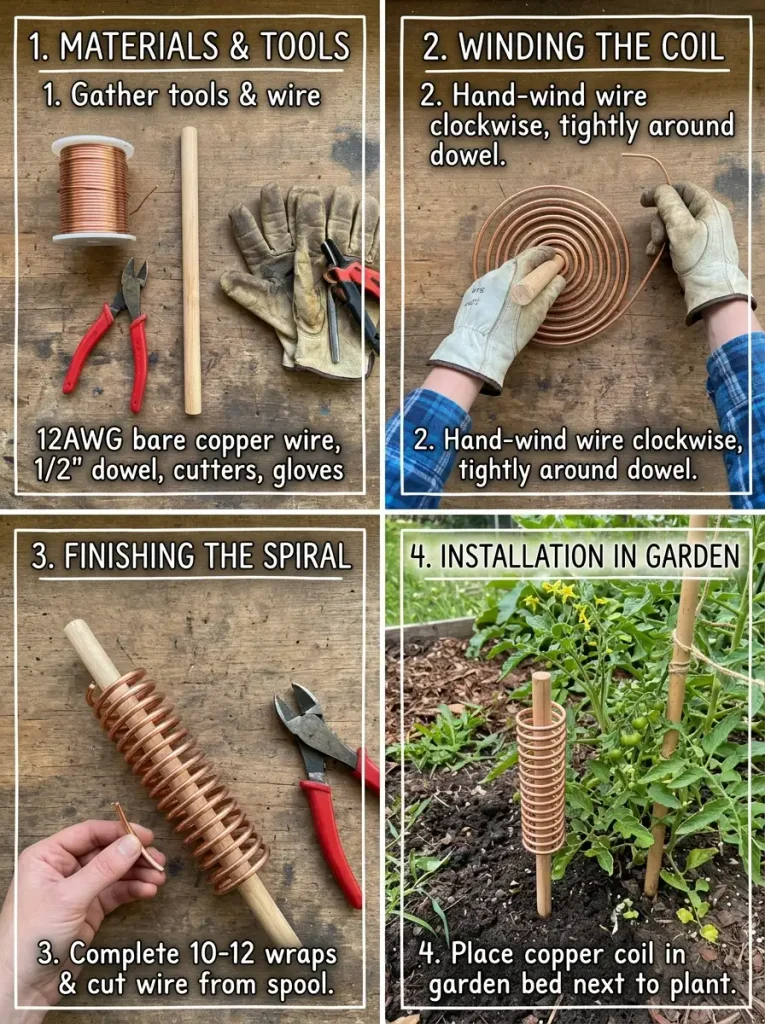
If you want to try it, here is a practical setup based on what garden centers and hobby gardeners commonly recommend.
Materials You Need
- Bare copper wire: Pure, solid copper. One source suggests 14 or 16 gauge, which is thick enough to last outdoors but still easy to bend.
- Wooden stakes, bamboo canes or dowels: About 2 to 4 feet long.
- Optional copper rod or pipe: A short length, often 12 to 18 inches.
- Wire cutters and gloves.
Choose wire with no coating. Skip insulated, enameled, or painted wire, and avoid copper plated or alloy wire, which may not behave the same way. If you buy copper pipe, choose new plumbing grade pipe, and avoid old pieces that may have lead solder.
Step by Step: Make a Simple Copper Coil
- Cut a piece of wire. A few feet is plenty for a small stake.
- Hold the end against the top of a wooden dowel or cane.
- Wrap the wire around the stake in an even spiral, about 10 to 20 turns.
- Leave a loose tail at the top. Some people shape it into a small loop or point.
- Press the bottom of the stake a few inches into the soil near your plants, with the coil above the leaves.
- Fold or cap any sharp wire ends so they don’t scratch you.
You can also slide the coil off the dowel and push it straight into the soil if you prefer to leave the wood out.
How to Make a Copper Rod for Gardening
A copper rod for gardening is even simpler. Cut a rod or pipe to about 12 to 18 inches, then do one of the following:
- Push it into the soil as a standalone marker, about a third of the way in.
- Fix it to the top of a wooden stake with garden twine or a small clamp.
- Wrap wire around it to make a coil on a metal core.
Gardeners often pair a rod with a coil so there is both a vertical piece and a spiral. Whether this adds anything is untested, which is another reason to run a fair comparison.
Placement and Spacing
A common rule is one stake for every few feet of bed. If you lay wire along the soil instead, one source recommends keeping strands 12 to 24 inches apart, with wire buried about 4 to 6 inches deep. Another approach keeps the base of the stake a few inches in the soil and the coil above the plants. Sources disagree, so follow whichever you prefer and write down what you did.
Raised Beds and Containers
In raised beds, place a small stake in each corner or loop wire along the edge. In pots, use a small coil on a wooden skewer or stake in the soil. If your pot sits directly on the ground, some gardeners push a stake through the drainage hole region to touch the earth below. If the pot sits on a patio or balcony, they simply use a coil on top. None of this is proven, so keep your setup simple.
Cold Climates and Winter
Copper wire handles cold fine. If you grow annual vegetables, pull the stakes at the end of the season, wipe them clean, and store them for reuse. Put them back in spring when you prep the bed. Wire can be reused for many seasons if it stays in good shape.
Safety Rules
- Never connect copper wire to any power source or outlet.
- Keep wire away from electrical cables, fences, and power lines.
- Wear gloves and use proper wire cutters.
- Tall metal rods can be a concern in open fields during storms, so keep your setup short and take it down when a thunderstorm is forecast.
- Don’t damage roots or irrigation lines when you push stakes in.
- Dispose of scraps properly, and recycle leftover copper.
Run a Fair Test of Copper for Gardening in Your Own Yard
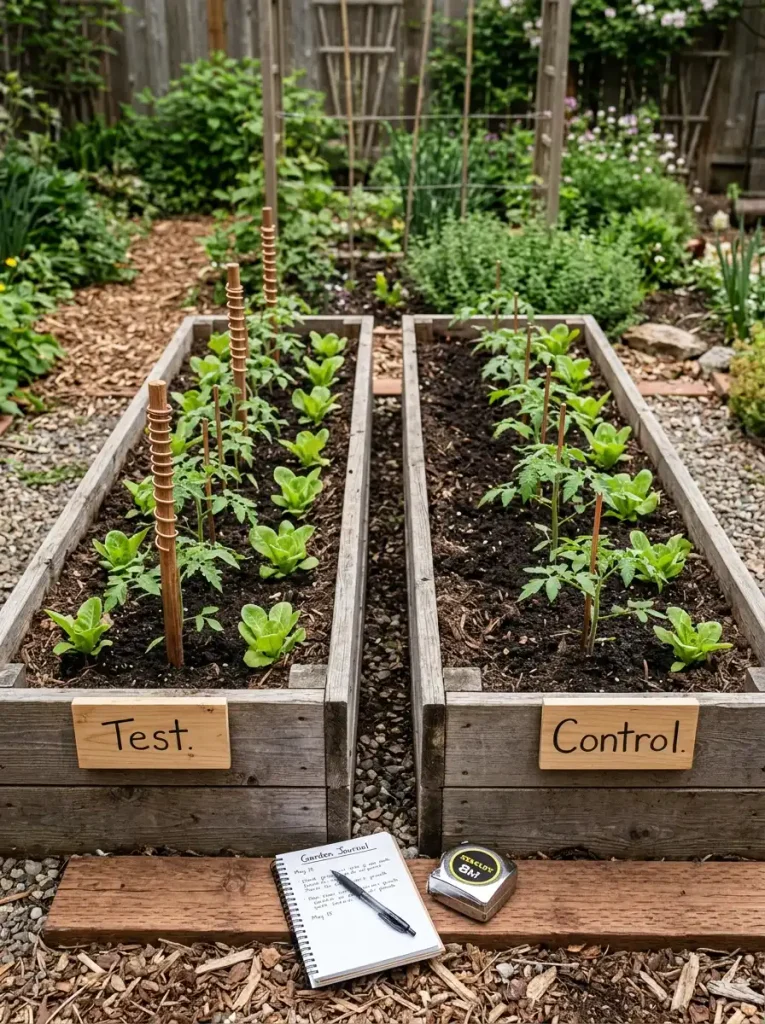
The best way to settle the debate is to try it yourself in a way that gives you real answers. This is something none of the competitor pages offer, and it is the single most useful step you can take.
Set Up Two Matching Groups
Pick two beds or two sets of pots that are as alike as possible. Use the same soil, the same plant variety, the same sunlight, the same watering and the same fertilizer. Add copper to only one group. The other is your control.
Change One Thing Only
If you add a coil, do not also add new compost or a new fertilizer to only one group. Otherwise, you won’t know what caused any difference.
Track Results Every Week
| What to measure | How | How often |
| Plant height | Tape measure from soil to top | Weekly |
| Leaf count or size | Count leaves, measure one marked leaf | Weekly |
| Pest damage | Count chewed leaves or aphids on three plants | Weekly |
| Soil moisture | Finger test at 2 inches deep | Twice a week |
| Harvest weight | Kitchen scale | At each harvest |
| Photos | Same angle, same time of day | Weekly |
Give It Enough Time
Plan on 8 to 12 weeks, or one full short season. One source says changes may show within a few weeks to a couple of months, so be patient. Repeat the test for another season if you can. If your copper group beats the control twice in a row, you have real data. If not, you saved yourself money and effort.
Stay Honest With Yourself
Humans love to see what they hope to see. Take photos, write down numbers, and let the results speak. Even a null result teaches you something about your garden.
Other Practical Uses for Copper Wire for Gardens and Mistakes to Avoid
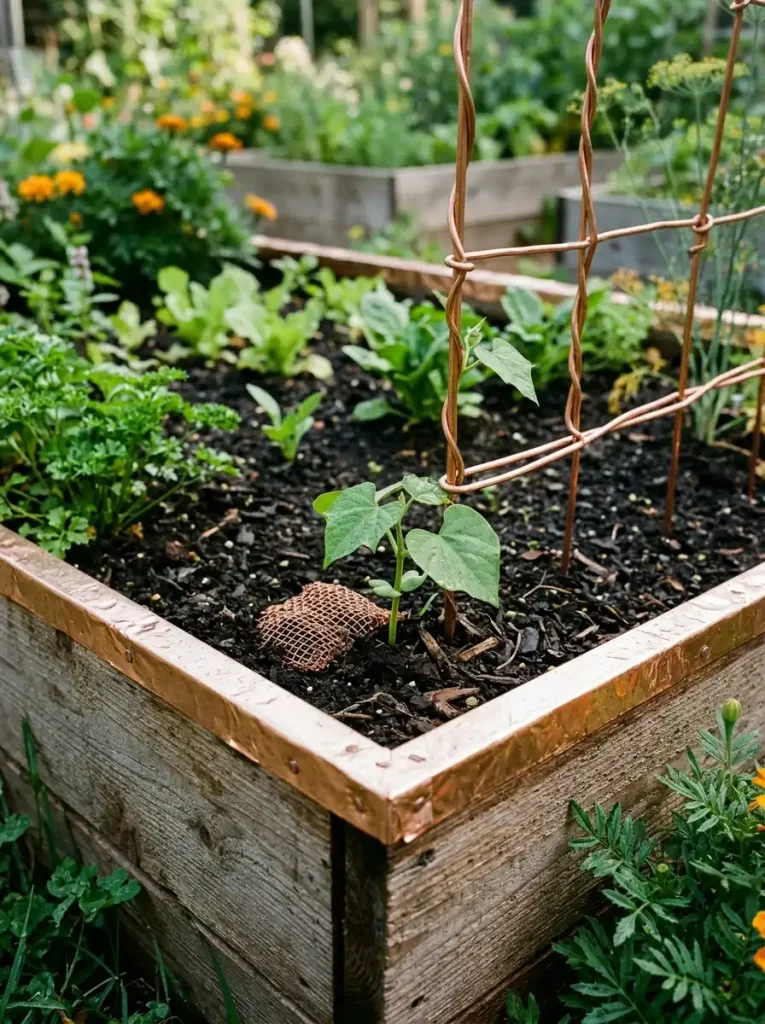
You do not need to believe in electroculture to get value from copper. Here are other practical uses.
Copper Tape and Mesh Against Slugs
Wrap self adhesive copper tape around raised beds, planters, and pots to form an unbroken ring. Keep it clean, because dirt and tarnish can reduce its effect. Overlap the ends and leave no gaps. Remember that slugs already inside the ring will not leave, so clear them out first. Many gardeners also stuff copper mesh near vulnerable seedlings. Results vary, so use it along with other methods such as hand picking, dry mulch, and beer traps.
Soft Copper Wire as Plant Ties and Supports
Soft copper wire can tie up small vines or shape light supports. Keep ties loose so they do not cut into stems as plants grow, and check them often.
Copper Trellises and Decor
A copper wire trellis or a copper pipe frame looks lovely and ages to a green patina. It also gives you a place to try your electroculture coils in a way that looks intentional.
Common Mistakes to Avoid
| Mistake | Why it matters | Better move |
| Using coated or insulated wire | Coating blocks contact with the metal | Use bare, solid copper |
| Expecting miracle yields | Evidence is limited | Treat it as a test |
| Skipping basics like compost and watering | Soil health drives growth | Keep core care first |
| Overusing copper fungicide | Can cause copper toxicity that lasts for years | Spray only when needed |
| Connecting wire to power | Dangerous and pointless | Never connect it |
| Changing many things at once | You can’t tell what worked | Change one variable |
| Using old pipe with solder | May contain lead | Use new plumbing grade copper |
Frequently Asked Questions
What is copper for gardening used for?
Copper for gardening is used as a plant nutrient, as a slug and snail barrier in the form of tape or mesh, and as wire or rods in electroculture. The nutrient use is well supported by science. The barrier use gives mixed results. The electroculture use is popular but not proven.
Does electroculture gardening copper wire really work?
The evidence is limited. Many gardeners report better growth and fewer pests, but few controlled studies support these claims, and no clear mechanism has been shown. Because copper wire is cheap and generally safe, it is reasonable to test it in a small area while treating results with caution.
What gauge copper wire is best for gardens?
For copper wire for gardens, a common recommendation is 14 or 16 gauge bare, solid copper. It is sturdy enough to last outdoors and still easy to bend into coils. Avoid coated, enameled or insulated wire.
Is copper safe for soil and plants?
A small amount of copper wire in the garden is generally considered low risk. The bigger concern is repeated use of copper based fungicides, which can build up in soil and harm plants because copper stays in soil for years. Keep wire bare, new and clean, and never connect it to electricity.
How do I make a copper rod for gardening?
Cut a new piece of copper rod or plumbing pipe to about 12 to 18 inches. Push it a few inches into the soil near your plants, or fix it to the top of a wooden stake. You can also wrap copper wire around it to make a coil. Keep it short and remove it before thunderstorms.
What is copper for gardening?
It is used in three ways. First, as a trace nutrient that plants need in tiny amounts. Second, as a barrier that slugs tend to avoid. Third, as wire or rods in electroculture, a method that claims copper antennas boost growth. The nutrient role is proven. The barrier role gets mixed results. The electroculture role lacks strong proof, but it is cheap and low risk to test.
Conclusion
Copper in gardening covers three distinct topics. As an essential plant nutrient, copper plays a genuine role in growth, and most garden soils already contain enough. Copper tape may help deter slugs, although results can vary. Meanwhile, copper wire and rods used in electroculture lack strong scientific evidence, but they are relatively inexpensive and easy to experiment with as part of your gardening routine.
The best move is to stay curious and stay honest. Keep up your compost, mulch and watering. Then try a small copper experiment with a control bed and a notebook, and let your own results guide you.