
For years, the design world pushed one message hard. Paint everything white, keep every surface bright, and never let a room feel small. Dark living room decor throws that advice out the window, and a growing number of homeowners are thrilled. Instead of chasing brightness at all costs, this approach leans into rich color, deep shadow, and a warmth a stark white room can never quite deliver.
This guide walks through everything you need to pull off the look successfully, from choosing the right dark color and avoiding the cave effect to layering texture, lighting the space properly, and blending moody tones with earthy, natural materials.
You will also find answers to the most common worries people have before committing to dark walls, plus practical fixes for small or naturally dim rooms. By the end you will know exactly how to make this style work in your own home rather than just admiring it on someone else’s feed.
Why Dark Living Room Decor Works So Well
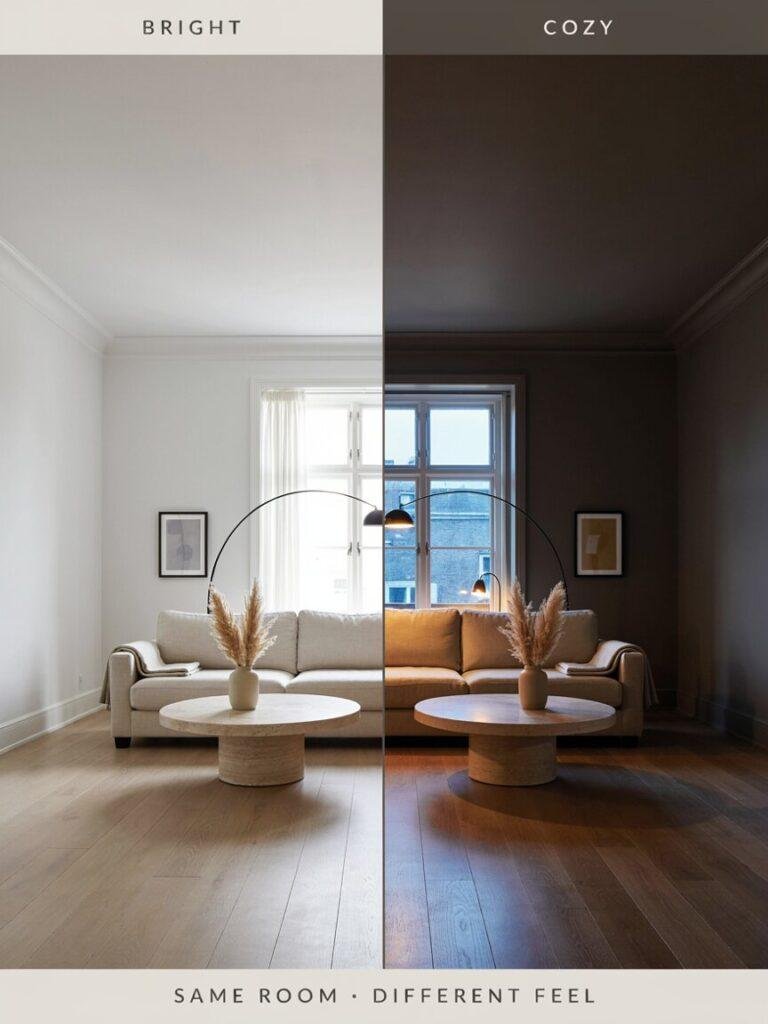
The instinct to avoid dark colors in a living room comes from a reasonable place. Nobody wants a room that feels like a cave, and for decades the accepted wisdom said dark paint would shrink a space and swallow the light. In practice, the opposite often happens once a room is done thoughtfully. Even Coastal and Cottagecore Living Room Decor can use deeper shades when they are balanced with natural textures, soft fabrics, and plenty of warm, layered lighting.
Dark walls actually blur the edges of a room rather than defining them. Where a white wall creates a hard visual stop, a deep charcoal or forest green wall recedes into shadow, especially in the evening, which can make a room feel larger and less boxed in than a stark white version of the same space. This is part of why so many small city apartments and dimly lit brownstone living rooms have leaned into dark color rather than fighting it.
There is also an emotional case for this style. A living room is usually where people unwind at the end of the day, and warm, saturated colors create a sense of enclosure and calm that bright white rarely achieves. Moody living room decor tends to photograph beautifully too, since rich colors hold detail and shadow in a way that flat white simply cannot, which is part of why the style has spread so quickly across design blogs and social feeds.
Finally, dark colors are remarkably forgiving. Scuffs, fingerprints, and everyday wear show up far less obviously on a deep charcoal or navy wall than on a pale one, which makes this style genuinely practical for households with kids, pets, or heavy foot traffic through the main living space.
There is a reason moody decor living room searches have climbed so sharply over the past several years. Social platforms rewarded the drama and richness of these spaces early on, but the staying power comes from something simpler. People actually enjoy spending time in these rooms once they are finished, which is a much better long term signal than a passing design trend usually offers.
Choosing the Right Colors for Moody Living Room Decor

Color selection is the single most important decision in this entire style, and it is where most people either succeed brilliantly or end up regretting the whole project.
Popular Dark Paint Color

Charcoal grey remains the safest and most versatile starting point, since it reads as sophisticated rather than harsh and pairs easily with almost any accent color. Deep navy brings a slightly more dramatic, jewel toned feel and works particularly well in rooms with warm wood floors or brass fixtures.
Forest green has become one of the most popular choices in dark living room decor over the past several years, since it bridges the gap between moody and earthy without committing fully to either.
Black itself, while bold, is far more usable than most people assume, especially as a matte finish rather than glossy. A true black wall paired with warm lighting and natural wood tones reads as intentional and rich rather than gloomy, though it is worth testing a sample patch before committing an entire room to it.
Undertones Matter More Than the Color Name
Every dark paint color carries an undertone, and this detail matters enormously once the paint is actually on the wall. A charcoal with a blue undertone can read cold and sterile under certain lighting, while the same shade with a warm brown undertone feels cozy and inviting instead. Always test paint samples directly on your walls and view them at different times of day before committing, since lighting shifts dramatically change how an undertone reads.
One Dark Wall or the Whole Room
A single dark accent wall is the lower commitment option and works especially well behind a sofa or fireplace, where it frames a focal point without darkening the entire space. Painting all four walls the same dark color creates a much more immersive, cocoon like effect and tends to work best in rooms with good natural light or high ceilings that can absorb the added visual weight without feeling cramped.
Avoiding the Cave Effect in Dark Decor for a Living Room
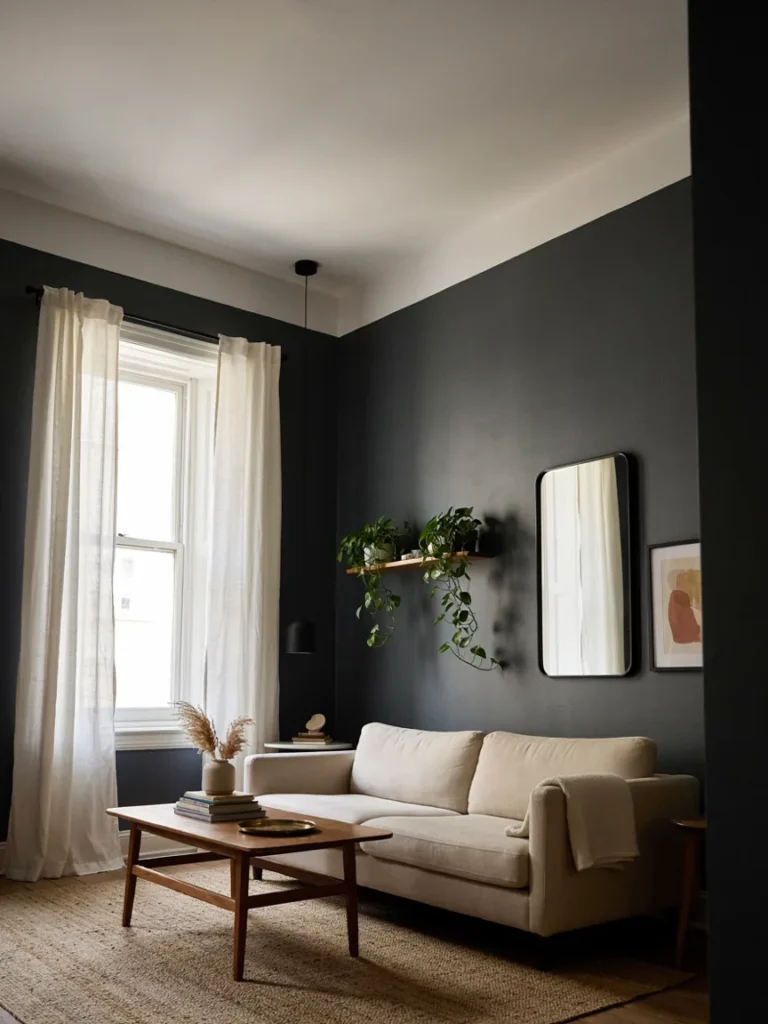
The most common fear people have before painting a living room dark is that it will end up feeling like a cave rather than a cozy retreat. A few specific choices make the difference between the two outcomes.
Contrast Is Everything
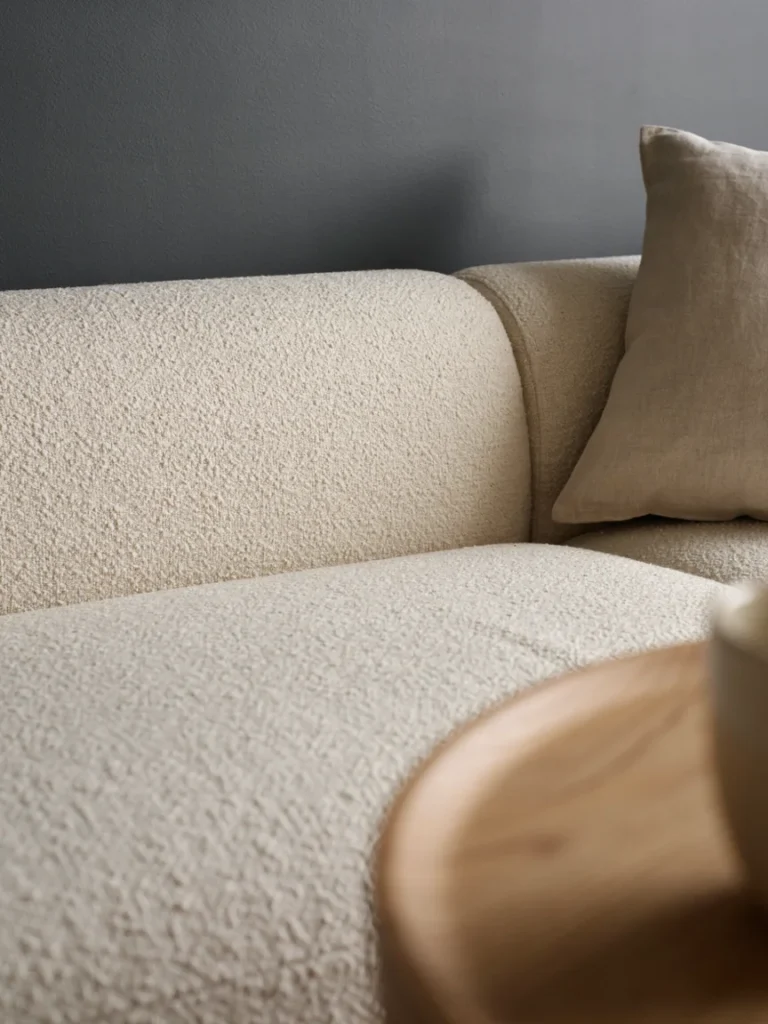
A room painted entirely in dark tones with dark furniture and dark textiles on top will genuinely feel heavy and closed in. The fix is contrast. Pair dark walls with a light colored sofa, pale wood furniture, or a cream area rug so the eye has somewhere to rest. This single principle does more to prevent the cave effect than almost any other decorating choice.
Keep the Ceiling Light
Painting a ceiling the same dark color as the walls is a bold, editorial choice that works in some spaces, but it is also the fastest way to make a room feel like it is closing in from above. Unless you specifically want that dramatic, enclosed feeling, keeping the ceiling white or a soft neutral gives the room somewhere to breathe visually while the walls carry the moody color.
Reflective Surfaces Do Real Work
![Large round mirror positioned to reflect a window on a dark charcoal wall, brass frame catching light, bright reflected daylight bouncing into the moody room]](https://stylishhomecorner.com/wp-content/uploads/2026/09/Large-round-mirror-positioned-to-reflect-a-window-on-a-dark-charcoal-wall-brass-frame-catching-light-bright-reflected-daylight-bouncing-into-the-moody-room-768x1024.webp)
Mirrors, glass, polished metal, and glossy ceramic all bounce available light around a dark room far more effectively than matte surfaces do. A large mirror positioned to reflect a window is one of the single most effective tricks for keeping a dark room from feeling flat or lifeless, since it doubles the perceived light source in the space.
Do Not Skip the Trim
Painting trim and moldings a lighter color than the walls, even a soft off white, creates definition and prevents a dark room from reading as one flat, undifferentiated block of color. This small detail is easy to overlook but makes a noticeable difference in how finished and intentional the final room feels.
Bringing Earthy Living Room Decor Into a Dark Palette
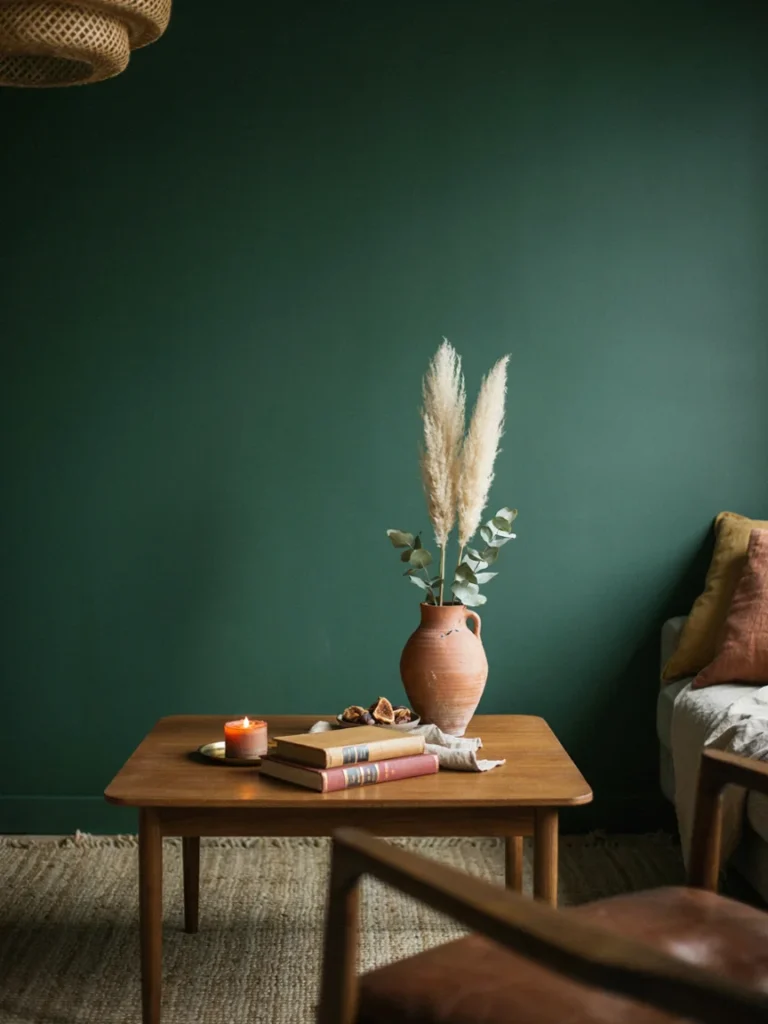
Earthy decor and moody decor pair together naturally, and many of the most successful dark living rooms actually borrow heavily from earthy design principles rather than leaning purely into cold, dramatic darkness.
Natural Materials Soften Dark Walls
Wood, rattan, jute, linen, and stone all bring warmth and texture that pure paint color cannot achieve on its own. A dark room filled with smooth, cool surfaces like glass and metal can start to feel sterile, while the same room layered with a wood coffee table, a jute rug, and linen curtains feels grounded and inviting instead. This is where earthy living room decor really earns its place inside a moody color scheme.
Terracotta, Rust, and Clay Tones
![: Close up of a rust colored throw pillow and a terracotta ceramic vase arranged against a deep forest green wall, warm earthy color pairing, soft natural light]](https://stylishhomecorner.com/wp-content/uploads/2026/09/Close-up-of-a-rust-colored-throw-pillow-and-a-terracotta-ceramic-vase-arranged-against-a-deep-forest-green-wall-warm-earthy-color-pairing-soft-natural-light-768x1024.webp)
These warm earthy accent colors bridge beautifully with charcoal, navy, and forest green backdrops. A rust colored throw pillow or a terracotta ceramic vase against a dark green wall creates a rich, layered look that feels intentional rather than accidental. This combination has become one of the most requested looks in modern earthy decor for a living room specifically because it reads as both cozy and current.
Clay pottery, unglazed ceramic planters, and woven baskets in warm tan and rust tones all reinforce this same earthy decor living room approach without requiring a full redesign. Even swapping out a handful of accessories for pieces in these warmer, more textured tones can shift an entire room from feeling coldly dramatic to genuinely warm and grounded.
Plants Bring Life Into Dark Spaces
![Large leafed fiddle leaf fig or monstera plant standing against a deep charcoal wall, strong silhouette contrast, soft natural window light highlighting the leaves]](https://stylishhomecorner.com/wp-content/uploads/2026/09/Large-leafed-fiddle-leaf-fig-or-monstera-plant-standing-against-a-deep-charcoal-wall-strong-silhouette-contrast-soft-natural-window-light-highlighting-the-leaves-768x1024.webp)
Greenery does double duty in a dark living room. It softens the visual weight of dark walls and furniture, and it introduces a living, organic element that keeps the space from feeling static. Large leafed plants in particular stand out beautifully against dark backgrounds, since the contrast highlights their shape and texture in a way that gets lost against a plain white wall.
Woven and Textured Fabrics
Chunky knit throws, woven baskets, and nubby textured upholstery all add tactile warmth that a dark room genuinely needs to avoid feeling flat. Smooth, shiny fabrics can read as cold against a dark backdrop, while rougher, more textured materials catch light and shadow in a way that adds depth and visual interest throughout the room.
Lighting Strategies for Dark Living Room Decor
![Evening living room scene lit by a floor lamp, table lamp, and warm pendant light at different heights, dark charcoal walls glowing warmly under soft layered lighting]](https://stylishhomecorner.com/wp-content/uploads/2026/09/Evening-living-room-scene-lit-by-a-floor-lamp-table-lamp-and-warm-pendant-light-at-different-heights-dark-charcoal-walls-glowing-warmly-under-soft-layered-lighting-768x1024.webp)
Lighting matters more in a dark room than in almost any other style of interior design, since it directly determines whether the space feels intentional or simply underlit.
Layer Multiple Light Sources

Relying on a single overhead fixture is one of the most common mistakes in dark living room decor. A well lit moody room typically combines at least three light sources, a floor lamp, a table lamp, and either a pendant or overhead fixture, so that light falls at different heights and creates depth rather than one flat wash of brightness.
Warm Bulb Temperature Is Non Negotiable
Cool white or daylight bulbs make dark colors look muddy and unwelcoming almost immediately. Warm white bulbs, generally in the range described as soft white on most packaging, bring out the richness in dark paint and make the whole room feel considerably more inviting. This single detail trips up more people than any other lighting mistake in this style.
Dimmers Give You Control
A dimmer switch lets a dark living room shift from bright and functional during the day to soft and atmospheric in the evening, which matters enormously in a room built around mood. This is a relatively inexpensive upgrade that makes a noticeable difference in how well the space performs throughout the day.
Maximize Whatever Natural Light You Have
Keep windows uncovered or dressed in sheer, light filtering curtains rather than heavy drapes that block daytime light entirely. A dark room with strong natural light during the day and warm artificial light in the evening gets the best of both worlds, while a dark room that blocks out its only natural light source will struggle far more with the cave effect discussed earlier.
Furniture and Layout Tips for a Moody Living Roomt

The furniture inside a dark room needs to work with the wall color rather than disappearing into it or fighting against it.
Choose at least one large light colored piece, typically the sofa, so the room has an anchor of contrast at eye level. A dark sofa against dark walls can look striking in photographs but often feels heavy and hard to distinguish in person, especially in evening light.
Leave breathing room around large furniture pieces rather than pushing everything against the walls. Dark colors already carry more visual weight than light ones, so a cramped layout compounds that heaviness, while a layout with genuine open floor space helps the room feel considerably more spacious despite the dark backdrop.
Metallic accents, particularly brass, gold, and aged bronze, catch light beautifully against dark walls and add a sense of warmth and richness that chrome or plain black hardware cannot match. A few well placed metallic touches, on a lamp base, picture frames, or drawer pulls, go a long way toward elevating the entire room.
Rug choice deserves special attention in this style. A pale, textured rug, something like a natural jute or a chunky wool weave in cream or oatmeal, does more to ground a dark room than almost any other single furniture decision. It gives the eye a light, neutral base to rest on and helps tie the earthy and moody elements of the room together into one cohesive look rather than two competing ideas fighting for attention.
Common Mistakes That Make Dark Decor for a Living Room Fall Flat

A handful of avoidable missteps account for most of the disappointing dark living rooms out there. Knowing what trips people up matters just as much as knowing what to buy.
Choosing the color from a small paint chip alone. A two inch swatch under store lighting rarely matches how a color behaves across an entire wall in your actual room. Always buy a sample pot, paint a section at least two feet wide, and view it in the morning, afternoon, and evening before committing.
Forgetting how much darker paint reads once it dries. Most dark paint colors look noticeably deeper and richer once fully cured on the wall than they appeared on the sample card or even freshly applied. If you are torn between two shades, it is usually safer to size down in intensity slightly rather than go bolder than you intended.
Skipping the lighting upgrade entirely. Painting a room dark without changing anything about the existing lighting setup is one of the most common reasons a moody makeover disappoints. The paint color and the lighting plan need to be considered together from the start, not treated as separate projects.
Matching every accessory to the wall color. A room where the pillows, art, and accessories all sit in the same narrow tonal range as the walls loses definition and starts to look flat rather than layered. Contrast in both color and texture is what keeps a dark room feeling rich rather than muddy.
Overlooking the flooring. Dark walls paired with dark flooring and no light colored rug or furniture can tip a room into feeling genuinely heavy rather than intentionally moody. If your flooring already runs dark, lean harder into light furniture and a pale rug to balance things out.
Is Dark Living Room Decor Right for Every Space?
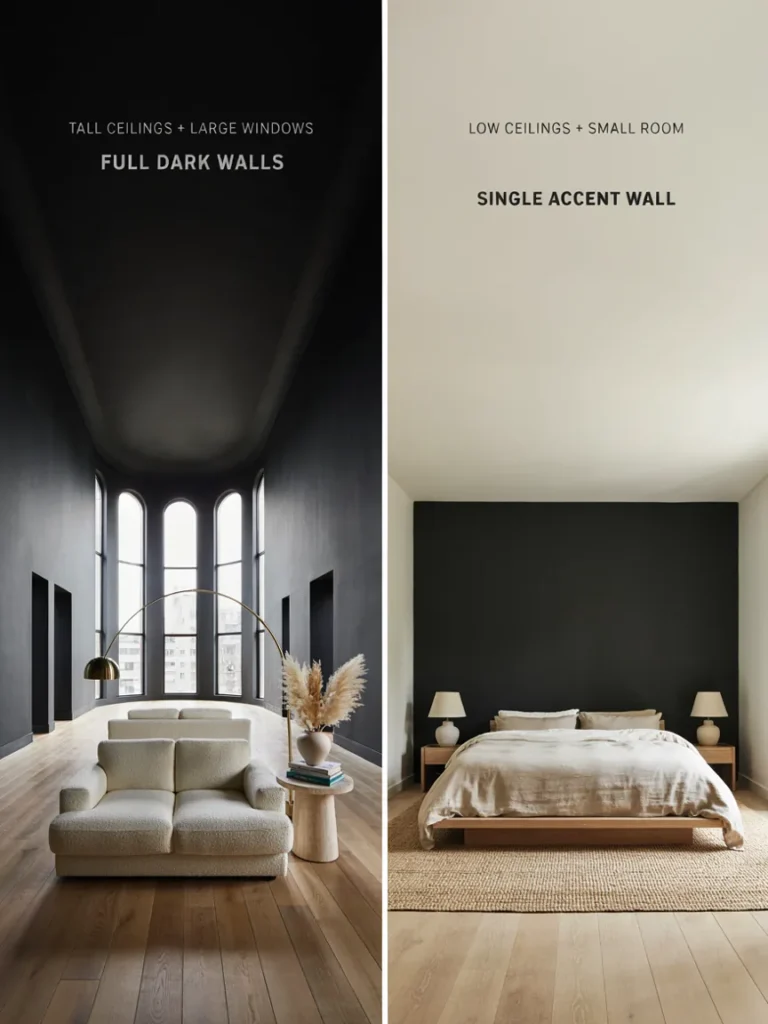
Not every room is an equally good candidate, and being honest about that upfront saves a lot of frustration later. A living room with little to no natural light, particularly a north facing room or one with small windows, needs extra care with artificial lighting to avoid feeling genuinely dim rather than intentionally moody. It is not a dealbreaker, but it does mean the lighting section above matters even more than usual.
Rooms with low ceilings can also feel more compressed under a fully dark treatment, though a single accent wall rather than all four walls usually solves this without sacrificing the look entirely. On the other hand, rooms with tall ceilings, large windows, or a strong architectural feature like exposed beams or a fireplace tend to handle dark color beautifully, since they already have enough visual interest and light to support the added depth.
If you are still unsure, a temporary approach like removable wallpaper or a bold gallery wall arrangement in dark frames can give you a preview of the mood before committing to paint on every wall.
Frequently Asked Questions
Will dark living room decor make my room feel smaller?
Not necessarily. Dark walls tend to blur a room’s edges rather than emphasize them, which can actually make a space feel larger and less boxed in than the same room painted stark white. The key factors are contrast, lighting, and keeping the ceiling a lighter tone.
What is the best color for moody living room decor if I am nervous about going too dark?
Charcoal grey is the safest starting point, since it reads as sophisticated rather than harsh and works with nearly any accent color. A single dark accent wall is also a lower commitment way to test the look before painting an entire room.
How do I keep a dark room from feeling like a cave?
Pair dark walls with light colored furniture, keep the ceiling a lighter shade, add reflective surfaces like mirrors and glass, and layer in warm artificial lighting from multiple sources rather than a single overhead fixture. These four choices together prevent the heaviness people worry about most.
Does earthy decor work well in a living room with dark walls?
Yes, earthy and moody styles pair naturally. Natural materials like wood, rattan, and jute soften dark walls, while warm accent colors like terracotta and rust create a layered, grounded look that feels both cozy and current.
What lighting works best for dark living room decor?
Warm white bulbs, layered across at least three light sources at different heights, work best. A dimmer switch adds flexibility, and maximizing whatever natural daylight the room receives helps balance the warm artificial lighting used in the evening.
Can I try moody decor living room styling without committing to a full paint job?
Yes. A single accent wall, removable dark wallpaper, or a gallery wall of framed art in dark frames all let you test the mood on a smaller scale before repainting an entire room. This is a good option for renters or anyone genuinely unsure whether the style will suit their space long term.
Conclusion
Dark living room decor comes down to a handful of consistent choices done well. Pick a dark color with a warm undertone, balance it with light colored furniture and reflective surfaces, layer in earthy natural materials and textures, and light the room generously with warm toned bulbs from multiple sources. None of this requires a total renovation, just a thoughtful sequence of decisions made with the whole room in mind rather than any single element in isolation. These simple principles can make Living Room Decor feel warm, balanced, and inviting without overwhelming the space.
Start small if you are unsure. Paint one accent wall, add a few earthy textured accessories, and swap your bulbs for a warmer tone before committing to anything larger. You will quickly get a feel for how the mood shifts and whether a fuller commitment to the style is right for your space.
Ready to bring some moody warmth into your living room? Browse our full collection of dark living room decor and earthy accent pieces to find what fits your space and your style.