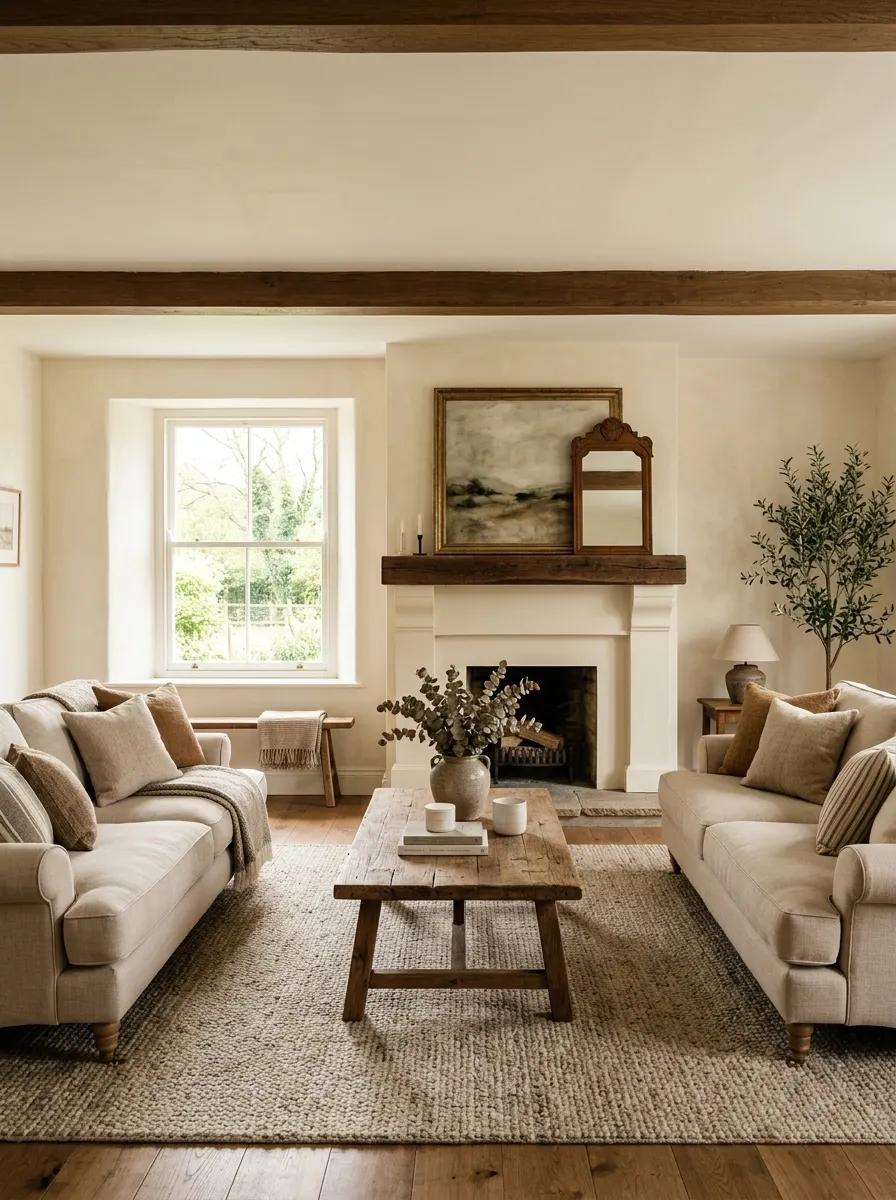
A farmhouse living room feels like a deep breath after a long day. It has warm wood, soft light, and calm colors that make people want to sit down and stay awhile. But if you have ever tried to copy the look, you know it can go sideways fast. An all white palette can feel cold without warm accents. Filling every corner with signs and baskets may make the space look overly themed. Too many accessories on surfaces can also take away from the overall charm.
The good news is that this rustic, cozy living room style is not hard to get right. It comes down to a few smart choices about color, wood, seating, texture, and light. This guide pulls together ideas from designer led projects and real home makeovers, then adds practical tips you can use this weekend.
Here is what you will learn:
- What really defines a farmhouse living room
- Which neutral colors and wood tones work together
- How to pick sofas, chairs, and rugs that fit real life
- How to layer light and texture for a cozy feel
- How to handle the fireplace, walls, and shelves
- How to save money and avoid common mistakes
A farmhouse living room mixes natural wood, warm neutral walls, comfortable furniture, and layered textures. Start with a soft white or warm cream base, add two or three wood tones, choose a durable sofa, and finish with warm lighting and a few personal pieces.
What Makes a Farmhouse Living Room Feel Like a Farmhouse?
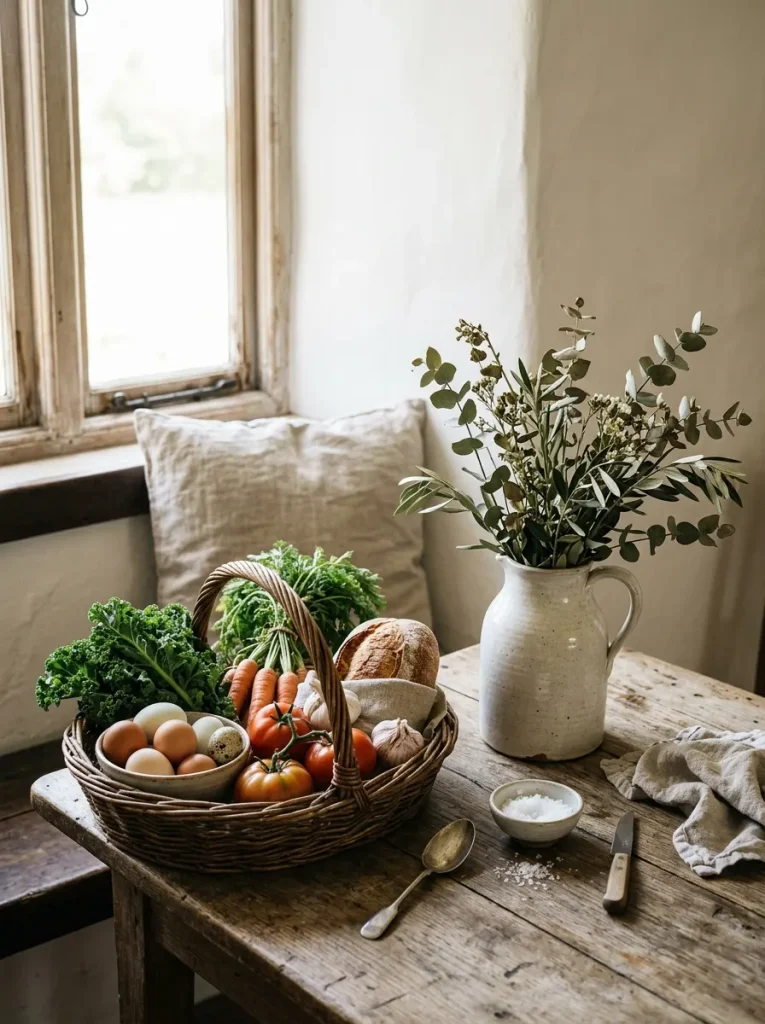
A farmhouse living room is built on honest materials and easy comfort. Think weathered wood, linen, stone, and soft whites. You can also incorporate teal living room decor ideas by adding teal throw pillows, cozy blankets, or accent pieces that bring a fresh pop of color while complementing the farmhouse style. The furniture is sturdy and simple, and the decor feels collected over time, not bought in one trip.
You do not need a barn door or giant ceiling beams to get there. Those features look great, but they can be expensive, and they do not fit every floor plan. The feeling matters more than the architecture. A modern apartment can feel like a farmhouse with the right wood table, a linen sofa, and a warm paint color.
Rustic, Modern Farmhouse, or Country Cottage?
These three styles get mixed up a lot, so it helps to know the difference.
- Rustic farmhouse leans on rough wood, stone, and heavier pieces. It feels earthy and traditional.
- Modern farmhouse keeps the warm wood but adds clean lines, lighter walls, and sleek shapes. Think a simple sectional beside a chunky wood coffee table.
- Country cottage is more layered and colorful. It uses florals, checks, and lots of small objects. The palette is warmer and more saturated.
Farmhouse style is cleaner and calmer than cottage style. Walls are usually soft white or warm gray, and accessories are chosen for character, not quantity. If you like a bit of both, that is fine. Many of the best rooms are a blend. Just pick one lead style so the room does not feel confused.
How Do You Choose the Right Neutral Colors?
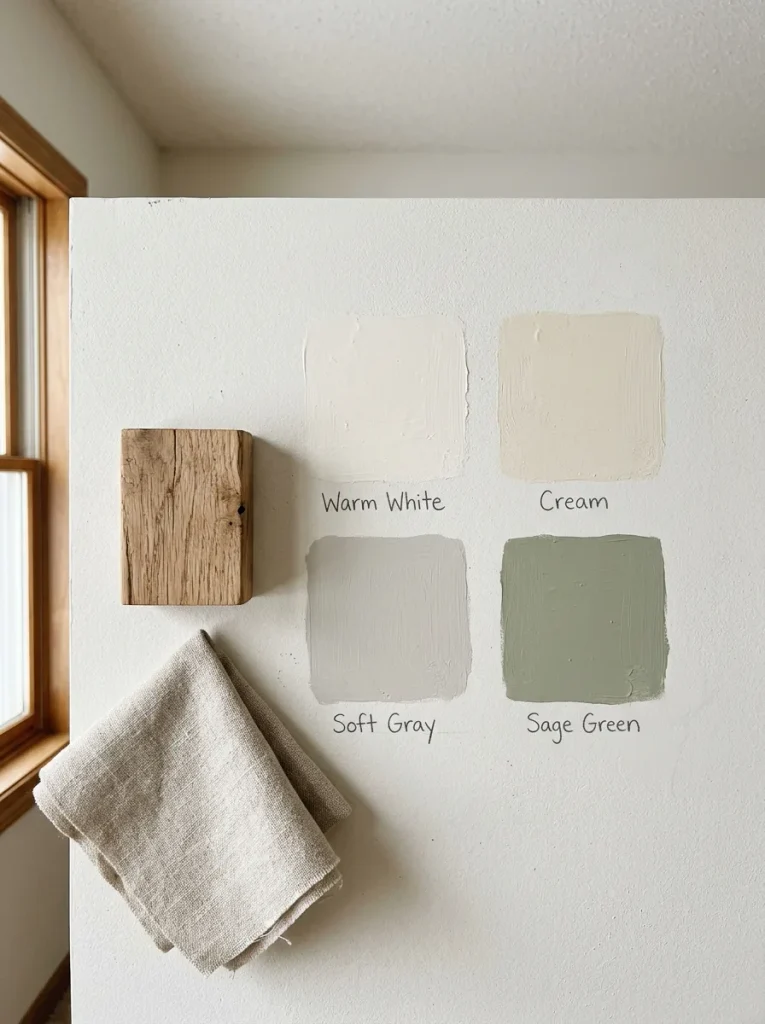
Color sets the mood before anyone notices a single piece of furniture. For a farmhouse living room, the safest path is a warm, light base with natural accents.
Start With a Soft, Warm Base
Warm whites, buttery creams, and soft stone shades create that sun washed look. Some popular paint picks include Simply White by Benjamin Moore, Alabaster by Sherwin Williams, and Classic Gray by Benjamin Moore for a softer gray option. These shades keep the room bright without feeling stark.
Be careful with cold, blue toned whites. They can feel clinical instead of cozy. Also remember that paint changes with the light. A pale blue green can look gray in the morning and almost minty by late afternoon. Paint large sample squares on two walls and check them in the morning, at noon, and in the evening before you commit. It costs a little time but saves a lot of repainting.
Add Accent Colors That Feel Natural
Neutral does not mean boring. Pull in colors that come from the countryside. Here are pairings that work well together:
| Main Color | Accent Color | Mood in the Room |
| Cream | Soft sage green | Fresh and calm |
| Warm beige | Rusty orange | Earthy and warm |
| Light gray | Muted dusty blue | Peaceful and soft |
| Soft white | Weathered wood brown | Classic rustic balance |
Deeper colors can work too. A dark green velvet sofa or a mustard chair can look rich against creamy walls. The trick is to repeat each color at least twice in the room so it looks planned. A green sofa feels more intentional when a green pillow or vase shows up across the room.
Do Not Forget the Midtones
Here is a mistake designers see all the time. A room has very pale walls and very bold furniture, with nothing in between. The sofa looks like a block of color floating in a white box. The fix is to add midtones, which are colors that sit halfway between light and dark.
Good midtone helpers include a textured grasscloth style wallpaper, a limewashed fireplace, a wood mantel, a patterned rug, or natural woven baskets. One designer tip is to start with a bold rug or piece of art, then pull colors from it into the rest of the room. If your rug has a touch of blue, repeat that blue on a pillow. If it has black lines, repeat black in a frame or lamp base. This simple trick ties everything together.
Where Should You Use Wood in a Farmhouse Living Room?
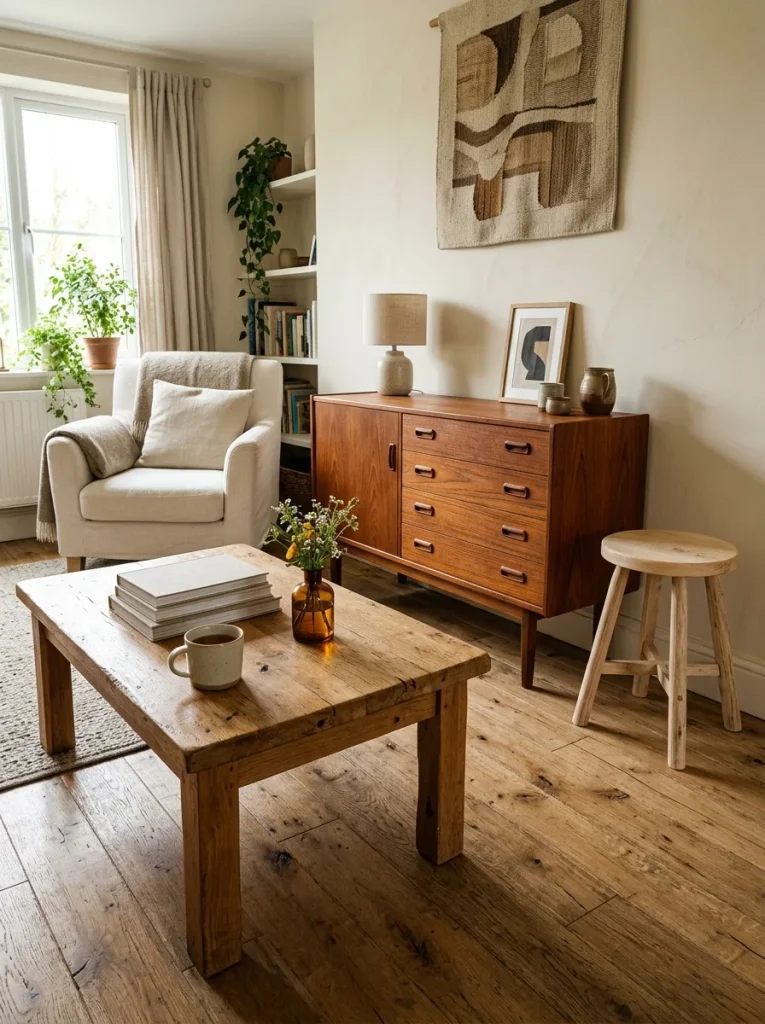
Wood is the heart of this style. It adds warmth, texture, and a sense of history. The key is to use it in a few places and let each piece breathe.
Choose Warm, Honest Wood
The best wood for a rustic living room is warm and a little rough. It should not look glossy or plastic. Visible grain, small knots, and even a few dings add charm. A chunky coffee table, a solid wood sideboard, and a simple console are great places to start.
Aim for two or three wood tones, not one matching set. For example, pair a golden oak coffee table with a darker teak cabinet and a pale wood stool. Mixed tones feel collected. A single matching set feels like a showroom. If your floors are oak, choose furniture that either matches the floor closely or contrasts on purpose. Slightly different wood next to the floor is the thing to avoid.
Do not worry if you cannot afford antiques. Secondhand shops, online marketplaces, and local makers often sell solid pieces for far less than new store prices. A well built table from a marketplace can look better than a new one, and it will probably last longer.
Beams, Shiplap, and Paneling
Real reclaimed beams cost a lot and need a certain ceiling. If you want the look without the price, there are easier ways.
- Shiplap or tongue and groove paneling painted in soft white, cream, or sage adds instant farmhouse character.
- Peel and stick wood planks give you a rustic wall without heavy construction. They are also easier to remove later.
- Faux beams made of lightweight material can add a ceiling feature for a fraction of the cost.
Direction matters too. One interior designer renovating a farmhouse style room ran wood planks from floor to ceiling, even past the beams, to make the space feel taller. Another smart move from that project was removing a contrasting strip of molding just under the ceiling beams. That strip was tricking the eye into seeing a lower ceiling. If your room feels short, try vertical planks and keep the ceiling line clean.
On the other hand, horizontal paneling can make a wide room feel even wider. You can balance it by adding vertical lines. Tall curtains, a floor lamp, a tall piece of art, or a narrow bookcase all help the eye move up and down.
Think About the Floor
Wide plank oak is a classic choice for a farmhouse living room. Light oak or golden oak looks timeless. If real hardwood is out of budget, good quality luxury vinyl plank in a wood finish can give the same look for less.
Also check how your floors flow. If you can see three different flooring types from the entryway, the room will feel chopped up. Using one consistent floor through the main living space makes everything look bigger and calmer. If you cannot replace the floor, a large rug can pull the room together and set the style.
How Do You Pick Furniture and Plan the Layout?
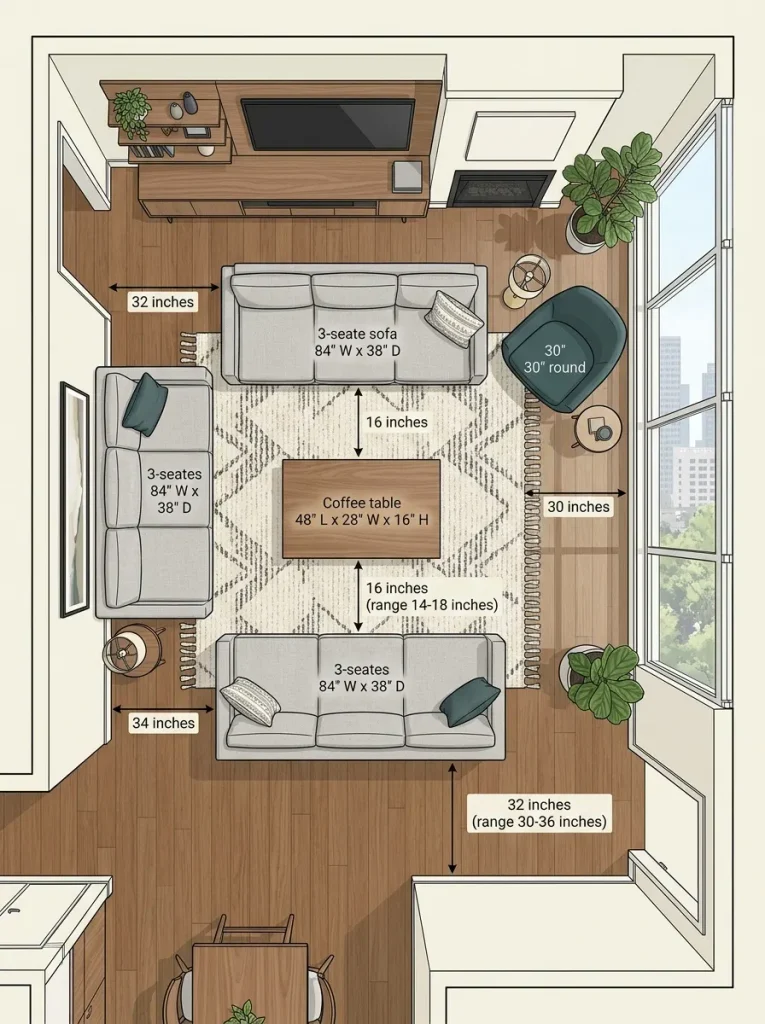
This is where a farmhouse living room either works or falls apart. Pretty rooms are easy to photograph. Rooms that work every day take a little more thought.
Pick a Sofa That Can Handle Real Life
Start with the sofa, since it is the biggest piece in the room. Linen and cotton blends look soft and natural. Performance fabrics and washable slipcovers are smart if you have kids or pets.
If you have a dog, think about the back cushions. Loose, oversized back cushions can get squashed flat when pets lie on them. Some designers now choose sofas with a tight back and a deep seat. These sofas look streamlined, and the small back pillows are optional. You can lay the pillows flat during the day and prop them up when you want to sit.
Fabric color matters for pet hair too. Velvet is surprisingly good at resisting hair, but a cream linen with several tones mixed in is even better at hiding it. Deep green or navy velvet can look rich and cozy, as long as you are fine with some lint rolling.
Place Seating for Conversation
People often push furniture against the walls, but that makes a room feel distant. Pull your seating closer together. Two sofas facing each other with a coffee table in the middle is a classic setup. If they are too far apart, guests cannot talk easily. Try bringing them a little closer and see how the room changes.
Here are a few spacing guidelines:
- Leave about 14 to 18 inches between the sofa and the coffee table.
- Keep walkways about 30 to 36 inches wide.
- Make sure every seat has a spot nearby for a drink.
That last point is easy to forget. A beautiful room where you have nowhere to set your coffee gets frustrating fast. Add a small side table or a tray ottoman near each seat.
Add Swivel or Accent Chairs
Open rooms that lead to other spaces are common in farmhouse homes. In a room like that, swivel chairs are a smart choice. They let people turn toward the conversation or toward the view outside. They also fill the room out without blocking traffic the way a heavy chair might.
One practical note: swivel chairs need clear space to turn. Either place them fully on the rug or fully off it so the swivel does not catch an edge. A footstool or ottoman nearby makes them even more comfortable.
Get the Rug Size Right
A rug that is too small is one of the most common mistakes. It makes furniture look like it is floating. As a rule, at least the front legs of your sofas and chairs should sit on the rug. In a large room, a 12×15 rug can be the perfect size. In a smaller room, an 8×10 often works well.
Texture and pattern are your choice. Geometric rugs lean modern, while traditional printed rugs lean classic. Jute adds a natural look, and wool adds softness. Whichever you pick, add a thick rug pad. A memory foam pad makes even a thin rug feel plush. Also check that your furniture is centered on the rug, or that the off center placement looks planned. Small details like that make a room feel finished.
How Do You Layer Texture, Light, and Windows for Coziness?
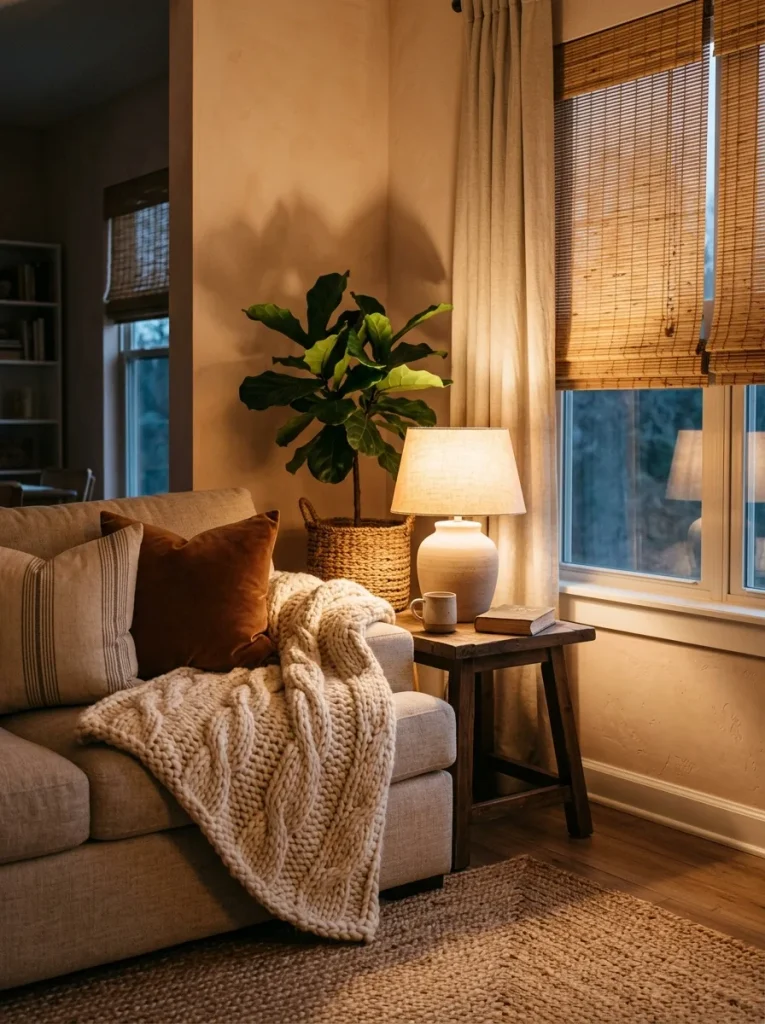
Cozy is not an accident. It comes from layers. A room with the right furniture can still feel cold if the texture and lighting are missing.
Mix Textures, Not Just Colors
Texture is what makes a neutral room interesting. Try mixing several of these:
- Linen curtains and cotton pillows
- A chunky knit or wool throw
- A jute or wool rug
- Woven baskets for blankets and toys
- Leather or faux leather chairs
- A sheepskin on a sofa arm
Velvet is lovely, but a room made only of velvet can feel heavy. If your sofas are velvet, bring in smoother and more natural materials nearby, such as linen pillows, wood, or a woven rug. That contrast keeps the look fresh instead of flat.
Layer Your Lighting
Lighting changes how every color and texture looks. Use three layers.
- Overhead light: A wrought iron chandelier, a rustic pendant, or a simple fixture centered over the seating area helps anchor the room. It makes the conversation zone feel grounded.
- Task and accent light: Table lamps, floor lamps, and wall sconces add pools of warm light. Sconces are great for dining nooks and reading corners.
- Mood light: Candles and small lamps create a glow in the evening.
Put your overhead lights on a dimmer. Choose warm bulbs, often labeled 2700K, instead of harsh bright white ones. If you want a fun budget project, try making your own pleated lampshade using a thin patterned fabric. A patterned shade pops against a plain wall and costs very little.
Dress the Windows
Window treatments are a common question in farmhouse design. Many modern homes skip curtains, but fabric adds coziness. A good combo is woven bamboo or natural shades for a clean base, plus linen curtains for softness. Roman shades work well in tighter spaces. Hang curtain rods high and wide so the windows look larger.
If you have a patterned fabric you love, such as a vintage textile, use it on one window or as a pillow instead of every window. A bold pattern works best when the rest of the room stays calm.
Bring the Outdoors In
Every farmhouse living room needs something alive. Plants are an easy choice and do not cost much. Branches from your yard in a tall vase look beautiful on a coffee table, and faux stems are fine in winter. A single large plant in a basket near a window can change the entire mood.
How Do You Style the Fireplace, Walls, and Shelves?
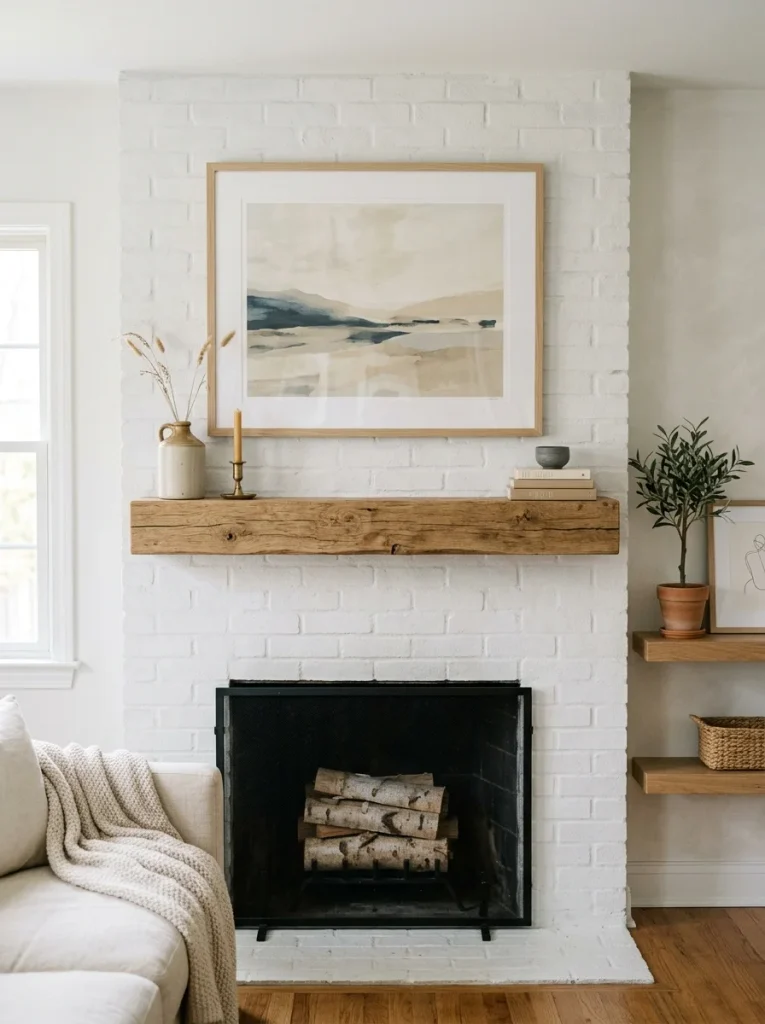
Once the big pieces are in place, the details bring personality. This is also where many rooms feel unfinished.
Give the Fireplace Some Character
A white painted brick fireplace is common, but it can look flat or cold next to warm furniture. If yours feels that way, you have several options.
- Add a wood mantel. A thick, warm wood beam is one of the easiest upgrades. It adds a natural focal point.
- Try limewash. Limewash paint gives brick a soft, chalky texture instead of a flat painted look.
- Strip the paint. Bringing back raw brick adds warmth, though it takes work.
- Add tile. A handmade tile surround can turn the fireplace into a showpiece.
A good design rule is to pair one rustic element with one sleek element. A smooth, simple fireplace body looks great with a thick rustic beam mantel. A chunky stone fireplace looks great with a slim modern mantel.
Before you commit, test your idea. Wrap the mantel in brown paper to see how a wood shade looks. Use photo editing to mock up a new color. Or just paint a small section, since paint is easy to change. A one day experiment beats years of wondering.
If you do not have a fireplace, an electric one or a rustic feature wall can give the same cozy focal point. Also, check the size of your fireplace screen. Large openings are hard to fit, so measure before you shop.
Choose Art That Fits the Space
Art over the mantel should be big enough to matter. A piece that is too small looks lost. A good guide is about two thirds the width of the mantel. Hang it instead of leaning it, unless you love the relaxed leaning look. A proper frame also makes a big difference.
Botanical prints, countryside scenes, vintage portraits, and abstract pieces in earthy colors all suit this style. Group smaller pieces together in a cluster or choose one large statement piece. Either way, keep the colors tied to your room.
Choose Wall Treatments With Care
Walls can add a lot of character. Some ideas:
- Tongue and groove or shiplap: Painted soft white or sage for a classic look.
- Limewash: Adds an aged, organic feel, especially on a single wall.
- Grasscloth style wallpaper: Adds midtone texture. Many good lookalikes are easier to live with than the real thing, which can show seams and uneven color.
- Botanical or toile wallpaper: Adds heritage charm without major construction.
- Fabric on walls: A creative option that avoids visible seams and can be removed more easily.
If your room has many doorways and openings, be careful with busy wallpaper. Every opening interrupts the pattern, which can make the walls feel choppy. A low contrast, subtle pattern is safer.
Style the TV Wall on Purpose
Most living rooms have a TV. Instead of letting it take over, give it company. A designer tip is to draw the eye toward the softer feature, like the fireplace, and make the TV wall look planned. Put a beautiful console underneath. Add a shelf above with a few objects. Use wood planks or art on the wall around it. When the whole wall looks styled, the screen stops being the star.
Style Shelves Without Clutter
Simple floating shelves are a clean choice. Fancy shelves with heavy brackets can look busy. Layer a few items on each shelf: a stack of books, a ceramic bowl, a candlestick, a small plant, and maybe a framed print. Leave space too. Shelves that are packed full feel stressful.
How Can You Do This on a Budget and Avoid Common Mistakes?
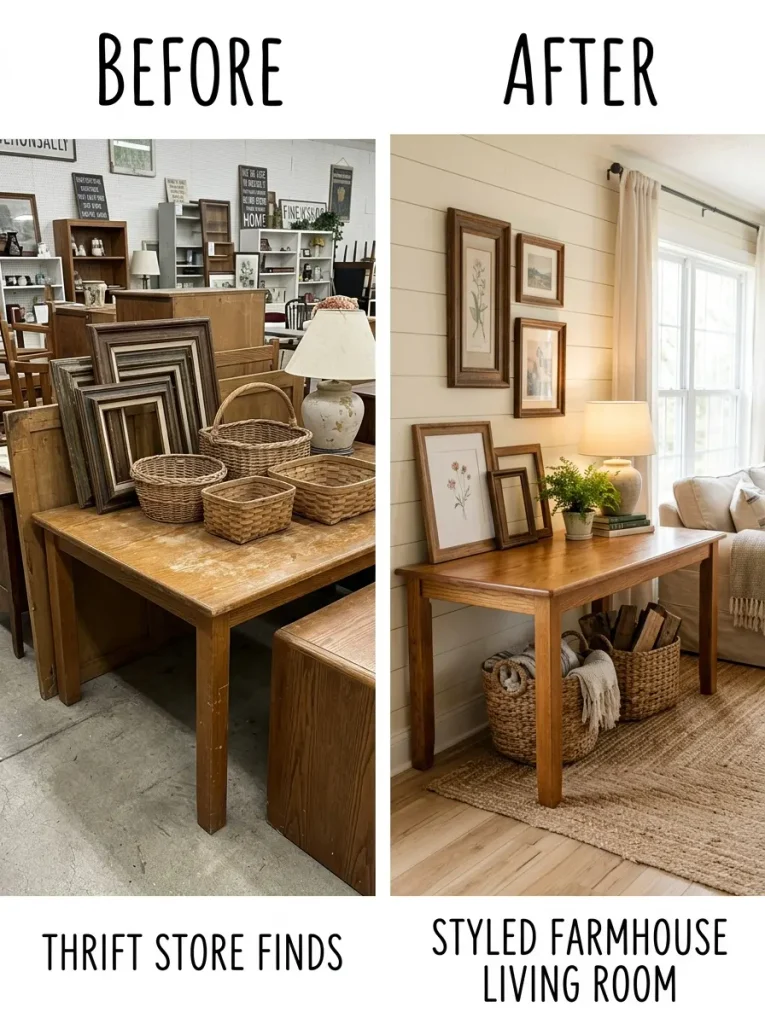
You do not need to buy everything at once. In fact, the best rooms grow slowly.
Budget Friendly Ways to Get the Look
- Use what you have. Sand and repaint an old wood piece, or swap a slipcover to refresh a tired sofa.
- Shop secondhand. Charity shops, flea markets, and online marketplaces are full of oak tables, wooden frames, and baskets.
- Make your own art. Frame vintage prints, old letters, or your own photos.
- Layer cheap textiles. Throws and pillows in neutral tones add warmth for very little money.
- Use plants. They add life and cost less than most decor.
- Paint first. A fresh coat of warm paint or a painted feature wall changes the room for the price of a gallon.
Where to Spend More
Spend on the pieces you use every day. A quality sofa and a good rug are worth it, since they set the tone for the whole room. Everything else can be mixed and matched affordably.
Mistakes to Skip
Going too themed. A sign that says “Gather” next to a basket of faux flowers next to a rooster figurine can tip the room into costume territory. Choose a few pieces with real meaning instead.
Buying matching sets. A room full of matching furniture feels staged. Layer items from different times and places.
Overstyling. Many readers of design blogs say the same thing about busy rooms: they feel better after removing about fifteen percent of the small objects. Try clearing everything off the surfaces, then add back only what you love.
Too much pattern. If your rug is bold, keep the wallpaper quiet. Pick one pattern to lead.
Forgetting function. A room that looks great but has no place to put a drink or a laptop will frustrate you. Plan for how you actually live.
Skipping the test. Always sample paint, rugs, and wallpaper before you buy. A small test can save you from a big, expensive regret.
Frequently Asked Questions
What colors work best in a farmhouse living room?
Warm whites, creams, soft grays, and beiges make the best base. Add accents like sage green, dusty blue, rusty orange, or muted mustard. Keep the palette soft and natural, and repeat each accent color at least twice.
How do I make my farmhouse living room feel cozy?
Layer textures and lighting. Add a linen or cotton sofa, a wool throw, a thick rug, warm lamps on dimmers, and a few plants. Keep lighting warm instead of bright white. A fireplace or an electric one adds extra warmth.
Can I create a farmhouse living room in a modern or new home?
Yes. Use natural materials like wood, linen, and woven baskets to soften modern lines. A warm neutral paint color and good lighting do most of the work. The building matters less than the materials and decor you bring in.
Do I need shiplap for a farmhouse living room?
No. Shiplap is just one option. Tongue and groove paneling, limewash, exposed brick, wallpaper, or a simple warm wall color can give the same textured look without cladding.
What rug size is best for a farmhouse living room?
Choose a rug big enough that at least the front legs of your sofas and chairs sit on it. Many rooms look best with an 8×10, while larger rooms may need a 12×15. Add a thick rug pad for comfort.
Conclusion
A great farmhouse living room is not built in a day, and it does not have to be perfect. Beautiful living room decor starts with warm wood, calm neutral colors, comfortable seating, soft textures, and light that makes everyone feel at home. Start with the biggest wins first: a good paint color, a comfortable sofa, a rug that fits, and warm lighting. Then add personal pieces over time to create a cozy, welcoming farmhouse style.
Ready to begin? Grab three paint samples, pick one wood piece to hunt for, and choose one corner to style this weekend. Small steps add up fast. Save this guide for later, and share your progress or questions in the comments. Your cozy, rustic living room is closer than you think.