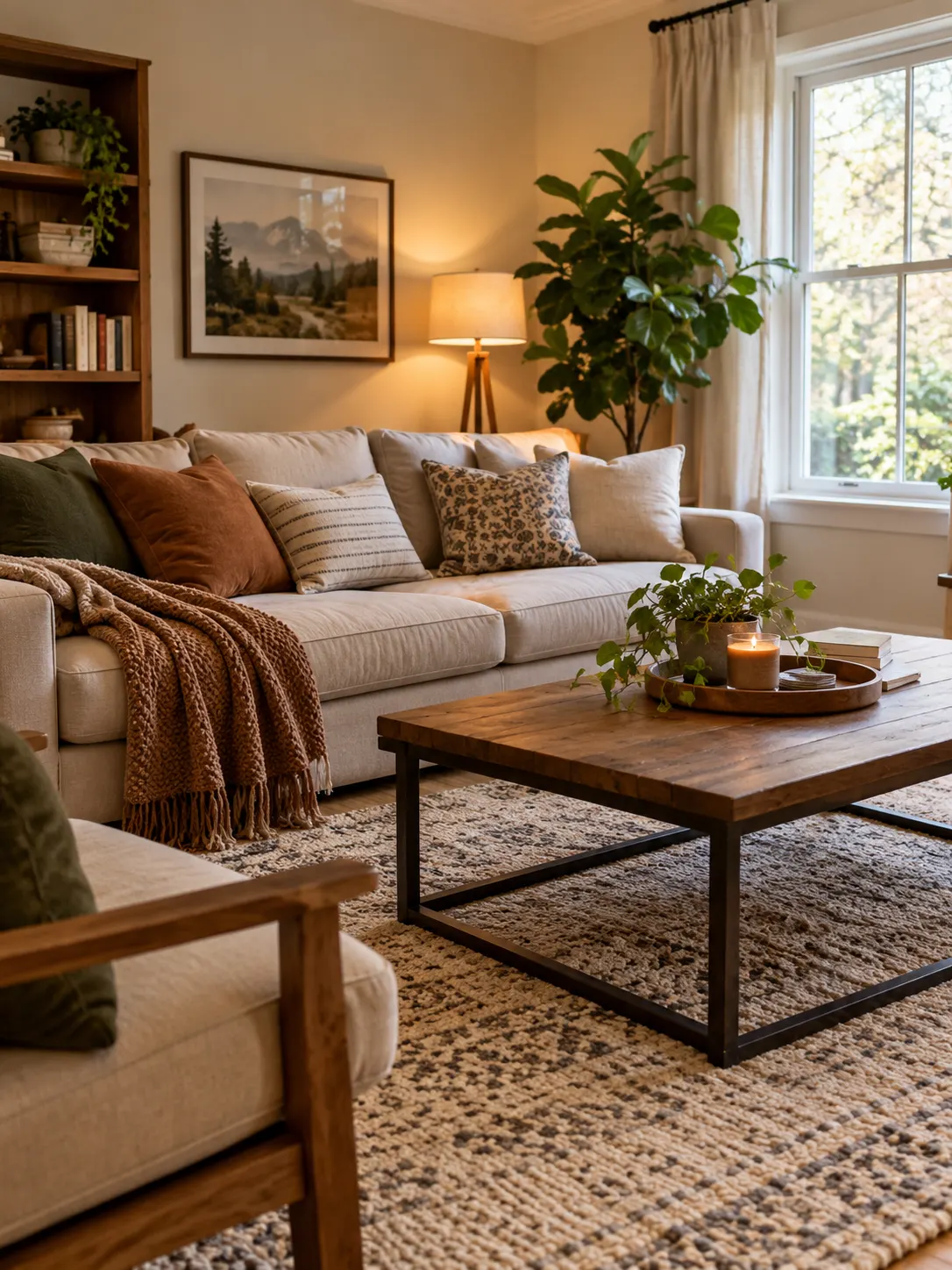
Your living room does a lot of work. You relax there, watch movies, host friends, and sometimes eat dinner on the sofa. So it makes sense to plan it with care. If you’re looking for living room design ideas, you probably want a space that looks good and works for daily life. This guide covers both.
You will learn how to plan your layout, pick a color scheme, layer your lighting, and choose accessories that add personality. You will also find a full section on small spaces, plus quick answers to common questions. Each idea is simple enough to use this weekend, and none of them needs a huge budget.
Start With How You Actually Use the Room
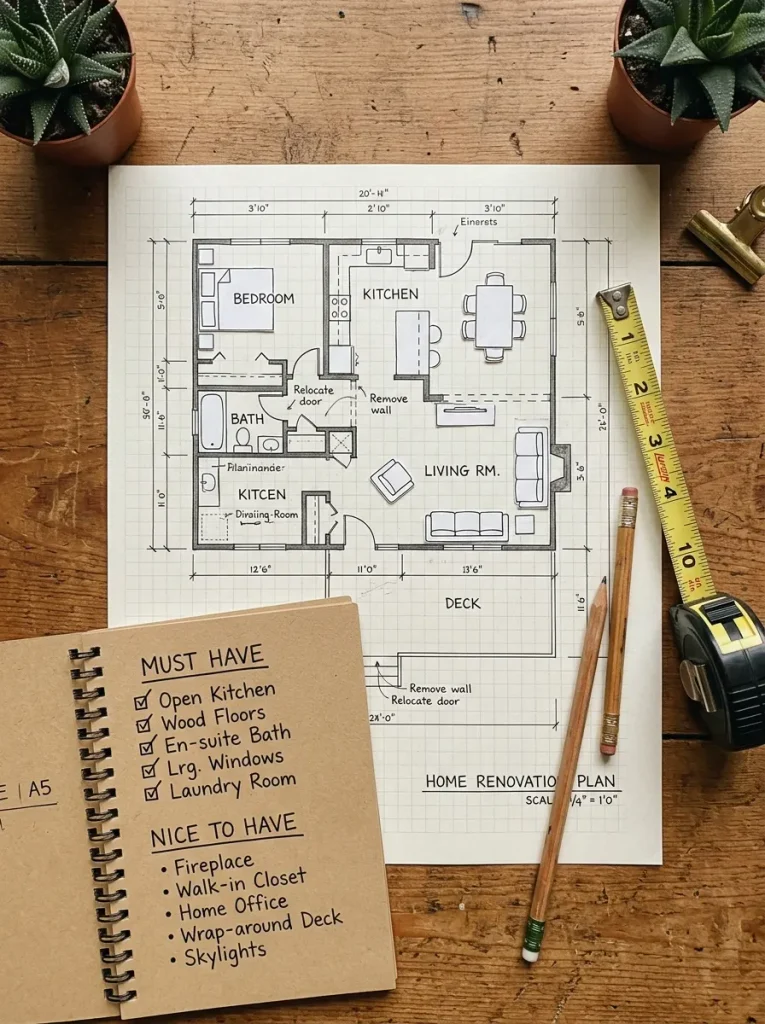
The best living room design ideas begin with one question: what does this room need to do? Before you buy a pillow or open a paint can, think about your real habits. Understanding how you relax, entertain guests, or spend time with family makes it easier to decide how to choose living room furniture that fits your lifestyle, available space, and personal style.
Write down every activity that happens in the room. Common ones include watching TV, reading, working from a laptop, playing with kids, and hosting guests. Then sort the list into “must have” and “nice to have.” Try to keep your must haves to two or three. A room that tries to do ten things often does none of them well.
Here is a quick way to think about it:
- A family room needs durable fabrics, easy to clean surfaces, and plenty of seating.
- A hosting room needs flexible seating, side tables for drinks, and clear walking paths.
- A quiet retreat needs soft lighting, deep seats, and calm colors.
- A work and relax room needs a small desk zone that can be hidden or tucked away.
Measure Twice, Shop Once
Grab a tape measure and record the length and width of the room, the ceiling height, the window sizes, and the position of doors, vents, and outlets. Measure any furniture you plan to keep. Many people skip this step and then find that a new sofa blocks a door or crowds a window. A few centimeters can decide whether a room flows or feels stuck.
Sketch a simple floor plan on paper. Even a rough drawing helps you test ideas before you move heavy furniture.
Find the Room’s Best Feature
Every room has something worth showing off. It might be a big window, a fireplace, a high ceiling, or a set of built in shelves. Designers often suggest making this feature the focal point, then arranging the room around it. If your room has an odd corner or a slanted wall, treat it as a bonus. A reading chair or a small bench can turn that awkward spot into a favorite place.
Living Room Layout Ideas That Make the Space Flow
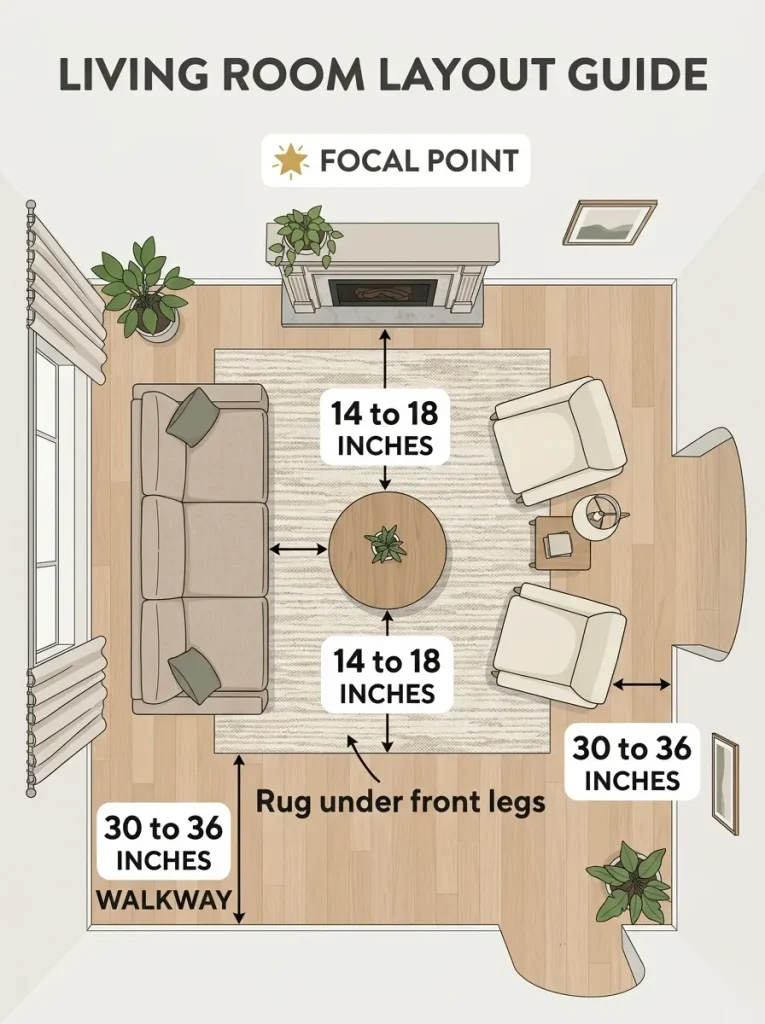
Layout comes before style. As interior designers like to say, you cannot decorate your way out of poor flow. A good layout makes the room feel larger, calmer, and easier to use.
Pick One Focal Point
Every living room needs a place where the eye lands first. That could be a fireplace, a window view, a TV wall, or a large piece of art. Point your main seating toward it, or at least arrange the seats so they relate to it. If you have a TV and a fireplace, choose which one leads and let the other support.
Use These Simple Distance Rules
Numbers take the guesswork out of layout. These are common guidelines used by designers:
- Leave 14 to 18 inches between the sofa and the coffee table so you can reach a drink without leaning.
- Keep 30 to 36 inches for main walking paths.
- Place seats within about 8 feet of each other so people can talk without raising their voices.
- Set your TV at a comfortable eye level when you sit, not high above the fireplace if you watch often.
Float Your Furniture
Pushing every piece against the wall is a common habit, but it can make a room feel like a waiting area. If your space allows, pull the sofa a few inches off the wall or let it float in the middle to define a zone. In an open plan home, a sofa with its back to the dining area acts like a soft wall. A narrow console table behind it adds a spot for lamps and keys.
Choose the Right Rug Size
A rug that is too small makes the room look unfinished. For most layouts, the rug should be large enough for at least the front legs of every seat to rest on it. In a living room that is about 12 by 15 feet, an 8 by 10 or 9 by 12 rug usually works well. A larger rug can even make a small room feel bigger, because it creates one clean base instead of a patchwork of floor.
Plan Zones in an Open Layout
If your living room shares space with a dining area or entry, create zones with rugs, lighting, and furniture placement. Use a different rug for each zone, but keep the colors in the same family. If an entry rug and a living rug sit near each other, make sure they look like they belong together. Cohesion matters more than matching.
Mix Seating Shapes
A sofa plus two armchairs is a classic setup, but you have options. Curved or rounded pieces, such as a round coffee table or a barrel chair, soften sharp corners and are friendlier around kids. Poufs and ottomans give you extra seats that tuck away when you do not need them. A sectional works well in a larger room, though a loveseat with two chairs can seat more people in less space.
Living Room Color Schemes That Work
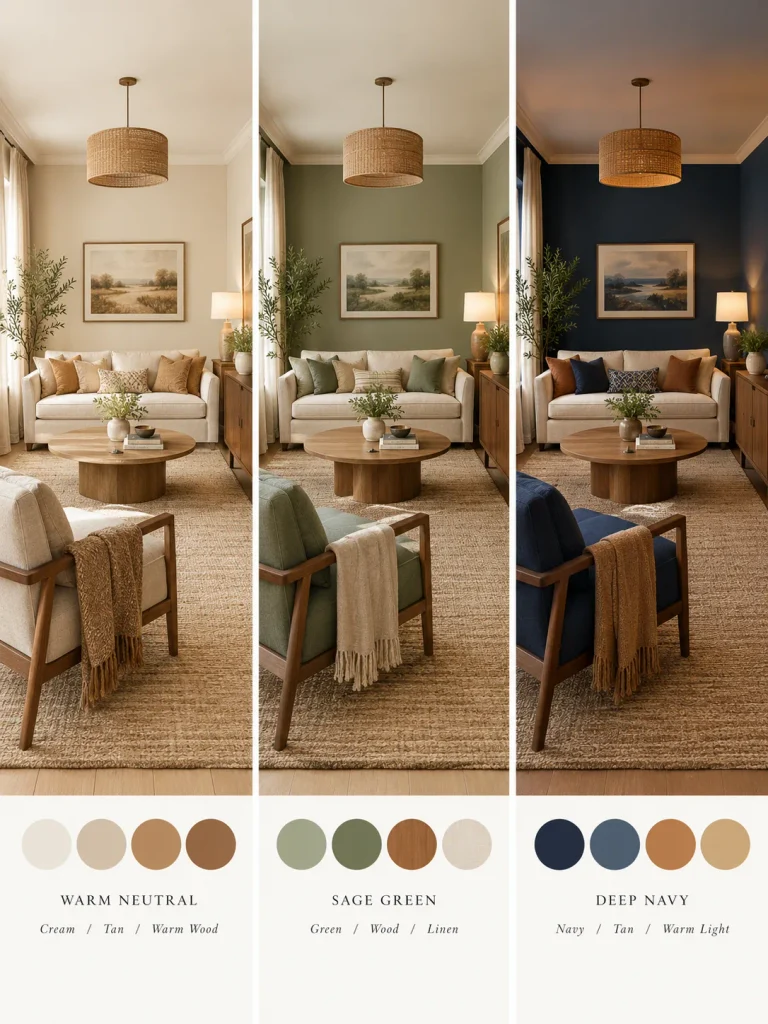
Color sets the mood before anyone sits down. The goal is not to follow a trend. The goal is to pick colors you enjoy looking at every day.
Use the 60, 30, 10 Rule
This simple rule keeps color balanced. Use one main color for about 60 percent of the room, such as walls and large furniture. Use a second color for about 30 percent, such as chairs, curtains, or a rug. Use an accent color for the last 10 percent, such as pillows, art, and small decor. It is an easy way to avoid a room that feels busy or flat.
Warm Neutrals
Creamy whites, beige, greige, and soft tan create a calm base that works with almost any style. They suit people who like to swap accessories with the seasons. To keep neutrals from feeling boring, mix textures. Think linen, wool, wood, and stone in the same color family. A tonal room, where everything is a shade of cream or sand, feels peaceful and layered when the textures vary.
Cool and Calm Colors
Soft blue, sage green, and gray green bring a fresh, relaxed feel. They work well in rooms that get plenty of daylight. Sage green seating, for example, pairs nicely with warm wood and cream walls. If your room faces north and gets cooler light, add warm lamps and wood tones so the colors do not feel chilly.
Bold and Dark Colors
Do not be afraid of deep colors. Navy, forest green, charcoal, and even chocolate brown can make a room feel rich and cozy. Dark walls work best when you add layered lighting and a few light pieces for contrast. Test paint samples on at least two walls and look at them in the morning and at night. Light changes color more than most people expect.
White on White
An all white room can look bright, clean, and modern. It is also a smart choice for a small room because it pulls attention away from the size. The secret is texture. Boucle, linen, cotton, painted wood, and woven baskets keep a white room from looking flat or cold. Add a few warm wood pieces to keep it welcoming.
Soft Pastels
Gentle pastels such as blush, pale blue, and soft mint can make a compact room feel fresh and airy. Pair them with white trim and natural wood so the look stays grown up rather than sweet.
Add Contrast
A room looks more interesting when it has some contrast, like a dark side table against a light wall or a black picture frame on a cream surface. Even a pulled together room needs one or two items that stand out. Without contrast, the eye has nothing to rest on.
Living Room Lighting Ideas: Layer It Like a Pro
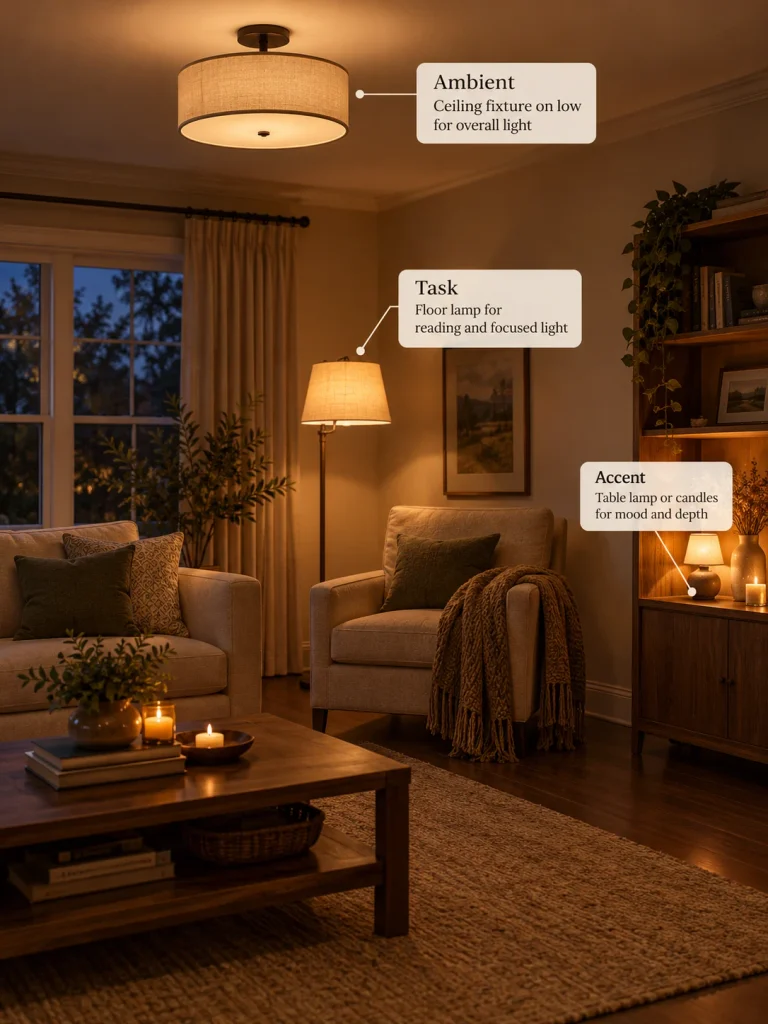
Lighting can change how a room feels more than almost any other choice. Many living rooms rely on one bright ceiling light, which makes a space look flat and harsh. Designers use three layers instead.
The Three Layers
- Ambient light is the general glow. Ceiling fixtures, chandeliers, and recessed lights provide it.
- Task light helps you do something specific. Reading lamps, desk lamps, and floor lamps beside a chair are good examples.
- Accent light adds mood. Picture lights, candles, and small lamps on shelves highlight what you love.
Aim to have at least three light sources in the room at different heights. This spreads light evenly and removes dark corners.
Choose Warm Bulbs
Look at the color temperature on the bulb box. For living rooms, 2700K to 3000K gives a soft, warm glow. Bulbs above 4000K look more like an office. Add dimmer switches if you can. They let you shift from bright for cleaning to soft for movie night with one slide.
Create Pockets of Light
A cozy room often has small glowing corners rather than one even blast of brightness. Put a floor lamp next to a chair with a throw blanket to build a reading nook. Place a table lamp on a side table to warm the sofa area. These pockets make a room feel inviting.
Make the Most of Daylight
Natural light is free and flattering. Keep windows clear of heavy furniture and avoid dark, thick curtains in rooms with little sun. Sheer panels let light in while keeping privacy. If you need blackout for sleeping or screen glare, pleated blackout curtains can keep light out when you want it and still look soft.
Hang Curtains Higher
Here is an easy trick. Hang your curtain rod a few inches above the window frame, or even close to the ceiling. This draws the eye up and makes windows and the whole room look taller. Let the curtains reach the floor, and choose a simple style so the space stays airy.
Furniture, Textures, and Accessories That Finish the Room
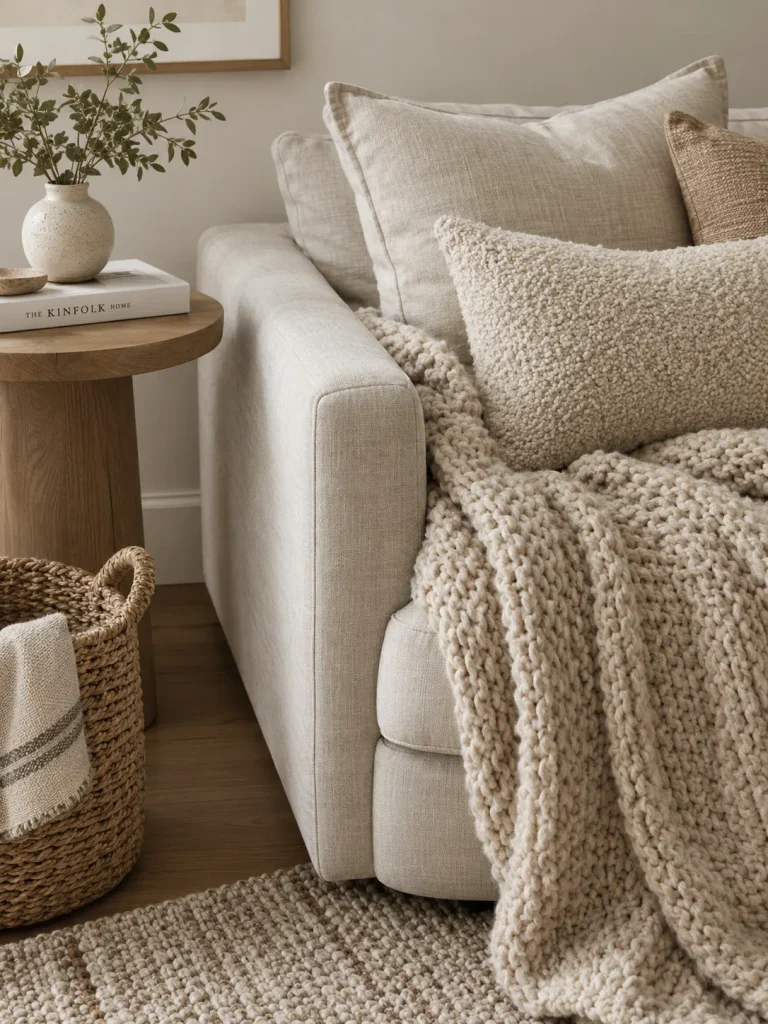
Once your layout, colors, and lighting are in place, accessories bring in personality. This is where your living room starts to look like yours.
Choose Seating You Want to Sink Into
A living room should look good, but it should also feel good. Deep, plush sofas, oversized chairs, and swivel chairs invite people to stay. Test a sofa in person if you can. Sit for a few minutes, lean back, and check the depth and support. Look for sturdy frames and high quality foam, since a living room sofa gets daily use.
Layer Textures
Texture is the quiet secret behind rooms that look expensive. Mix soft and rough, shiny and matte. Try a chunky knit throw on a smooth leather chair, or linen pillows against a boucle sofa. A woven basket, a wooden bowl, and a ceramic vase all add variety. If you stick to a limited color range, texture does most of the visual work.
Bring in Natural Materials
Wood, jute, cotton, stone, and clay make a room feel grounded. A wood side table, a stone tray, or a rattan chair adds warmth without clutter. Warm wood tones are especially useful if your walls are white, because they stop the room from feeling plain.
Style Your Coffee Table
A coffee table is a small stage. Use a tray to group items so they look planned. A good formula is height, softness, and something living. For example, a stack of books, a candle or small bowl, and a small plant or a bunch of flowers. Leave open space so you still have room for a drink.
Style Shelves With the Zigzag Rule
Shelves often turn into clutter. A simple method helps. Place a larger item on the left of one shelf, then a larger item on the right of the next shelf, so your eye moves in a zigzag. Mix books stacked flat and standing, small art, personal items, and one plant. Leave some empty space, because gaps make the objects you chose stand out.
Add Greenery
Plants soften corners and bring life into a room. An olive tree in a pot, a fiddle leaf fig, or a tall snake plant adds height and calm. Real plants need light and care, so choose ones that suit your windows. Good quality faux plants work too if you dust them.
Use Mirrors and Art
A large mirror across from a window bounces light around and makes a room feel bigger. A gallery wall adds personality, and a simple one in black and white looks neat and cozy. Lay your frames on the floor first and plan the arrangement before you hammer a single nail. For a tall look, let a group of art rise toward the ceiling.
Add Personal Touches
Family photos, travel finds, and books you love turn a showroom into a home. Pick a few items with meaning and display them with care instead of filling every surface.
Hide the Messy Parts
TV cords and gadgets can ruin a nice room. Run cables behind the wall or through cord covers painted the same color as the wall. A basket, a console with doors, or decorative stones around a cable area can hide wires and routers. Keep electronics simple. A small room does not need a full home theater system.
Think About a Fireplace
A fireplace is a natural focal point. Dress it with candles, art, or a simple mirror for instant warmth. If you do not have one, a linear electric fireplace can add a similar glow and some extra heat. These models usually do not need a chimney or venting, so they work well in apartments and condos. A wall mounted unit under a TV can even replace a separate console.
Small Living Room Ideas That Make the Space Feel Bigger
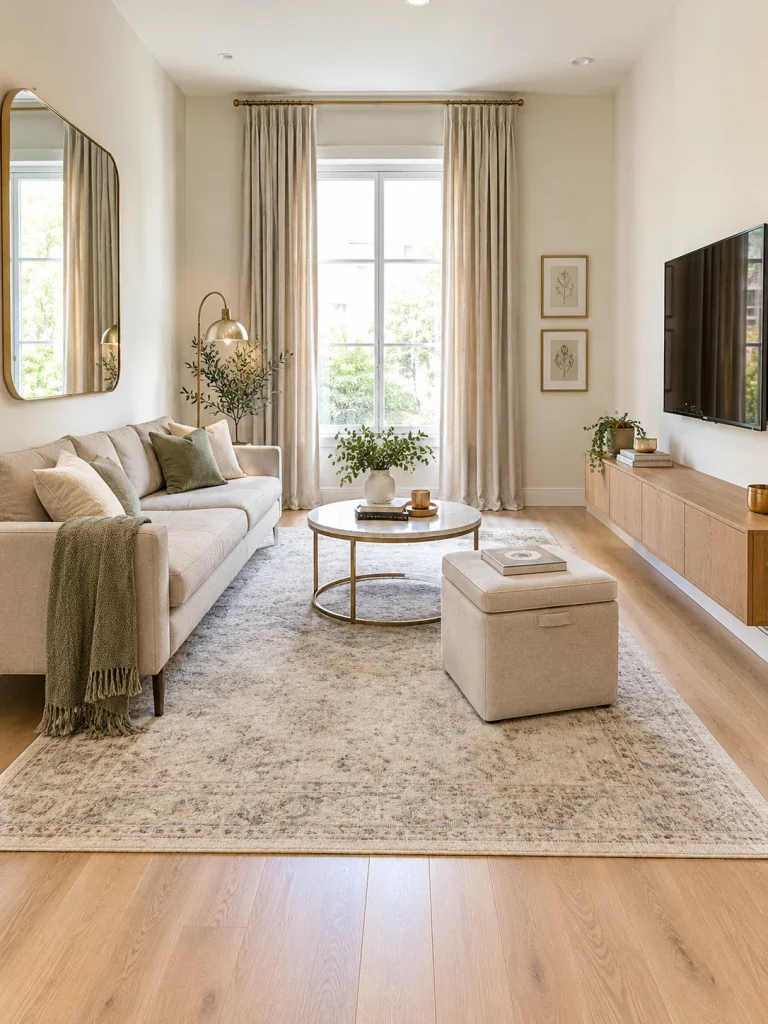
Small does not mean boring. With a few clever moves, a compact room can feel open, comfortable, and stylish.
Do Not Overcrowd
The first rule for small rooms is simple: do not cram in too much furniture. Choose fewer, smaller pieces and give each one room to breathe. A good test is to look at the floor. If you can see plenty of floor around the furniture, the room will feel larger.
Pick Furniture With a Smaller Footprint
Look for sofas with slim arms, raised legs, and a simple shape. Pieces on legs let you see the floor underneath, which makes the room feel lighter. A small scale sofa can fit nicely in a niche or against a short wall. Instead of a big sectional, try a loveseat and two armless chairs placed close together. That setup can give you more seats than a three seat sofa. Rounded coffee tables help you walk around without bumping a corner.
Choose Furniture That Does Two Jobs
Multipurpose pieces are the best friend of a small room. Great options include:
- An ottoman with storage that also works as a footrest or extra seat
- Nesting tables you can pull apart when guests come
- A coffee table with a shelf or hidden storage
- Stools that serve as side tables
- A sofa with built in storage or a sofa bed for overnight guests
- A round cafe table with two chairs if the room also needs a dining spot
- A wall mounted desk that folds up when you finish work
- Foldable chairs you can store in a closet
Go Vertical
When floor space is short, use the walls. Install tall bookshelves, floating shelves, and hanging planters. A wall mounted TV frees up floor space and keeps the room tidy. If you hang art or shelves that rise toward the ceiling, you draw the eye up. Some designers also add picture rail molding about 18 inches from the ceiling and paint the wall above it to match. This creates the feeling of height.
Use Light and Reflection
Use light colors on walls, add a large mirror, and keep curtains light. Hang a chandelier or a pendant to draw attention to the ceiling. Make sure light reaches every corner so no area feels dark and tight. Mirrors on side walls can also stretch a narrow room.
Choose a Bigger Rug
It may sound backward, but a larger rug can make a small room feel more spacious. One big rug looks calm and clean. Several small rugs chop up the floor and make the room look busier.
Add Boldness in Small Doses
Small rooms can handle drama. A deep colored accent wall, patterned pillows, or a statement lamp can make the room feel designed, not cramped. Just keep the number of different patterns limited, and repeat colors so the room stays unified.
Use Every Nook
Do you have a spot behind the sofa, under a window, or beside a fireplace? A bench, a narrow desk, or built in shelves can turn it into useful space. Try placing a console behind the sofa to hold lamps and baskets, and use the sofa as a gentle divider.
Common Living Room Design Mistakes to Avoid
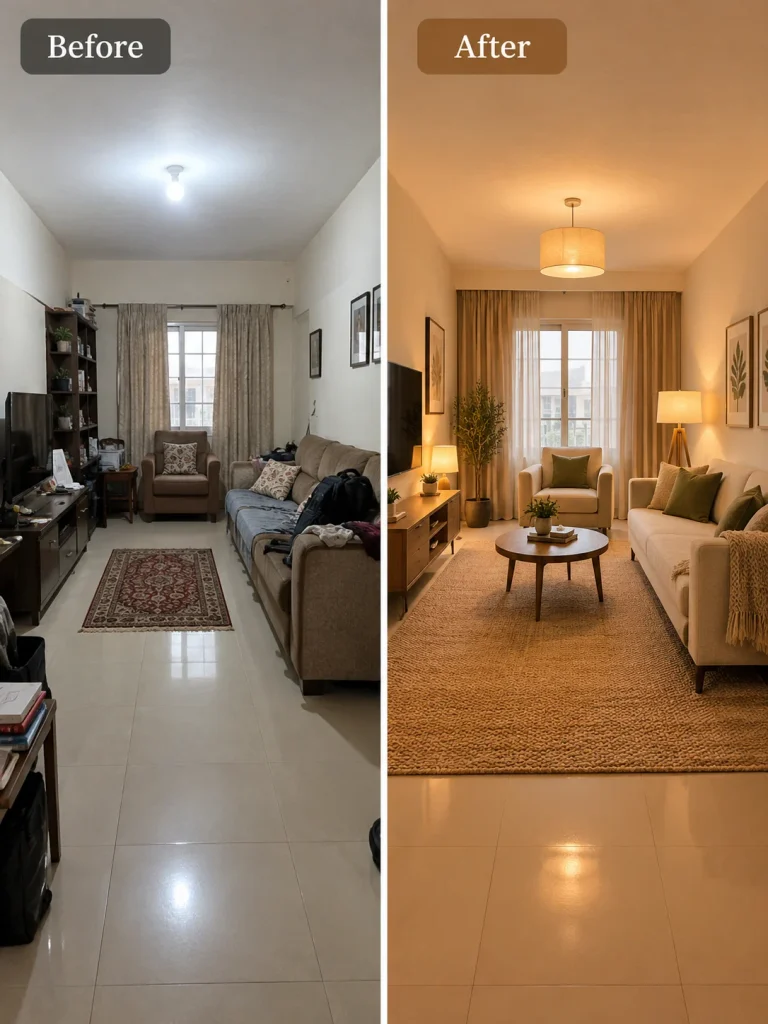
Even good ideas can go wrong. Watch out for these frequent errors:
- Buying furniture before measuring. This leads to returns and frustration.
- Using only one light source. One bright ceiling light makes a room flat.
- Choosing a rug that is too small. It makes the space look disconnected.
- Pushing everything against the walls. It can leave a hole in the middle of the room.
- Following every trend. Pick what you truly love so the room lasts.
- Skipping storage. Clutter ruins the best design. Add baskets, closed cabinets, and storage ottomans.
- Forgetting the room needs to feel comfortable. A beautiful but stiff sofa will go unused.
If you are working with a budget, spend first on the pieces you use most, like the sofa and lighting. Then add paint, rugs, and accessories over time. Secondhand shops and online marketplaces are good places to find solid wood tables and unique decor.
Frequently Asked Questions
What is the best layout for a living room?
The best layout depends on your room size and how you use it. In general, choose one focal point, face your main seating toward it, and leave 30 to 36 inches for walking paths. Keep the coffee table 14 to 18 inches from the sofa. Float furniture off the walls when you can, and anchor the group with a rug large enough for at least the front legs of each seat.
What colors make a living room look bigger?
Light, soft colors such as white, cream, pale gray, and soft pastels make a living room look larger because they reflect more light. A white on white scheme with plenty of texture also works well. Painting the ceiling a light shade and hanging curtains close to the ceiling can add to the feeling of height.
How do I make my living room feel cozy?
Layer your lighting with warm bulbs at 2700K to 3000K, add a soft rug, and pile on throw pillows and blankets. Bring in natural materials like wood and linen, add a plant, and choose deep seating. Candles and a few personal items finish the look.
How can I design a small living room on a budget?
Start by decluttering and rearranging. Then paint, add a mirror, and swap harsh bulbs for warm ones. Choose multipurpose furniture such as a storage ottoman, and add one large rug instead of several small ones. Shop secondhand for tables and shelves.
Should I choose a layout or a color scheme first?
Choose the layout first. A good layout makes sure you can move around and use the room. Once the furniture plan is set, pick colors, lighting, and accessories that suit it.
Conclusion
You now have plenty of ideas for living room decor, from layouts and color schemes to lighting, accessories, and clever tricks for small spaces. You don’t need to do everything at once. Pick one idea and try it today. Move your sofa a few inches away from the wall, swap a cold bulb for a warm one, or add a plant to a bare corner. These small changes can make a big difference in creating a cozy, stylish, and inviting living room.
Ready to begin? Measure your room, sketch a simple layout, and choose one color family to build from. Then save this guide and come back to it as you go. Your living room will start to look and feel like the place you imagined.