
Choosing living room furniture feels simple until you start shopping. A sofa looks perfect in the showroom, then it arrives and swallows half the room. A coffee table seems small online, then you keep bumping your knees on it. Most of these problems come from buying pieces one at a time, without a plan.
This guide gives you that plan. You will learn how to measure, pick a style, choose a sofa, add tables and storage, and arrange everything so the room feels easy to live in. We also cover small rooms, apartments, colors, materials, budgets, and the mistakes people make most often.
How Do You Choose Living Room Furniture?
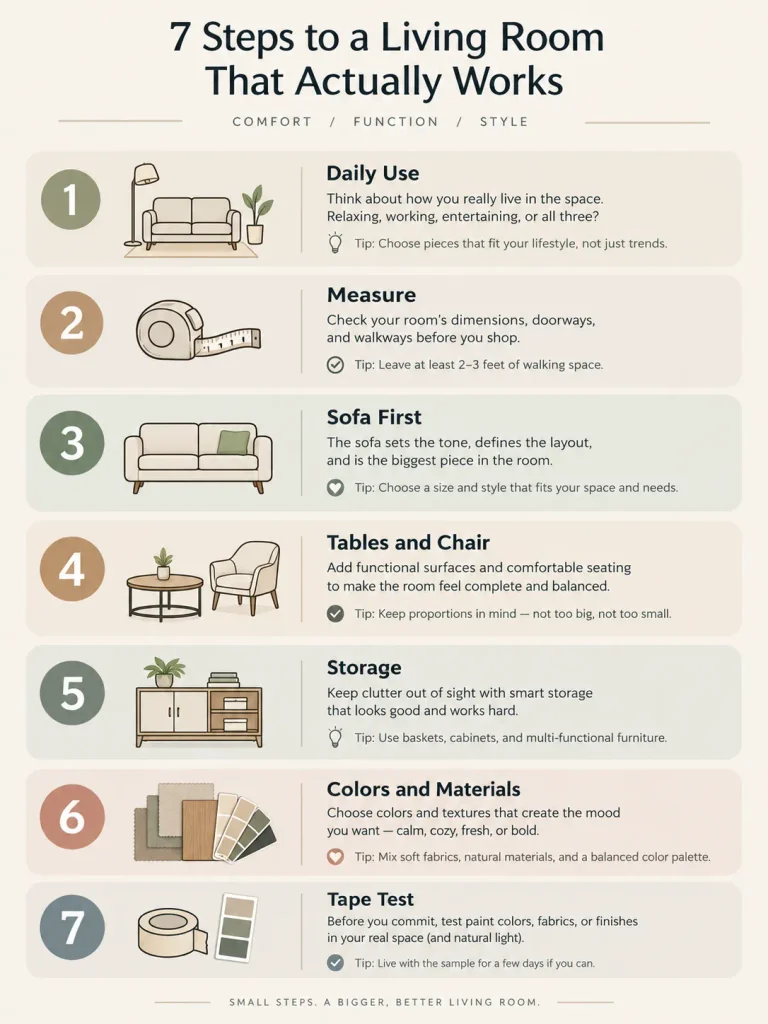
To choose living room furniture, follow these steps in order:
- Decide how your household uses the room every day.
- Measure the room, doors, windows, and walking paths.
- Pick the sofa first, since it takes the most space.
- Add a coffee table, side tables, and a chair only after the seating is set.
- Plan storage for the things that actually end up in the room.
- Choose colors and materials that suit your lifestyle and keep the look consistent.
- Check the full layout with tape on the floor before you buy.
Each step is explained below.
Start With How You Use Your Living Room
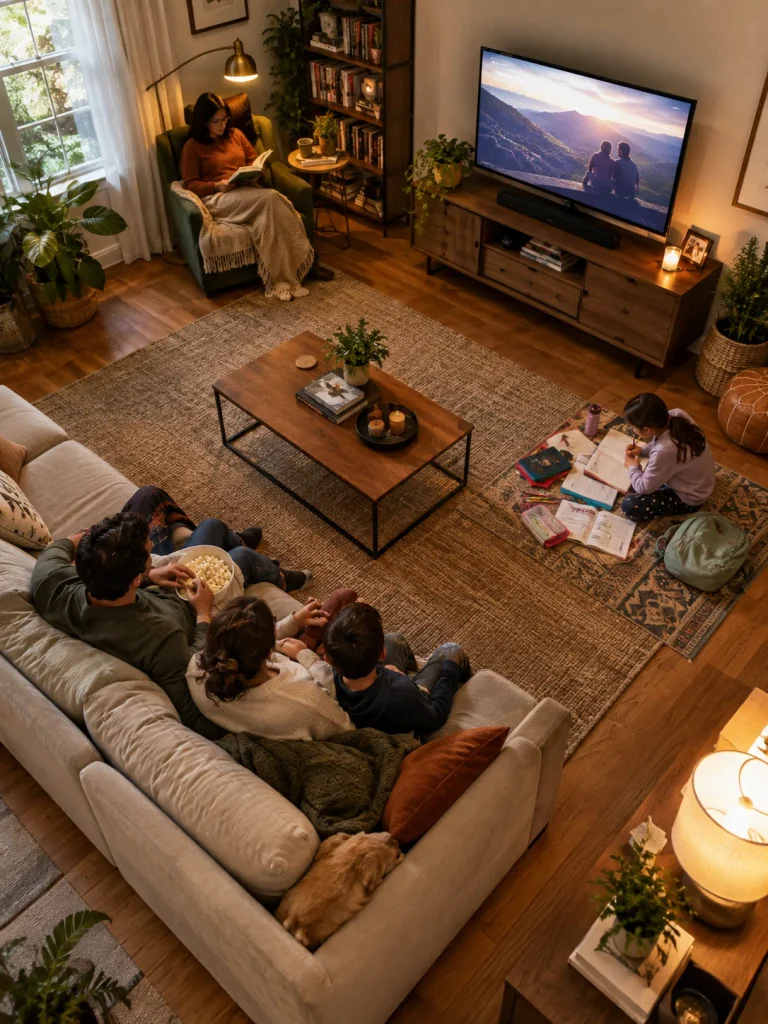
Before you look at a single sofa, think about a normal evening in your home. Does everyone watch TV together? Do kids do homework on the floor? Do you host friends every weekend, or is the room mostly for quiet time?
Your answers decide what you need. A family of five that watches movies together needs more seats than a couple who reads in the evening. A person who works from home may need a table that doubles as a desk, while a household with a toddler benefits from rounded corners and easy-to-clean fabrics. If you love a cozy, welcoming atmosphere, explore farmhouse living room ideas with comfortable seating, natural wood accents, and practical furniture that suits your family’s everyday needs.
Write a Simple Furniture List
Most living rooms start with four basics: a sofa, a coffee table, a side table, and a media unit. Accent chairs, shelves, and console tables come later, once you know why you need them. If you cannot say what job a piece will do, leave it off the list for now.
Measure the Space That Must Stay Empty
Wall length is only part of the story. Doors need room to swing open. Balcony access has to stay clear. Windows, plug points, vents, and radiators all limit where furniture can go.
Here is a trick designers use. Mark the sofa and table on the floor with masking tape or newspaper. Leave about 75 to 90 cm (30 to 36 inches) for the main walking path. Then walk through the room like you normally would. If you keep stepping around the taped shapes, the furniture is too big or in the wrong spot.
Pick a Style That Fits Your Home
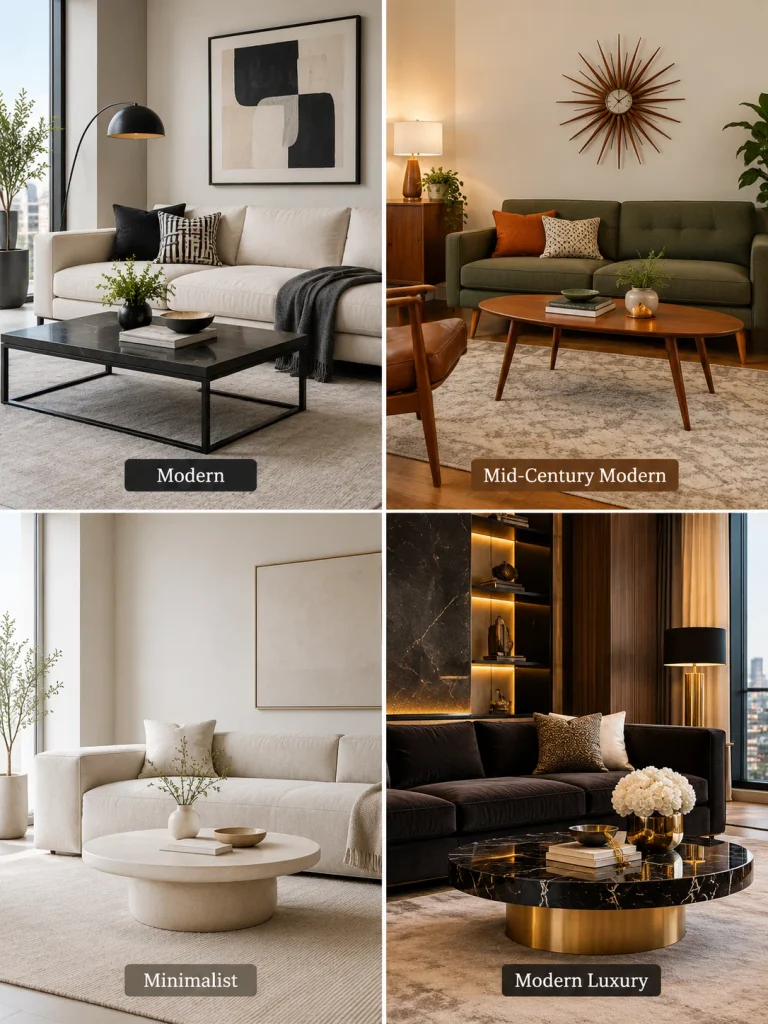
Style is the fun part, but it works best after you know your space and habits. Here are the most popular looks and what each one asks of you.
Modern and Contemporary Living Room Furniture
People often use these two words as if they mean the same thing, but there is a small difference. Modern living room furniture follows a design period from the early to mid 1900s. It has clean lines, simple shapes, and little decoration. Contemporary living room furniture follows what is popular right now. It changes with trends and often mixes curves, soft fabrics, and bold accents.
If you want a safe pick, choose simple shapes in calm colors. You can add current trends later with cushions and decor.
Mid Century Modern Living Room Furniture
Mid century modern living room furniture comes from the 1950s and 1960s. Look for tapered wooden legs, low profiles, gentle curves, and warm wood tones. The slim legs are a bonus in smaller rooms because you can see the floor underneath, which makes the room feel larger.
Minimalist Living Room Furniture
Minimalist living room furniture is about owning fewer things and choosing each one with care. Think one sofa, one table, and a few pieces of closed storage. This style works well when you value calm and easy cleaning. Just make sure comfort does not get lost. A minimalist room still needs soft seating and good lighting.
Luxury and Modern Luxury Living Room Furniture
Luxury living room furniture is about quality more than size. Look for solid frames, tight stitching, high density foam, and fabrics that hold their shape. Modern luxury living room furniture pairs these quality details with clean lines. Think a velvet sofa in a deep color, a marble top table, or brass accents. Keep the rest of the room simple so one or two pieces can shine.
Mix Modern Looks With Your Own Character
Your home does not have to look like a catalog. You can combine modern furniture with wooden finishes, handmade art, textured fabrics, family pieces, and plants. The key is balance. Pick two or three elements that work together instead of mixing five styles at once.
Choose the Right Sofa First
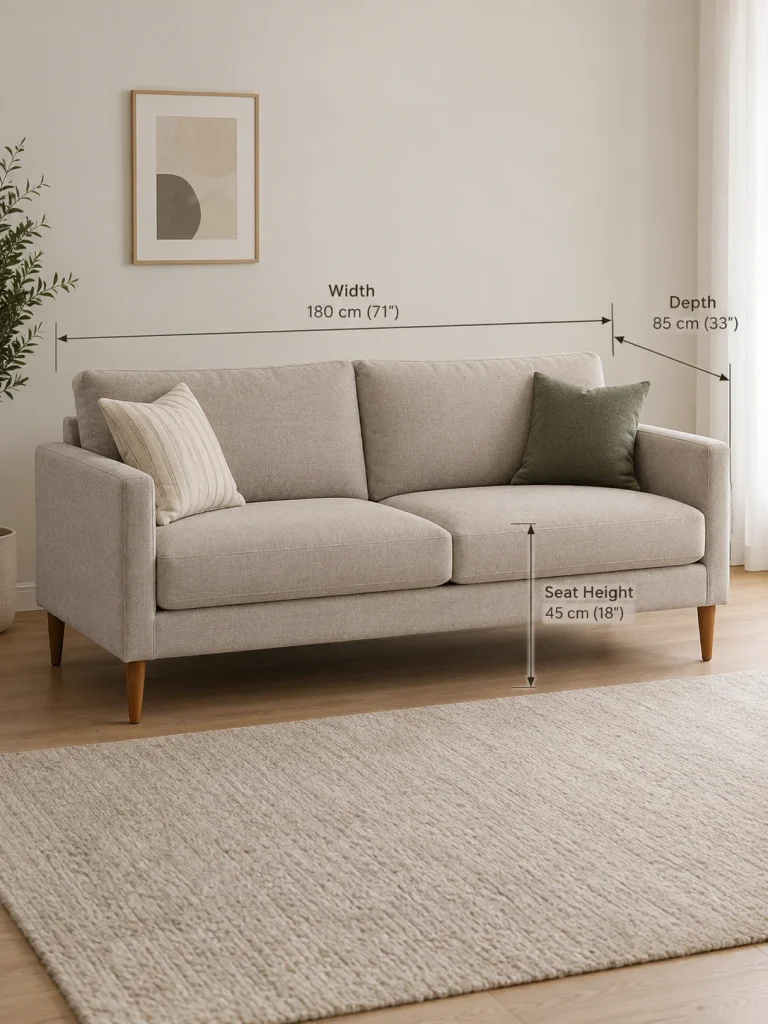
The sofa is usually the biggest and most expensive piece in the room. It also decides where everything else goes. So start here.
Match the Sofa to the Number of People
Count how many people sit in the room on a normal day. A two seater suits a couple or a small household. A three seater works for most families. An L shaped sofa suits larger households or open rooms, but it takes a lot of floor space, so measure carefully before you commit.
Check Depth, Arms, and Height
Width is not the only number that matters. A deep seat feels great for lounging but can be hard to get out of. Thick arms and heavy bases use up floor space fast. Slim arms and raised legs make the same sofa look lighter.
If you can, sit on the sofa in a store. Stay for a few minutes. Check that your feet reach the floor, your back is supported, and the cushions do not sink too much.
Think About Fabric and Daily Wear
If you have kids or pets, choose tightly woven fabric, performance fabric, or leather that wipes clean. Removable covers are a big help. Light colors look great but show every mark, so be honest about how much upkeep you want.
Sofa Sets vs. Mixed Pieces
Living room furniture sets give you a matching look with no guesswork. A sofa and loveseat set is a classic choice because the two pieces share the same color, fabric, and style. This works well in a medium or large room.
Matching sets can feel heavy in a small room, though. A single sofa plus a separate chair often looks fresher and uses less space. If you like the set look, you can mix on purpose. Repeat one wood tone or one metal finish across two or three pieces, and the room will still feel connected.
Consider a Sofa Cum Bed
A sofa cum bed (a sofa that opens into a bed) is a smart pick for studios, small apartments, and homes without a guest room. It works as normal seating by day and as a bed when guests stay. Before you buy, measure the sofa and the space it needs when fully open. You usually need about 5 to 6 feet of clear floor in front.
Add Tables, Chairs, and Storage
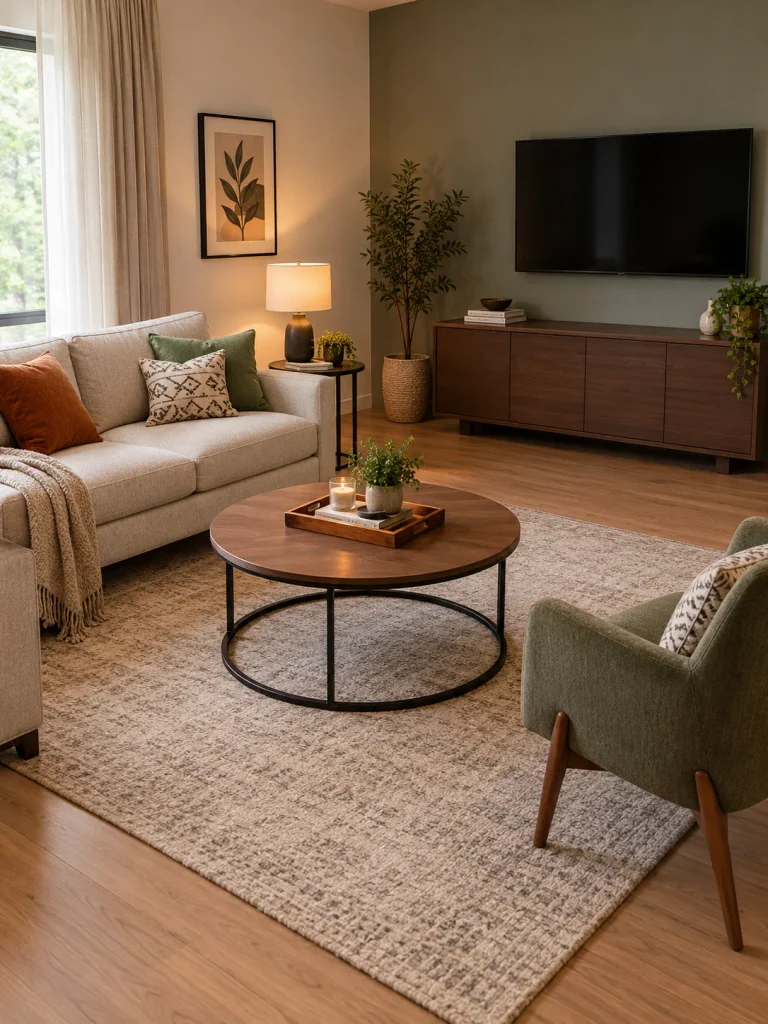
Once the sofa is in place on your plan, build the rest around it.
Pick the Right Coffee Table
Here are a few easy rules for a coffee table:
- Make it about two thirds the length of your sofa.
- Keep the top close to seat height, or just a little lower.
- Leave about 35 to 45 cm (14 to 18 inches) between the sofa and the table.
- Make sure you can reach it without leaning far forward.
Round and oval tables are good in tight rooms because there are no sharp corners to bump into. They also feel lighter. Rectangular tables suit long sofas and bigger rooms.
Some tables do more than one job:
- Lift top tables rise up to work as a desk or a dining surface. Many also hide storage inside.
- Nesting tables slide into each other. Keep them stacked for open floor space or pull them apart when guests arrive.
- Coffee tables with stools tuck the stools underneath until you need extra seats.
Use Side Tables Wisely
A small side table next to the sofa holds a drink, a lamp, a phone, or a book. In a very narrow room, it can replace the coffee table completely. That keeps the center of the room open for easy movement. Before you buy both, ask whether the two tables would do the same job.
Add Accent Chairs and Lounge Chairs
One chair, placed at an angle to the sofa, can finish a seating group. A lounge chair is often better than a second sofa. It takes less space, and you can move it near a window for reading or turn it toward the sofa when friends visit.
Choose chairs with slim arms and visible legs. If the sofa is heavy, pick a lighter chair so the room does not feel bulky on every side. An open frame rocking chair is another good option. It gives you a cozy corner without much visual weight.
Give Storage a Job
Storage works best when it has a clear purpose. Think about what really ends up in the room: remotes, chargers, routers, toys, books, and spare cushions. Then pick storage to match.
- A closed TV unit hides cables and electronics.
- A storage ottoman holds blankets and toys.
- Floating shelves hold books and plants without using floor space.
- A slim console table behind the sofa adds a surface for lamps and can mark the edge of the living area in an open plan home.
Open shelves look nice but need more dusting. Closed cabinets hide clutter but can become a dumping ground. Pick the mix that suits your habits. A wooden tray on the coffee table is a simple way to gather small items, so the table looks tidy.
Colors and Materials That Work
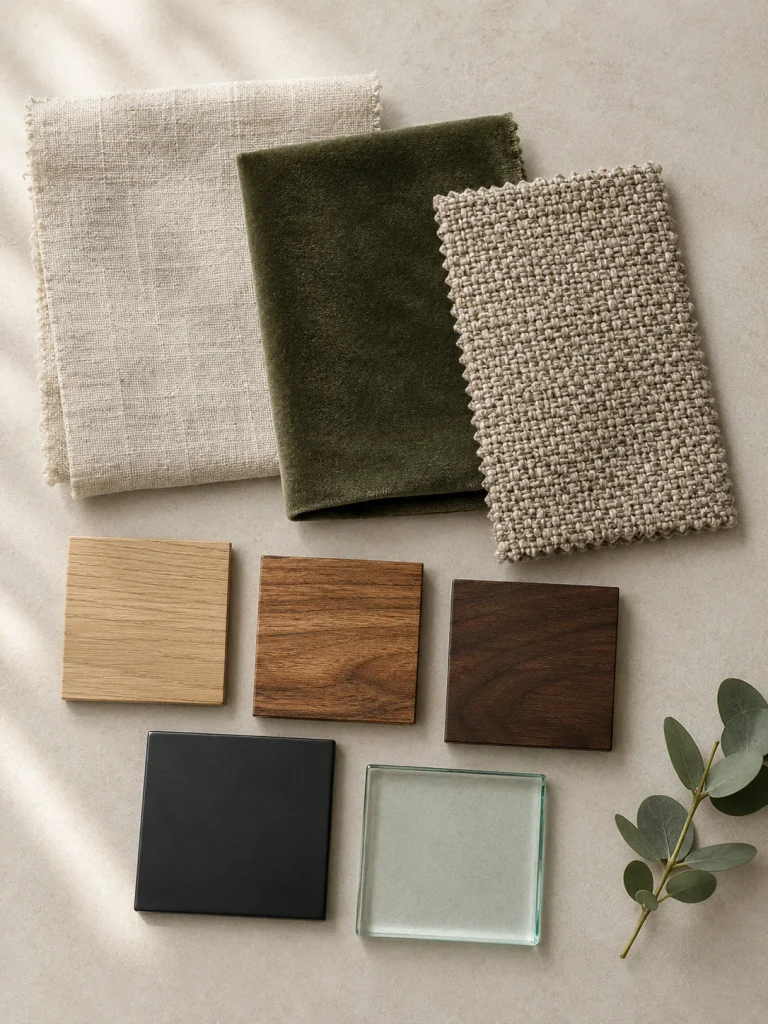
Color and material change how heavy or light a room feels, and how well your furniture lasts.
Neutral Living Room Furniture
Neutral living room furniture in white, beige, grey, or soft taupe is a safe base. It goes with almost any wall color and lets you change the look later with cushions, throws, and art. If neutrals feel flat to you, add texture. A linen sofa, a woven basket, and a wool rug can add depth without adding color.
Black Living Room Furniture
Black living room furniture adds drama and a strong modern feel. It works best in small doses, such as a black metal frame table, black chair legs, or a black media unit. A fully black room can feel heavy, especially if it is small or has little daylight. Balance black pieces with light walls, warm wood, and soft fabric.
Wooden Living Room Furniture
Wooden living room furniture brings warmth and lasts for years when it is well made. Light and mid tone woods, such as acacia or oak, keep a room feeling open. Darker woods, such as walnut or sheesham, look rich and formal. Try to repeat a similar wood tone on your coffee table, shelves, and side tables. A steady material palette makes a small room feel calm.
If you live in a humid or monsoon climate, look for solid wood that has been kiln dried. This helps reduce warping and swelling. Solid hardwood or good plywood usually holds up better than low grade particle board.
Glass, Metal, and Resin
Glass tops can make a room feel airy, but they show fingerprints and can be risky around small kids. Metal adds a modern edge. A resin and wood table can be a bold statement piece. If you choose one eye catching item, keep the walls, curtains, and other furniture simple so it does not compete.
How to Arrange Living Room Furniture
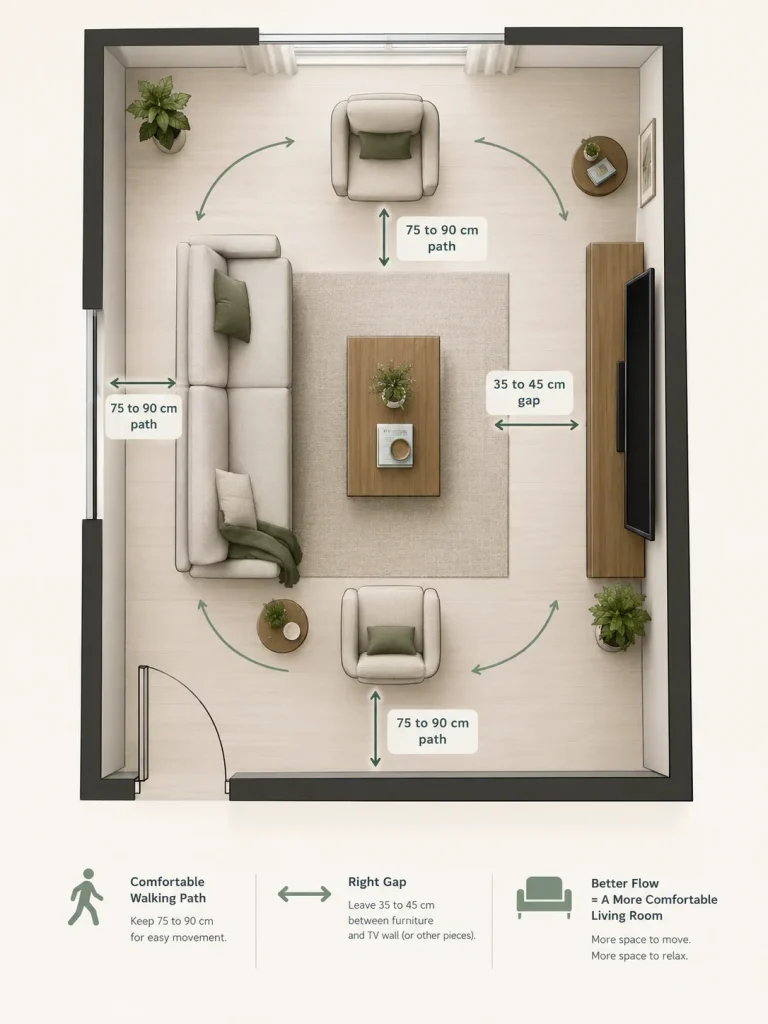
Good furniture can still feel wrong if it is placed badly. Here is a simple way to arrange living room furniture, step by step.
Step 1: Choose a Focal Point
The TV is a common focal point, but a window, a fireplace, or a piece of art can work too. Decide which direction the room faces. This tells you where to point the sofa and chairs.
Step 2: Place the Sofa
The sofa does not always need to sit against a wall. In a wide room, pulling it forward can create a better conversation area and leave space behind it for a console table or a reading nook.
Step 3: Add Seating Around It
Place chairs so people can see each other without shouting. Keep seats within about 2.5 meters (8 feet) of each other for easy talking. Angle the chairs a little instead of lining everything up with the walls.
Step 4: Set the Rug
Pick a rug large enough that at least the front legs of the sofa and chairs sit on it. A rug that only fits under the coffee table makes the seating look scattered. Jute, cotton, and flatwoven rugs are easy to care for and add warmth.
Step 5: Do the Tray Test
Imagine carrying a tray of tea from the door to the sofa. Then picture walking from the sofa to the balcony or kitchen. If the path feels awkward, move or remove one piece.
Layouts by Room Shape
- Narrow room: Put a compact sofa along the longer wall. Use a round or small table and keep the other side open.
- Square room: A sofa with two chairs makes a balanced conversation circle around a central table.
- Open plan room: Use the back of the sofa to mark the living area. A slim console table behind it can help split the zones without a wall.
Small Living Room Furniture and Apartment Ideas
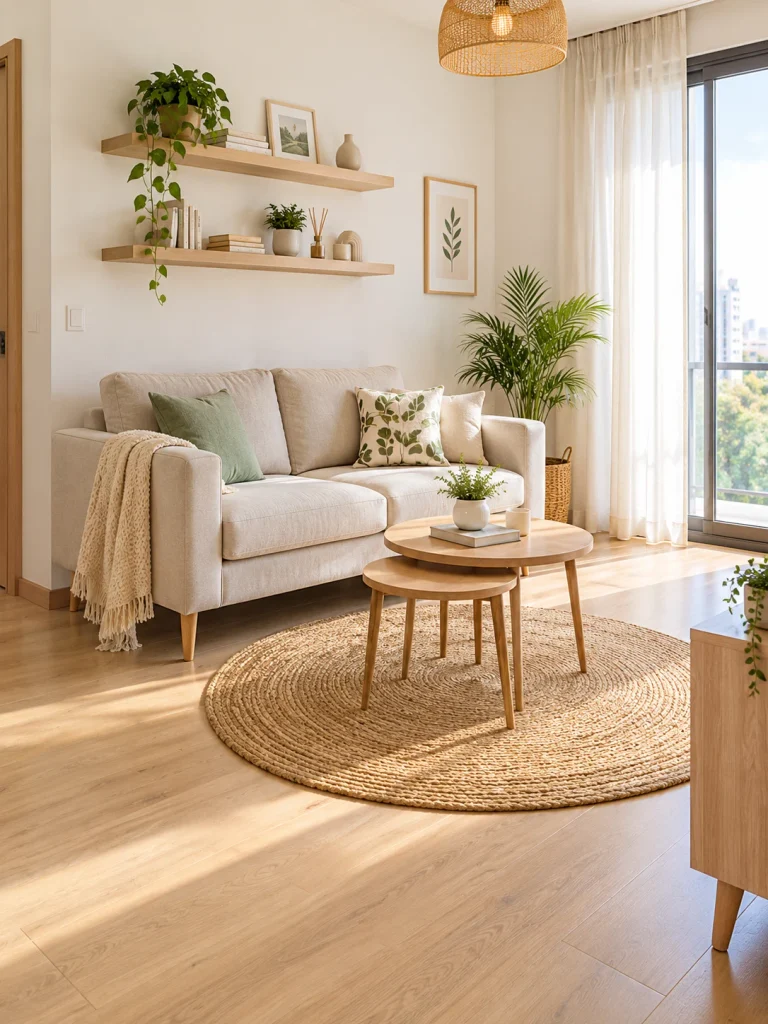
Small living room furniture is not about buying tiny versions of everything. It is about choosing which pieces deserve space. This matters most in apartments, where the living room may also be the TV room, guest room, and home office.
Build the Room in Order
Place the sofa first. Add a second seat only if you truly need one. Then decide on a coffee table, a side table, or both. Buying in this order stops you from ending up with a pile of furniture that does not fit together.
Choose Furniture That Does More
For apartment living room furniture, multi purpose pieces are a big help:
- A sofa cum bed for guests
- A lift top coffee table that doubles as a desk
- A storage ottoman for seating and hiding clutter
- Nesting tables that you pull out only when needed
Use Walls Instead of Floors
Floating shelves, wall mounted units, and tall, slim bookcases give you storage and display space without eating into your walking paths. Mirrors can also help by bouncing light around the room.
Keep Visual Weight Low
Furniture can feel large even when the size is fine. Raised legs, slim arms, light colors, and open frames help. A low coffee table also keeps sightlines clear, so the whole room feels bigger.
Furniture Ideas for Small Living Rooms: Combinations That Work
- Very small room: a two seater sofa, one compact table, and one side table.
- Compact apartment: a two seater, one lounge chair, one low coffee table, and one side table.
- Frequent guests: a two seater plus a movable chair and stools that tuck under the table.
- Room with limited center space: skip the coffee table and use a side table next to the sofa.
Small Rooms Need Empty Space Too
One of the biggest mistakes is filling every corner. Visible floor and bare wall give each piece room to breathe. If a corner looks empty, a simple floor lamp or a plant is often better than another cabinet.
Budget, Buying Tips, and Common Mistakes
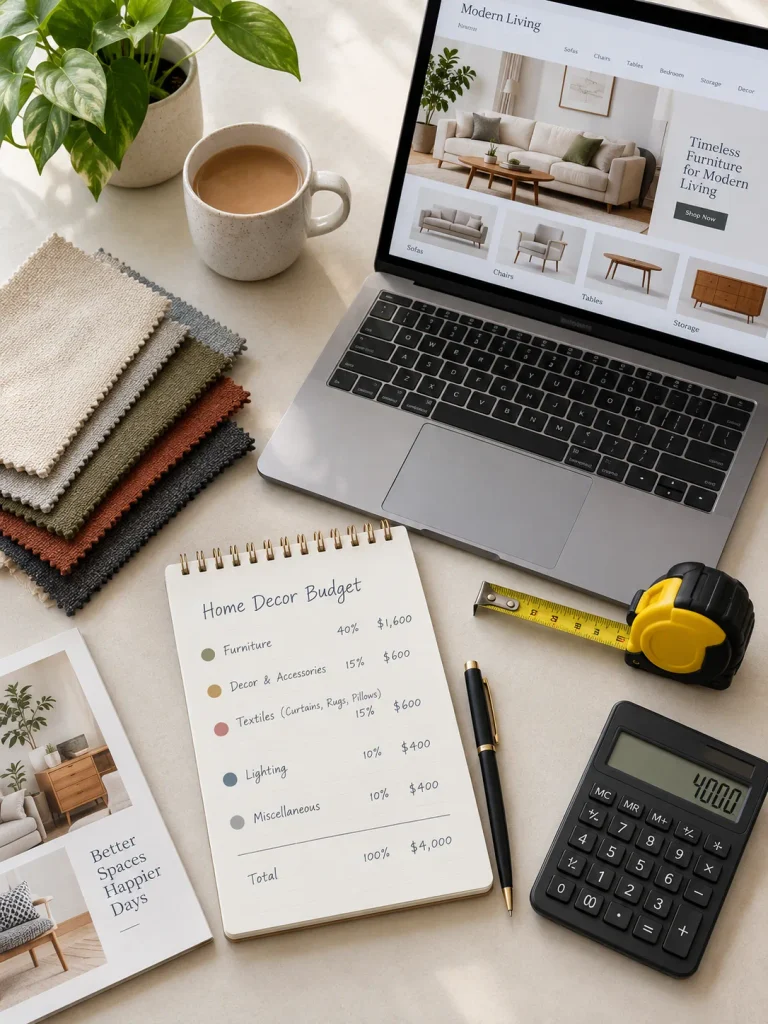
Spend Where It Counts
Set a total budget first, then split it by priority. Spend more on pieces you use every day, like the sofa and a good rug. Spend less on items you use now and then, like a small side table or decor. A well made piece that lasts for years often costs less over time than something cheap that needs replacing.
Check Build Quality
Look for these signs of a sturdy sofa and table:
- A solid wood or strong plywood frame
- Joints that are screwed or doweled, not only stapled
- High density foam that springs back
- Smooth drawer slides and even finishes
Do Not Chase Every Trend
Curved sofas, boucle fabric, and modular seating are popular right now. Some of them solve real problems. Rounded edges help in tight rooms. Modular seating adapts when guests come. But a trend that does not suit your room or routine will just annoy you. A good rule is to keep big pieces simple and bring trends in through small items like cushions, vases, and throws.
Plan for Change
Homes and lives change. A family may grow, or you may start working from home. Movable chairs, nesting tables, and modular seating make it easy to adapt. If you rent or might move, avoid very large custom pieces that may not fit in your next home.
Five Questions to Ask Before You Buy
- How many people use this room on a normal day?
- How often do I host guests?
- Do I still have enough walking space once everything is in?
- Can this piece do more than one job?
- Do the sizes match my real room measurements?
Common Mistakes to Avoid
- Buying a sofa that fits the wall but leaves no room to walk
- Choosing each piece alone without checking how they look together
- Picking a rug that is too small
- Pushing everything against the walls
- Skipping the tape test
- Buying matching sets just because they are convenient
Frequently Asked Questions
What should I buy first for my living room?
Buy the sofa first. It is the largest piece, and it controls the rest of the layout. Once you know its size and spot, pick the coffee table, side tables, chairs, and rug to match.
How much space should be between living room furniture?
Leave about 75 to 90 cm (30 to 36 inches) for main walking paths. Keep about 35 to 45 cm (14 to 18 inches) between the sofa and the coffee table. These gaps let people move and reach things without squeezing.
What is the best living room furniture for a small space?
A two seater sofa, a round or nesting coffee table, a slim side table, and one accent chair work well in most small rooms. Add wall shelves for storage. If you need a guest bed, choose a sofa cum bed. Pick light colors and furniture with raised legs to keep the room feeling open.
How do I make my living room furniture look cohesive?
Repeat a few things. Use the same wood tone on two or three pieces, or repeat one metal finish or one color in different places. Keep large pieces simple and add variety through cushions, art, and rugs. Furniture does not need to come from one matching set to look good together.
Should living room furniture match?
No, it does not need to match exactly. A little variety makes a room feel collected and personal. Pieces should still work together through shared colors, materials, or shapes. If matching sets feel safer to you, a sofa and loveseat set is a good starting point, and you can mix in other pieces over time.
Conclusion
The best living room furniture is not the most expensive or the most trendy. It fits your space, supports the way your family lives, and feels comfortable every day. Thoughtful living room decor starts with understanding how you use the room, measuring carefully, choosing the sofa first, and building around it one piece at a time. Test your furniture layout with tape before you spend money to create a stylish, functional, and welcoming living room.
Ready to start? Grab a measuring tape and a roll of masking tape today. Mark out your sofa and table, walk through the room, and write down your measurements. With those numbers in hand, you can shop with confidence and choose living room furniture that you will enjoy for years.