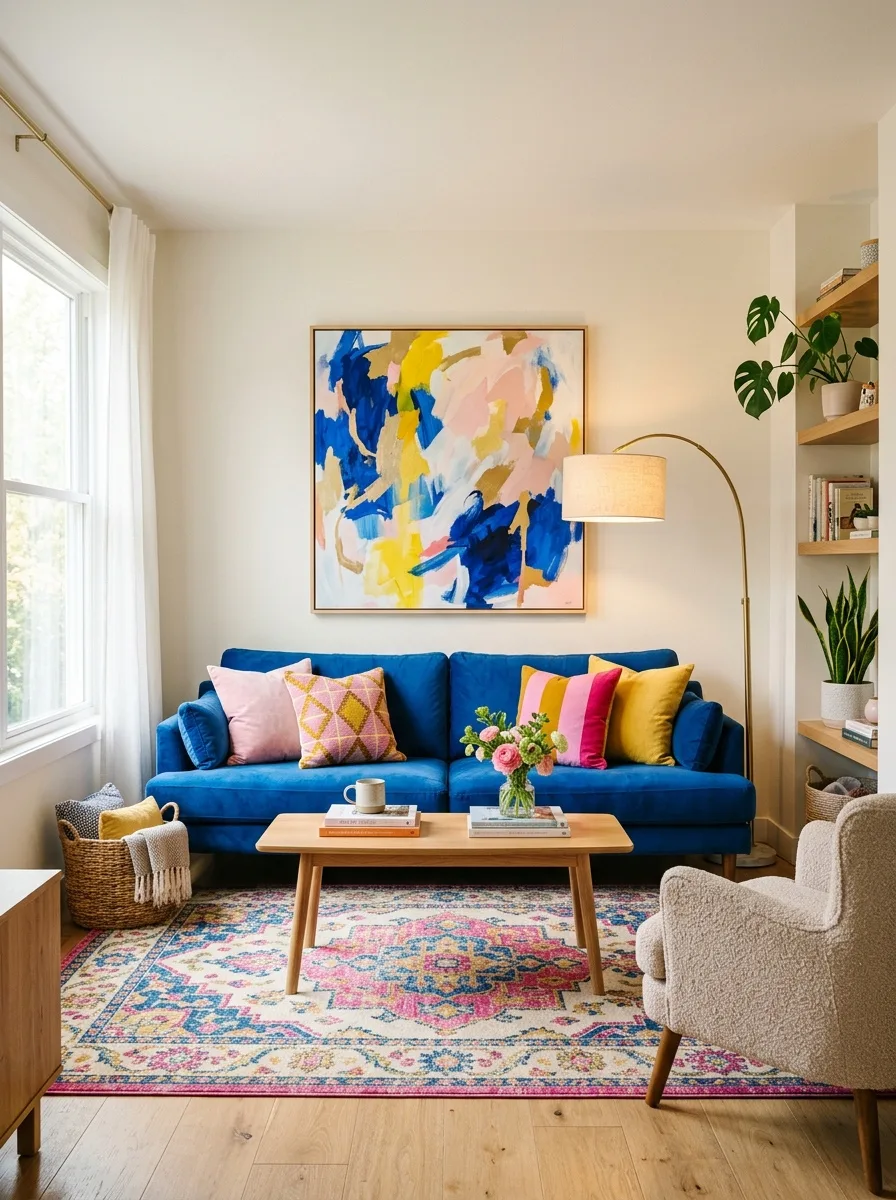
You walk into your living room after a long day, and it feels flat. Maybe every wall is beige, the sofa is gray, and nothing in the room makes you smile. That is the exact problem dopamine decor tries to solve. A dopamine decor living room is built around one simple question: does this make me feel good? If the answer is yes, it stays. If the answer is no, it goes.
This guide explains what dopamine decor is, how to choose colors without going overboard, and how to add pattern, texture, lighting, and meaningful pieces. You will also find budget friendly projects, common mistakes, and answers to the questions people ask most. Whether you love bright color or only want a small boost, you will find a way to make it work.
What Is Dopamine Decor? A Quick Answer
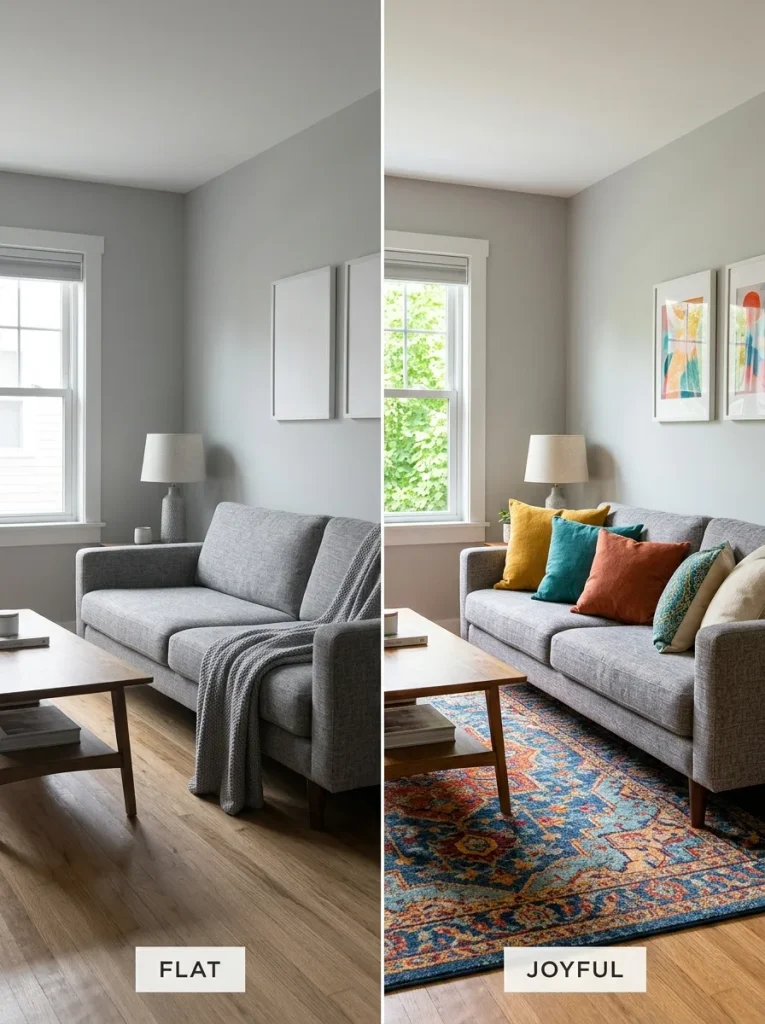
Dopamine decor is a design style where you choose colors, patterns, and objects that lift your mood. Instead of following trends or matching everything, you fill your home with things you truly enjoy. A black living room set can add a bold, sophisticated touch while allowing colorful cushions, playful artwork, and cheerful accessories to stand out. This style can feature bright colors, soft pastels, favorite keepsakes, or a cozy chair you love sitting in.
Where the Trend Came From
The idea grew out of “dopamine dressing,” a fashion trend about wearing clothes that make you happy. Social media then carried the idea into homes, and it spread fast. People were tired of years of gray walls and cold, plain rooms, and they wanted spaces with more personality. HGTV even described those older minimalist gray looks as drab and draining, which shows how far the mood has shifted.
Is There Science Behind It?
Dopamine is a chemical in the brain linked to pleasure and motivation. The name makes the trend sound scientific, but it is important to be honest here: no one can promise that a yellow pillow raises the dopamine in your brain. What we do know is that color, light, and personal objects affect how people feel in a space. Some studies suggest warm colors feel energizing and cool colors feel calming, but reactions vary from person to person. Think of dopamine decor as a way to design for your own mood, not as a medical treatment.
Dopamine Decor Is Not the Same as Maximalism
Many people assume you need a loud, crowded room. You do not. Interior stylist Maxine Brady points out that this style is not about filling your home with color for its own sake. A calm room with one joyful sofa and a few meaningful objects can be just as much a dopamine decor living room as a wall to wall rainbow. The goal is intention, not volume.
Start With Your Own Joy Before You Pick a Single Color
The biggest mistake people make is shopping first. Before you buy anything, spend one evening figuring out what makes you happy. This step is what separates a real dopamine decor living room from a room that just copies a trend.
Do a Quick Home Audit
Walk through your living room and sort every item into three piles: love it, fine with it, and dislike it. Pay attention to treasured items that are hidden in boxes or buried under clutter. Bring them out and display them where you can see them. Then look at what is left. Tired curtains, a faded rug, or a dull paint color might be the easiest things to refresh.
Look to Your Childhood
Designers quoted by HGTV and Apartment Therapy often describe this style as nostalgic. Think about the colors and objects you loved as a child: a bright blue bedroom, a rainbow blanket, a favorite toy, or a poster you adored. You do not need to copy your childhood room, but those memories can guide your color choices and give the space a playful spirit.
Collect Meaningful Pieces
One of the most useful ideas from home brand Oak and Olive is that the best joyful rooms include items with a story. A hand painted vase from a trip, a lampshade you found at a market, or your child’s drawing in a nice frame can do more for your mood than an expensive piece from a store. Designer Jennifer Huston is quoted there saying the most successful rooms contain elements that mean something to the owner.
Name Your Mood Words
Write down three words for how you want the room to feel, such as cozy, cheerful, and social. When you are unsure about a purchase, check it against your words. If a bold orange chair feels cheerful and social, it fits. If a pattern gives you a headache, skip it, even if everyone online loves it.
How to Choose Colors for a Colorful Living Room Decor Plan

Color is the heart of dopamine decor, and it is also where people feel the most nervous. A simple system keeps it easy.
Pick One Anchor Color You Love
HGTV designer Amber Guyton suggests choosing one bold color that gives you joy, then selecting a focal object in that color, such as a chair, a textured wall, art, or drapes. Build the rest of the room around it with accessories in contrasting hues. This single choice stops the room from feeling random.
Use the 60, 30, 10 Guide
A helpful rule from the design world is to split your room into three parts. Use about 60 percent for a calm base such as warm white, cream, or soft gray. Use about 30 percent for your main color, such as a sofa or rug. Use about 10 percent for punchy accents such as pillows, vases, and art. You can bend this rule, but it is a safe starting point if you are new to color.
Try a Joyful Palette
Here are color ideas that work well in a living room, along with the mood each one tends to create:
- Green: Associated with nature and renewal, it feels fresh and balanced. Try a velvet sofa or green painted shelves.
- Yellow: Cheerful and optimistic. Use it in small doses such as pillows, a lamp, or the inside of a bookcase.
- Orange: Warm and social. Maxine Brady suggests pairing it with charcoal, black, or soft gray to keep it grounded.
- Pink: Playful and soft. It looks great with green, red, or deep blue.
- Cobalt blue: Bold but calm. It works well on a sofa, a rug, or a painted door.
- Red: Lively and strong. Use a small amount, like curtains or a single chair, so it does not overwhelm.
One designer described a dopamine room as looking like a box of crayons: hot pink, chrome yellow, tangerine, fire engine red, lime green, and cobalt blue. If that sounds like too much, remember the same designer advised grounding the space with a base color to pull everything together.
Match Color to How You Use the Room
Temple and Webster designers note that different colors affect people differently. If your living room is where you unwind at night, lean toward cooler shades like blue and green. If you host friends often and want energy, add warmer colors like orange, yellow, and coral.
Go Soft If Bold Is Not Your Style
You do not need bright neon to join in. Pastels, earthy terracotta, olive green, and mustard can all count, as long as they make you happy. If you live in a quiet space or work in a busy place, a softer version can be far more relaxing. A blue and white room with one playful chair is still full of joy.
Place Color in Unexpected Spots
Color does not have to cover every wall. Try these low risk places:
- Paint the ceiling a soft color, or add a graphic wallpaper to it.
- Color block an alcove, window frame, or the inside of a bookcase.
- Paint skirting boards or baseboards in a fun shade.
- Use a bright color on the front door of a media cabinet.
- Paint a single wall behind the sofa and keep the others neutral.
Dopamine Decor Ideas for Pattern, Texture, and Furniture
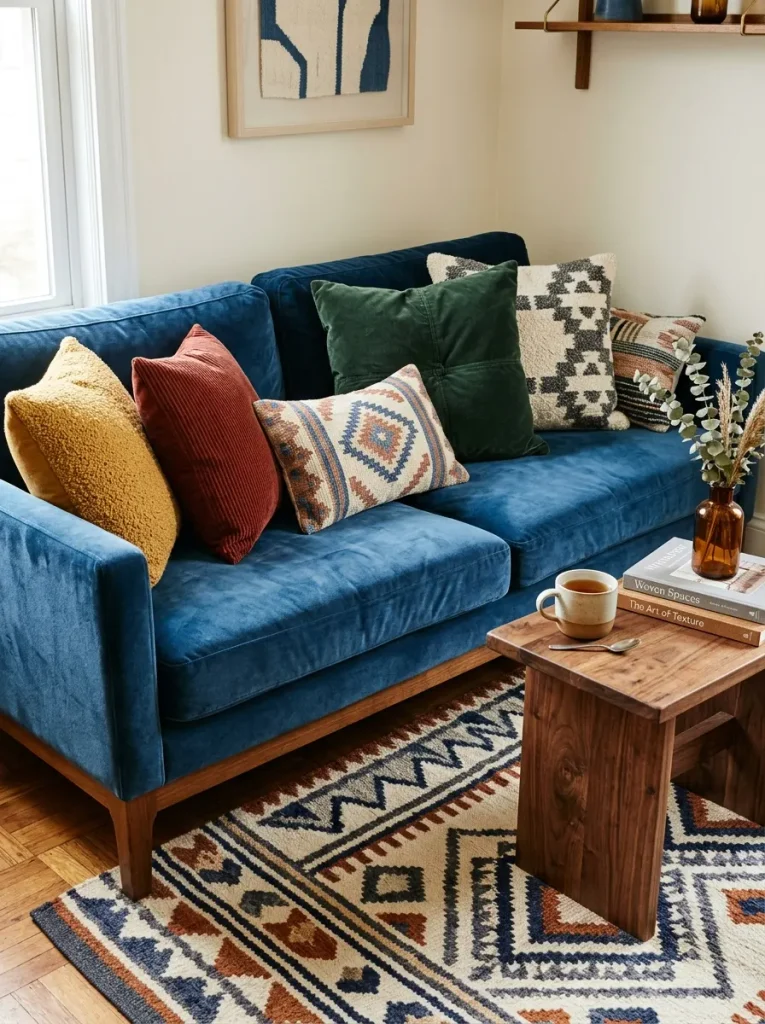
Once your colors are set, pattern and texture make the room feel alive. This is where dopamine decor ideas get fun.
Layer Patterns With a Plan
Mixing patterns is easier than it looks. Choose one large pattern, such as a bold rug, one medium pattern, such as striped curtains, and one small pattern, such as a checked pillow. Keep the colors in the same family so everything feels connected. Designers say you can layer nearly anything in this style, including textiles, wallpaper, art, and upholstery, as long as it looks intentional.
Make It Soft to the Touch
Touch matters as much as sight. HGTV designers highlight soft, comforting fabrics like velvet, mohair, bouclé, and corduroy. Add natural textures too, such as jute, rattan, wood, or wool, so the room does not feel flat or too slick. A velvet sofa with a woven basket and a chunky blanket is a good example of this mix.
Choose Furniture With Personality
Furniture is a focal point in this style. Instead of a plain gray sectional, think about a curved sofa, a sculptural coffee table, or a pair of bright accent chairs. A single playful piece, like a colorful ottoman, a scalloped mirror, or a funky lamp, can set the tone for the room. You do not need many; one or two strong pieces are enough.
Let Art Do the Talking
Large art gives instant energy. A big abstract canvas in pink and cobalt can anchor a room, and small rooms can handle big pieces too. Mix paintings, prints, and framed photos on a gallery wall, and choose art that makes you laugh or smile, not just art that matches. A framed poster, a thrift store painting, or your own paint sample doodles all count.
Show Off a Rainbow Bookshelf
Sorting books by color is a playful way to add joy with items you already own. Put the books on shelves in a rainbow order, then add a few objects and a plant. You can also paint the back of the shelf a bold shade to make everything pop.
Add Plants and Natural Greenery
Plants add a living kind of color and bring a feeling of calm. Interior designers often suggest rearranging the room to catch more sunlight and bringing in greenery as part of the palette. A tall plant in a bright pot, or a shelf of small plants near the window, works in almost any living room.
Ground the Room With Neutrals
HGTV designer Megan Evans reminds us that the eyes need a place to rest. Wood furniture, stone, white walls, and natural fibers give your eyes a break and make the colorful items look better. Without neutrals, even beautiful color can feel noisy.
Layout, Lighting, and Balance: The Parts People Forget
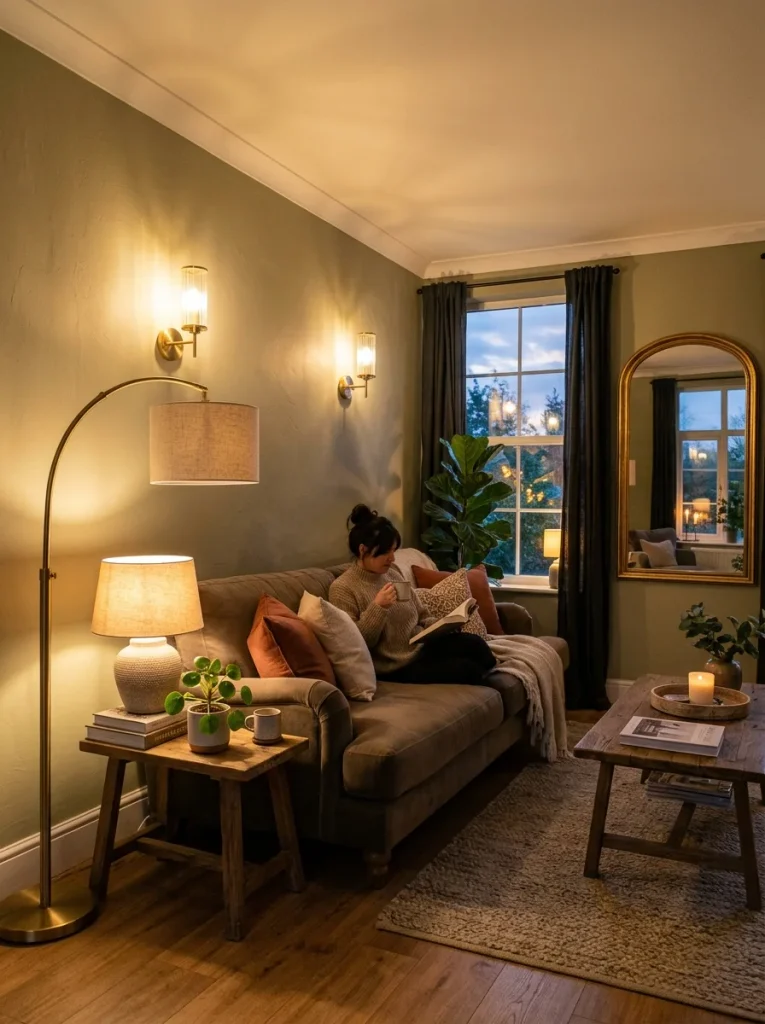
Color gets all the attention, but a joyful room also needs to work well in daily life. Maxine Brady, a stylist with many years of experience, stresses that dopamine decor is about how a home functions as well as how it looks.
Arrange Furniture for Easy Movement and Conversation
A room feels better when you can move through it without bumping into things. Avoid pushing every piece against the walls. Spread the visual weight so one side is not heavy and the other empty, and angle seating so people can talk. A pair of chairs facing the sofa makes a living room feel social.
Keep Clutter Under Control
Color works best when surfaces are not crowded. Use closed storage, baskets, and floor to ceiling shelves to hide everyday items. In small rooms, look up as well as across, since tall storage frees floor space. You can still show your favorite items, but give them room to breathe.
Use Layered Lighting
Lighting can change a room more than paint. Do not rely on one bright ceiling light. Instead, mix table lamps, floor lamps, and wall lights at different heights to create soft pools of light, which gives the room a cozy, boutique hotel feel. Choose warm toned bulbs for evenings, since harsh white light can make colors look cold. Good lighting also makes your favorite objects stand out.
Maximize Natural Light
Open your curtains during the day, keep windows clear of large furniture, and clean the glass. If you are renovating, larger windows, glass doors, or a skylight can bring more daylight deep into the room. Natural light also makes colors look richer and more true.
Place Mirrors With a Purpose
A mirror placed across from a window bounces daylight around the room and brightens dark corners. A colorful or uniquely shaped frame turns the mirror into art. Hang one near a lamp to double the glow in the evening.
Easy and Budget Friendly Ways to Try Dopamine Decor
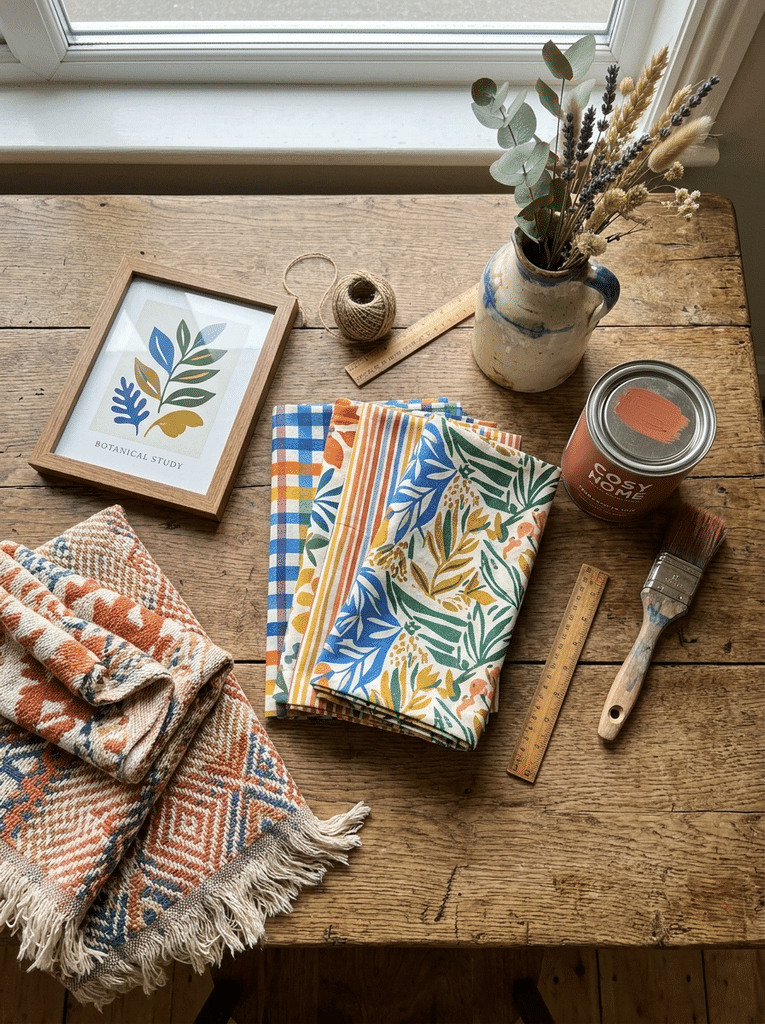
You do not need to redo the whole room. A few small steps can change the mood right away, and you can add more over time.
Start With the Room You Use the Most
Put your energy into the space where you spend the most time. For many people, that is the living room, which makes it a smart place to begin. A joyful space you see every day gives more reward than a perfect guest room.
Swap One Rug or a Set of Pillows
This is the lowest risk first step. Replace one rug with a brightly colored one, or add new cushion covers and a throw blanket. If you like how it feels, move on to bigger items such as a chair, a console table, or a painted wall. Buy plain pillow inserts and change the covers whenever you want a new look.
Paint Something Small
A can of paint goes a long way. Try painting a side table, a picture frame, a lamp base, a bookcase interior, or a thrifted chair. Spray paint works well for small items. Test your color on a sample board and look at it at different times of day.
Shop Secondhand and Mix Eras
Thrift stores, flea markets, and online resale sites are great for bold vases, quirky lamps, vintage rugs, and framed art. Mixing old and new makes a room feel collected, and it costs far less than buying everything in a single store. Pieces with history also add the meaningful touch this style values.
Create Art Yourself
Paint a large canvas in two or three of your palette colors, frame a patterned fabric scrap, or print a favorite quote or photo. A homemade piece costs very little and makes the room feel like you.
Renter Friendly Ideas
If you cannot paint, use large rugs, bright curtains, removable wallpaper, lamps, plants, and leaning art. These items add a lot of color and can move with you when you leave.
A Simple Weekend Plan
- Friday evening: Do the audit. Pick your anchor color and three mood words.
- Saturday morning: Declutter, clean, and rearrange the furniture for better flow.
- Saturday afternoon: Swap pillows and a rug, and hang one piece of art you love.
- Sunday morning: Paint one small item or one alcove, and add a plant.
- Sunday evening: Layer in lamps and a mirror, then sit in the room and notice how it feels.
Common Dopamine Decor Mistakes and How to Avoid Them
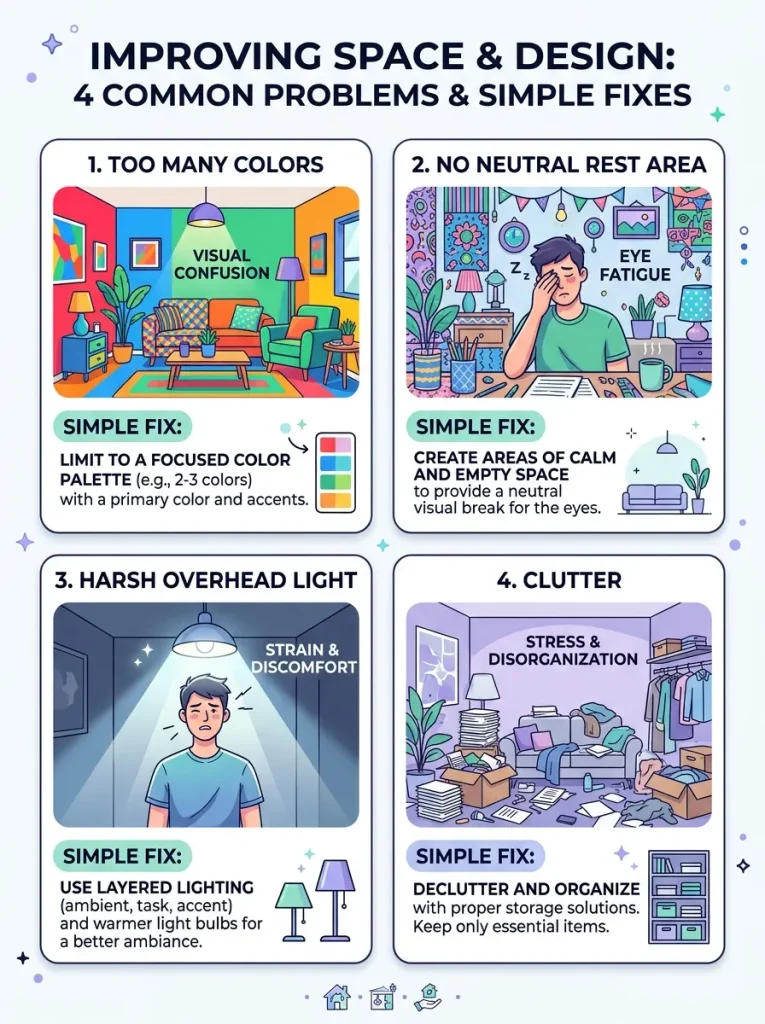
Even a great idea can go wrong without a little care. Watch out for these problems.
Using Too Many Colors at Once
Five or six bold colors with no plan will feel chaotic. Stick to one anchor color and two accents, and repeat them in several places so the eye can follow them around the room.
Forgetting the Neutral Base
Without a calm base, the room can feel tiring. Keep some walls, large furniture, or flooring simple. HGTV designers also warn that a dopamine room should look fun but intentional, not like a play set.
Following Trends Instead of Your Taste
If you buy a bright orange chair because it is popular but you dislike it, it will not lift your mood. Choose items that make you smile, not items that look good in someone else’s photos.
Overdoing It Where You Rest
Bright, busy spaces can be tiring in rooms meant for sleep or deep rest. Sleep experts quoted in the press recommend using color in small doses in a bedroom and choosing warm lights for evenings. In a living room, use the same idea if you often relax or fall asleep on the sofa: add a few softer colors and dimmable lamps.
Skipping the Light
A colorful room with poor lighting still feels dull. Add lamps and a mirror before you buy more decor.
Expecting the Room to Be Finished
This style grows with you. Let the room change as your tastes change, and swap items every season or two. A dopamine decor living room is never truly finished, and that is part of the fun.
Frequently Asked Questions
What colors are best for a dopamine decor living room?
The best colors are the ones that make you happy. Popular choices include green, yellow, orange, pink, and cobalt blue. Start with one anchor color, add two accents, and balance them with neutrals such as white, cream, wood, or charcoal.
Is dopamine decor expensive?
No. You can start with a new set of pillow covers, a thrifted lamp, or a can of paint. Money does not decide whether a space feels joyful. Personal items, secondhand finds, and simple DIY art often work better than costly new furniture.
Can I use dopamine decor if I like minimalism?
Yes. Keep your clean lines and add one joyful element, such as a colorful chair, a bright piece of art, or a patterned rug. You can also use soft colors like pale pink, sage, or sky blue. The idea is to choose what feels good, not to fill the room.
Will dopamine decor go out of style?
The trend name may fade, but the idea of a home that reflects you is lasting. To keep it fresh, invest in big, neutral, well-made pieces and add color through easy-to-swap items like pillows, art, and lamps.
How do I start dopamine decor in a small living room?
Choose one focal color, hang one large piece of art, and add a mirror to bounce light. Use light neutral walls, smaller furniture, and a few bright accents. Keep surfaces clear so the room still feels open.
Conclusion
You do not need a big budget, a designer, or a bold personality to enjoy a dopamine decor living room. The best living room decor reflects what makes you happy, whether that means bright colors, playful patterns, or meaningful accessories. Start small, notice how you feel, and let your space evolve with your personality.
Pick one idea from this guide today. Swap a pillow cover, paint a small table, hang a piece of art you love, or add a lamp with a warm bulb. Then stand in the doorway and see how the room feels. Ready to begin? Choose your first project and start this weekend.