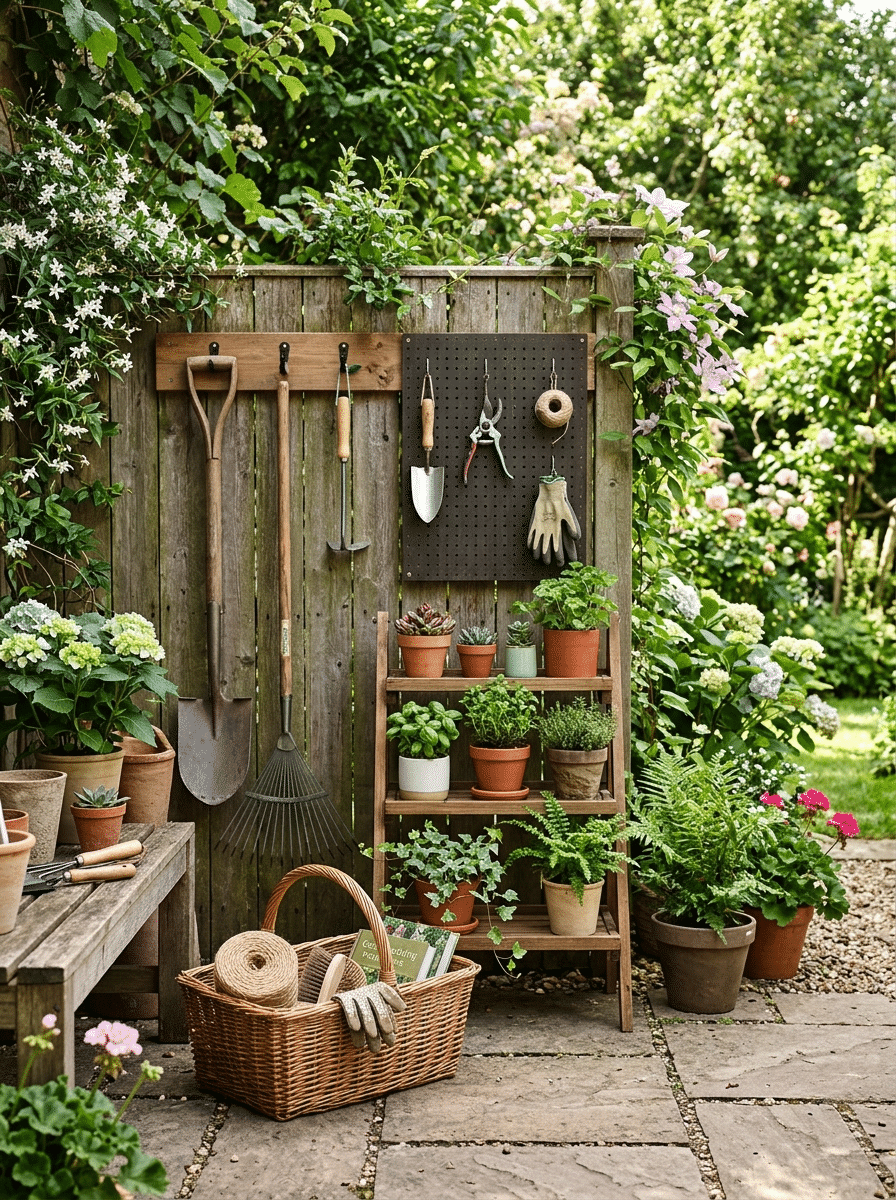
A good gardening rack can change how you garden. Instead of hunting for a trowel under a pile of pots, you reach for it in two seconds. Instead of leaning a rake against a wall where it falls over, you hang it up and walk away. Plants sit at the right height, tools stay dry, and your space looks calm instead of crowded.
Most gardeners start by buying more stuff. Smart gardeners start by giving everything a home. This guide shows you how to do that. You will see which type of rack fits your space, how to store long tools and small tools, how to display plants on shelves, and how to use a gardening basket, gardening buckets, a gardening holster, a rattan gardening tray, and a gardening harvest basket along with your rack. You will also get gift ideas, install tips, and common mistakes to avoid.
Quick answer: A gardening rack is a stand, shelf, or wall mounted holder that keeps garden items off the ground. The best setup uses a wall rack for long handled tools, a pegboard or caddy for small tools, and a tiered plant rack for pots. Keep everything clean, dry, and close to where you work.
In this guide, you will learn:
- The main types of gardening racks and how to pick one
- How to store long and short tools so they last longer
- Plant rack and shelf ideas for balconies, patios, and small yards
- How to use baskets, buckets, holsters, and trays with your rack
- Thoughtful gardening basket gift ideas
- How to install, use, and maintain your rack, plus mistakes to skip
What Is a Gardening Rack and Which Type Do You Need?
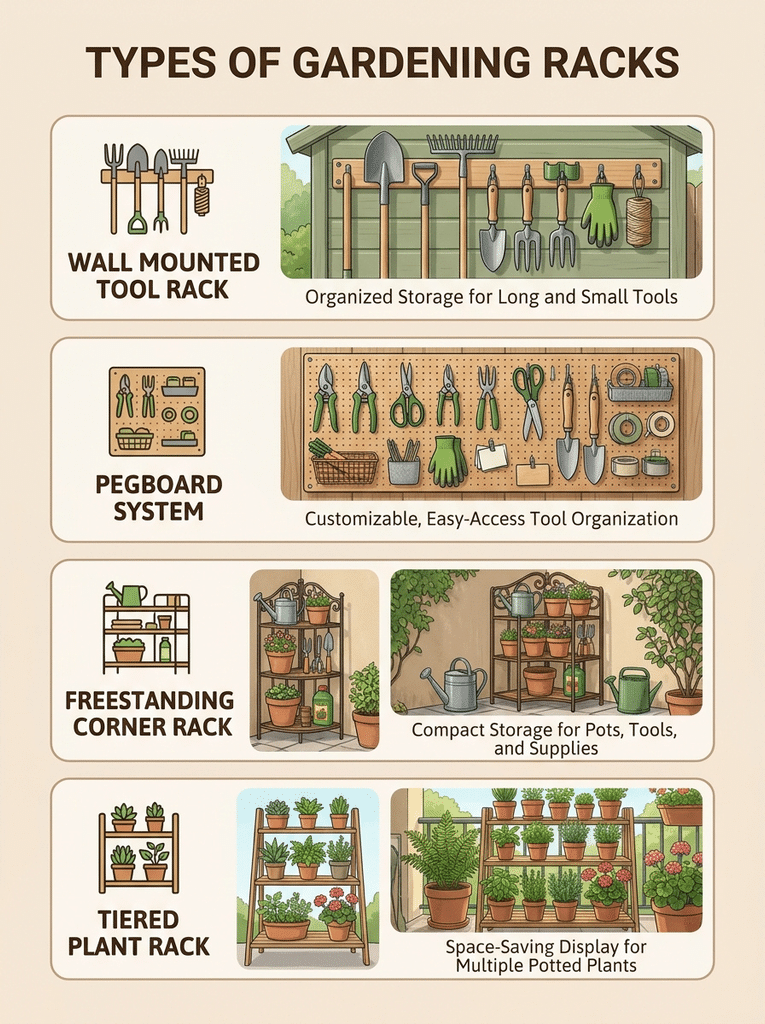
The words “gardening rack” cover three jobs, and it helps to know which one you need.
1. A tool rack. This holds spades, rakes, hoes, brooms, and shears. It can be a wall rack, a rail with hooks, a corner stand, or a rolling tower.
2. A plant rack. This is a shelf, ladder, or tiered stand that holds pots. It lifts plants off the floor, gives them light, and turns a small space into a display.
3. A supply rack. This is a wire or wood shelf for potting mix, spare pots, sprayers, labels, and gloves.
Many gardens need all three. A small balcony may need only a plant rack and one hanging basket for tools. A garage may need a long tool rack and a supply shelf. Start by looking at what is piled on your floor right now. That pile tells you which rack to buy first.
Why Racks Beat Piles
A rack does more than save space. It protects your tools and plants in real ways.
- Tools last longer. Tools left outside or on a damp floor can pick up moisture from rain, dew, and wet grass. That leads to rust. Hanging them keeps the metal dry.
- Blades stay sharp. Leaning a spade on concrete can dull the edge. A rack keeps sharp edges free in the air.
- You work faster. A tool with a fixed home is easy to find. Many organized gardeners say this one habit saves the most time.
- Plants get better light and air. Raised pots drain better, get more sun, and are easier to check for pests.
- Your space feels bigger. Vertical storage frees the floor for walking, cleaning, and working.
Gardening Rack Ideas for Long Tools and Hand Tools
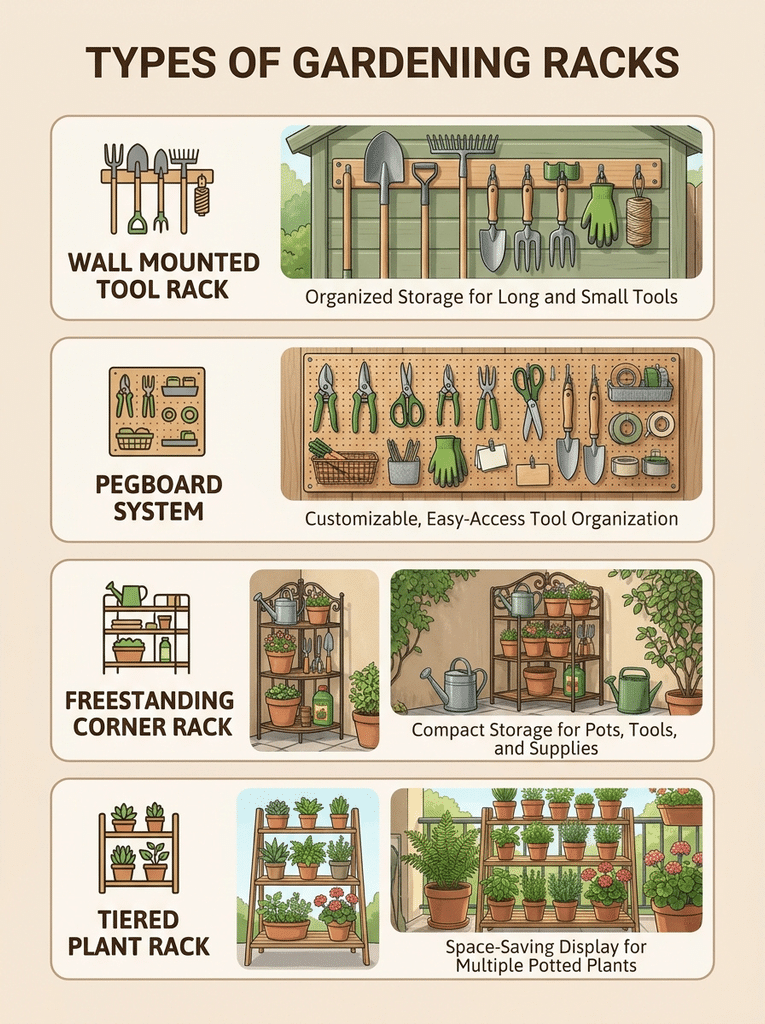
The first rule of tool storage is simple: sort long tools and short tools separately. Long tools go on a rack, rail, or tower, while short tools belong on a pegboard or in a caddy. You can even explore outdoor pallet projects and backyard ideas to create affordable, DIY storage solutions. Count how many tools you own, and that will help you decide how big your gardening rack needs to be.
Wall Rack for Long Handled Tools
This is the classic choice. A wall rack is usually a board or pair of boards that screw into wall studs and hold tools by the handle. A 36 inch rack often holds about six to seven long tools. Look for a rack with a clear weight rating, and make sure it is mounted into studs, not just drywall.
Rail and Hook System
A rail is a flexible version of a rack. The hooks slide along the track, so you can change the layout as your collection grows. This is a smart pick if the wall also has to hold bikes, ladders, or a hose. Check the weight limit for each hook, because locking hooks often hold more than basic ones.
Heavy Duty Steel Rack
If you store heavy items like leaf blowers, hedge trimmers, or big forks, a steel rack with coated hooks is a stronger option. Choose one with a rust resistant finish if it will live in a carport or covered porch.
Pegboard for Hand Tools
A pegboard keeps small tools visible. Hang your trowel, hand rake, pruners, twine, and gloves where you can see them at a glance. Try the outline trick: trace each tool on the board with a marker or paint. When a tool is missing, the empty outline shows you right away.
Corner Rack for Small Spaces
If you have no free wall, use a corner. A freestanding corner rack has slots for shovels and rakes and small hooks for hand tools. It needs no drilling, so it works in rentals and on porches.
Rolling Tool Tower
If you have more tools than wall space, a rolling tower on lockable wheels holds a big collection. You can roll it to the door before a big job and lock the wheels when it is back in place.
Vertical Storage Locker
With no shed or garage, a tall resin cabinet outdoors protects long tools from the weather and can be locked. Measure your longest handle against the door opening, not the outside height.
Simple DIY Rack Ideas
You do not need to buy a rack to get started.
- A 2 by 4 board with lag screw hooks. Screw it to the wall studs and add hooks. This is the simplest wall rack there is.
- A tall utility bin. Use it like a giant pencil holder for long tools, with handles down.
- A bucket of oiled sand. Fill a bucket with sand and a little light oil, and push trowels and small tools into it after use. It cleans and protects them at the same time.
- Bright tape on handles. A colorful wrap makes tools easy to spot on the lawn or in a flower bed.
Clean Before You Hang
A rack only helps if tools go on it clean. Wipe off soil and plant bits, because dirty tools can carry plant diseases from one bed to the next. Dry metal tools fully before hanging them, and wipe the blades with a drop of light oil now and then.
Plant Rack and Shelf Ideas for Pots, Balconies, and Small Spaces
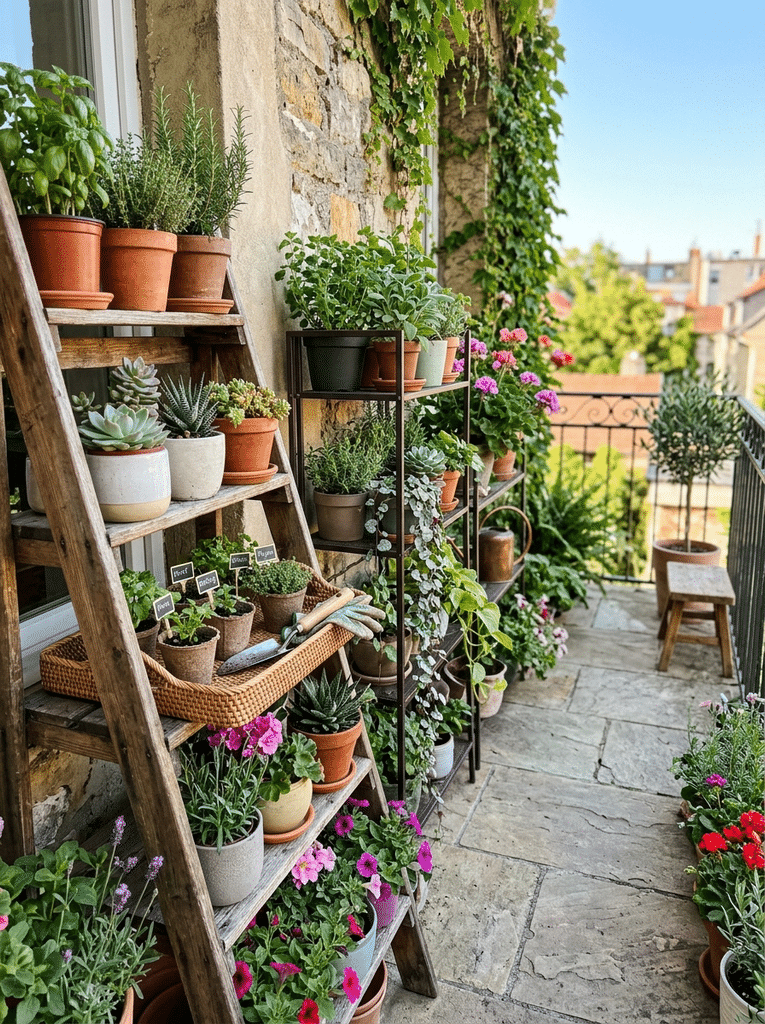
A plant rack lets you grow more in less space. Garden designers call this trend “shelved gardens.” You stack and arrange pots like books on a shelf, so the pots and the plants both become part of the display. It is like a vertical garden, but easier, because you can move things around any time. There are no built in walls to build, and no worry about moisture inside a wall.
Ideas to Try
- Tiered plant stands: These multi level stands were popular years ago, and they are back in fresh styles. They are great for herbs, succulents, and small flowers.
- Plant ladders: Lean a ladder shelf against a wall and set a pot on each step. It is both decor and storage.
- Floating shelves: Wall shelves hold small pots without touching the floor. Glass shelves with built in lights look modern and work well for succulents.
- Industrial pipe racks: Metal pipe stands are sturdy and can hold large pots.
- Geometric metal stands: Triangle or hexagon frames suit modern spaces and hold small to medium plants.
- Pallet racks: A wooden pallet stood on its side makes a budget friendly, rustic rack for pots.
- Found shelves: A step ladder, stacked bricks, and old wooden fruit crates can become shelves with lots of charm.
- Macrame hangers: Hanging planters add height without using floor space, and they show off trailing plants.
- Corner stands: A corner rack turns a dead spot into a green feature.
- Multi pot holders: Round or stepped holders create a full centerpiece in a small footprint.
Use a Rattan Gardening Tray
A rattan gardening tray is a flat, woven tray that sits on a shelf or table. It holds small pots, seedlings, or a set of herbs in one neat group. It also makes a nice potting station for repotting without spilling soil everywhere. Rattan looks warm and natural, but it is not waterproof. Put a plastic liner or saucers inside so water does not leak into the weave, and keep it out of constant rain.
Plant Rack Rules for Healthy Plants
A pretty rack is not enough. Plants need the right setup too.
- Group by needs. Put sun lovers together and shade lovers together. Keep thirsty plants apart from drought tolerant ones. This makes watering much easier.
- Mind the light. Top shelves get the most light. Lower shelves get less. Rotate pots every few weeks, or add a grow light for dim spots.
- Protect your floor. Use saucers, trays, or waterproof mats under pots so water does not drip onto lower shelves.
- Check the weight. A large pot with wet soil can weigh 20 pounds or more. Check the weight rating of each shelf, and put the heaviest pots on the lowest level.
- Keep heavy items low and away from edges. On a high balcony, wind can knock over light stands. Place heavy planters safely away from the railing. If you garden on a roof or terrace, check what the surface can safely hold and keep drains clear.
- Leave walking space. Do not block drain outlets or paths. You need room to water and clean.
Racks With Grow Lights
If your home has little sun, a rack with built in grow lights can solve it. A good one has adjustable shelves, strong frames (some shelves hold over 100 pounds each), lockable wheels, and waterproof mats with drainage holes. Be aware that some basic kits have no timer or dimmer, so you may need to add a plug in timer. These racks are best for seedlings, herbs, succulents, and small indoor plants.
Baskets, Buckets, Holsters, and Trays That Work With Your Rack
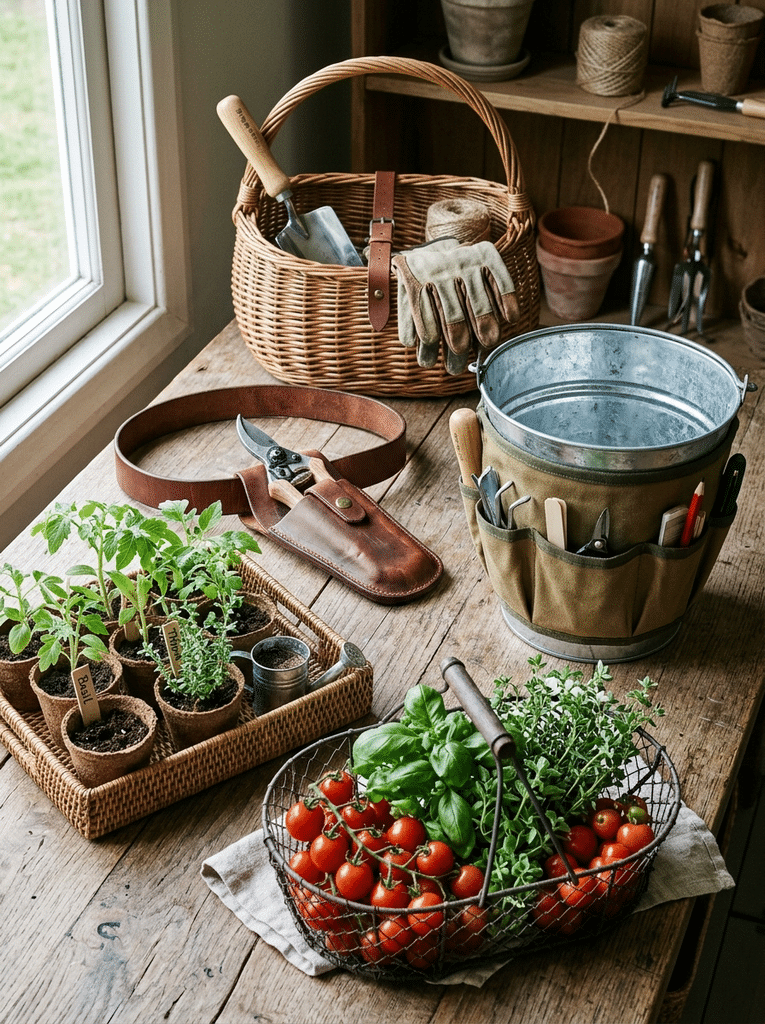
A rack stores your gear. These carry items move it. Together they make a full system, where tools live on the rack and travel in a basket, bucket, or holster.
Gardening Basket
A gardening basket is the all round carrier. Fill it with gloves, a trowel, twine, plant labels, and snips, and carry it from bed to bed in one trip. Choose one with a sturdy handle and a flat base, so it stands up on its own. Hang it from a hook on your rack when it is not in use, and you will never lose the kit. A lined basket also keeps small tools from falling through the weave.
Gardening Buckets
Gardening buckets are cheap, tough, and useful in many ways.
- Tool caddy: A canvas wrap with pockets slips over a standard five gallon bucket. The pockets hold small tools, and the middle holds weeds, clippings, or soil.
- Oiled sand bucket: As noted above, this cleans and protects trowels.
- Water and feed carrier: Keep a bucket for watering cans and plant food.
- Harvest helper: A clean bucket works for heavy crops such as potatoes or carrots.
Use two buckets if you can, one for tools and one for waste. Store them upside down or hung from a hook, so they do not fill with rainwater.
Gardening Holster
A gardening holster is a belt or a pouch worn at the hip, like a tool belt. It holds pruners, snips, a small knife, string, and a marker. Your hands stay free, and you do not need to bend down to pick up a tool. It is a great choice for pruning, deadheading, and harvesting, when you move quickly from plant to plant. Look for a comfortable belt, a deep pouch for pruners, and a sheath that covers the blades. When the day is done, hang the holster on a rack hook so it stays dry and ready.
Gardening Harvest Basket
A gardening harvest basket is built for picking produce. Wire or open weave styles let dirt fall away and let you rinse fresh vegetables right in the basket. A shallow, wide basket protects soft fruit like tomatoes and berries from being crushed. Pick a handle that is comfortable to carry when the basket is full. After harvest, let the basket dry in the open air, and store it on a hook so air can circulate.
Rattan Gardening Tray
As covered above, a rattan gardening tray is great for seedlings, potted herbs, and repotting. Keep it dry between uses, and wipe it down so mold does not form.
Bag and Tote Options
If you work several beds at once, a tool bag with many pockets that stands up on its own is a good alternative to a basket. It is lighter, and it folds flat for storage.
Gardening Basket Gift Ideas for Plant Lovers
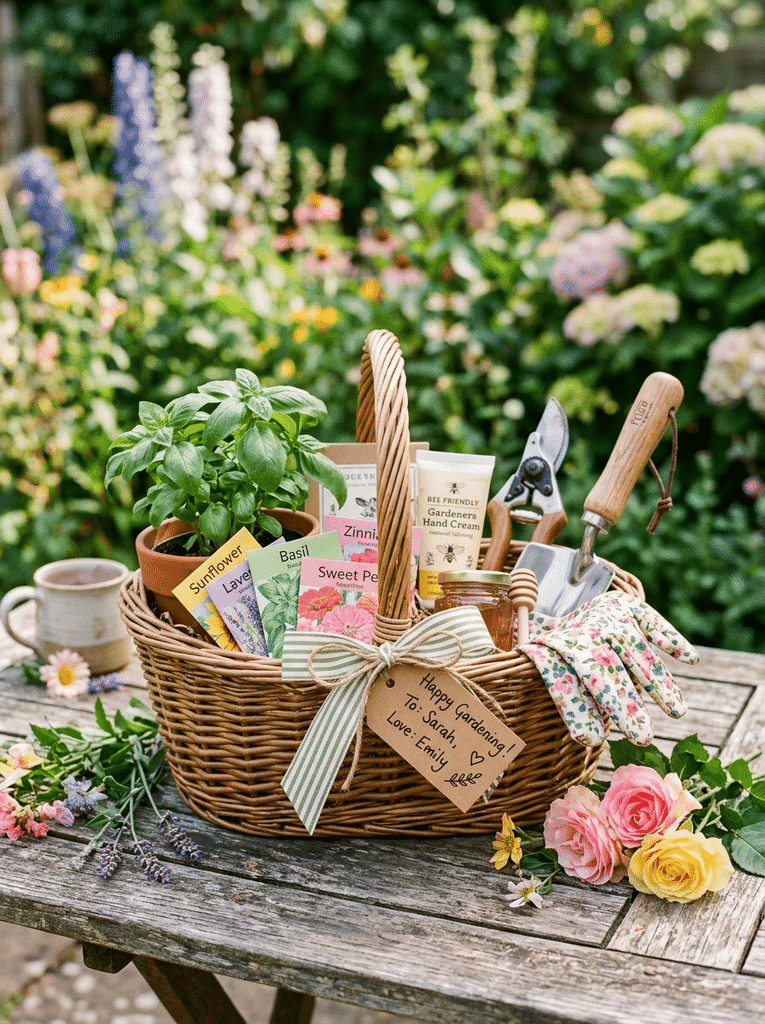
A gardening basket gift is one of the easiest presents to get right. It looks lovely, it is useful, and you can fit it to any budget. Here is how to build one.
Start with the basket. Choose a sturdy woven or wire basket the person will keep using, because it becomes part of the gift.
Start with the essentials.
- A good pair of gloves
- A hand trowel or small fork
- Pruners or snips
- Twine and plant labels
Something new to grow.
- Seed packets for herbs, flowers, or vegetables
- A small potted herb such as basil or mint
- A packet of bulbs in the right season
Add comfort and care.
- A rich hand cream
- A kneeling pad
- A small watering can or mister
Add a personal touch.
- A handwritten tag with a growing tip
- A wooden plant marker
- A small decorative rattan tray to hold seedlings
Gift ideas by budget:
- Low: A basket, gloves, seed packets, and a plant label set
- Medium: A basket, a good trowel and pruners, a potted herb, and a hand cream
- Higher: A basket, a gardening holster, a bucket caddy, tools, and a small wall rack to hang everything
A compact wall rack or a tiered plant stand also makes a thoughtful gift for a new gardener who has more plants than space.
How to Choose, Install, and Maintain Your Gardening Rack
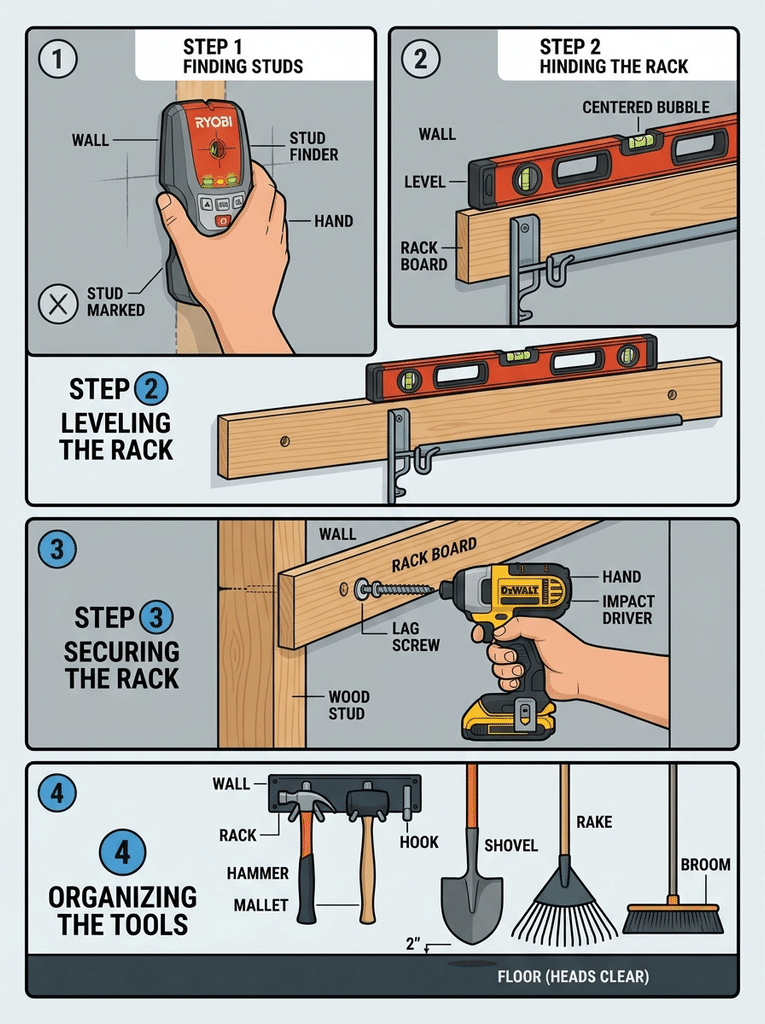
Now let’s put it all together. Here is how to pick the right rack and keep it working for years.
How to Choose in Five Steps
- Count your tools. Count long ones and short ones separately. This tells you the size of the rack you need.
- Check the wall. Find the studs. A stud mounted rack is the strongest. If the wall is block, siding, or a rental where you cannot drill, choose a freestanding corner rack, a rolling tower, or a wire shelf.
- Decide wet or dry. In a garage or shed, almost any rack works. Under a carport or on a covered porch, pick one with a rust resistant finish. In an open yard, only a closed cabinet will keep the rain off.
- Pick the material. Birch plywood and solid wood look warm and are strong. Powder coated steel is tough and rust resistant. Plastic and resin resist water. Wire shelves are light and let air through.
- Think about growth. Buy a little bigger than you need today. Gardeners almost always add more tools and pots.
How to Install a Wall Rack
- Use a stud finder to mark the studs. They are often about 16 inches apart.
- Hold the rack against the wall and mark the screw holes. Use a level so it hangs straight.
- Drill small pilot holes, then drive the screws into the studs.
- Hang a long tool and check the height. The tool head should clear the floor by a few inches, and the handle should be easy to reach.
- Give the rack a firm tug to test it before you load it.
Keep a Simple Routine
Good habits keep a rack useful. Here is an easy schedule.
- After each use: Wipe tools, dry them, and put them back in their spot.
- Weekly: Check pots for pests, remove dead leaves, and look for blocked drainage holes.
- Monthly: Check the rack screws and hooks, wipe down shelves, and rotate plants for even light.
- Each season: Sharpen blades, oil metal parts, and sort out tools you no longer use.
Also check plants when you are on your way past, not only at watering time. A short look for yellow leaves, pests, or dry soil catches problems early.
Common Mistakes to Avoid
- Leaving tools outside. Rain, dew, and wet grass cause rust.
- Leaning tools on concrete. Pavement can dull blades and hold moisture.
- Putting tools away dirty or wet. This is a fast road to rust and spreading plant disease.
- Hanging only by the head. Hang by the handle where possible, so sharp edges are not left exposed.
- Picking a damp, airless spot. Larger tools do best hung in a dry, airy place.
- Overloading shelves. Always check the weight limit.
- Blocking paths or drains. Keep walkways and drains clear.
- Too much clutter. A rack works best when you remove tools you do not use.
Frequently Asked Questions
What is the best gardening rack for long handled tools?
A stud mounted wall rack is usually best for long handled tools. It holds shovels, rakes, and hoes off the floor, protects blades, and takes up very little space. If you cannot drill into your wall, use a freestanding corner rack or a rolling tool tower instead.
How do I organize garden tools in a small space?
Use vertical space and corners. Hang long tools on a narrow wall rack or corner stand, put small tools on a pegboard or in a gardening bucket caddy, and carry the daily kit in a gardening basket. A rolling tower can move out of the way when you are not using it.
What is a gardening holster used for?
A gardening holster is a belt or hip pouch that holds small tools like pruners, snips, and twine. It keeps your hands free and your tools close, which makes pruning, deadheading, and harvesting faster. Hang it on a rack hook when you are done.
Can I use a rattan gardening tray outdoors?
Yes, but protect it. Rattan is a natural material and is not waterproof. Line the tray or use saucers inside it, keep it under cover from heavy rain, and let it dry fully so it does not grow mold. It works best on a covered patio, porch, or indoors.
What should go in a gardening basket gift?
A good gardening basket gift includes a sturdy basket, gloves, a hand trowel, pruners, seed packets, and a small potted herb. Add a hand cream, a kneeling pad, and a handwritten tag for a personal touch. A small rack or plant stand is a nice upgrade.
Conclusion
A gardening rack is a small change with a big payoff. It protects your tools, lifts your plants, and makes every garden task a little easier. If you are following a copper for gardening guide, keep your copper supplies organized alongside your everyday tools. You do not need a perfect shed or a big budget. Start with the pile that bothers you most, add one rack, and give every item a home.