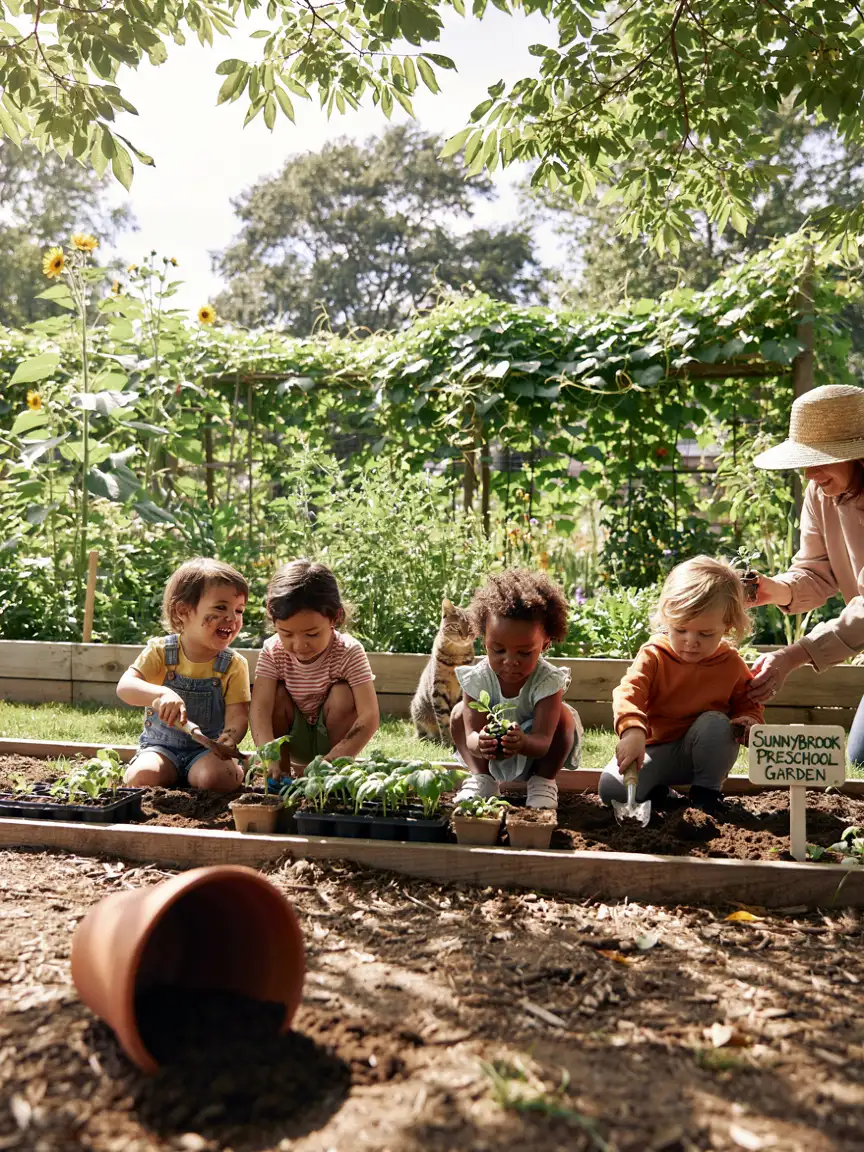
Getting little hands into the dirt does more than keep them busy on a sunny afternoon. Gardening for kids builds patience, curiosity, and a genuine love of nature that can last a lifetime. If you are a parent, a preschool teacher, or a Brownie troop leader looking for a full gardening theme preschool families and classrooms will actually enjoy, you are in the right place.
In this guide, you will find hands on preschool gardening activities, sensory bin ideas, printable worksheets, bingo games, craft projects, and even a breakdown of the Brownie gardening badge requirements. We will also walk through the Creative Curriculum gardening study at a glance so teachers using that framework know exactly what to cover. By the end, you will have everything you need to plan a gardening unit that is educational, engaging, and easy to put together, even with a small budget and limited outdoor space.
Why Gardening Is Such a Powerful Learning Tool for Young Children
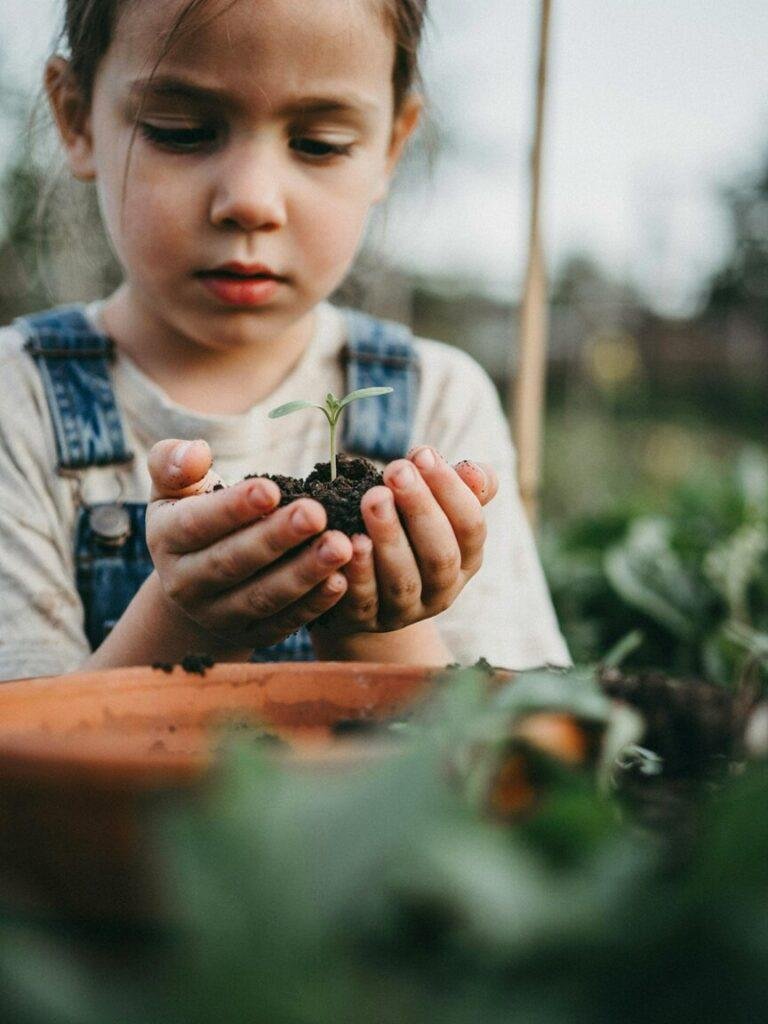
Preschoolers learn best through their senses and through repetition, and gardening naturally checks both boxes. When a child plants a seed, waters it, and watches it change over days and weeks, they are absorbing lessons in science, responsibility, and cause and effect without ever sitting through a lecture. Simple touches like a colorful gardening flag can make the space feel more inviting, while gift ideas for gardeners can introduce children to fun, age-appropriate tools and accessories that make gardening even more engaging.
Here are a few specific developmental benefits that make gardening kids activities so valuable in early childhood settings.
Fine motor skill development. Scooping soil, pressing seeds into the ground, and using small watering cans strengthens the same hand muscles children need for writing and cutting.
Early science concepts. Children begin to grasp ideas like growth, decay, weather, and the needs of living things simply by observing a garden over time.
Emotional regulation and patience. Plants do not grow overnight, and waiting for a seed to sprout teaches young children a gentle lesson in delayed gratification.
Language and vocabulary growth. Words like sprout, root, soil, and pollinator become part of a child’s everyday vocabulary through repeated, meaningful use.
Healthy eating habits. Kids who grow their own vegetables are far more likely to want to taste them, which makes gardening a sneaky but effective tool for encouraging healthy food choices.
Setting Up a Gardening Theme Preschool Classroom or Home Corner

Before diving into individual activities, it helps to set the stage. A dedicated gardening theme preschool corner, whether in a classroom or a playroom at home, gives children a visual and physical space to connect with the topic all week long.
Choosing a Simple Layout
You do not need a large outdoor plot to run a successful gardening unit. A few clear plastic bins, a sunny windowsill, or even a single raised bed outside the classroom door is enough. What matters most is that children can visit the space daily to check on progress, water plants, and talk about what they notice.
Building a Gardening Vocabulary Wall
Print or draw simple images of a seed, sprout, root, stem, leaf, flower, and fruit, then label each one and post them at child height. Referring back to this wall during activities helps reinforce the vocabulary naturally, which supports both the science content and early literacy goals.
Gathering Low Cost Supplies
Most preschool gardening supplies can be sourced cheaply or even for free. Egg cartons and yogurt cups work well as seed starters, popsicle sticks make plant markers, and many local hardware stores donate leftover seed packets at the end of a planting season. This keeps the unit budget friendly while still giving children hands on materials to explore.
Hands On Gardening Activities for Preschoolers
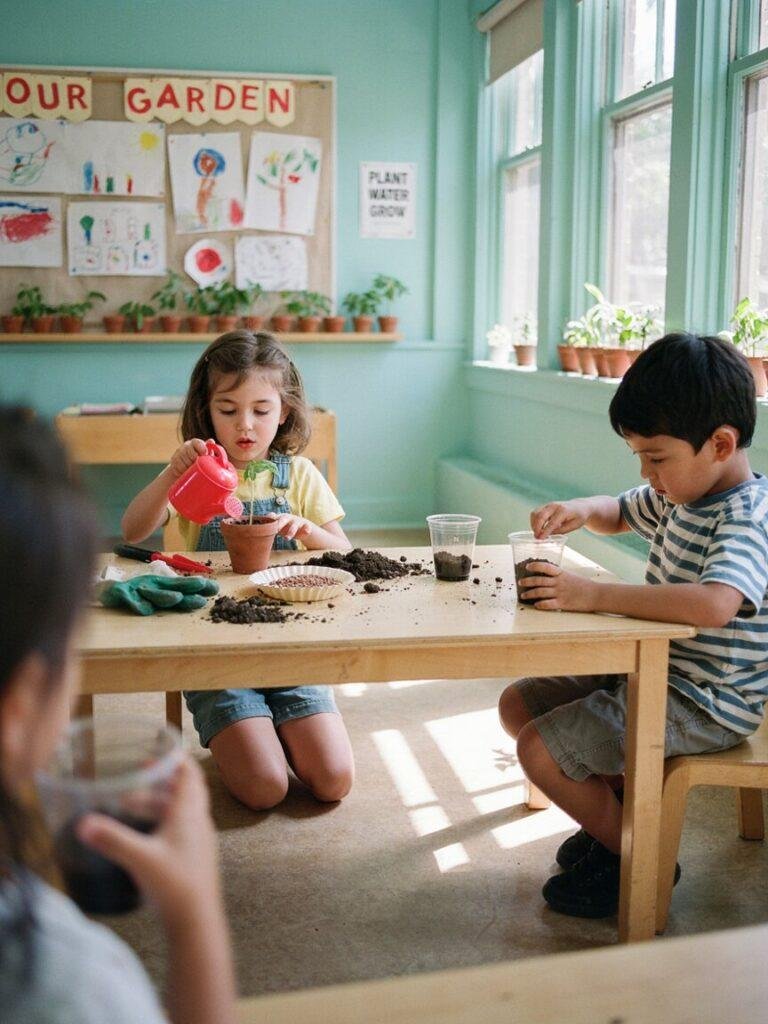
The heart of any gardening theme preschool unit is the activities themselves. Below are gardening preschool activities organized by type, so you can mix and match based on your group’s age, attention span, and available materials.
Planting and Growing Activities
Seed to Sprout Journals. Give each child a simple booklet with blank boxes for drawing what they see each day. This turns observation into an ongoing art and science project and works beautifully as one of your core gardening ideas for preschoolers.
Bean in a Bag. Place a damp paper towel and a few bean seeds inside a clear zip top bag, then tape it to a sunny window. Children can watch roots and shoots develop without any digging required, making it perfect for classrooms without outdoor access.
Herb Pots for the Windowsill. Basil, mint, and chives grow quickly and have a strong, pleasant scent that keeps young children engaged. Growing herbs also opens the door to a simple cooking activity once the plants mature.
Gardening Sensory Bin Ideas
A gardening sensory bin is one of the most requested preschool gardening activities because it invites open ended, hands on exploration.
Basic Soil and Seed Bin. Fill a large bin with potting soil, then add plastic bugs, small shovels, silk flowers, and a handful of large seeds like sunflower or pumpkin. Children can dig, plant, and bury as they please.
Garden Tool Discovery Bin. Combine dried beans or rice with miniature garden tools, small pots, and fake flowers. This variation keeps the mess level lower while still delivering the same sensory benefits.
Flower Petal Sorting Bin. Fill a shallow tray with real or silk flower petals in different colors and sizes, then add tweezers or tongs and small sorting cups. This version pairs sensory play with early math skills like sorting and counting.
Gardening Crafts for Preschoolers
Craft time gives children a chance to express what they are learning in a creative, low pressure way.
Paper Plate Sunflowers. Children glue yellow paper strips around the edge of a paper plate and add a brown circle in the center, then finish with a green paper stem.
Handprint Flower Garden. Paint each child’s hand and press it onto paper to create flower petals, then add a stem and leaves once dry. These make wonderful keepsakes for parents.
Recycled Bottle Planters. Cut the bottom off a plastic bottle, let children decorate the outside with paint or stickers, and use the finished planter to start their own seedling to take home.
Egg Carton Caterpillar Garden. Combine a gardening lesson with a bug lesson by having children plant seeds in an egg carton while decorating a paper caterpillar to sit beside it.
Gardening Bingo and Printable Worksheets
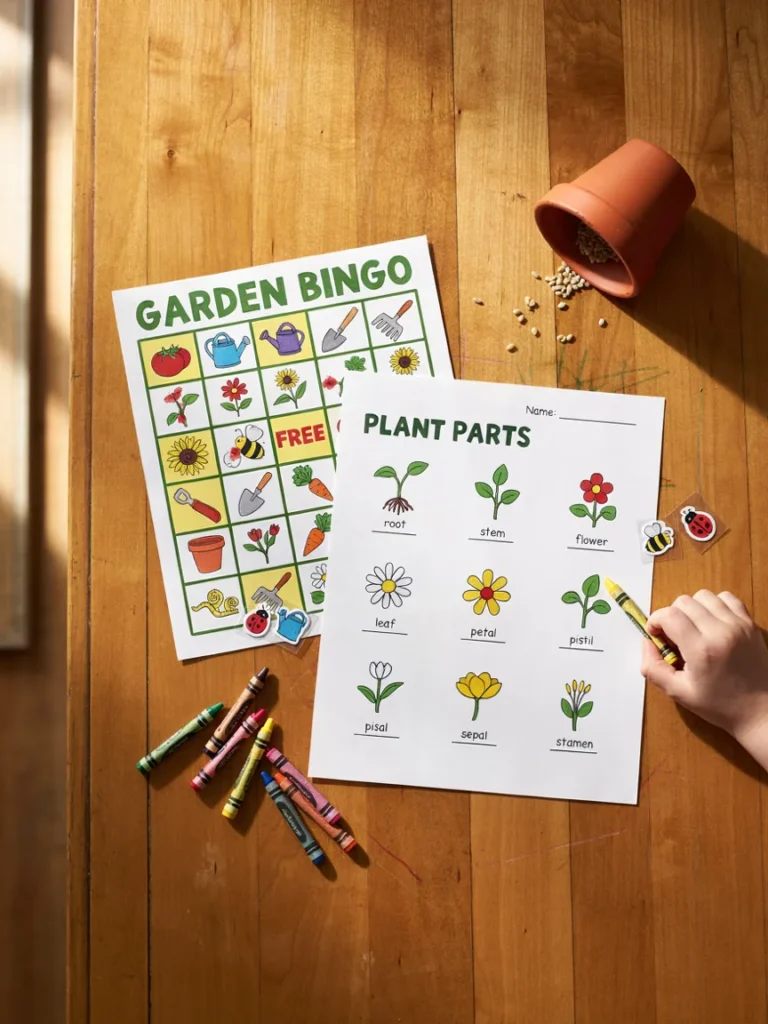
Games and printables give teachers an easy way to review vocabulary and reinforce concepts without needing extra prep time each day.
Gardening Bingo
A gardening bingo board can include simple images such as a watering can, sun, seed, worm, flower, and vegetable. As you read a description aloud, children mark the matching picture on their card. This works well as a whole group activity and doubles as informal vocabulary assessment, since you can quickly see which children recognize each term.
To make it easy to differentiate, prepare two versions: one with pictures only for younger children, and one with pictures paired with words for children who are starting to recognize letters and sounds.
Preschool Gardening Worksheets Printable Options
Printable gardening worksheets for preschoolers are especially useful for morning work, take home practice, or a quiet table activity during center time. A few formats that consistently work well include the following.
Parts of a Plant Labeling Sheet. A simple diagram of a flower with blank lines for children to trace or copy the words root, stem, leaf, and flower.
Growth Sequencing Cards. Four images showing a seed, sprout, growing plant, and full bloom that children cut out and glue in the correct order.
Counting Seeds Worksheet. A page with several flower pots, each needing a specific number of seed stickers or stamps added, which blends gardening with early number sense.
Matching Tools to Tasks. Pictures of garden tools on one side and tasks like watering or digging on the other, connected with a line or drawn arrow.
Keeping a folder of preschool gardening worksheets printable and ready to go means you always have a backup activity on hand, especially useful on days when weather keeps everyone indoors.
Creative Curriculum Gardening Study at a Glance
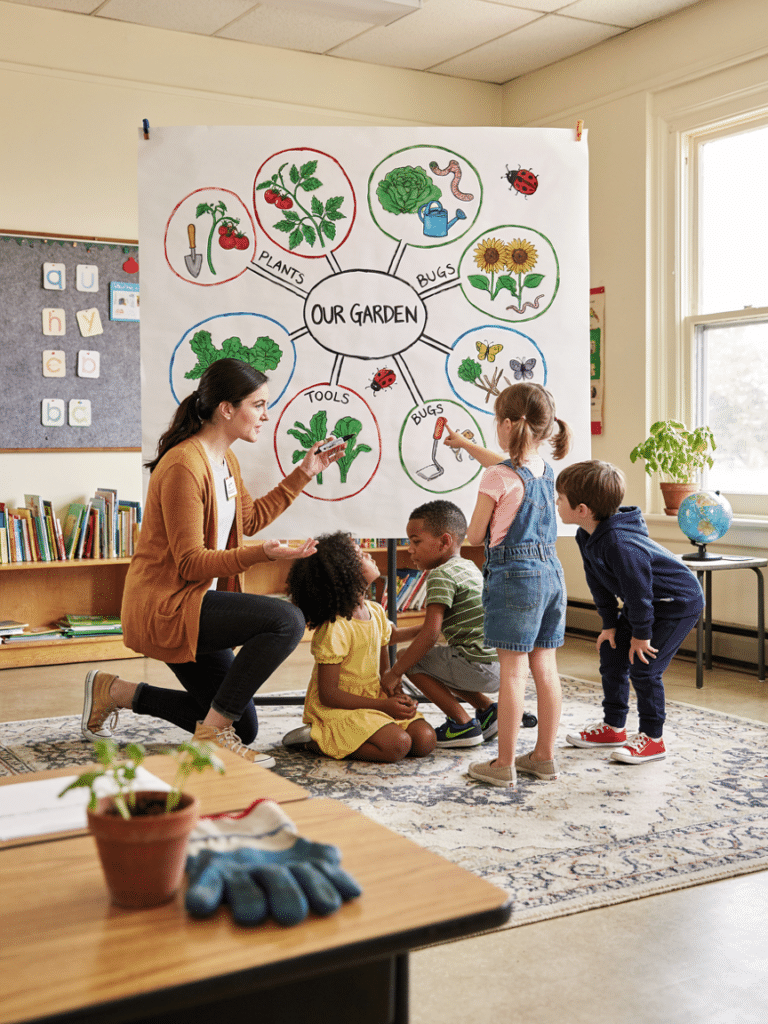
Many preschool programs use the Creative Curriculum framework, and a Creative Curriculum gardening study fits naturally into its investigation based approach. If your program follows this model, here is what a Creative Curriculum gardening study at a glance typically includes.
Topic Web Development. Teachers and children brainstorm together what they already know about gardens and what they want to find out, creating a visual web of subtopics such as tools, plants, insects, and weather.
Three Phase Investigation. The study usually moves through an introductory phase where children explore the general topic, a field work phase where they investigate real gardens or plants directly, and a culminating phase where they share what they learned, often through a class garden display or family event.
Content Learning Standards. The gardening study is mapped to specific objectives in areas like science, math, literacy, and social studies, ensuring the fun activities are also building measurable skills.
Family Engagement Component. Most Creative Curriculum studies include a way to involve families, such as sending home a simple planting kit or asking families to share their own gardening traditions with the class.
Using this structure helps teachers move beyond a single themed week and instead build a multi week gardening study that deepens as children’s questions and interests evolve.
Earning a Brownie Gardening Badge
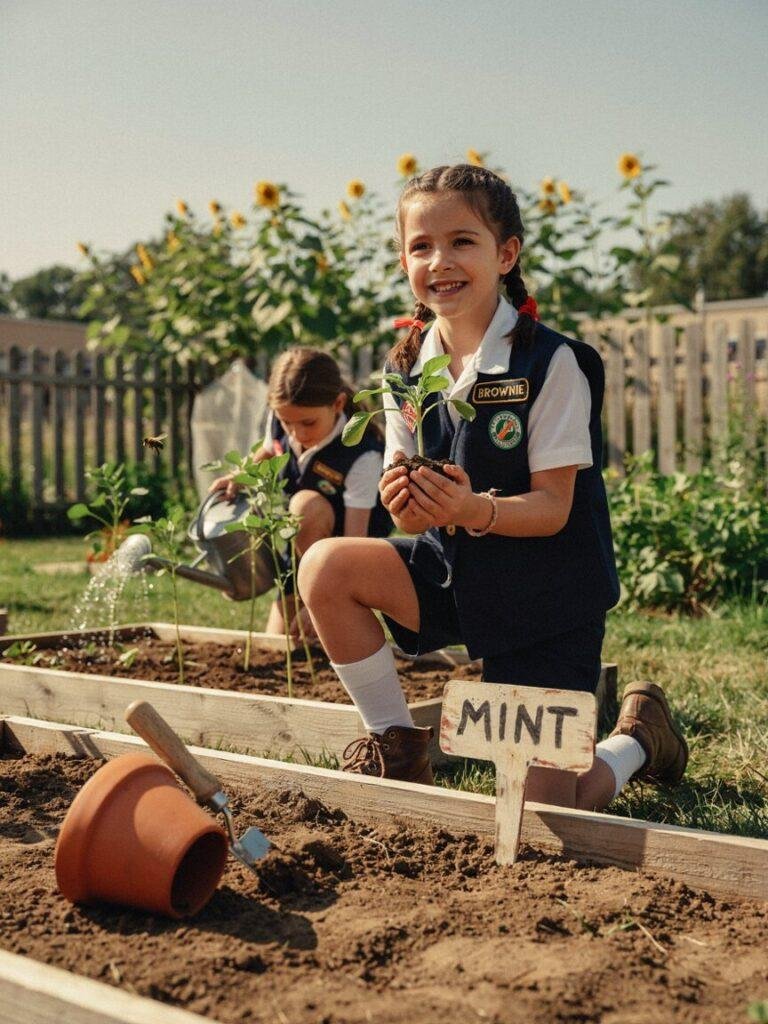
For older children in scouting programs, gardening can move from casual exploration into a structured achievement. Understanding the Brownie gardening badge requirements helps troop leaders plan meetings that satisfy the badge criteria while still feeling fun and hands on.
Generally, requirements for this badge and similar gardening merit badge programs ask children to do the following.
Learn what plants need to grow. Children typically discuss and demonstrate understanding of sunlight, water, soil, and air as essential plant needs.
Plant and care for something real. Most programs require girls to actually plant a seed or seedling and track its progress over several weeks, connecting directly back to the seed to sprout journal idea covered earlier.
Explore different types of gardens. This might include learning about vegetable gardens, flower gardens, herb gardens, or even container gardens for small spaces.
Understand the role of pollinators. Many badge requirements ask children to learn how bees, butterflies, and other pollinators support plant growth.
Share what they learned. Badge completion often involves showing or teaching a friend or family member something new about gardening, which reinforces the material while also building communication skills.
If you are leading a troop working toward this achievement, pairing the more formal Brownie gardening badge requirements with lighter activities like a gardening sensory bin or gardening bingo game keeps meetings balanced between structured learning and open play.
For programs working toward a broader gardening merit badge at an older age level, the same foundational activities apply, simply with more depth expected in journaling, plant identification, and independent care of a garden bed over a longer stretch of time.
Tips for Parents and Teachers Running a Gardening Unit
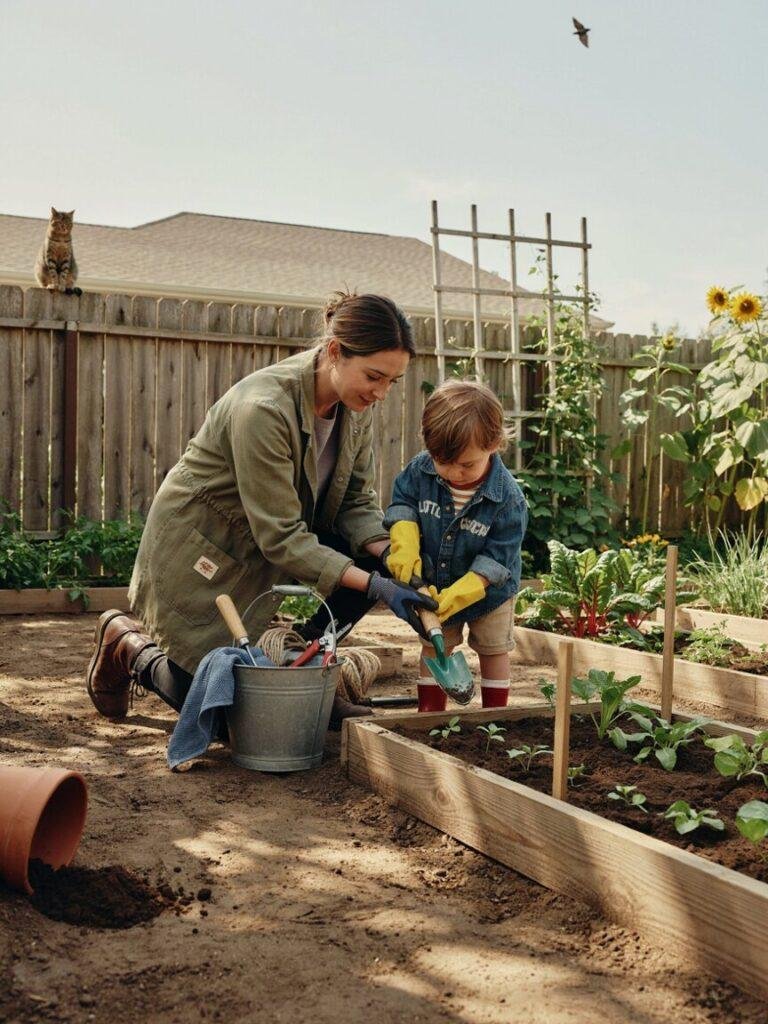
A few practical tips can make the difference between a smooth gardening unit and one that feels overwhelming.
Start small and build up. Begin with a single easy to grow plant like a bean or sunflower before adding more complex elements like an outdoor bed or multiple plant varieties.
Expect a slower pace than adults are used to. Preschoolers thrive with repetition, so revisiting the same plant or bin over several days is more valuable than moving quickly through new material.
Plan for mess. Soil, water, and small hands are a natural combination, so having towels, smocks, and an easy cleanup routine ready in advance saves stress in the moment.
Document the process. Photos of children planting, watering, and observing growth make wonderful additions to a classroom newsletter or a family memory book, and they help children see their own progress over time.
Connect gardening to mealtime. If your unit includes growing something edible, tie in a simple tasting activity once the plant is ready. This reinforces the full life cycle from seed to plate in a way children remember.
Frequently Asked Questions About Gardening for Kids
[Image instruction: A simple, friendly graphic style image showing a stack of question mark icons alongside small garden illustrations like a watering can, seed packet, and flower, suitable as a light visual break before the FAQ text.]
What age is best to start teaching kids about gardening? Most children can begin simple gardening activities as early as age two or three, especially sensory based tasks like digging in soil or watering plants. More structured planting and observation activities work well starting around age four.
What is the easiest plant for preschoolers to grow? Beans, sunflowers, and radishes are among the easiest options because they sprout quickly, often within a week, which keeps young children engaged and prevents them from losing interest before they see results.
How do I run a gardening unit without outdoor space? Windowsill herb pots, bean in a bag experiments, and indoor sensory bins allow a full gardening theme preschool unit to run entirely indoors, so a lack of outdoor space should never be a barrier.
What should be included in a gardening sensory bin for toddlers? A safe, toddler friendly gardening sensory bin should stick to large, non choking hazard items such as big seeds, silk flowers, chunky plastic tools, and soil or a soil substitute like dried coffee grounds, always with close supervision.
How does gardening connect to a Brownie or scouting badge? Gardening connects directly to badge requirements that ask children to plant and care for something living, learn about plant needs, and share their knowledge with others, making it one of the more naturally hands on badges to complete.
Conclusion
A well planned Gardening unit gives young children far more than a fun afternoon outside. Through hands on planting, sensory bins, crafts, printable worksheets, bingo games, and structured programs like the Creative Curriculum gardening study or a Brownie gardening badge, children build science knowledge, fine motor skills, patience, and a genuine curiosity about the natural world.
Whether you are a teacher building a full classroom unit or a parent looking for a single weekend activity, start with one simple idea from this guide, whether that is a bean in a bag or a paper plate sunflower craft, and let your child’s curiosity guide how far the gardening lesson grows from there.
Ready to bring gardening into your classroom or home this week? Pick one activity above, gather your supplies, and get those little hands into the soil. Your budding gardener will thank you.