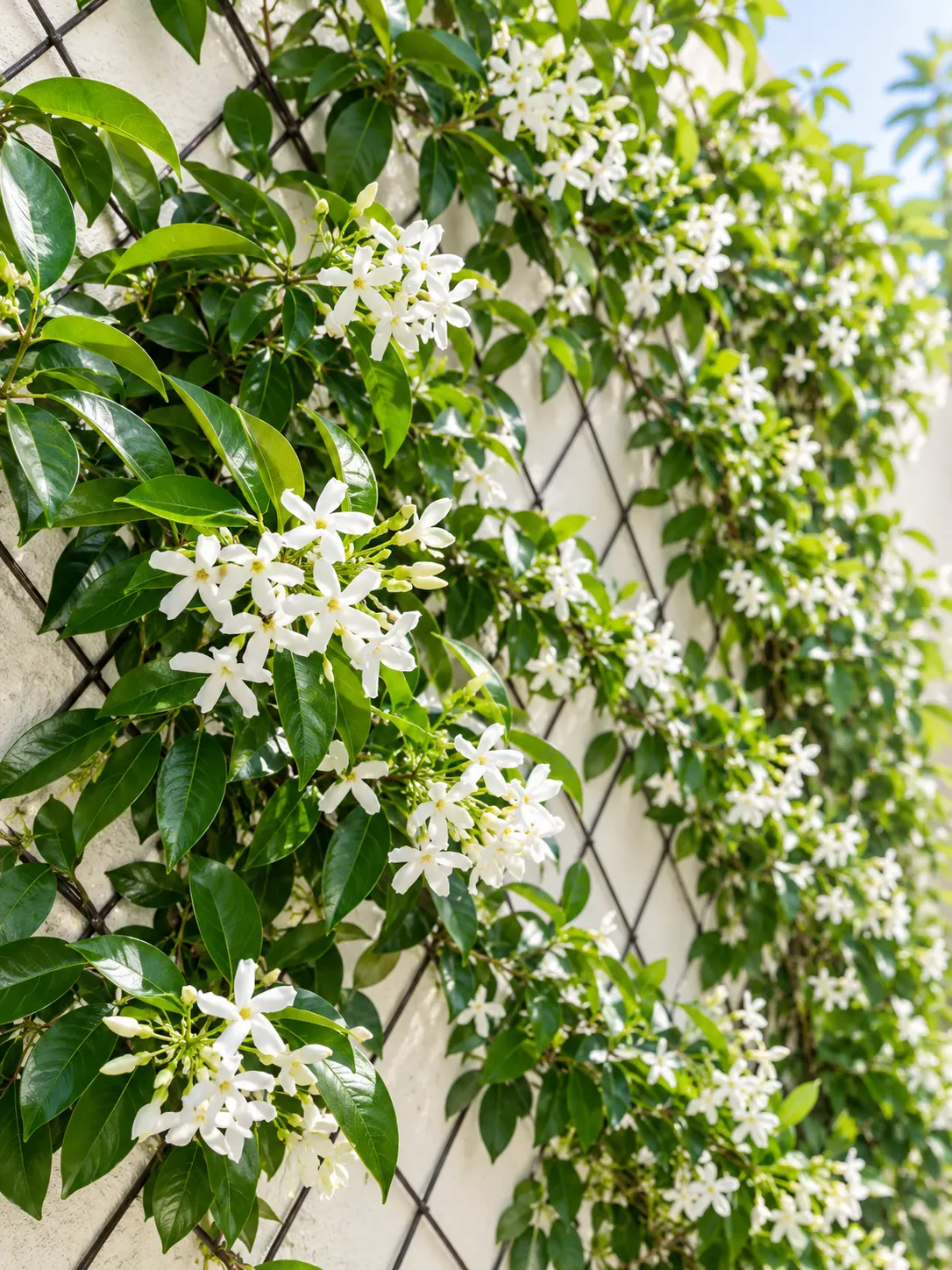
A star jasmine trellis can turn a bare fence or plain wall into a living curtain of glossy leaves and sweet-smelling white flowers. The plant is easy to like. It stays green all year, it smells wonderful in late spring, and it forgives most beginner mistakes. But there is one catch. Star jasmine will not climb a wall on its own, and it will not look neat without a little help from you.
This guide shows you how to plan, build, and train a star jasmine trellis that lasts. You will see trellis ideas for walls, fences, arches, and pots. You will learn how to choose the right support, how to tie and shape the vine, and how to care for it so it blooms well.
Every tip comes from a close read of four respected garden resources and was rewritten here in plain language, then filled in with details that many of them leave out.
The best star jasmine trellis is a strong, open support such as horizontal wires, a sturdy lattice panel, or a metal grid, fixed firmly to a wall or fence. Tie the young stems loosely, spread them sideways, and prune after the spring bloom.
Why Star Jasmine Needs a Trellis
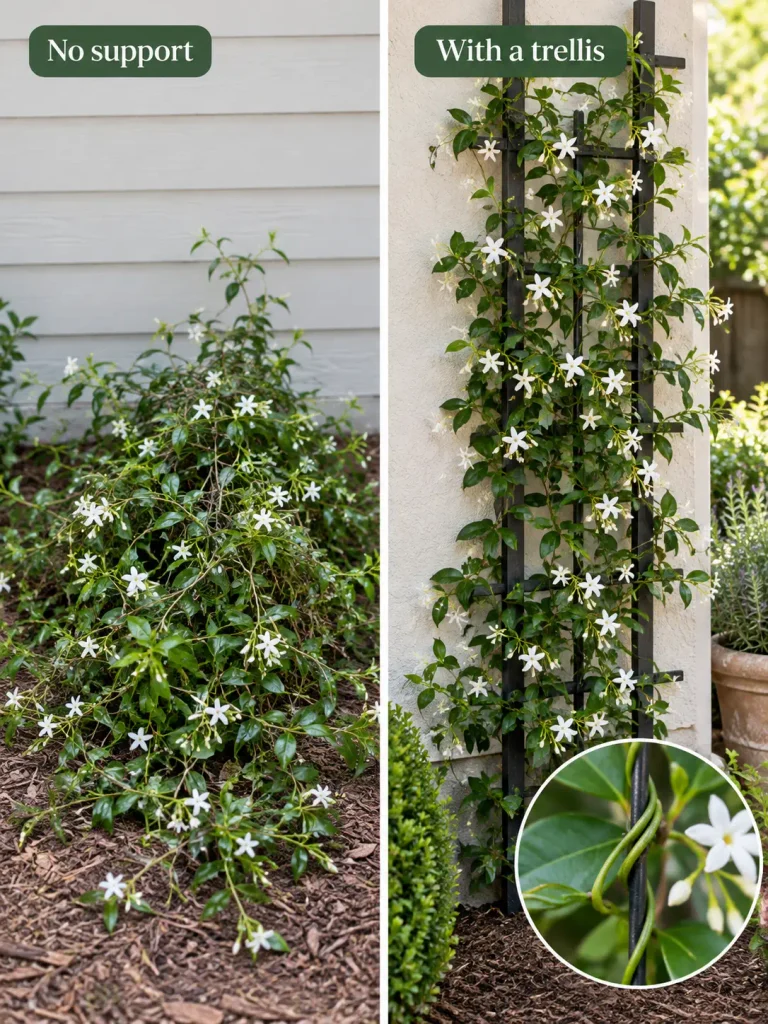
Star jasmine (Trachelospermum jasminoides) is a woody, twining vine. Twining means its stems wrap around things they can grab. Unlike ivy, it has no sticky pads or small roots to cling to a flat wall. Without support, the plant flops back on itself, forming a messy mound.
With a sturdy trellis or other suitable support, it can climb 20 to 25 feet tall, making it a beautiful choice for a landscape gardening guide focused on vertical greenery and fragrant garden features.
Star Jasmine Is Not a True Jasmine
Here is a fun fact that surprises many gardeners. Star jasmine is not a true jasmine. True jasmines belong to the Jasminum genus. Star jasmine belongs to the same plant family as oleander and plumeria. You may also see it sold as confederate jasmine, Chinese star jasmine, or southern jasmine. They all mean the same plant. Why does this matter? Because training advice written for true jasmine does not always fit star jasmine. Its stems get woodier with age, so early training makes a big difference.
What a Trellis Does for the Plant
A good trellis does more than hold the vine up. It spreads the stems so light reaches the leaves. It lets air move through the plant, which helps prevent pests. It also makes pruning easier, because you can see which stems matter and which ones are in the way. A well trained vine blooms more evenly and looks planned instead of wild.
Star Jasmine Trellis Ideas for Every Space
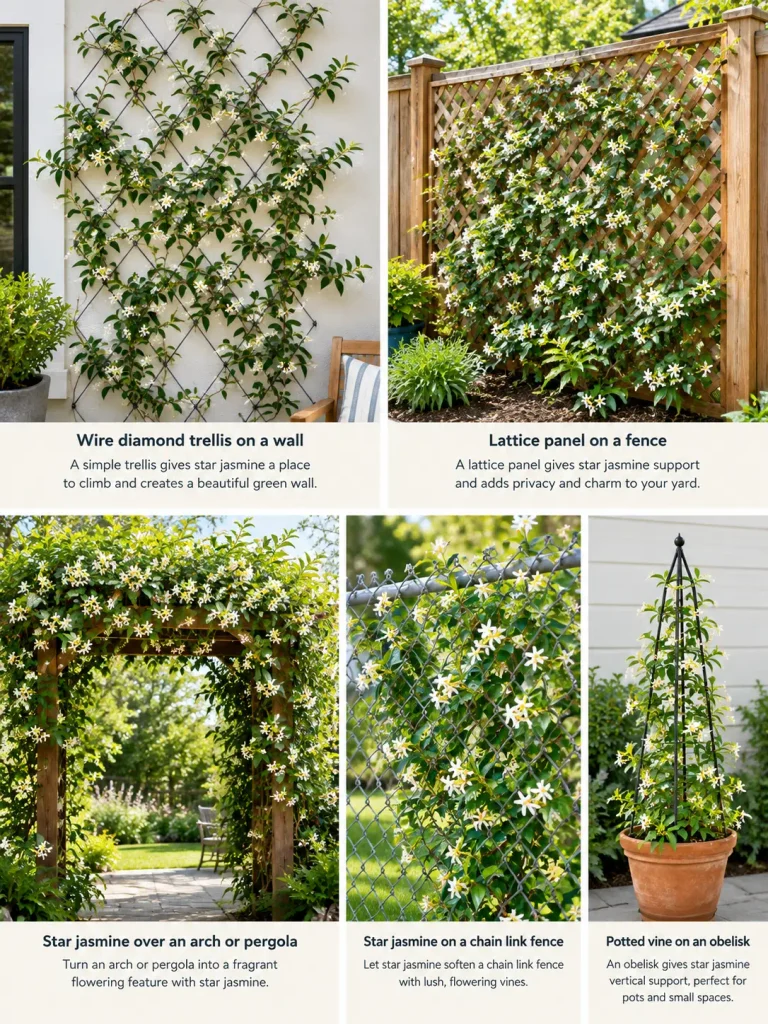
There is no single best design. The right star jasmine trellis idea depends on your wall, your budget, and how much time you want to spend. Here are the options that work well in real gardens.
Wire Diamond Wall Trellis
This is a simple and budget friendly choice. You fix screws into a wall and run strong green garden wire between them to make a diamond pattern. As the vine grows, it covers the wire, and the wire almost disappears.
One DIY gardener used this method on a stucco wall and watched it fill in over three years. The first summer had fewer flowers, but each year looked fuller. This style is great when you want a clean, modern look without a bulky frame.
Lattice Panel Trellis
A wood or vinyl lattice panel gives you many tie points and wide coverage. It suits fences, patio edges, and small side yards. Because the squares are close together, the vine can get crowded, so thin out stems every year.
Horizontal Wire System
Wires stretched in straight lines across a wall give you the most control. You can place each main stem exactly where you want it. Gardeners who care about long term shape often pick this system. It takes more setup, but it rewards you with an even spread of flowers.
Metal Grid or Welded Panel
Metal panels are strong and last a long time. They work well for big, vigorous plants. They can look stiff at first, but star jasmine hides them quickly.
Arbor, Arch, and Pergola
Star jasmine looks lovely over an arch or pergola. It takes patience, though. One homeowner trained the vine over a new garage pergola and said it would take a few more years to get the full look. Plan on regular pruning and gentle tying while it climbs. In return, you get a shady, fragrant spot to sit.
Chain Link or Wire Fence
This is the easiest option. A wire fence gives the stems plenty to twine through, so you need very little training. It can even hide a plain fence or a parking area behind it.
Obelisk, Fan, or Hoop for Pots
Small supports suit container plants. A fan or obelisk keeps the vine tidy and helps you control its height. Make sure the support is heavy enough, or anchored well enough, that the pot will not tip when the vine gets bigger.
Low Hedge or Ground Cover Style
Not every vine needs to climb. If you prune star jasmine to about 2 feet, it spreads sideways and makes a good ground cover. Some gardeners also use it as a low hedge, but a hedge needs pruning three or four times a year to keep stems out of paths and beds. Think about that workload before you choose it.
Best Trellis for Star Jasmine: How to Choose
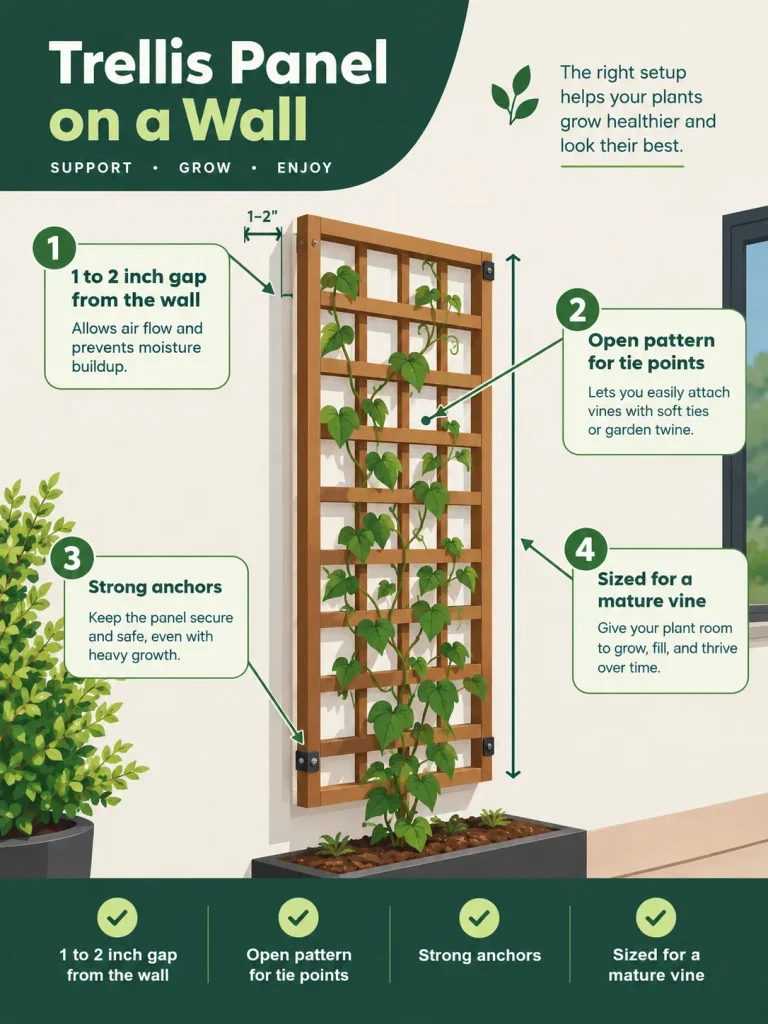
Picking the best trellis for star jasmine is mostly about strength, size, and spacing. Use this checklist before you buy or build.
- Plan for the plant you will have in three years. A young vine looks small and light. A mature one is heavy, especially after rain. Pick a support that can handle the full weight.
- Choose an open pattern. You want many places to tie stems, but also gaps so the plant is not crushed or crowded.
- Anchor it firmly. Use screws or anchors that match your wall. Stucco needs masonry screws. Brick, wood, and siding each need their own fasteners. A wobbly trellis becomes a problem the moment a storm hits.
- Pick a material that lasts outdoors. Powder coated metal, treated wood, and vinyl all hold up well. Untreated thin wood may rot before the vine is mature.
- Leave a small gap behind it. If you use a panel, mount it about an inch or two off the wall. This helps air flow and keeps stems from squeezing into cracks.
- Match the height to your goal. A tall wall needs a tall support. If the vine reaches the top of the trellis and has nowhere to go, it will wander into gutters and eaves.
A Word About Wood Siding
One gardener was asked if this works on wood siding. The honest answer is that it can, but you must watch it closely. Like all vines, star jasmine will push into cracks if you let it. Keep stems on the wire or trellis only, and prune any shoots that wander toward the siding. The same goes for eaves, where unchecked growth can cause damage over time.
Star Jasmine Trellis Design: A Simple DIY Wall Project
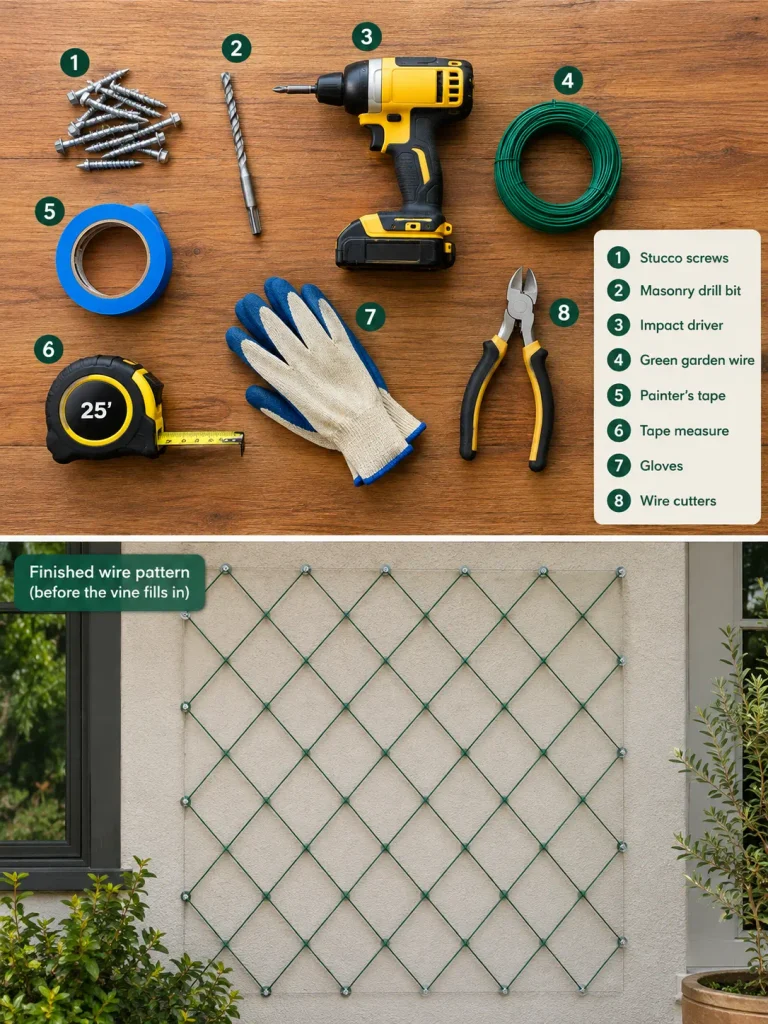
If you like to build things yourself, a wire trellis wall is one of the easiest projects you can do in a weekend. This is the same basic method used by home gardeners on stucco walls, and you can adjust it for other surfaces.
What You Need
- Screws that suit your wall type (stucco screws for stucco, or the right screws or anchors for brick, wood, or siding)
- A drill bit that matches your screws (a masonry bit for stucco or brick)
- A drill or an impact driver, which is faster and easier on masonry
- Heavy duty green garden wire
- Painter’s tape and a tape measure
- Gloves and wire cutters
Step by Step
- Plan the pattern. Use tape to mark where each screw will go. Space them about 24 inches apart or a bit more. The plant will cover the gaps as it fills in, so wider spacing is fine.
- Drill pilot holes. Use the right bit for your wall. An impact driver works best, but a regular drill will do the job if you are patient.
- Set the screws. Leave the heads sticking out just enough to wrap wire around them.
- Run the wire. Wrap the wire around each screw a few times so it stays tight, then stretch it to the next screw. Build a diamond pattern or simple straight lines.
- Check the tension. Press the wire with your hand. It should feel firm but not so tight that it bows the screws.
- Add the plant. If you already have a vine growing, guide its stems onto the wire. If you are starting fresh, plant a young vine at the base and lean it toward the wire.
A Real Garden Lesson
The gardener behind this project first tried growing a potted jasmine up the second wall. It did not survive. The next year, she trained a vine that was already growing in the ground over to the second wall, and that worked well. The lesson is simple. A vine rooted in the ground has more energy and water to feed fast growth than a small pot does. If you have a choice, plant in the ground for a big wall.
How to Train Star Jasmine on a Trellis
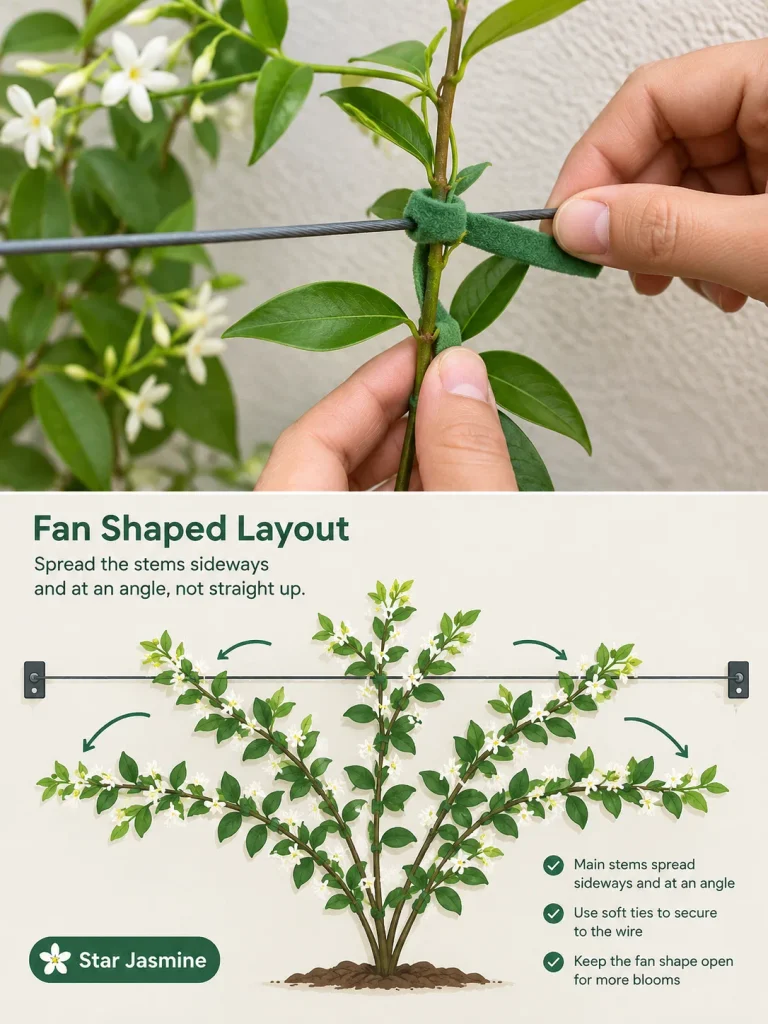
Training is where most of the magic happens. The steps below work for walls, fences, and pergolas. Start early. Young stems bend easily. Old woody stems do not.
Start With Smart Planting
Plant in spring or early fall, when days are warm and nights are cool. Dig a hole as deep as the root ball and a bit wider. Mix in plenty of compost. Set the plant so it sits at the same depth it grew in the nursery pot, and lean it slightly toward the trellis so the stems can reach it.
For spacing, one plant is plenty for a small trellis. If you want to cover a long wall or fence, plant vines about 5 to 6 feet apart for slow, steady coverage. If you are using small cuttings and want faster coverage, plant them closer, around 2 to 3 feet apart. A very wide gap will take several years to fill, so be patient.
Remove Nursery Stakes and Ties
Most store bought vines come tied to a bamboo stick with green twine. Once the stems are long enough to reach your trellis, take off the twine and the stake. If you leave them, the vine can grow twisted and stiff.
Tie Loosely, Not Tightly
Use soft plant ties, garden twine, or flexible clips. Never pull a tie tight. Stems thicken over time, and a tight tie can cut into the bark and hurt the plant. Think of it as a loose hug, not a tight grip.
Spread Stems Sideways
This is the most useful training trick. If you let every stem race straight up, the top gets thick and the bottom turns bare. Instead, guide the main stems sideways or at a slant. Angled and horizontal stems send out more side shoots, and side shoots are where many flowers appear. A fan shape works especially well because it spreads light across the whole plant.
Pinch Tips to Fill In
If a stem is long and bare, pinch or snip the tip. This pushes the plant to branch and fill in. Do not try to cover the entire trellis in one season. Build coverage in layers: first a few strong main stems, then side branches, then flowers.
Check and Retrain Often
Walk by your vine every week or two during spring and summer. Redirect new shoots before they harden or tangle. Five minutes of checking beats an hour of fixing later. If a plant has wandered, a gentle tug and a new tie is usually enough. Star jasmine will start to twine on its own as it matures, but it still needs your help as it gets going.
What to Expect Over Time
A new trellis often looks sparse at first. In one real garden, the first summer after installing a wire wall looked thin, and the next year had fewer blooms than hoped. By year three, the wall looked full and lush. Give your plant at least two to three seasons before you judge the results.
Growing Star Jasmine on a Trellis in Pots
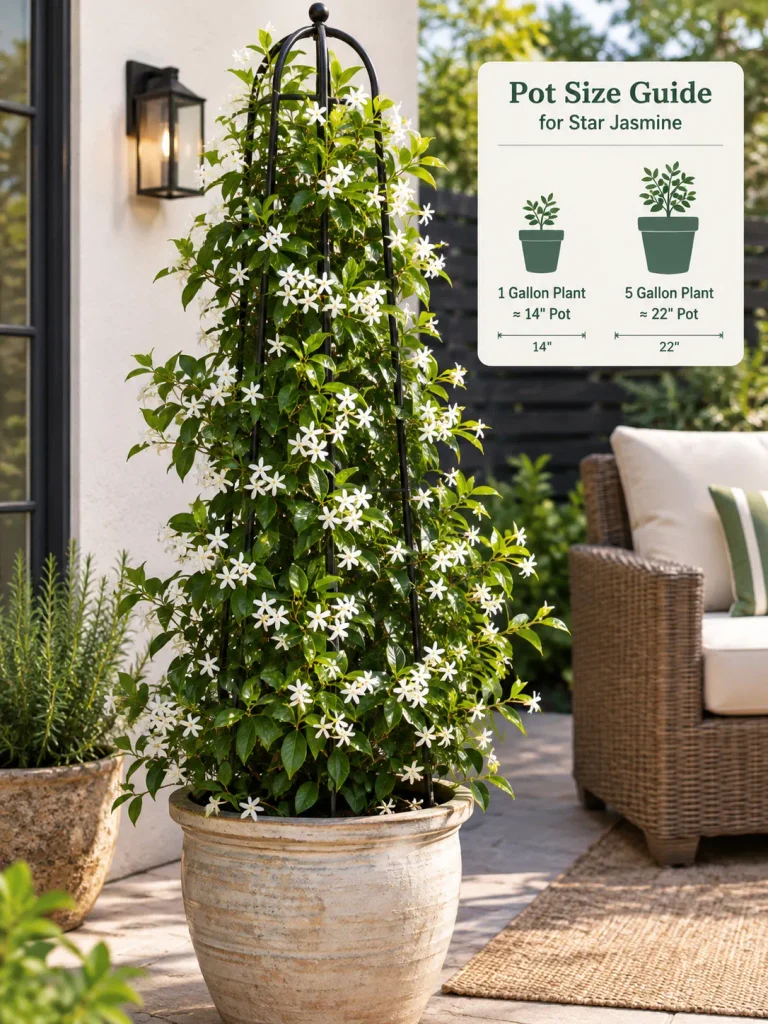
Star jasmine grows well in containers, which is great for patios, balconies, and cold areas where you need to move it indoors for winter. It does grow more slowly in a pot, and it needs water more often than a plant in the ground.
Pot Size and Soil
Pot size matters. A one gallon plant can start in a pot around 14 inches wide and deep. A five gallon plant that will climb a trellis needs a much bigger pot, around 22 inches wide and deep. Plan on moving up a size every spring as the roots grow. Use a good potting mix with some compost added for richness and drainage.
Pot Support Tips
Choose a fan, hoop, obelisk, or small lattice that fits the pot. Tie the stems in early and keep the shape tidy. Remove long runners that stick out past the support. Do not let the top become a thick cap that shades the lower leaves, because the bottom will weaken.
Feeding and Watering in Pots
Water when the top few inches of soil feel dry. Feed container plants monthly with a liquid fertilizer from spring until early fall. If the plant slows down or blooms less, check the roots. A rootbound plant dries out fast and may need a bigger pot or fresh soil.
Star Jasmine Care Tips for a Healthy Trellis Vine
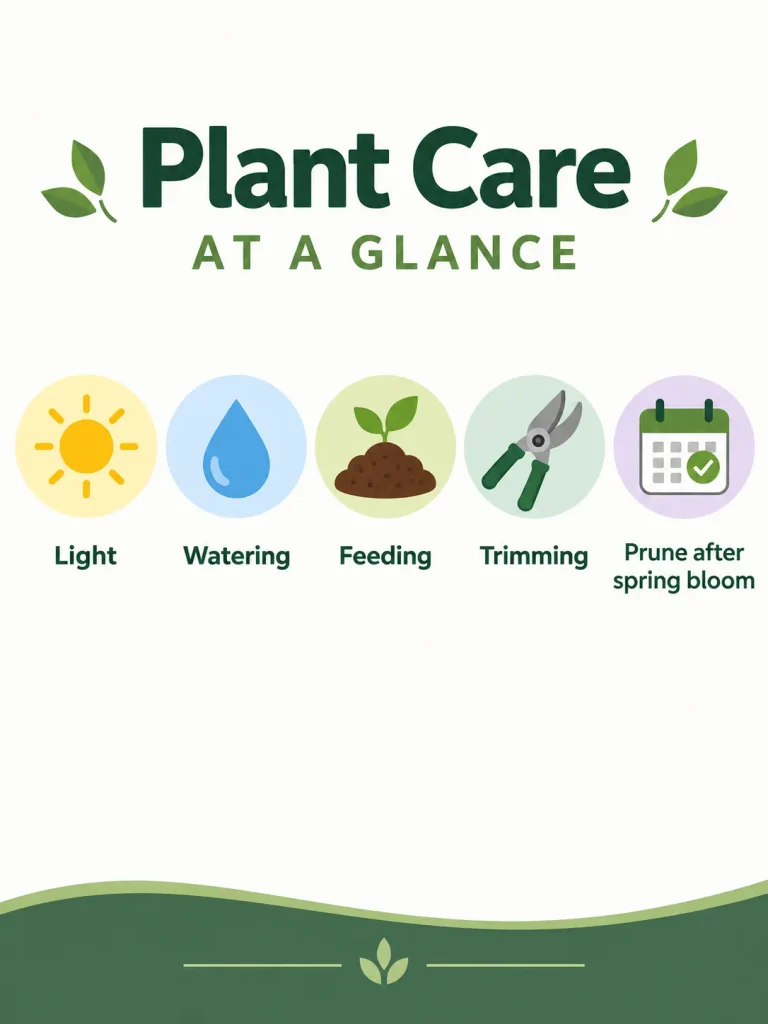
Training gets the shape right. Care keeps the plant alive and flowering. Here is what a star jasmine on a trellis needs.
Sunlight
The right amount of sun depends on where you live. In cool coastal areas, star jasmine enjoys full sun. In hot, dry places, it does better with morning sun and bright shade in the afternoon, because strong afternoon sun can scorch the leaves. One garden had a vine on a harsh, hot side of the house that lost most of its leaves each summer. As a rough guide, give it at least two hours of direct light each day, and avoid deep shade.
Watering
New plants need frequent water to settle in. Water them every other day during the first growing season, or at least keep the soil damp but not soggy. Once established, the plant is fairly tough. Water when the top few inches of soil are dry. In many climates that means every 10 to 21 days. In a hot summer, you may need to water as often as once or twice a week. In cool seasons, you may not need to water at all. Plants in the sun need more water than plants in shade.
Soil and Feeding
Star jasmine likes rich, loamy soil that drains well. Add compost when you plant. After that, a layer of compost or rotted manure each late winter or early spring is often all it needs. A layer about 4 inches deep also helps hold moisture during hot summers. If you prefer fertilizer, use a balanced all purpose product after the plant finishes flowering.
Pruning
Most experts agree that the big prune should come right after the main flowering, which is usually late spring to early summer. Pruning then lets the plant grow new stems that carry next year’s flowers. A second, lighter trim in early fall can tidy stray tendrils. Try to avoid heavy winter pruning, because it can remove flower buds. One gardener trims lightly at the start of spring to shape the vine before it blooms and still gets lovely flowers, so a small early trim is fine. Just keep deep cuts for after the show.
When you cut a stem, it leaks a milky sap. The sap can irritate skin, so wear gloves and long sleeves. It is also sticky, so wipe your shears clean after each session.
Hardiness and Winter
Star jasmine grows best in USDA zones 8 to 11 and can handle temperatures down to about 10 to 15°F for short periods. A variety called ‘Madison’ is a bit hardier, good for zones 7 to 10. In colder areas, grow the vine in a large pot and move it into a cool, bright space for winter. Check indoor plants for aphids.
The plant is evergreen, so it stays green through winter. Do not panic if some leaves turn red or dark in fall and winter. That color change is a normal reaction to cold, and many of those leaves drop in spring when new growth arrives.
Propagating Extra Plants
Want a second vine for another wall? Take 4 to 6 inch stem cuttings in summer, right after the plant finishes blooming. Root them in water or a propagation mix, then move them into soil once roots form. Star jasmine roots easily, so this is a cheap way to cover more space.
Common Star Jasmine Trellis Problems and Fixes
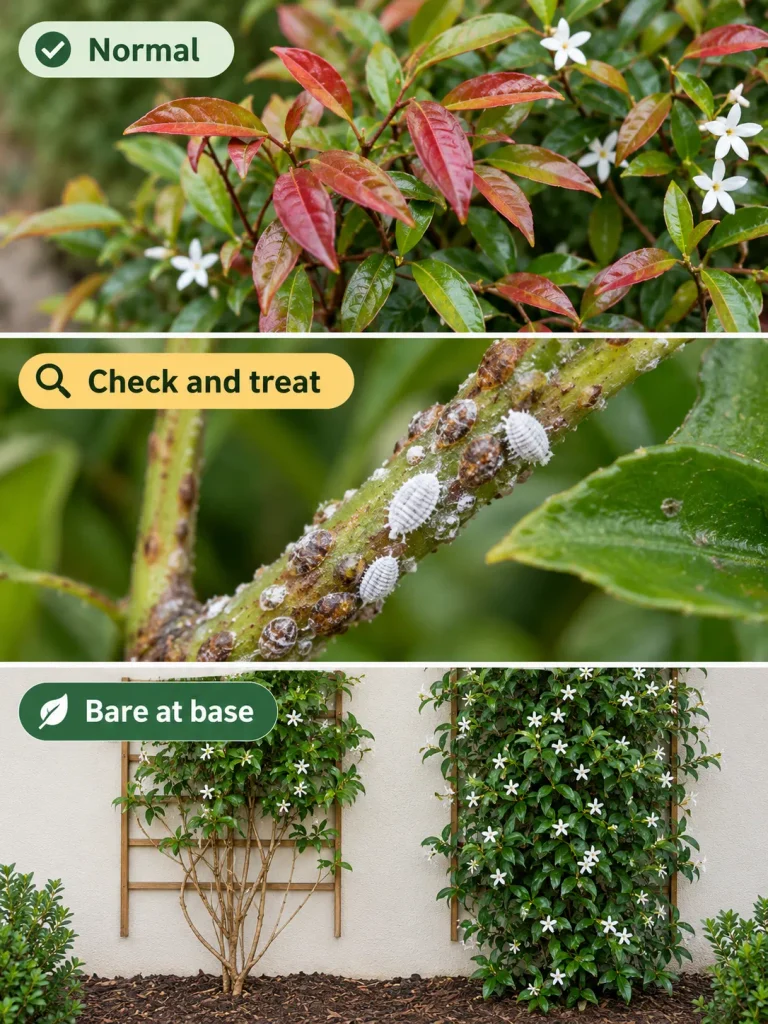
The vine is bare at the bottom. This happens when stems are allowed to shoot straight up. Tie newer shoots lower and wider, thin the crowded top after flowering, and let more light reach the base.
It is not blooming. The usual causes are too little sun, pruning at the wrong time, or too much nitrogen fertilizer. Young plants may also need a year or two before they flower well. Give it light, prune after bloom, and be patient.
Leaves turn red, brown, or yellow. Red leaves in cold weather are normal. Brown or scorched leaves often point to hot sun or winter cold. Yellow leaves can come from soil that is too heavy, too much or too little water, or too much fertilizer. A few yellow leaves in spring when new growth starts are normal too.
Stems are tangled and woody. This means training was delayed or thinning was skipped. After flowering, remove some old stems, open up the structure, and tie in the best shoots.
Pests. Mealybugs and scale are the most common insects, and aphids can show up too. Because the plant grows thick, look inside the foliage now and then. Treat pests early before they spread. Slugs and snails can nibble young plants.
Damage to walls. Keep the vine on the wires and away from siding, cracks, gutters, and eaves. Regular pruning prevents most trouble.
Frequently Asked Questions
What is the best trellis for star jasmine?
The best trellis for star jasmine is a strong, open support that is firmly anchored. Horizontal wires, a sturdy lattice panel, and a metal grid all work well. Pick one that can hold the full weight of a mature vine, which can reach 20 feet or more.
Does star jasmine climb a trellis on its own?
Only partly. It is a twining vine, so it will wrap around supports once it gets going. But young plants need to be guided and tied in from the start. It will not stick to a flat wall without wires or a frame.
How do you train star jasmine on a trellis?
Plant it close to the support and lean it toward the trellis. Remove nursery stakes once the stems are long enough, then tie the strongest stems loosely and spread them sideways or at an angle. Check the plant often, retrain new shoots while they are soft, and prune right after flowering.
How long does star jasmine take to cover a trellis?
It depends on the plant size, sun, water, and spacing. In good conditions, the vine grows fast, but many gardeners see a full, lush look only after two to three seasons. A pot grown vine will be slower than one planted in the ground.
Can star jasmine grow on a trellis in a pot?
Yes. Use a large pot with good potting soil, a stable trellis, and regular watering and feeding. A fan, hoop, or obelisk keeps the plant tidy. Move up to a larger pot as the roots grow.
Conclusion
A star jasmine trellis is one of the simplest ways to add greenery, fragrance, and charm to your garden. For successful gardening, choose a strong, open support, anchor it securely, and train the vine early. Tie the stems loosely and spread them sideways for fuller coverage. Water carefully, provide enough sunlight, and prune after the spring bloom. With these simple steps, your star jasmine will reward you with beautiful green growth and fragrant flowers year after year.
Ready to start? Pick your wall or fence this weekend, measure the space, and choose one of the trellis ideas above. Then plant your vine and give it its first loose tie. A few small steps today will turn into a wall of fragrant flowers in the seasons ahead.