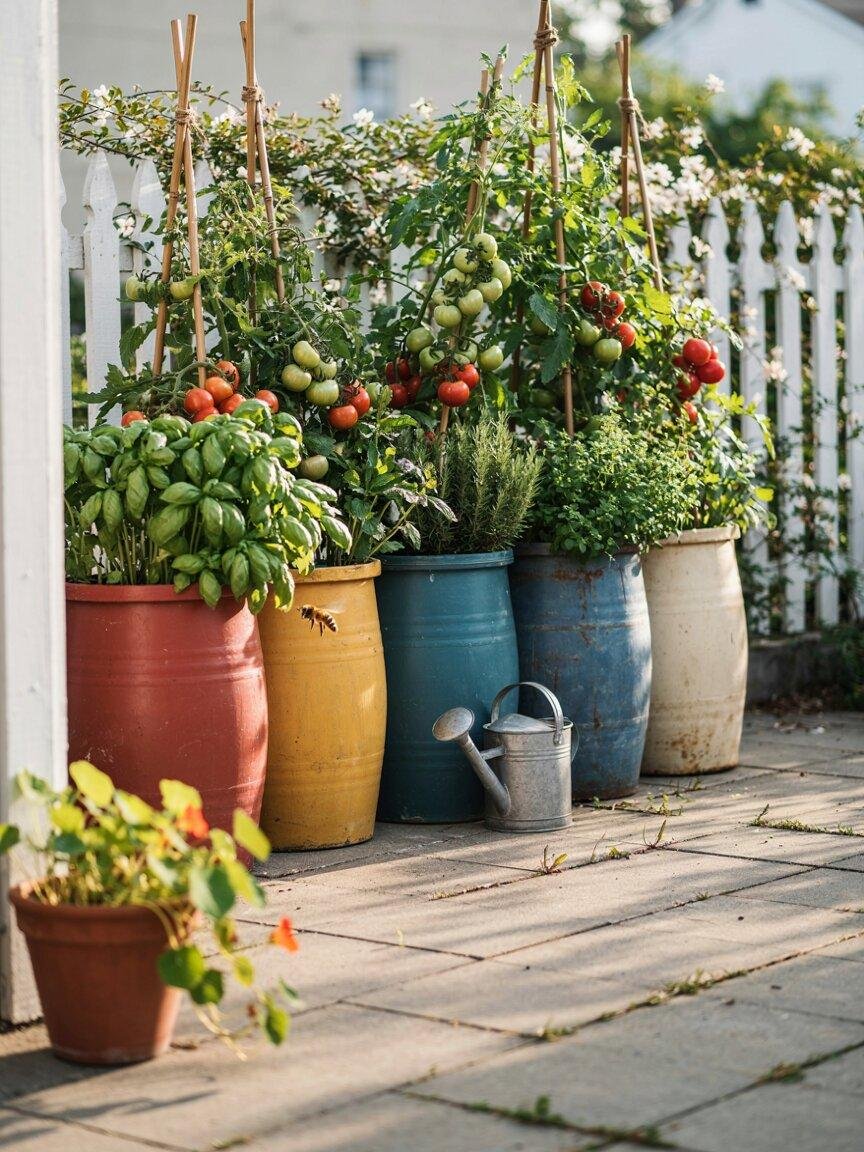
If your yard is small, your soil is poor, or you simply want more control over your growing conditions, barrel gardening might be the answer you have been looking for. A single repurposed barrel can hold enough soil to grow a full tomato plant, a cluster of herbs, or a small potato patch, all without the labor of digging up a traditional in ground bed.
This guide covers everything you need to know to start barrel gardening successfully, along with several related container methods worth considering, including pallets, buckets, cinder blocks, and metal raised beds. Whether you are working with a tiny patio, a rocky backyard, or you just want to try something a little different this season, you will find practical advice here that you can put to use right away.
Barrel gardening has become a go to solution for gardeners dealing with limited space, poor native soil, or physical limitations that make traditional in ground beds difficult to manage. It also appeals to anyone drawn to upcycling, since so many barrel gardening setups start with a container that would otherwise be discarded. By the end of this guide, you should feel confident choosing the right barrel, preparing it properly, and deciding whether a barrel, a bucket, a pallet, or another container method fits your specific garden best.
What Is Barrel Gardening and Why It Works So Well
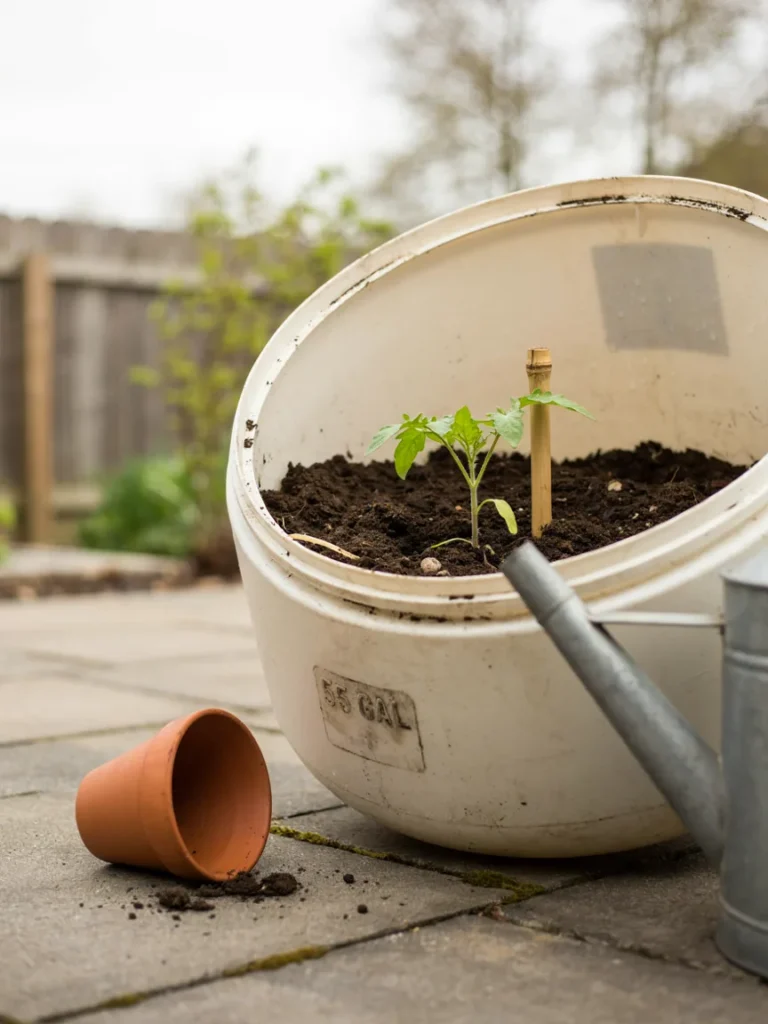
Barrel gardening simply means growing plants in a large barrel, usually a 55 gallon drum, that has been cleaned, drilled with drainage holes, and filled with a suitable growing medium. Gardening barrels can be plastic, metal, or wood, and many gardeners repurpose old food grade barrels from breweries, pickle producers, or shipping companies rather than buying something new. These containers can also be adapted for gardening for kids preschool activities, giving young children a simple, hands-on way to plant seeds, water plants, and watch them grow.
The appeal comes down to a few practical advantages. Barrel gardening gives you full control over soil quality, which matters enormously if your native soil is compacted, rocky, or contaminated. They also raise your plants up off the ground, which reduces strain on your back and knees during planting, watering, and harvesting. Because a barrel is a contained unit, it warms up faster in spring than open ground, giving you a slightly earlier start to the growing season, and the height helps deter certain pests and reduces weed pressure significantly compared to a traditional bed.
Choosing the Right Barrel for Your Garden
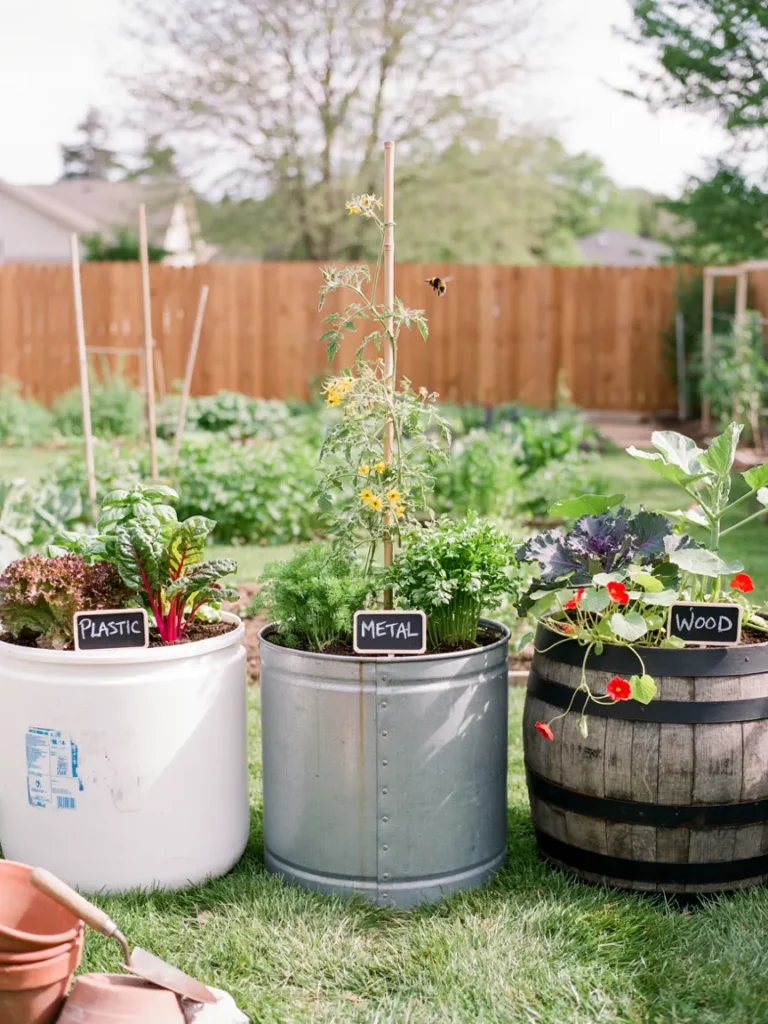
Not every barrel is created equal, and the material you choose will affect both the plants you grow and how long the barrel lasts. Food grade plastic barrels are lightweight, affordable, and widely available secondhand, making them a popular starting point for new gardeners. Metal barrels look attractive and last a long time, but they can heat up considerably in direct sun, which may stress the roots of heat sensitive plants during peak summer. Wooden barrels, often repurposed from wine or whiskey production, offer a rustic look and decent insulation, though they will eventually break down and need replacing after several seasons of exposure to moisture.
Before you fill any barrel with soil, always confirm what it previously held. Barrels used for chemicals, fuel, or non food industrial products can leach residue into your soil and should never be used for growing anything you plan to eat.
Getting Started with Your First Gardening Barrel
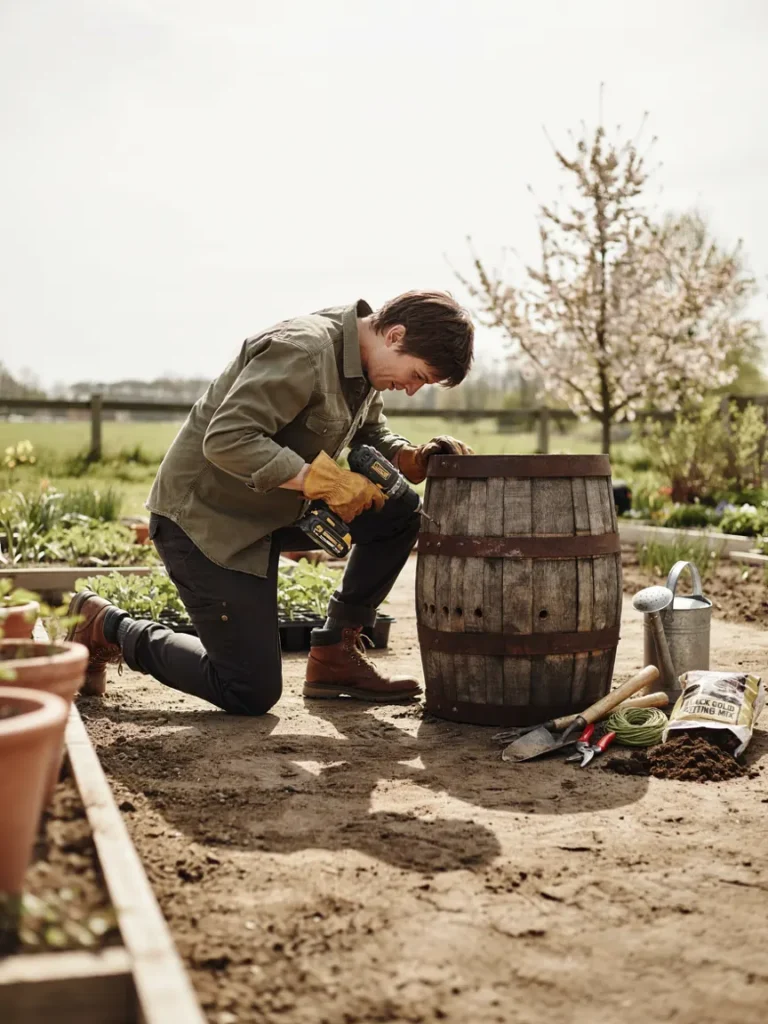
Once you have chosen a barrel, a bit of preparation up front will save you headaches later in the season and set your barrel gardening project up for a strong start.
Drainage and Drilling
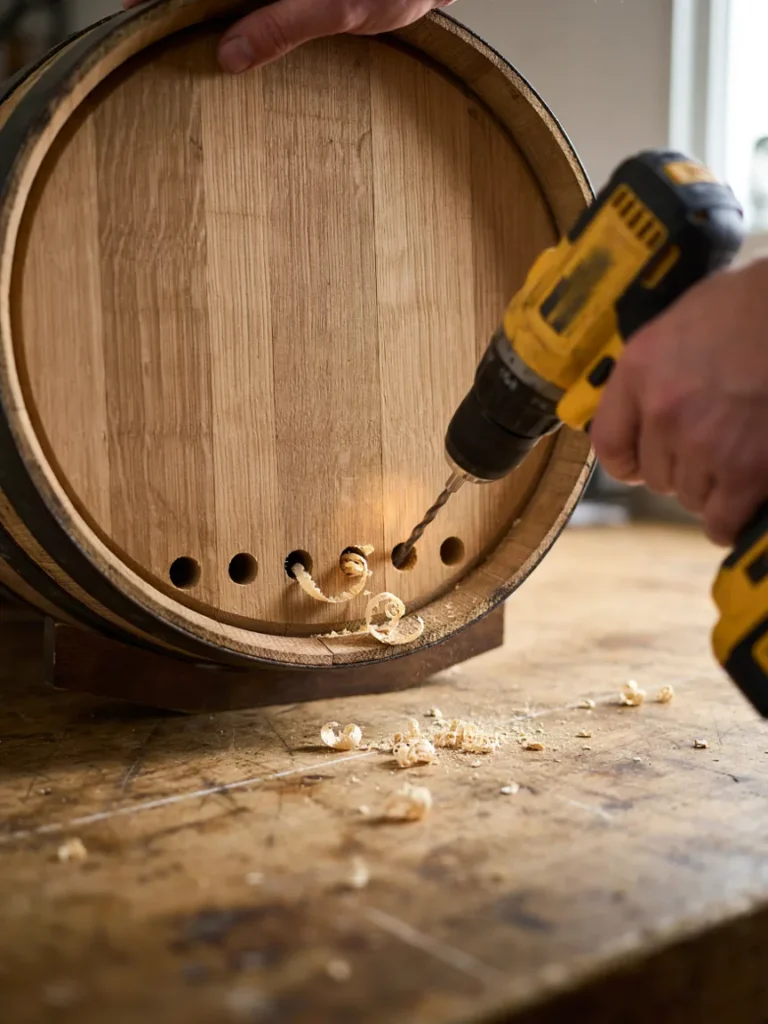
Good drainage is the single most important factor in successful barrel gardening. Without it, water pools at the bottom, roots rot, and plants decline no matter how good your soil is. Drill several holes, roughly half an inch in diameter, spaced evenly across the bottom of the barrel. Some gardeners add a layer of gravel or broken pottery at the base before adding soil, though this is optional if your drainage holes are sufficient.
Filling With the Right Soil Mix
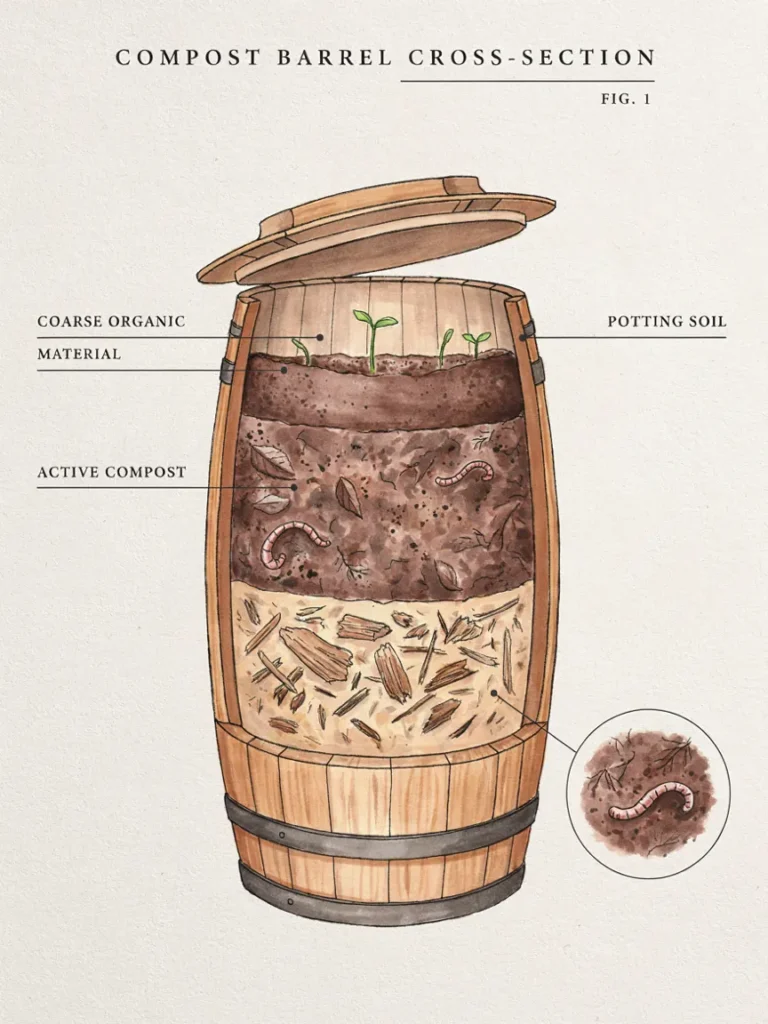
Barrels are large enough that filling them entirely with bagged potting mix can get expensive fast. Many experienced gardeners use a layered approach instead, filling the bottom third with coarse organic material like small branches or straw, then topping the rest with a quality blend of compost and potting soil. This method, sometimes called hugelkultur in miniature, improves drainage, reduces the total amount of soil needed, and adds slow release nutrients as the buried material breaks down over time.
Positioning Your Barrel

Think carefully about placement before you fill the barrel completely, since a full barrel is extremely heavy and difficult to move. Most vegetables need at least six hours of direct sun daily, so choose a spot with good light exposure. If you are gardening on a balcony or patio, double check the weight capacity of the surface, since a full 55 gallon barrel can weigh several hundred pounds once soil and water are added.
Pallet Gardening: Vertical and Ground Level Ideas
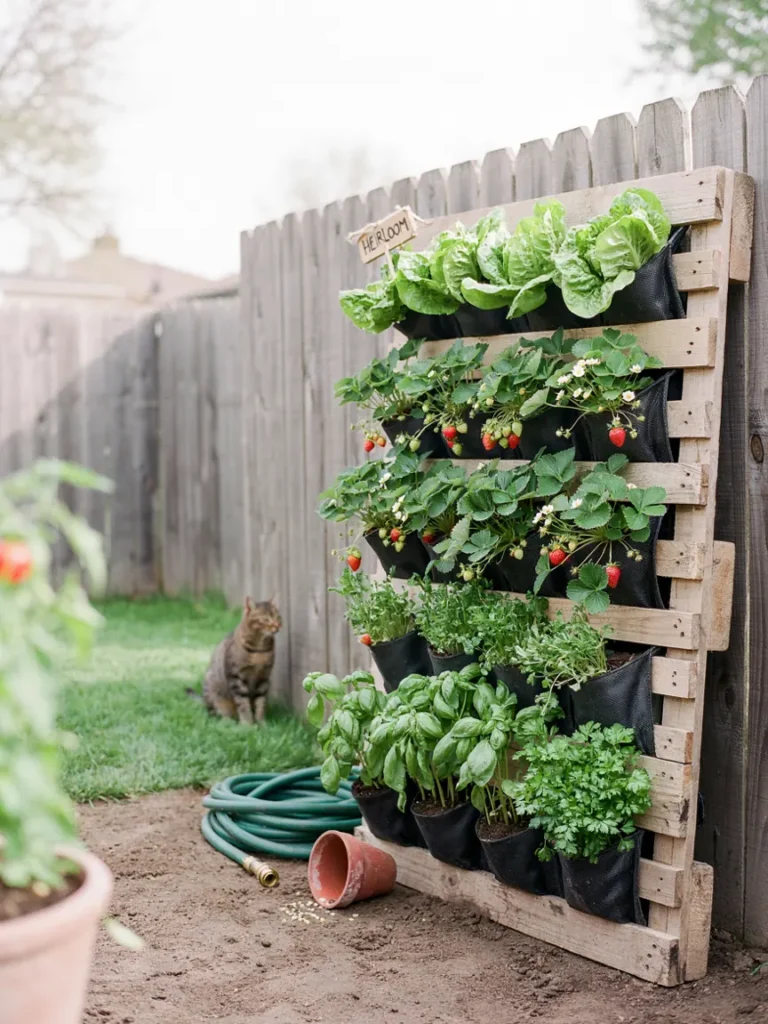
Pallets have become one of the most popular free or low cost materials in the gardening world, and gardening with pallets offers a completely different set of possibilities compared to barrels.
Vertical Pallet Gardens
![Close up of a vertical pallet garden mounted on an apartment balcony wall, small pockets of soil bursting with herbs and strawberry plants.]](https://stylishhomecorner.com/wp-content/uploads/2026/09/Close-up-of-a-vertical-pallet-garden-mounted-on-an-apartment-balcony-wall-small-pockets-of-soil-bursting-with-herbs-and-strawberry-plants-768x1024.webp)
A standard wooden pallet can be stood upright, lined with landscape fabric, and filled with soil to create a vertical garden that takes up very little floor space. This approach works particularly well for shallow rooted plants like lettuce, strawberries, and herbs, since the horizontal slats naturally create individual planting pockets. Vertical pallet gardening ideas are especially popular among renters and apartment dwellers who want to grow food without permanent construction.
Ground Level Pallet Garden Beds
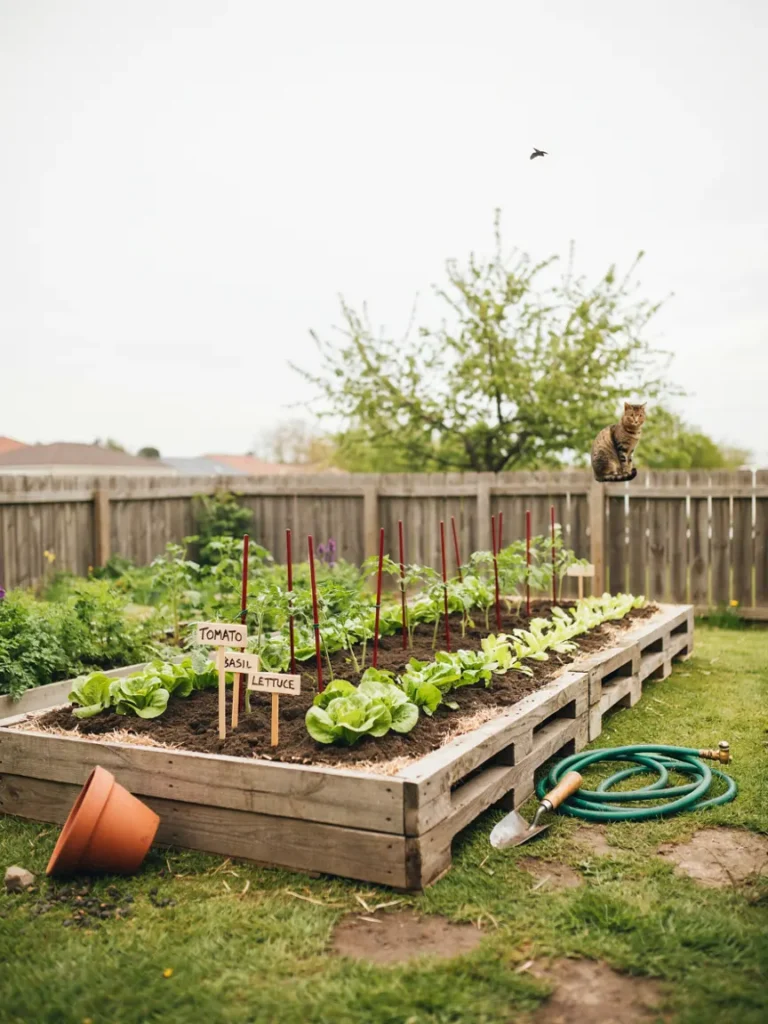
Alternatively, pallets can be laid flat and used as a frame for a shallow raised bed, or stacked to create walls for a slightly deeper growing space. This method requires less soil than a full barrel and is a good option for gardeners who want raised bed gardening ideas without investing in lumber or purchased kits. As with barrels, always check the source of your pallet before using it for food crops, since pallets treated with certain chemicals are not safe for growing edibles. Look for pallets stamped with an HT marking, which indicates heat treatment rather than chemical fumigation.
Bucket Gardening Systems for Small Spaces
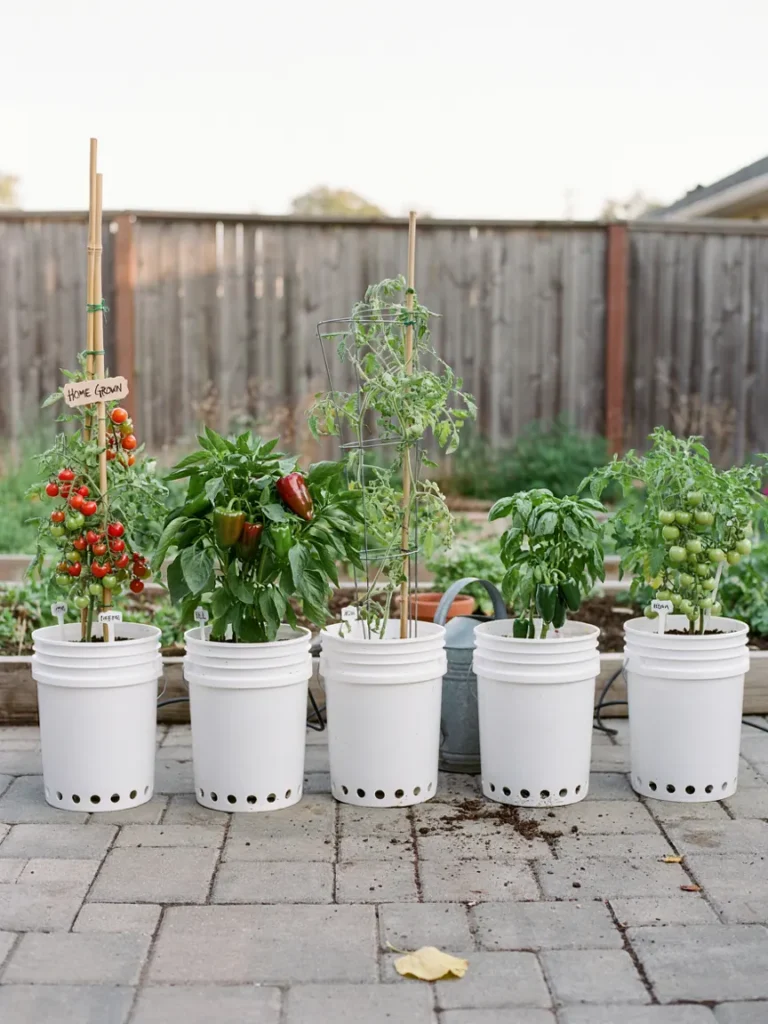
For gardeners with very limited space, or those who want an easily movable option, a bucket gardening system offers many of the same benefits as barrel gardening on a smaller scale.
Setting Up a Basic Bucket System
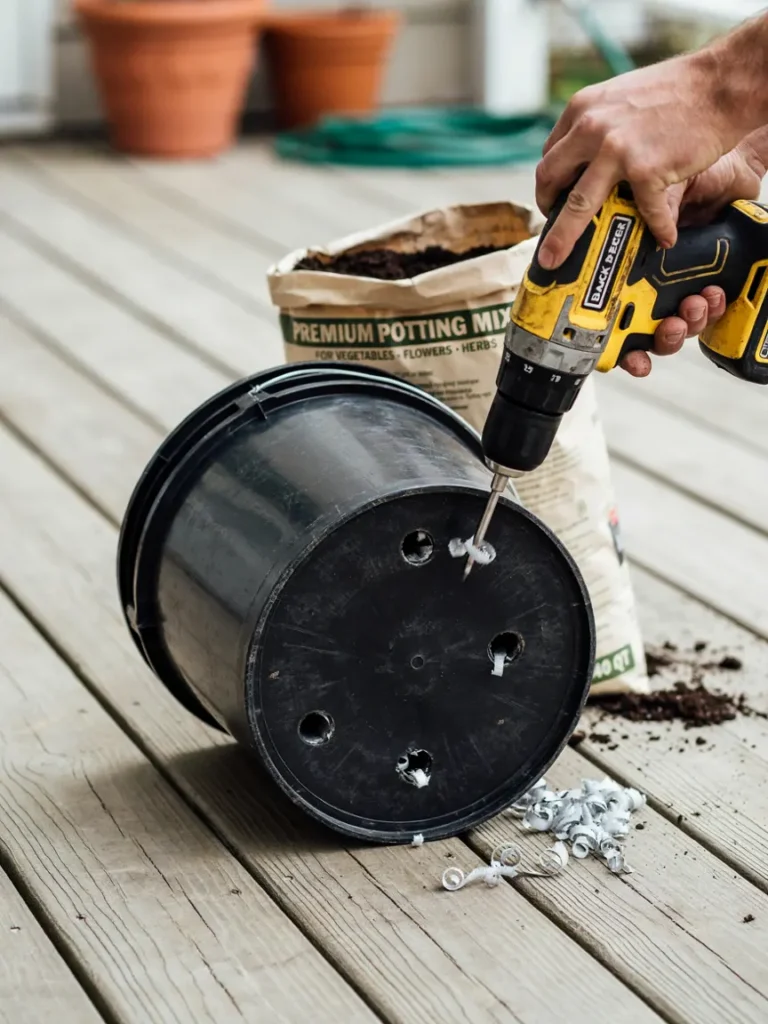
Five gallon buckets, often available free from restaurants or hardware stores, make excellent individual planters once drainage holes are drilled into the bottom. A single bucket can support one determinate tomato plant, a pepper, or a small cluster of herbs. Because buckets are lightweight and portable even when full, they can be rearranged throughout the season to chase sunlight or moved indoors during an unexpected cold snap.
Self Watering Bucket Modifications
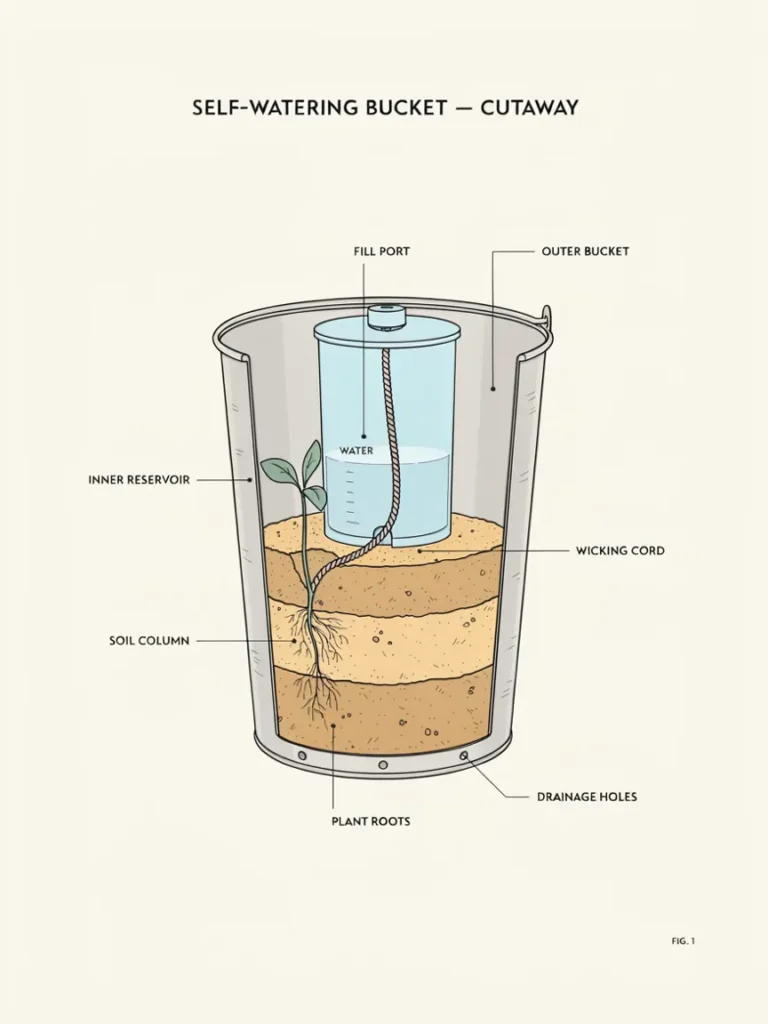
Many gardeners upgrade their bucket gardening system into a self watering setup by adding a reservoir at the bottom, using a second smaller container or a length of perforated pipe to wick water up into the soil. This modification reduces the frequency of watering needed, which is especially useful for gardeners who travel often or simply want to cut down on daily maintenance during hot summer months.
Cinder Blocks, Earth Boxes, and Other Raised Bed Alternatives
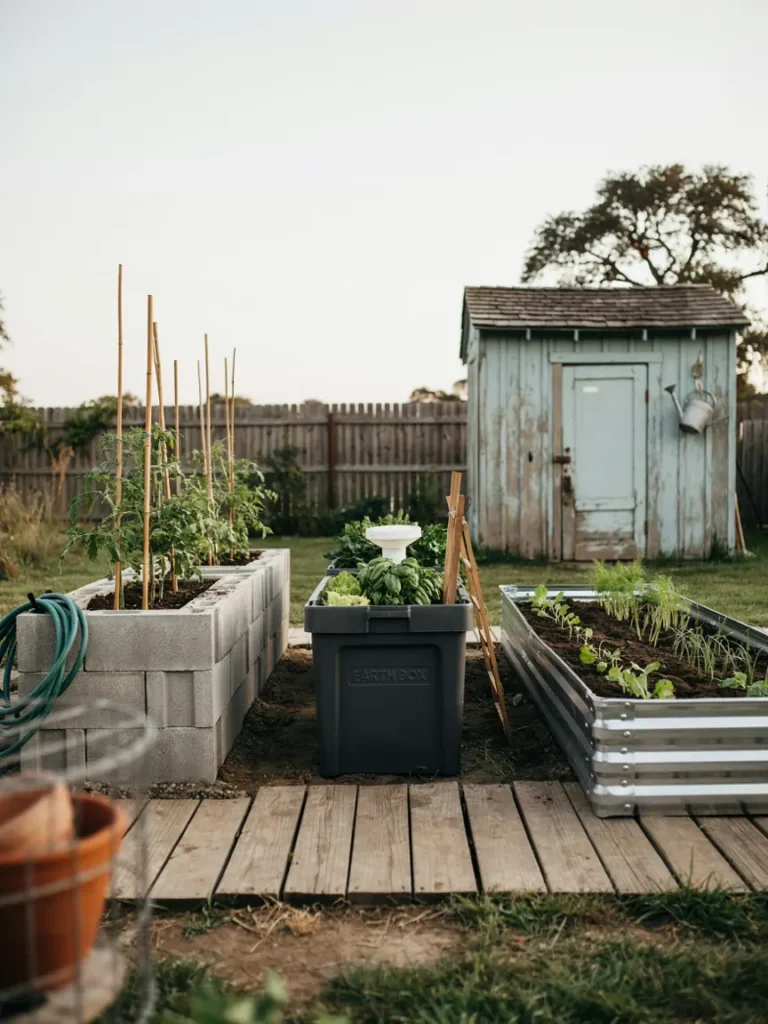
Beyond barrels, pallets, and buckets, there are several other above ground gardening boxes worth considering depending on your budget, aesthetic preferences, and how permanent you want your setup to be.
Gardening With Cinder Blocks
![A rectangular raised bed built from stacked cinder blocks, with small marigolds and herbs growing directly in the hollow centers of the blocks.]](https://stylishhomecorner.com/wp-content/uploads/2026/09/A-rectangular-raised-bed-built-from-stacked-cinder-blocks-with-small-marigolds-and-herbs-growing-directly-in-the-hollow-centers-of-the-blocks-768x1024.webp)
Cinder blocks are a favorite among budget conscious gardeners because they are inexpensive, widely available, and require no cutting or specialized tools to assemble. Stacking cinder blocks in a rectangular shape creates sturdy walls for a raised bed, while the hollow centers of the blocks themselves can be filled with soil and used to grow small companion plants like marigolds or herbs right in the wall structure. This dual purpose use of space is one of the more clever aspects of gardening with cinder blocks, since it effectively doubles your planting area without expanding your bed’s footprint.
Earth Boxes and Self Contained Growing Systems
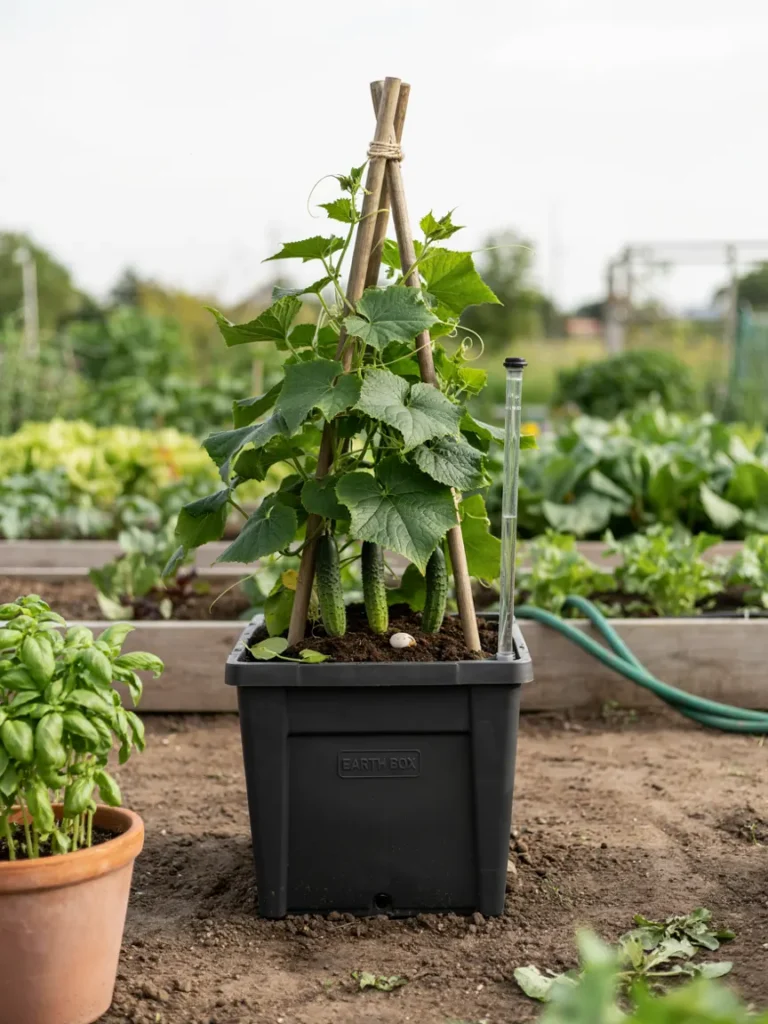
Earth boxes for gardening are a commercially designed alternative that combines a soil chamber with a built in water reservoir and a wicking system similar to the self watering bucket approach described earlier. These systems are particularly popular for growing container gardening cucumbers, tomatoes, and peppers, since consistent moisture is critical for these crops and an earth box largely automates that process. They tend to cost more upfront than a repurposed barrel or bucket, but many gardeners find the consistent yields worth the investment.
Metal Raised Beds for Gardening
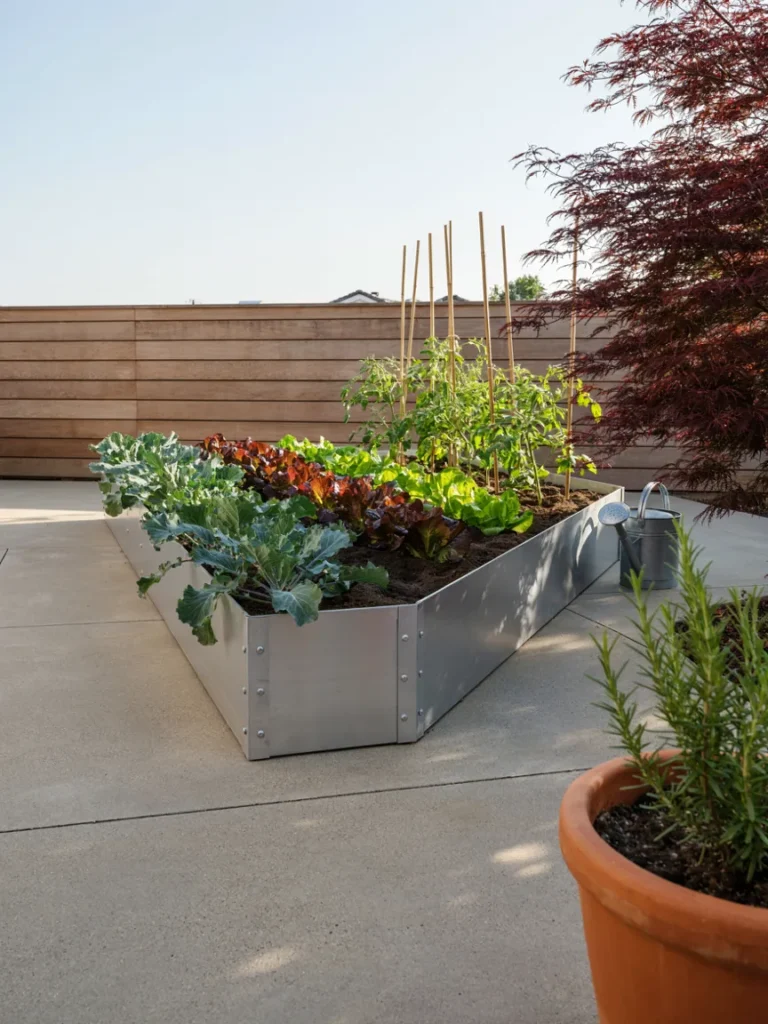
Metal raised beds for gardening have grown in popularity recently thanks to their clean, modern appearance and impressive durability compared to wood, which eventually rots. Galvanized steel beds resist pests and disease better than wood since they do not harbor the same organic matter that can host fungal issues, and they typically last well over a decade with minimal maintenance. The main drawback is heat retention in very sunny climates, similar to the concern with metal barrels, so lining the interior walls with a thin layer of straw or cardboard can help insulate plant roots during peak summer heat.
Burlap Sack Gardening: An Old Method Making a Comeback
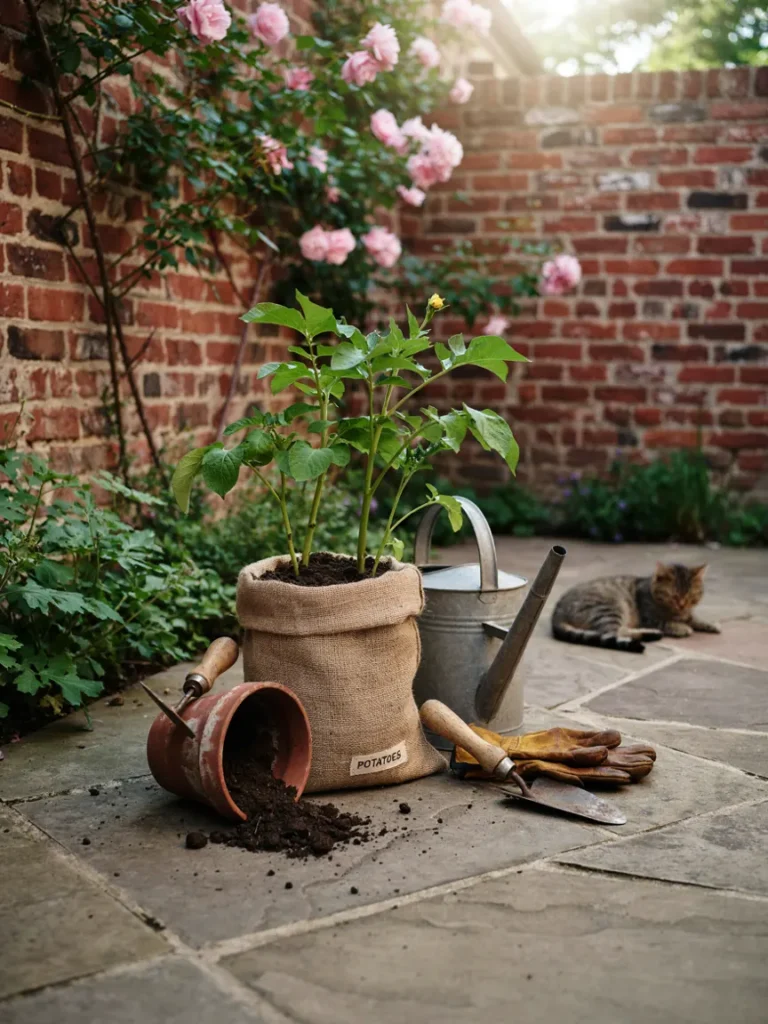
Burlap sack gardening has a long history in small scale and urban farming, particularly for growing potatoes, and it remains one of the cheapest ways to get started with container growing.
How Burlap Sack Gardening Works
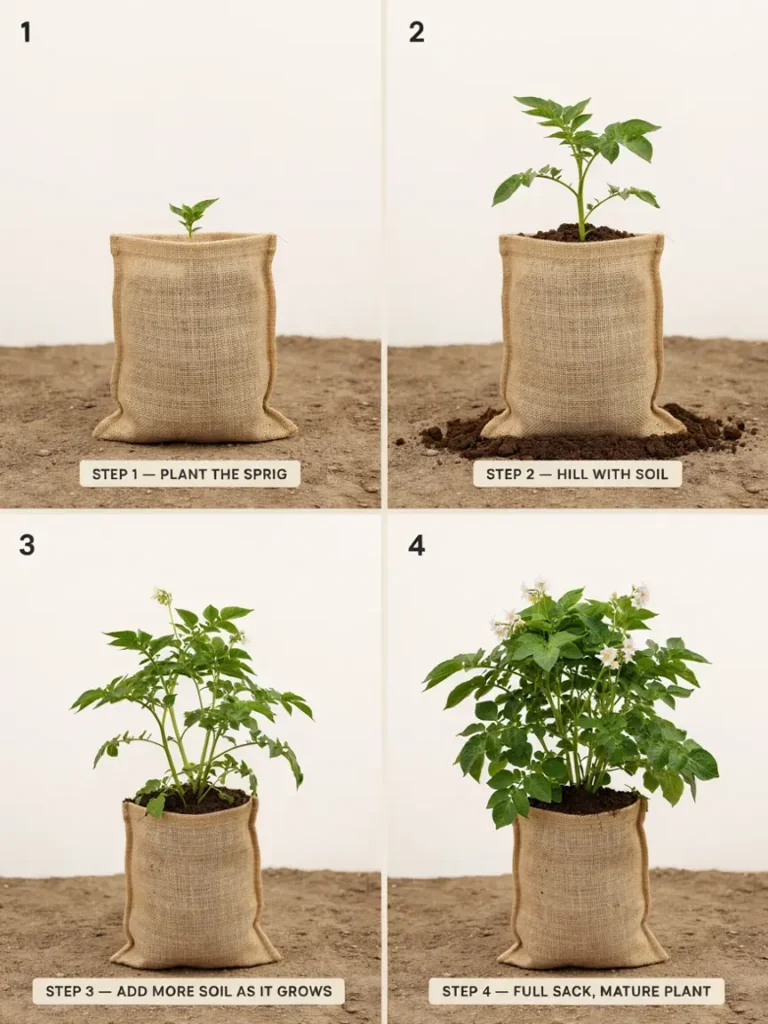
A burlap sack is filled partway with soil, planted, and then gradually filled in as the plant grows, a technique especially well suited to potatoes since it allows tubers to form along the buried stem at multiple levels. The breathable nature of burlap allows excess moisture to escape, reducing the risk of rot compared to sealed plastic containers. Because the sacks are soft sided and lightweight when empty, they store easily during the off season and can be reused for several years if kept dry between uses.
Best Uses for Burlap Sack Gardening
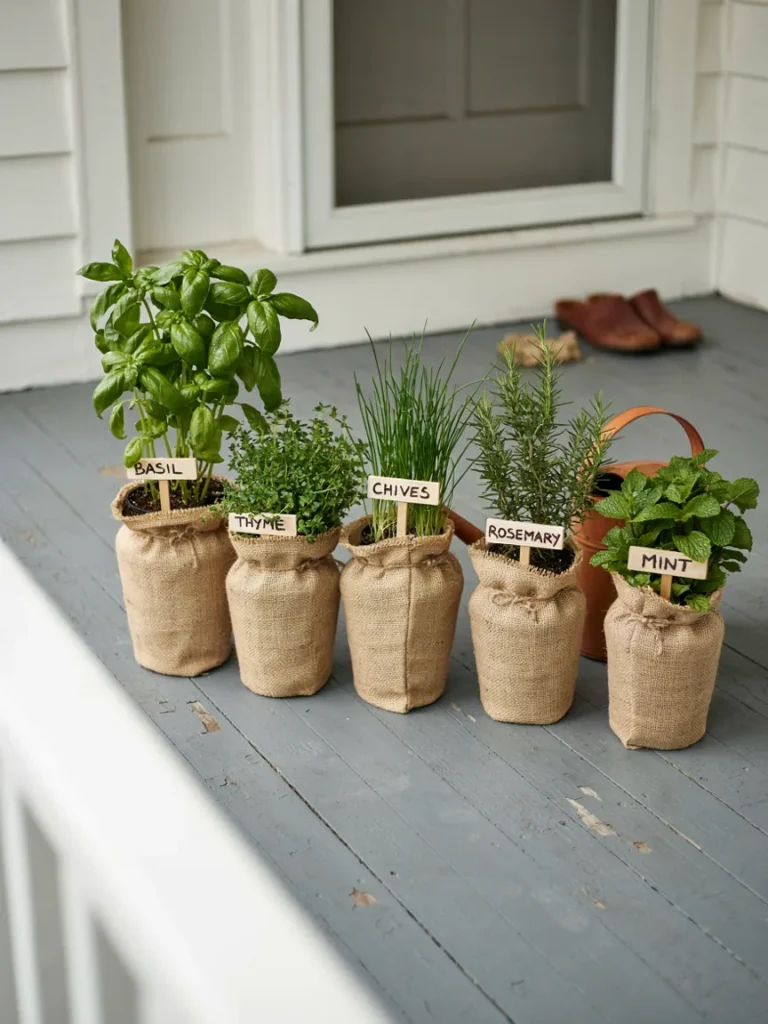
While potatoes are the classic choice, burlap sacks also work well for shallow rooted greens and herbs. They are a particularly good fit for gardeners who want to try container gardening herbs on a porch or patio without investing in rigid pots, since a few sacks can be tucked into small corners that would not accommodate a barrel or raised bed.
Choosing the Best Plants for Your Container Garden
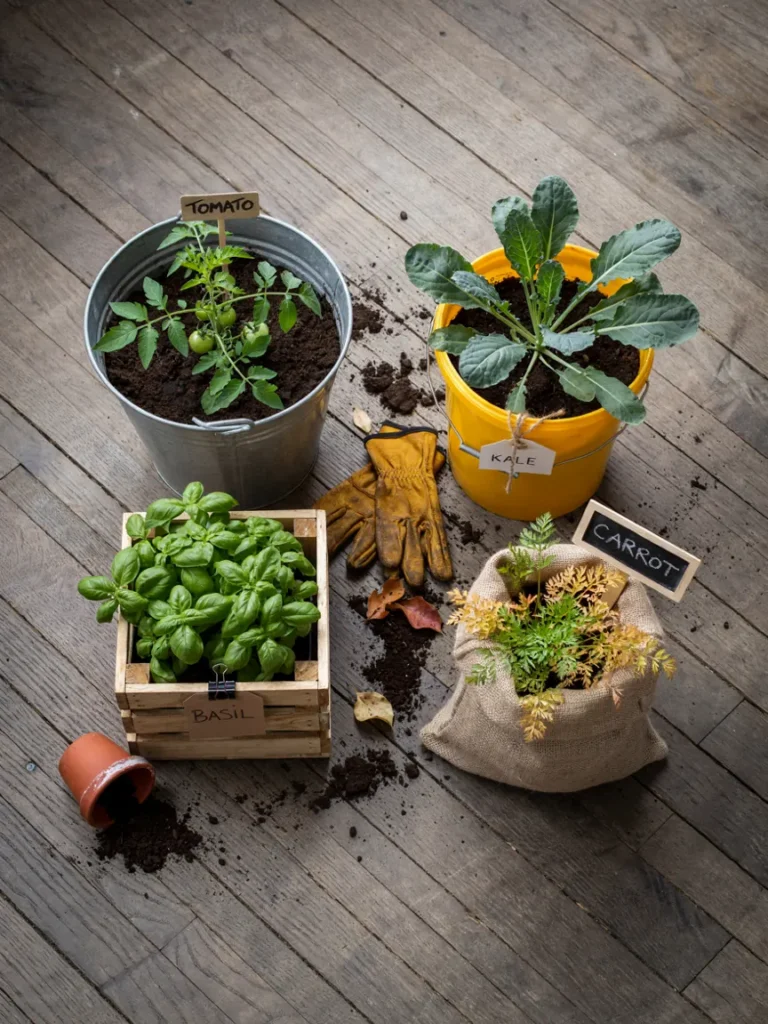
No matter which method you choose, barrel, pallet, bucket, cinder block, or burlap sack, matching the right plants to the right container makes a significant difference in your results.
Best Crops for Barrel Gardening

Deep rooted plants like tomatoes, potatoes, and peppers thrive in the generous depth a barrel provides. Barrels are also excellent for growing a full season of climbing cucumbers when paired with a simple trellis inserted into the soil, since container gardening cucumbers benefit enormously from the improved drainage and warmth a barrel offers compared to compacted garden soil. Many gardeners find that a single well maintained barrel gardening setup can produce a surprisingly large tomato harvest, often rivaling what the same plant would produce in open ground, simply because the soil quality and drainage are so carefully controlled.
Best Crops for Shallow Containers
![A shallow container or pallet pocket filled with a mix of lettuce, radishes, and spinach in various growth stages.]](https://stylishhomecorner.com/wp-content/uploads/2026/09/A-shallow-container-or-pallet-pocket-filled-with-a-mix-of-lettuce-radishes-and-spinach-in-various-growth-stages-768x1024.webp)
Pallets, shallow raised beds, and burlap sacks are better suited to shallow rooted plants such as lettuce, spinach, radishes, and most culinary herbs. Basil, thyme, and chives in particular do well in these setups, since they do not require the deep root run that tomatoes or potatoes need to develop properly.
Seasonal Care and Maintenance for Barrel Gardening
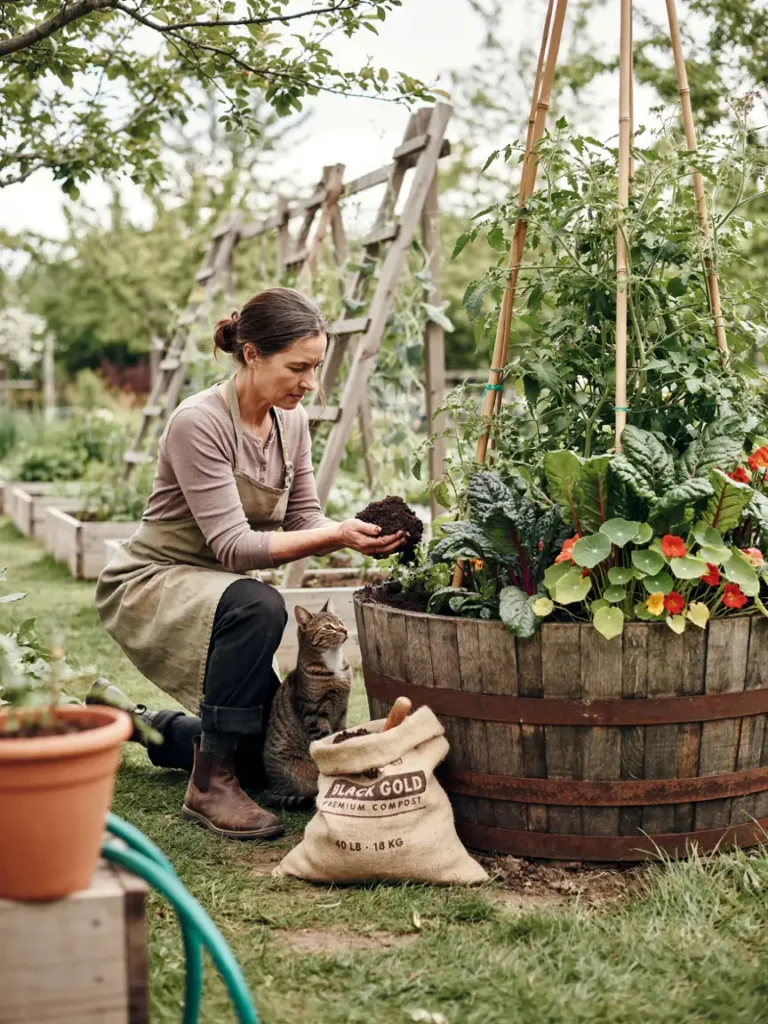
Keeping a barrel garden productive season after season takes a bit more attention than a one time setup, since the contained nature of barrel gardening means nutrients and moisture behave differently than they would in open ground.
Refreshing Soil Between Seasons
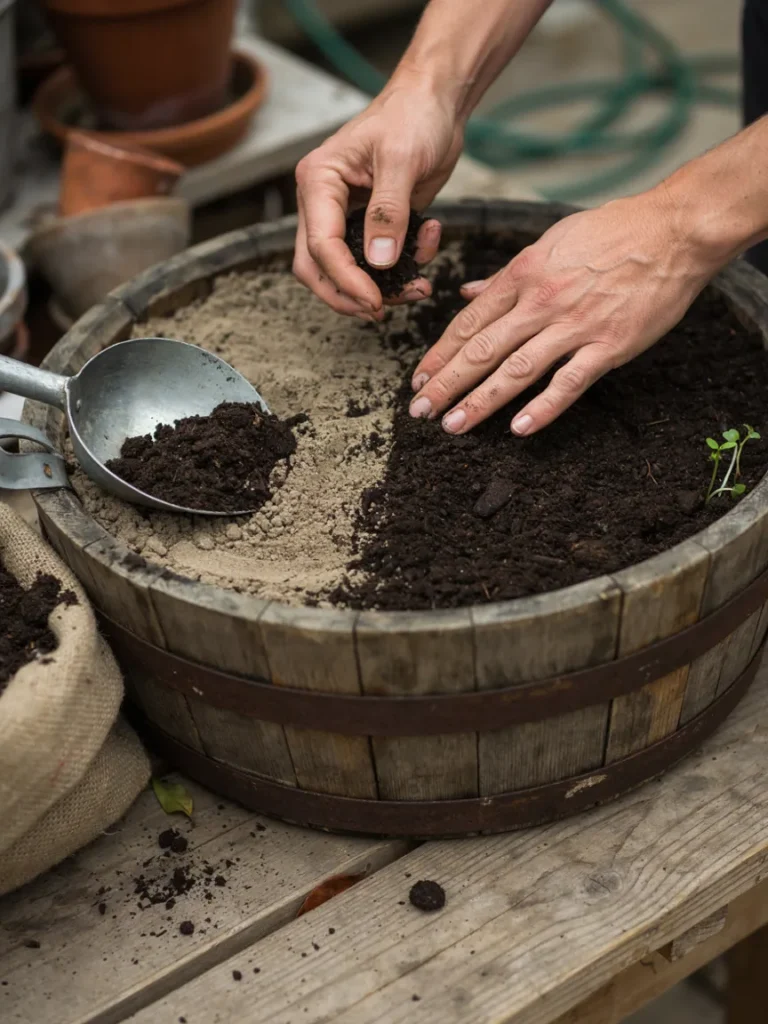
Because a barrel holds a fixed volume of soil, nutrients deplete faster than they would in a large in ground bed where roots can spread further to find fresh reserves. At the start of each new growing season, remove the top several inches of old soil and replace it with fresh compost, or better yet, work in a generous amount of aged compost throughout the barrel before replanting. Rotating what you grow in each barrel from year to year, moving tomatoes to a barrel that previously held herbs for example, also helps prevent the kind of nutrient depletion and disease buildup that can happen when the same crop is grown in the same soil repeatedly.
Managing Water Needs Through the Seasons
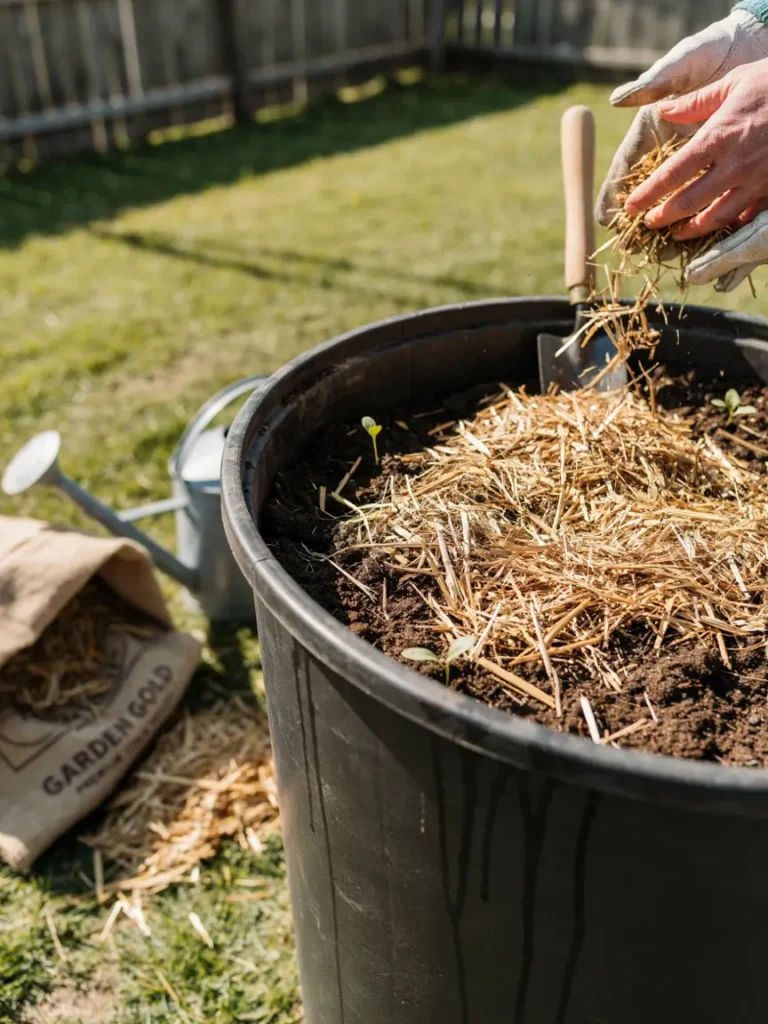
Barrel gardening tends to dry out faster than in ground planting during hot summer months, since the raised, contained soil is more exposed to sun and wind on all sides. A layer of mulch on top of the soil helps retain moisture and reduces how often you need to water. In cooler months, be mindful of the opposite problem: barrels can retain excess moisture longer if rainfall increases and evaporation slows, so keep an eye on drainage holes to make sure they have not become blocked with settled soil or roots.
Protecting Barrels Through Winter
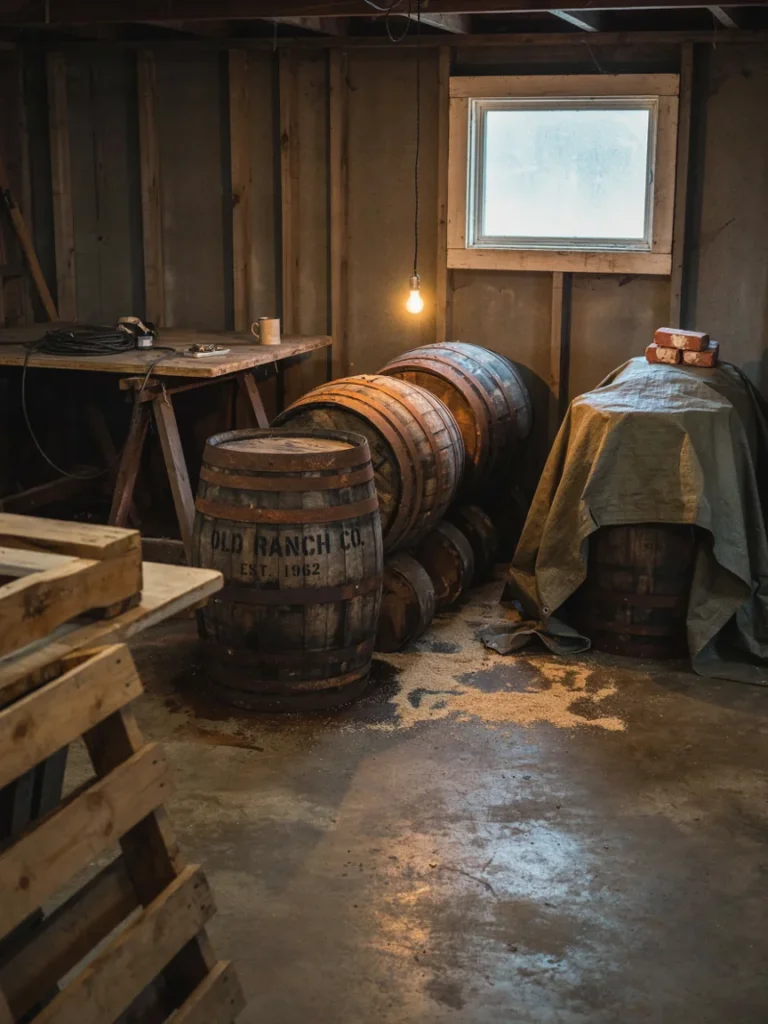
If you garden in a region with freezing winters, empty plastic or wood barrels should be stored somewhere dry and protected to prevent cracking from repeated freeze and thaw cycles. Metal barrels generally hold up better to cold weather but should still be checked for rust developing at drainage points. Many gardeners choose to leave a barrel gardening setup planted with cold hardy greens through the fall, then fully empty and clean the barrel before the first hard freeze arrives.
Comparing the Cost of Barrel Gardening to Other Container Methods
Budget is often the deciding factor when choosing between barrel gardening, pallets, buckets, cinder blocks, or purchased raised bed kits, so it is worth breaking down what each option typically costs to set up.
Low Cost Options
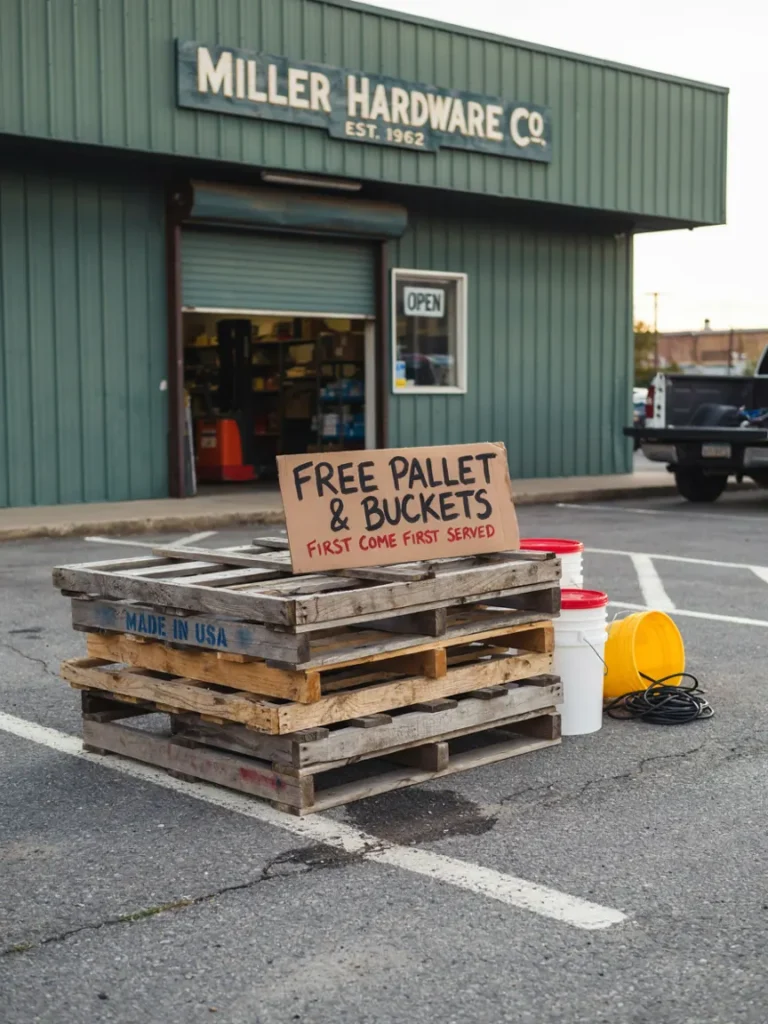
Five gallon buckets and wooden pallets are usually the cheapest way to start, often available free or at very low cost from local businesses willing to give away materials they would otherwise discard. Burlap sacks fall into a similar price range, typically costing just a few dollars each if not already on hand. These options are ideal for gardeners testing out container growing for the first time without a significant financial commitment.
Mid Range Options
A repurposed food grade barrel generally costs more than a bucket or pallet but less than a purchased raised bed kit, especially if sourced secondhand from a local supplier of used industrial barrels. Cinder blocks fall into a similar mid range category, with the total cost scaling depending on how large a bed you want to build, since each block is inexpensive individually but the total adds up for a full sized raised bed.
Higher Investment Options
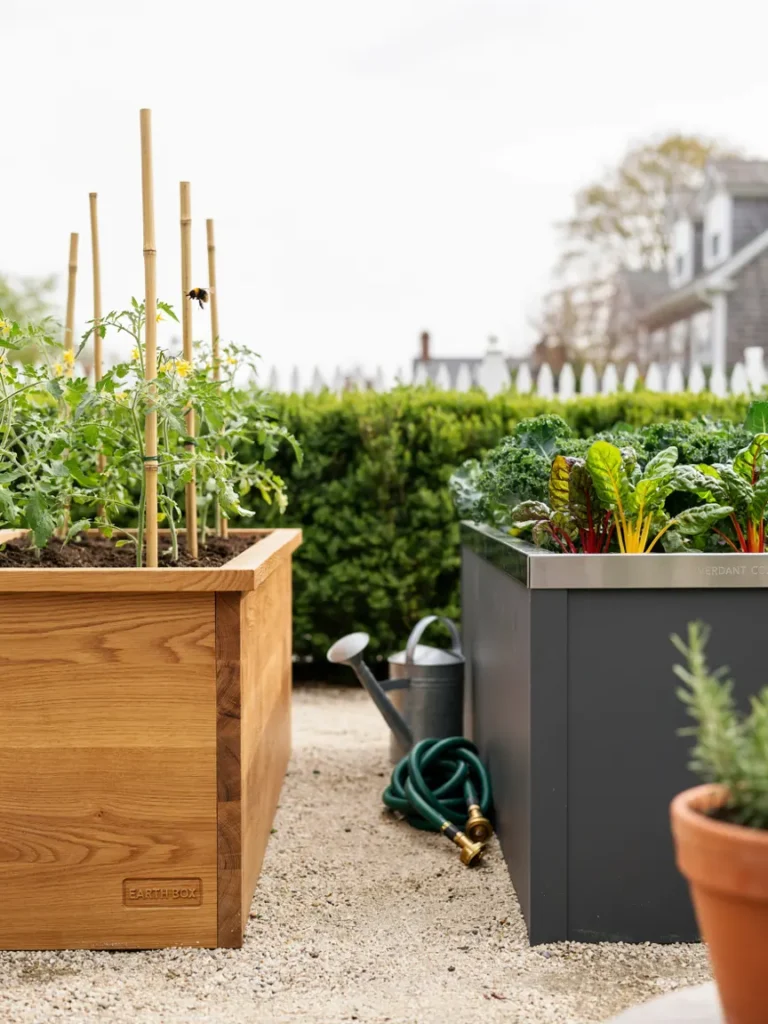
Earth boxes and metal raised beds for gardening represent the higher end of the cost spectrum, but they typically come with added conveniences, like built in water reservoirs or long term durability, that can offset the higher upfront price over several years of use. For gardeners who plan to garden in the same location for many seasons, this initial investment often pays off through reduced replacement costs and less frequent soil amendment compared to some of the more temporary container options.
Troubleshooting Common Barrel Gardening Problems
Even a well planned barrel gardening setup can run into a few predictable issues, most of which are easy to fix once you know what to look for.
Yellowing Leaves and Stunted Growth
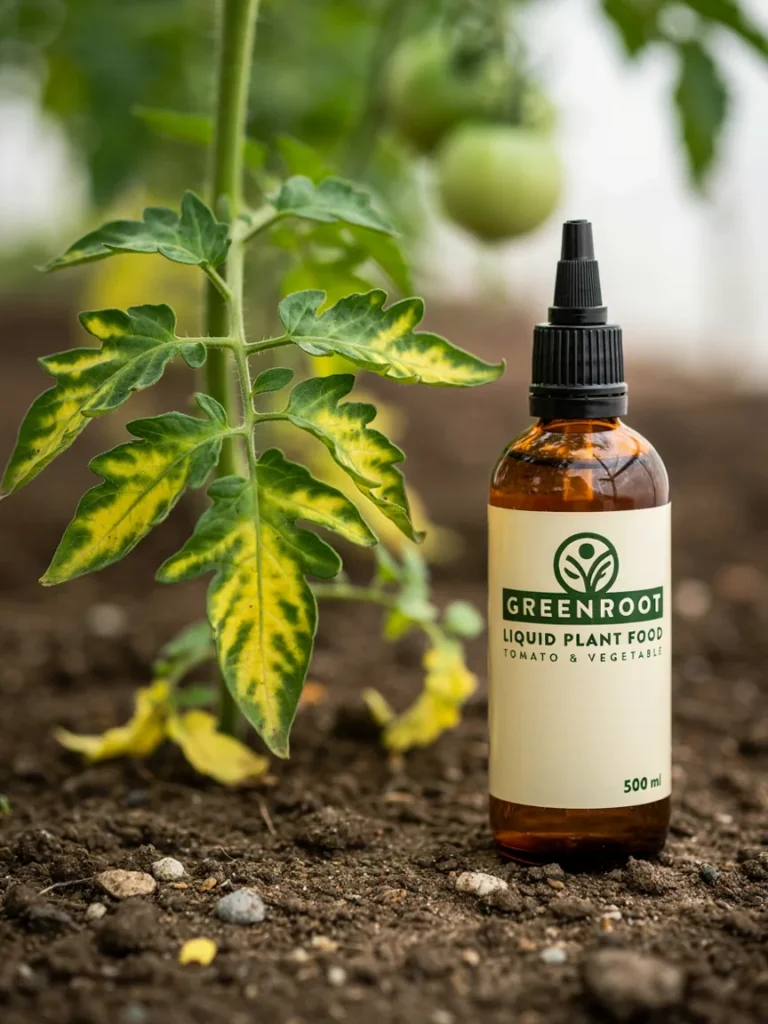
If plants in your barrel start showing yellow leaves or slow growth midway through the season, the most likely cause is nutrient depletion in the limited soil volume. Since barrel gardening relies on a fixed amount of soil rather than an unlimited surrounding bed, plants can exhaust available nutrients faster than expected, especially with heavy feeders like tomatoes. A dose of balanced liquid fertilizer, applied every two to three weeks during the growing season, usually resolves the issue.
Water Pooling or Slow Drainage
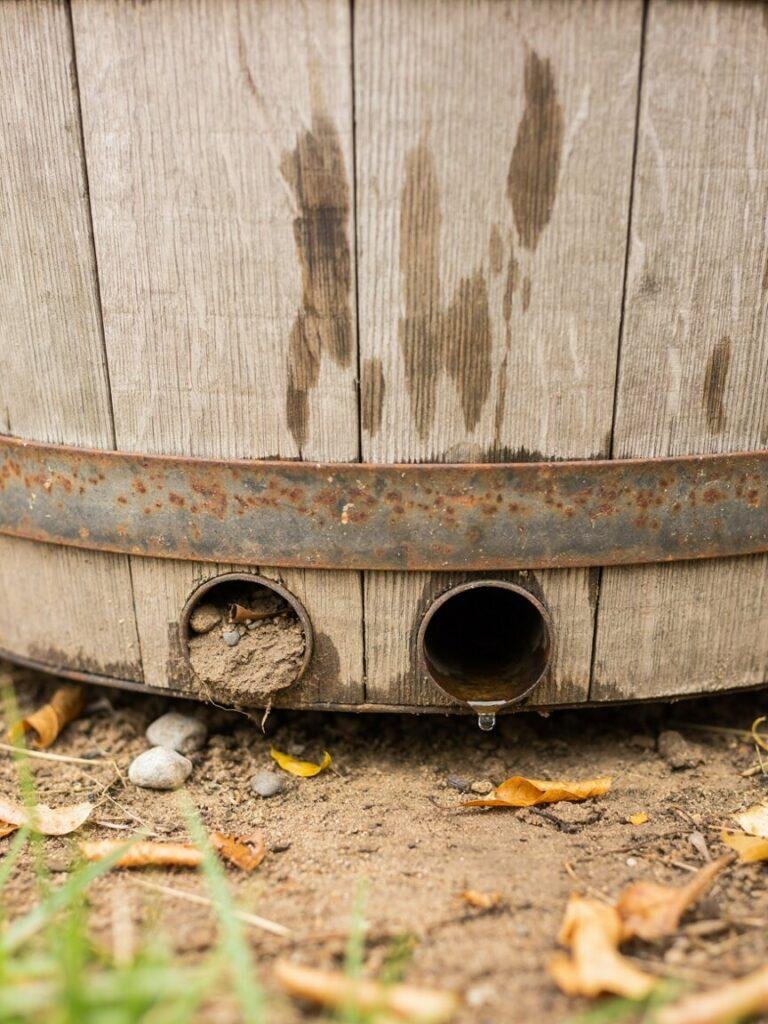
If you notice water sitting on top of the soil long after watering, check that your drainage holes have not become clogged with compacted soil or root growth. This is one of the more common setup mistakes in barrel gardening, and it is easily prevented by drilling a few extra holes at the outset rather than relying on the bare minimum.
Tipping or Instability in Windy Areas
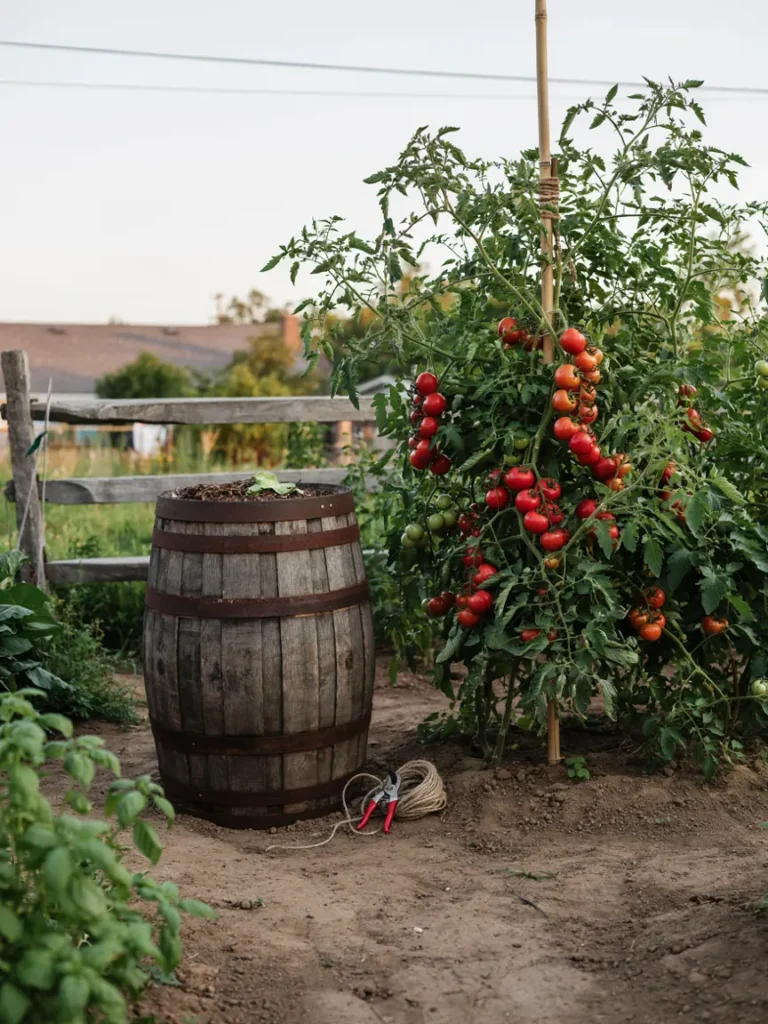
A tall, narrow barrel filled with a top heavy plant like a full grown tomato can become unstable in strong wind, particularly once the plant is heavy with fruit. Positioning barrels against a wall or fence, or adding a sturdy stake driven through the soil into the ground beneath, can prevent tipping without requiring major changes to your barrel gardening setup.
Frequently Asked Questions About Barrel Gardening
What size barrel is best for barrel gardening?
A 55 gallon drum is the most common size used for barrel gardening, offering enough depth and volume for a single large plant like a tomato or several smaller herbs planted together. Smaller barrels around 20 to 30 gallons work well for shallower rooted crops if space is limited.
Do I need to drill drainage holes in a gardening barrel?
Yes. Drainage holes are essential for barrel gardening, since standing water at the bottom of a sealed barrel will cause root rot regardless of soil quality. Aim for several evenly spaced holes roughly half an inch in diameter across the base.
Is gardening with pallets safe for growing vegetables?
It can be, as long as you choose pallets stamped with an HT marking, which indicates heat treatment rather than chemical fumigation. Avoid pallets with unknown markings or visible chemical staining, especially for edible crops.
How often do I need to water a bucket gardening system?
Standard bucket gardens typically need watering every one to two days during warm weather, since the smaller soil volume dries out faster than a full barrel or in ground bed. A self watering bucket modification can extend that interval significantly.
Which container method is best for beginners?
Bucket gardening and gardening with cinder blocks tend to be the most beginner friendly options, since both require minimal setup, low upfront cost, and forgiving maintenance. Barrel gardening is a natural next step once you want to grow larger plants like tomatoes or potatoes.
Conclusion
Barrel gardening, along with its many container based cousins like pallets, buckets, cinder blocks, and earth boxes, proves that you do not need a large yard or perfect soil to grow a genuinely productive garden. Each method has its own strengths, and many gardeners end up mixing several approaches across their space, a few barrels for tomatoes, a pallet for herbs, a row of buckets for peppers, tailored to what actually works for their site and their gardening goals.
Start with one method, get comfortable with the basics of drainage, soil, and sunlight, and expand from there as your confidence grows. Whether you choose a classic gardening barrel or decide to experiment with cinder blocks or burlap sacks, the most important step is simply getting started.